Romanticism in Frankenstein
• Name: Trivedi Hezal K.
• Roll No: 35
• PG Reg. No. PG15101040
• M.A. – English Regular, Semester-2
• Year: 2016
• Course No. 5: The Romantic Literature
• Unit-4 – Frankenstein (mary-shelley)
• Assignments Topic- Romanticism & Frankenstein
• Submitted to: S.B. Gardi Department of English
• Maharaja Krishnakumarsinhji Bhavnagar University
• (Gujarat – India)
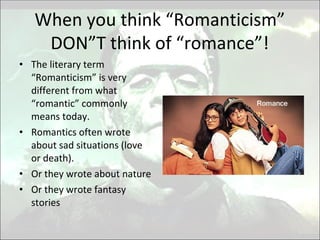
When you think “Romanticism”
DON”T think of “romance”!
• The literary term
“Romanticism” is very
different from what
“romantic” commonly
means today.
• Romantics often wrote
about sad situations (love
or death).
• Or they wrote about nature
• Or they wrote fantasy
stories
Some elements of the
Romanticism
• Nature
• Emotion
• Symbolism
• The Self/Personal
freedom
• Imagination and
Fantasy
• The supernatural
• Belief that that science
only corrupts, but
nature soothes.
• Interest in Past
• Rural Life and the
Common Man
• Legends & myths
• Death
• Failed love
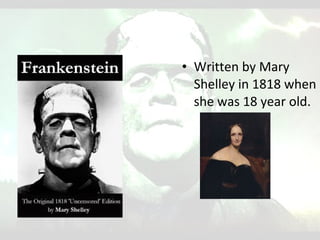
• Written by Mary
Shelley in 1818 when
she was 18 year old.
Nature in
Frankenstein
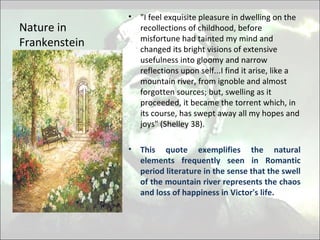
• "I feel exquisite pleasure in dwelling on the
recollections of childhood, before
misfortune had tainted my mind and
changed its bright visions of extensive
usefulness into gloomy and narrow
reflections upon self...I find it arise, like a
mountain river, from ignoble and almost
forgotten sources; but, swelling as it
proceeded, it became the torrent which, in
its course, has swept away all my hopes and
joys" (Shelley 38).
• This quote exemplifies the natural
elements frequently seen in Romantic
period literature in the sense that the swell
of the mountain river represents the chaos
and loss of happiness in Victor's life.
Emotion in
Frankenstein
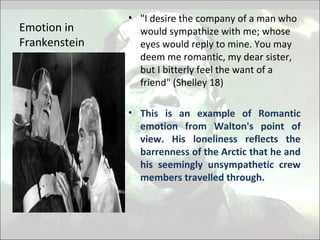
• "I desire the company of a man who
would sympathize with me; whose
eyes would reply to mine. You may
deem me romantic, my dear sister,
but I bitterly feel the want of a
friend" (Shelley 18)
• This is an example of Romantic
emotion from Walton's point of
view. His loneliness reflects the
barrenness of the Arctic that he and
his seemingly unsympathetic crew
members travelled through.
Symbolism in
Frankenstein
• " ‘One day, when I was oppressed by
cold, I found a fire which had been
left by some wandering beggars, and
was overcome with delight at the
warmth I experienced from it' "
(Shelley 99).
• This passage shows the symbolism
that Shelley uses to explain how the
creature felt when he first
discovered fire. The fire represents
feelings of joy the creature truly felt
throughout the novel when in
contact with flames.
Imagination in
Frankenstein
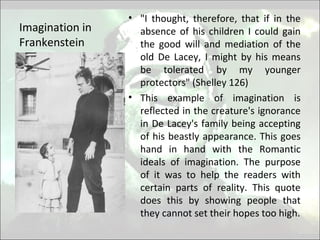
• "I thought, therefore, that if in the
absence of his children I could gain
the good will and mediation of the
old De Lacey, I might by his means
be tolerated by my younger
protectors" (Shelley 126)
• This example of imagination is
reflected in the creature's ignorance
in De Lacey's family being accepting
of his beastly appearance. This goes
hand in hand with the Romantic
ideals of imagination. The purpose
of it was to help the readers with
certain parts of reality. This quote
does this by showing people that
they cannot set their hopes too high.
Conclusion
 Mary Shelley's novel, Frankenstein, is a
romantic classic. It is based around the
romantic principles that science only corrupts,
but nature soothes. She is warning us that if
we neglect nature, like Victor Frankenstein
did, we will end up making a monster out of
ourselves and one day look back at how
foolish we were in neglecting nature.
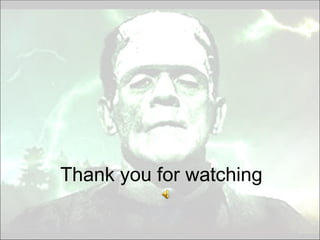
Thank you for watching

Romanticism in Frankenstein

  • 1.
    Romanticism in Frankenstein •Name: Trivedi Hezal K. • Roll No: 35 • PG Reg. No. PG15101040 • M.A. – English Regular, Semester-2 • Year: 2016 • Course No. 5: The Romantic Literature • Unit-4 – Frankenstein (mary-shelley) • Assignments Topic- Romanticism & Frankenstein • Submitted to: S.B. Gardi Department of English • Maharaja Krishnakumarsinhji Bhavnagar University • (Gujarat – India)
  • 2.
    When you think“Romanticism” DON”T think of “romance”! • The literary term “Romanticism” is very different from what “romantic” commonly means today. • Romantics often wrote about sad situations (love or death). • Or they wrote about nature • Or they wrote fantasy stories
  • 3.
    Some elements ofthe Romanticism • Nature • Emotion • Symbolism • The Self/Personal freedom • Imagination and Fantasy • The supernatural • Belief that that science only corrupts, but nature soothes. • Interest in Past • Rural Life and the Common Man • Legends & myths • Death • Failed love
  • 4.
    • Written byMary Shelley in 1818 when she was 18 year old.
  • 5.
    Nature in Frankenstein • "Ifeel exquisite pleasure in dwelling on the recollections of childhood, before misfortune had tainted my mind and changed its bright visions of extensive usefulness into gloomy and narrow reflections upon self...I find it arise, like a mountain river, from ignoble and almost forgotten sources; but, swelling as it proceeded, it became the torrent which, in its course, has swept away all my hopes and joys" (Shelley 38). • This quote exemplifies the natural elements frequently seen in Romantic period literature in the sense that the swell of the mountain river represents the chaos and loss of happiness in Victor's life.
  • 6.
    Emotion in Frankenstein • "Idesire the company of a man who would sympathize with me; whose eyes would reply to mine. You may deem me romantic, my dear sister, but I bitterly feel the want of a friend" (Shelley 18) • This is an example of Romantic emotion from Walton's point of view. His loneliness reflects the barrenness of the Arctic that he and his seemingly unsympathetic crew members travelled through.
  • 7.
    Symbolism in Frankenstein • "‘One day, when I was oppressed by cold, I found a fire which had been left by some wandering beggars, and was overcome with delight at the warmth I experienced from it' " (Shelley 99). • This passage shows the symbolism that Shelley uses to explain how the creature felt when he first discovered fire. The fire represents feelings of joy the creature truly felt throughout the novel when in contact with flames.
  • 8.
    Imagination in Frankenstein • "Ithought, therefore, that if in the absence of his children I could gain the good will and mediation of the old De Lacey, I might by his means be tolerated by my younger protectors" (Shelley 126) • This example of imagination is reflected in the creature's ignorance in De Lacey's family being accepting of his beastly appearance. This goes hand in hand with the Romantic ideals of imagination. The purpose of it was to help the readers with certain parts of reality. This quote does this by showing people that they cannot set their hopes too high.
  • 9.
    Conclusion  Mary Shelley'snovel, Frankenstein, is a romantic classic. It is based around the romantic principles that science only corrupts, but nature soothes. She is warning us that if we neglect nature, like Victor Frankenstein did, we will end up making a monster out of ourselves and one day look back at how foolish we were in neglecting nature.
  • 10.
    Thank you forwatching