WSO2 MI for Enterprise Integration in
a Decentralized,
Microservice Oriented Landscape
Isuru Udana
Director - Engineering
WSO2
Shazni Nazeer
Director - Solutions Architecture
WSO2
Agenda
2
● Introduction to Microservices and decentralized architectures
● WSO2 MI overview and features
● Designing microservice-friendly integrations
● Implementation with WSO2 Micro Integrator
Microservices & Decentralized
Architecture
Microservices Architecture
4
4
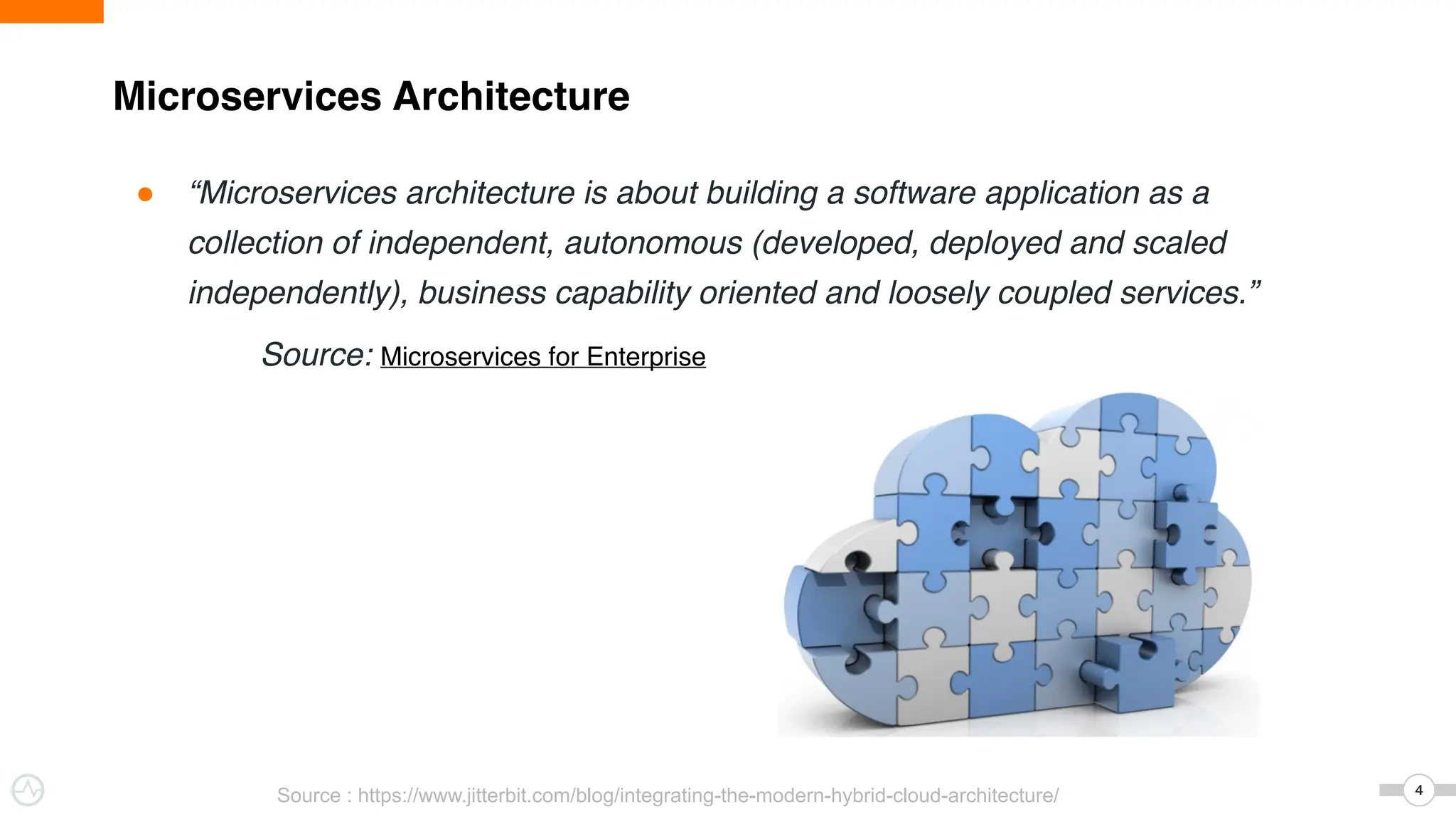
● “Microservices architecture is about building a software application as a
collection of independent, autonomous (developed, deployed and scaled
independently), business capability oriented and loosely coupled services.”
Source: Microservices for Enterprise
Source : https://www.jitterbit.com/blog/integrating-the-modern-hybrid-cloud-architecture/
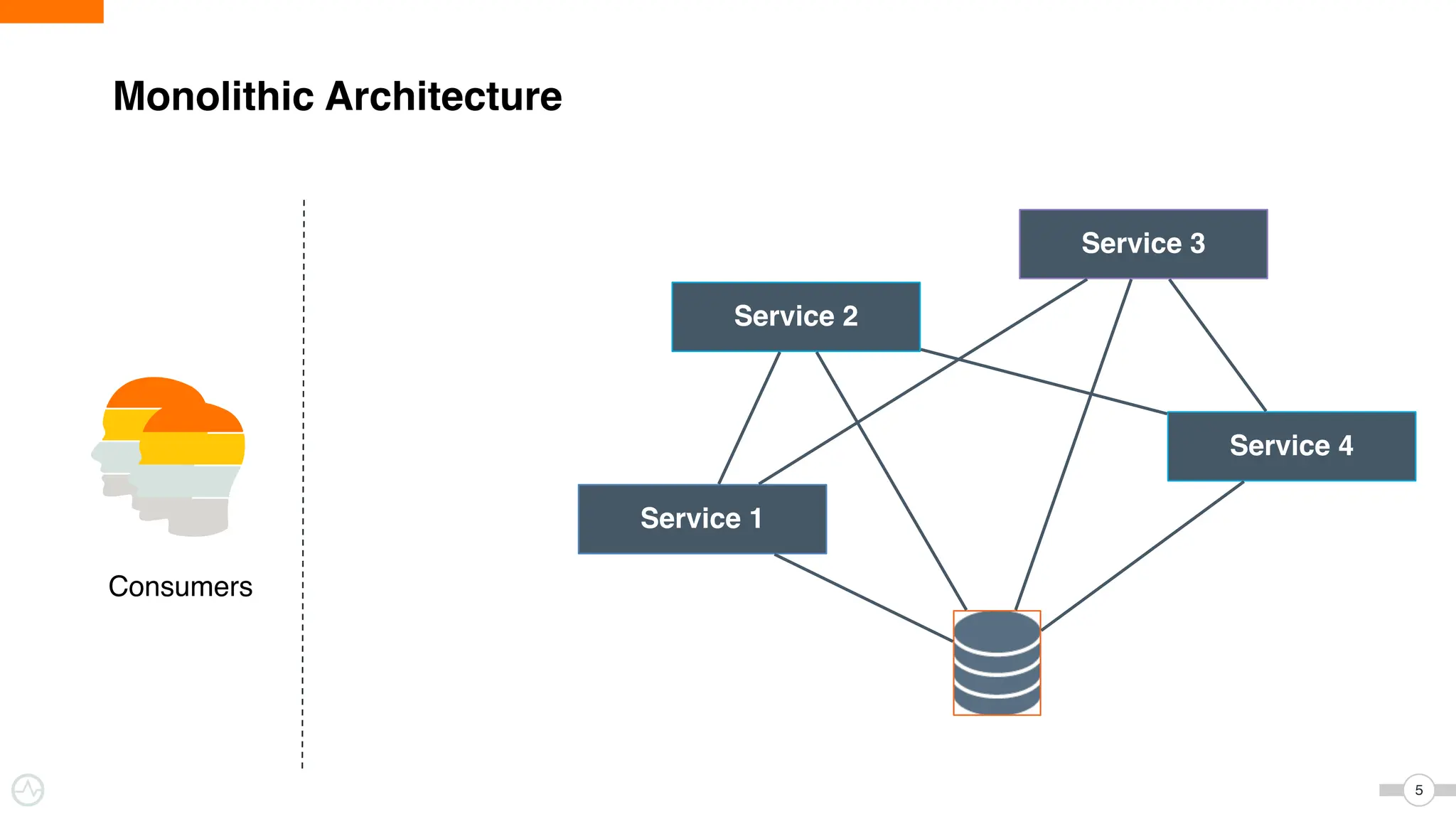
Monolithic Architecture
5
Service 2
Service 1
Service 3
Service 4
Consumers
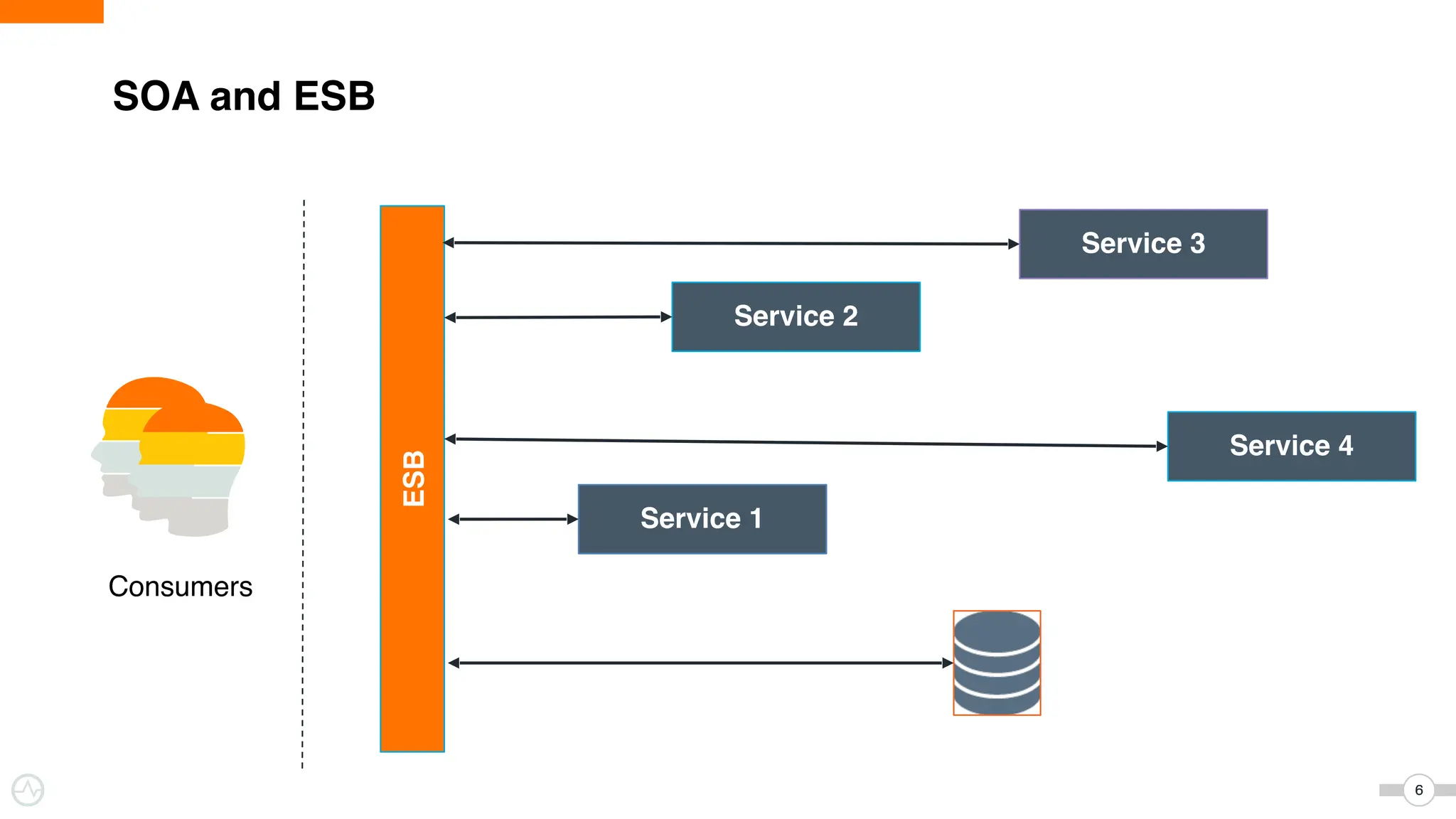
SOA and ESB
6
6
Service 2
Service 1
Service 3
Service 4
Consumers
ESB
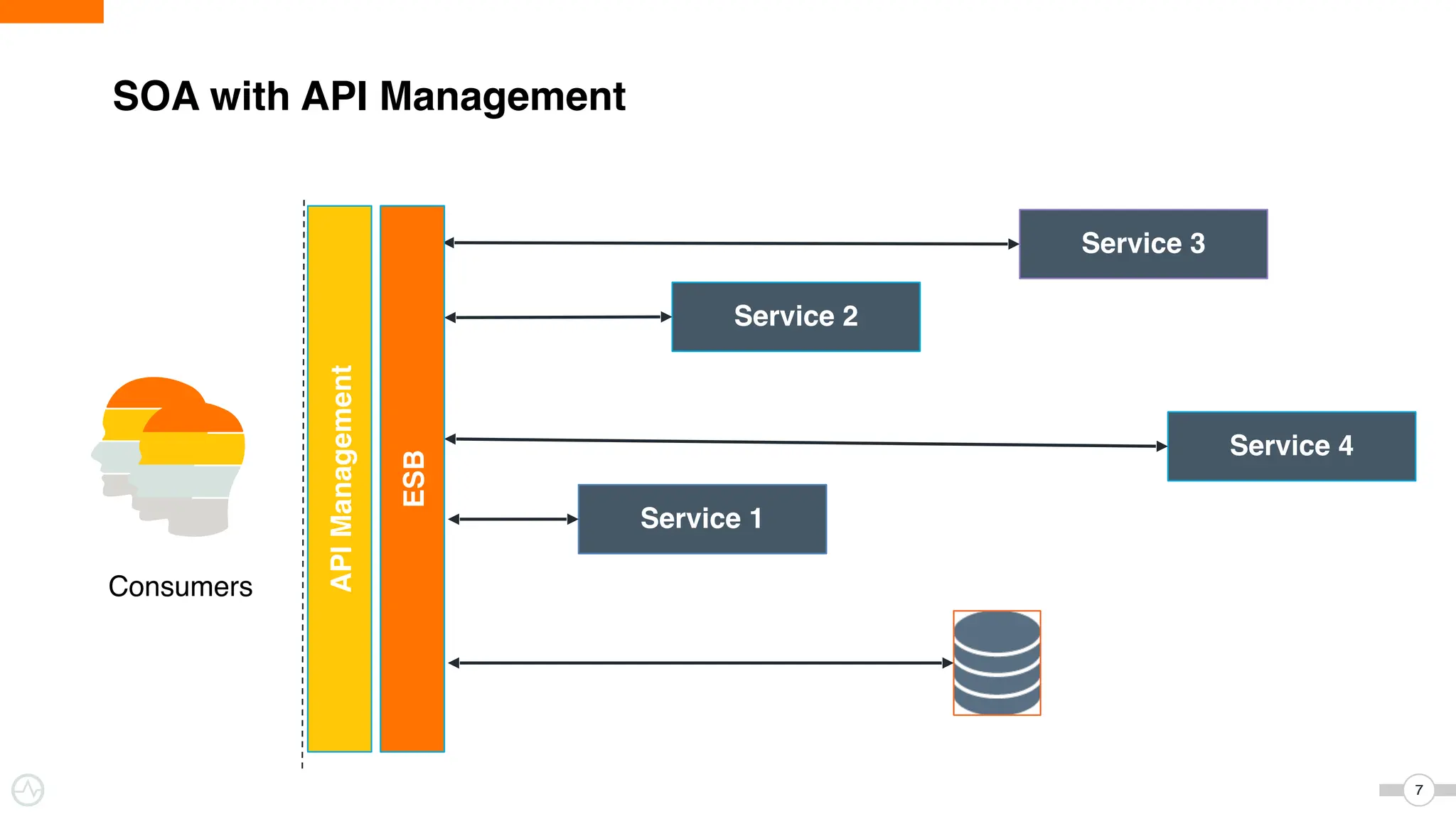
SOA with API Management
7
7
Service 2
Service 1
Service 3
Service 4
Consumers
ESB
ESB
API
Management
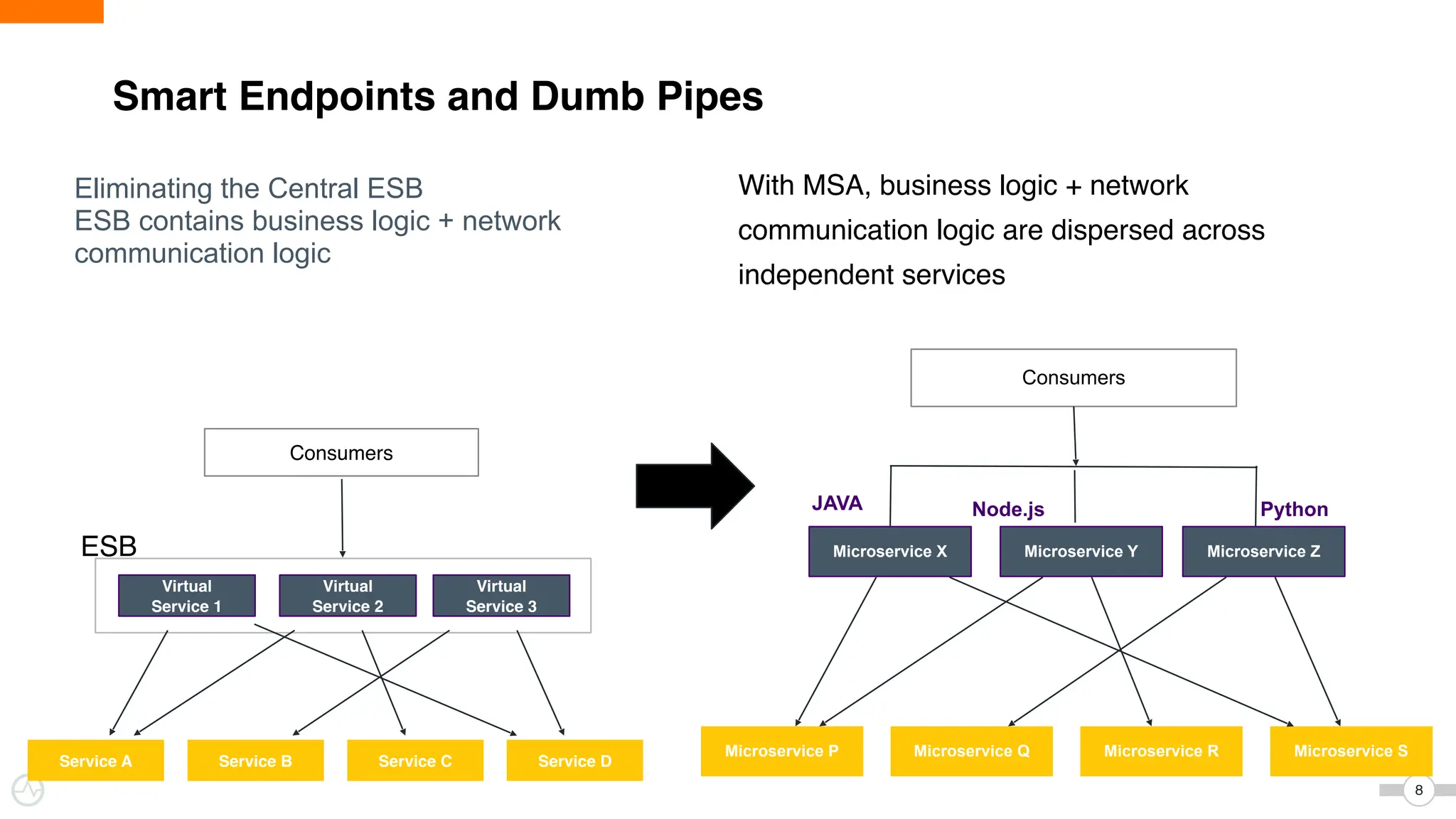
Eliminating the Central ESB
ESB contains business logic + network
communication logic
With MSA, business logic + network
communication logic are dispersed across
independent services
8
Smart Endpoints and Dumb Pipes
Consumers
Virtual
Service 1
Virtual
Service 2
Virtual
Service 3
Service A Service B Service C Service D
Microservice P
ESB
Consumers
Microservice X Microservice Y Microservice Z
Microservice P Microservice Q Microservice R Microservice S
JAVA Node.js Python
Organizing Microservices
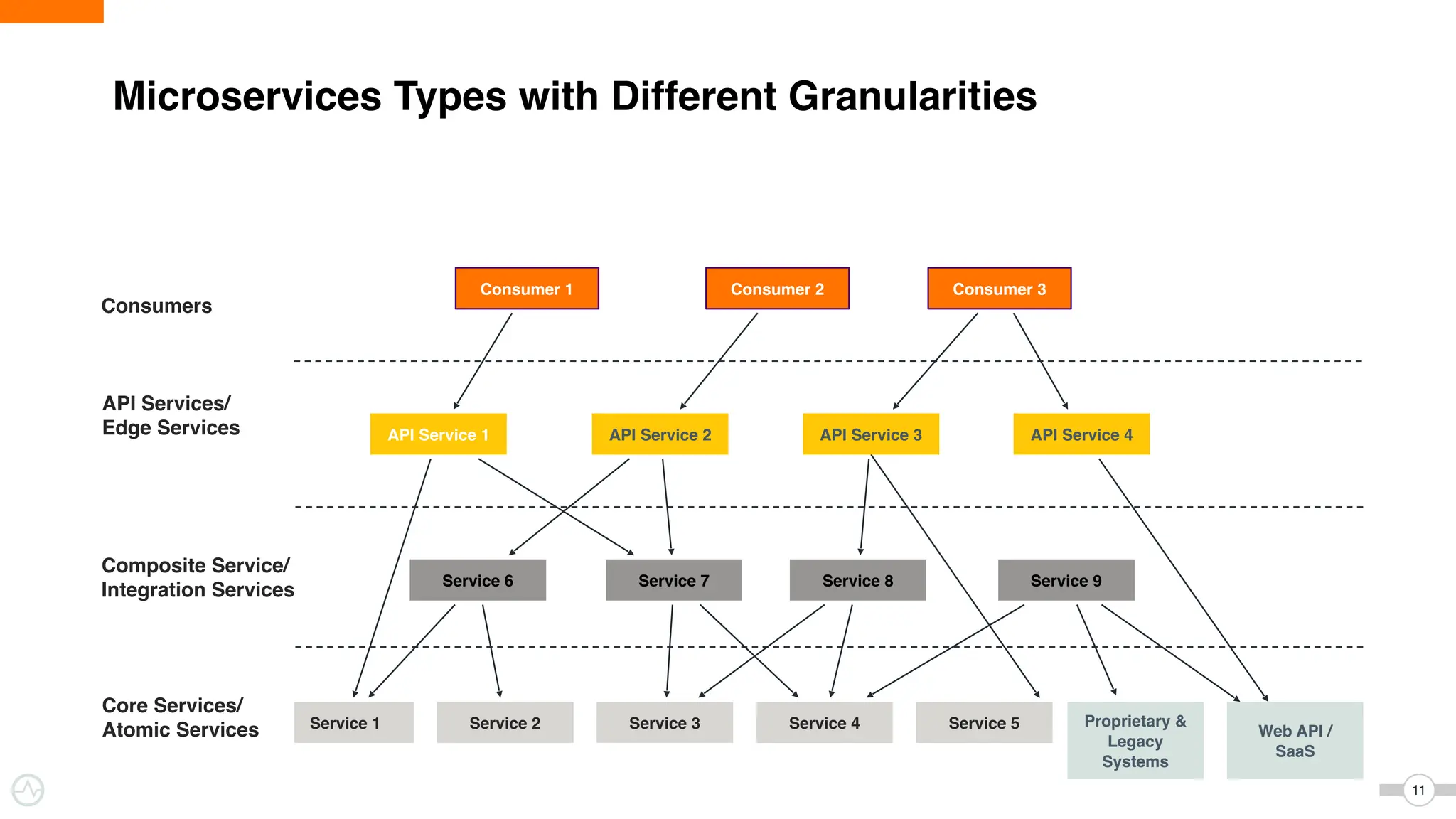
● Not all microservices are similar
● Some services are business logic heavy, while some contain a lot of interservice
calls
● Some services are too fine-grained to be exposed as a business functionality
● Some services are exposed as APIs
Microservices Types with Different Granularities
10
Microservices Types with Different Granularities
11
Consumer 1
API Service 1 API Service 2 API Service 3 API Service 4
Consumers
Consumer 2 Consumer 3
Service 6 Service 7 Service 8 Service 9
Service 1 Service 2 Service 3 Service 4 Service 5 Proprietary &
Legacy
Systems
Web API /
SaaS
API Services/
Edge Services
Composite Service/
Integration Services
Core Services/
Atomic Services
Integrating Microservices is hard!
12
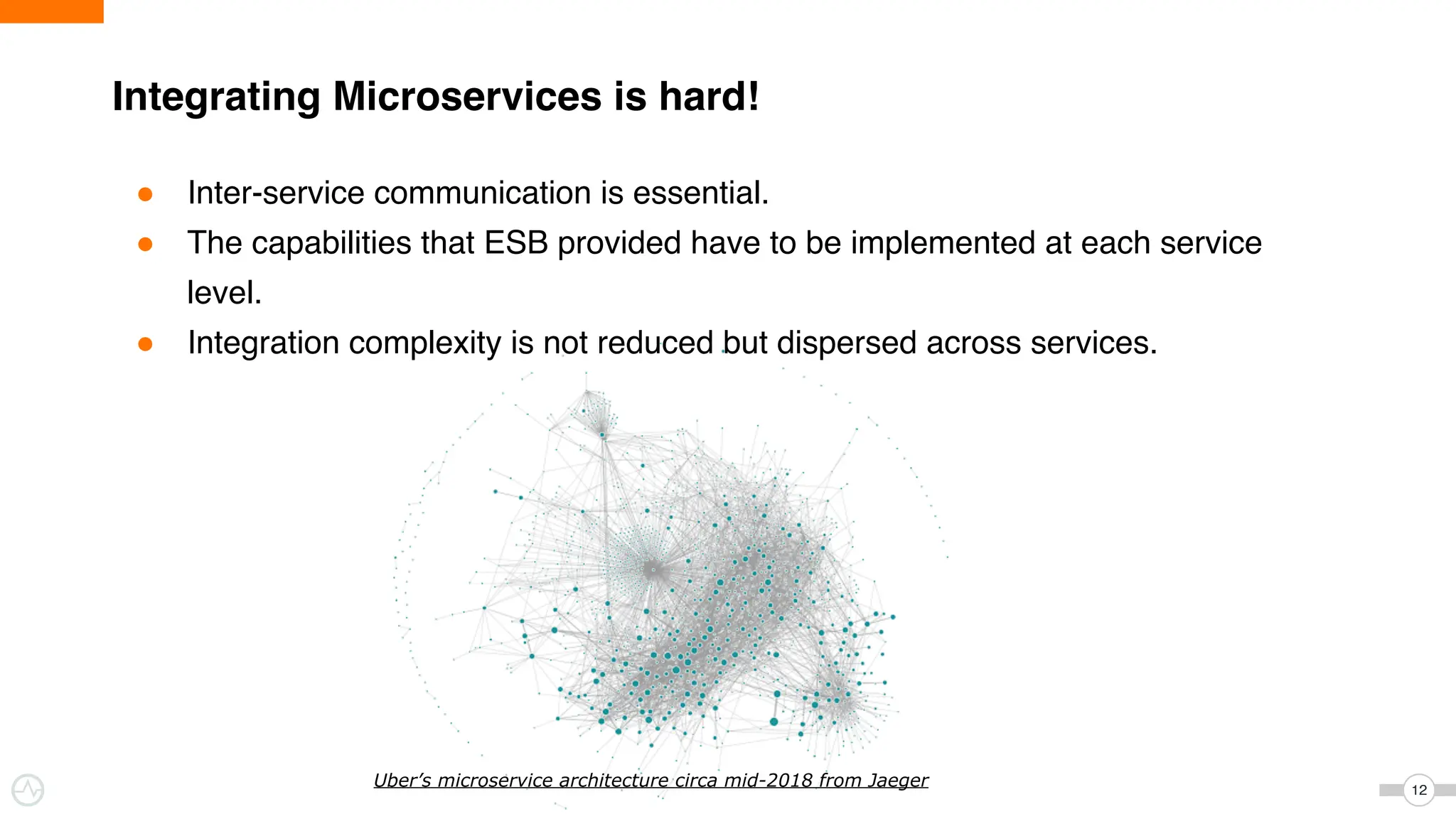
Uber’s microservice architecture circa mid-2018 from Jaeger
● Inter-service communication is essential.
● The capabilities that ESB provided have to be implemented at each service
level.
● Integration complexity is not reduced but dispersed across services.
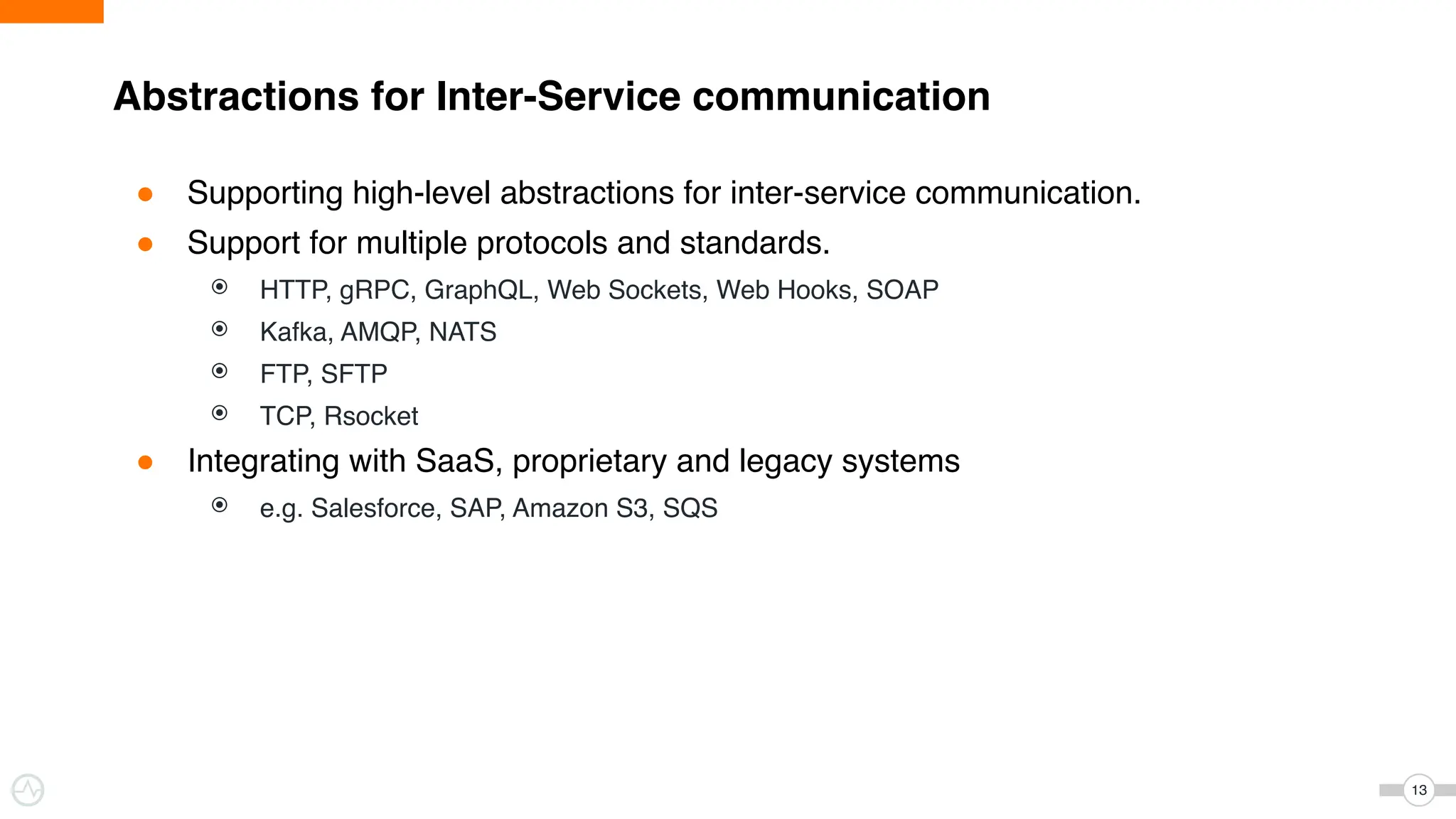
Abstractions for Inter-Service communication
13
● Supporting high-level abstractions for inter-service communication.
● Support for multiple protocols and standards.
⦿ HTTP, gRPC, GraphQL, Web Sockets, Web Hooks, SOAP
⦿ Kafka, AMQP, NATS
⦿ FTP, SFTP
⦿ TCP, Rsocket
● Integrating with SaaS, proprietary and legacy systems
⦿ e.g. Salesforce, SAP, Amazon S3, SQS
Technologies for Building Microservices
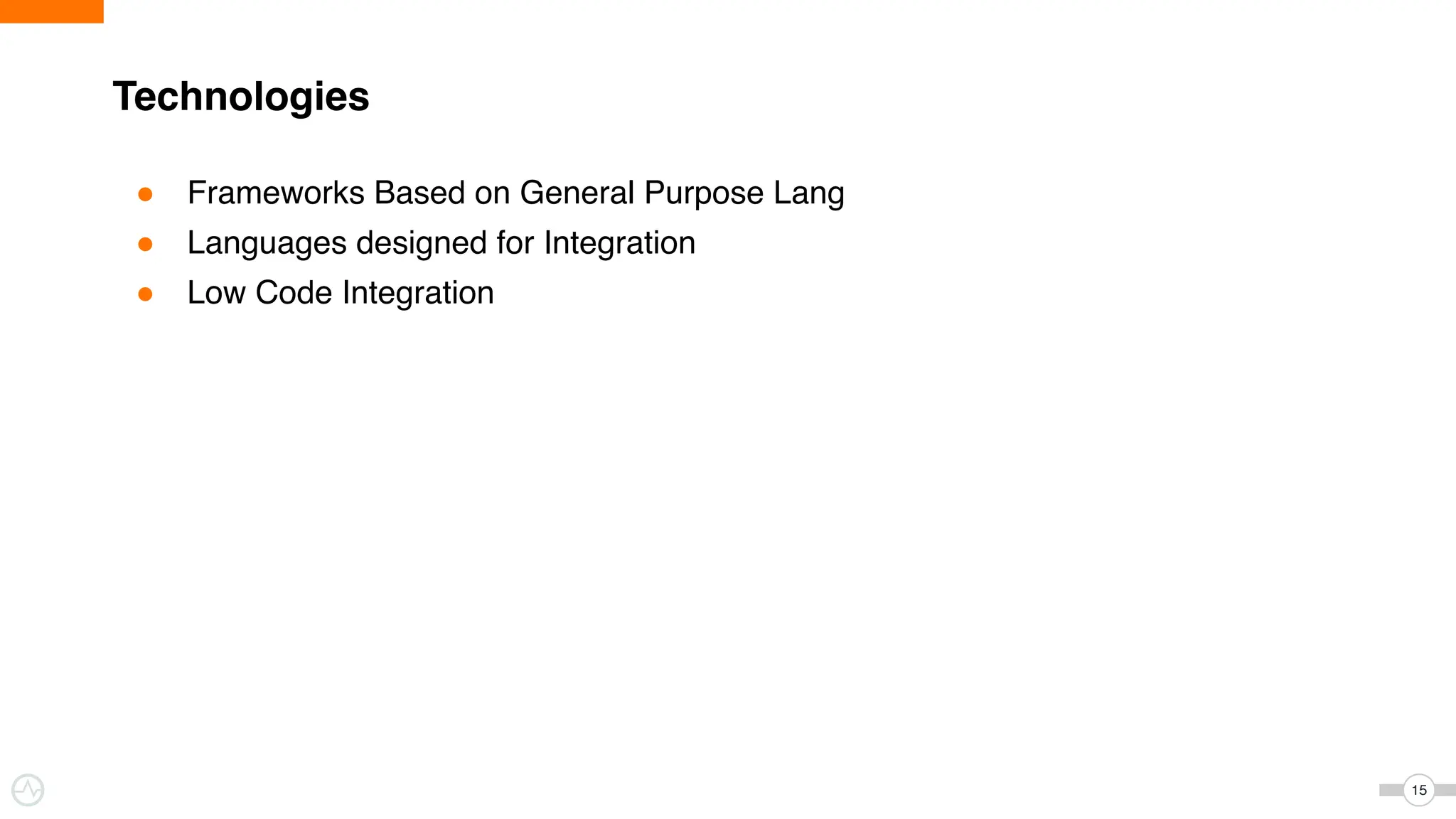
Technologies
15
● Frameworks Based on General Purpose Lang
● Languages designed for Integration
● Low Code Integration
WSO2 Micro Integrator
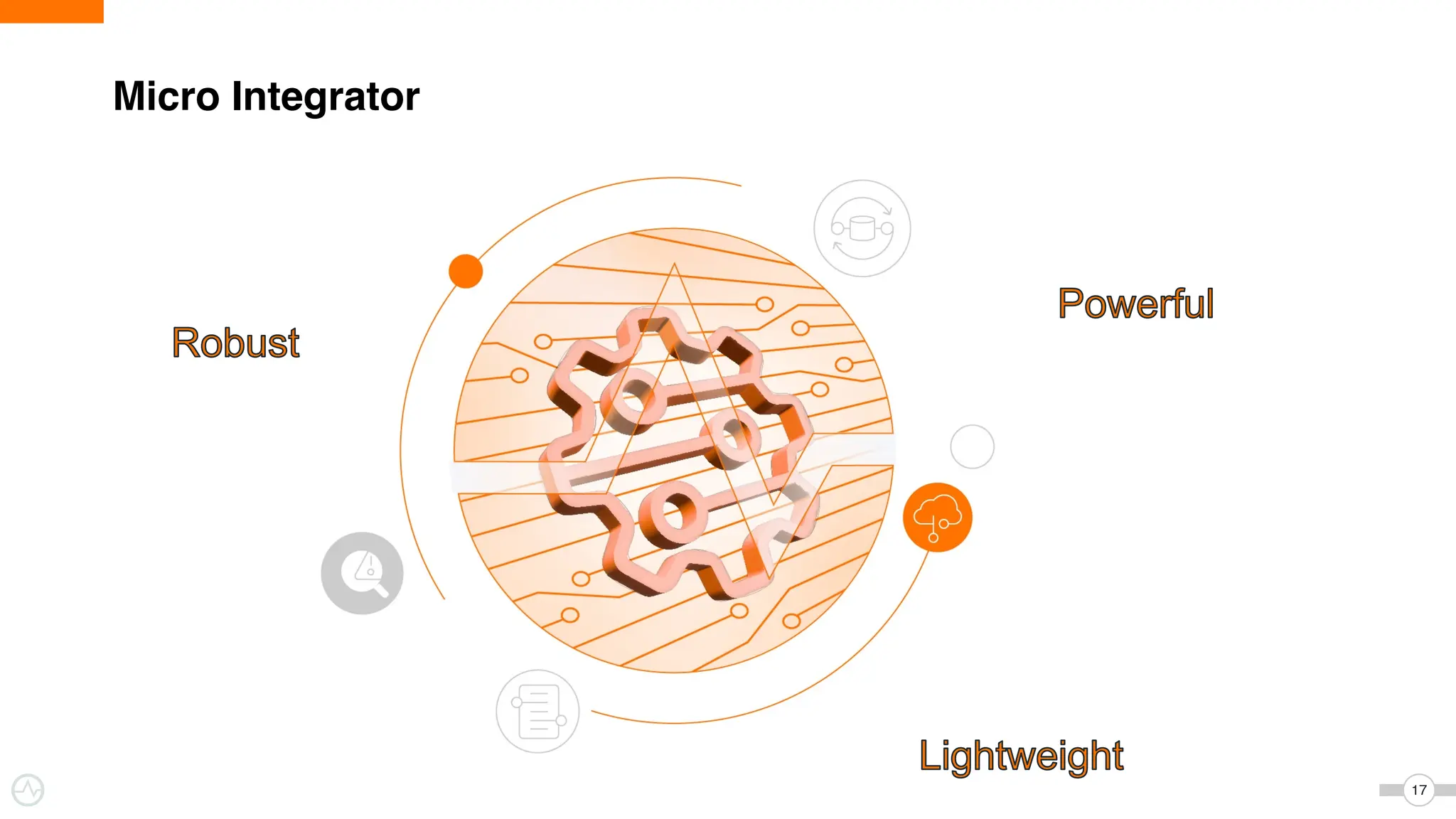
Micro Integrator
17
Robust
Lightweight
Powerful
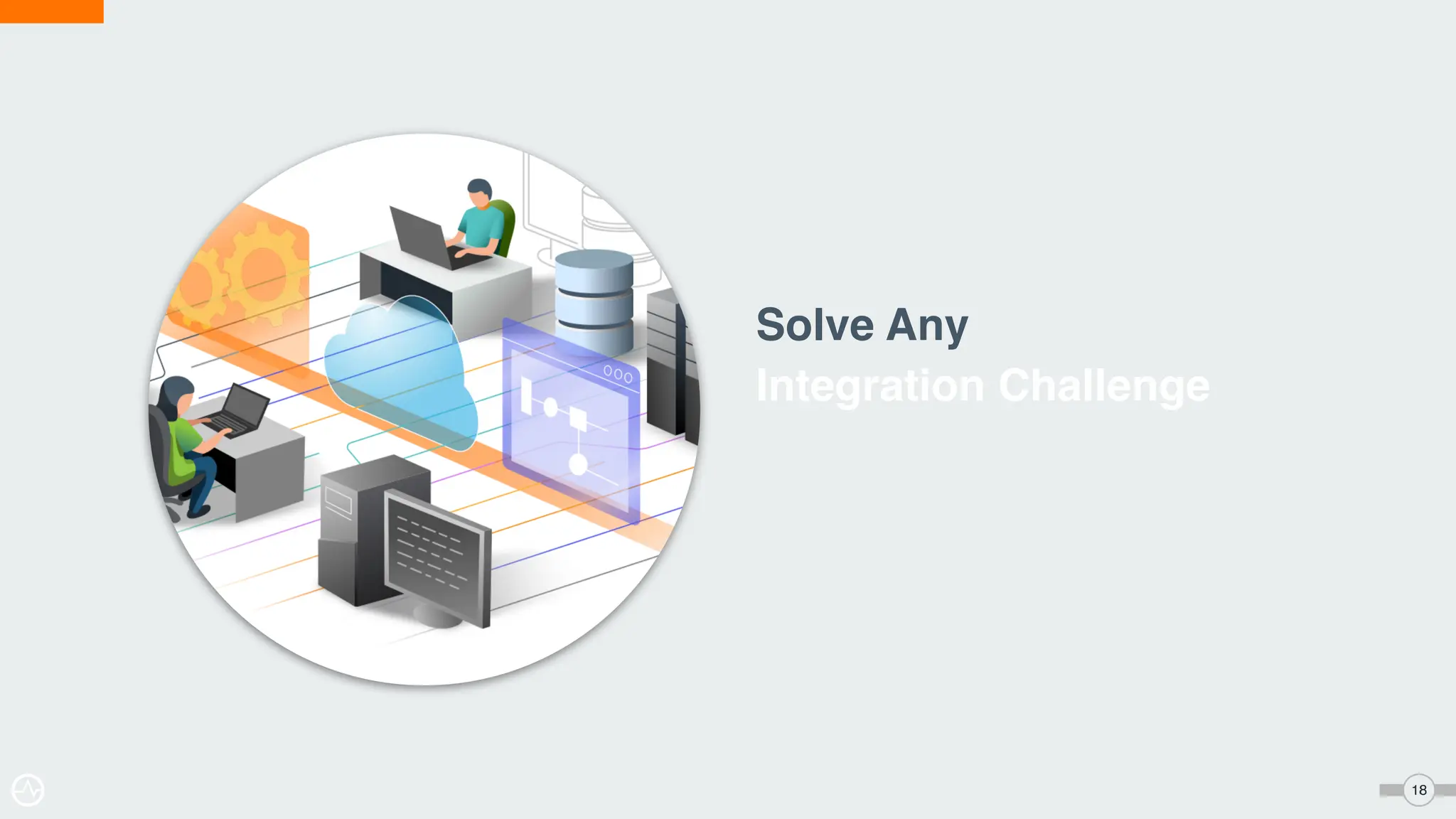
Solve Any
Integration Challenge
18
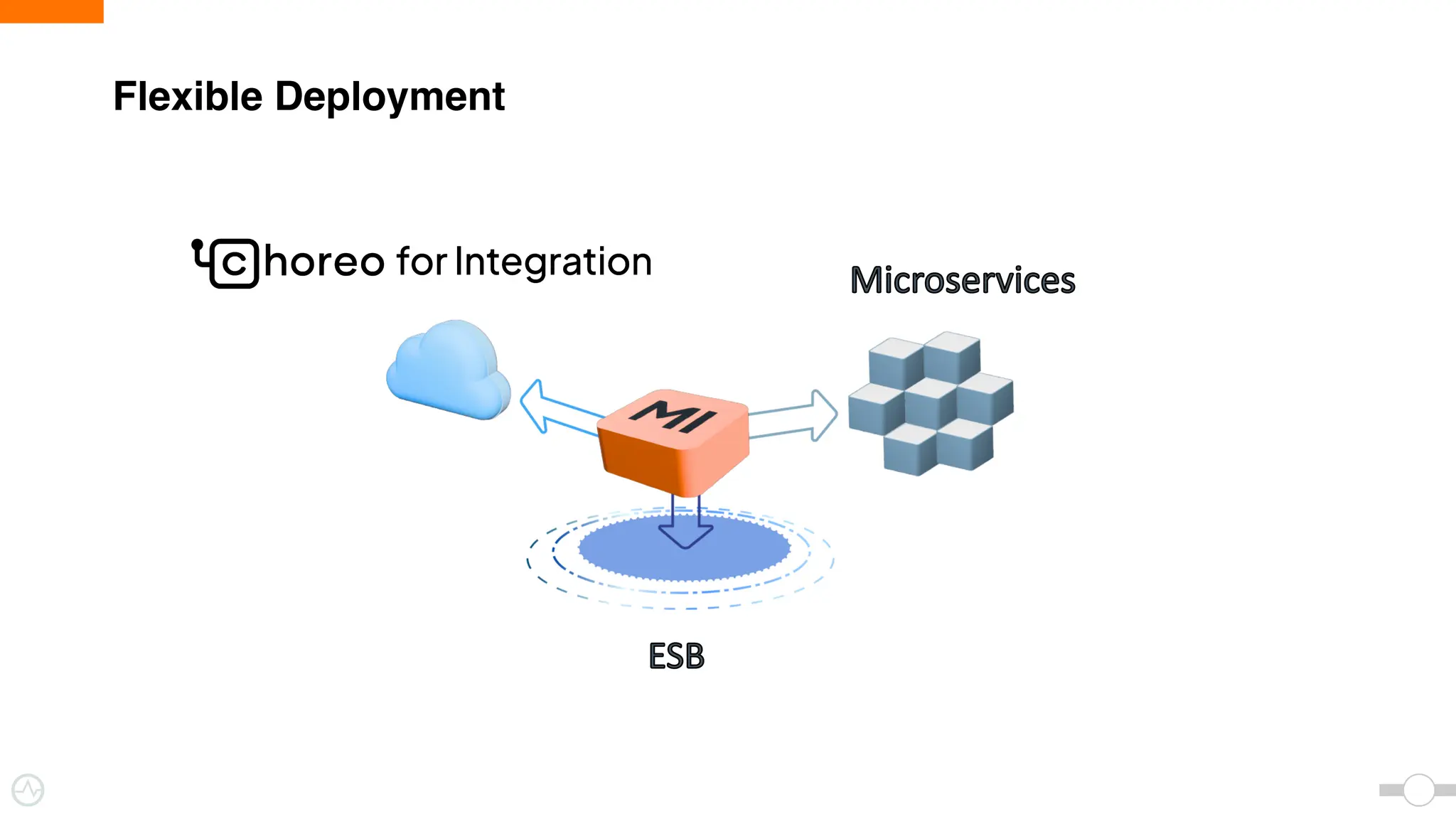
Flexible Deployment
Microservices
ESB
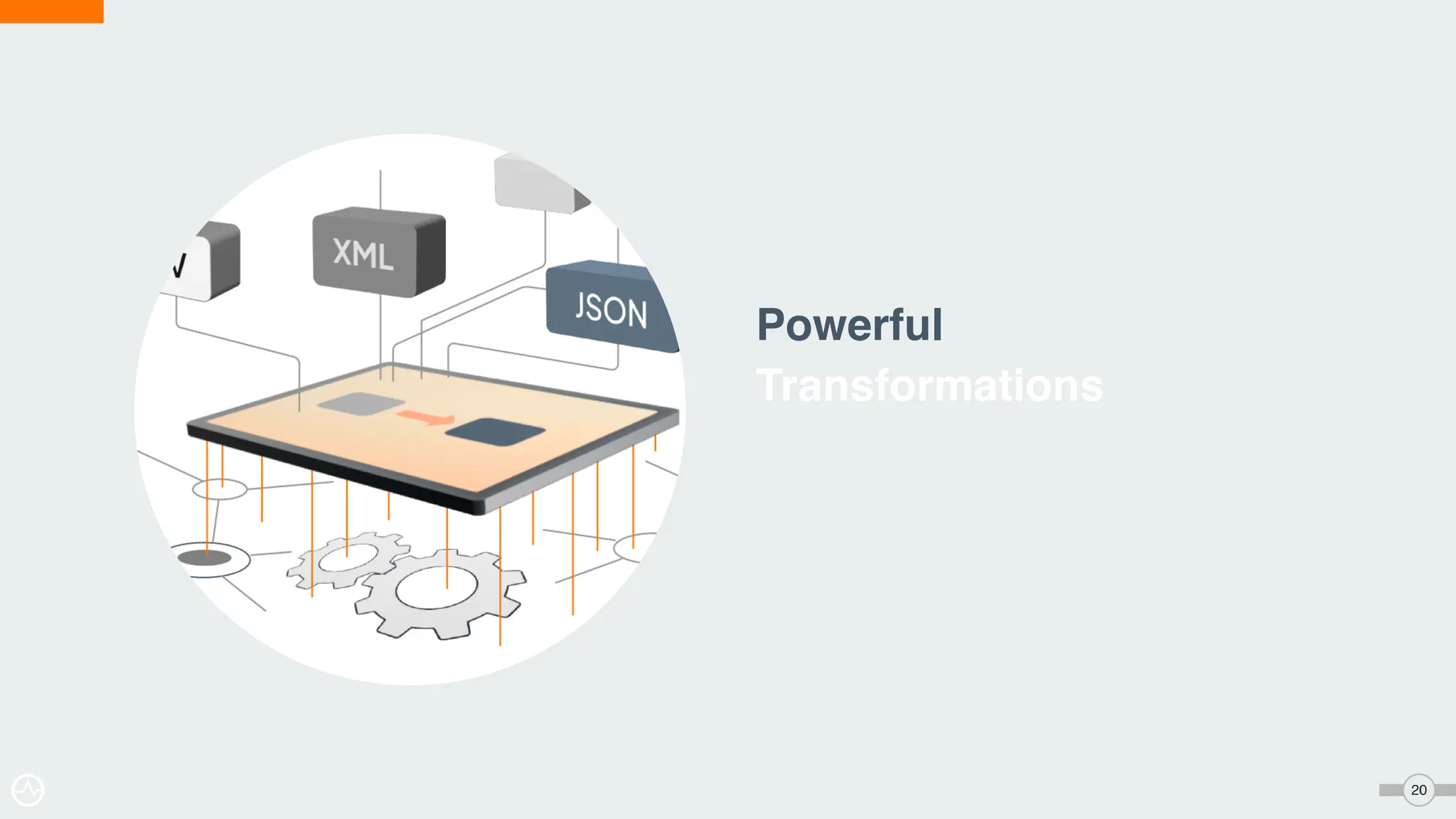
Powerful
Transformations
20
21
Simplified Debugging
and Testing
Key Features
23
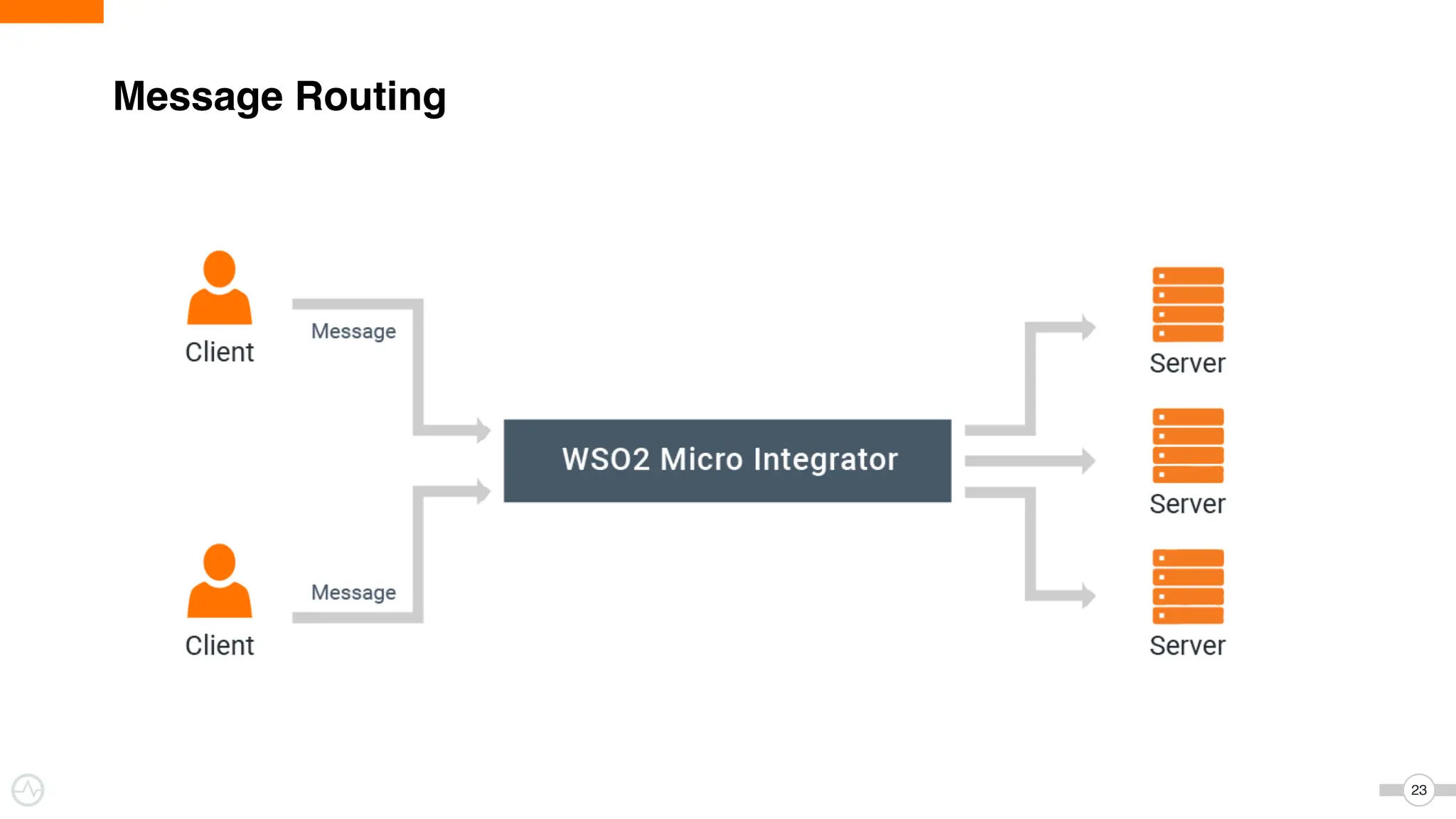
Message Routing
24
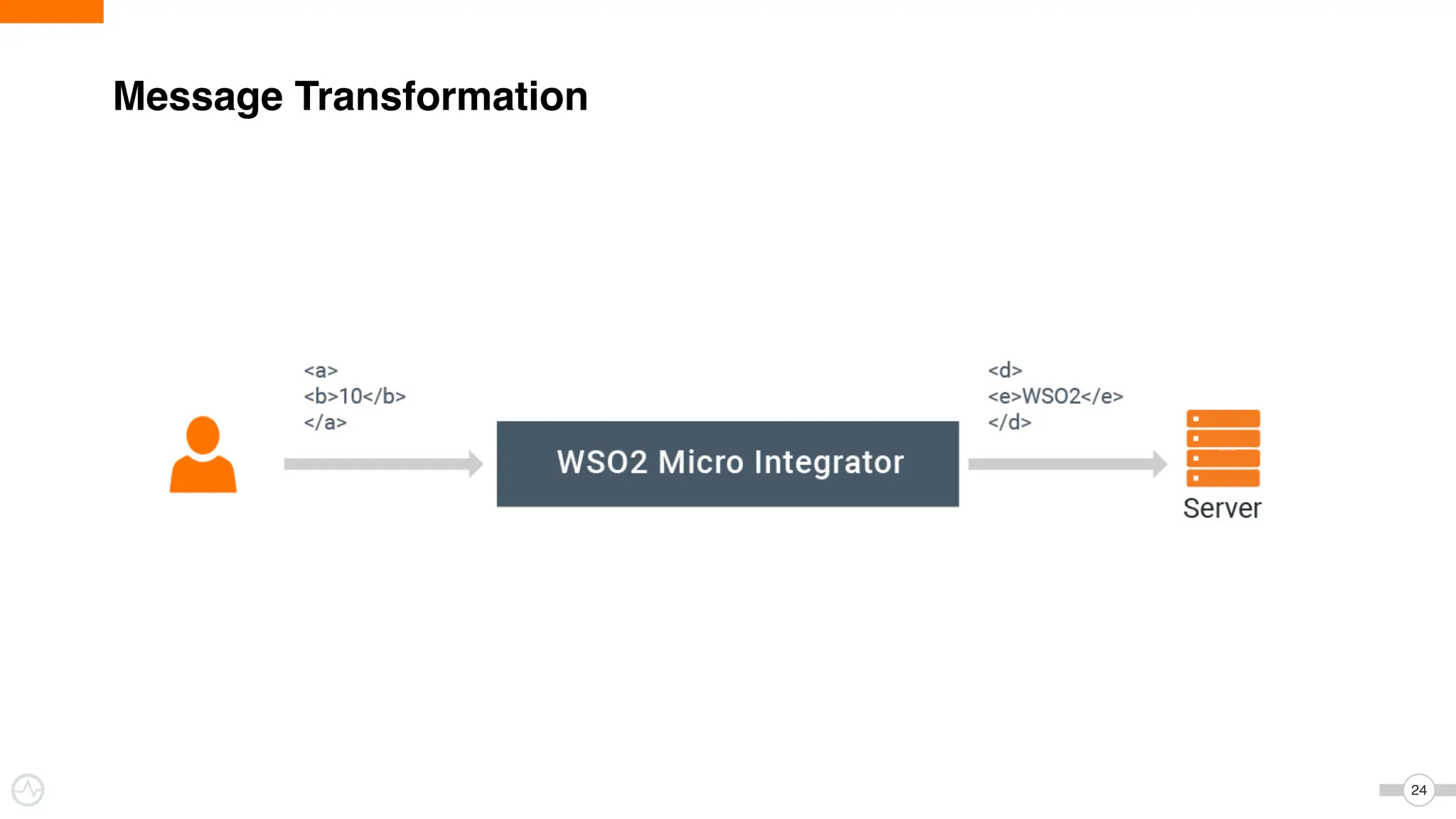
Message Transformation
25
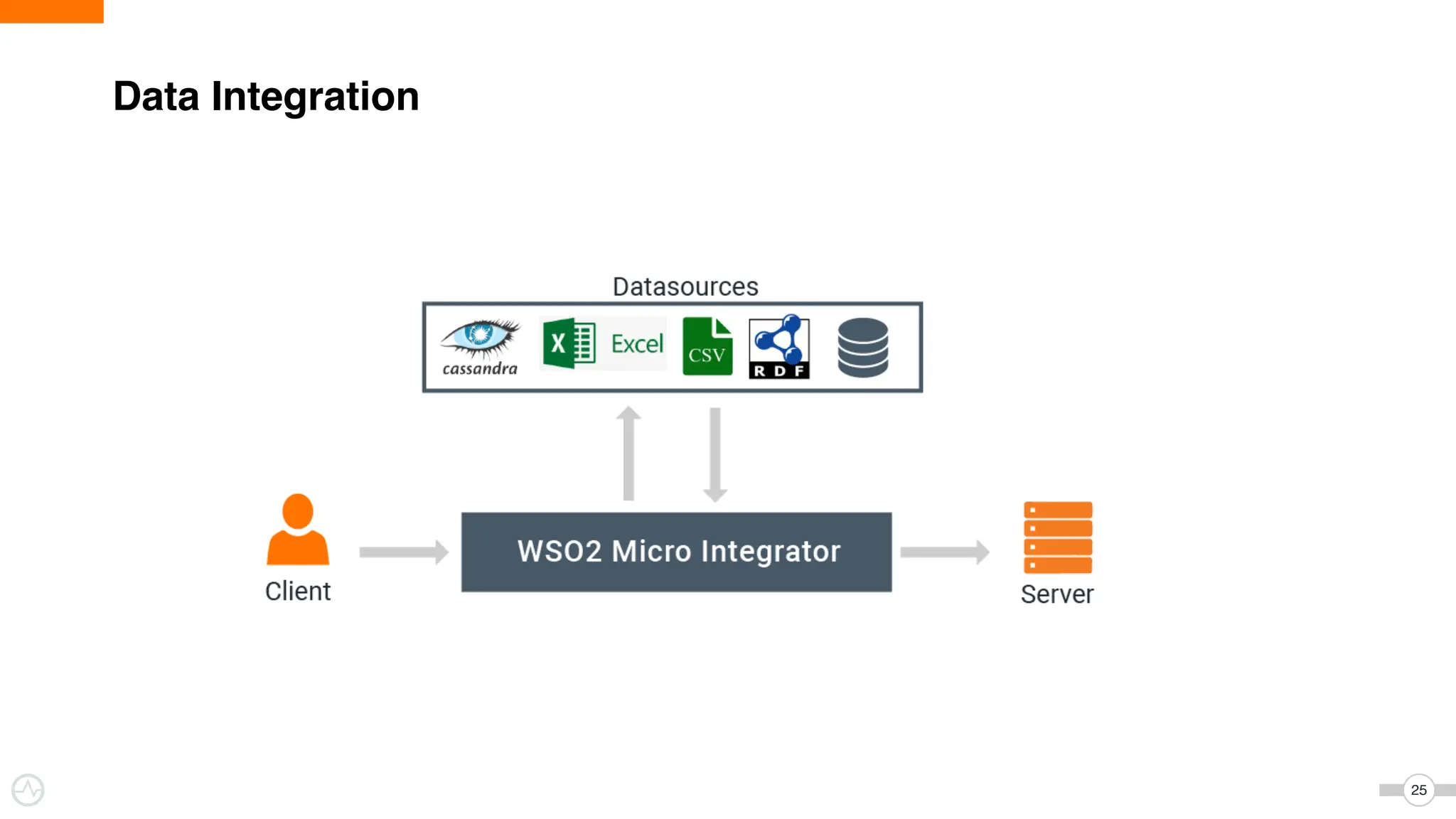
Data Integration
26
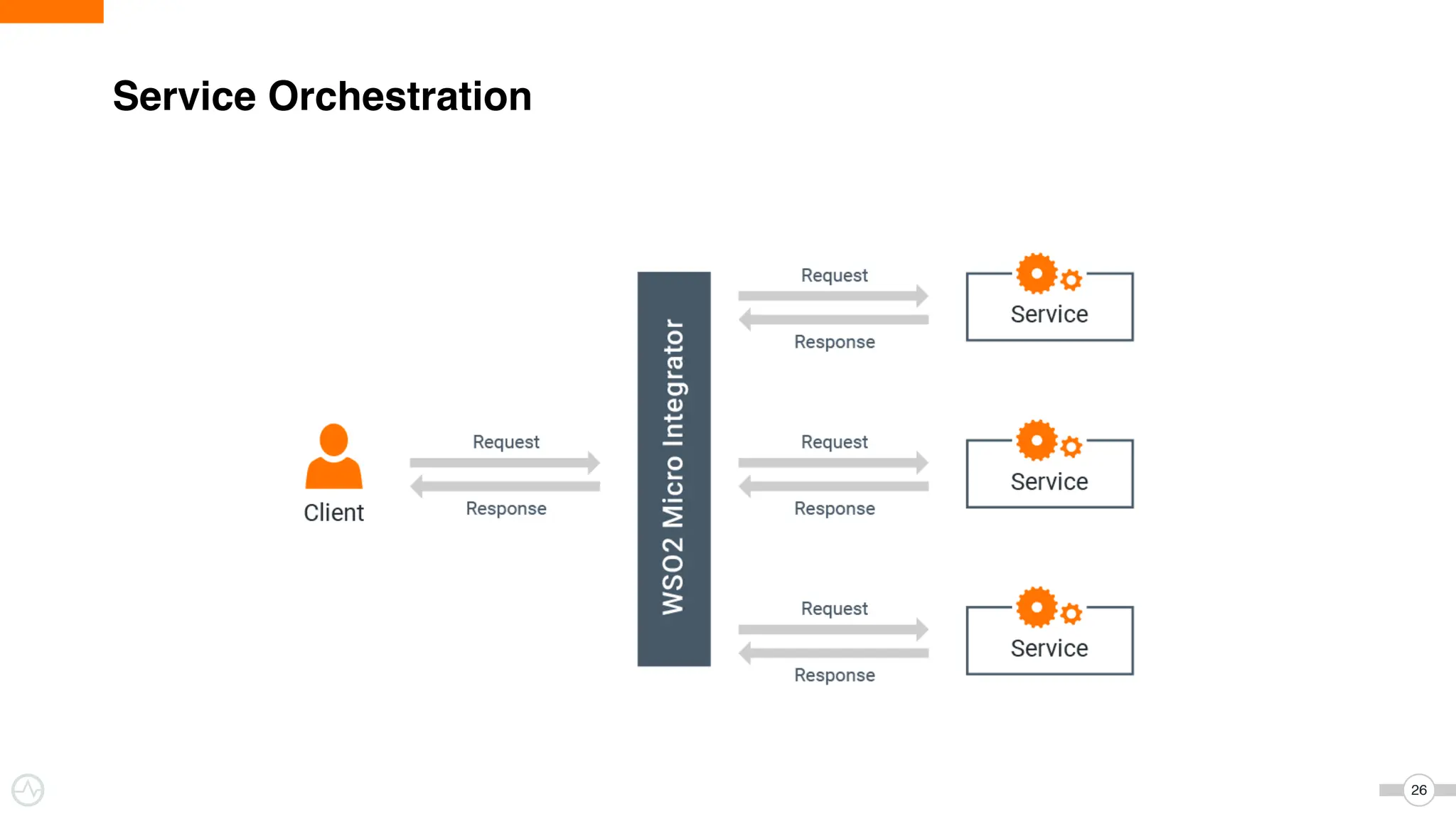
Service Orchestration
27
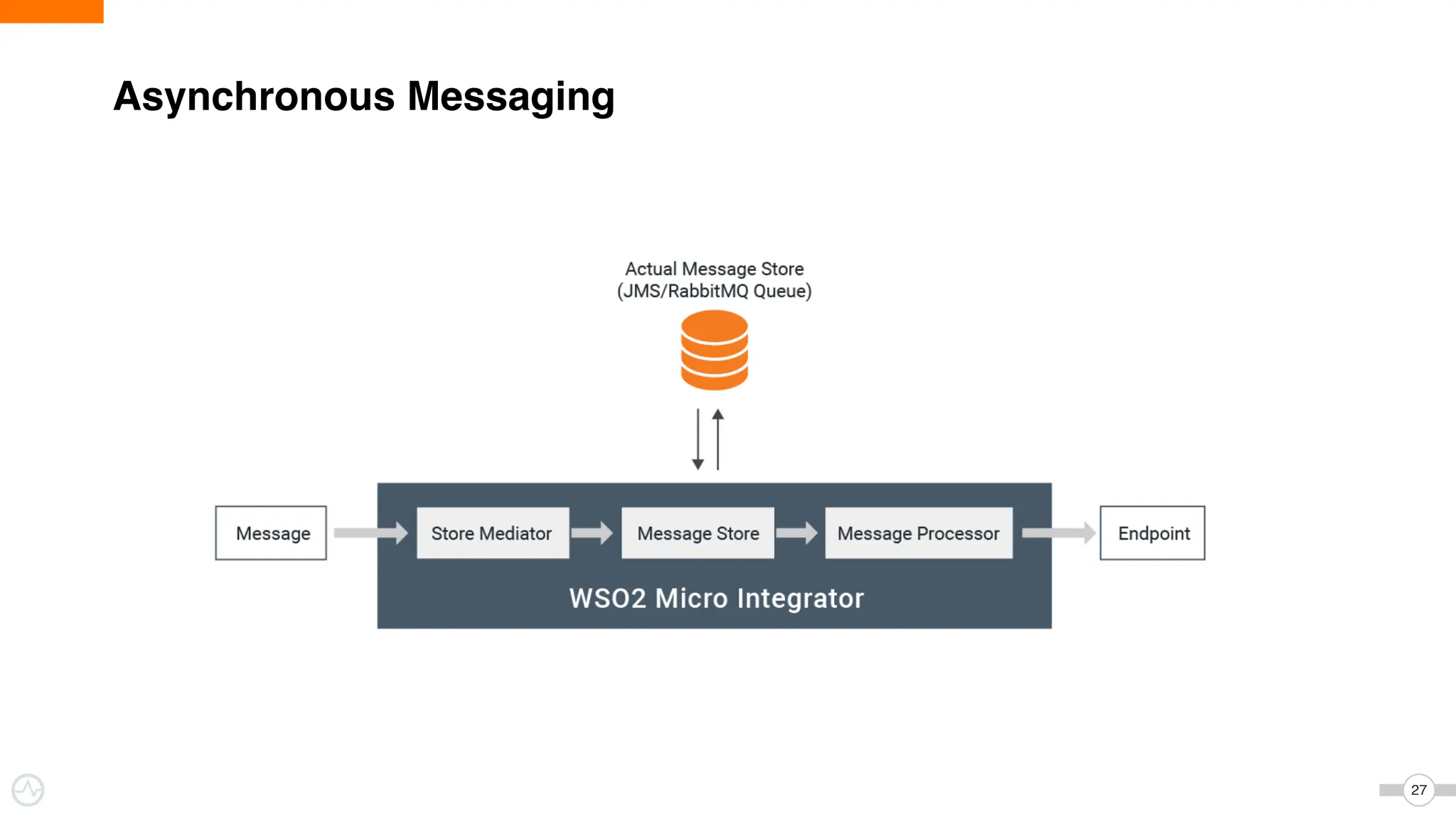
Asynchronous Messaging
28
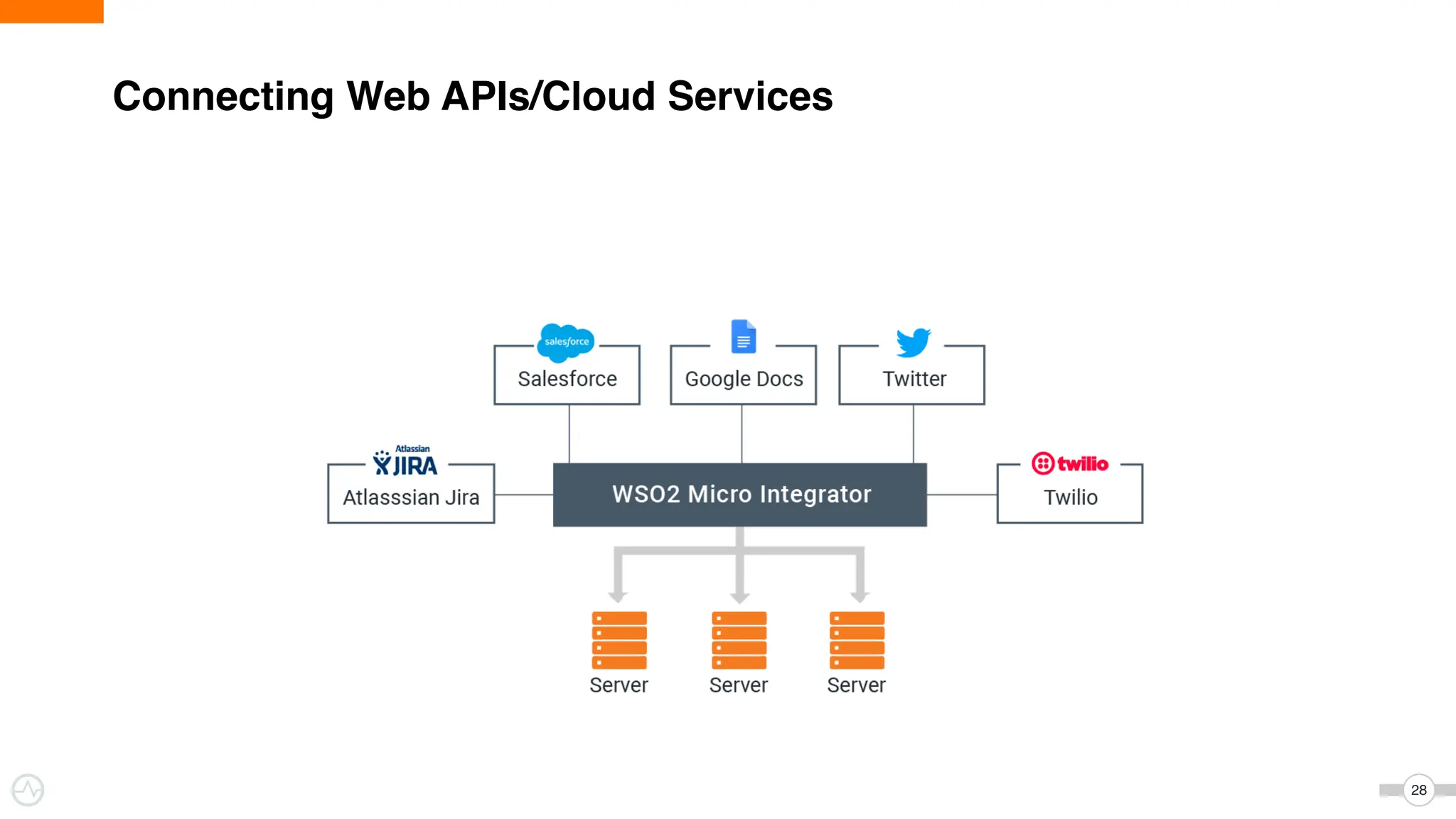
Connecting Web APIs/Cloud Services
29
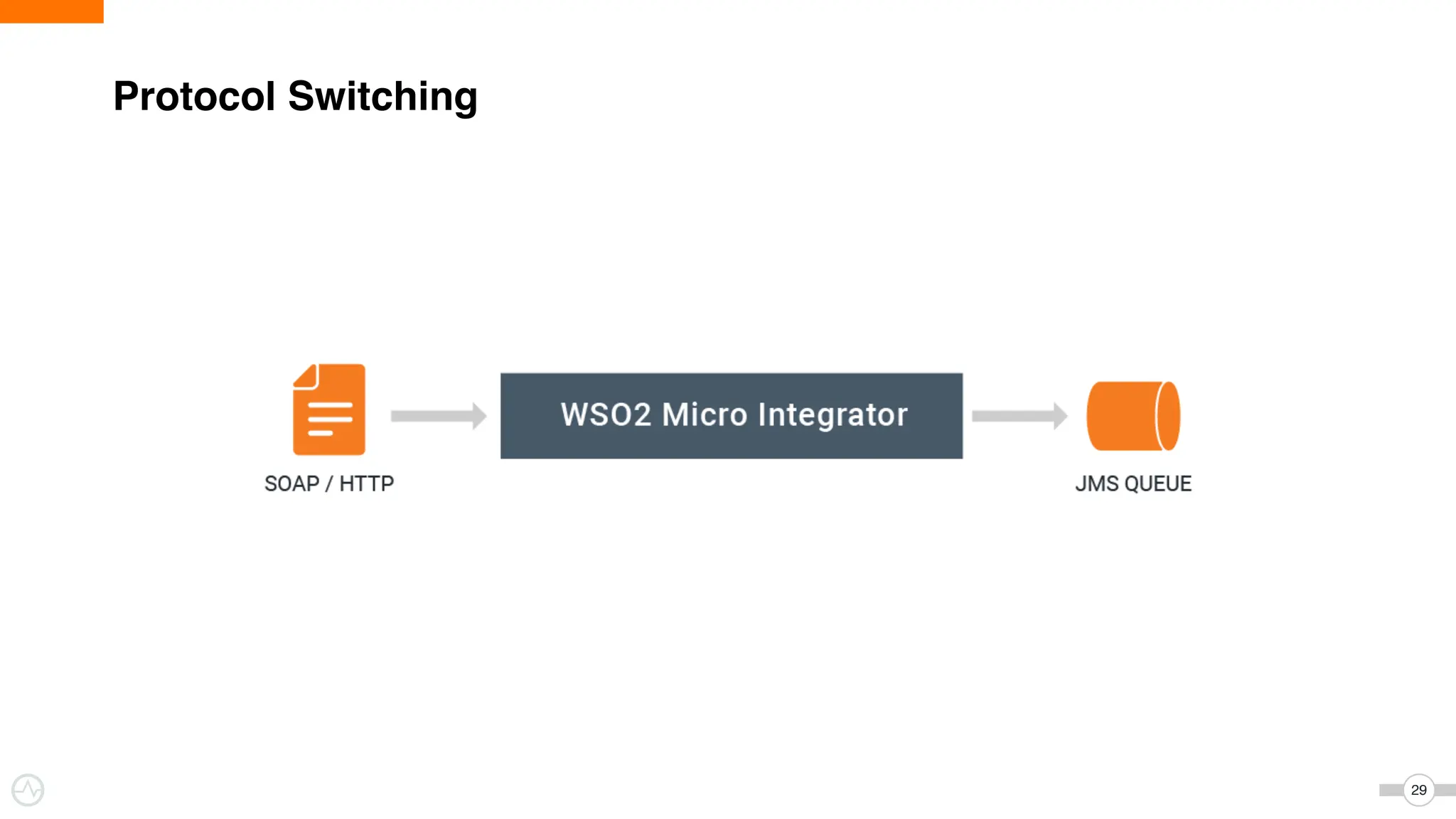
Protocol Switching
30
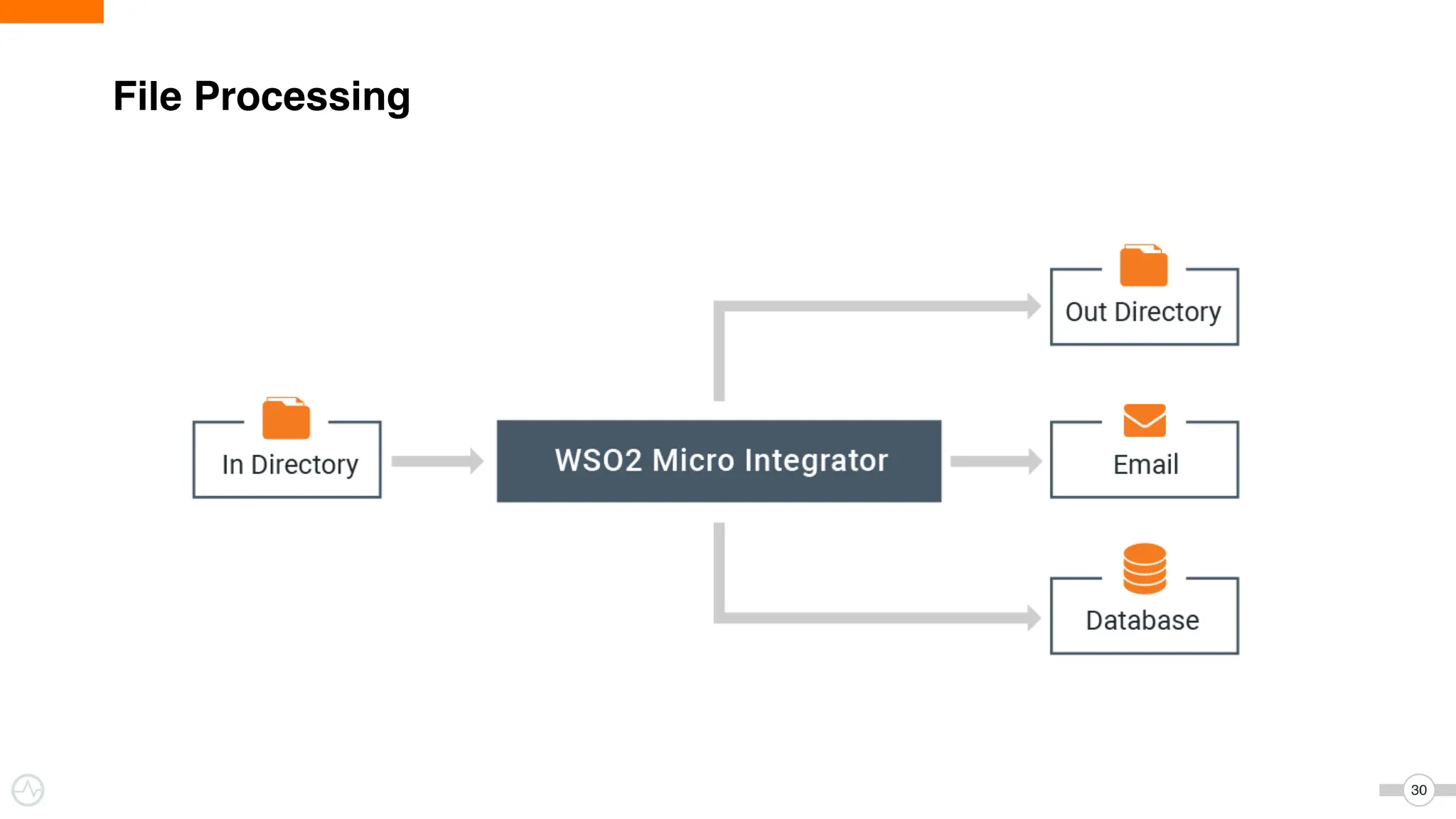
File Processing
Scenario
32
Scenario
33
Scenario
34
Scenario
35
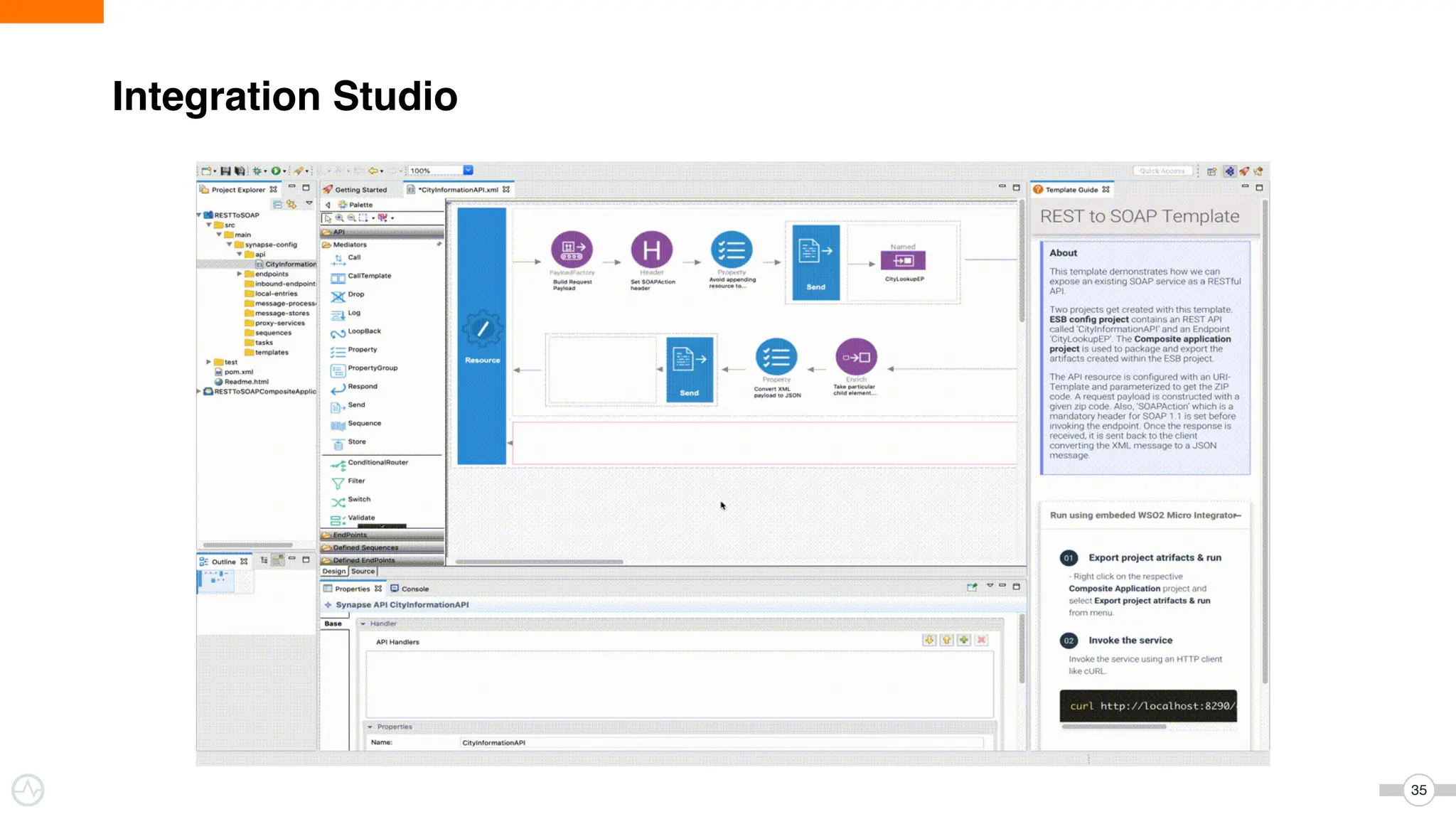
Integration Studio
High-Level Architecture
37
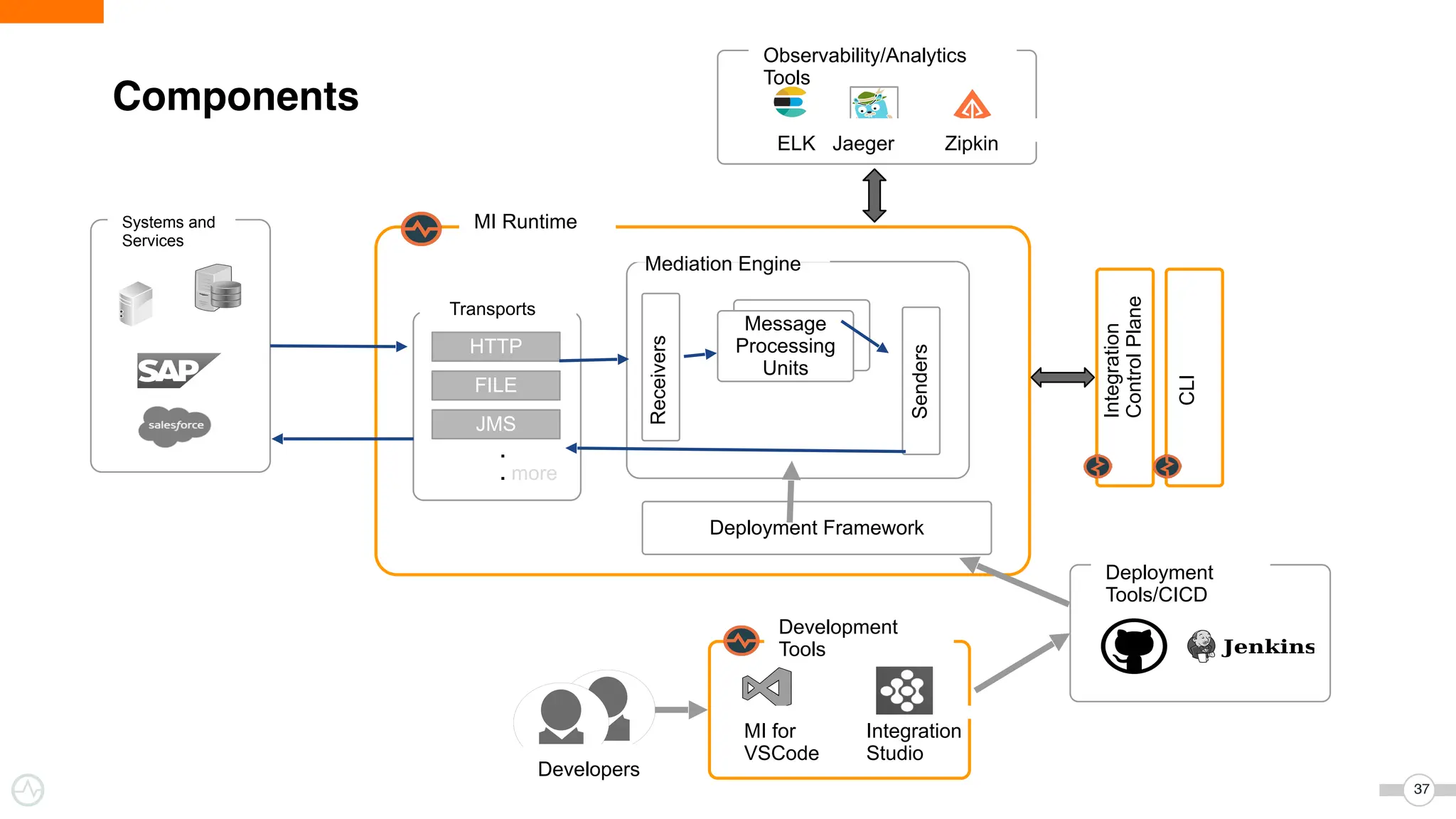
Components
Mediation Engine
Transports
HTTP
FILE
JMS
.
. more
Deployment Framework
Observability/Analytics
Tools
Message
Processing
Units
Receivers
Senders
Integration
Control
Plane
Development
Tools
MI for
VSCode
Integration
Studio
Developers
Deployment
Tools/CICD
Systems and
Services
CLI
ELK Jaeger Zipkin
MI Runtime
Concepts
39
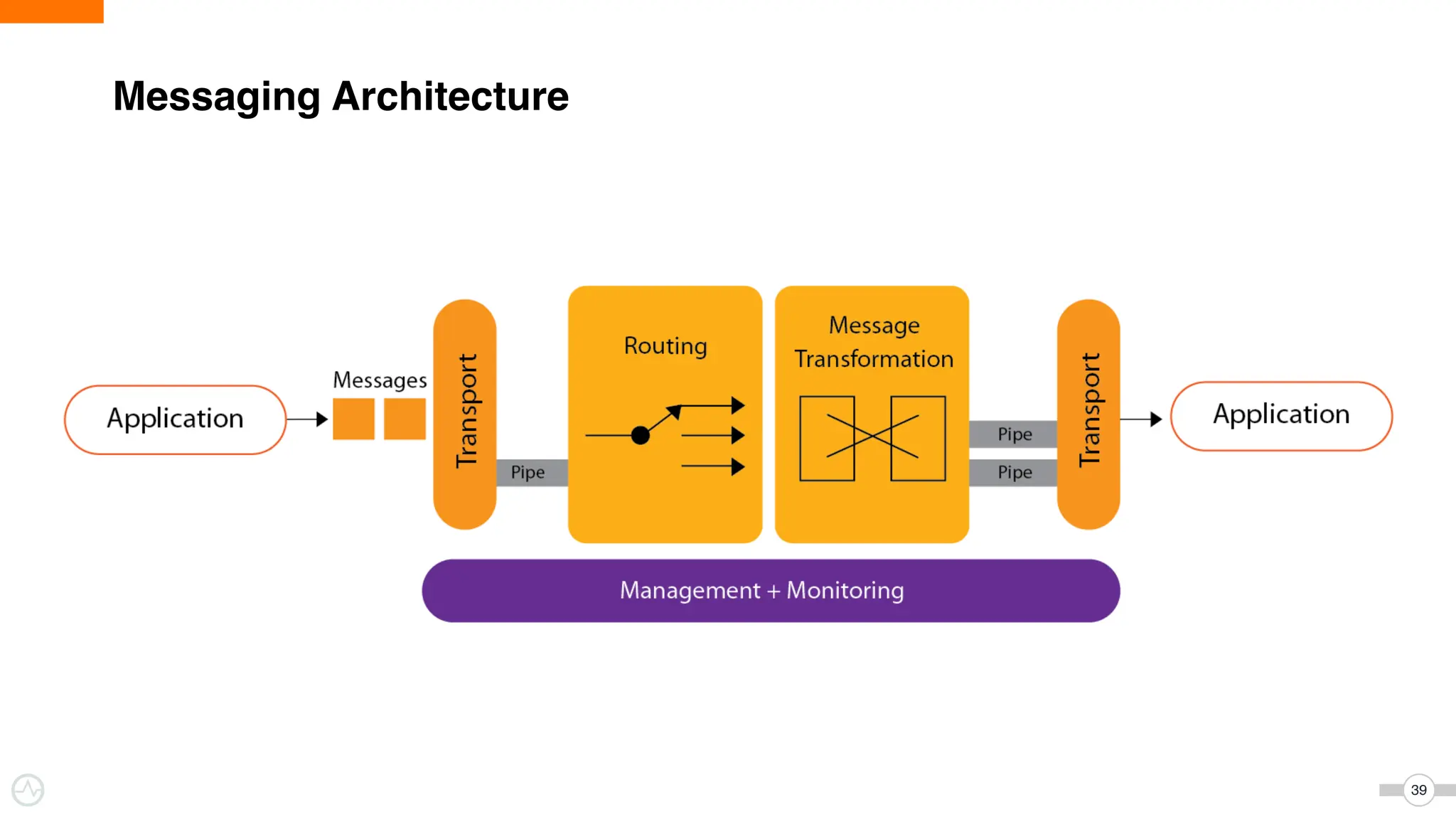
Messaging Architecture
40
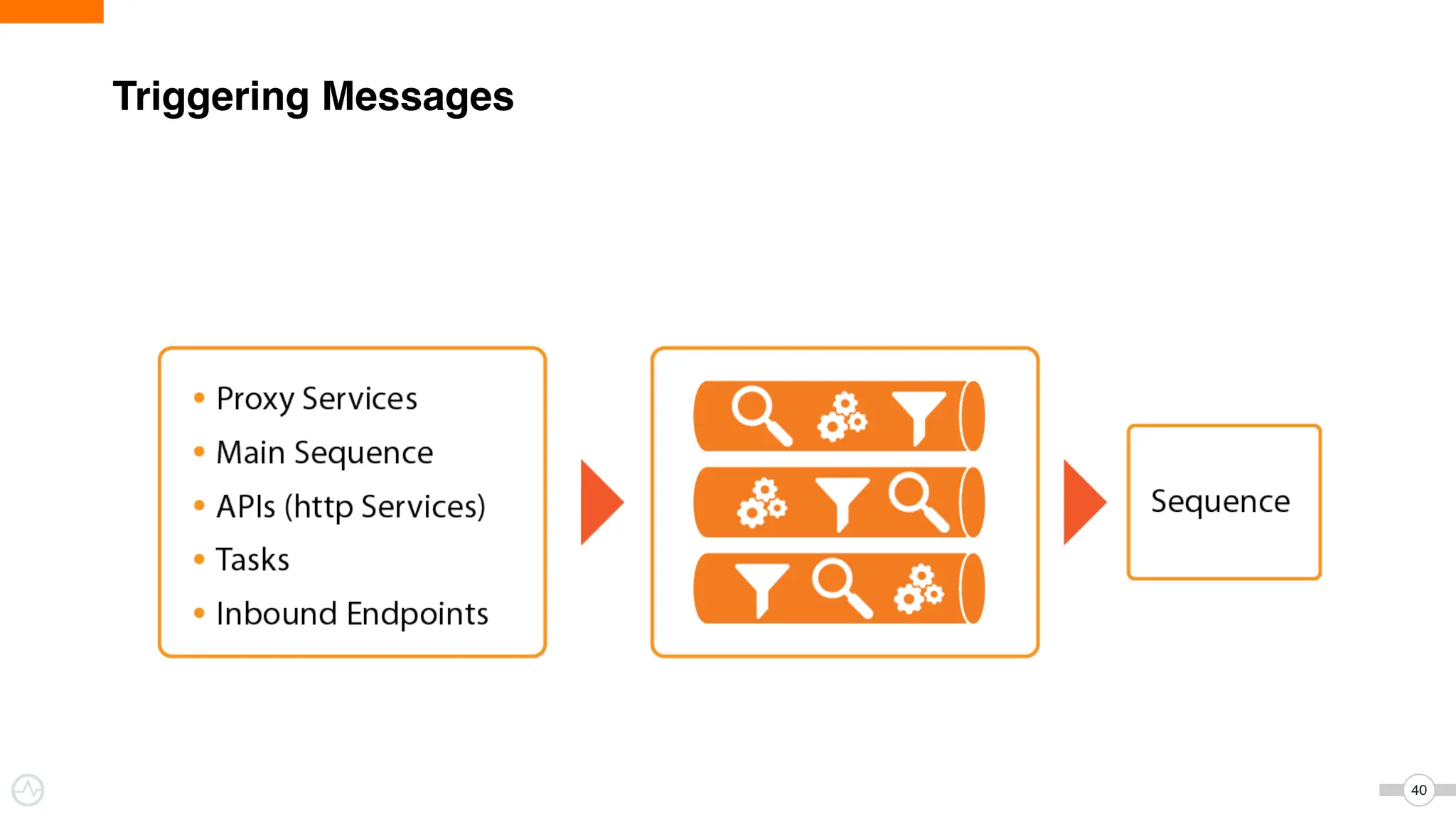
Triggering Messages
41
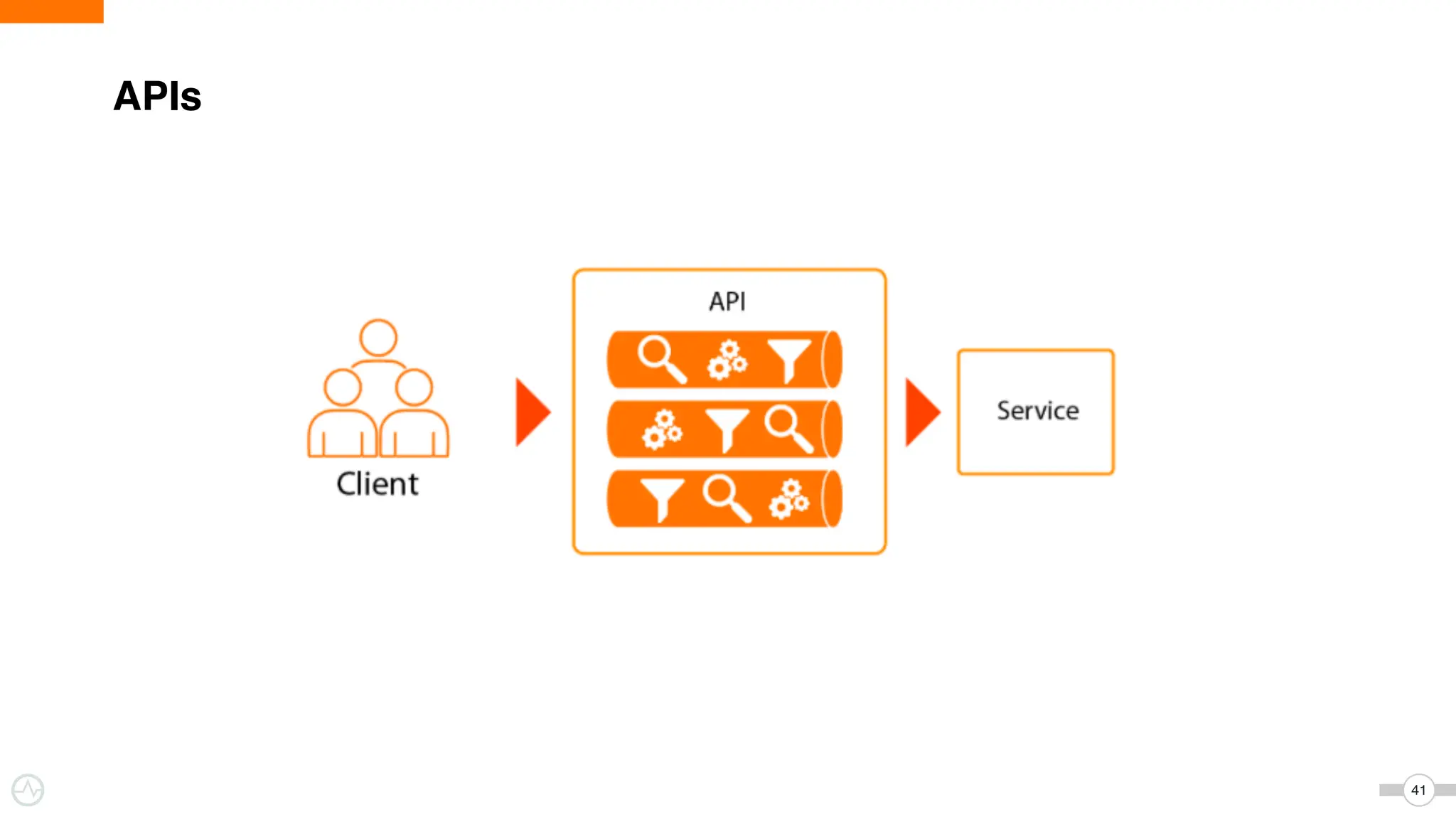
APIs
42
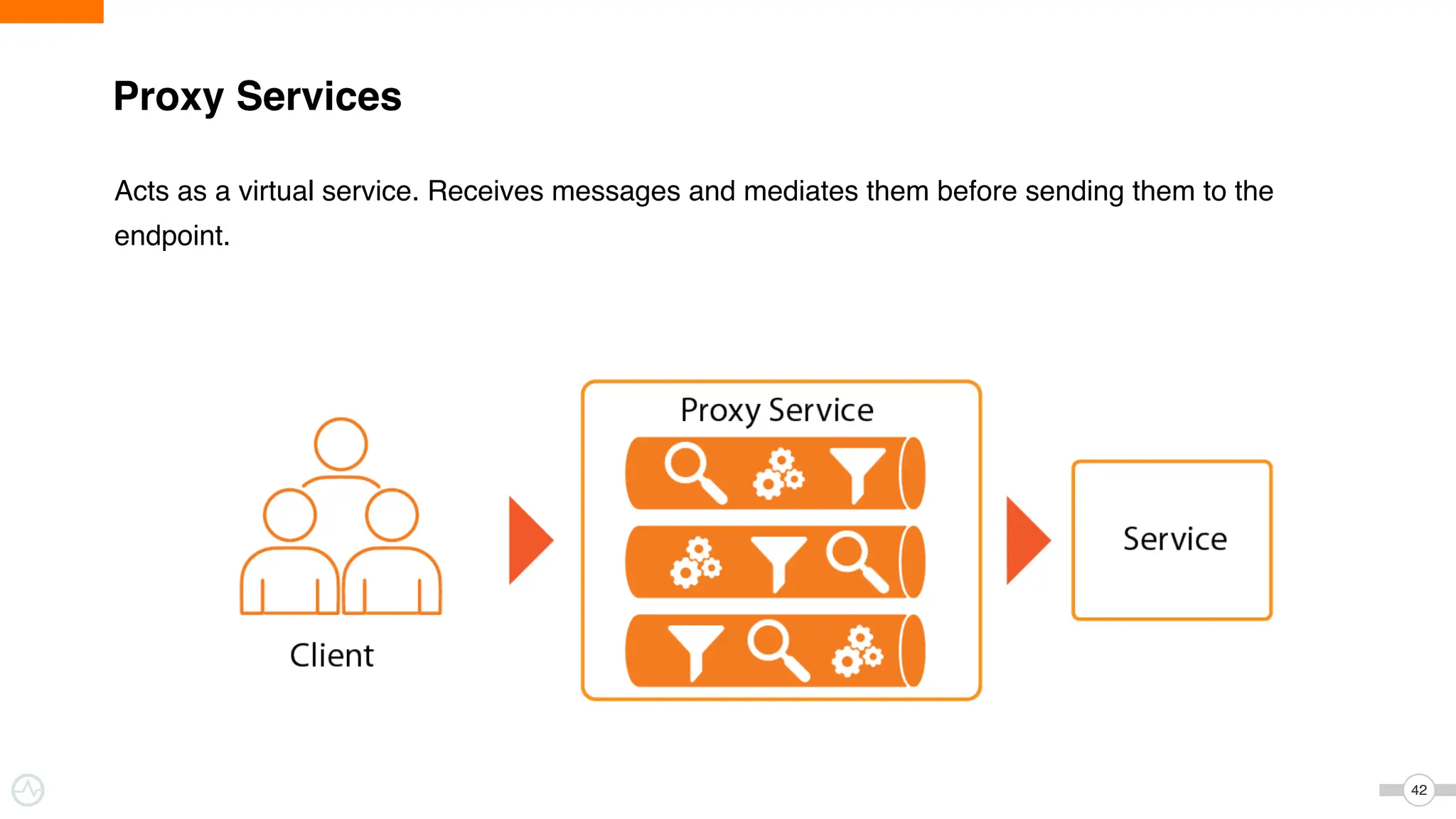
Proxy Services
Acts as a virtual service. Receives messages and mediates them before sending them to the
endpoint.
43
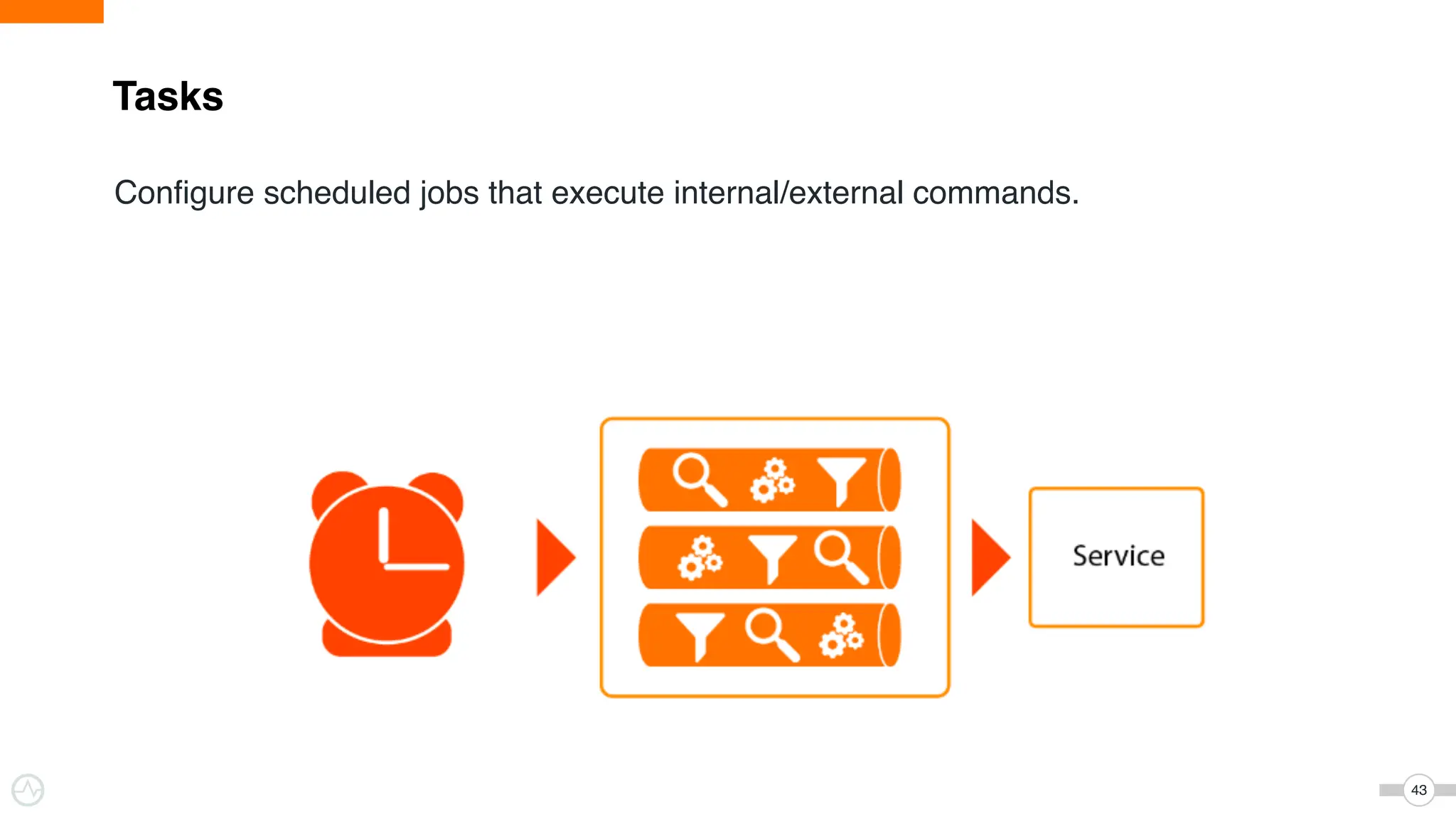
Tasks
Configure scheduled jobs that execute internal/external commands.
44
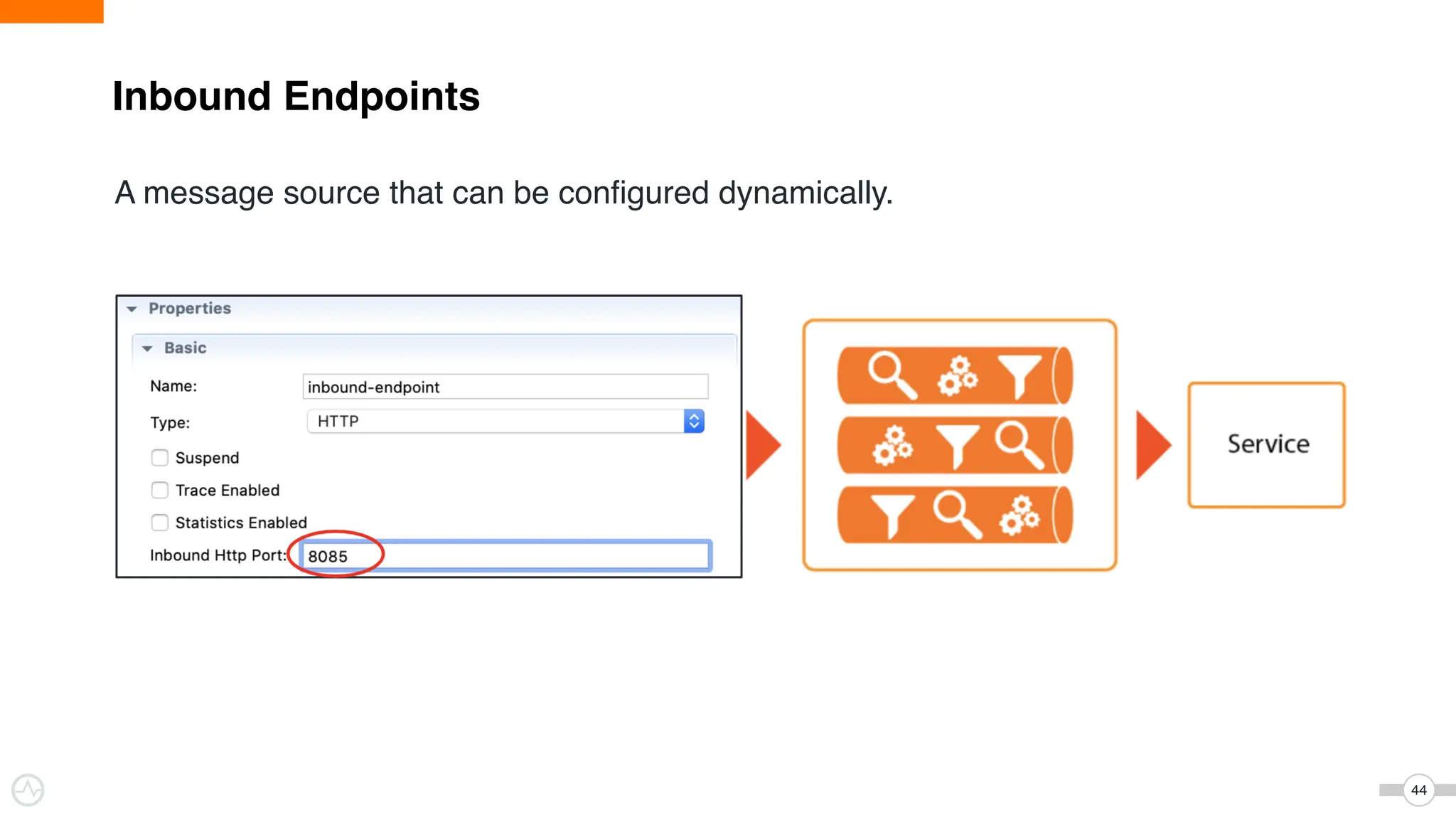
Inbound Endpoints
A message source that can be configured dynamically.
45
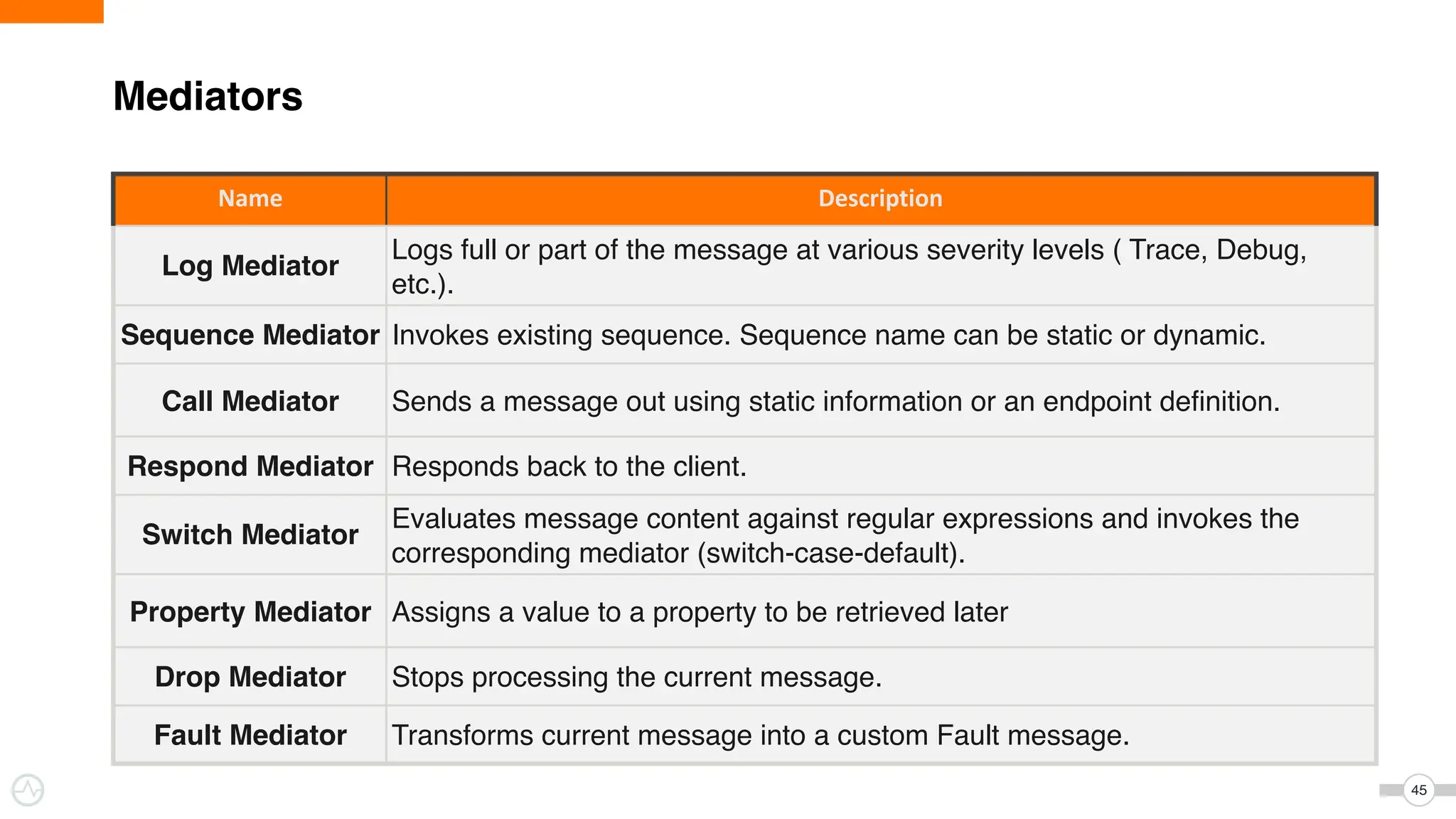
Mediators
Name Description
Log Mediator
Logs full or part of the message at various severity levels ( Trace, Debug,
etc.).
Sequence Mediator Invokes existing sequence. Sequence name can be static or dynamic.
Call Mediator Sends a message out using static information or an endpoint definition.
Respond Mediator Responds back to the client.
Switch Mediator
Evaluates message content against regular expressions and invokes the
corresponding mediator (switch-case-default).
Property Mediator Assigns a value to a property to be retrieved later
Drop Mediator Stops processing the current message.
Fault Mediator Transforms current message into a custom Fault message.
Scenario Contd..
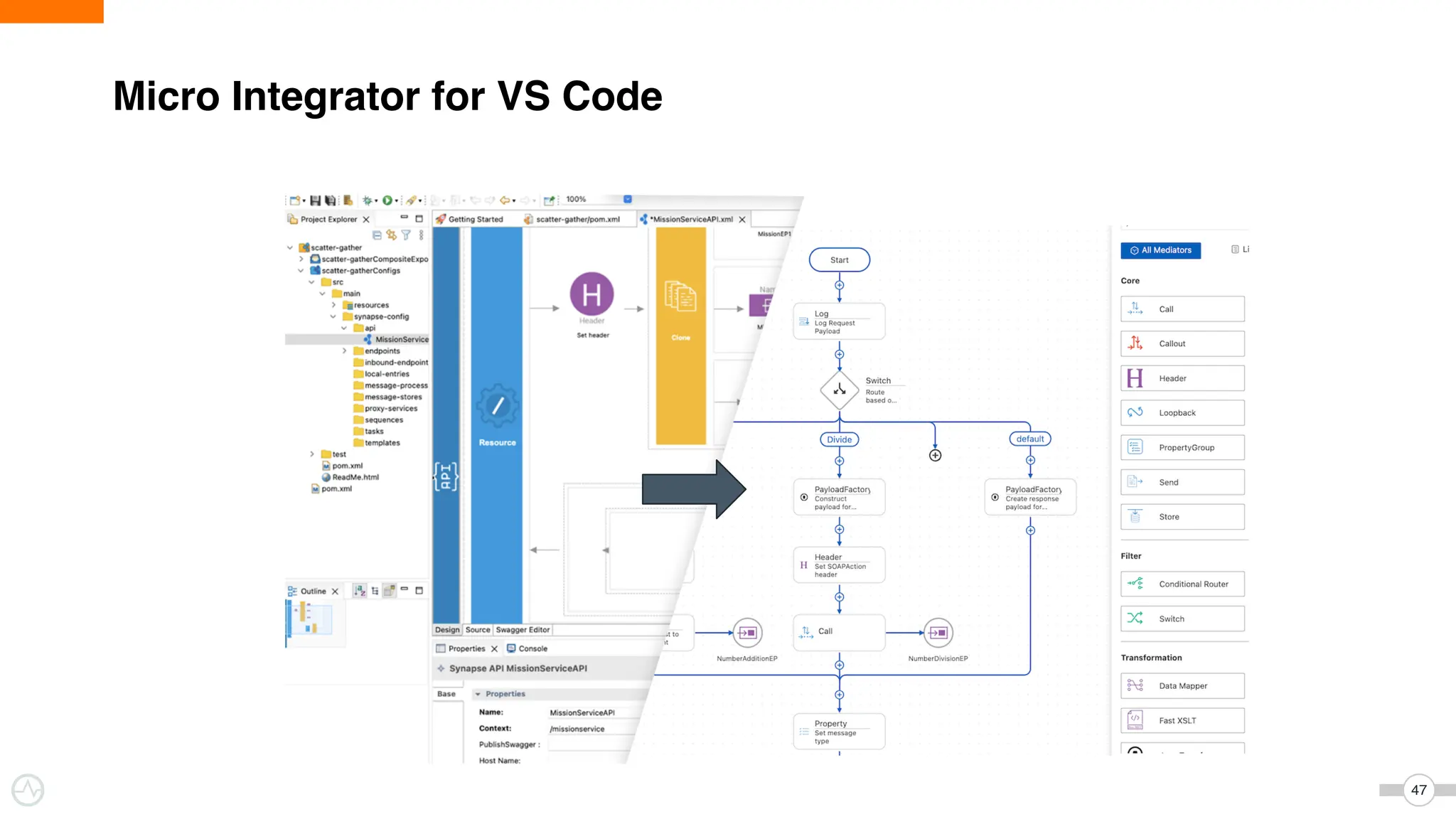
Micro Integrator for VS Code
47
Question Time!
48
Thank You!
50

WSO2 Micro Integrator for Enterprise Integration in a Decentralized, Microservice-Oriented Landscape