© 2013 Future Leaders Charitable Trust
Reflections on Corporate
Governance
David Doughty
Chief Executive, Excellencia Limited 
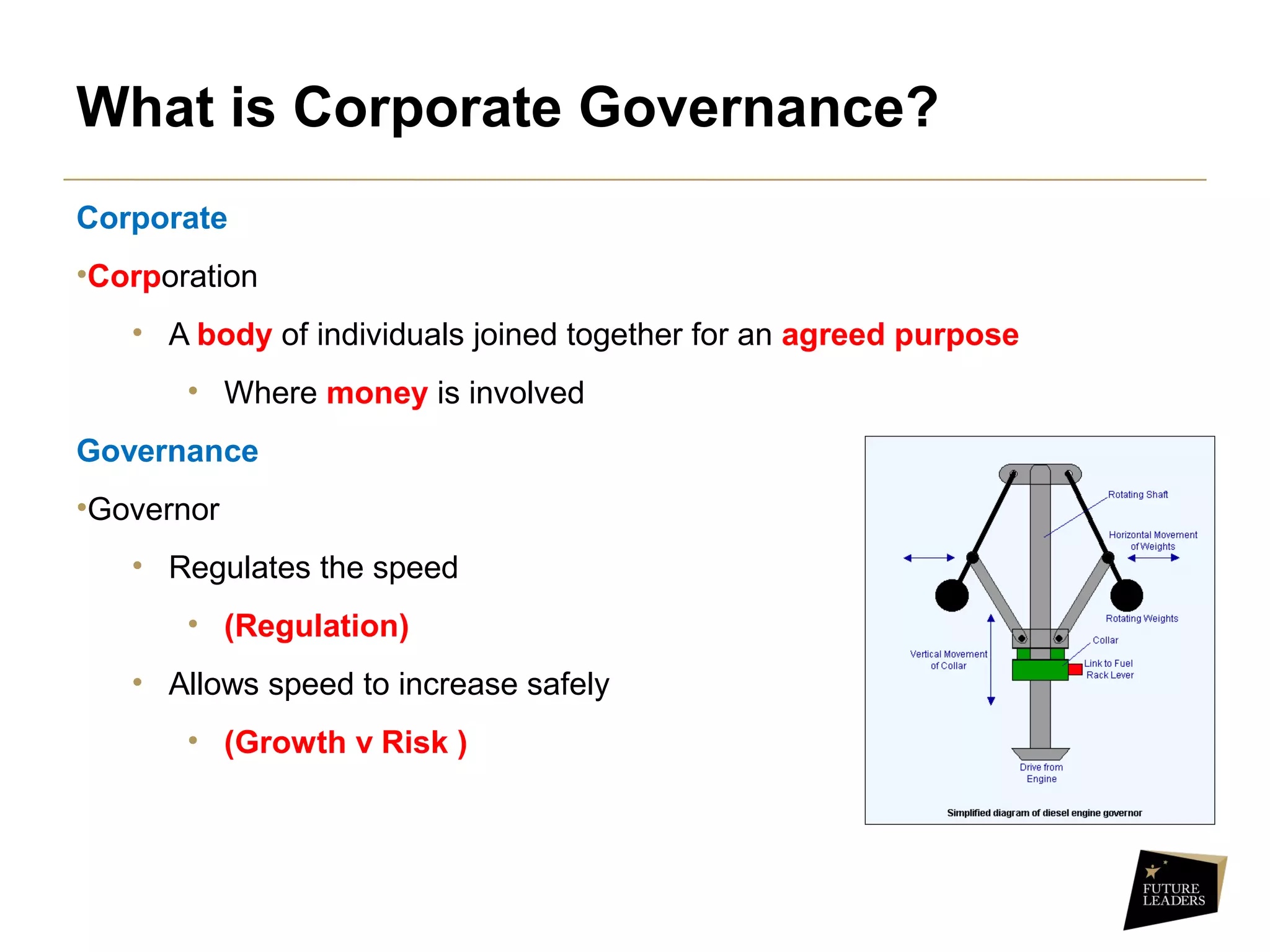
What is Corporate Governance?
Corporate
•Corporation
• A body of individuals joined together for an agreed purpose
• Where money is involved
Governance
•Governor
• Regulates the speed 
• (Regulation)
• Allows speed to increase safely 
• (Growth v Risk )
“The purpose of corporate governance
is to facilitate effective, entrepreneurial
and prudent management that can
deliver the long-term success of the
company.”
UK Corporate Governance Code
Basic Principles
• A company is a separate legal entity
• Company assets are owned by the company
• Companies are responsible for their own debts and liabilities
(limited liability)
• All companies have owners – they may be called shareholders, members 
or partners
• Companies also have stakeholders such as creditors, employees, 
customers, suppliers and communities
• Companies in England, Wales & NI are registered at Companies House
• A registered company must have a board consisting of at least one director
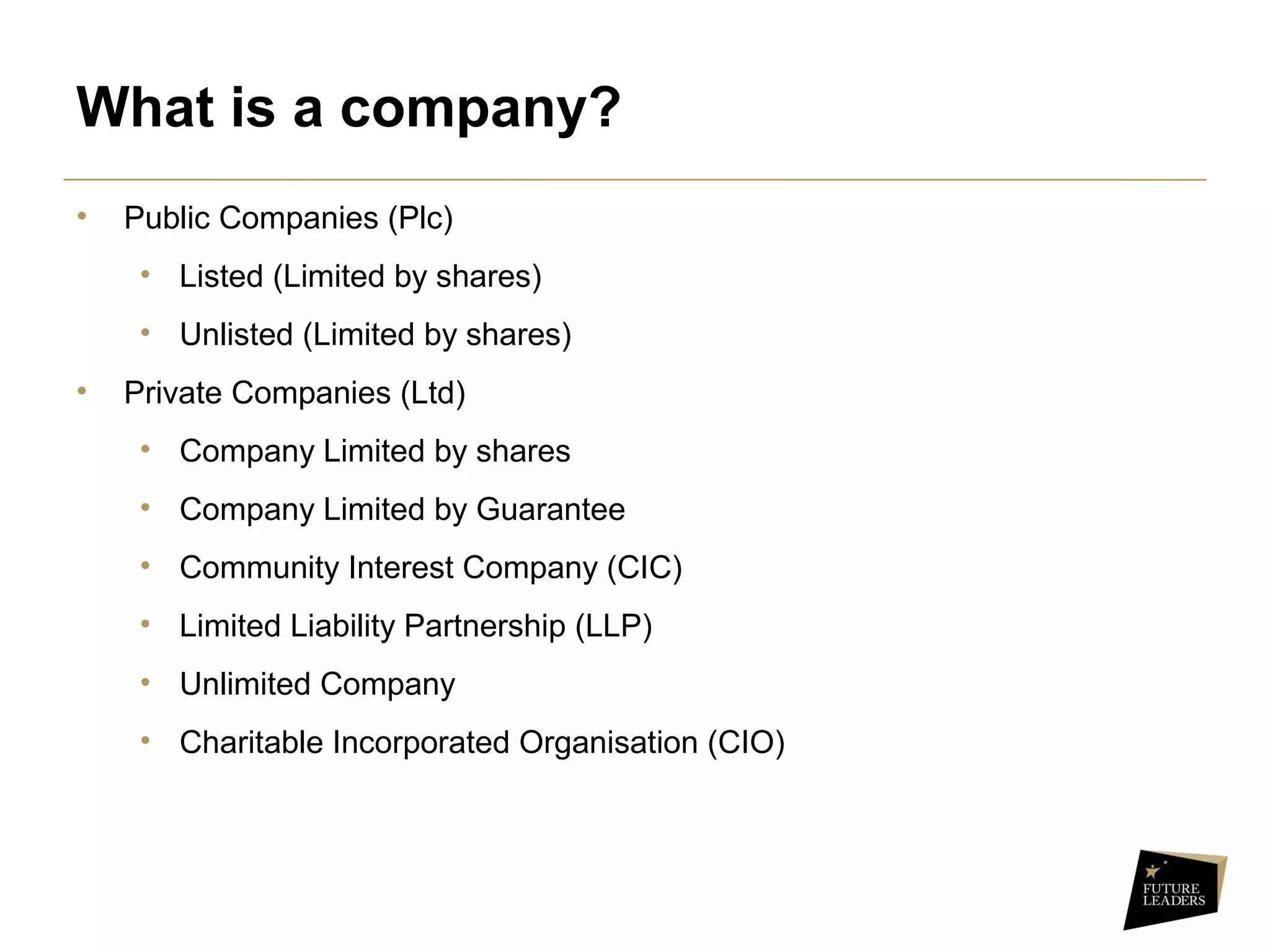
What is a company?
• Public Companies (Plc)
• Listed (Limited by shares)
• Unlisted (Limited by shares)
• Private Companies (Ltd)
• Company Limited by shares
• Company Limited by Guarantee
• Community Interest Company (CIC)
• Limited Liability Partnership (LLP)
• Unlimited Company
• Charitable Incorporated Organisation (CIO)
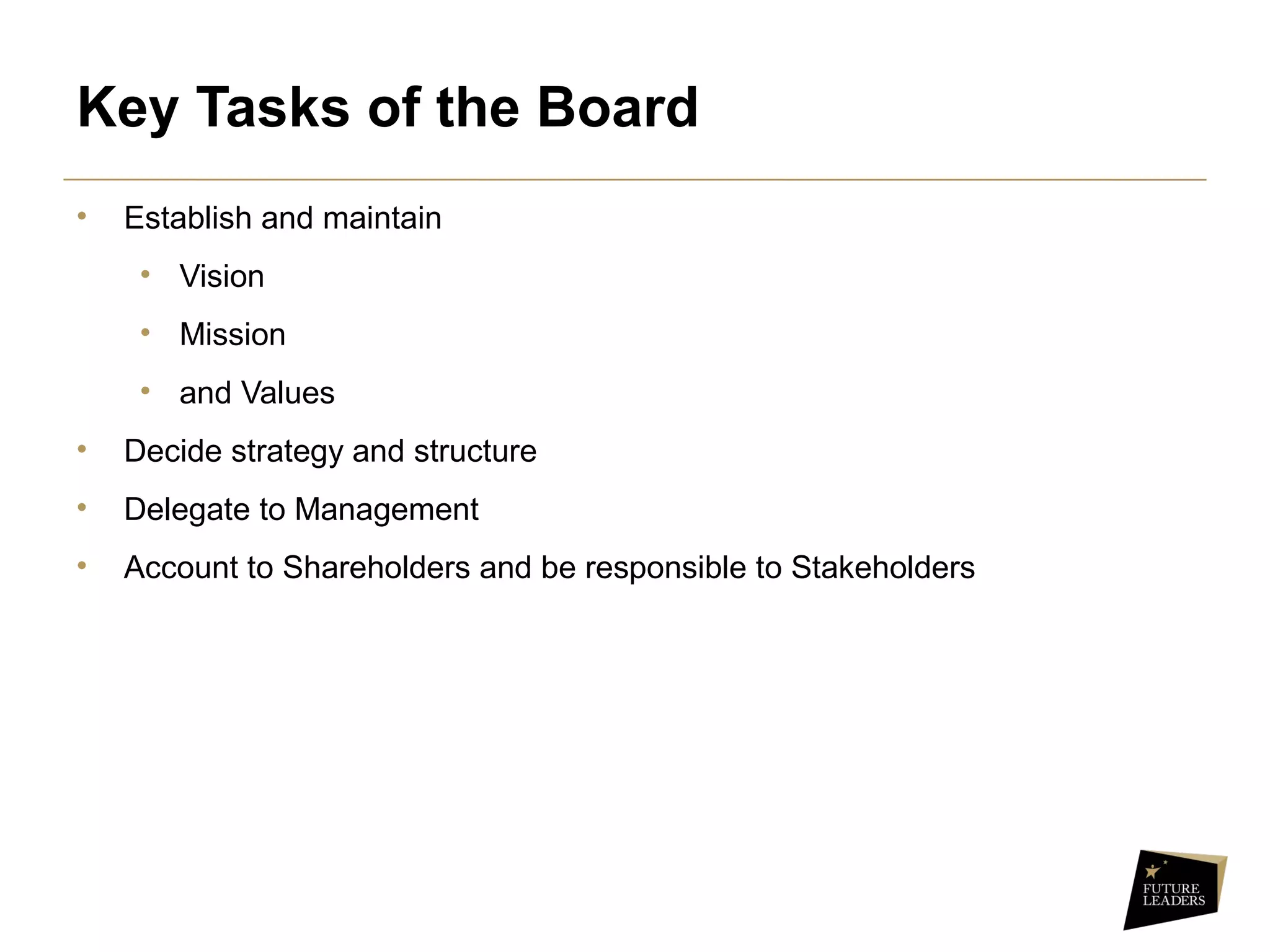
Key Tasks of the Board
• Establish and maintain
• Vision
• Mission
• and Values
• Decide strategy and structure
• Delegate to Management
• Account to Shareholders and be responsible to Stakeholders
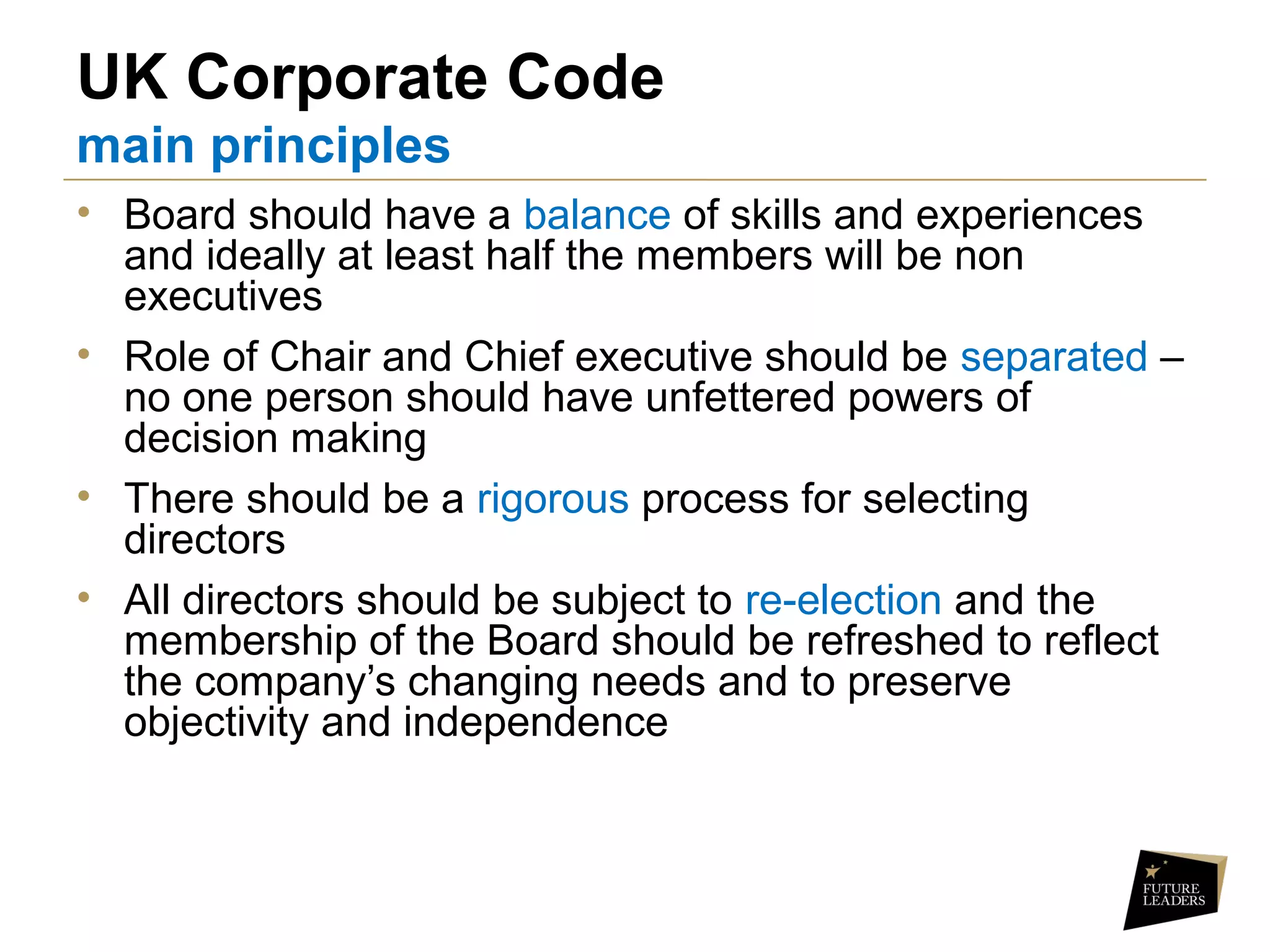
UK Corporate Code
main principles
• Board should have a balance of skills and experiences
and ideally at least half the members will be non
executives
• Role of Chair and Chief executive should be separated –
no one person should have unfettered powers of
decision making
• There should be a rigorous process for selecting
directors
• All directors should be subject to re-election and the
membership of the Board should be refreshed to reflect
the company’s changing needs and to preserve
objectivity and independence
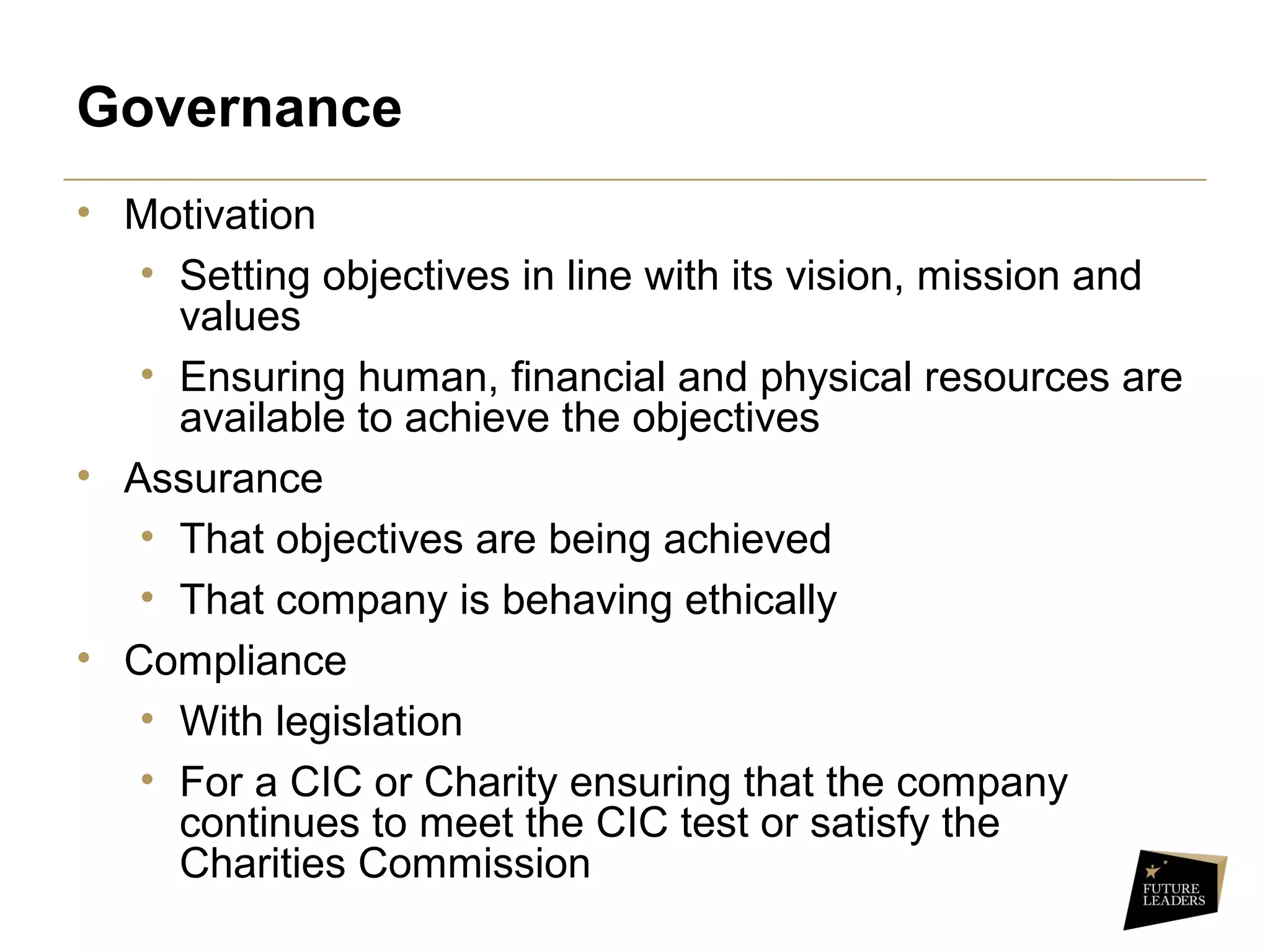
Governance
• Motivation
• Setting objectives in line with its vision, mission and
values
• Ensuring human, financial and physical resources are
available to achieve the objectives
• Assurance
• That objectives are being achieved
• That company is behaving ethically
• Compliance
• With legislation
• For a CIC or Charity ensuring that the company
continues to meet the CIC test or satisfy the
Charities Commission
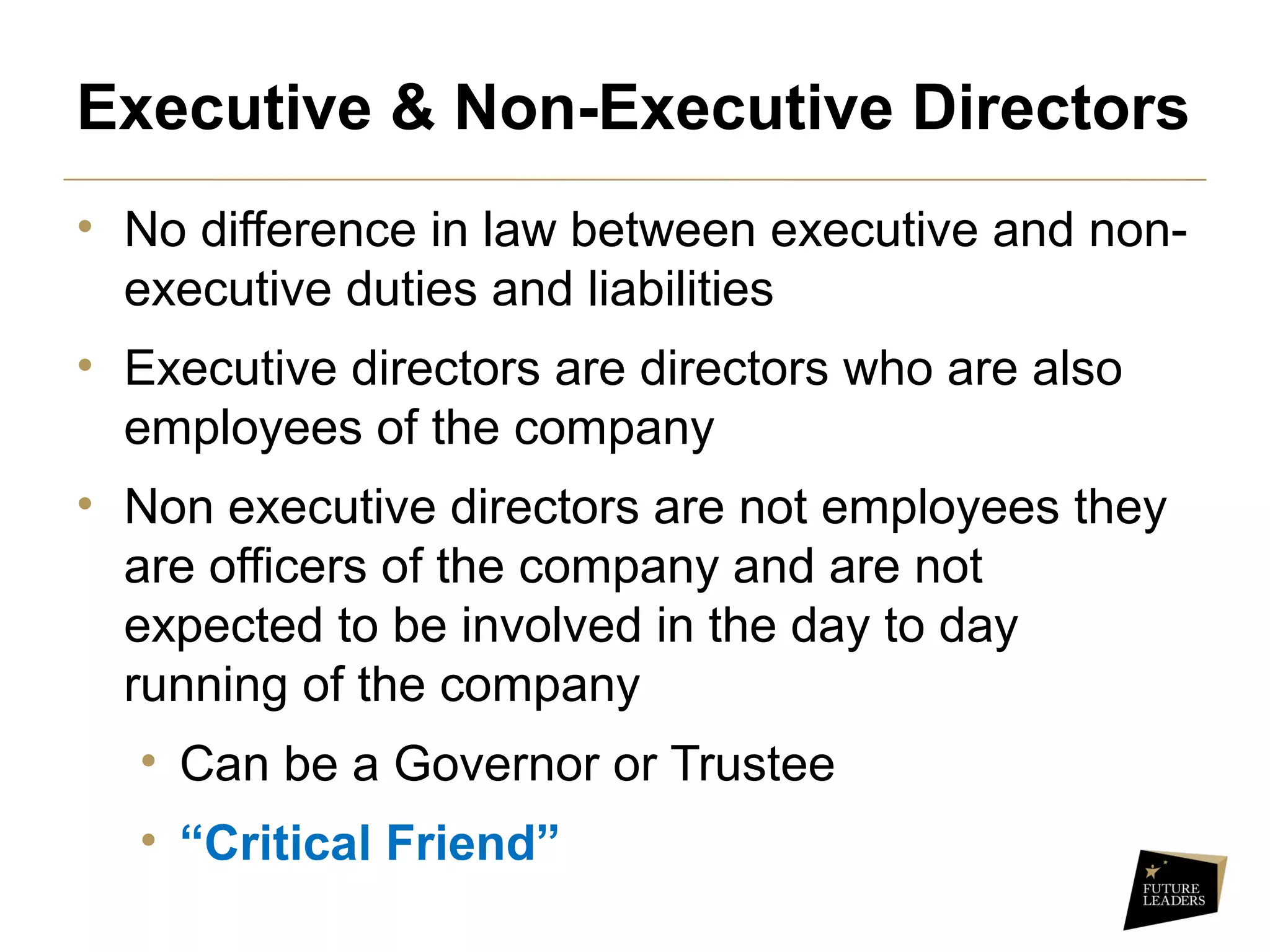
Executive & Non-Executive Directors
• No difference in law between executive and non-
executive duties and liabilities
• Executive directors are directors who are also
employees of the company
• Non executive directors are not employees they
are officers of the company and are not
expected to be involved in the day to day
running of the company
• Can be a Governor or Trustee
• “Critical Friend”
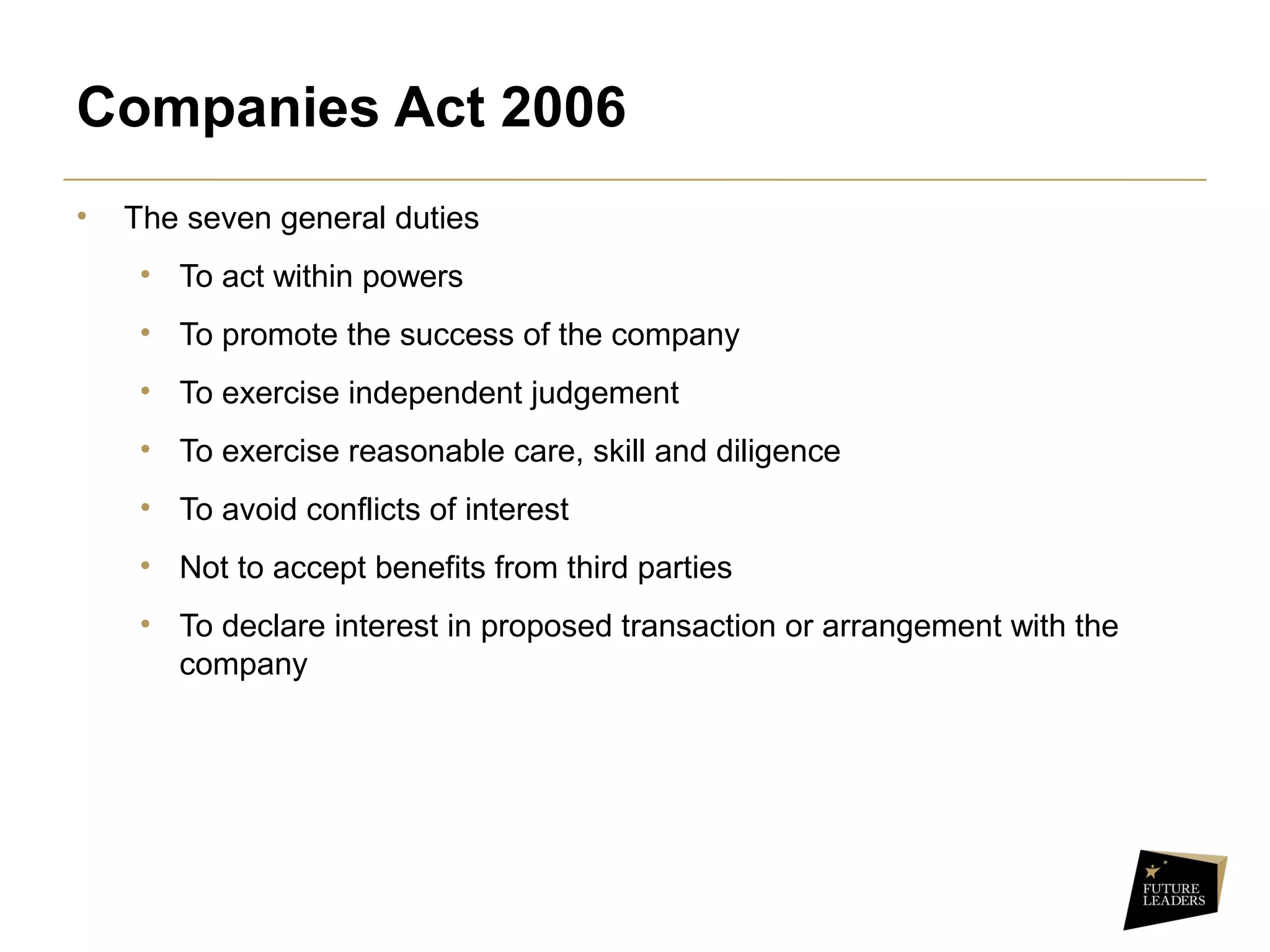
Companies Act 2006
• The seven general duties
• To act within powers
• To promote the success of the company
• To exercise independent judgement
• To exercise reasonable care, skill and diligence
• To avoid conflicts of interest
• Not to accept benefits from third parties
• To declare interest in proposed transaction or arrangement with the
company
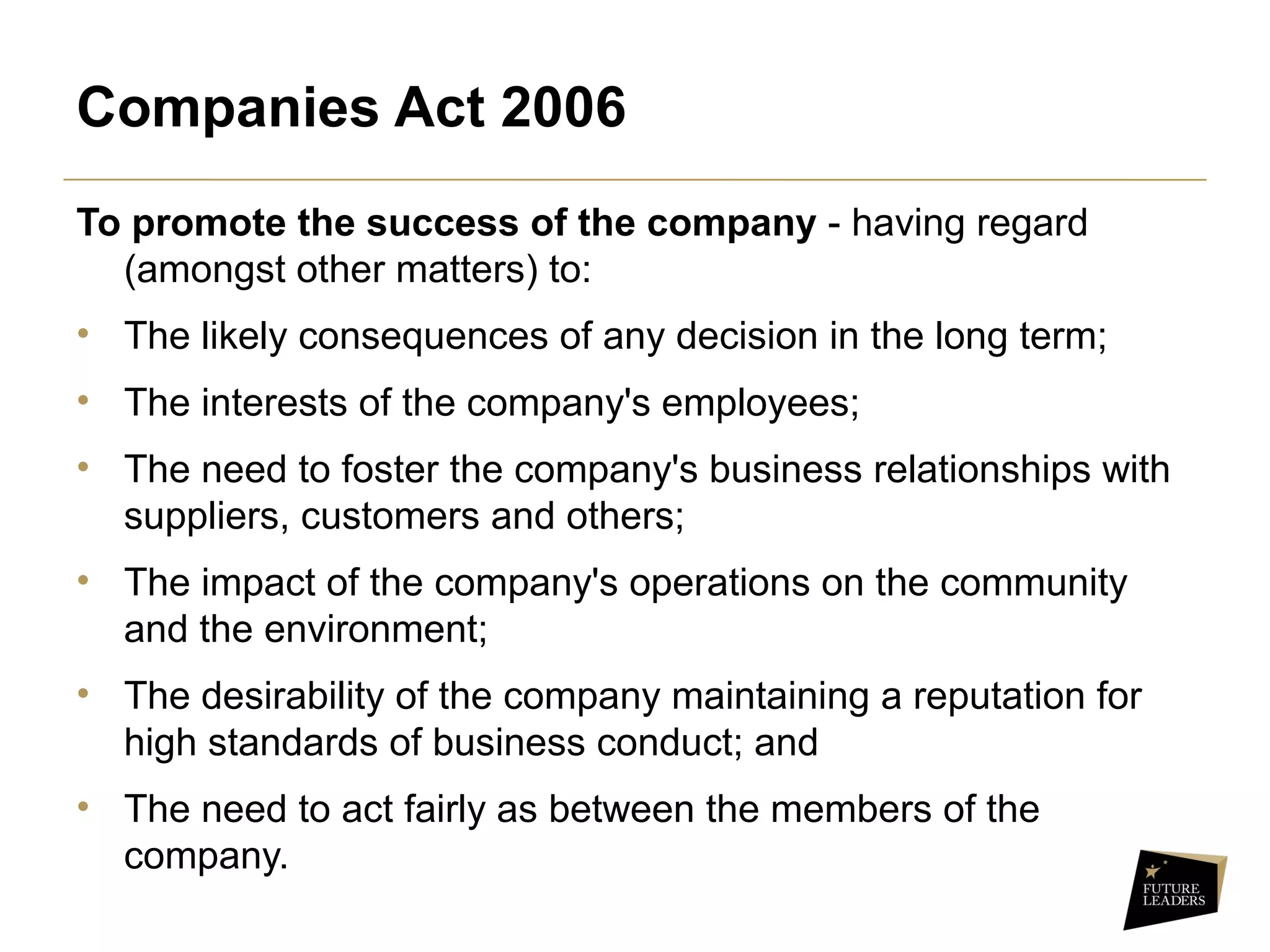
Companies Act 2006
To promote the success of the company - having regard
(amongst other matters) to:
• The likely consequences of any decision in the long term;
• The interests of the company's employees;
• The need to foster the company's business relationships with
suppliers, customers and others;
• The impact of the company's operations on the community
and the environment;
• The desirability of the company maintaining a reputation for
high standards of business conduct; and
• The need to act fairly as between the members of the
company.
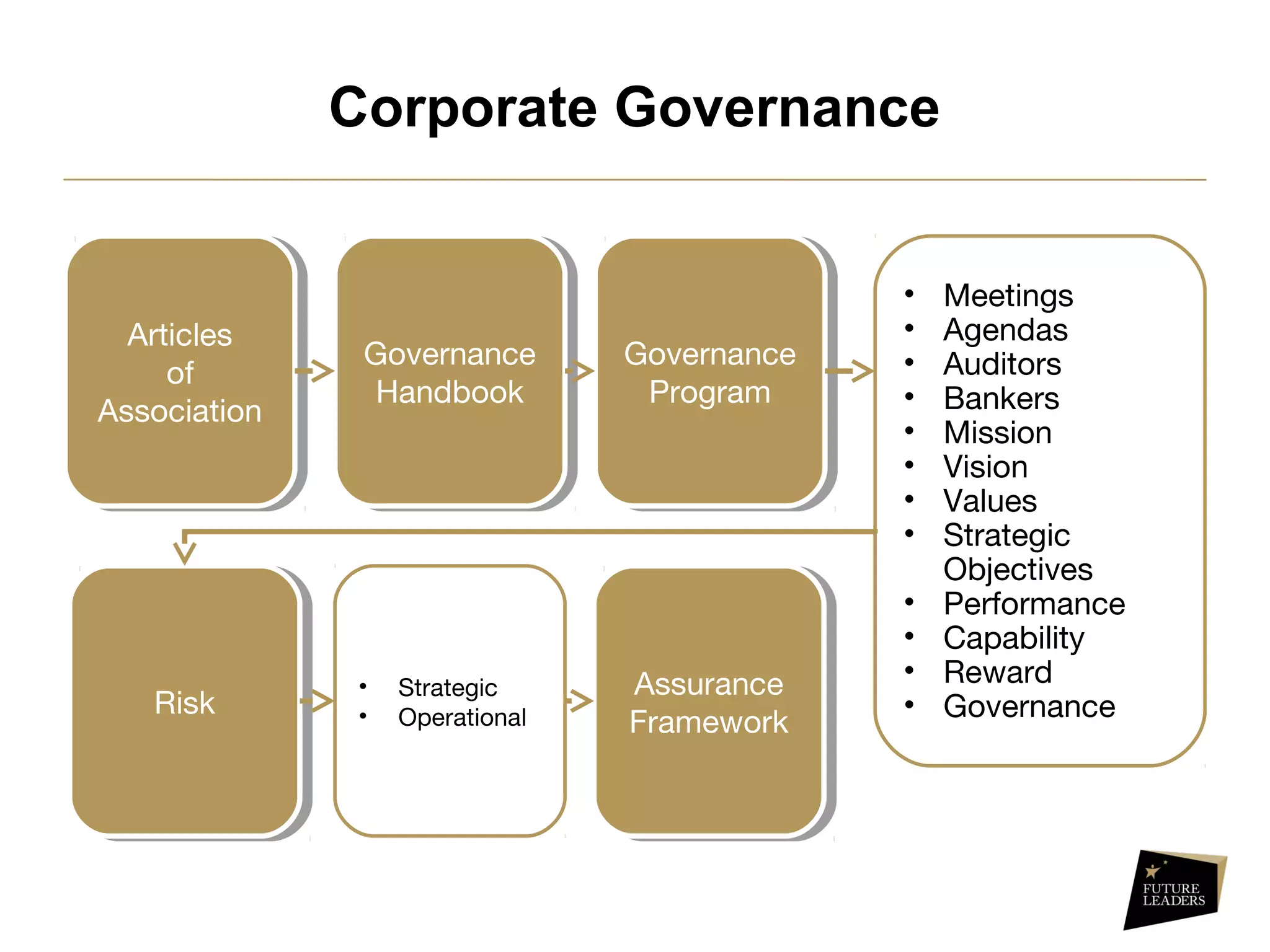
Corporate Governance
Articles
of
Association
Articles
of
Association
Governance
Handbook
Governance
Handbook
Governance
Program
Governance
Program
• Meetings
• Agendas
• Auditors
• Bankers
• Mission
• Vision
• Values
• Strategic
Objectives
• Performance
• Capability
• Reward
• GovernanceRiskRisk
• Strategic
• Operational
Assurance
Framework
Assurance
Framework
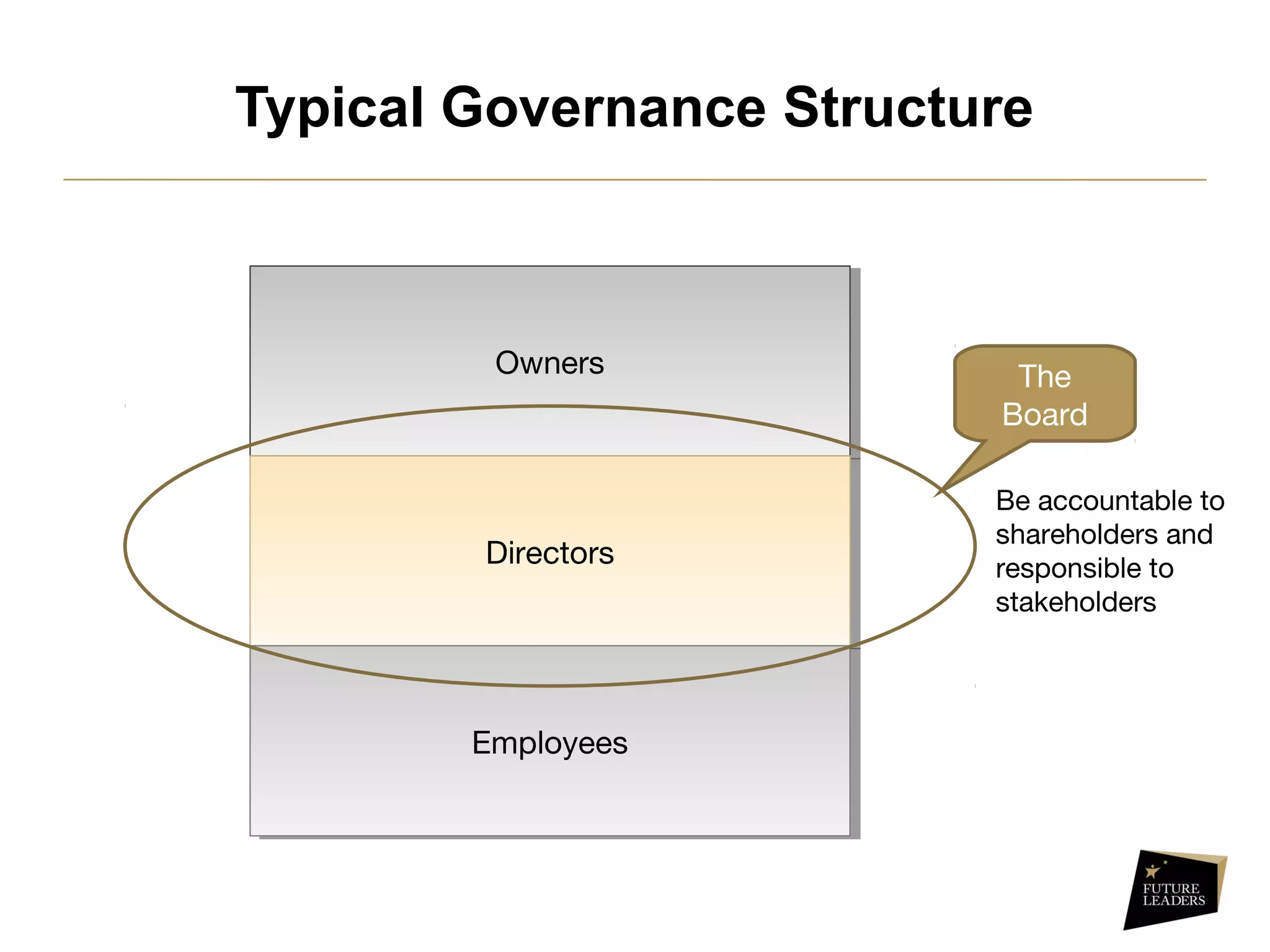
Typical Governance Structure
OwnersOwners
DirectorsDirectors
EmployeesEmployees
The
Board
Be accountable to
shareholders and
responsible to
stakeholders
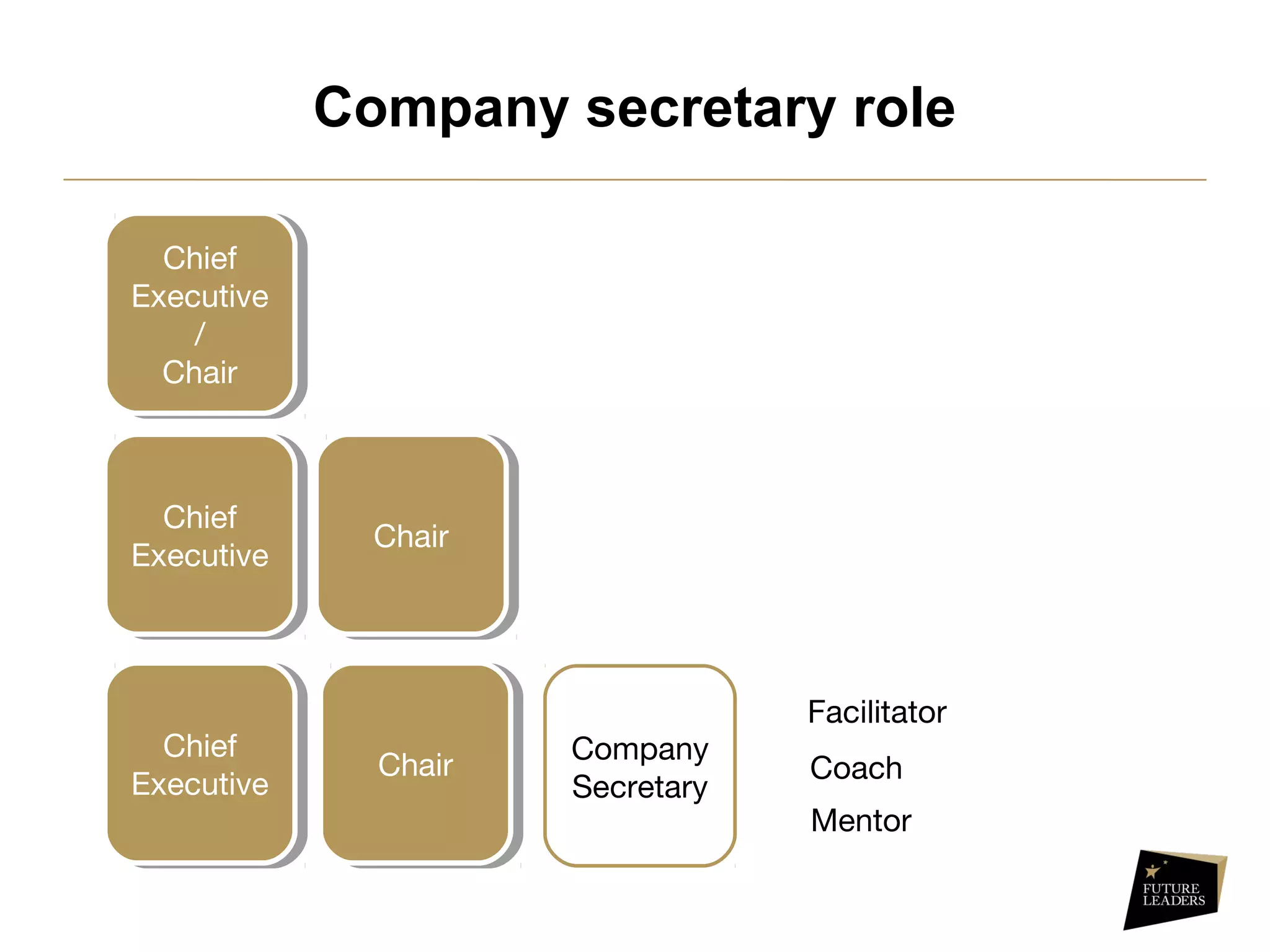
Company secretary role
Chief
Executive
/
Chair
Chief
Executive
/
Chair
Chief
Executive
Chief
Executive
Chief
Executive
Chief
Executive
ChairChair
ChairChair
Company
Secretary
Facilitator
Coach
Mentor
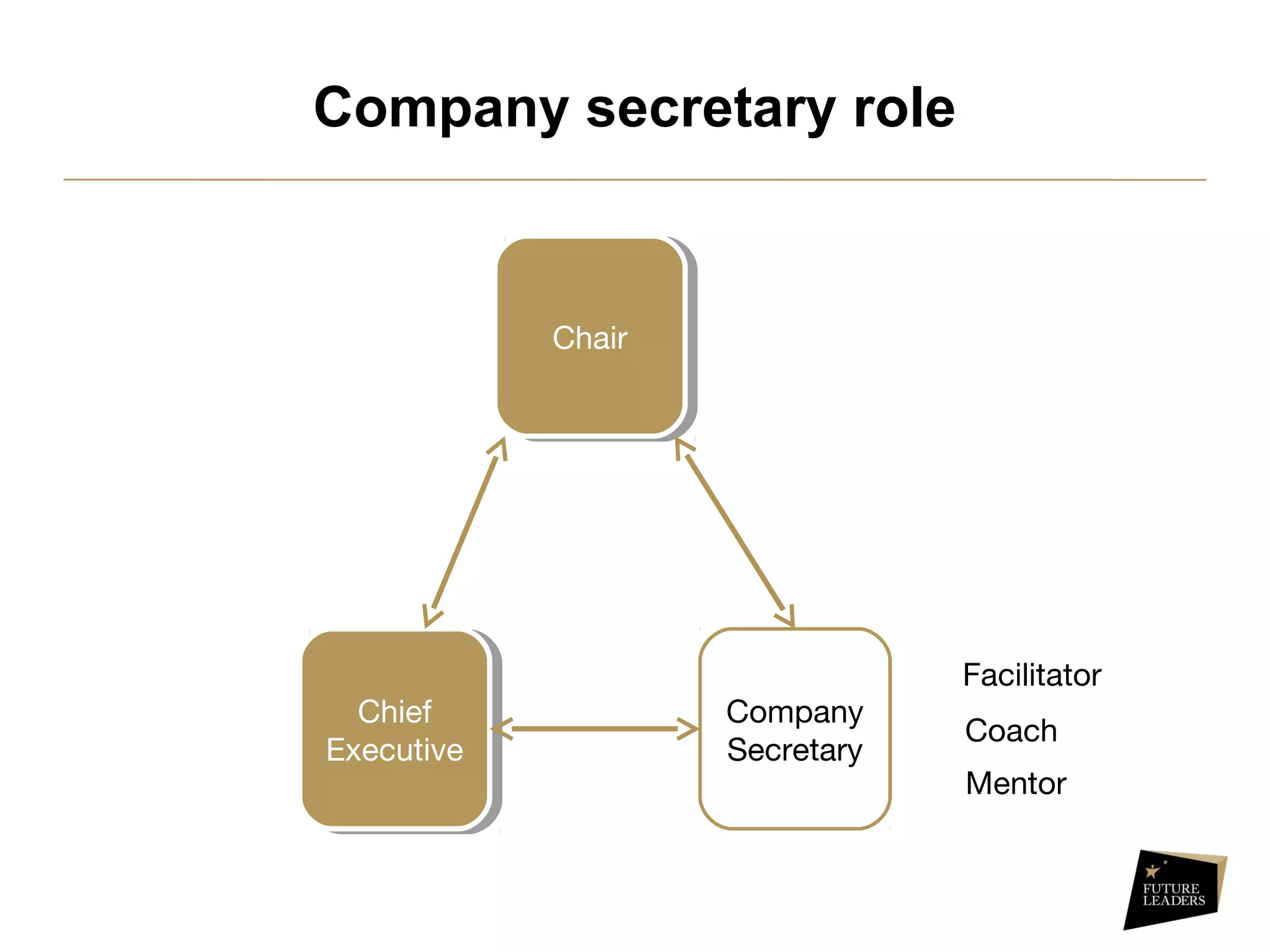
Company secretary role
Chief
Executive
Chief
Executive
ChairChair
Company
Secretary
Facilitator
Coach
Mentor
Case Study – Panorama Fallout
Volkswagen – the perfect storm?
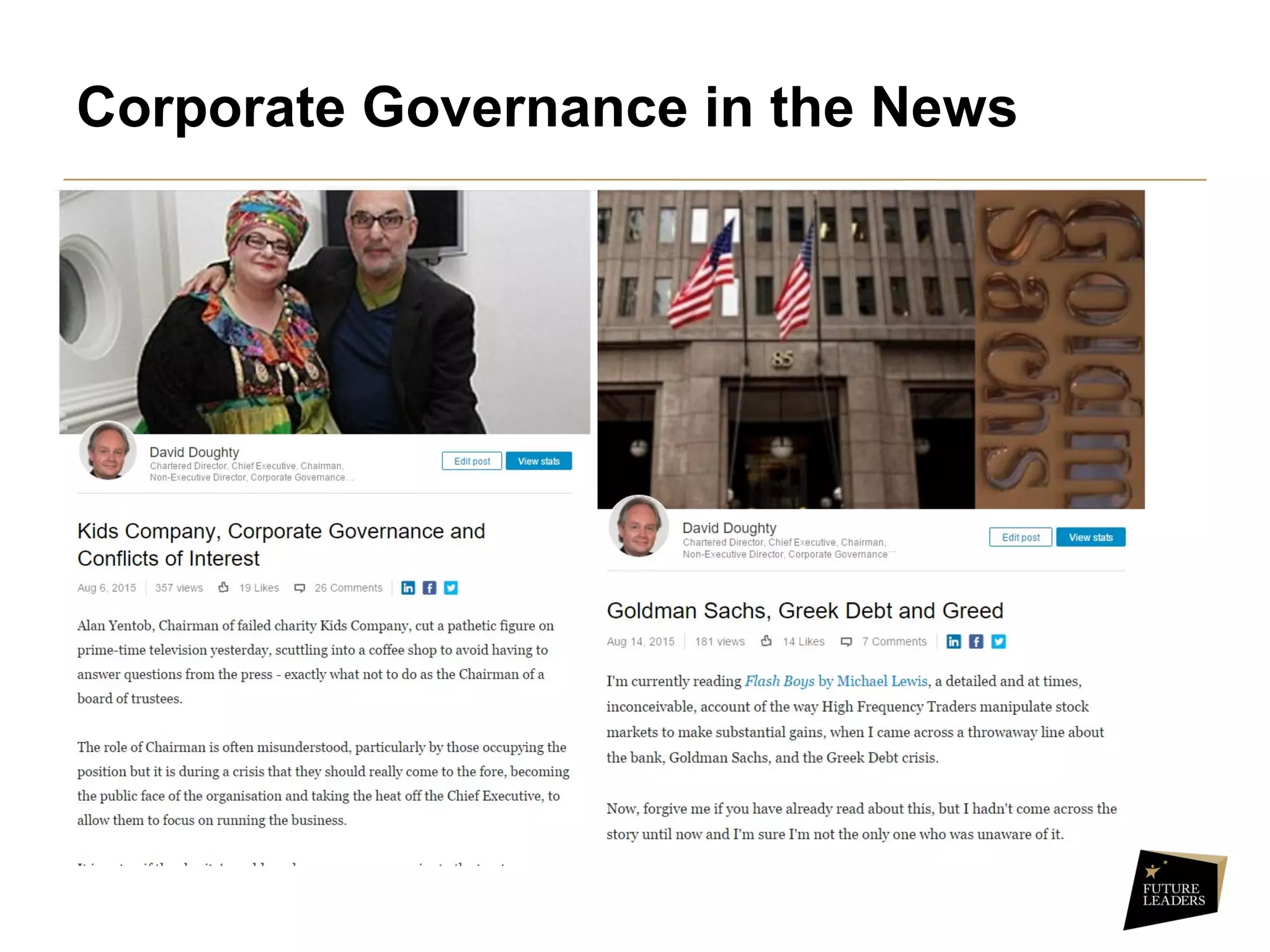
Corporate Governance in the News
Summary
Corporate Governance is
•a balancing act between
• Regulation (“holding to account”, “critical challenge”) and
• Encouragement (“sustainable growth”, “support and advice”)
•not (just) box ticking, compliance or following the rules
•the joint and several responsibility of all directors/trustees
•concerned with enhancing corporate performance, a modus operandi which
adds value to the organisation
•essential for the success of the organisation
•the ‘glue’ that keeps all the various strands of the organisation aligned to the
same strategic purpose
•less a list of rules and collection of processes, more a state of mind
Questions?

Reflections on Governance

  • 1.
  • 2.
    What is CorporateGovernance? Corporate •Corporation • A body of individuals joined together for an agreed purpose • Where money is involved Governance •Governor • Regulates the speed  • (Regulation) • Allows speed to increase safely  • (Growth v Risk )
  • 3.
    “The purpose ofcorporate governance is to facilitate effective, entrepreneurial and prudent management that can deliver the long-term success of the company.” UK Corporate Governance Code
  • 4.
    Basic Principles • A company is a separatelegal entity • Company assets are owned by the company • Companies are responsible for their own debts and liabilities (limited liability) • All companies have owners – they may be called shareholders, members  or partners • Companies also have stakeholders such as creditors, employees,  customers, suppliers and communities • Companies in England, Wales & NI are registered at Companies House • A registered company must have a board consisting of at least one director
  • 5.
    What is acompany? • Public Companies (Plc) • Listed (Limited by shares) • Unlisted (Limited by shares) • Private Companies (Ltd) • Company Limited by shares • Company Limited by Guarantee • Community Interest Company (CIC) • Limited Liability Partnership (LLP) • Unlimited Company • Charitable Incorporated Organisation (CIO)
  • 6.
    Key Tasks ofthe Board • Establish and maintain • Vision • Mission • and Values • Decide strategy and structure • Delegate to Management • Account to Shareholders and be responsible to Stakeholders
  • 7.
    UK Corporate Code mainprinciples • Board should have a balance of skills and experiences and ideally at least half the members will be non executives • Role of Chair and Chief executive should be separated – no one person should have unfettered powers of decision making • There should be a rigorous process for selecting directors • All directors should be subject to re-election and the membership of the Board should be refreshed to reflect the company’s changing needs and to preserve objectivity and independence
  • 8.
    Governance • Motivation • Settingobjectives in line with its vision, mission and values • Ensuring human, financial and physical resources are available to achieve the objectives • Assurance • That objectives are being achieved • That company is behaving ethically • Compliance • With legislation • For a CIC or Charity ensuring that the company continues to meet the CIC test or satisfy the Charities Commission
  • 9.
    Executive & Non-ExecutiveDirectors • No difference in law between executive and non- executive duties and liabilities • Executive directors are directors who are also employees of the company • Non executive directors are not employees they are officers of the company and are not expected to be involved in the day to day running of the company • Can be a Governor or Trustee • “Critical Friend”
  • 10.
    Companies Act 2006 •The seven general duties • To act within powers • To promote the success of the company • To exercise independent judgement • To exercise reasonable care, skill and diligence • To avoid conflicts of interest • Not to accept benefits from third parties • To declare interest in proposed transaction or arrangement with the company
  • 11.
    Companies Act 2006 Topromote the success of the company - having regard (amongst other matters) to: • The likely consequences of any decision in the long term; • The interests of the company's employees; • The need to foster the company's business relationships with suppliers, customers and others; • The impact of the company's operations on the community and the environment; • The desirability of the company maintaining a reputation for high standards of business conduct; and • The need to act fairly as between the members of the company.
  • 12.
    Corporate Governance Articles of Association Articles of Association Governance Handbook Governance Handbook Governance Program Governance Program • Meetings •Agendas • Auditors • Bankers • Mission • Vision • Values • Strategic Objectives • Performance • Capability • Reward • GovernanceRiskRisk • Strategic • Operational Assurance Framework Assurance Framework
  • 13.
  • 14.
  • 15.
  • 16.
    Case Study –Panorama Fallout
  • 17.
    Volkswagen – theperfect storm?
  • 18.
  • 19.
    Summary Corporate Governance is •abalancing act between • Regulation (“holding to account”, “critical challenge”) and • Encouragement (“sustainable growth”, “support and advice”) •not (just) box ticking, compliance or following the rules •the joint and several responsibility of all directors/trustees •concerned with enhancing corporate performance, a modus operandi which adds value to the organisation •essential for the success of the organisation •the ‘glue’ that keeps all the various strands of the organisation aligned to the same strategic purpose •less a list of rules and collection of processes, more a state of mind
  • 20.

Editor's Notes

  • #9 Definition: formal and informal organisational frameworks through which an organisation is ‘governed’ to ensure a company is run in compliance with the law and regulatory requirements, and achieves its purpose and objectives. Governance is about the exercise of power on behalf of the organisation therefore involves selection, delegation, objective setting and holding to account Less about operational activity, more about giving overall direction to the enterprise and overseeing the executive actions of management and ensuring accountability to shareholders and stakeholders