1
Dr Hemal Dave,
2nd
year resident,
Karamsad Medical
college
DR. Manoj K Ghoda
2
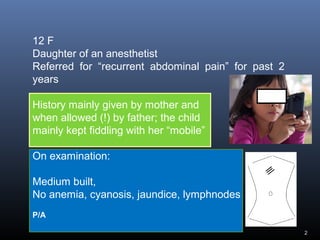
12 F
Daughter of an anesthetist
Referred for “recurrent abdominal pain” for past 2
years
History mainly given by mother and
when allowed (!) by father; the child
mainly kept fiddling with her “mobile”
On examination:
Medium built,
No anemia, cyanosis, jaundice, lymphnodes
P/A
3
4
Should we accept the diagnosis of RAP
made elsewhere, or investigate this case
further? Why?
5
Let us see what
different kinds
of abdominal
pains this
young lady
could have……
Acute
Organic
Inorganic/ Idiopathic/
functional
Chronic
Organic
Inorganic/ Idiopathic/
functional
Here again there may be
many variations
6
One has to be careful.
Goo......d history
Attention to body
language
Thorough physical
Meticulous follow-up
 Pain distant from the
umbilicus
 Pain that awakens the
child
 Significant vomiting or
diarrhea
 Associated fever
7
Organic pain
8
• Family history of
organic diseases
• Involuntary weight
loss, slowed linear
growth, or delayed
puberty
• Systemic
involvement Organic pain
 Localized fullness
or mass effect
 Organomegaly
 Localized
tenderness
 Perianal
abnormalities
9
Organic pain
10
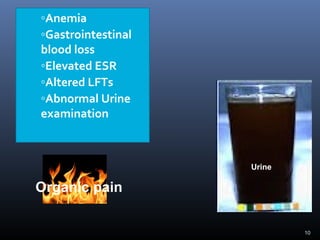
◦Anemia
◦Gastrointestinal
blood loss
◦Elevated ESR
◦Altered LFTs
◦Abnormal Urine
examination
Organic pain
Urine
11
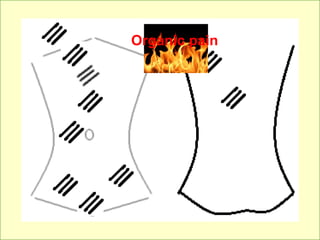
Organic pain
Organic pain
12
Functional abdominal pain will have none
of these.
Different types of idiopathic/ inorganic
pains
•Recurrent abdominal pain
•Chronic abdominal pain
•Functional abdominal pain
Common understanding of Recurrent
abdominal Pain
 History of at least three episodes of pain
 Pain sufficiently severe to affect activities
 Episodes occur over a period of three months
 No known organic cause
Hyams et.al 1996.
13
14
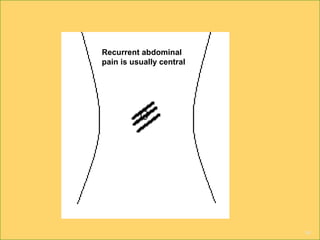
Recurrent abdominal
pain is usually central
15
Functional abdominal pain
For practical purpose .....
it is a type of pain which affects a particular
GI function but there is no organic cause
that could be found.
16
So.. Functional pain could be..
Functional dyspepsia (Rome III criteria, 2006)
•Epigastric Localization
•Persistent or recurrent
•Associated with eating;
•Nausea, vomiting, heartburn, oral
regurgitation,
•Early satiety, excessive hiccups and
belching.
No evidence of underlying organic problem
Functional Abdominal Pain
 Irritable bowel syndrome
 Functional abdominal pain associated
with alteration in bowel movements
 Symptoms of altered bowel pattern
include:
 diarrhea, constipation, or a sense of
incomplete evacuation.
17
18
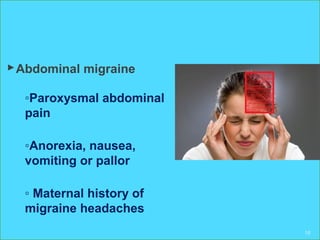
Abdominal migraine
◦Paroxysmal abdominal
pain
◦Anorexia, nausea,
vomiting or pallor
◦ Maternal history of
migraine headaches
19
Functional abdominal pain syndrome
•Functional abdominal pain without
the characteristics of dyspepsia,
irritable bowel syndrome, or
abdominal migraine.
• Have at least 25% of the time one or
more of the following.
• Some loss of daily function.
• Additional somatic symptoms such as
headache, limb pain, or difficulty
sleeping
•"recurrent abdominal pain"
should not be used as a
synonym for functional,
psychological, or stress-
related abdominal pain .
American Academy of Paed.2005
20
21
Are these pains common? Should
a pediatrician bother about them?
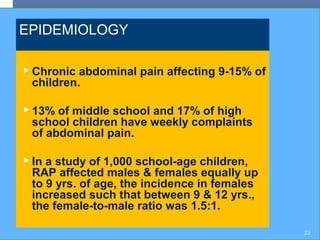
EPIDEMIOLOGY
 Chronic abdominal pain affecting 9-15% of
children.
 13% of middle school and 17% of high
school children have weekly complaints
of abdominal pain.
 In a study of 1,000 school-age children,
RAP affected males & females equally up
to 9 yrs. of age, the incidence in females
increased such that between 9 & 12 yrs.,
the female-to-male ratio was 1.5:1.
22
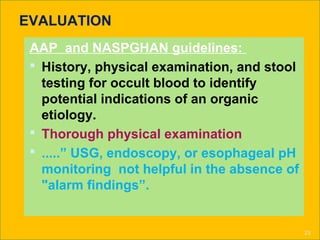
EVALUATION
AAP and NASPGHAN guidelines:
 History, physical examination, and stool
testing for occult blood to identify
potential indications of an organic
etiology.
 Thorough physical examination
 .....” USG, endoscopy, or esophageal pH
monitoring not helpful in the absence of
"alarm findings”.
23
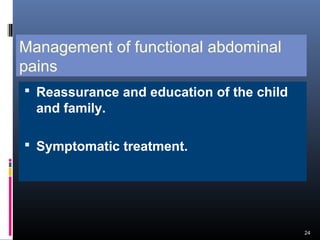
Management of functional abdominal
pains
 Reassurance and education of the child
and family.
 Symptomatic treatment.
24
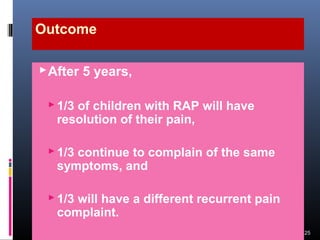
Outcome
After 5 years,
1/3 of children with RAP will have
resolution of their pain,
1/3 continue to complain of the same
symptoms, and
1/3 will have a different recurrent pain
complaint.
25
26
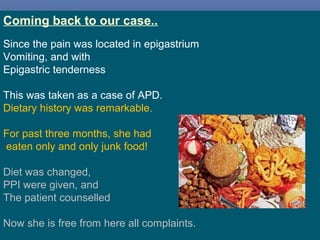
Coming back to our case..
Since the pain was located in epigastrium
Vomiting, and with
Epigastric tenderness
This was taken as a case of APD.
Dietary history was remarkable.
For past three months, she had
eaten only and only junk food!
Diet was changed,
PPI were given, and
The patient counselled
Now she is free from here all complaints.
27
Summary
Of various types of abdominal pains, a large
minority have pain without identifiable cause or
significant consequences.
To sit on them, you must satisfy yourself by way
of meticulous history, physical and follow-up
Detailed investigations are not necessary for
these “functional pain”
28
Thanks
29
SUMMARY AND CONCLUSIONS
 Chronic abdominal pain is defined by pain of at least
three months' duration, although some clinicians
consider pain of more than one to two months'
duration to be chronic.
 Recurrent abdominal pain is defined by more than
three episodes of pain that are sufficiently severe to
affect activity and that occur over the course of at
least three months.
30

Recurrent abdominal pain in children

  • 1.
    1 Dr Hemal Dave, 2nd yearresident, Karamsad Medical college DR. Manoj K Ghoda
  • 2.
    2 12 F Daughter ofan anesthetist Referred for “recurrent abdominal pain” for past 2 years History mainly given by mother and when allowed (!) by father; the child mainly kept fiddling with her “mobile” On examination: Medium built, No anemia, cyanosis, jaundice, lymphnodes P/A
  • 3.
  • 4.
    4 Should we acceptthe diagnosis of RAP made elsewhere, or investigate this case further? Why?
  • 5.
    5 Let us seewhat different kinds of abdominal pains this young lady could have…… Acute Organic Inorganic/ Idiopathic/ functional Chronic Organic Inorganic/ Idiopathic/ functional Here again there may be many variations
  • 6.
    6 One has tobe careful. Goo......d history Attention to body language Thorough physical Meticulous follow-up
  • 7.
     Pain distantfrom the umbilicus  Pain that awakens the child  Significant vomiting or diarrhea  Associated fever 7 Organic pain
  • 8.
    8 • Family historyof organic diseases • Involuntary weight loss, slowed linear growth, or delayed puberty • Systemic involvement Organic pain
  • 9.
     Localized fullness ormass effect  Organomegaly  Localized tenderness  Perianal abnormalities 9 Organic pain
  • 10.
    10 ◦Anemia ◦Gastrointestinal blood loss ◦Elevated ESR ◦AlteredLFTs ◦Abnormal Urine examination Organic pain Urine
  • 11.
  • 12.
    12 Functional abdominal painwill have none of these. Different types of idiopathic/ inorganic pains •Recurrent abdominal pain •Chronic abdominal pain •Functional abdominal pain
  • 13.
    Common understanding ofRecurrent abdominal Pain  History of at least three episodes of pain  Pain sufficiently severe to affect activities  Episodes occur over a period of three months  No known organic cause Hyams et.al 1996. 13
  • 14.
  • 15.
    15 Functional abdominal pain Forpractical purpose ..... it is a type of pain which affects a particular GI function but there is no organic cause that could be found.
  • 16.
    16 So.. Functional paincould be.. Functional dyspepsia (Rome III criteria, 2006) •Epigastric Localization •Persistent or recurrent •Associated with eating; •Nausea, vomiting, heartburn, oral regurgitation, •Early satiety, excessive hiccups and belching. No evidence of underlying organic problem
  • 17.
    Functional Abdominal Pain Irritable bowel syndrome  Functional abdominal pain associated with alteration in bowel movements  Symptoms of altered bowel pattern include:  diarrhea, constipation, or a sense of incomplete evacuation. 17
  • 18.
    18 Abdominal migraine ◦Paroxysmal abdominal pain ◦Anorexia,nausea, vomiting or pallor ◦ Maternal history of migraine headaches
  • 19.
    19 Functional abdominal painsyndrome •Functional abdominal pain without the characteristics of dyspepsia, irritable bowel syndrome, or abdominal migraine. • Have at least 25% of the time one or more of the following. • Some loss of daily function. • Additional somatic symptoms such as headache, limb pain, or difficulty sleeping
  • 20.
    •"recurrent abdominal pain" shouldnot be used as a synonym for functional, psychological, or stress- related abdominal pain . American Academy of Paed.2005 20
  • 21.
    21 Are these painscommon? Should a pediatrician bother about them?
  • 22.
    EPIDEMIOLOGY  Chronic abdominalpain affecting 9-15% of children.  13% of middle school and 17% of high school children have weekly complaints of abdominal pain.  In a study of 1,000 school-age children, RAP affected males & females equally up to 9 yrs. of age, the incidence in females increased such that between 9 & 12 yrs., the female-to-male ratio was 1.5:1. 22
  • 23.
    EVALUATION AAP and NASPGHANguidelines:  History, physical examination, and stool testing for occult blood to identify potential indications of an organic etiology.  Thorough physical examination  .....” USG, endoscopy, or esophageal pH monitoring not helpful in the absence of "alarm findings”. 23
  • 24.
    Management of functionalabdominal pains  Reassurance and education of the child and family.  Symptomatic treatment. 24
  • 25.
    Outcome After 5 years, 1/3of children with RAP will have resolution of their pain, 1/3 continue to complain of the same symptoms, and 1/3 will have a different recurrent pain complaint. 25
  • 26.
    26 Coming back toour case.. Since the pain was located in epigastrium Vomiting, and with Epigastric tenderness This was taken as a case of APD. Dietary history was remarkable. For past three months, she had eaten only and only junk food! Diet was changed, PPI were given, and The patient counselled Now she is free from here all complaints.
  • 27.
    27 Summary Of various typesof abdominal pains, a large minority have pain without identifiable cause or significant consequences. To sit on them, you must satisfy yourself by way of meticulous history, physical and follow-up Detailed investigations are not necessary for these “functional pain”
  • 28.
  • 29.
  • 30.
    SUMMARY AND CONCLUSIONS Chronic abdominal pain is defined by pain of at least three months' duration, although some clinicians consider pain of more than one to two months' duration to be chronic.  Recurrent abdominal pain is defined by more than three episodes of pain that are sufficiently severe to affect activity and that occur over the course of at least three months. 30

Editor's Notes

  • #3 If you see a child like this, by her body language you surmise that she can’t be harboring serious illness.
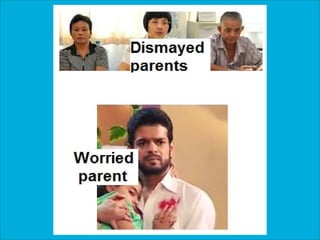
  • #4 The look is quite characteristic, worried patient looks worried and the child may also look sick. Dismayed patient has the appearance of questioning, as to…..”after all what is going on doc. You read big books…but can’t find out why my child has recurrent pain..”
  • #5 My suggestion to you is you never accept anything anyone has said. It should make sense to you. Otherwise question anything and everything if it defies your logic. This child has pain localized in epigastrium and that is why we will not accept the diagnosis of RAP. Investigations does not necessarily mean tests, but further inquiries and if required tests to find a specific cause which when treated will give relief from pain.
  • #6 Let us consider different types of pain a pediatric or adolescent could have. Acute pain by definition is of shorter duration, few hours to a day or so. There is a sub-type of this what we call “abrupt” pain; one minute everything is fine and next patient in agony. This abrupt pain could be because of perforation or mesenteric embolization or torsion. Chronic pain is one which has much longer duration, says months or years. Some acute pains are recurrent so one may call it chronic and some chronic pain have acute exacerbations. So while evaluating any pain these things needs keeping in mind.
  • #7 Acute and chronic are differentiated by definition most of the time. It is more important to differentiate between organic and functional pain. Once you have diagnosed functional pain, follow-up is mandatory. It is during the follow-up that you reassess your diagnosis and look for any slip ups.
  • #8 Organic pain has altogether different look about it; the child and thier care takers both look unwell
  • #11 These investigations, if abnormal, will tell you that something is wrong and further probing is needed
  • #12 Hepatic amebiasis, liver abscess, cholecystitis, acid peptic diseases, pancreatitis, retrocecal appendicitis, appendicitis or typhlitis, cystitis, amebic colitis 2nd photo: pyelonephritis/ renal colic, pancreatitis
  • #13 Various terminologies used here is confusing enough. There is lot of overlap, so for simplicity we will take for granted that all types of pain mentioned are chronic anyway therefore we take out “chronic pain” category here.
  • #14 Some argue that “three” episodes may not be necessary.
  • #15 This pain usually is around tummy button, can come on suddenly and may disappear equally suddenly after a variable period. It may come with any frequency and for any length of time. Apart from pain, obviously there are no other features.
  • #16 Another category is “functional abdominal pain”.
  • #17 Of course evidence or no evidence of organic pain depends upon how good is your history and physical examnation.
  • #18 Another variety related to intestines is called IBS
  • #19 This entity is vehemently denied by gastroenterology community
  • #20 A sub-category of functional abdominal pain is “functional abdominal pain syndrome”. Here apart from pain in abdomen, there are many systemic symptoms
  • #21 Recurrent abdominal pain is a category in itself and not synonymous with functional abdominal pain
  • #23 - The overall incidence appears to peak @ 10 to 12 years. RAP is rare among children younger than 5 years of age, & an organic cause must be -considered even more carefully in this younger age group. - Apley observed that males and females are affected equally in early childhood up until the age of 9. - Between 9 and 12 years of age the female-to-male ratio approaches 1.5 to 1. - Onset of chronic pain in a child younger than 4 years old requires a more in-depth organic evaluation, particularly for structural abnormalities.
  • #24 Again need for investigations depend upon how good is your history and physical examination. Having said that parenteral pressure sometimes is so overbearing that you may end up doing blood tests and stool tests and USG. Or even worse, parents themselves get USG done before coming to us!
  • #25 Management of organic pain will of course be correction of underlying condition.
  • #26 Factors that seem to be related to worse prognosis are: positive family history of abdominal symptoms male sex age of onset younger than 3 years a period of more than 6 months before seeking treatment low educational level and family poverty
  • #27 One important question here is that is it appropriate to consider this as functional pain? We think not. Because even if there are no structural changes on endoscopy, still patient could have acid-peptic disease. So for us this is a straight forward case of APD.
  • #31 With the exception of the gallbladder and ascending and descending colon, most digestive tract pain is perceived in the midline Pain that clearly is lateralized most likely arises from the ipsilateral kidney, ureter, ovary, or somatically innervated structures. Visceral pain is perceived in the spinal segment at which the visceral afferent nerves enter the spinal cord.