Rectangular
Coordinate
System
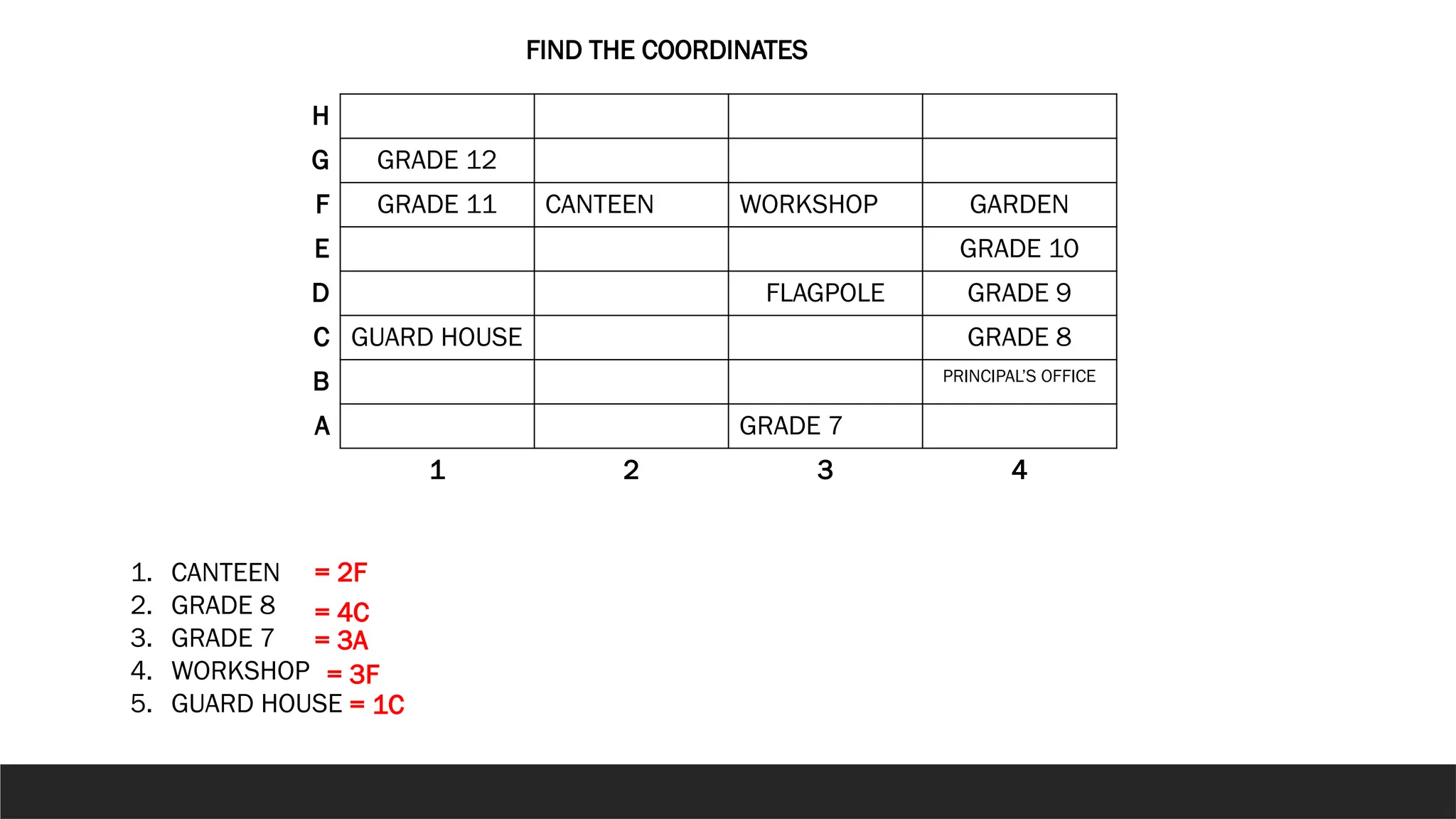
H
G GRADE 12
F GRADE 11 CANTEEN WORKSHOP GARDEN
E GRADE 10
D FLAGPOLE GRADE 9
C GUARD HOUSE GRADE 8
B PRINCIPAL’S OFFICE
A GRADE 7
1 2 3 4
1. CANTEEN
2. GRADE 8
3. GRADE 7
4. WORKSHOP
5. GUARD HOUSE
= 2F
= 4C
= 3A
= 3F
= 1C
FIND THE COORDINATES
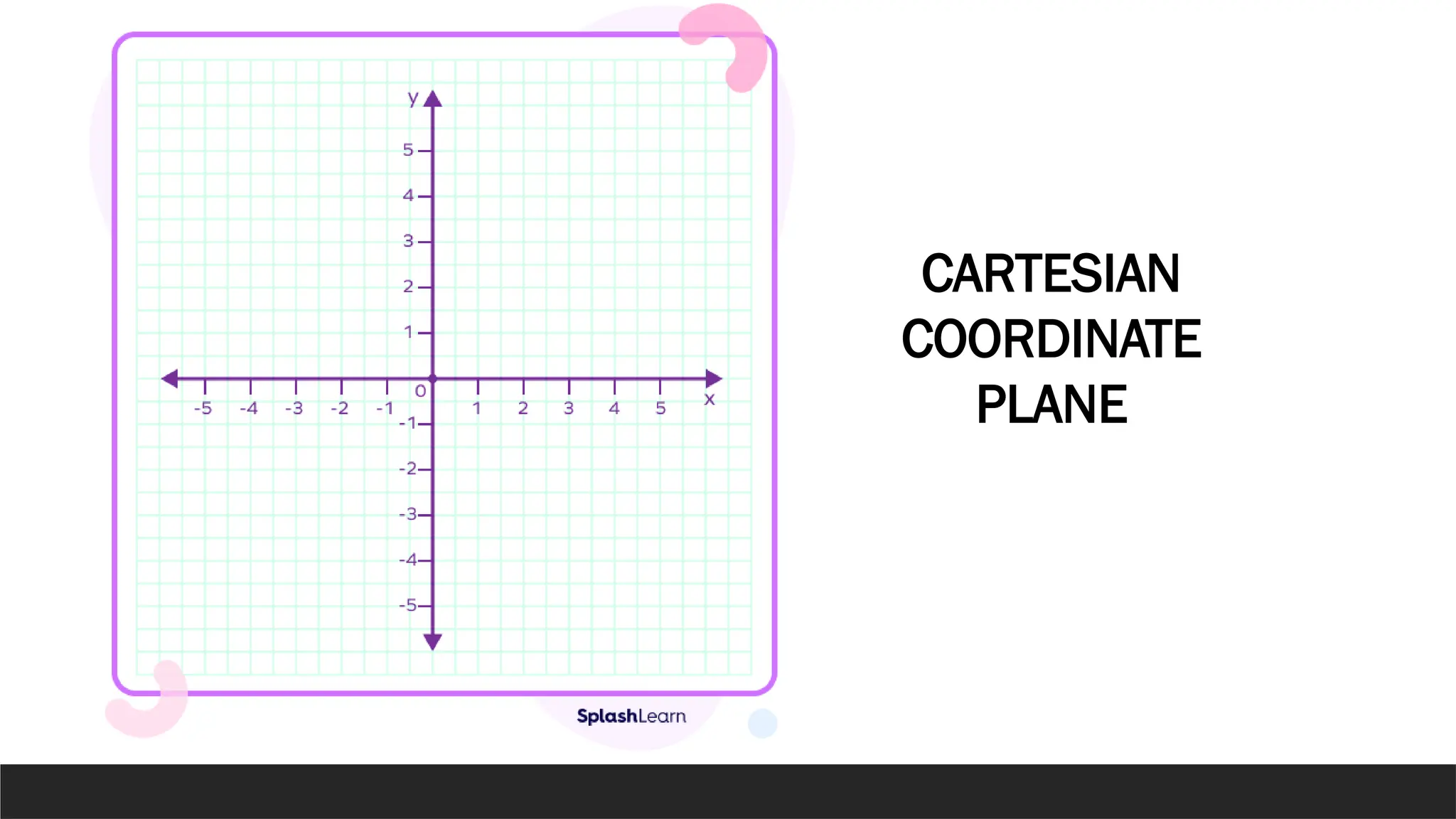
CARTESIAN
COORDINATE
PLANE
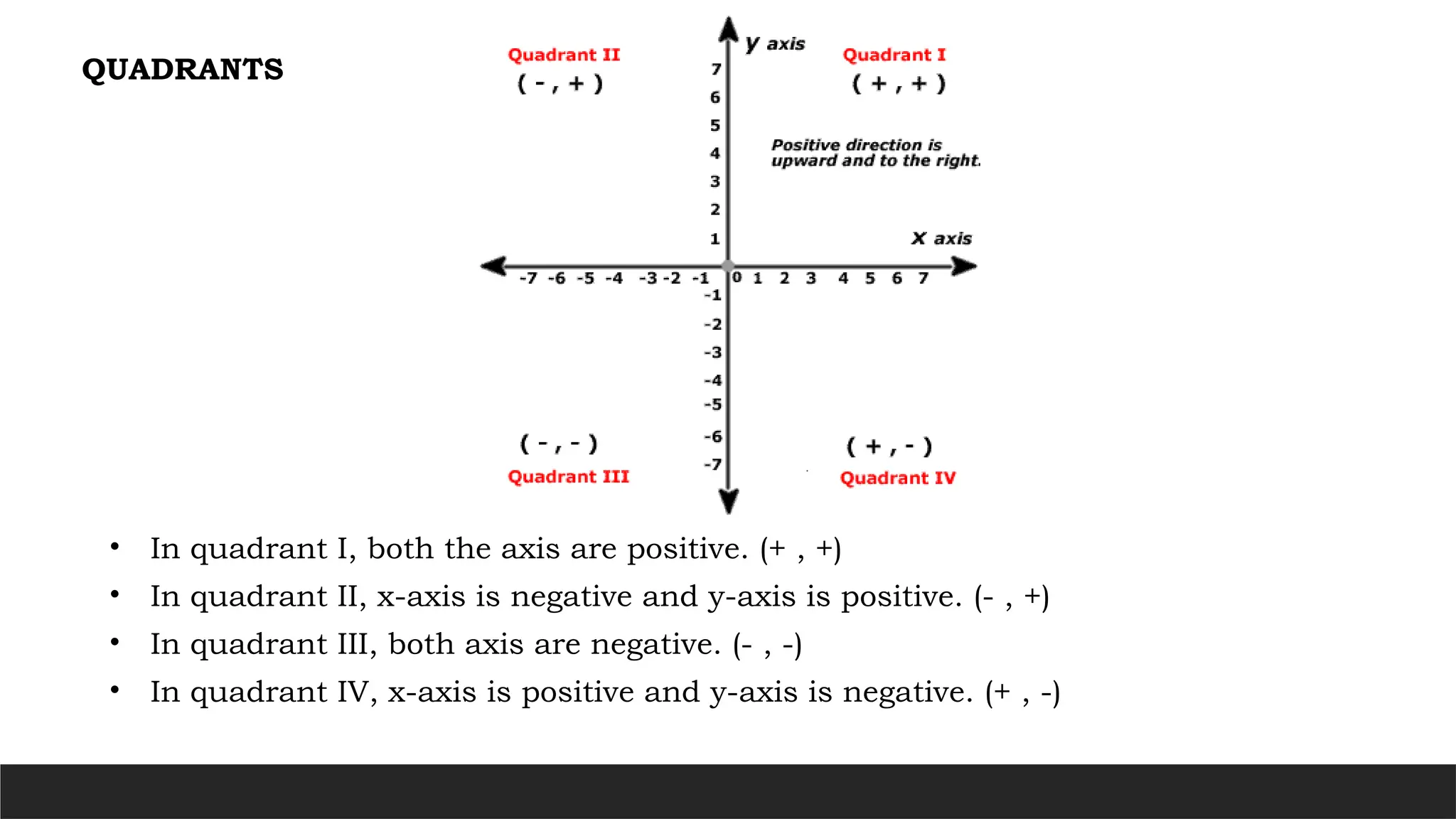
• The rectangular coordinate system consists of two real number lines
that intersect at a right angle.
• The horizontal number line is called the x-axis, and the vertical
number line is called the y-axis.
• These two number lines define a flat surface called a plane, and each
point on this plane is associated with an ordered pair of real
numbers(x,y).
• The first number is called the x-coordinate or the abscissa of the
point, and the second number is called the y-coordinate or the
ordinate of the point.
• The intersection of the two axes is known as the origin, which
corresponds to the point (0, 0).
• The x-axis is often called the axis of abscissa and the y-axis is called
as axis of coordinate.
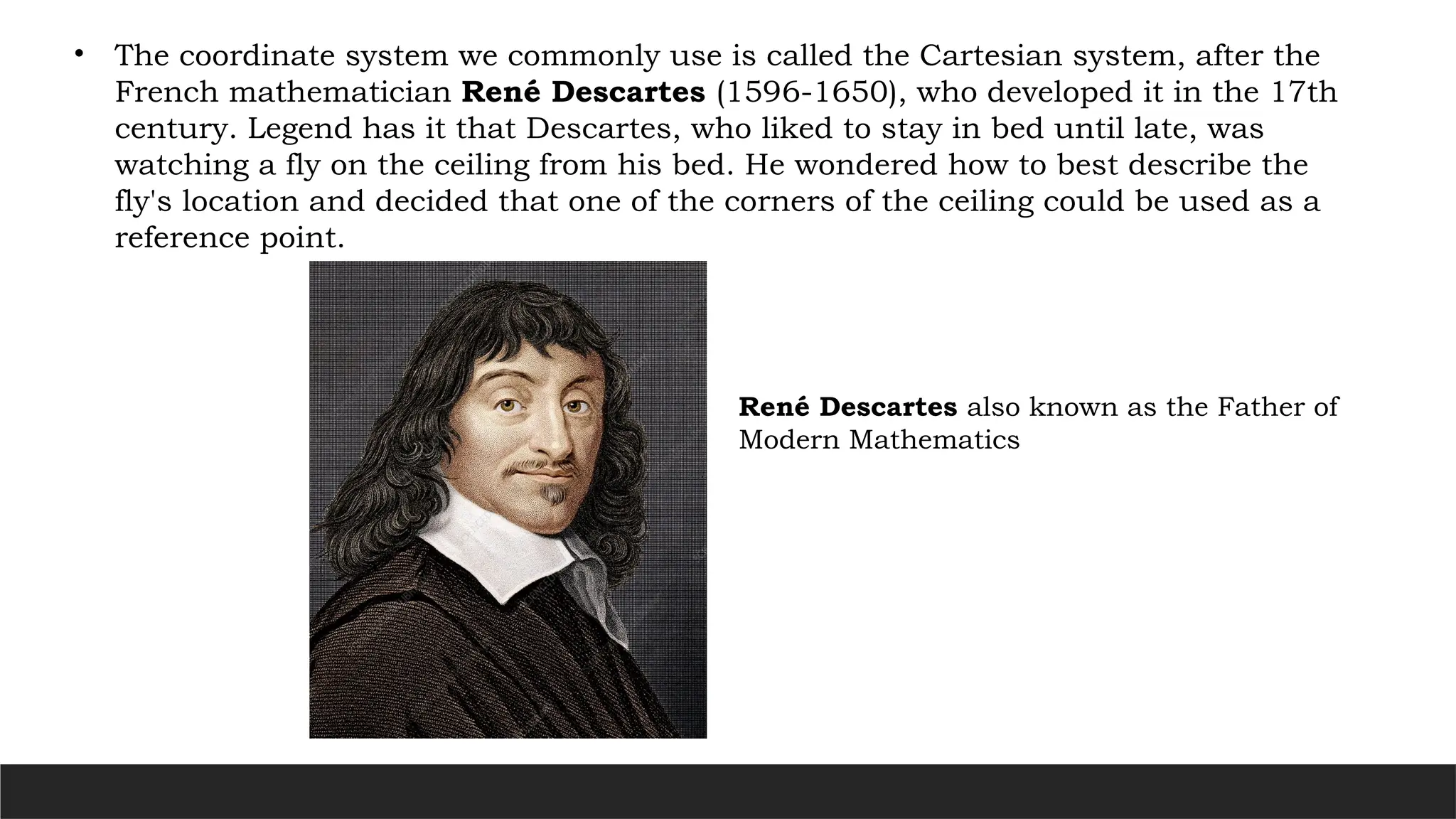
• The coordinate system we commonly use is called the Cartesian system, after the
French mathematician René Descartes (1596-1650), who developed it in the 17th
century. Legend has it that Descartes, who liked to stay in bed until late, was
watching a fly on the ceiling from his bed. He wondered how to best describe the
fly's location and decided that one of the corners of the ceiling could be used as a
reference point.
René Descartes also known as the Father of
Modern Mathematics
• In quadrant I, both the axis are positive. (+ , +)
• In quadrant II, x-axis is negative and y-axis is positive. (- , +)
• In quadrant III, both axis are negative. (- , -)
• In quadrant IV, x-axis is positive and y-axis is negative. (+ , -)
QUADRANTS
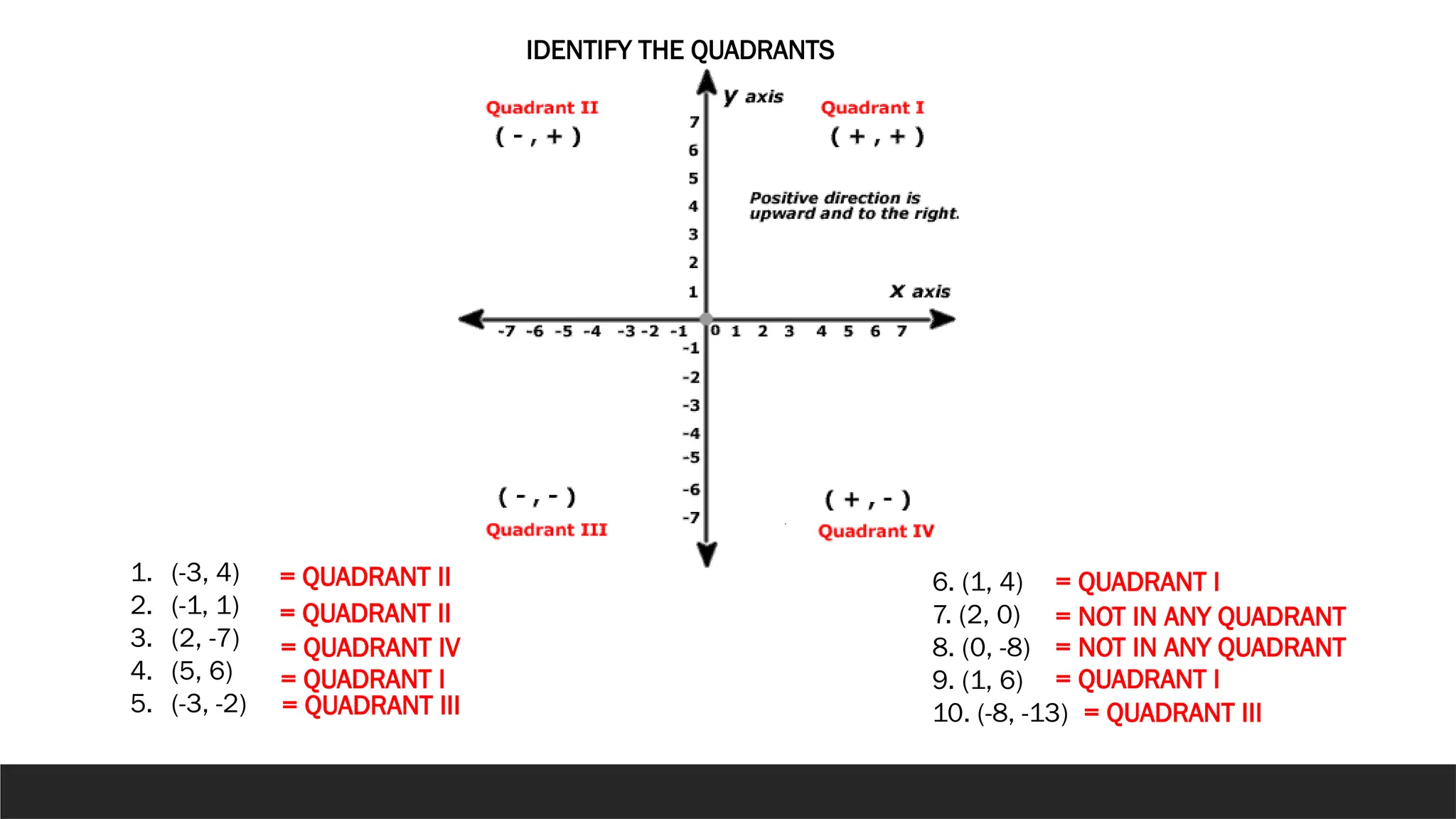
1. (-3, 4)
2. (-1, 1)
3. (2, -7)
4. (5, 6)
5. (-3, -2)
= QUADRANT II
= QUADRANT II
= QUADRANT IV
= QUADRANT I
= QUADRANT III
IDENTIFY THE QUADRANTS
6. (1, 4)
7. (2, 0)
8. (0, -8)
9. (1, 6)
10. (-8, -13)
= QUADRANT I
= NOT IN ANY QUADRANT
= QUADRANT I
= QUADRANT III
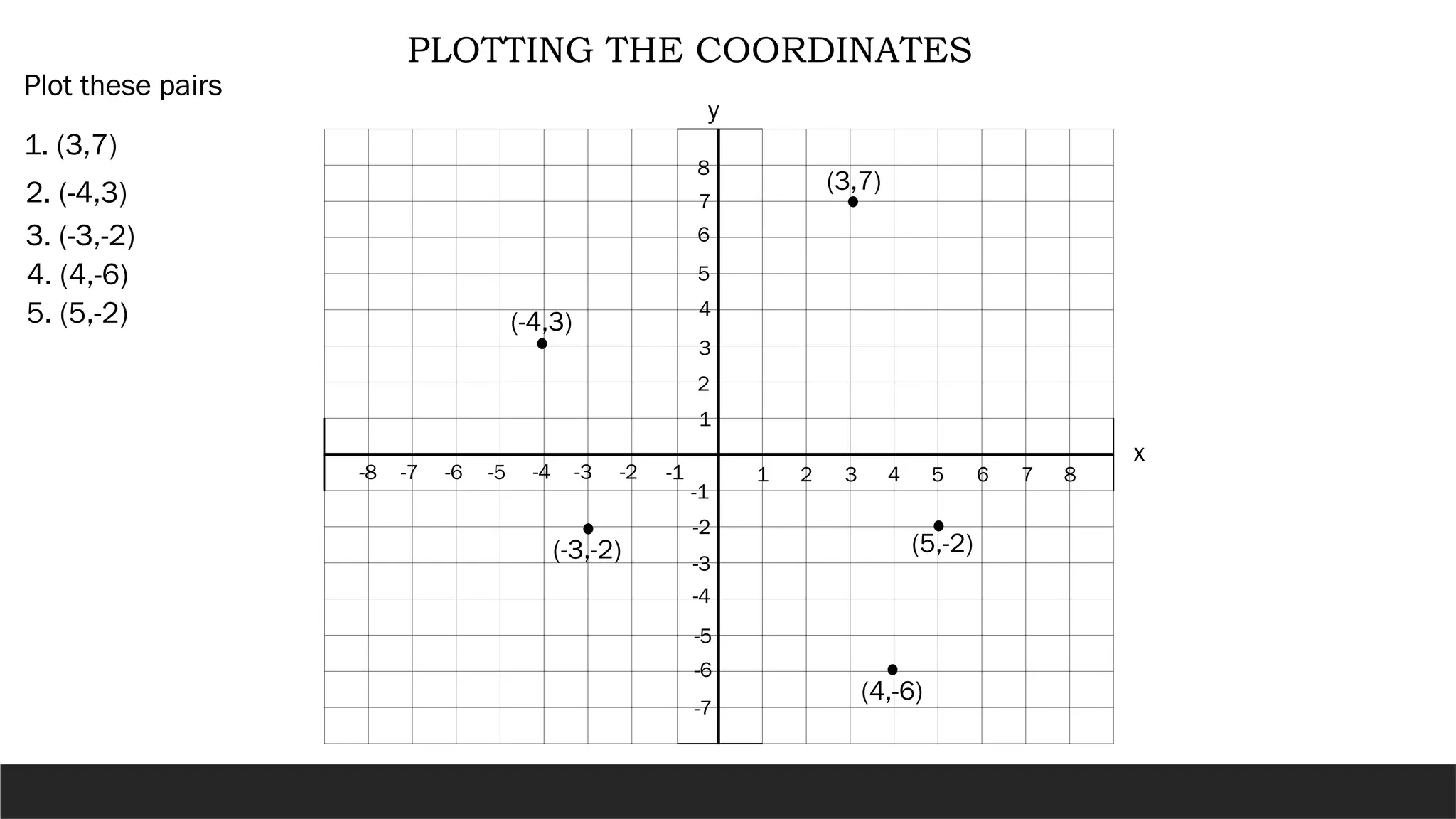
PLOTTING THE COORDINATES
Plot these pairs
1 2 3 4 5 6 7
-1
-2
-3
-4
-5
-6
-7
1
2
3
4
5
6
8
7
-8
8
-1
-2
-3
-4
-5
-6
-7
y
x
(3,7)
1. (3,7)
2. (-4,3)
(-4,3)
3. (-3,-2)
(-3,-2)
4. (4,-6)
(4,-6)
5. (5,-2)
(5,-2)
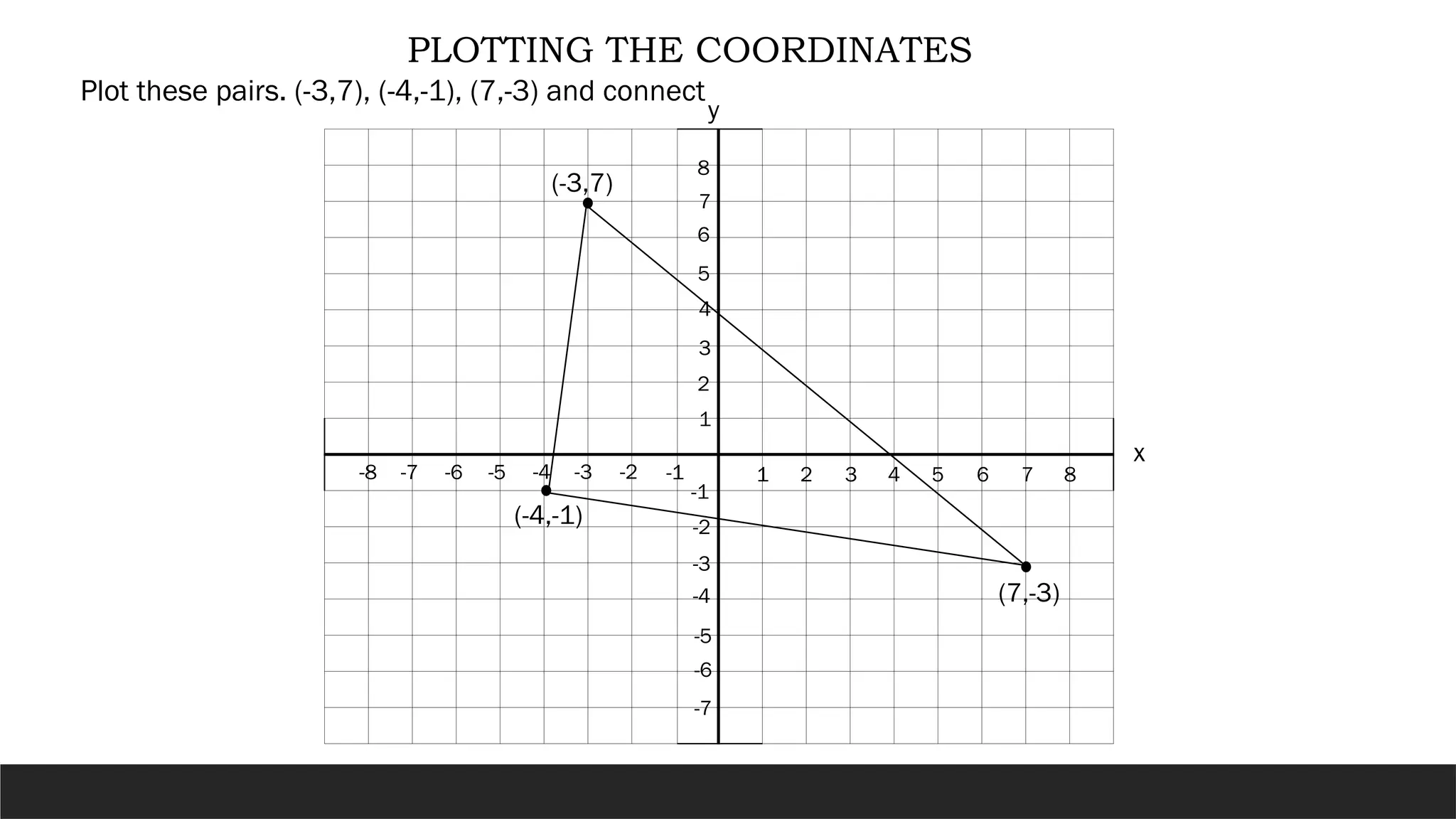
PLOTTING THE COORDINATES
Plot these pairs. (-3,7), (-4,-1), (7,-3) and connect
1 2 3 4 5 6 7
-1
-2
-3
-4
-5
-6
-7
1
2
3
4
5
6
8
7
-8
8
-1
-2
-3
-4
-5
-6
-7
y
x
(-3,7)
(-4,-1)
(7,-3)
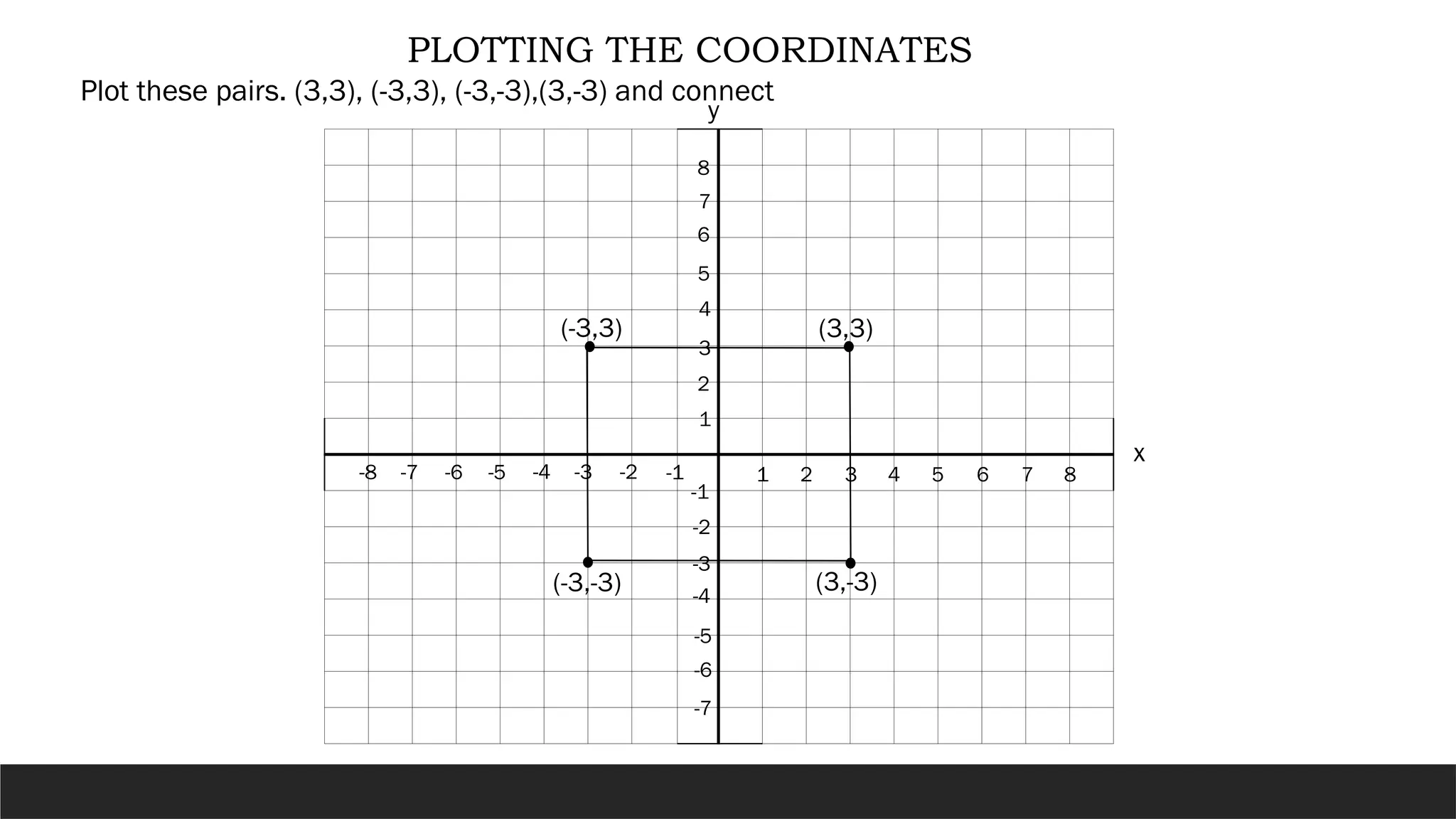
PLOTTING THE COORDINATES
Plot these pairs. (3,3), (-3,3), (-3,-3),(3,-3) and connect
1 2 3 4 5 6 7
-1
-2
-3
-4
-5
-6
-7
1
2
3
4
5
6
8
7
-8
8
-1
-2
-3
-4
-5
-6
-7
y
x
(3,3)
(-3,3)
(-3,-3) (3,-3)
PLOTTING THE COORDINATES
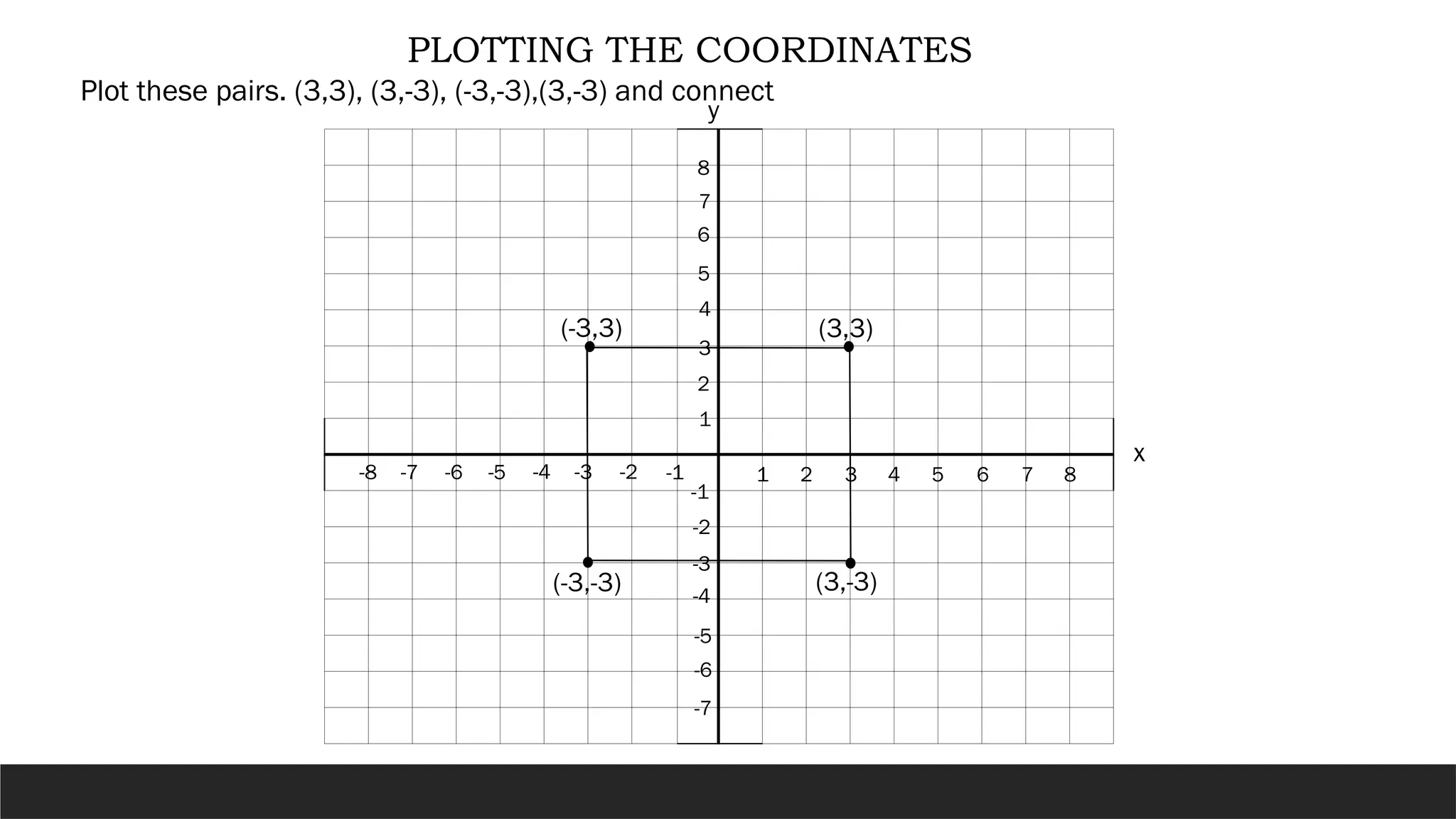
Plot these pairs. (3,3), (3,-3), (-3,-3),(3,-3) and connect
1 2 3 4 5 6 7
-1
-2
-3
-4
-5
-6
-7
1
2
3
4
5
6
8
7
-8
8
-1
-2
-3
-4
-5
-6
-7
y
x
(3,3)
(-3,3)
(-3,-3) (3,-3)
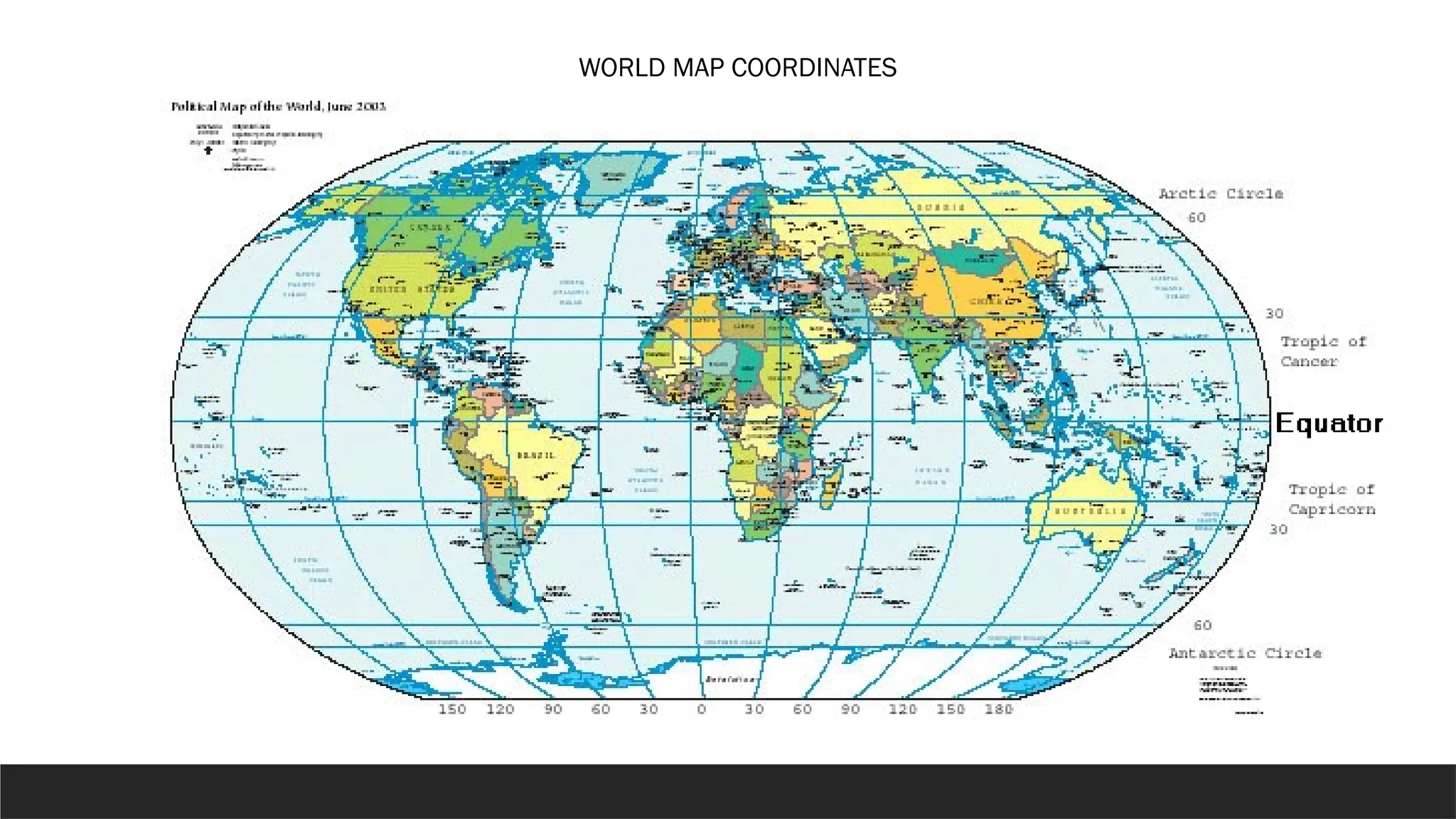
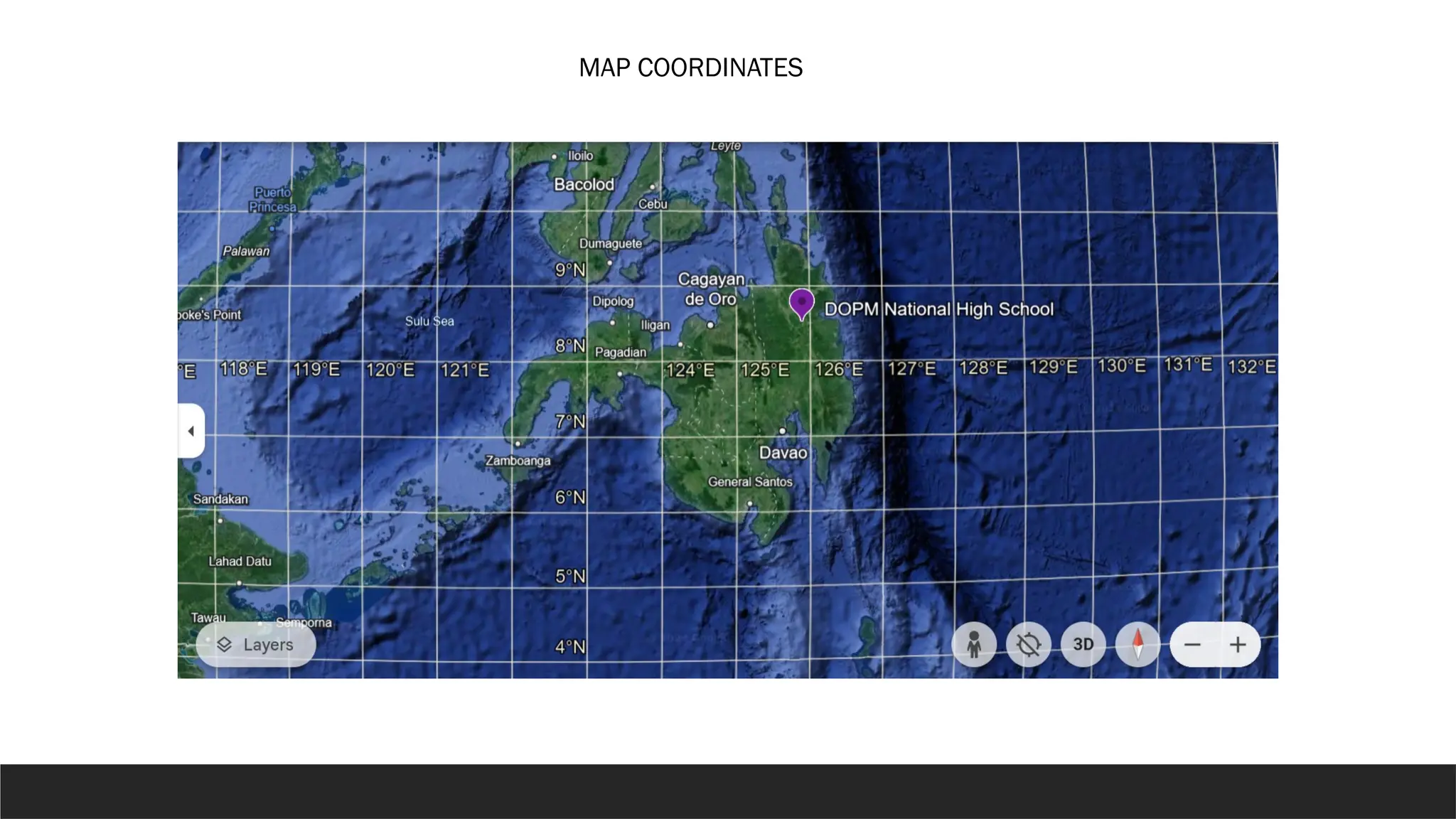
WORLD MAP COORDINATES
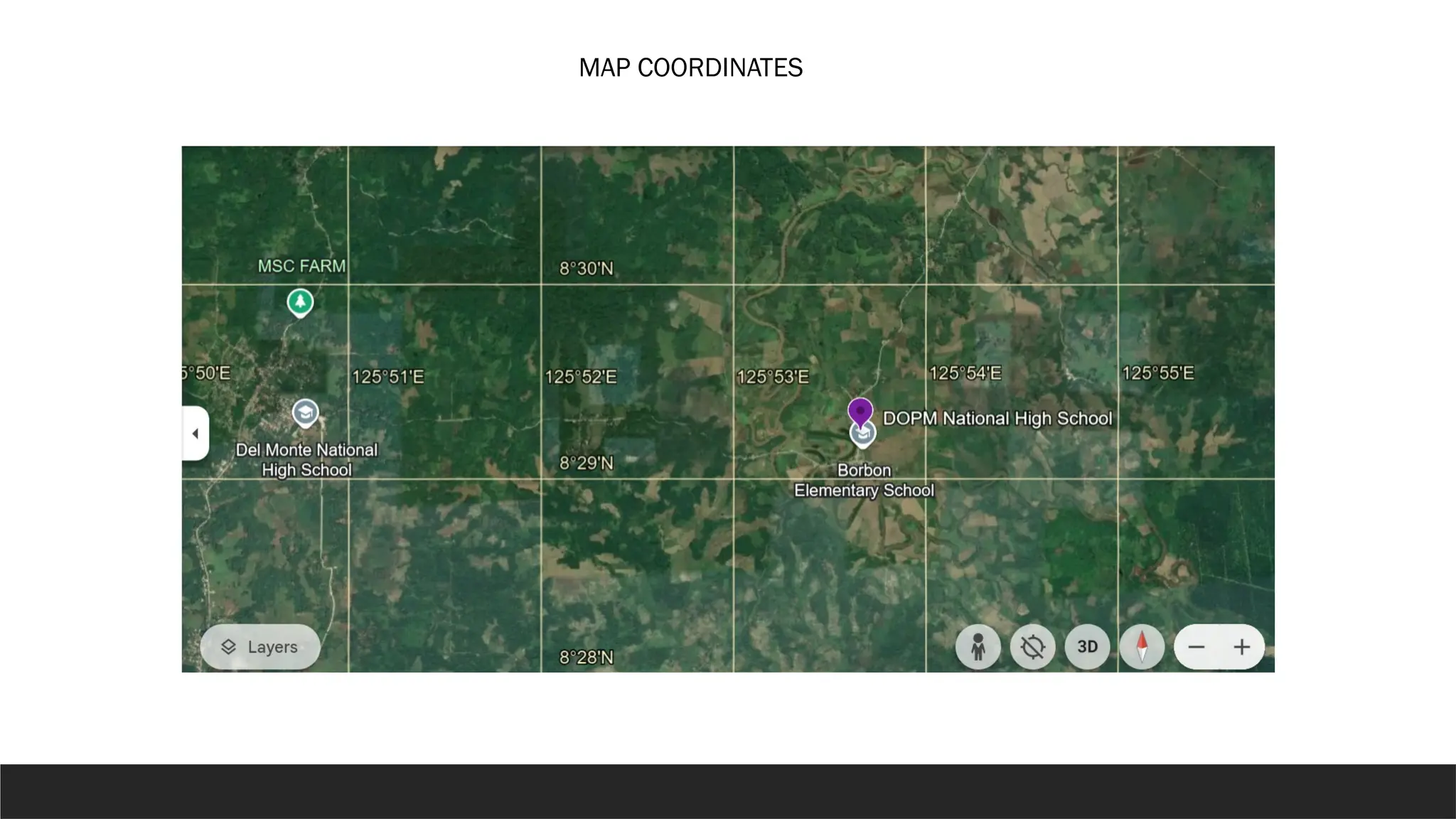
MAP COORDINATES
MAP COORDINATES
Draw a Cartesian plane and plot the following points. Then
connect all the points according to the sequence of letters
indicated below and identify the figure formed.
1. (0, 4)
2. (-3, -4)
3. (4, 1)
4. (-4, 1)
5. (3, -4)

Rectangular Coordinate System2 examples.pptx

  • 1.
  • 2.
    H G GRADE 12 FGRADE 11 CANTEEN WORKSHOP GARDEN E GRADE 10 D FLAGPOLE GRADE 9 C GUARD HOUSE GRADE 8 B PRINCIPAL’S OFFICE A GRADE 7 1 2 3 4 1. CANTEEN 2. GRADE 8 3. GRADE 7 4. WORKSHOP 5. GUARD HOUSE = 2F = 4C = 3A = 3F = 1C FIND THE COORDINATES
  • 3.
  • 4.
    • The rectangularcoordinate system consists of two real number lines that intersect at a right angle. • The horizontal number line is called the x-axis, and the vertical number line is called the y-axis. • These two number lines define a flat surface called a plane, and each point on this plane is associated with an ordered pair of real numbers(x,y). • The first number is called the x-coordinate or the abscissa of the point, and the second number is called the y-coordinate or the ordinate of the point. • The intersection of the two axes is known as the origin, which corresponds to the point (0, 0). • The x-axis is often called the axis of abscissa and the y-axis is called as axis of coordinate.
  • 5.
    • The coordinatesystem we commonly use is called the Cartesian system, after the French mathematician René Descartes (1596-1650), who developed it in the 17th century. Legend has it that Descartes, who liked to stay in bed until late, was watching a fly on the ceiling from his bed. He wondered how to best describe the fly's location and decided that one of the corners of the ceiling could be used as a reference point. René Descartes also known as the Father of Modern Mathematics
  • 6.
    • In quadrantI, both the axis are positive. (+ , +) • In quadrant II, x-axis is negative and y-axis is positive. (- , +) • In quadrant III, both axis are negative. (- , -) • In quadrant IV, x-axis is positive and y-axis is negative. (+ , -) QUADRANTS
  • 7.
    1. (-3, 4) 2.(-1, 1) 3. (2, -7) 4. (5, 6) 5. (-3, -2) = QUADRANT II = QUADRANT II = QUADRANT IV = QUADRANT I = QUADRANT III IDENTIFY THE QUADRANTS 6. (1, 4) 7. (2, 0) 8. (0, -8) 9. (1, 6) 10. (-8, -13) = QUADRANT I = NOT IN ANY QUADRANT = NOT IN ANY QUADRANT = QUADRANT I = QUADRANT III
  • 8.
    PLOTTING THE COORDINATES Plotthese pairs 1 2 3 4 5 6 7 -1 -2 -3 -4 -5 -6 -7 1 2 3 4 5 6 8 7 -8 8 -1 -2 -3 -4 -5 -6 -7 y x (3,7) 1. (3,7) 2. (-4,3) (-4,3) 3. (-3,-2) (-3,-2) 4. (4,-6) (4,-6) 5. (5,-2) (5,-2)
  • 9.
    PLOTTING THE COORDINATES Plotthese pairs. (-3,7), (-4,-1), (7,-3) and connect 1 2 3 4 5 6 7 -1 -2 -3 -4 -5 -6 -7 1 2 3 4 5 6 8 7 -8 8 -1 -2 -3 -4 -5 -6 -7 y x (-3,7) (-4,-1) (7,-3)
  • 10.
    PLOTTING THE COORDINATES Plotthese pairs. (3,3), (-3,3), (-3,-3),(3,-3) and connect 1 2 3 4 5 6 7 -1 -2 -3 -4 -5 -6 -7 1 2 3 4 5 6 8 7 -8 8 -1 -2 -3 -4 -5 -6 -7 y x (3,3) (-3,3) (-3,-3) (3,-3)
  • 11.
    PLOTTING THE COORDINATES Plotthese pairs. (3,3), (3,-3), (-3,-3),(3,-3) and connect 1 2 3 4 5 6 7 -1 -2 -3 -4 -5 -6 -7 1 2 3 4 5 6 8 7 -8 8 -1 -2 -3 -4 -5 -6 -7 y x (3,3) (-3,3) (-3,-3) (3,-3)
  • 12.
  • 13.
  • 14.
  • 15.
    Draw a Cartesianplane and plot the following points. Then connect all the points according to the sequence of letters indicated below and identify the figure formed. 1. (0, 4) 2. (-3, -4) 3. (4, 1) 4. (-4, 1) 5. (3, -4)