SUPPORTING A
SUCCESSFUL TRANSITION
INTO RECOVERY
RECOVERY COACHING
A BRIEF HISTORY
 Imported the problem
 1792 – 2,579 distilleries w/annual per-capita
consumption 2 ½ gallons
 1810 – 14,191 w/annual consumption 4 ½ gallons
 1830 – consumption rose to 7.1 gallons
A BRIEF HISTORY
 Dr. Benjamin Rush – possible father of the
disease concept
 Attitude changed towards social value of
alcohol
 Late 1700s – start of the Temperance
Movement
A BRIEF HISTORY
 Groups formed to assist chronic alcohol
abusers
 Signed a pledge for abstinence
 Fraternal Temperance Societies and Reform
Clubs later provided financial support
 Failed because of inconsistencies in membership
requirements & mission purpose
A BRIEF HISTORY
 Late 1800s – special institutions &
professional roles
 Inebriate “homes”, “dry hotels”
 Inebriate asylum - large medical directed
facilities
 AA physicians & nurses & “AA Wards”
A BRIEF HISTORY
 Emmanuel Church of Boston (1906)
 Used religion, psychology & medicine
 Clinics pioneered use of lay alcoholism
psychotherapists
 Jacoby Club – support meetings & social events
 Used “friendly visitors”
A BRIEF HISTORY
 1935 – founding of Alcoholics Anonymous
 Industrial alcoholism specialists
 Entrepreneurs opened “AA farms” & “AA
retreats”
A BRIEF HISTORY
 1940s & 50s – Yale Center of Alcohol
Studies
 Pioneered new outpatient model
 Continued lay therapist mode
 Codification of “Counselor on
Alcoholism”, “Minnesota Model” pioneered
by Hazelden
A BRIEF HISTORY
 1970s – roles rapidly professionalized
 Education & training requirements escalated
 Today’s focus on (acute) bio-psycho-social
stabilization
 Many service models focus on reduction of
client’s deficits and pathology
STABILIZATION VS RECOVERY
 Treatment is viewed at the “magic” solution
 Short, well defined period with special
protocol
 Goal – to develop skills & resources to
maintain abstinence & find quality of life
 get to treatment with varying levels of
motivation, awareness, knowledge, &
capacity of dealing with their disorder
SUSTAINED RECOVERY MANAGEMENT
 Recovery – (process) of implementing these
skills into strategy that accomplishes those
goals
 Disengagement – relapse
 Recidivism rates are much lower in
monitored programs
SUSTAINED RECOVERY MANAGEMENT
 Remember – treatment focuses on deficits &
pathology
 Long-term recovery support emphasis –
assisting client to focus on strengths rather
than pathology
DEVELOPMENTAL MODEL OF RECOVERY
 Pretreatment stage
 Recognition of addiction
 Stabilization stage
 Withdrawal & crisis management
 Regain control of thought processes, emotional
processes, judgment, and behavior
DEVELOPMENTAL MODEL OF RECOVERY
 Early recovery stage
 Acceptance & non-chemical coping
 Moves it from the head to the heart
 Stops talking about what to do and begins to
mostly do what they are supposed to
 May last from one to two years
DEVELOPMENTAL MODEL OF RECOVERY
 Middle recovery stage
 Focus on balanced lifestyle
 Reestablishing broken relationships
 May set new occupational goals
 Participates in more social & recreational
activities
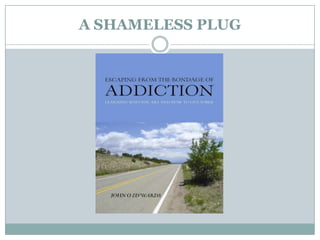
A SHAMELESS PLUG
ONLINE RECOVERY RESOURCE
THE PARETO PRINCIPLE
 Roughly 80% of the effects come from 20% of
the causes
 Identifying your 20%
A WORD FROM A TWENTY PERCENTER
“I’m no longer employed by (blank) due to my
own ignorance, stupidity, and TnPAP. I can
not do an inpatient rehab because it is not
warrented and my insurance is cut off. I will
be sober 2-1-12 because of my dedication to
myself and my conscience. I am free of (blank)
and TnPAP to live fron alcohol abuse and the
requirement to lie if in my ultimate best
interests. I AM FREE!
HOW DO WE DEAL WITH THEM NOW?
 Monitoring
 Monitoring Agreement Extensions
 More treatment
 More evaluation/therapy
 Non-compliant discharge
RECOVERY COACHING
 Scope of services
 Monitoring – compliance with MA requirements
 Drug testing – random testing for enhanced
accountability
 Case management – additional referrals that support
client’s goals and choices
 Life skills coaching – to support personal growth
RECOVERY COACHING
 Qualifications:
 Credentialing – depending on State requirements
(peer based)
 Ability to establish empathy with client
 Ability to work with diverse populations &
backgrounds
 Ability to focus on & reinforce positive strengths &
behaviors
 Should not have a single view of pathway to recovery
(personal choices)
RECOVERY COACHING
 General professional competencies:
 Aspects of addiction treatment & how to access
 Stages of change (Trans Theoretical Model of
Change)
 Motivational interviewing or motivational
enhancement techniques
 Case management activities & knowledge of
community resources
STRENGTH BASED RECOVERY PLANNING
 Focus on individual strengths rather than
pathology
 Interventions are based on client self-
determination
 People suffering from SUD or mental illness
continue to learn, grow, and change
 Chinese Proverb - “Give a man a fish & you feed
him for a day. Teach a man to fish & you feed him
for a lifetime”.
WORKING WITH THE PARTICIPANT
 Motivational interviewing
 Non-confrontational behavioral intervention used to
increase awareness of SUD and assist in transition through
first three stages
 Four therapeutic components:
 Express empathy (active listening skills)
 Develop discrepancy
 Roll with resistance
 Support self-efficacy (how other people view their own
capacities & strengths)
WORKING WITH THE PARTICIPANT
 Contingency Management – based on
operant learning theory (voluntary actions of
human beings)
 Links consequences with behaviors
 Behavior is learned by its consequences & can be
changed by changing the consequences
 Motivates people to learn new or alternative
behaviors by providing positive reinforcement
 Used to keep people engaged until the process
becomes reinforcing
REFERENCES
 Manual for Recovery Coaching & Personal Recovery
Plan Development – David
Loveland, PhD, dloveland@fayettecompanies.org
 Slaying the Dragon – William L. White, Chestnut Health
Systems/Lighthouse Institute, Bloomington Ill
 Escaping From the Bondage of Addiction – John O.
Edwards, BS, CEAP, SAP, www.therecoverycoach.co
 International Coach
Federation, www.internationalcoach.org

Recovery coaching for N.O.A.P

  • 1.
    SUPPORTING A SUCCESSFUL TRANSITION INTORECOVERY RECOVERY COACHING
  • 2.
    A BRIEF HISTORY Imported the problem  1792 – 2,579 distilleries w/annual per-capita consumption 2 ½ gallons  1810 – 14,191 w/annual consumption 4 ½ gallons  1830 – consumption rose to 7.1 gallons
  • 3.
    A BRIEF HISTORY Dr. Benjamin Rush – possible father of the disease concept  Attitude changed towards social value of alcohol  Late 1700s – start of the Temperance Movement
  • 4.
    A BRIEF HISTORY Groups formed to assist chronic alcohol abusers  Signed a pledge for abstinence  Fraternal Temperance Societies and Reform Clubs later provided financial support  Failed because of inconsistencies in membership requirements & mission purpose
  • 5.
    A BRIEF HISTORY Late 1800s – special institutions & professional roles  Inebriate “homes”, “dry hotels”  Inebriate asylum - large medical directed facilities  AA physicians & nurses & “AA Wards”
  • 6.
    A BRIEF HISTORY Emmanuel Church of Boston (1906)  Used religion, psychology & medicine  Clinics pioneered use of lay alcoholism psychotherapists  Jacoby Club – support meetings & social events  Used “friendly visitors”
  • 7.
    A BRIEF HISTORY 1935 – founding of Alcoholics Anonymous  Industrial alcoholism specialists  Entrepreneurs opened “AA farms” & “AA retreats”
  • 8.
    A BRIEF HISTORY 1940s & 50s – Yale Center of Alcohol Studies  Pioneered new outpatient model  Continued lay therapist mode  Codification of “Counselor on Alcoholism”, “Minnesota Model” pioneered by Hazelden
  • 9.
    A BRIEF HISTORY 1970s – roles rapidly professionalized  Education & training requirements escalated  Today’s focus on (acute) bio-psycho-social stabilization  Many service models focus on reduction of client’s deficits and pathology
  • 10.
    STABILIZATION VS RECOVERY Treatment is viewed at the “magic” solution  Short, well defined period with special protocol  Goal – to develop skills & resources to maintain abstinence & find quality of life  get to treatment with varying levels of motivation, awareness, knowledge, & capacity of dealing with their disorder
  • 11.
    SUSTAINED RECOVERY MANAGEMENT Recovery – (process) of implementing these skills into strategy that accomplishes those goals  Disengagement – relapse  Recidivism rates are much lower in monitored programs
  • 12.
    SUSTAINED RECOVERY MANAGEMENT Remember – treatment focuses on deficits & pathology  Long-term recovery support emphasis – assisting client to focus on strengths rather than pathology
  • 13.
    DEVELOPMENTAL MODEL OFRECOVERY  Pretreatment stage  Recognition of addiction  Stabilization stage  Withdrawal & crisis management  Regain control of thought processes, emotional processes, judgment, and behavior
  • 14.
    DEVELOPMENTAL MODEL OFRECOVERY  Early recovery stage  Acceptance & non-chemical coping  Moves it from the head to the heart  Stops talking about what to do and begins to mostly do what they are supposed to  May last from one to two years
  • 15.
    DEVELOPMENTAL MODEL OFRECOVERY  Middle recovery stage  Focus on balanced lifestyle  Reestablishing broken relationships  May set new occupational goals  Participates in more social & recreational activities
  • 16.
  • 17.
  • 18.
    THE PARETO PRINCIPLE Roughly 80% of the effects come from 20% of the causes  Identifying your 20%
  • 19.
    A WORD FROMA TWENTY PERCENTER “I’m no longer employed by (blank) due to my own ignorance, stupidity, and TnPAP. I can not do an inpatient rehab because it is not warrented and my insurance is cut off. I will be sober 2-1-12 because of my dedication to myself and my conscience. I am free of (blank) and TnPAP to live fron alcohol abuse and the requirement to lie if in my ultimate best interests. I AM FREE!
  • 20.
    HOW DO WEDEAL WITH THEM NOW?  Monitoring  Monitoring Agreement Extensions  More treatment  More evaluation/therapy  Non-compliant discharge
  • 21.
    RECOVERY COACHING  Scopeof services  Monitoring – compliance with MA requirements  Drug testing – random testing for enhanced accountability  Case management – additional referrals that support client’s goals and choices  Life skills coaching – to support personal growth
  • 22.
    RECOVERY COACHING  Qualifications: Credentialing – depending on State requirements (peer based)  Ability to establish empathy with client  Ability to work with diverse populations & backgrounds  Ability to focus on & reinforce positive strengths & behaviors  Should not have a single view of pathway to recovery (personal choices)
  • 23.
    RECOVERY COACHING  Generalprofessional competencies:  Aspects of addiction treatment & how to access  Stages of change (Trans Theoretical Model of Change)  Motivational interviewing or motivational enhancement techniques  Case management activities & knowledge of community resources
  • 24.
    STRENGTH BASED RECOVERYPLANNING  Focus on individual strengths rather than pathology  Interventions are based on client self- determination  People suffering from SUD or mental illness continue to learn, grow, and change  Chinese Proverb - “Give a man a fish & you feed him for a day. Teach a man to fish & you feed him for a lifetime”.
  • 25.
    WORKING WITH THEPARTICIPANT  Motivational interviewing  Non-confrontational behavioral intervention used to increase awareness of SUD and assist in transition through first three stages  Four therapeutic components:  Express empathy (active listening skills)  Develop discrepancy  Roll with resistance  Support self-efficacy (how other people view their own capacities & strengths)
  • 26.
    WORKING WITH THEPARTICIPANT  Contingency Management – based on operant learning theory (voluntary actions of human beings)  Links consequences with behaviors  Behavior is learned by its consequences & can be changed by changing the consequences  Motivates people to learn new or alternative behaviors by providing positive reinforcement  Used to keep people engaged until the process becomes reinforcing
  • 27.
    REFERENCES  Manual forRecovery Coaching & Personal Recovery Plan Development – David Loveland, PhD, dloveland@fayettecompanies.org  Slaying the Dragon – William L. White, Chestnut Health Systems/Lighthouse Institute, Bloomington Ill  Escaping From the Bondage of Addiction – John O. Edwards, BS, CEAP, SAP, www.therecoverycoach.co  International Coach Federation, www.internationalcoach.org