Starting on the right-Note
Keeping records of your invention
3
Overview
• What is record-keeping?
• Benefits of record-keeping
• How should it be like?
• Sample of note-taking
• What should not be in the notebook?
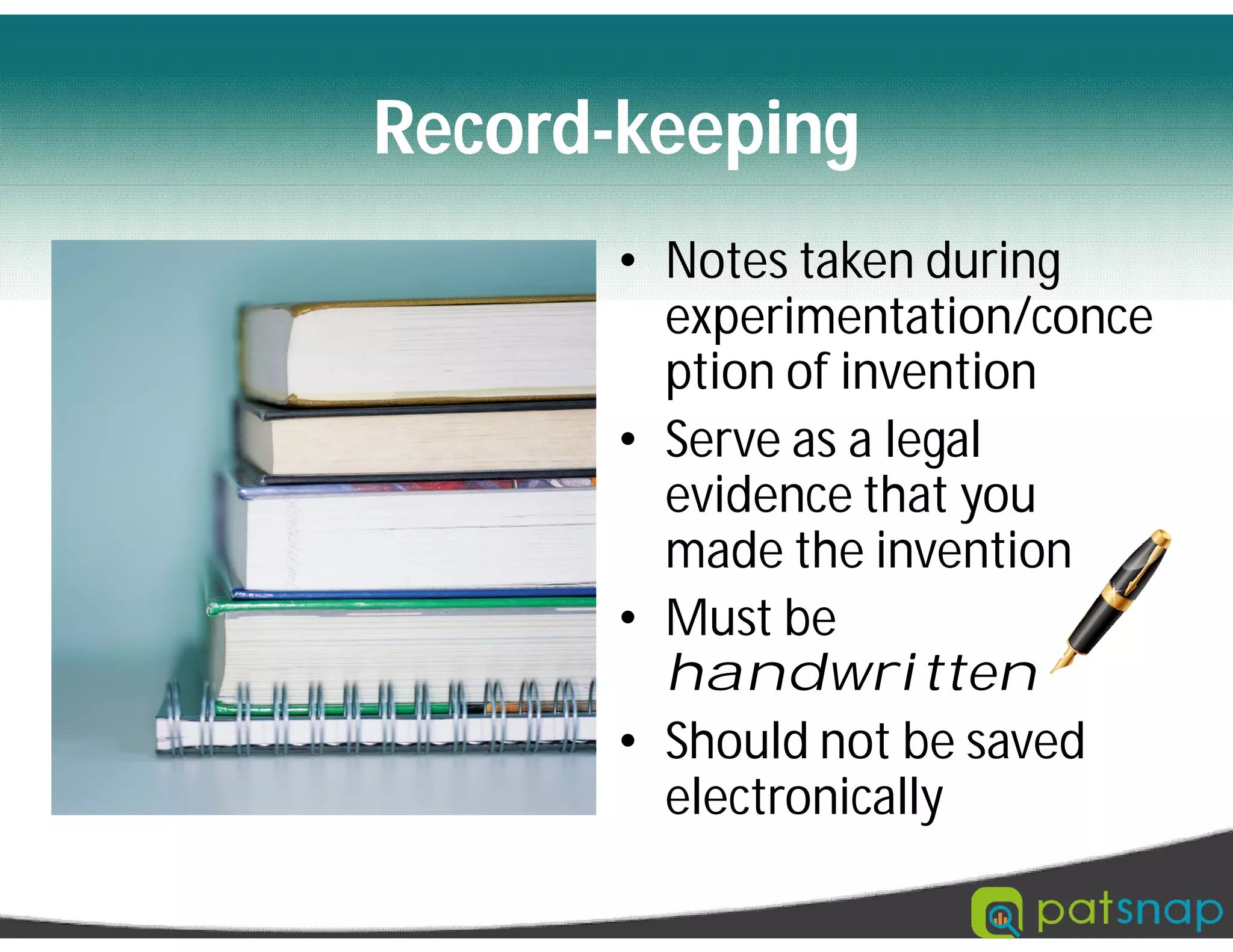
Record-keeping
• Notes taken during
experimentation/conce
ption of invention
• Serve as a legal
evidence that you
made the invention
• Must be
handwritten
• Should not be saved
electronically
Why Journal your Journey?
This logbook:
• Is evident of the date of conception of your
invention when filing for application
• Helps organize your thoughts and avoid
spinning the wheel, especially when you have
limited resources as a start-up
• Provides an inventory on the designs that you
discarded and yet, could potentially be
patentable
The best time to start is….
Record the moment you have the idea…
How to Journal your Journey
Keep a log:
• In a bound notebook
with numbered pages
• With Pen (avoid pencil
as it is erasable)
• Recording the details
(e.g. observations,
illustrative sketches,
test results)
It’s not a simple journal that only involves you.
You need a….
Witness
• Get a trusted friend/relative (as a witness) to
review and sign on the last written page
occasionally, specifying the date
• Should have at least a basic knowledge in your
field of invention e.g. your lab technician
• Have a written agreement with the witness to
ensure the confidentiality of the invention
• SHOULD NOT be your co-inventor
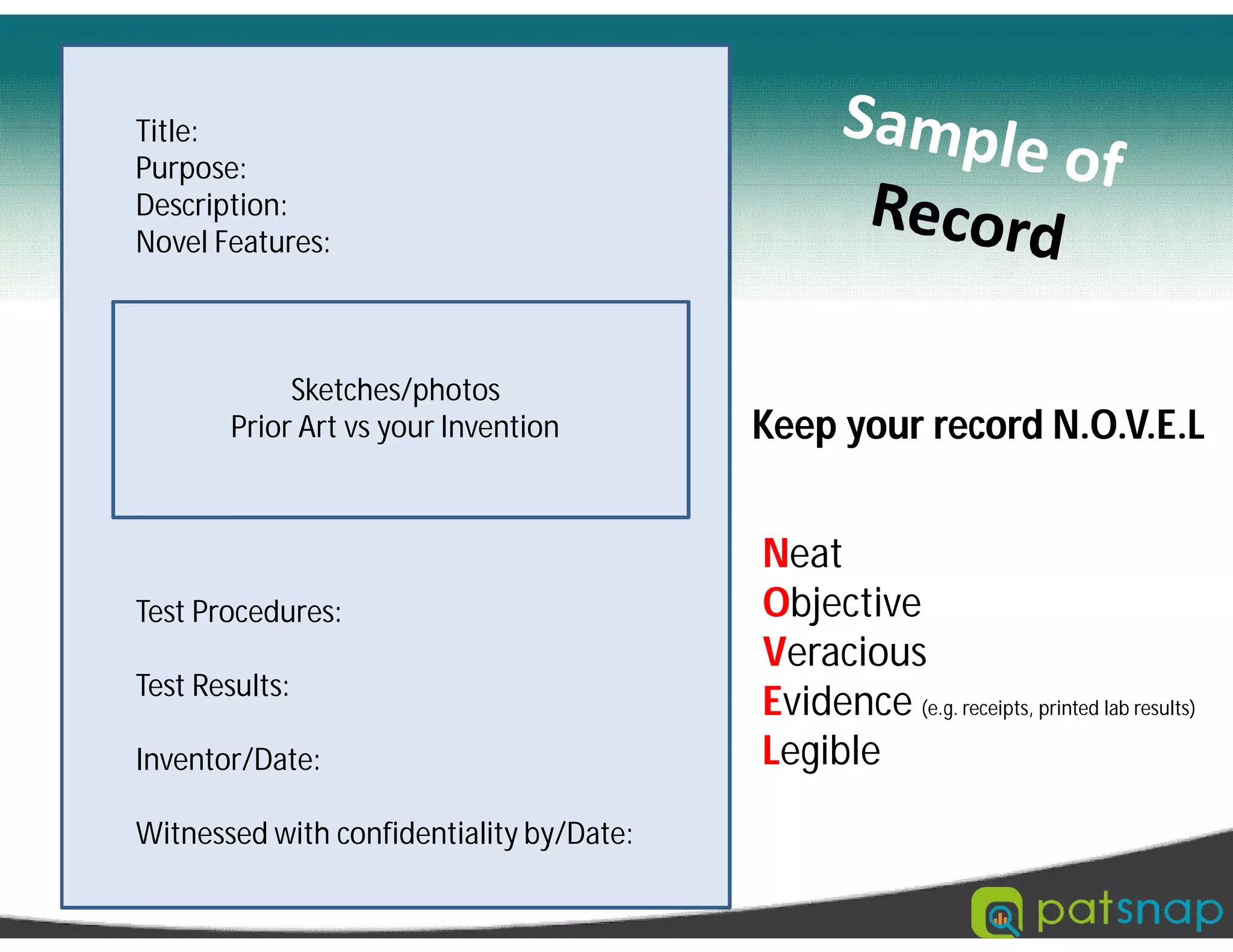
Title:
Purpose:
Description:
Novel Features:
Sketches/photos
Prior Art vs your Invention
Test Procedures:
Test Results:
Inventor/Date:
Witnessed with confidentiality by/Date:
Neat
Objective
Veracious
Evidence (e.g. receipts, printed lab results)
Legible
Keep your record N.O.V.E.L
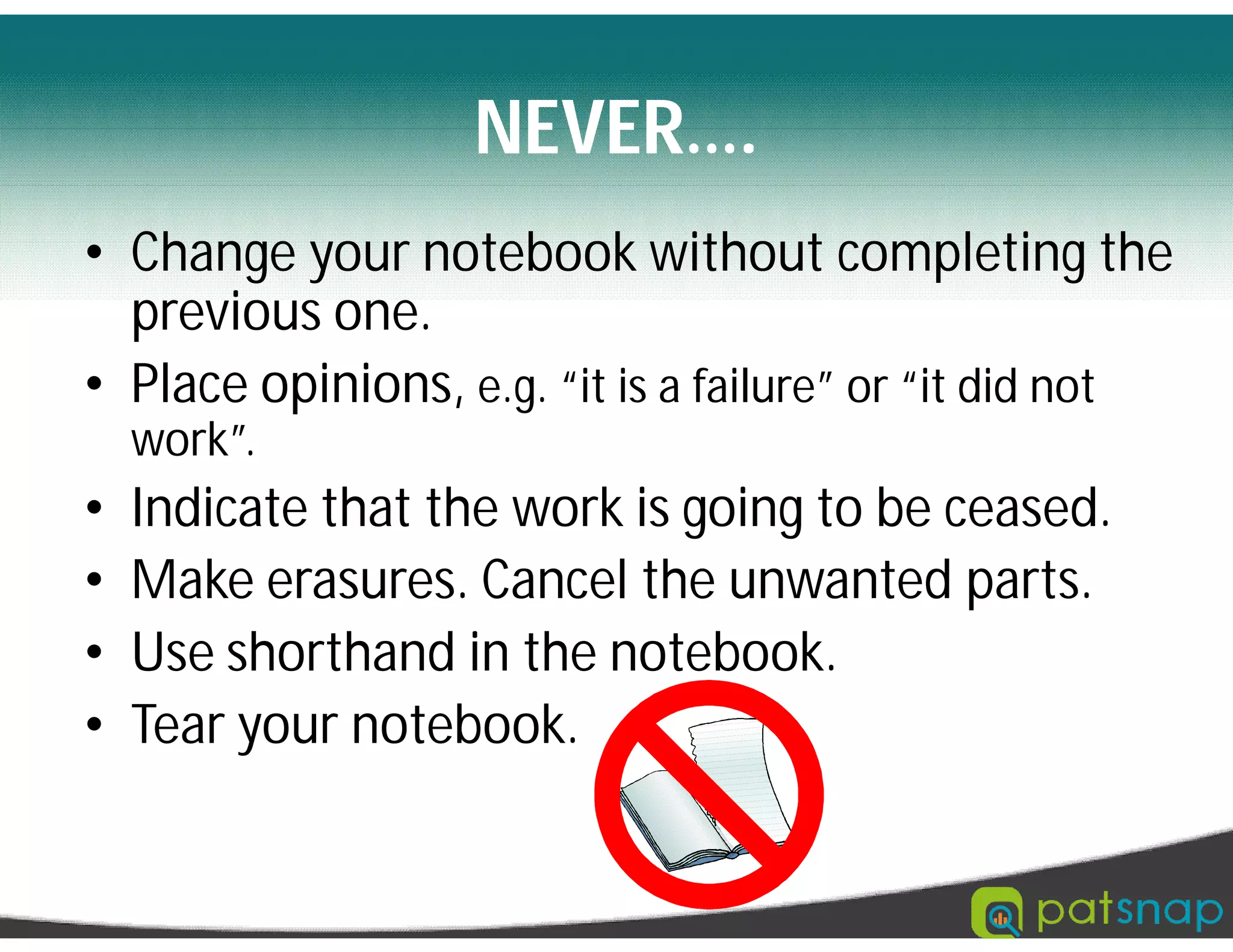
NEVER….
• Change your notebook without completing the
previous one.
• Place opinions, e.g. “it is a failure” or “it did not
work”.
• Indicate that the work is going to be ceased.
• Make erasures. Cancel the unwanted parts.
• Use shorthand in the notebook.
• Tear your notebook.
There is no duplicate copy of your notebook.
Keep it in a secure place.
Treat your logbook like a gold.
About IP guide for Start-ups
Visit www.facebook.com/patsnap for your weekly dose of Intellectual Property guide for early ventures, written by
PatSnap’s PaTENt minutes’ team.
Rev up your IP knowledge in just 10 minutes. Each Patent 10 minutes guide consists of 10 slides.

Patent 10 minutes: Record-keeping for patent application

  • 1.
    Starting on theright-Note Keeping records of your invention 3
  • 2.
    Overview • What isrecord-keeping? • Benefits of record-keeping • How should it be like? • Sample of note-taking • What should not be in the notebook?
  • 3.
    Record-keeping • Notes takenduring experimentation/conce ption of invention • Serve as a legal evidence that you made the invention • Must be handwritten • Should not be saved electronically
  • 4.
    Why Journal yourJourney? This logbook: • Is evident of the date of conception of your invention when filing for application • Helps organize your thoughts and avoid spinning the wheel, especially when you have limited resources as a start-up • Provides an inventory on the designs that you discarded and yet, could potentially be patentable
  • 5.
    The best timeto start is…. Record the moment you have the idea…
  • 6.
    How to Journalyour Journey Keep a log: • In a bound notebook with numbered pages • With Pen (avoid pencil as it is erasable) • Recording the details (e.g. observations, illustrative sketches, test results)
  • 7.
    It’s not asimple journal that only involves you. You need a….
  • 8.
    Witness • Get atrusted friend/relative (as a witness) to review and sign on the last written page occasionally, specifying the date • Should have at least a basic knowledge in your field of invention e.g. your lab technician • Have a written agreement with the witness to ensure the confidentiality of the invention • SHOULD NOT be your co-inventor
  • 9.
    Title: Purpose: Description: Novel Features: Sketches/photos Prior Artvs your Invention Test Procedures: Test Results: Inventor/Date: Witnessed with confidentiality by/Date: Neat Objective Veracious Evidence (e.g. receipts, printed lab results) Legible Keep your record N.O.V.E.L
  • 10.
    NEVER…. • Change yournotebook without completing the previous one. • Place opinions, e.g. “it is a failure” or “it did not work”. • Indicate that the work is going to be ceased. • Make erasures. Cancel the unwanted parts. • Use shorthand in the notebook. • Tear your notebook.
  • 11.
    There is noduplicate copy of your notebook. Keep it in a secure place. Treat your logbook like a gold.
  • 12.
    About IP guidefor Start-ups Visit www.facebook.com/patsnap for your weekly dose of Intellectual Property guide for early ventures, written by PatSnap’s PaTENt minutes’ team. Rev up your IP knowledge in just 10 minutes. Each Patent 10 minutes guide consists of 10 slides.