How to do a
Science Project
The Project/Display Board
& Log Book
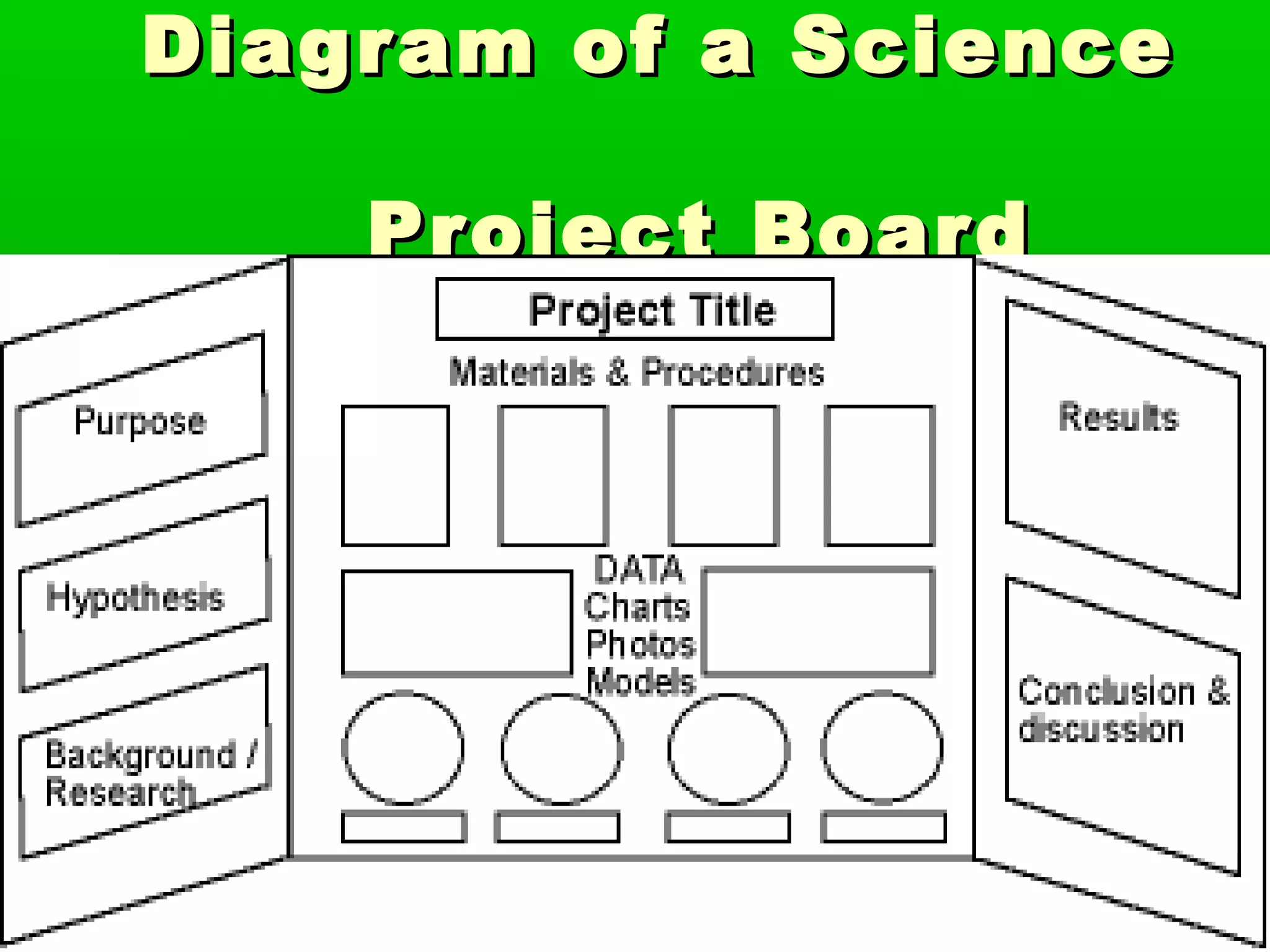
Diagram of a Science

    Project Board
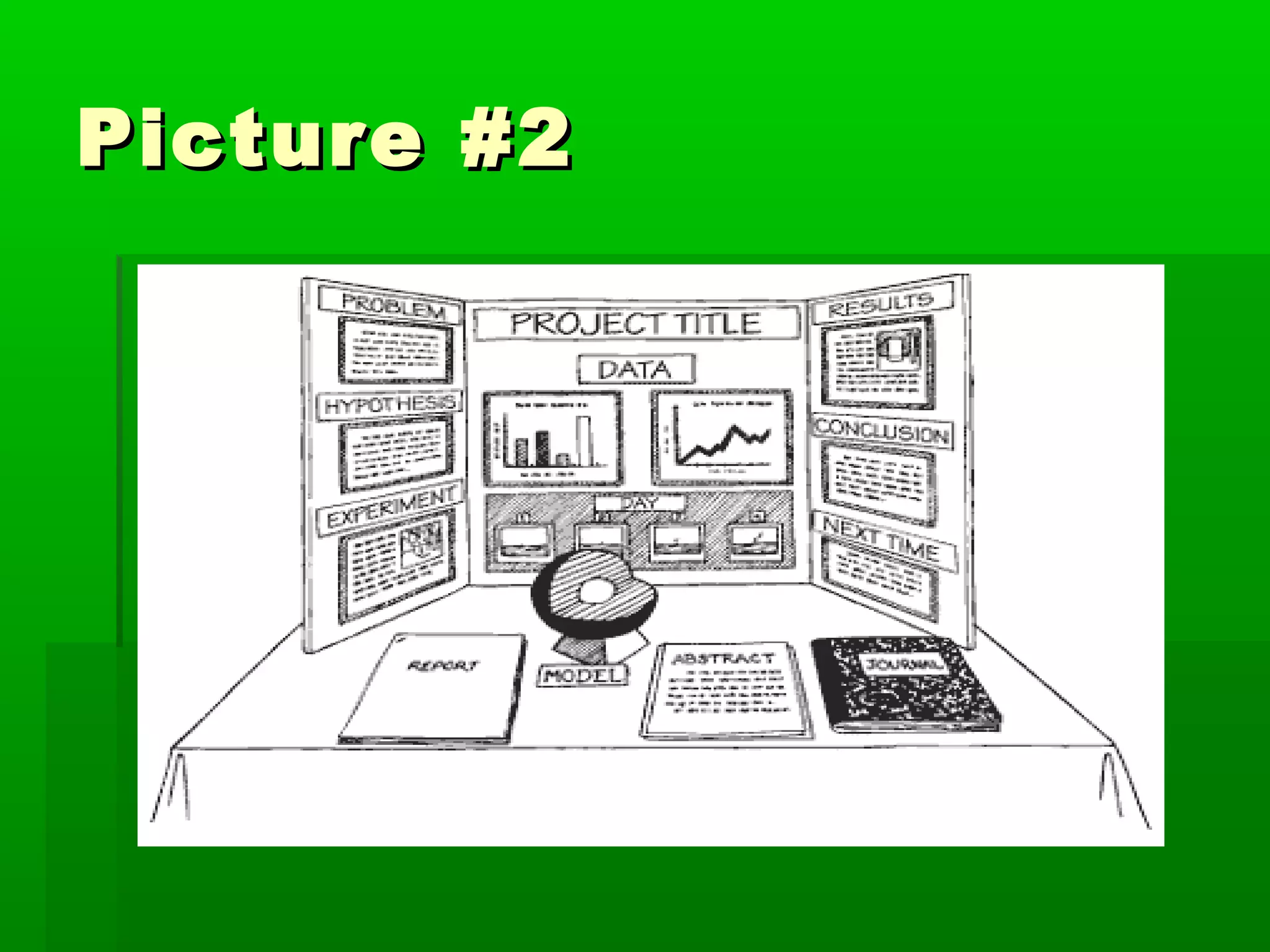
Picture #2
Project Board
  Your science fair display represents all the
   work that you have done.
  It should consist of anything that represents
   your project, such as models made, items
   studied, photographs, surveys, and the like.
  It must tell the story of the project in such a
   way that it attracts and holds the interest of the
   viewer.
  It has to be thorough, but not too crowded, so
   keep it simple.
Log Book
 logbook is a crucial part of any research project. It is a
 detailed account of every phase of your
  project, from the initial brainstorming to the
  final research report.
 The logbook is proof
  that certain activities occurred at specific
  times.
 Journals and logbooks are subject to
    scrutiny by the scientific community and are
    acceptable evidence in a court of law.
Log Book (continued)

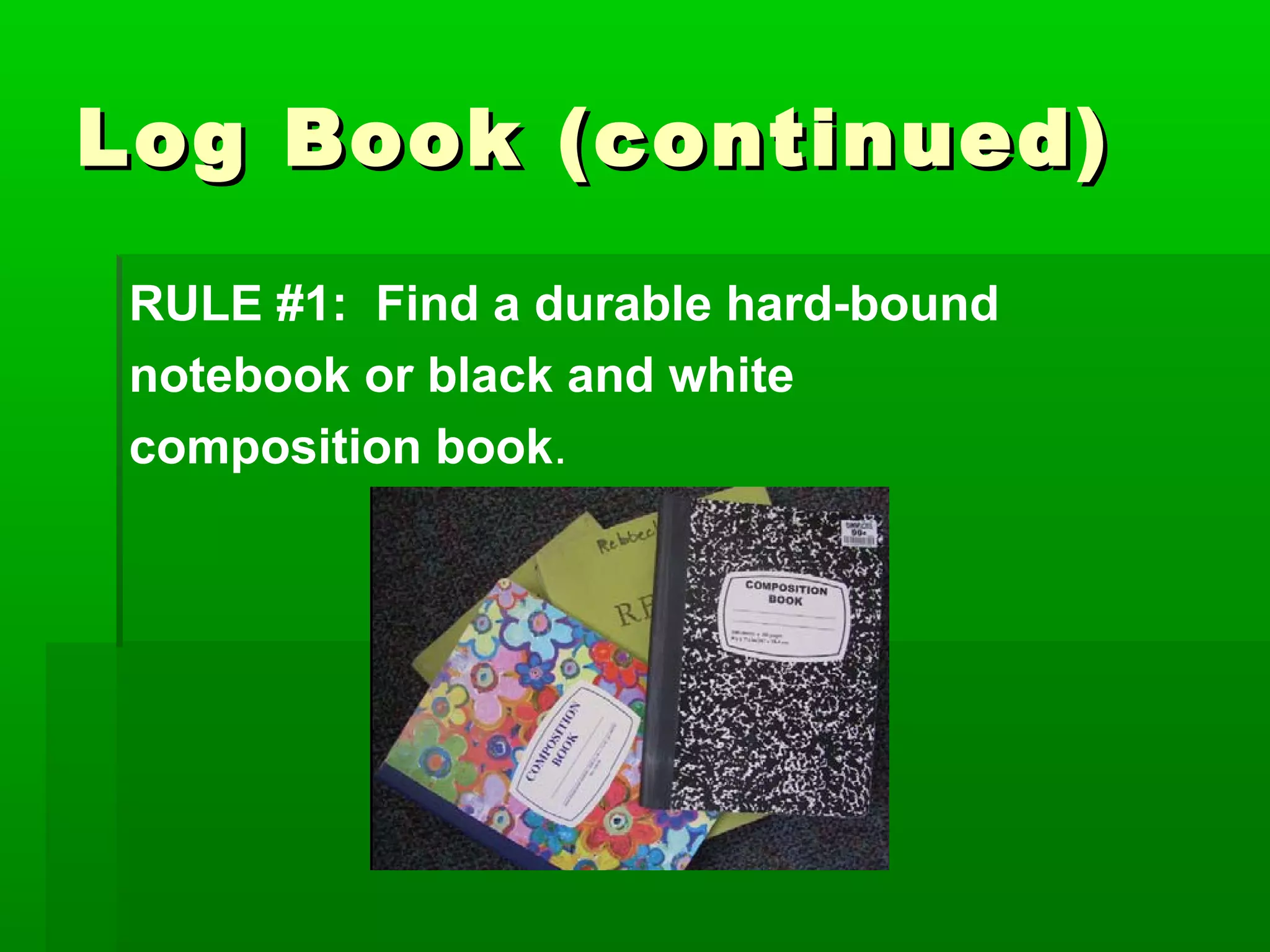
 RULE #1: Find a durable hard-bound
 notebook or black and white
 composition book.
Log Book (cont.)
 Rule #2: Label your logbook
  your name, phone number, email address, and
   teacher's name in a prominent location.

 Rule#3: Write all entries in ink NO PENCIL.
  This is a permanent record of all of your
    activities associated with your
    project.
Log Book (cont.)

 RULE#4: Number the pages in your
 Logbook.

 Rule#5: Date every entry.
  Like a journal
  Brief but concise
  Full sentences are not required
Log Book (cont)

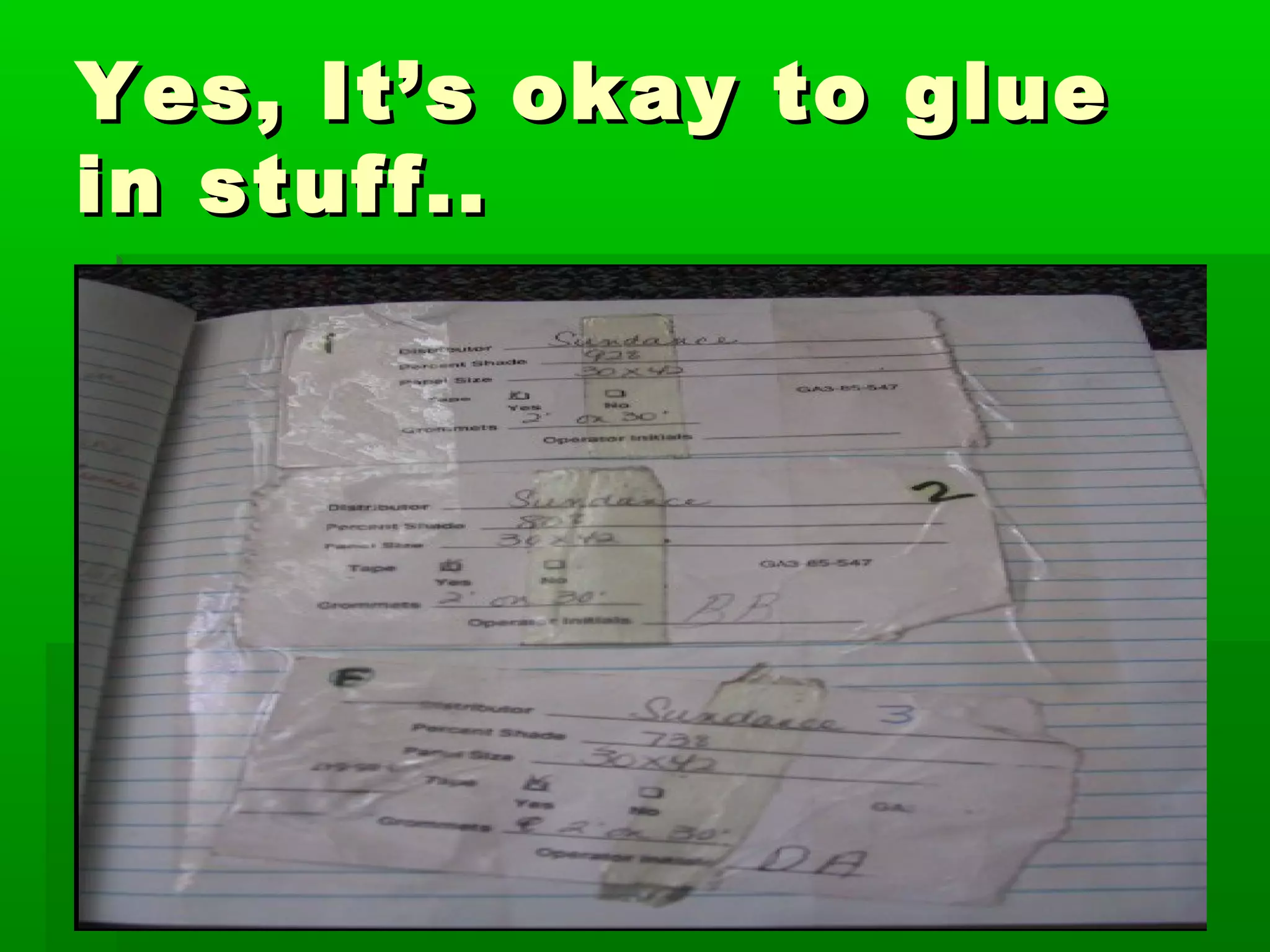
 Rule #6: Don't worry about neatness.
  Work should be legible
Yes, It’s okay to glue
in stuff..
Log Book ( cont)
 Rule #7: Should be used during all
 phases of the project.

  Should include your brainstorming, calculations,
   library/internet searches, phone calls, interviews,
   meetings with mentors or advisors, notes from tours of
   laboratories, research facilities and other related
   activities.

  Remember that it's documentation of your work.
Log Book

Rule #8: Make sure it is organized.
 A table of Contents, tabs whatever ….
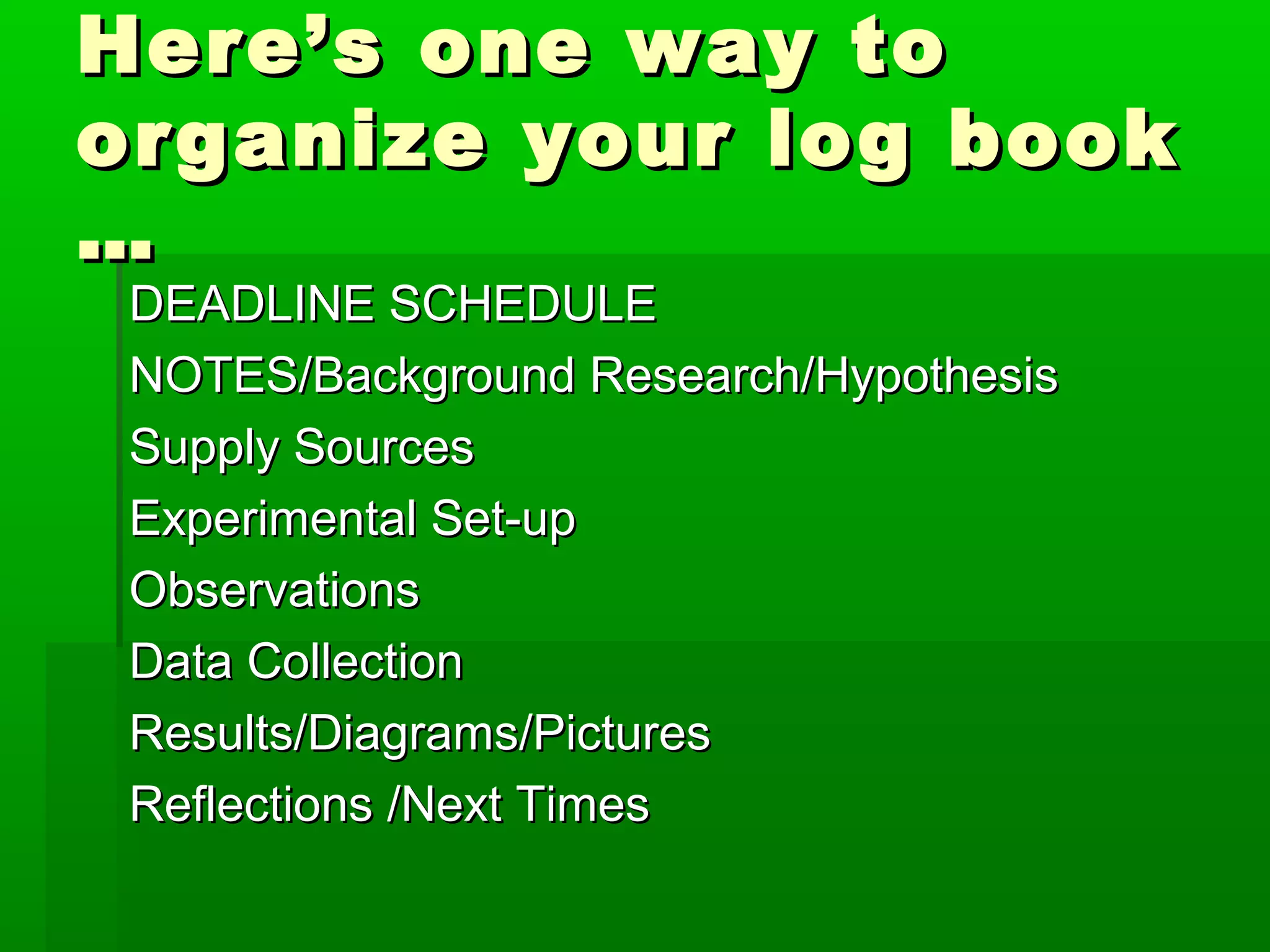
Here’s one way to
organize your log book
…
 DEADLINE SCHEDULE
 NOTES/Background Research/Hypothesis
 Supply Sources
 Experimental Set-up
 Observations
 Data Collection
 Results/Diagrams/Pictures
 Reflections /Next Times
NOW,   GET TO
WORK   !!!!

How to do a science project powerpoint project board

  • 1.
    How to doa Science Project The Project/Display Board & Log Book
  • 2.
    Diagram of aScience Project Board
  • 3.
  • 4.
    Project Board Your science fair display represents all the work that you have done.  It should consist of anything that represents your project, such as models made, items studied, photographs, surveys, and the like.  It must tell the story of the project in such a way that it attracts and holds the interest of the viewer.  It has to be thorough, but not too crowded, so keep it simple.
  • 5.
    Log Book  logbookis a crucial part of any research project. It is a  detailed account of every phase of your project, from the initial brainstorming to the final research report.  The logbook is proof that certain activities occurred at specific times.  Journals and logbooks are subject to scrutiny by the scientific community and are acceptable evidence in a court of law.
  • 6.
    Log Book (continued) RULE #1: Find a durable hard-bound notebook or black and white composition book.
  • 7.
    Log Book (cont.) Rule #2: Label your logbook  your name, phone number, email address, and teacher's name in a prominent location. Rule#3: Write all entries in ink NO PENCIL.  This is a permanent record of all of your activities associated with your project.
  • 8.
    Log Book (cont.) RULE#4: Number the pages in your Logbook. Rule#5: Date every entry.  Like a journal  Brief but concise  Full sentences are not required
  • 9.
    Log Book (cont) Rule #6: Don't worry about neatness.  Work should be legible
  • 10.
    Yes, It’s okayto glue in stuff..
  • 11.
    Log Book (cont) Rule #7: Should be used during all phases of the project.  Should include your brainstorming, calculations, library/internet searches, phone calls, interviews, meetings with mentors or advisors, notes from tours of laboratories, research facilities and other related activities.  Remember that it's documentation of your work.
  • 12.
    Log Book Rule #8:Make sure it is organized.  A table of Contents, tabs whatever ….
  • 13.
    Here’s one wayto organize your log book … DEADLINE SCHEDULE NOTES/Background Research/Hypothesis Supply Sources Experimental Set-up Observations Data Collection Results/Diagrams/Pictures Reflections /Next Times
  • 14.
    NOW, GET TO WORK !!!!