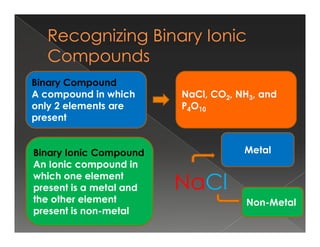
Binary Compound
A compound in which
only 2 elements are
present
NaCl, CO2, NH3, and
P4O10
Binary Ionic Compound
An Ionic compound in
which one element
present is a metal and
the other element
present is non-metal
NaCl
Metal
Non-Metal
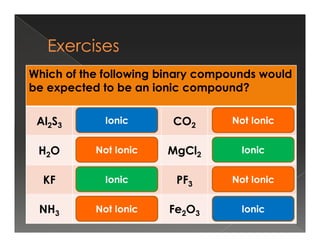
Which of the following binary compounds would
be expected to be an ionic compound?
Al2S3 CO2
Ionic Not Ionic
Al2S3 CO2
H2O MgCl2
KF PF3
NH3 Fe2O3
Ionic
Not Ionic
Ionic
Not Ionic
Not Ionic
Ionic
Ionic
Not Ionic
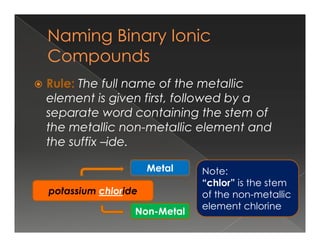
 Rule: The full name of the metallic
element is given first, followed by a
separate word containing the stem of
the metallic non-metallic element and
the suffix –ide.
Metal
Non-Metal
potassium chloride
Note:
“chlor” is the stem
of the non-metallic
element chlorine
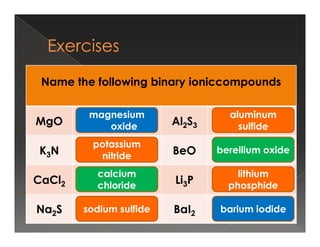
Name the following binary ioniccompounds
MgO Al2S3
magnesium
oxide
aluminum
sulfide
MgO Al2S3
K3N BeO
CaCl2 Li3P
Na2S BaI2
oxide
potassium
nitride
calcium
chloride
sodium sulfide
sulfide
berellium oxide
barium iodide
lithium
phosphide
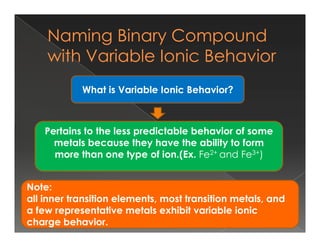
What is Variable Ionic Behavior?
Pertains to the less predictable behavior of some
metals because they have the ability to form
more than one type of ion.(Ex. Fe2+ and Fe3+)
Note:
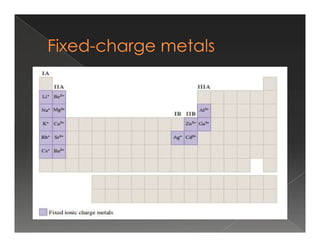
all inner transition elements, most transition metals, and
a few representative metals exhibit variable ionic
charge behavior.
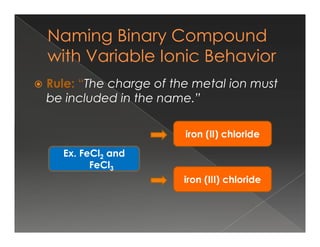
 Rule: “The charge of the metal ion must
be included in the name.”
Ex. FeCl2 and
FeCl3
iron (II) chloride
iron (III) chloride
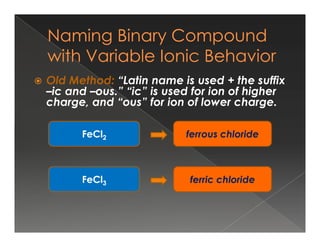
 Old Method: “Latin name is used + the suffix
–ic and –ous.” “ic” is used for ion of higher
charge, and “ous” for ion of lower charge.
FeCl2
ferric chloride
ferrous chloride
FeCl3
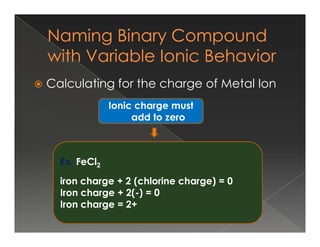
 Calculating for the charge of Metal Ion
Ionic charge must
add to zero
Ex. FeCl2
iron charge + 2 (chlorine charge) = 0
Iron charge + 2(-) = 0
Iron charge = 2+
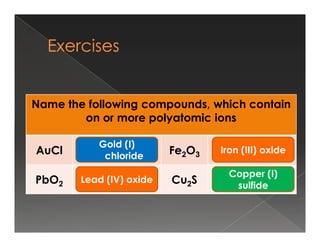
Name the following compounds, which contain
on or more polyatomic ions
AuCl Fe2O3
PbO2 Cu2S
Gold (I)
chloride
Lead (IV) oxide
Iron (III) oxide
Copper (I)
sulfide

Recognize-and-name-Binary-compound.pdf

  • 3.
    Binary Compound A compoundin which only 2 elements are present NaCl, CO2, NH3, and P4O10 Binary Ionic Compound An Ionic compound in which one element present is a metal and the other element present is non-metal NaCl Metal Non-Metal
  • 4.
    Which of thefollowing binary compounds would be expected to be an ionic compound? Al2S3 CO2 Ionic Not Ionic Al2S3 CO2 H2O MgCl2 KF PF3 NH3 Fe2O3 Ionic Not Ionic Ionic Not Ionic Not Ionic Ionic Ionic Not Ionic
  • 5.
     Rule: Thefull name of the metallic element is given first, followed by a separate word containing the stem of the metallic non-metallic element and the metallic non-metallic element and the suffix –ide. Metal Non-Metal potassium chloride Note: “chlor” is the stem of the non-metallic element chlorine
  • 7.
    Name the followingbinary ioniccompounds MgO Al2S3 magnesium oxide aluminum sulfide MgO Al2S3 K3N BeO CaCl2 Li3P Na2S BaI2 oxide potassium nitride calcium chloride sodium sulfide sulfide berellium oxide barium iodide lithium phosphide
  • 8.
    What is VariableIonic Behavior? Pertains to the less predictable behavior of some metals because they have the ability to form more than one type of ion.(Ex. Fe2+ and Fe3+) Note: all inner transition elements, most transition metals, and a few representative metals exhibit variable ionic charge behavior.
  • 9.
     Rule: “Thecharge of the metal ion must be included in the name.” Ex. FeCl2 and FeCl3 iron (II) chloride iron (III) chloride
  • 10.
     Old Method:“Latin name is used + the suffix –ic and –ous.” “ic” is used for ion of higher charge, and “ous” for ion of lower charge. FeCl2 ferric chloride ferrous chloride FeCl3
  • 11.
     Calculating forthe charge of Metal Ion Ionic charge must add to zero Ex. FeCl2 iron charge + 2 (chlorine charge) = 0 Iron charge + 2(-) = 0 Iron charge = 2+
  • 13.
    Name the followingcompounds, which contain on or more polyatomic ions on or more polyatomic ions AuCl Fe2O3 PbO2 Cu2S Gold (I) chloride Lead (IV) oxide Iron (III) oxide Copper (I) sulfide