Mechanical Department, BVIT, Navi Mumbai.
 System to convey fluids
 Discipline of piping design studies the
efficient transport of fluid.
 Industrial process piping manufacturing
 In-line components senses and controls
 Piping sometimes refers to Piping Design
BVIT
2
 Piping technology developed slowly from
Roman period
 Wooden piping found in 1890’s
 Import of cast iron from the U.S in the 1960’s
 Light-gauge copper tubing coming on the
market in the 1930’s
 In 1926 the PVC pipe was invented but not
manufactured until 1940’s
BVIT
3
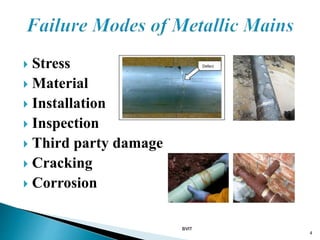
 Stress
 Material
 Installation
 Inspection
 Third party damage
 Cracking
 Corrosion
BVIT
4
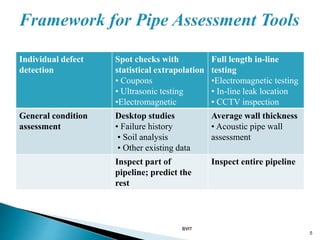
Individual defect
detection
Spot checks with
statistical extrapolation
• Coupons
• Ultrasonic testing
•Electromagnetic
Full length in-line
testing
•Electromagnetic testing
• In-line leak location
• CCTV inspection
General condition
assessment
Desktop studies
• Failure history
• Soil analysis
• Other existing data
Average wall thickness
• Acoustic pipe wall
assessment
Inspect part of
pipeline; predict the
rest
Inspect entire pipeline
BVIT
5
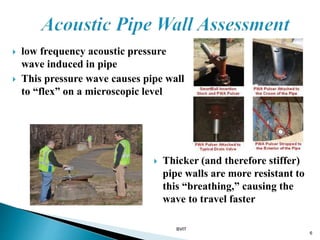
 low frequency acoustic pressure
wave induced in pipe
 This pressure wave causes pipe wall
to “flex” on a microscopic level
6
 Thicker (and therefore stiffer)
pipe walls are more resistant to
this “breathing,” causing the
wave to travel faster
BVIT
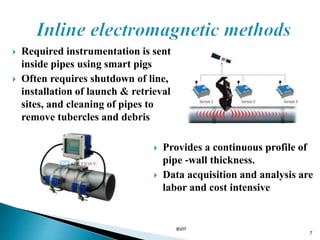
 Required instrumentation is sent
inside pipes using smart pigs
 Often requires shutdown of line,
installation of launch & retrieval
sites, and cleaning of pipes to
remove tubercles and debris
7
 Provides a continuous profile of
pipe ‐wall thickness.
 Data acquisition and analysis are
labor and cost intensive
BVIT
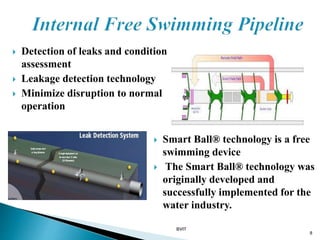
 Detection of leaks and condition
assessment
 Leakage detection technology
 Minimize disruption to normal
operation
8
 Smart Ball® technology is a free
swimming device
 The Smart Ball® technology was
originally developed and
successfully implemented for the
water industry.
BVIT
 Reduces overflows, violations & failures
 Prioritizes repair and maintenance efforts
 Reduces emergency repairs or dig &
replace
 Modern technologies utilize trenchless
condition assessment and rehabilitation
techniques
 Can save a lot of money!
BVIT
9
 A well-run Condition Assessment & Rehabilitation
Program provides a systematic, consistent, & cost-
effective approach to asset management
 Supports long term capital expenditure planning
 Effective in forecasting future maintenance needs,
prioritizing resource allocation, and costs based on
inspection & condition assessment ratings
 Reduces potential overflows, violations & failures
 Utilizes trenchless technology
 Can save a lot of money!
BVIT
10
BVIT
11
BVIT
12

Recent Advances In Pipe Wall Assessment Technnology

  • 1.
  • 2.
     System toconvey fluids  Discipline of piping design studies the efficient transport of fluid.  Industrial process piping manufacturing  In-line components senses and controls  Piping sometimes refers to Piping Design BVIT 2
  • 3.
     Piping technologydeveloped slowly from Roman period  Wooden piping found in 1890’s  Import of cast iron from the U.S in the 1960’s  Light-gauge copper tubing coming on the market in the 1930’s  In 1926 the PVC pipe was invented but not manufactured until 1940’s BVIT 3
  • 4.
     Stress  Material Installation  Inspection  Third party damage  Cracking  Corrosion BVIT 4
  • 5.
    Individual defect detection Spot checkswith statistical extrapolation • Coupons • Ultrasonic testing •Electromagnetic Full length in-line testing •Electromagnetic testing • In-line leak location • CCTV inspection General condition assessment Desktop studies • Failure history • Soil analysis • Other existing data Average wall thickness • Acoustic pipe wall assessment Inspect part of pipeline; predict the rest Inspect entire pipeline BVIT 5
  • 6.
     low frequencyacoustic pressure wave induced in pipe  This pressure wave causes pipe wall to “flex” on a microscopic level 6  Thicker (and therefore stiffer) pipe walls are more resistant to this “breathing,” causing the wave to travel faster BVIT
  • 7.
     Required instrumentationis sent inside pipes using smart pigs  Often requires shutdown of line, installation of launch & retrieval sites, and cleaning of pipes to remove tubercles and debris 7  Provides a continuous profile of pipe ‐wall thickness.  Data acquisition and analysis are labor and cost intensive BVIT
  • 8.
     Detection ofleaks and condition assessment  Leakage detection technology  Minimize disruption to normal operation 8  Smart Ball® technology is a free swimming device  The Smart Ball® technology was originally developed and successfully implemented for the water industry. BVIT
  • 9.
     Reduces overflows,violations & failures  Prioritizes repair and maintenance efforts  Reduces emergency repairs or dig & replace  Modern technologies utilize trenchless condition assessment and rehabilitation techniques  Can save a lot of money! BVIT 9
  • 10.
     A well-runCondition Assessment & Rehabilitation Program provides a systematic, consistent, & cost- effective approach to asset management  Supports long term capital expenditure planning  Effective in forecasting future maintenance needs, prioritizing resource allocation, and costs based on inspection & condition assessment ratings  Reduces potential overflows, violations & failures  Utilizes trenchless technology  Can save a lot of money! BVIT 10
  • 11.
  • 12.