Getting students Excited
Expanding the Literature
 experience for students
Does it matter what books students’
               read?
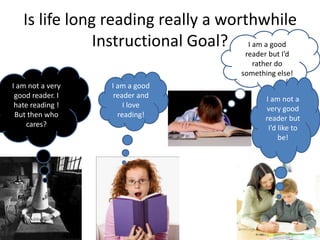
Is life long reading really a worthwhile
               Instructional Goal? I am a good
                                      reader but I’d
                                        rather do
                                     something else!
I am not a very   I am a good
 good reader. I    reader and               I am not a
 hate reading !       I love                very good
 But then who       reading!                reader but
    cares?                                   I’d like to
                                                 be!
Did you know?
• Proficient readers read about a million words
  a year. That is the equivalent of reading 25
  average length novels a year
• The average student should be learning 3000
  words a year. That is 7 to 10 new words a day.
• By the time students leave secondary school
  they should have a vocabulary of between
  25000 to 50000 words or more.
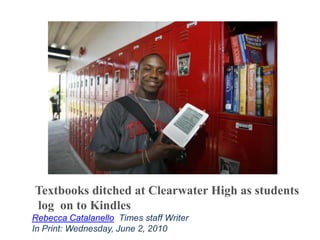
Textbooks ditched at Clearwater High as students
log on to Kindles
Rebecca Catalanello, Times staff Writer
In Print: Wednesday, June 2, 2010
The SLSS student as a Reader
Is disinterested in reading (mainly the boys)

Averse to reading (mainly the boys)

Avoids reading(mainly the boys)

Lacks proficiency in fluency, vocabulary, prosody
  and comprehension (everyone)

Has little or no home support (everyone)
YOU may be all the SLSS student has
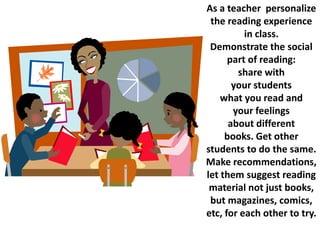
As a teacher personalize
 the reading experience
          in class.
 Demonstrate the social
      part of reading:
        share with
       your students
    what you read and
       your feelings
      about different
     books. Get other
students to do the same.
Make recommendations,
let them suggest reading
 material not just books,
 but magazines, comics,
etc, for each other to try.
Some Effective Techniques
Collaborative activities
 Challenging materials
 Projects that entail several class periods
Stressing links between literature and students’ lives
 Teaching comprehension strategies
 Techniques that facilitate comprehension
 Bibliotherapy

George Graham Lecture, 2008 Michael C. McKenna University of Virginia
Some More Effective Techniques

 Build on interests
 Include variety and choice
 Conduct read-alouds
Assess attitudes and interests.
 Focus on proficiency.
 “Sell” reading.
 Build an engaging classroom
George Graham Lecture, 2008 Michael C. McKenna University of Virginia
Beliefs about the
                Outcomes of Reading
Is reading likely to be pleasurable or
 useful?
Or is reading likely to be
 boring, frustrating, even humiliating?


George Graham Lecture, 2008 Michael C. McKenna University of Virginia
Instruction that fosters positive
             attitudes should
Provide successful and engaging
   experiences with reading
 Strengthen beliefs that reading
   will be pleasant
 Challenge beliefs about peer
    expectations concerning reading


George Graham Lecture, 2008 Michael C. McKenna University of Virginia
Teaching Literature strategies
THE TEACHER LEADS THE WAY—FIND YOUR INNER READER
                          READ CHILDREN’S BOOKS AS AN ADULT


        Teacher Resources              Teacher Resources
   • http://www.adlit.org/        • http://www.amazon.com/T
   • http://www.readingrockets.     he-Book-Whisperer-
     org/                           Awakening-
                                    Reader/dp/0470372273
                                  • http://www.scholastic.com/
                                    readeveryday/read.htm
                                  • http://www.walker.co.uk/Us
                                    erFiles/file/Rights%20of%20
                                    the%20reader/NYOR_ROTR.
                                    pdf
One Size does not fit all
•   Concept maps/wikis/blogs/drawings
•   Literature webquests/Literature circles
•   Book trailers/text to speech software
•   Podcasts, movies and videocasts
•   Digital story telling
•   Drama/Reading Theatre/ Hot seat
•   Games
•   Online chat/skype the author
What’s Hot for vacation reading?
• http://abcnews.go.com/Video/playerIndex?i
  d=11000842
Sites for teenage literature
• http://www.guysread.com/

• http://www.scholastic.com/kids/stacks/books/?lnkid=stac
  ks/nav/b_and_a/main

• http://www.goodreads.com/review/list/3931523-stace-
  leza?shelf=%23ALL%23

• http://teenspace.cincinnatilibrary.org/books/booklist.asp?i
  d=justlikeme

• http://dianebrowneblog.blogspot.com/

• http://summeredward.blogspot.com/p/caribbean-
More sites for teenage literature
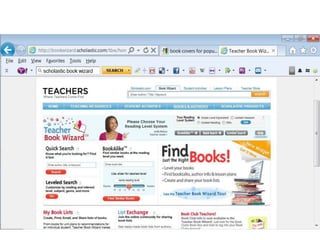
• http://bookwizard.scholastic.com/tbw/homePage.do
• http://www.kidsreads.com/features/great-books-
  boys.asp
• http://www.amazon.com/African-American-Teen-
  Books-Right/lm/382WBQII9SLOU

 •http://www.goodreads.com/search?q=african+ameri
 can+teen+fiction&search%5Bsource%5D=goodreads&
 search_type=books& tab=books

 •http://www.adlit.org/books_authors/
More sites for teenage literature
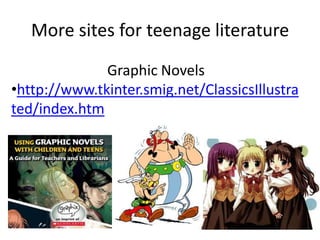
              Graphic Novels
•http://www.tkinter.smig.net/ClassicsIllustra
ted/index.htm
Finally can you make a difference?
• http://www.npr.org/templates/story/story.ph
  p?storyId=113357239

Readingforpleasure

  • 1.
  • 2.
    Expanding the Literature experience for students Does it matter what books students’ read?
  • 4.
    Is life longreading really a worthwhile Instructional Goal? I am a good reader but I’d rather do something else! I am not a very I am a good good reader. I reader and I am not a hate reading ! I love very good But then who reading! reader but cares? I’d like to be!
  • 5.
    Did you know? •Proficient readers read about a million words a year. That is the equivalent of reading 25 average length novels a year • The average student should be learning 3000 words a year. That is 7 to 10 new words a day. • By the time students leave secondary school they should have a vocabulary of between 25000 to 50000 words or more.
  • 6.
    Textbooks ditched atClearwater High as students log on to Kindles Rebecca Catalanello, Times staff Writer In Print: Wednesday, June 2, 2010
  • 8.
    The SLSS studentas a Reader Is disinterested in reading (mainly the boys) Averse to reading (mainly the boys) Avoids reading(mainly the boys) Lacks proficiency in fluency, vocabulary, prosody and comprehension (everyone) Has little or no home support (everyone)
  • 9.
    YOU may beall the SLSS student has
  • 10.
    As a teacherpersonalize the reading experience in class. Demonstrate the social part of reading: share with your students what you read and your feelings about different books. Get other students to do the same. Make recommendations, let them suggest reading material not just books, but magazines, comics, etc, for each other to try.
  • 11.
    Some Effective Techniques Collaborativeactivities  Challenging materials  Projects that entail several class periods Stressing links between literature and students’ lives  Teaching comprehension strategies  Techniques that facilitate comprehension  Bibliotherapy George Graham Lecture, 2008 Michael C. McKenna University of Virginia
  • 12.
    Some More EffectiveTechniques  Build on interests  Include variety and choice  Conduct read-alouds Assess attitudes and interests.  Focus on proficiency.  “Sell” reading.  Build an engaging classroom George Graham Lecture, 2008 Michael C. McKenna University of Virginia
  • 13.
    Beliefs about the Outcomes of Reading Is reading likely to be pleasurable or useful? Or is reading likely to be boring, frustrating, even humiliating? George Graham Lecture, 2008 Michael C. McKenna University of Virginia
  • 14.
    Instruction that fosterspositive attitudes should Provide successful and engaging experiences with reading  Strengthen beliefs that reading will be pleasant  Challenge beliefs about peer expectations concerning reading George Graham Lecture, 2008 Michael C. McKenna University of Virginia
  • 15.
    Teaching Literature strategies THETEACHER LEADS THE WAY—FIND YOUR INNER READER READ CHILDREN’S BOOKS AS AN ADULT Teacher Resources Teacher Resources • http://www.adlit.org/ • http://www.amazon.com/T • http://www.readingrockets. he-Book-Whisperer- org/ Awakening- Reader/dp/0470372273 • http://www.scholastic.com/ readeveryday/read.htm • http://www.walker.co.uk/Us erFiles/file/Rights%20of%20 the%20reader/NYOR_ROTR. pdf
  • 16.
    One Size doesnot fit all • Concept maps/wikis/blogs/drawings • Literature webquests/Literature circles • Book trailers/text to speech software • Podcasts, movies and videocasts • Digital story telling • Drama/Reading Theatre/ Hot seat • Games • Online chat/skype the author
  • 17.
    What’s Hot forvacation reading? • http://abcnews.go.com/Video/playerIndex?i d=11000842
  • 20.
    Sites for teenageliterature • http://www.guysread.com/ • http://www.scholastic.com/kids/stacks/books/?lnkid=stac ks/nav/b_and_a/main • http://www.goodreads.com/review/list/3931523-stace- leza?shelf=%23ALL%23 • http://teenspace.cincinnatilibrary.org/books/booklist.asp?i d=justlikeme • http://dianebrowneblog.blogspot.com/ • http://summeredward.blogspot.com/p/caribbean-
  • 21.
    More sites forteenage literature • http://bookwizard.scholastic.com/tbw/homePage.do • http://www.kidsreads.com/features/great-books- boys.asp • http://www.amazon.com/African-American-Teen- Books-Right/lm/382WBQII9SLOU •http://www.goodreads.com/search?q=african+ameri can+teen+fiction&search%5Bsource%5D=goodreads& search_type=books& tab=books •http://www.adlit.org/books_authors/
  • 22.
    More sites forteenage literature Graphic Novels •http://www.tkinter.smig.net/ClassicsIllustra ted/index.htm
  • 23.
    Finally can youmake a difference? • http://www.npr.org/templates/story/story.ph p?storyId=113357239