Race Conditions and
exec Functions
Race Conditions
• A race condition occurs when multiple processes are trying to do something
with shared data and the final outcome depends on the order in which the
processes run.
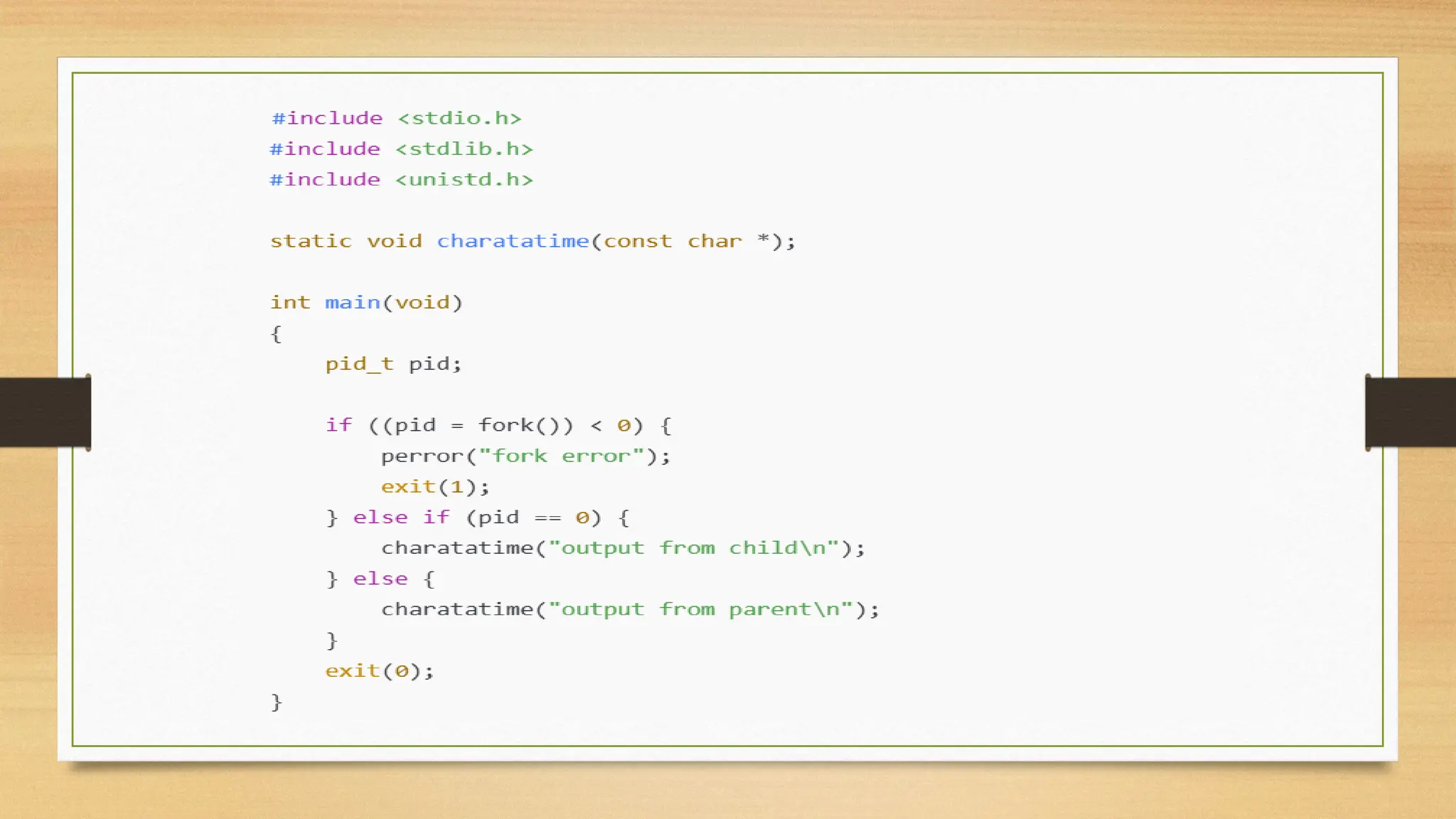
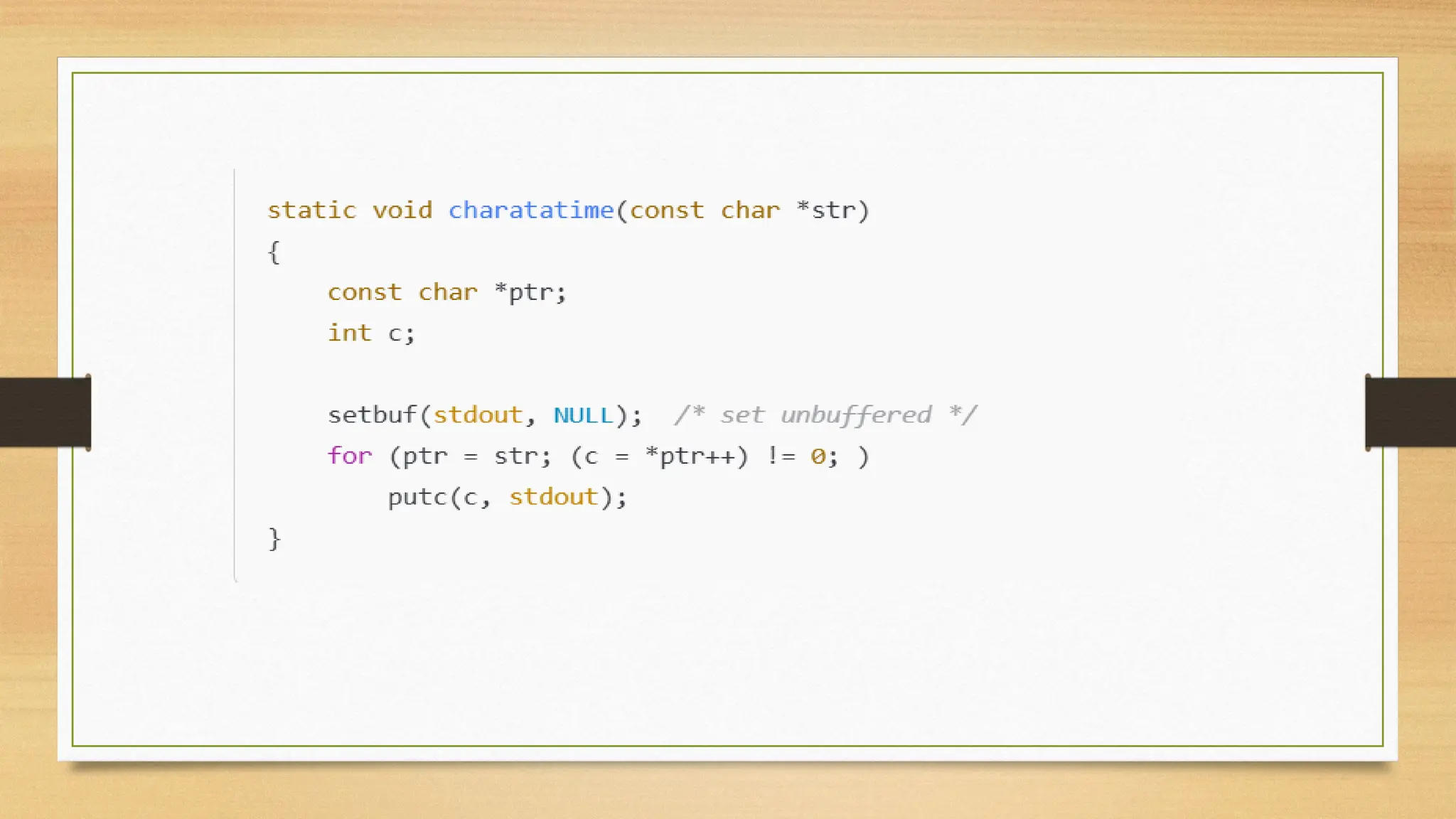
• The program below outputs two strings: one from the child and one from
the parent. The program contains a race condition because the output
depends on the order in which the processes are run by the kernel and for
how long each process runs.
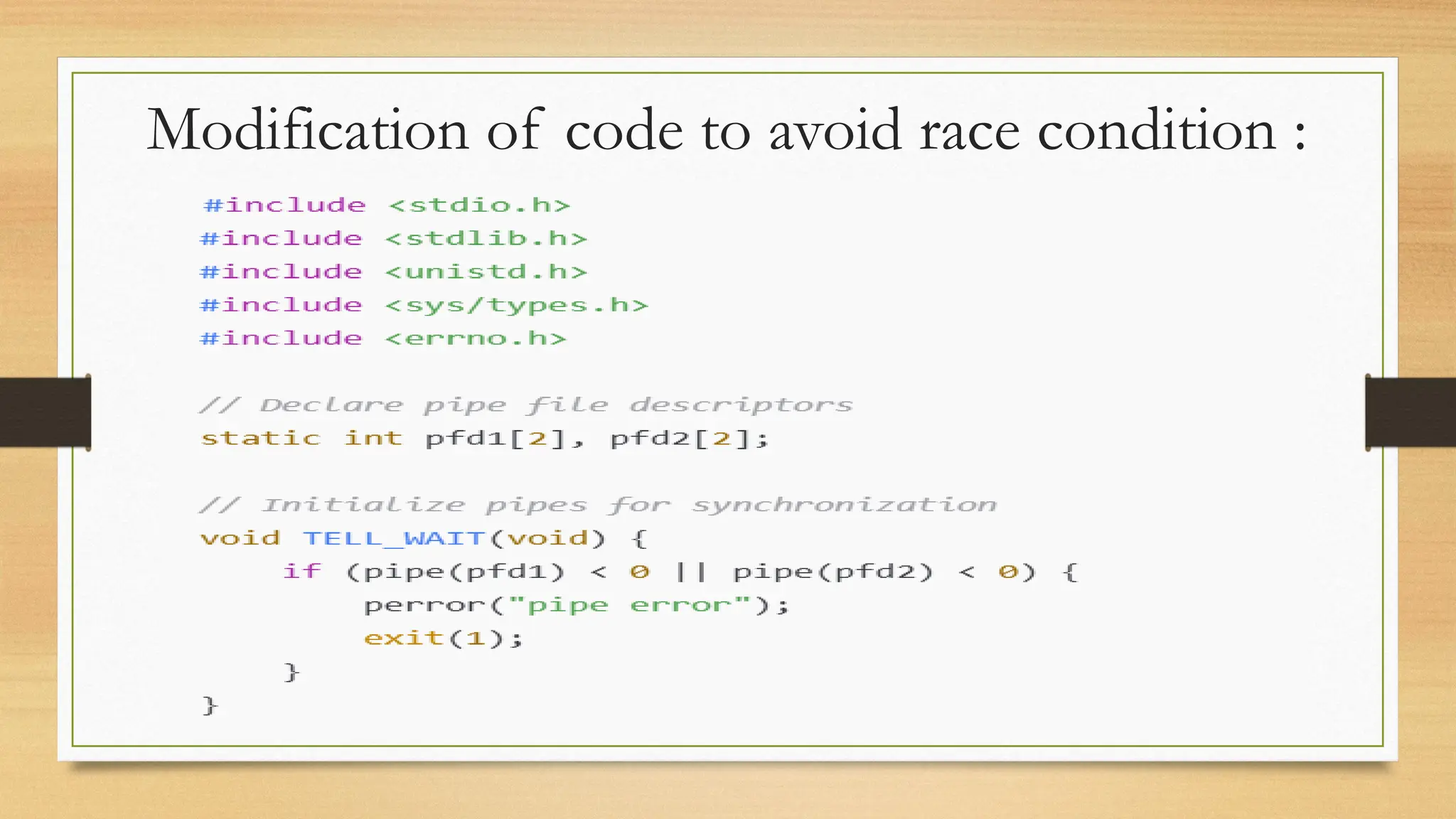
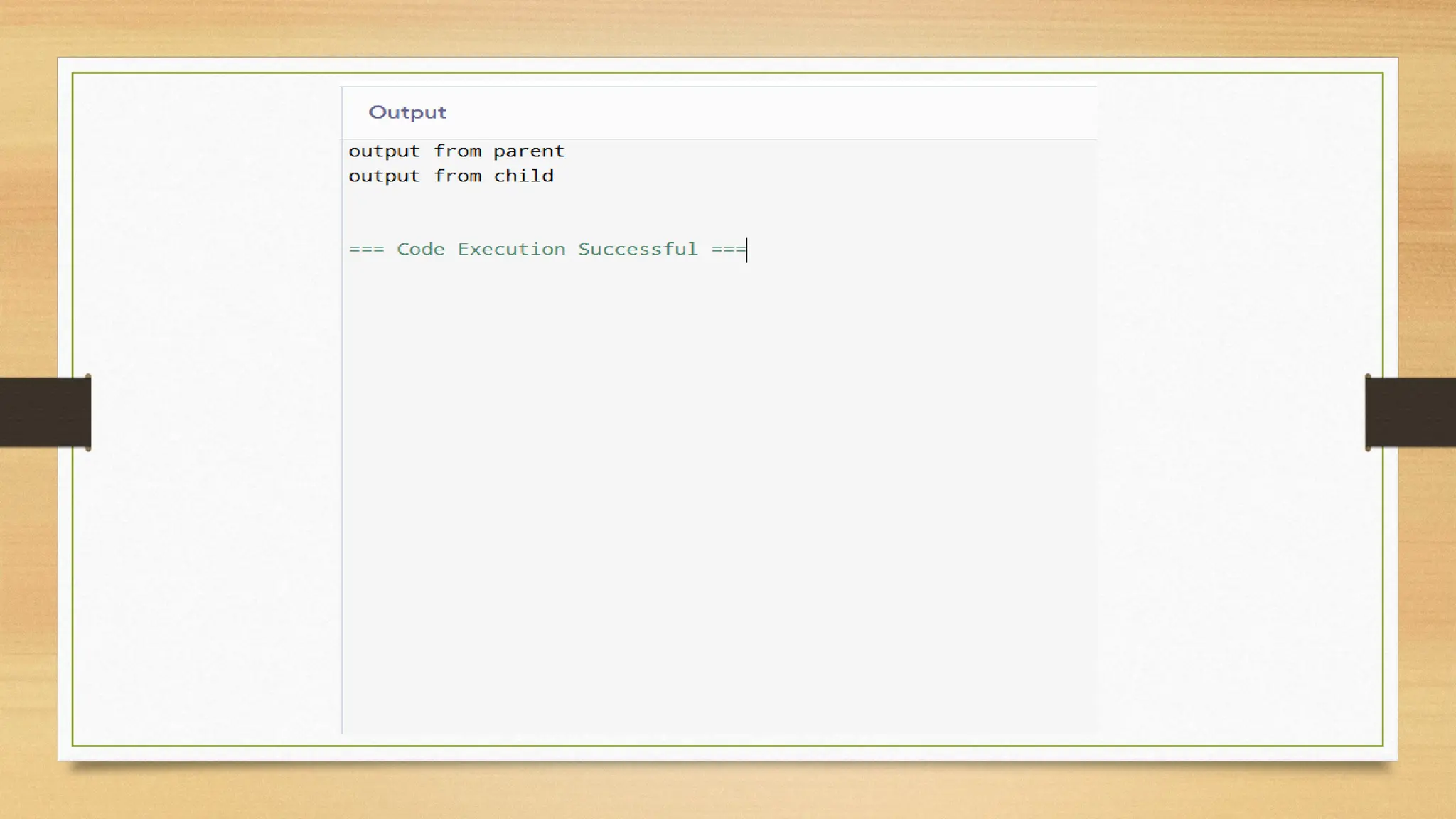
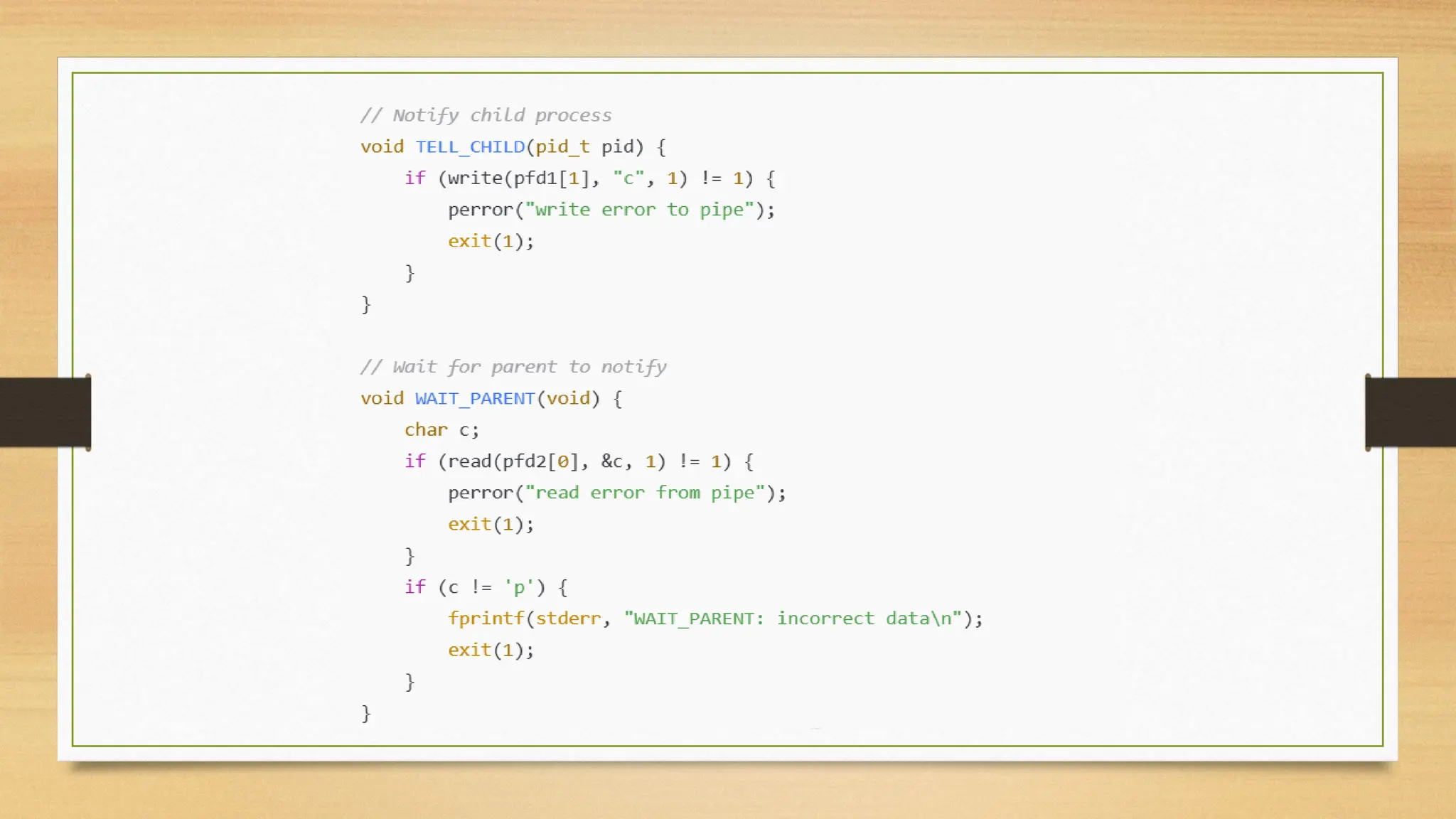
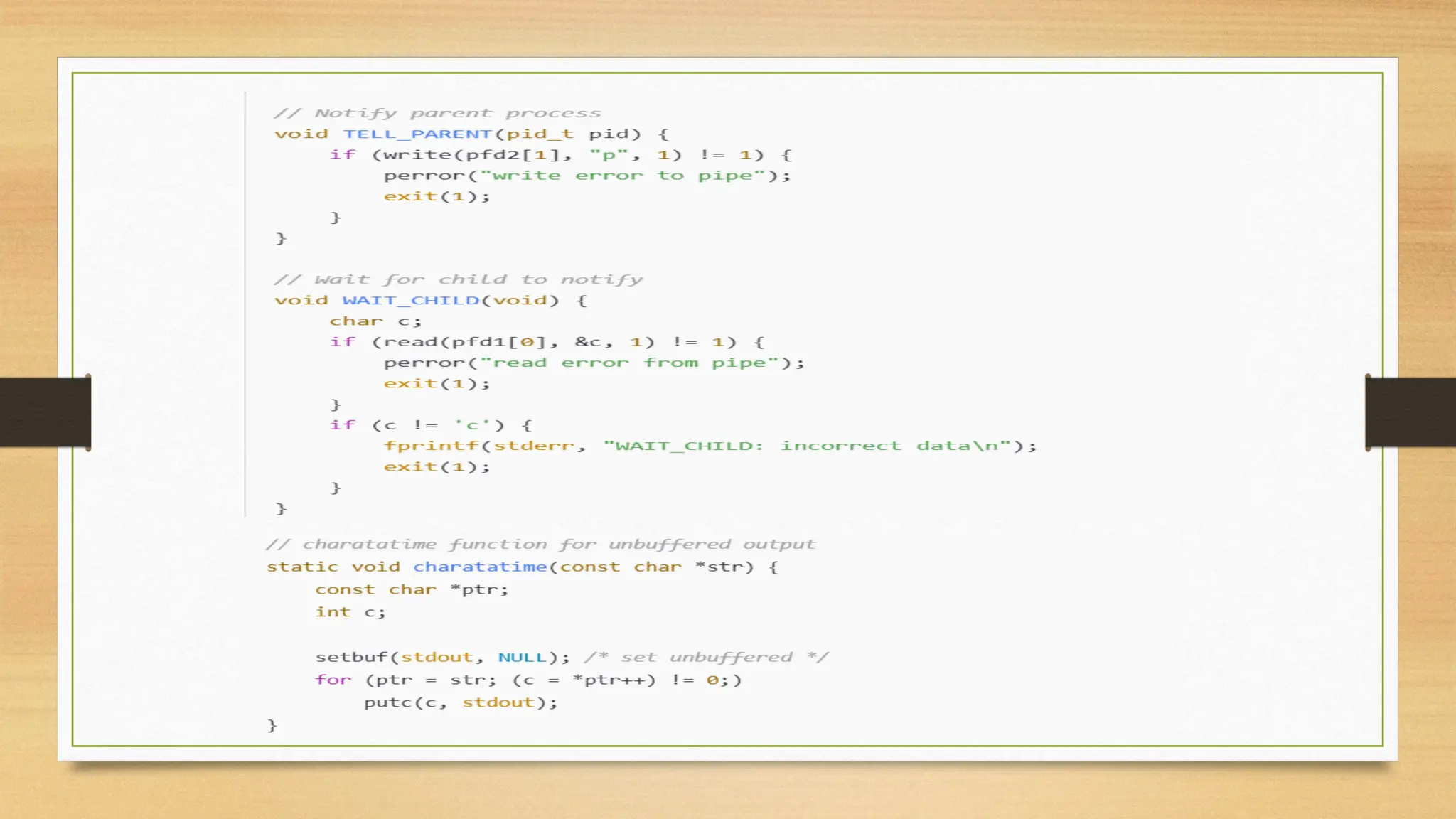
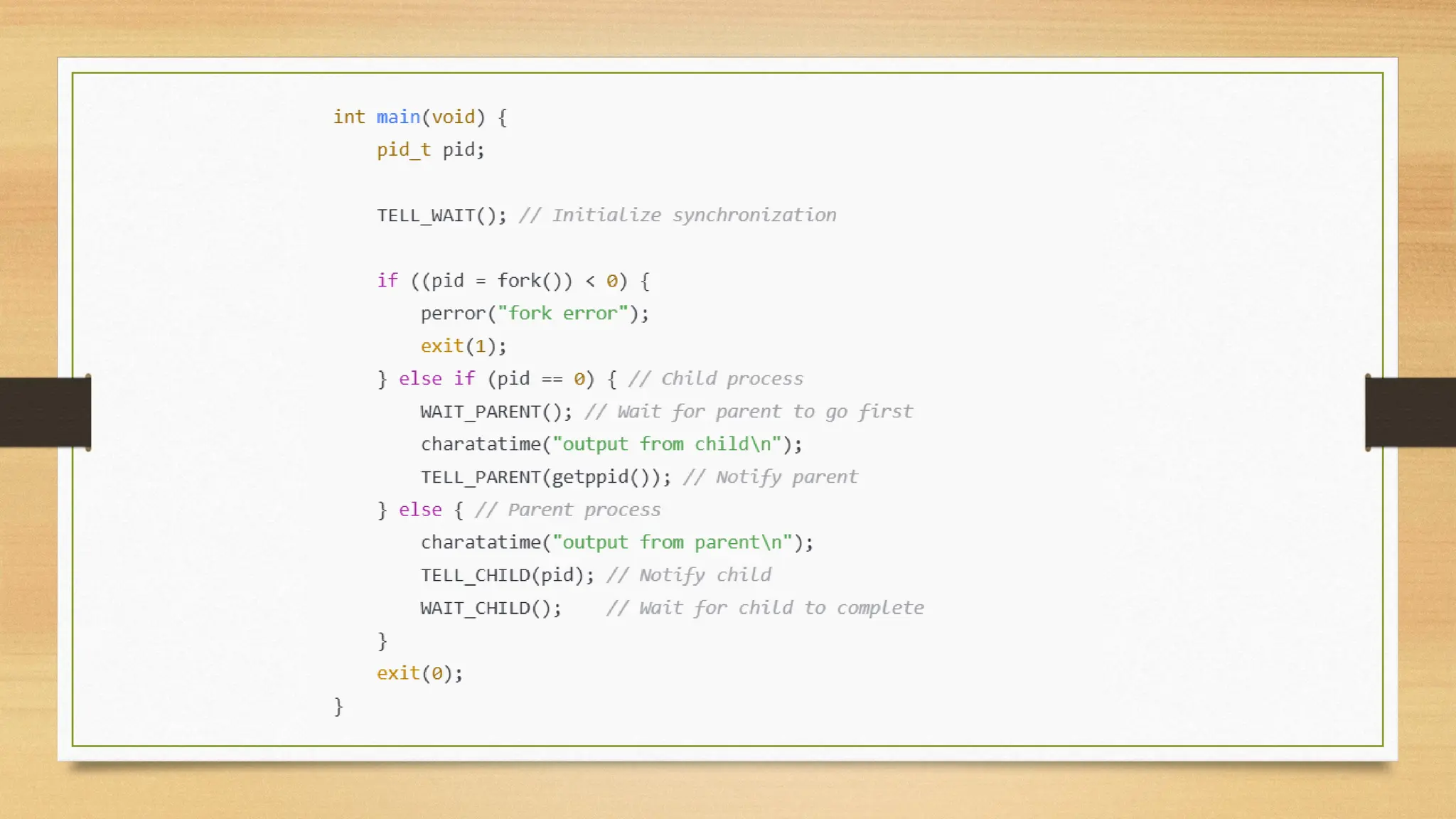
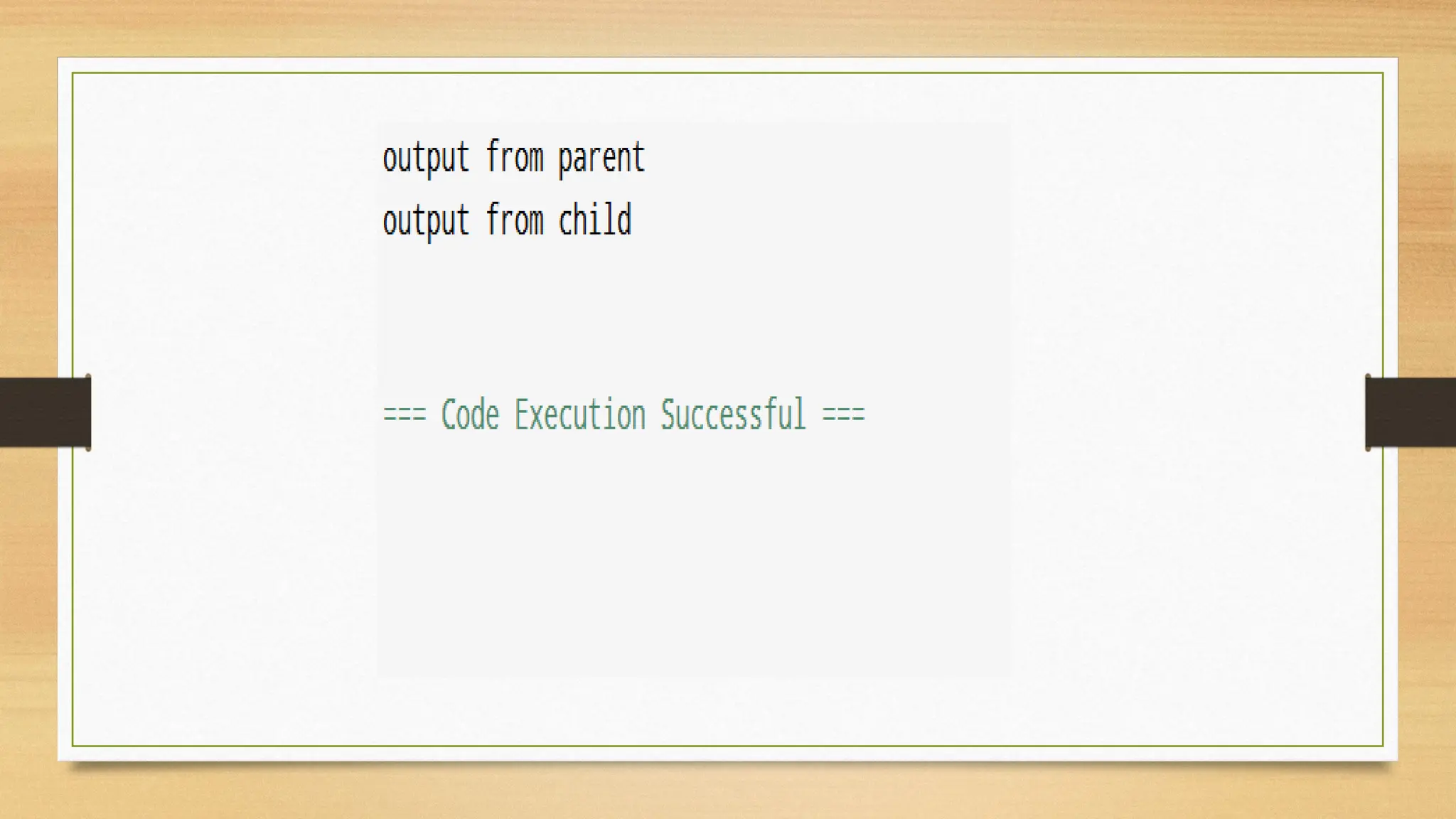
Modification of code to avoid race condition :
exec Functions
• When a process calls one of the exec functions, that process is completely
replaced by the new program, and the new program starts executing at its
main function. The process ID does not change across an exec, because a
new process is not created; exec merely replaces the current process—its
text, data, heap, and stack segments—with a brand new program from disk.
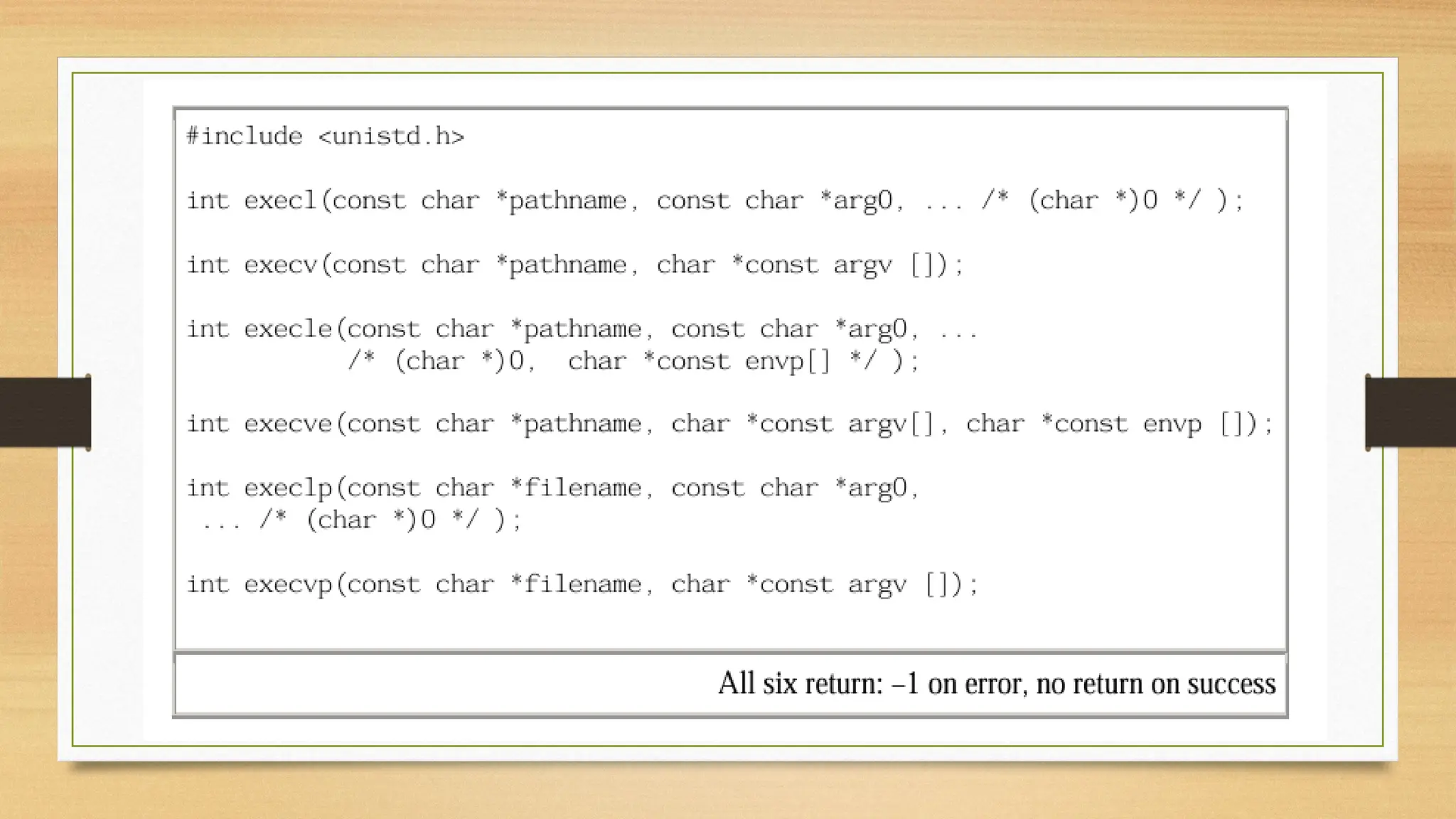
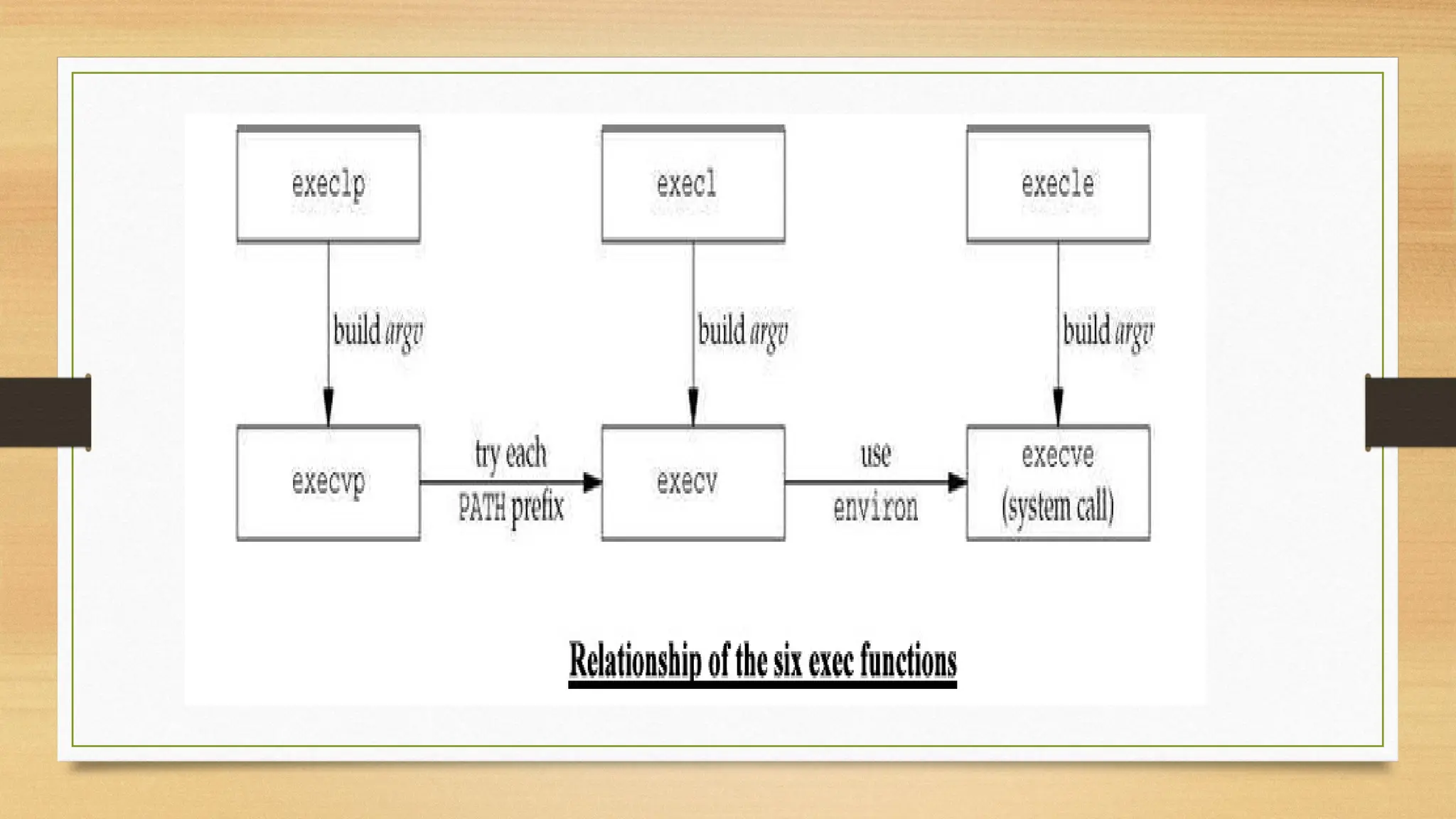
• There are six different exec functions;
Types of exec functions
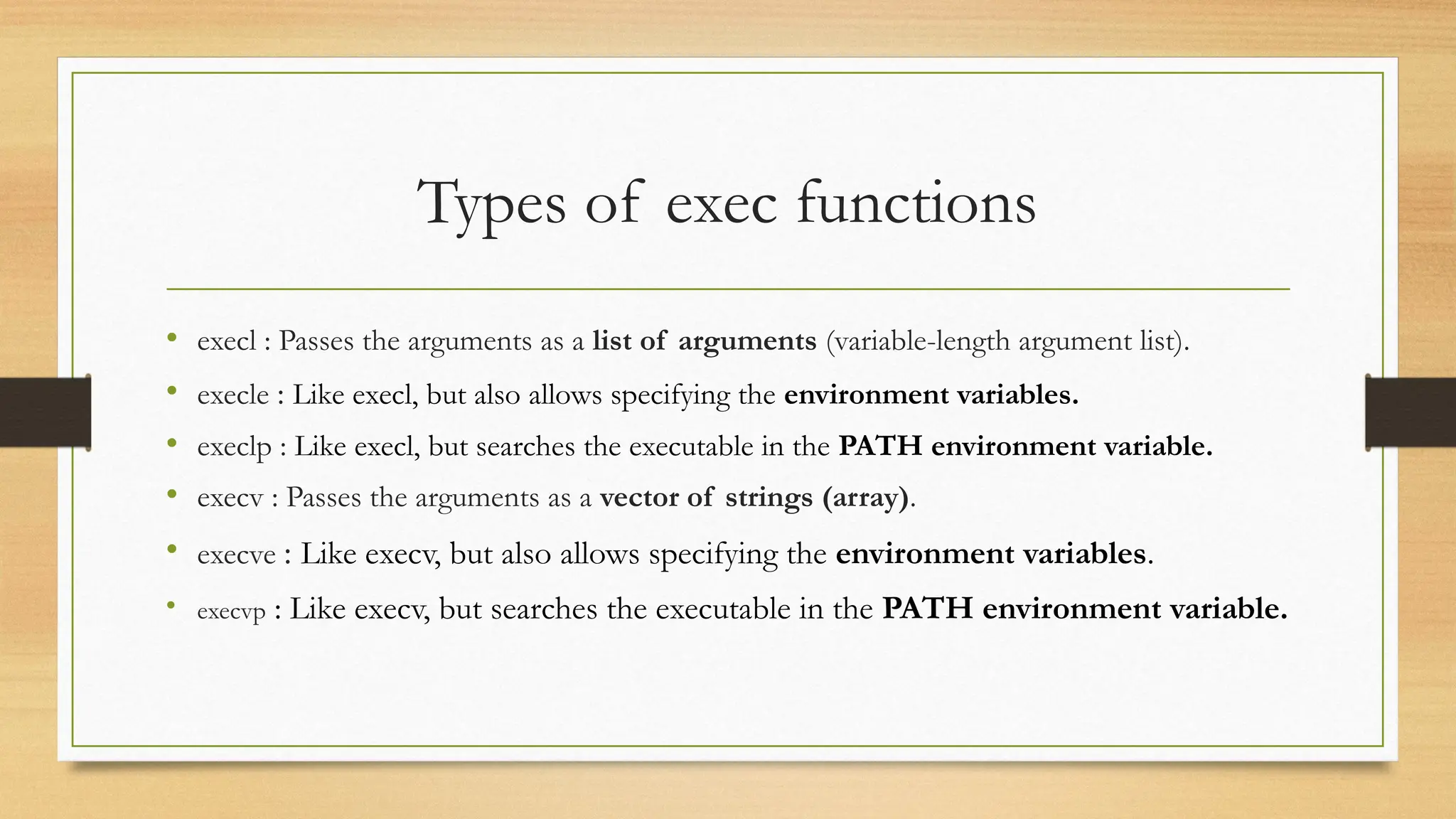
• execl : Passes the arguments as a list of arguments (variable-length argument list).
• execle : Like execl, but also allows specifying the environment variables.
• execlp : Like execl, but searches the executable in the PATH environment variable.
• execv : Passes the arguments as a vector of strings (array).
• execve : Like execv, but also allows specifying the environment variables.
• execvp : Like execv, but searches the executable in the PATH environment variable.
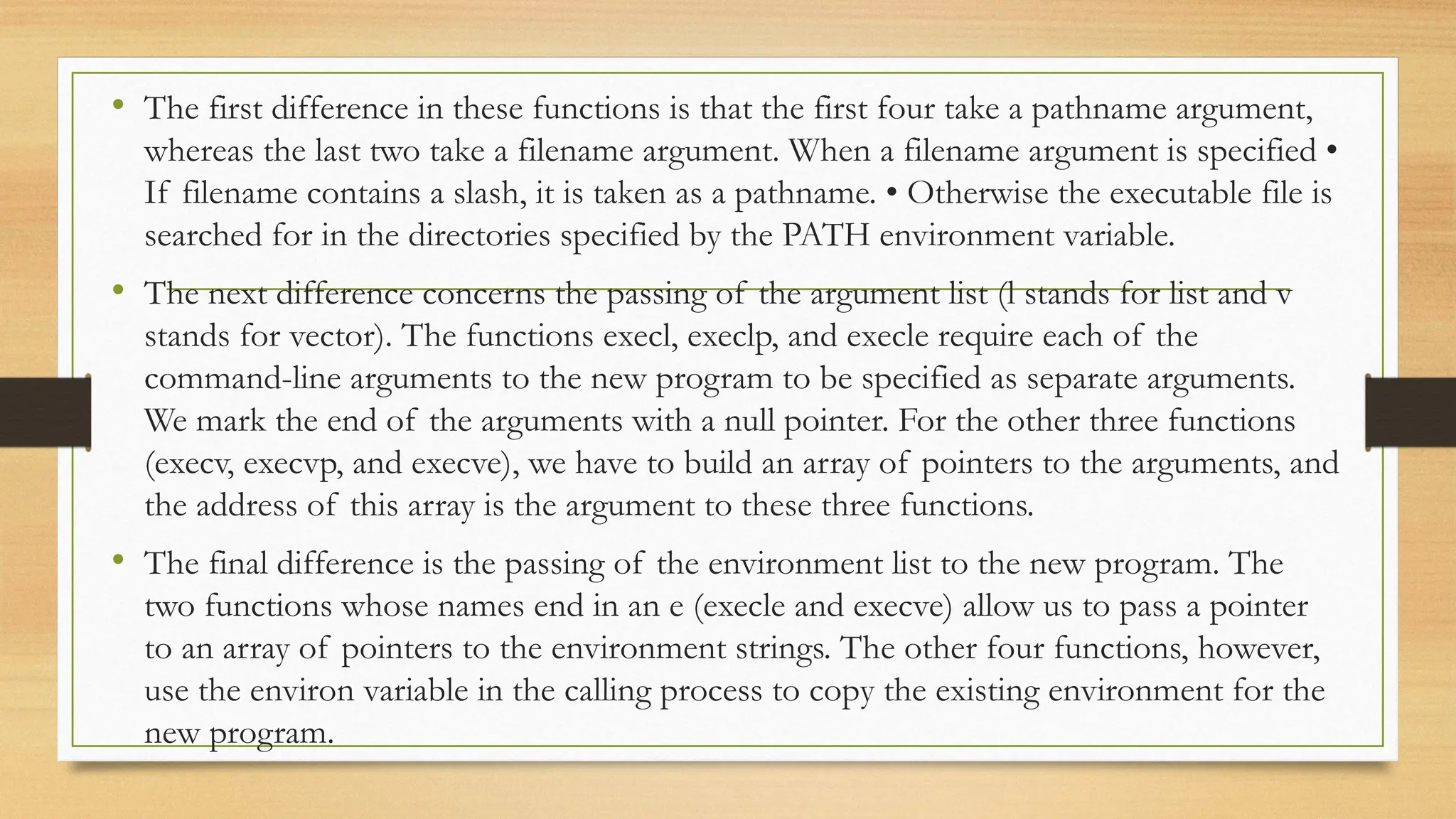
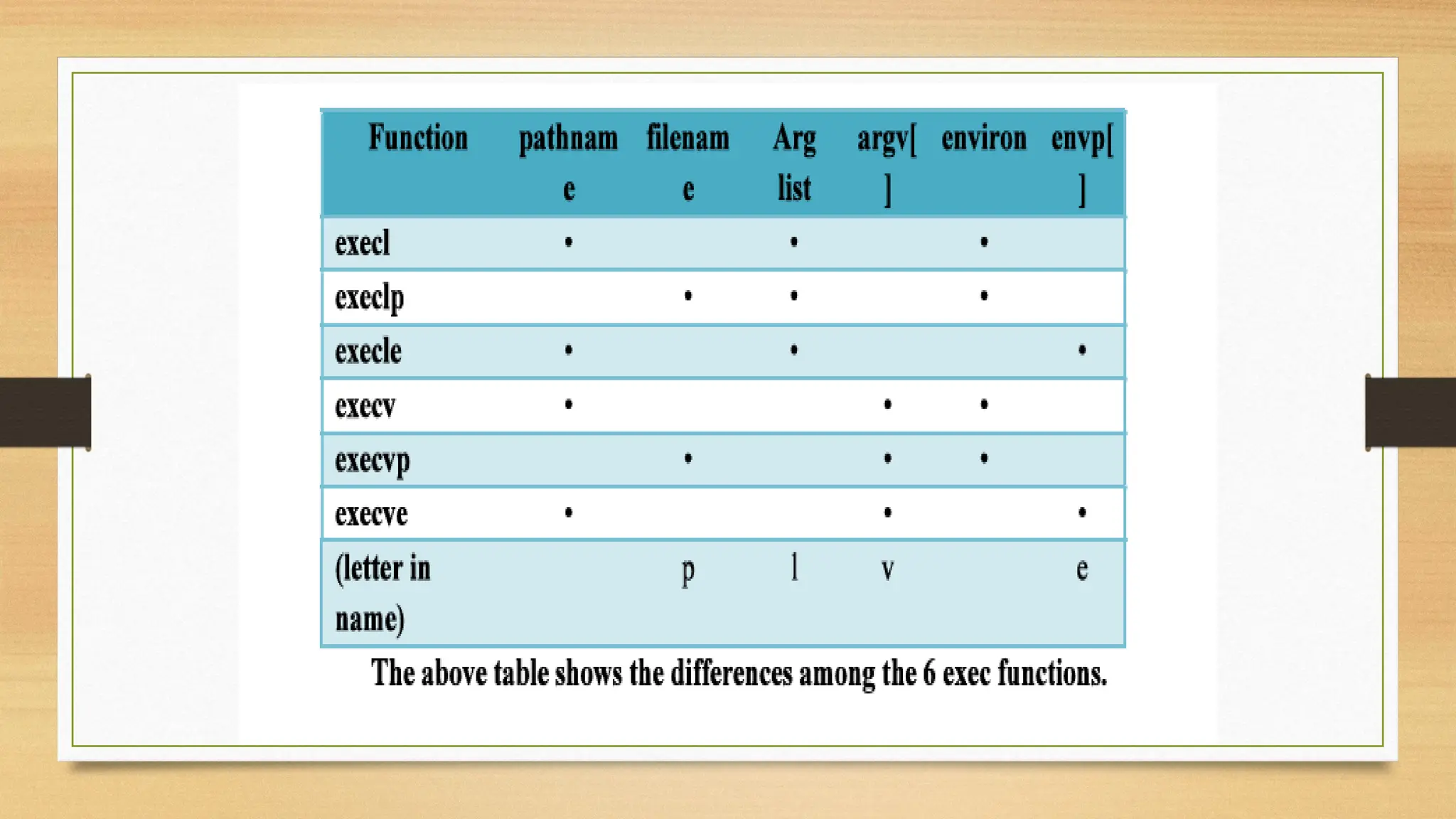
• The first difference in these functions is that the first four take a pathname argument,
whereas the last two take a filename argument. When a filename argument is specified •
If filename contains a slash, it is taken as a pathname. • Otherwise the executable file is
searched for in the directories specified by the PATH environment variable.
• The next difference concerns the passing of the argument list (l stands for list and v
stands for vector). The functions execl, execlp, and execle require each of the
command-line arguments to the new program to be specified as separate arguments.
We mark the end of the arguments with a null pointer. For the other three functions
(execv, execvp, and execve), we have to build an array of pointers to the arguments, and
the address of this array is the argument to these three functions.
• The final difference is the passing of the environment list to the new program. The
two functions whose names end in an e (execle and execve) allow us to pass a pointer
to an array of pointers to the environment strings. The other four functions, however,
use the environ variable in the calling process to copy the existing environment for the
new program.
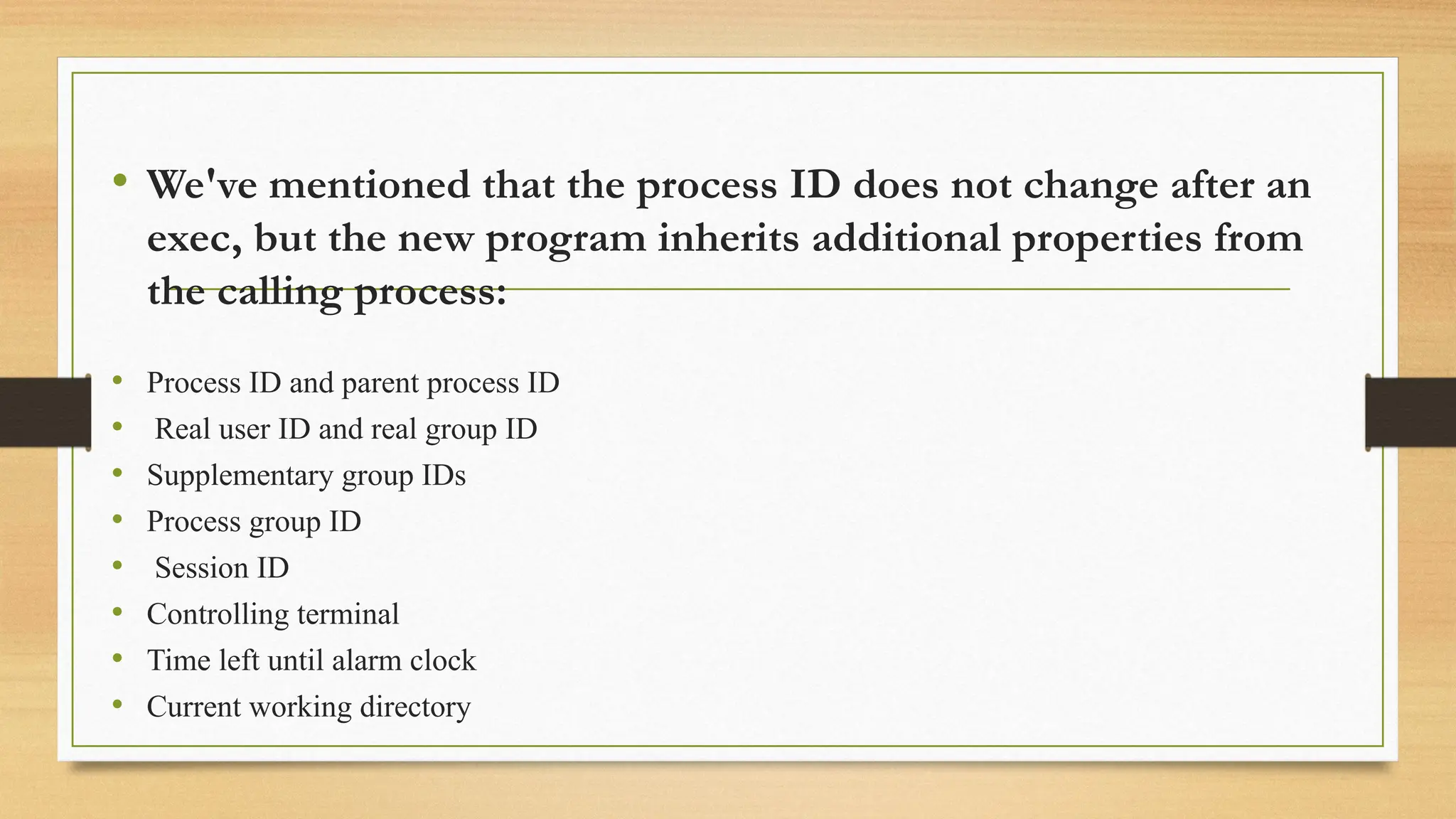
• We've mentioned that the process ID does not change after an
exec, but the new program inherits additional properties from
the calling process:
• Process ID and parent process ID
• Real user ID and real group ID
• Supplementary group IDs
• Process group ID
• Session ID
• Controlling terminal
• Time left until alarm clock
• Current working directory
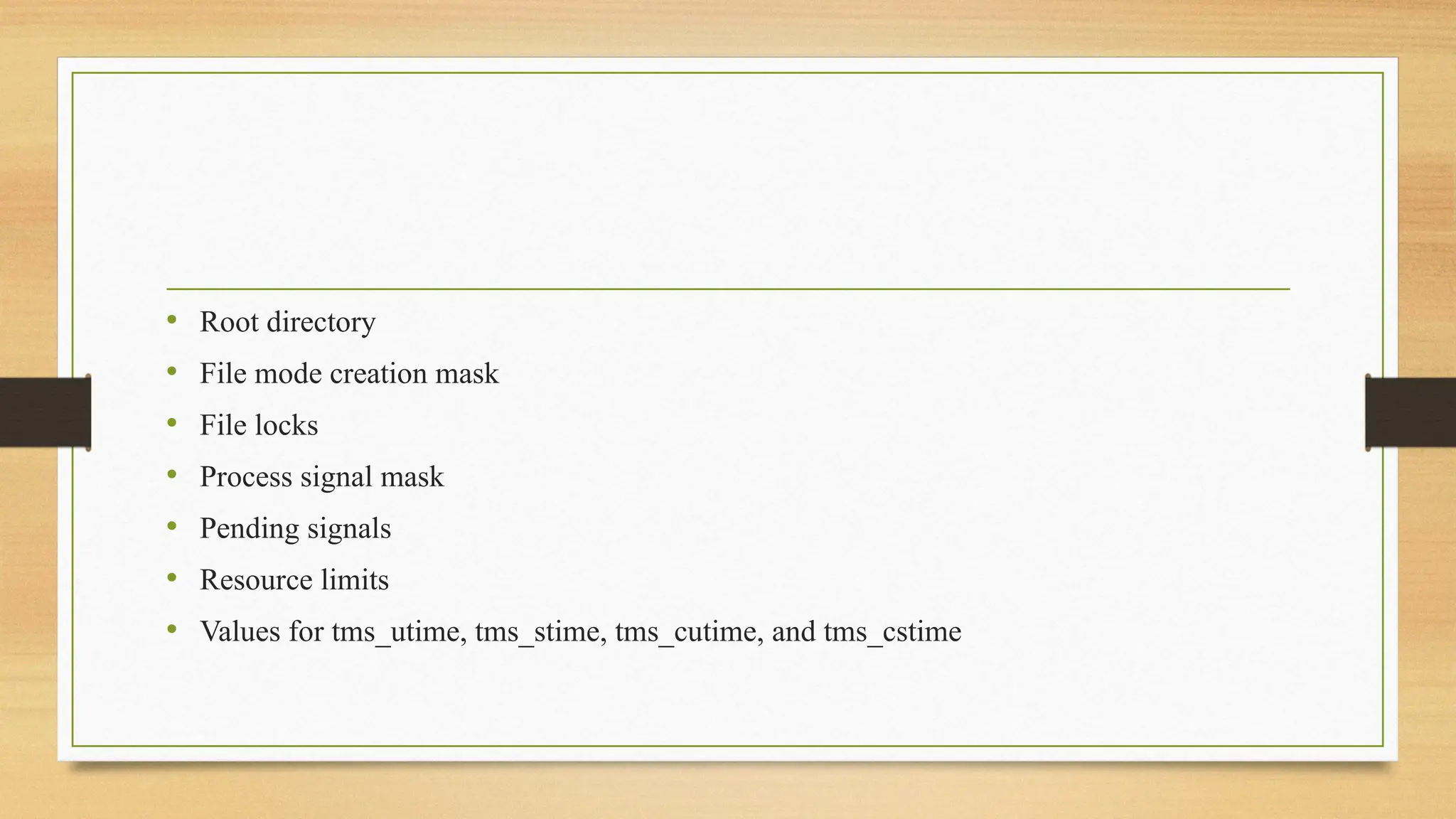
• Root directory
• File mode creation mask
• File locks
• Process signal mask
• Pending signals
• Resource limits
• Values for tms_utime, tms_stime, tms_cutime, and tms_cstime
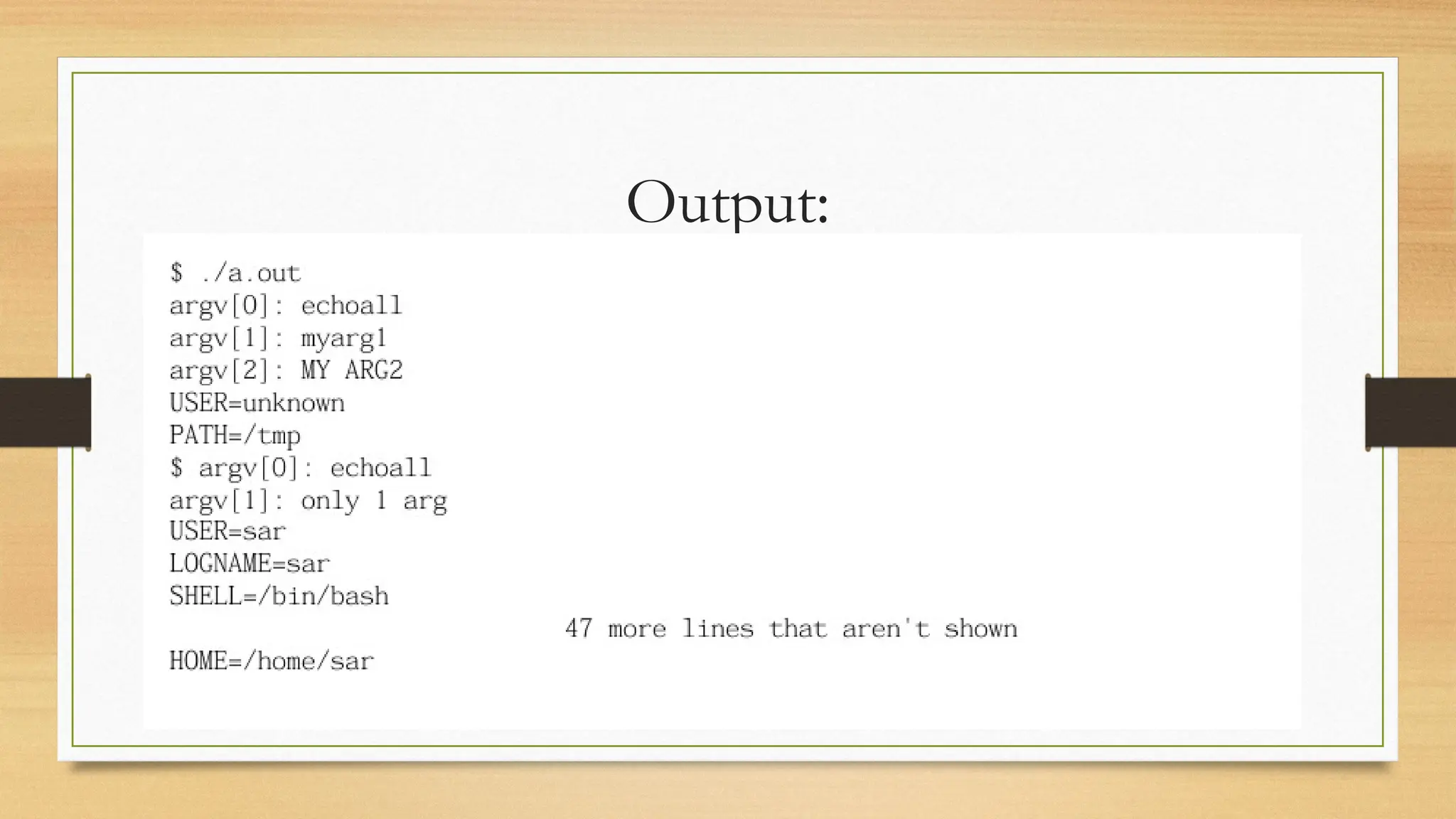
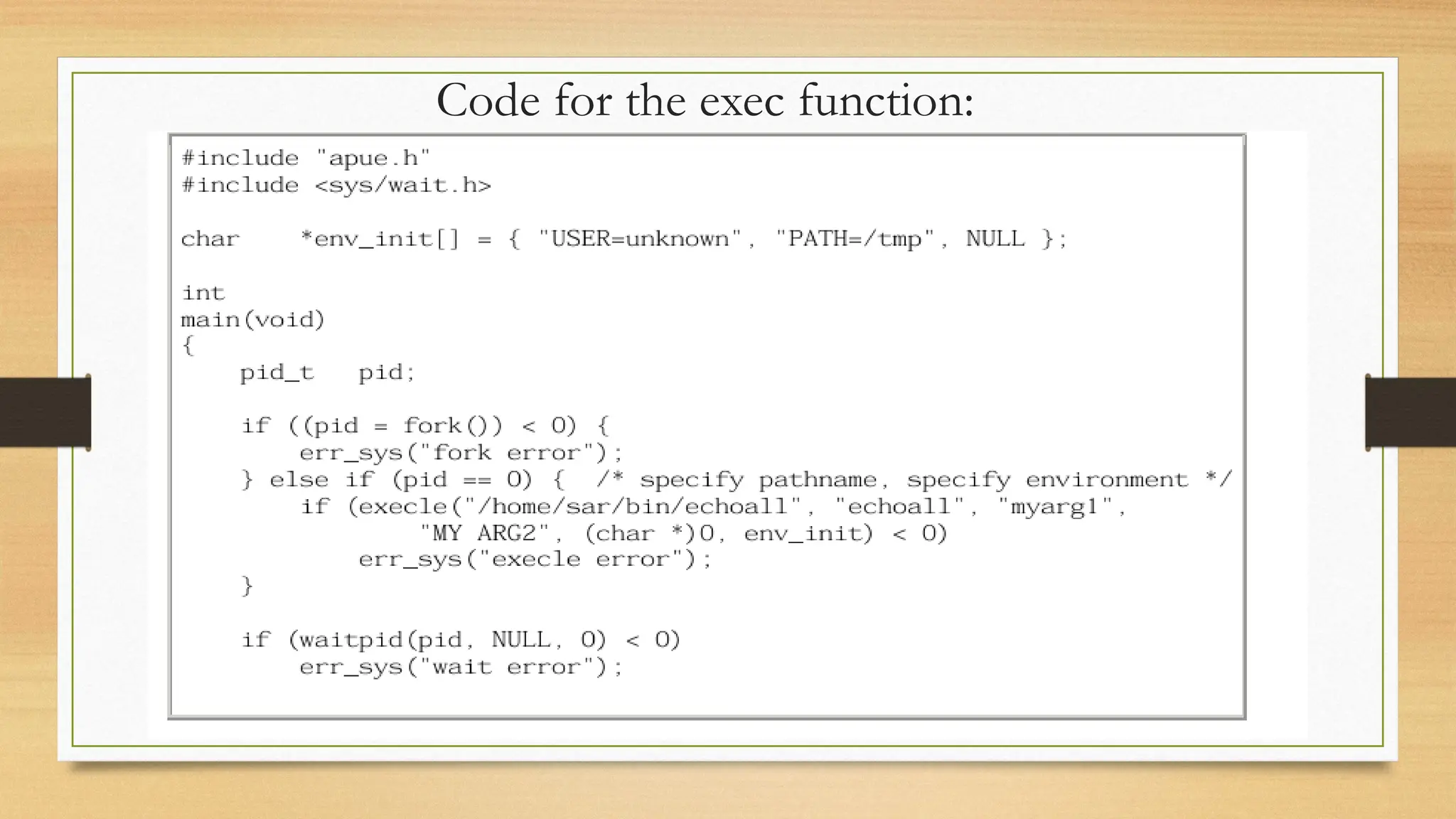
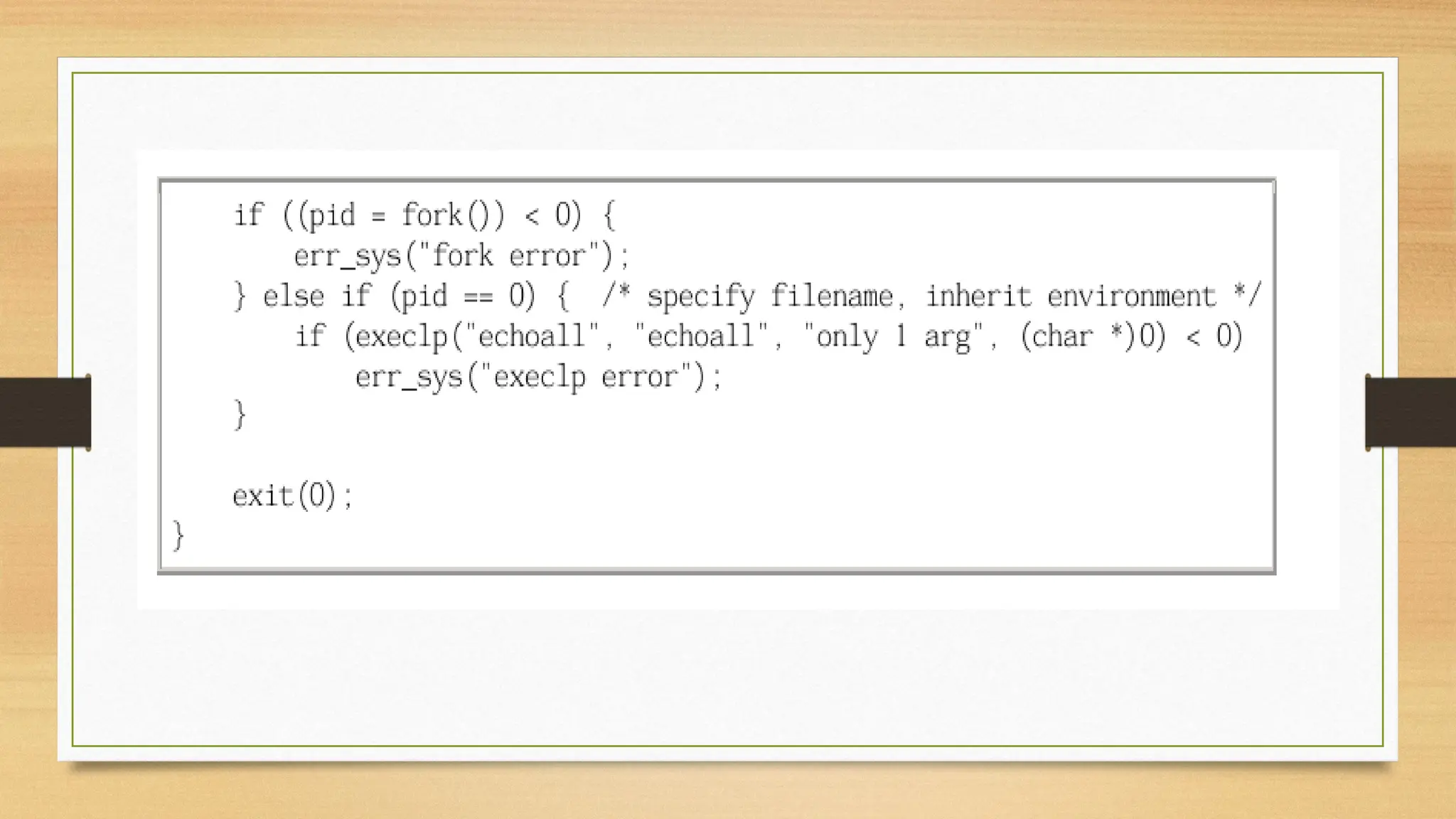
Code for the exec function:
Output:

Race Conditions and exec function unix operating system.pptx

  • 1.
  • 2.
    Race Conditions • Arace condition occurs when multiple processes are trying to do something with shared data and the final outcome depends on the order in which the processes run. • The program below outputs two strings: one from the child and one from the parent. The program contains a race condition because the output depends on the order in which the processes are run by the kernel and for how long each process runs.
  • 5.
    Modification of codeto avoid race condition :
  • 11.
    exec Functions • Whena process calls one of the exec functions, that process is completely replaced by the new program, and the new program starts executing at its main function. The process ID does not change across an exec, because a new process is not created; exec merely replaces the current process—its text, data, heap, and stack segments—with a brand new program from disk. • There are six different exec functions;
  • 12.
    Types of execfunctions • execl : Passes the arguments as a list of arguments (variable-length argument list). • execle : Like execl, but also allows specifying the environment variables. • execlp : Like execl, but searches the executable in the PATH environment variable. • execv : Passes the arguments as a vector of strings (array). • execve : Like execv, but also allows specifying the environment variables. • execvp : Like execv, but searches the executable in the PATH environment variable.
  • 14.
    • The firstdifference in these functions is that the first four take a pathname argument, whereas the last two take a filename argument. When a filename argument is specified • If filename contains a slash, it is taken as a pathname. • Otherwise the executable file is searched for in the directories specified by the PATH environment variable. • The next difference concerns the passing of the argument list (l stands for list and v stands for vector). The functions execl, execlp, and execle require each of the command-line arguments to the new program to be specified as separate arguments. We mark the end of the arguments with a null pointer. For the other three functions (execv, execvp, and execve), we have to build an array of pointers to the arguments, and the address of this array is the argument to these three functions. • The final difference is the passing of the environment list to the new program. The two functions whose names end in an e (execle and execve) allow us to pass a pointer to an array of pointers to the environment strings. The other four functions, however, use the environ variable in the calling process to copy the existing environment for the new program.
  • 16.
    • We've mentionedthat the process ID does not change after an exec, but the new program inherits additional properties from the calling process: • Process ID and parent process ID • Real user ID and real group ID • Supplementary group IDs • Process group ID • Session ID • Controlling terminal • Time left until alarm clock • Current working directory
  • 17.
    • Root directory •File mode creation mask • File locks • Process signal mask • Pending signals • Resource limits • Values for tms_utime, tms_stime, tms_cutime, and tms_cstime
  • 19.
    Code for theexec function:
  • 21.