A2-group
WHY
Reasons
I.   Textual evidence can help
    prove our case.
II. Data and specialized
    knowledge can make our
    argument stronger.
III. Direct quotes from a speech or
    interview can make our words
    more powerful.
Example of 3 reasonrd


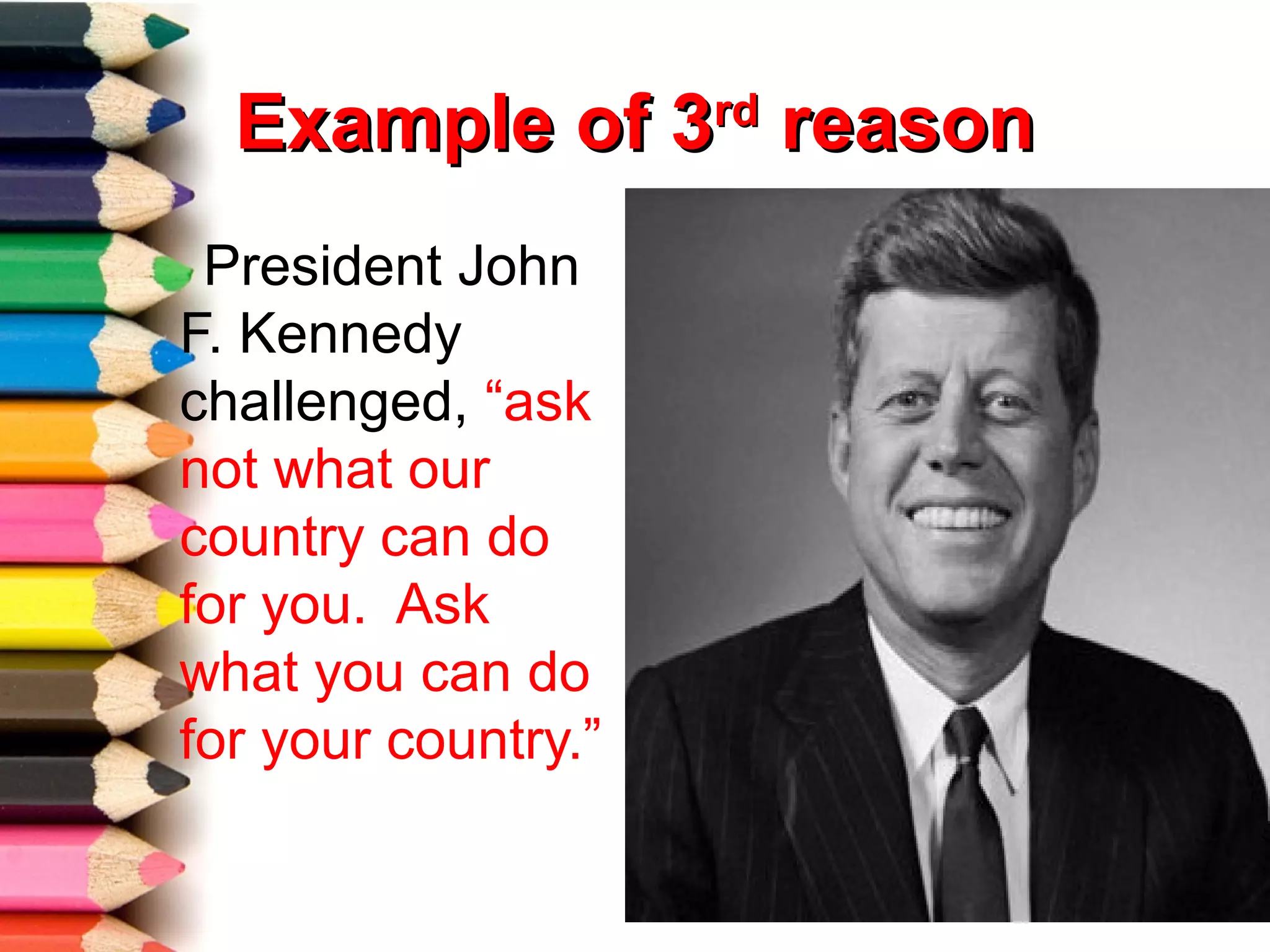
 President John
F. Kennedy
challenged, “ask
not what our
country can do
for you. Ask
what you can do
for your country.”
TIPs
     -Definition
   - Punctuation
      - Citations
-Indented Quotes
Definition
DEFINITION
•       Quotation means writing
    down exactly what a person
    said or wrote. Quotations are
    never officially used "quotes“
    in academic writing.
Punctuation
Citation
CITATION
• Citation means mentioning sources where you
  got information from. For ex,
      • Quotation
            “To be or not to be“

     • Citation:
           "To be or not to be" (Shakespeare)
INDENTED
 QUOTES
INDENTED QUOTES
   Sometimes in an essay, you will use a
long quotation. But, no quotation longer
than five lines should be within the body
 of the text of your essay. If you choose
to use a long quotation (longer than five
lines of text), then you should indent the
                  quotation.
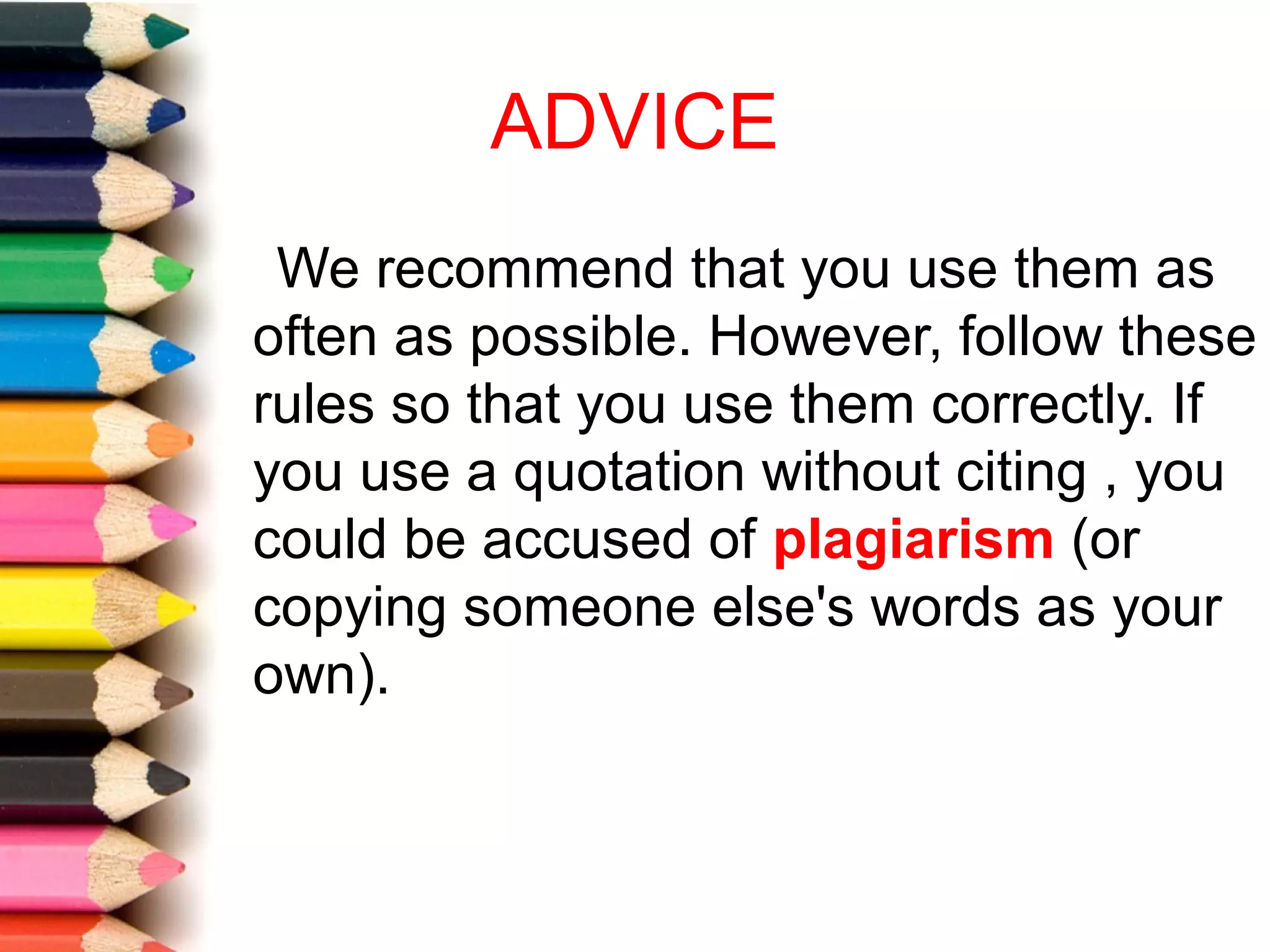
ADVICE
 We recommend that you use them as
often as possible. However, follow these
rules so that you use them correctly. If
you use a quotation without citing , you
could be accused of plagiarism (or
copying someone else's words as your
own).
Punctuation
PUNCTUATION
       Definition: The use of standard
marks and signs in writing and
printing to separate words into
sentences, clauses, and phrases in
order to clarify their meaning
       Example: Comma, question
 mark,     exclamation mark…
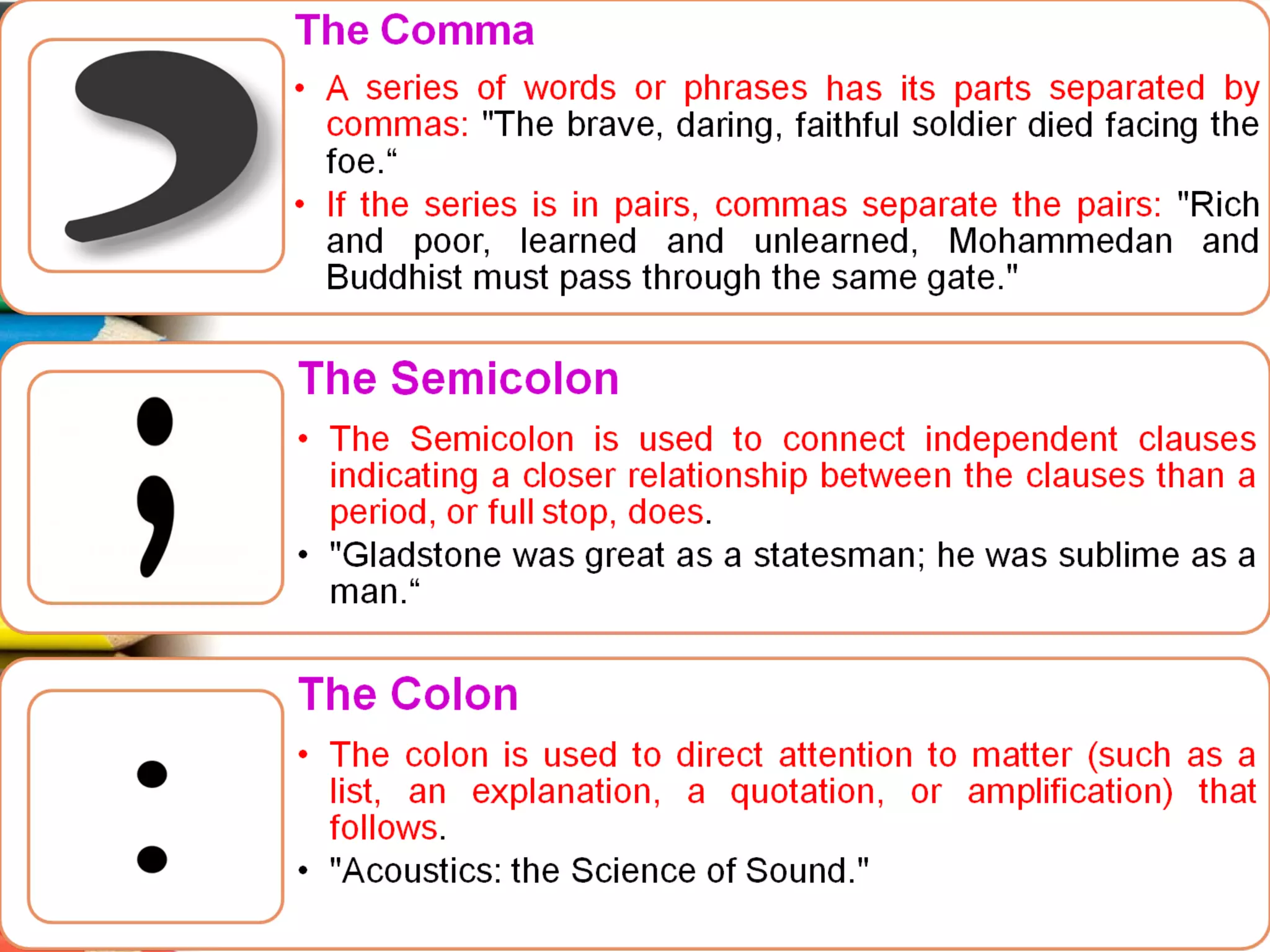
The principal marks of
  punctuation are:
  The Comma [ , ]
• The Semicolon [ ; ]
• The Colon [ : ]
• The Period or Full Stop [ . ]
• The Interrogation or Question Mark [ ? ]
• The Exclamation Mark [ ! ]
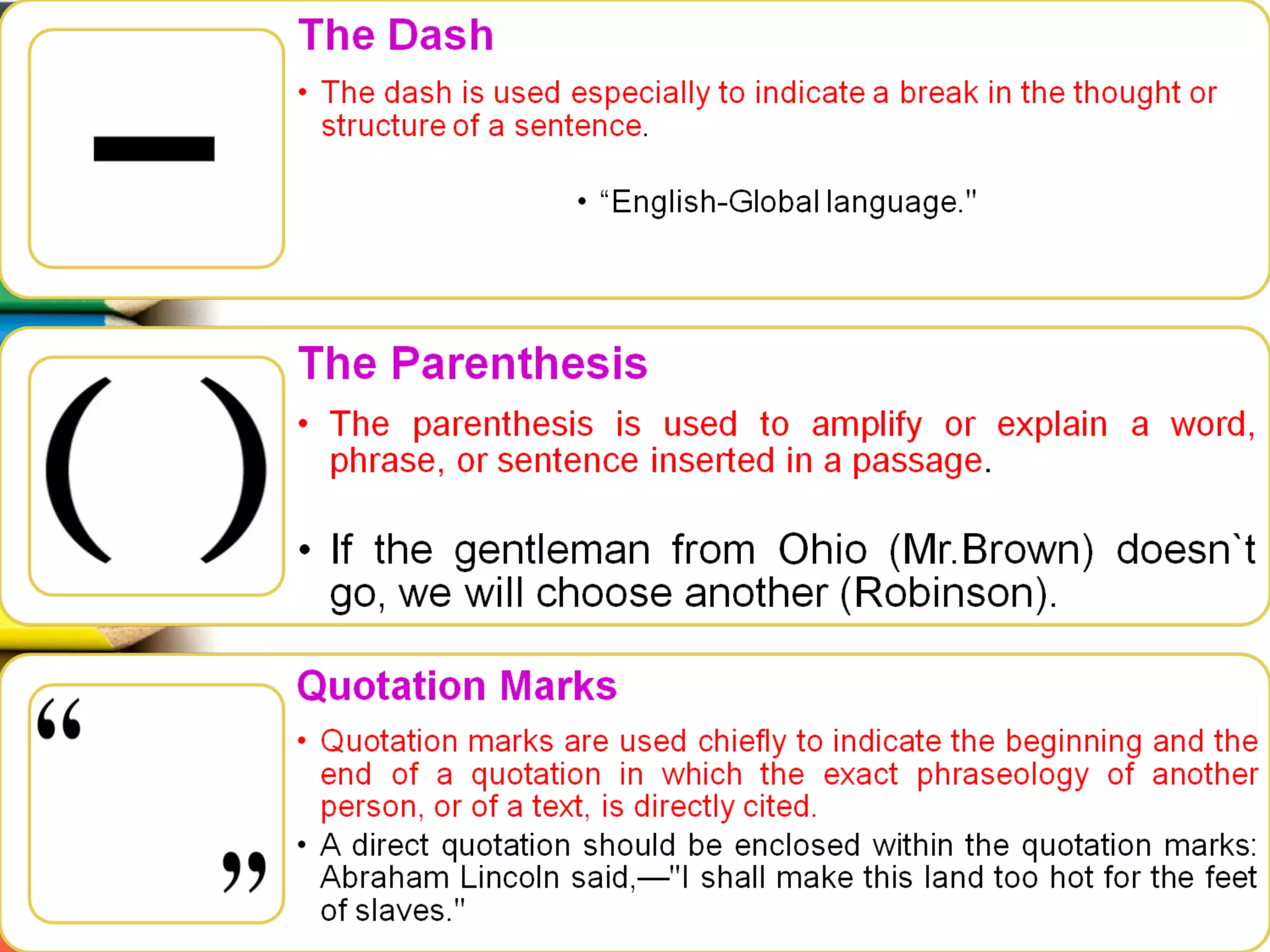
• The Dash [ — ]
• The Parenthesis [ ( ) ]
• The Quotation Mark [ " " ]
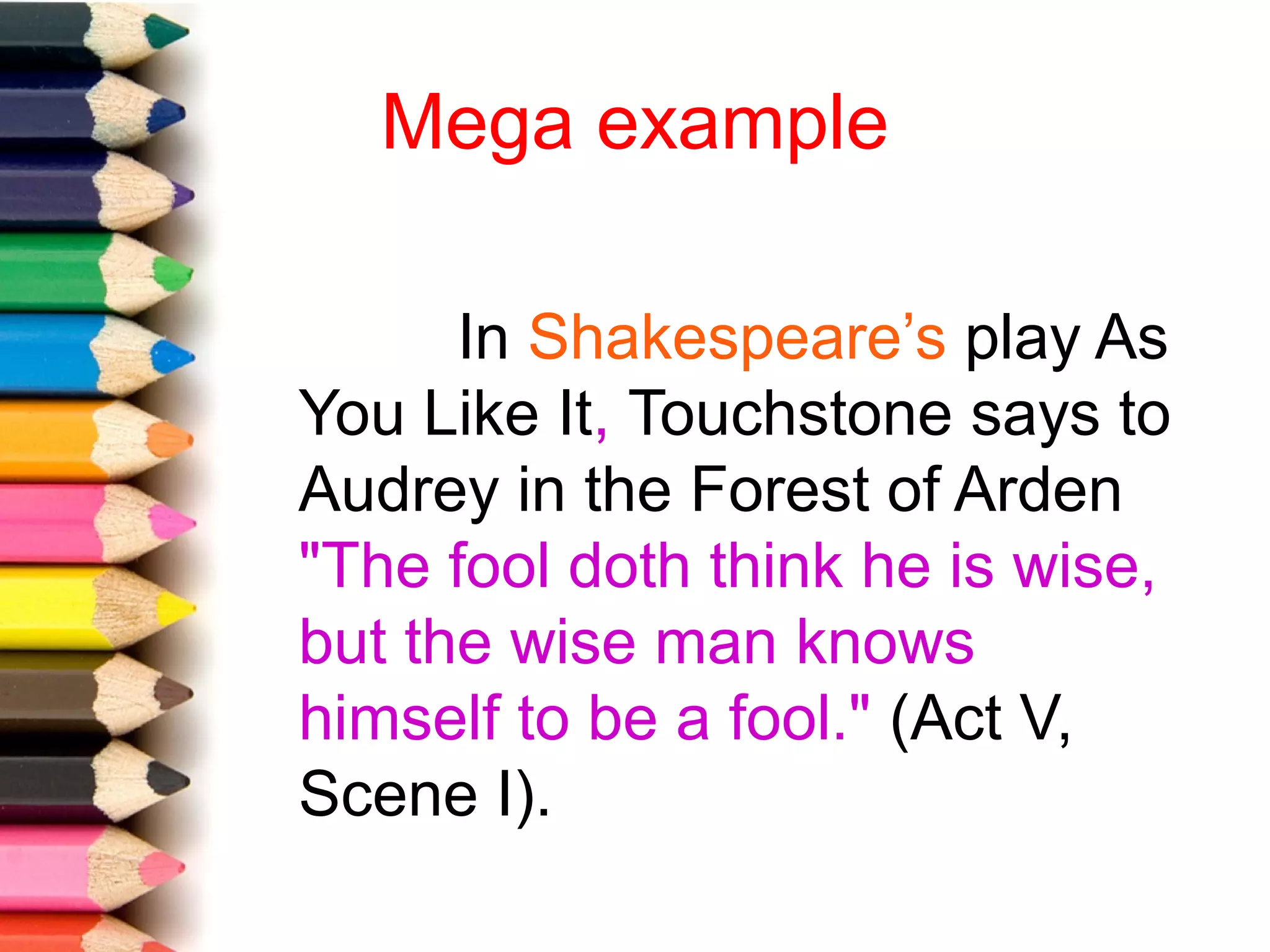
Mega example

      In Shakespeare’s play As
You Like It, Touchstone says to
Audrey in the Forest of Arden
"The fool doth think he is wise,
but the wise man knows
himself to be a fool." (Act V,
Scene I).
REFERENCES

       • http://quotationspage.com
• /http://www.wikihow.com/Use-Internal-
                  Citations
          • www.goodreads.com
      • http://www.brainyquote.com/
THANK YOU FOR
ATTENTION

Quotation

  • 1.
  • 2.
  • 3.
    Reasons I. Textual evidence can help prove our case. II. Data and specialized knowledge can make our argument stronger. III. Direct quotes from a speech or interview can make our words more powerful.
  • 4.
    Example of 3reasonrd President John F. Kennedy challenged, “ask not what our country can do for you. Ask what you can do for your country.”
  • 5.
    TIPs -Definition - Punctuation - Citations -Indented Quotes
  • 6.
  • 7.
    DEFINITION • Quotation means writing down exactly what a person said or wrote. Quotations are never officially used "quotes“ in academic writing.
  • 8.
  • 9.
  • 10.
    CITATION • Citation meansmentioning sources where you got information from. For ex, • Quotation “To be or not to be“ • Citation: "To be or not to be" (Shakespeare)
  • 11.
  • 12.
    INDENTED QUOTES Sometimes in an essay, you will use a long quotation. But, no quotation longer than five lines should be within the body of the text of your essay. If you choose to use a long quotation (longer than five lines of text), then you should indent the quotation.
  • 13.
    ADVICE We recommendthat you use them as often as possible. However, follow these rules so that you use them correctly. If you use a quotation without citing , you could be accused of plagiarism (or copying someone else's words as your own).
  • 14.
  • 15.
    PUNCTUATION Definition: The use of standard marks and signs in writing and printing to separate words into sentences, clauses, and phrases in order to clarify their meaning Example: Comma, question mark, exclamation mark…
  • 16.
    The principal marksof punctuation are: The Comma [ , ] • The Semicolon [ ; ] • The Colon [ : ] • The Period or Full Stop [ . ] • The Interrogation or Question Mark [ ? ] • The Exclamation Mark [ ! ] • The Dash [ — ] • The Parenthesis [ ( ) ] • The Quotation Mark [ " " ]
  • 19.
    Mega example In Shakespeare’s play As You Like It, Touchstone says to Audrey in the Forest of Arden "The fool doth think he is wise, but the wise man knows himself to be a fool." (Act V, Scene I).
  • 20.
    REFERENCES • http://quotationspage.com • /http://www.wikihow.com/Use-Internal- Citations • www.goodreads.com • http://www.brainyquote.com/
  • 21.