Quality
Management
Student Name:
Student ID:
Introduction
The presentation includes different things including-
● Cost of Quality
● Definition of Quality Management
● Development of QM
● Evolution of TQM
● Six Sigma Quality
● Continuous Improvement Tools
● Conclusion
Cost of Quality
Different types of costs include-
● Prevention cost
● Appraisal cost
● Internal & external failure cost
● Opportunity cost
Quality Management
“Managing different activities of an organisation to excel in different dimensions
that are crucial to customers”
QM= More features and fewer Defects
Development of QM
The series of events that led to development of QM are as follows.
● Principles of QM developed by Deming and Juran
● Japan develops its National Quality Award in 1951
● European firms and US firms implement the concepts of QM
● US develops an award of Malcolm Baldridge National Quality Award
What is TQM?
● Strategy of continuous improvement
● Strategy of leadership development
● Helps in developing partnership
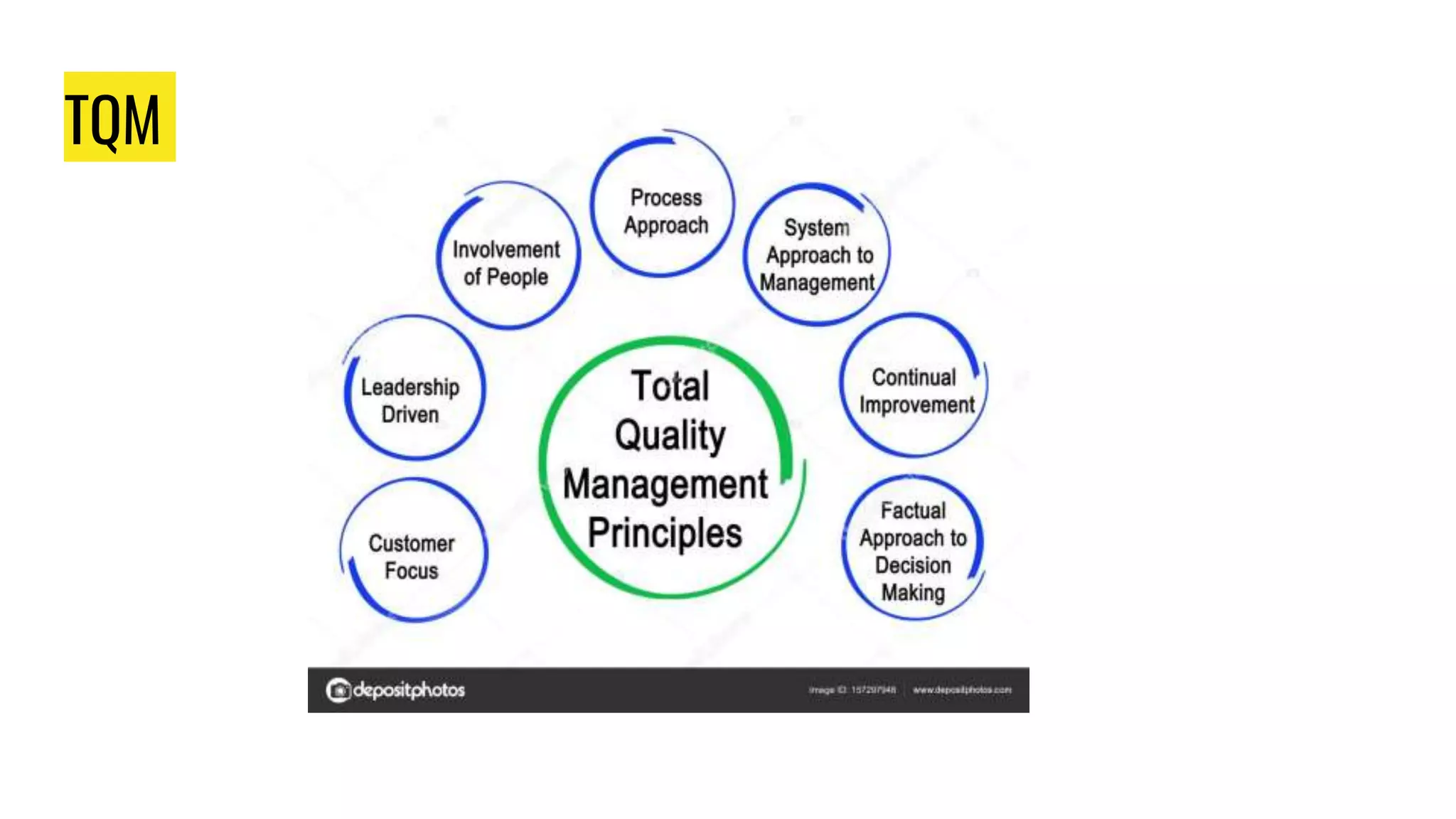
TQM
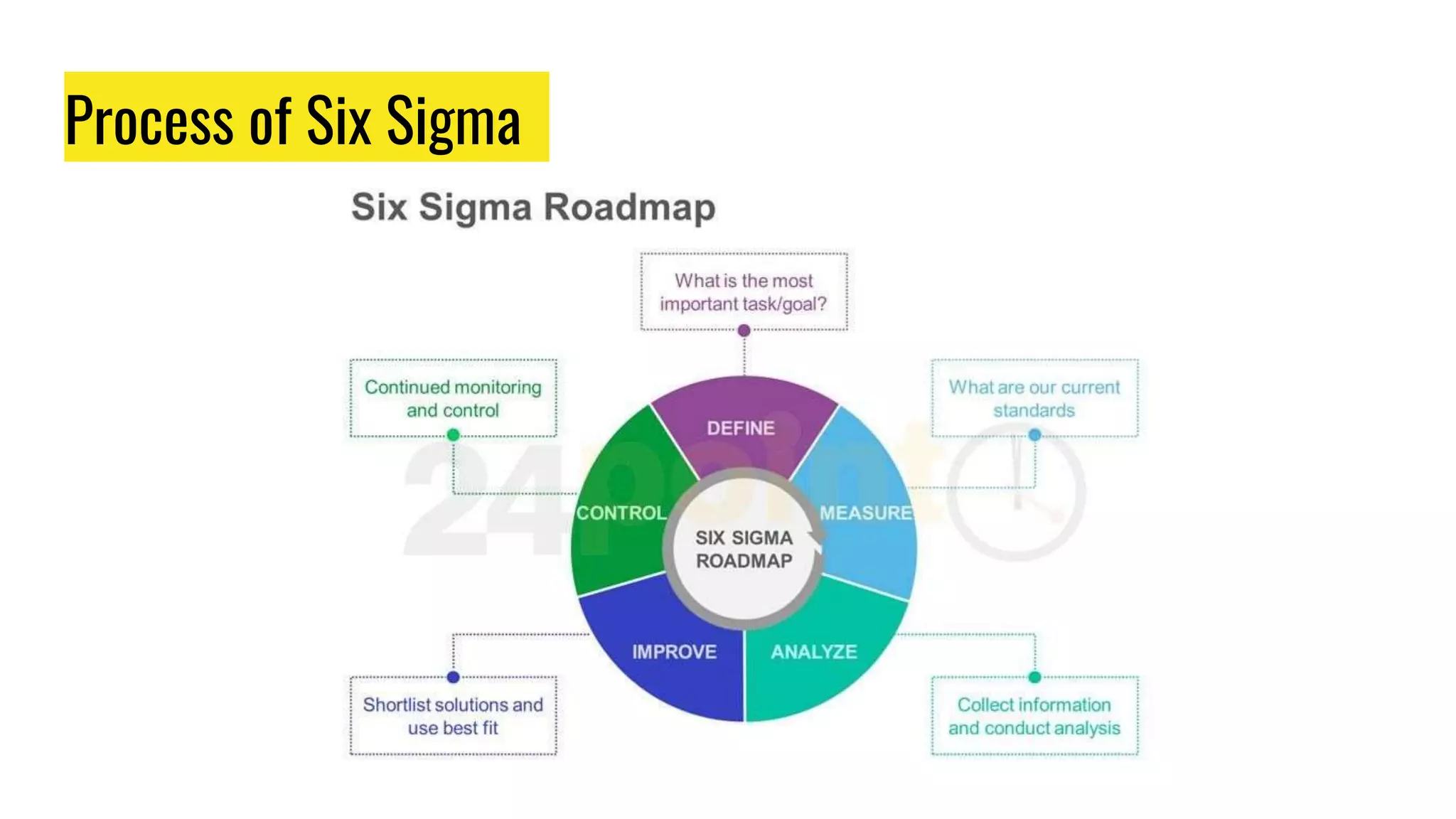
Six Sigma
● Philosophy used by management to eliminate any problems from the
company
● Reduces the variation in processes due to which product defects arise
● Refers to variation that exist within plus or minus six standard deviations of
process inputs
Process of Six Sigma
Continuous Improvement
● A step by step approach to manage and enhance quality
● Include Plan-do-Check-Act and PDCA
● Different tools for continuous improvement include flow charts, run chart,
cause & effect diagram, histogram, pareto analysis etc.
Conclusion
● QM is vital for the success of projects.
● Helps in improving the quality of projects and increasing the productivity of
the organisation.
● Ensures that different tools are taken for reducing the quality management
Any Questions?
References
Evans, J. R. (2012). Total quality management. INFOR, 40(4), 364.
Hackman, J. R., & Wageman, R. (2015). Total quality management: Empirical,
conceptual, and practical issues. Administrative science quarterly, 309-342.
Kaynak, H. (2013). The relationship between total quality management practices
and their effects on firm performance. Journal of operations management, 21(4),
405-435.
Powell, T. C. (2015). Total quality management as competitive advantage: a
review and empirical study. Strategic management journal, 16(1), 15-37.
Sallis, E. (2014). Total quality management in education. Routledge.
Contribution of Members

Quality Management | Sample PPT Assignment

  • 1.
  • 2.
    Introduction The presentation includesdifferent things including- ● Cost of Quality ● Definition of Quality Management ● Development of QM ● Evolution of TQM ● Six Sigma Quality ● Continuous Improvement Tools ● Conclusion
  • 3.
    Cost of Quality Differenttypes of costs include- ● Prevention cost ● Appraisal cost ● Internal & external failure cost ● Opportunity cost
  • 4.
    Quality Management “Managing differentactivities of an organisation to excel in different dimensions that are crucial to customers” QM= More features and fewer Defects
  • 5.
    Development of QM Theseries of events that led to development of QM are as follows. ● Principles of QM developed by Deming and Juran ● Japan develops its National Quality Award in 1951 ● European firms and US firms implement the concepts of QM ● US develops an award of Malcolm Baldridge National Quality Award
  • 6.
    What is TQM? ●Strategy of continuous improvement ● Strategy of leadership development ● Helps in developing partnership
  • 7.
  • 8.
    Six Sigma ● Philosophyused by management to eliminate any problems from the company ● Reduces the variation in processes due to which product defects arise ● Refers to variation that exist within plus or minus six standard deviations of process inputs
  • 9.
  • 10.
    Continuous Improvement ● Astep by step approach to manage and enhance quality ● Include Plan-do-Check-Act and PDCA ● Different tools for continuous improvement include flow charts, run chart, cause & effect diagram, histogram, pareto analysis etc.
  • 11.
    Conclusion ● QM isvital for the success of projects. ● Helps in improving the quality of projects and increasing the productivity of the organisation. ● Ensures that different tools are taken for reducing the quality management
  • 12.
  • 13.
    References Evans, J. R.(2012). Total quality management. INFOR, 40(4), 364. Hackman, J. R., & Wageman, R. (2015). Total quality management: Empirical, conceptual, and practical issues. Administrative science quarterly, 309-342. Kaynak, H. (2013). The relationship between total quality management practices and their effects on firm performance. Journal of operations management, 21(4), 405-435. Powell, T. C. (2015). Total quality management as competitive advantage: a review and empirical study. Strategic management journal, 16(1), 15-37. Sallis, E. (2014). Total quality management in education. Routledge.
  • 14.

Editor's Notes

  • #13 What other tools can be used be used for managing quality of a project? Do you think Six Sigma is beneficial in large organisation? How do you think TQM is an important component for the success of a project?