 Intro: We already know the
standard form of a quadratic
equation is:
y = ax2 + bx + c
 The coefficients are: a , b, c
 The variables are: y, x
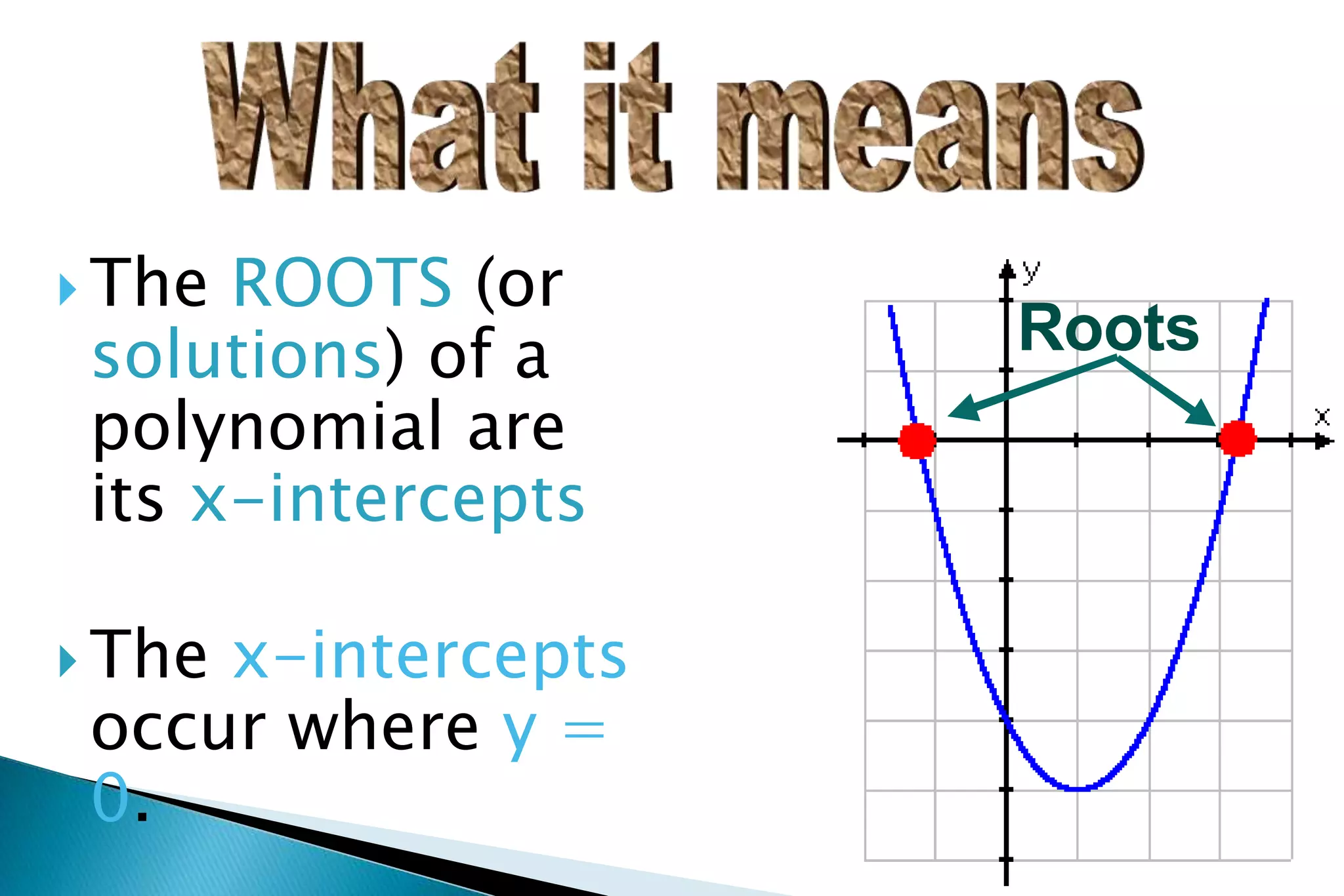
 The ROOTS (or
solutions) of a
polynomial are
its x-intercepts
 The x-intercepts
occur where y =
0.
Roots
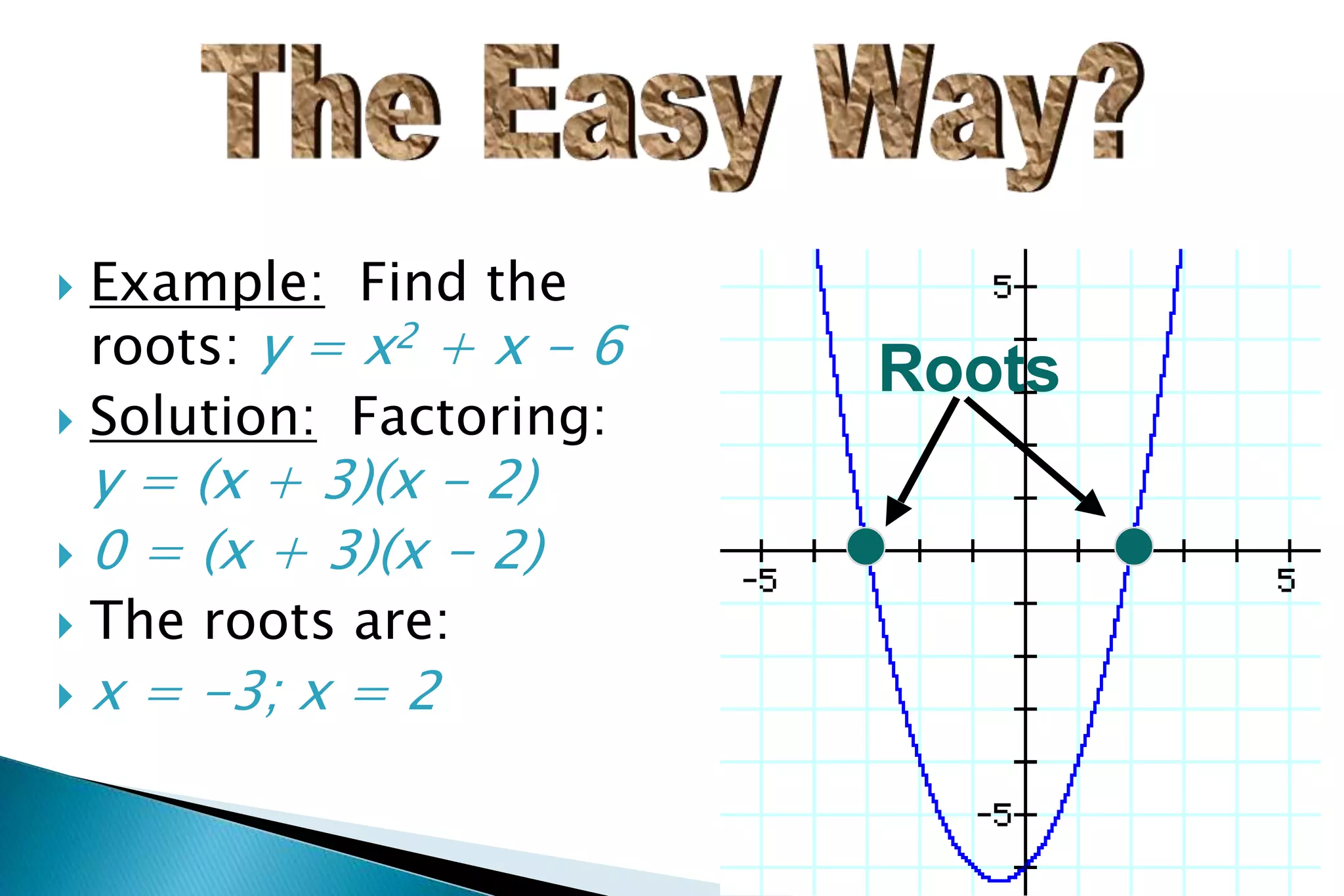
 Example: Find the
roots: y = x2 + x - 6
 Solution: Factoring:
y = (x + 3)(x - 2)
 0 = (x + 3)(x - 2)
 The roots are:
 x = -3; x = 2
Roots
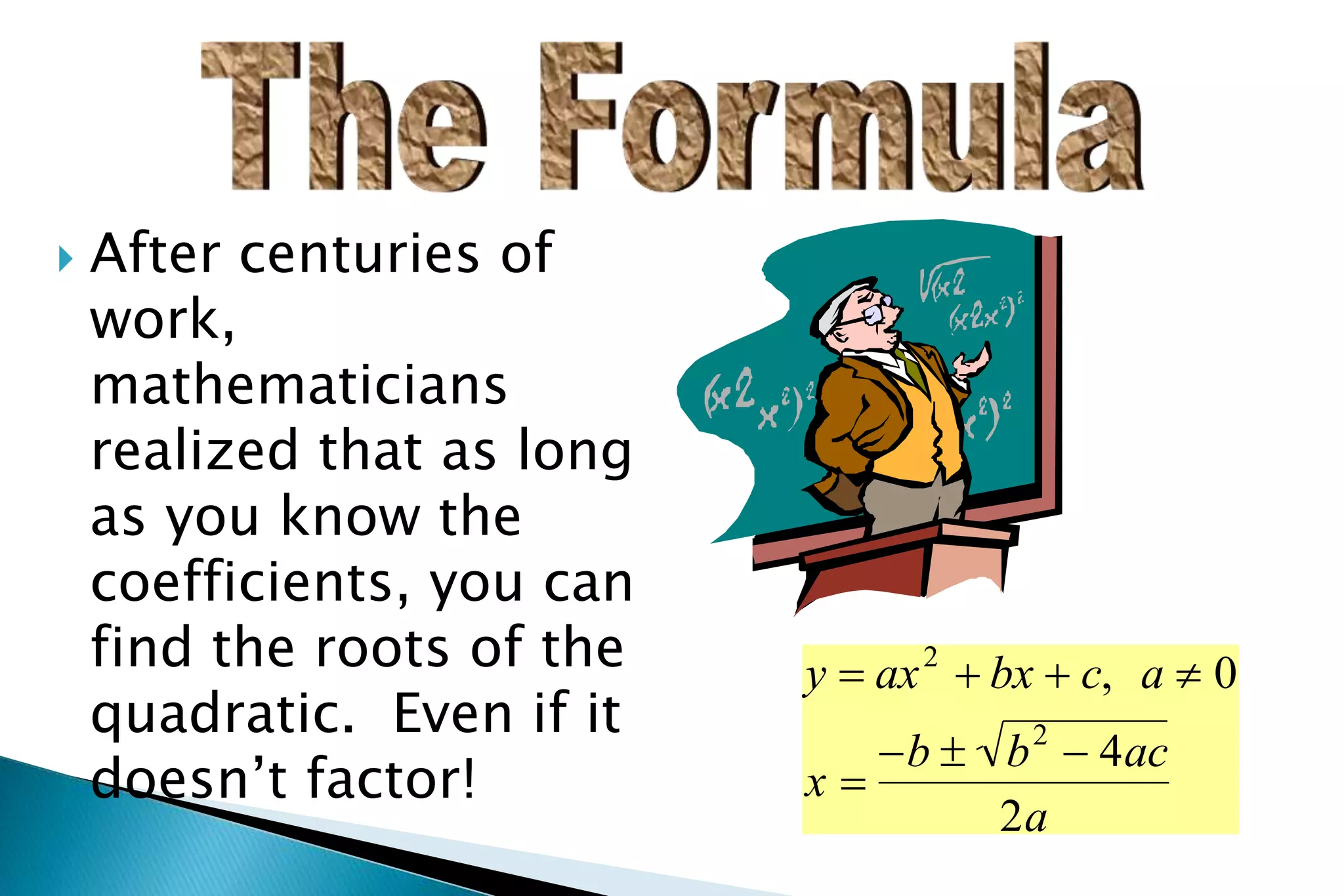
 After centuries of
work,
mathematicians
realized that as long
as you know the
coefficients, you can
find the roots of the
quadratic. Even if it
doesn’t factor!
y  ax2
 bx  c, a  0
x 
b  b2
 4ac
2a
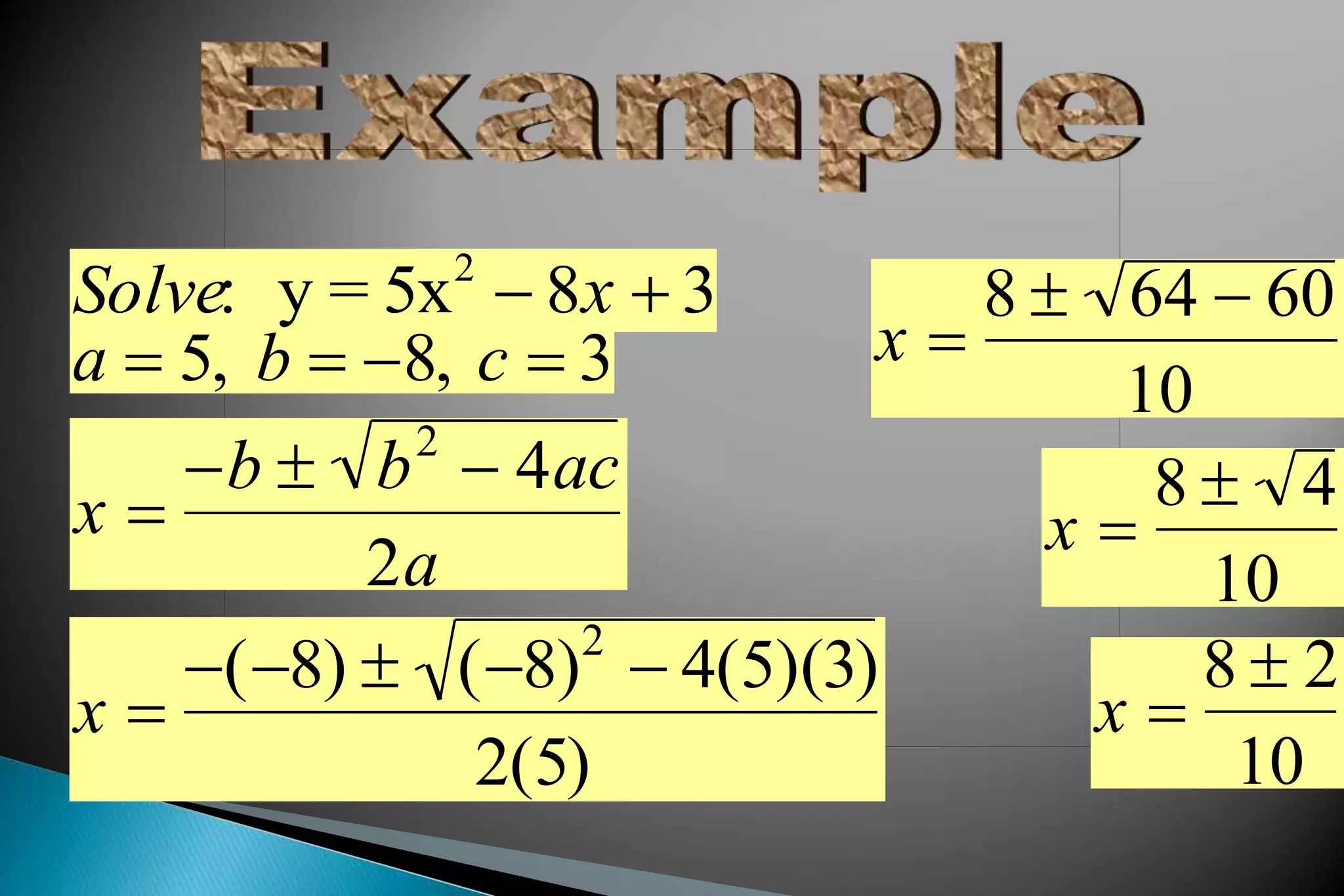
Solve: y = 5x2
 8x  3
x 
b  b2
 4ac
2a
a  5, b  8, c  3
x 
(8)  (8)2
 4(5)(3)
2(5)
x 
8  64  60
10
x 
8  4
10
x 
8  2
10
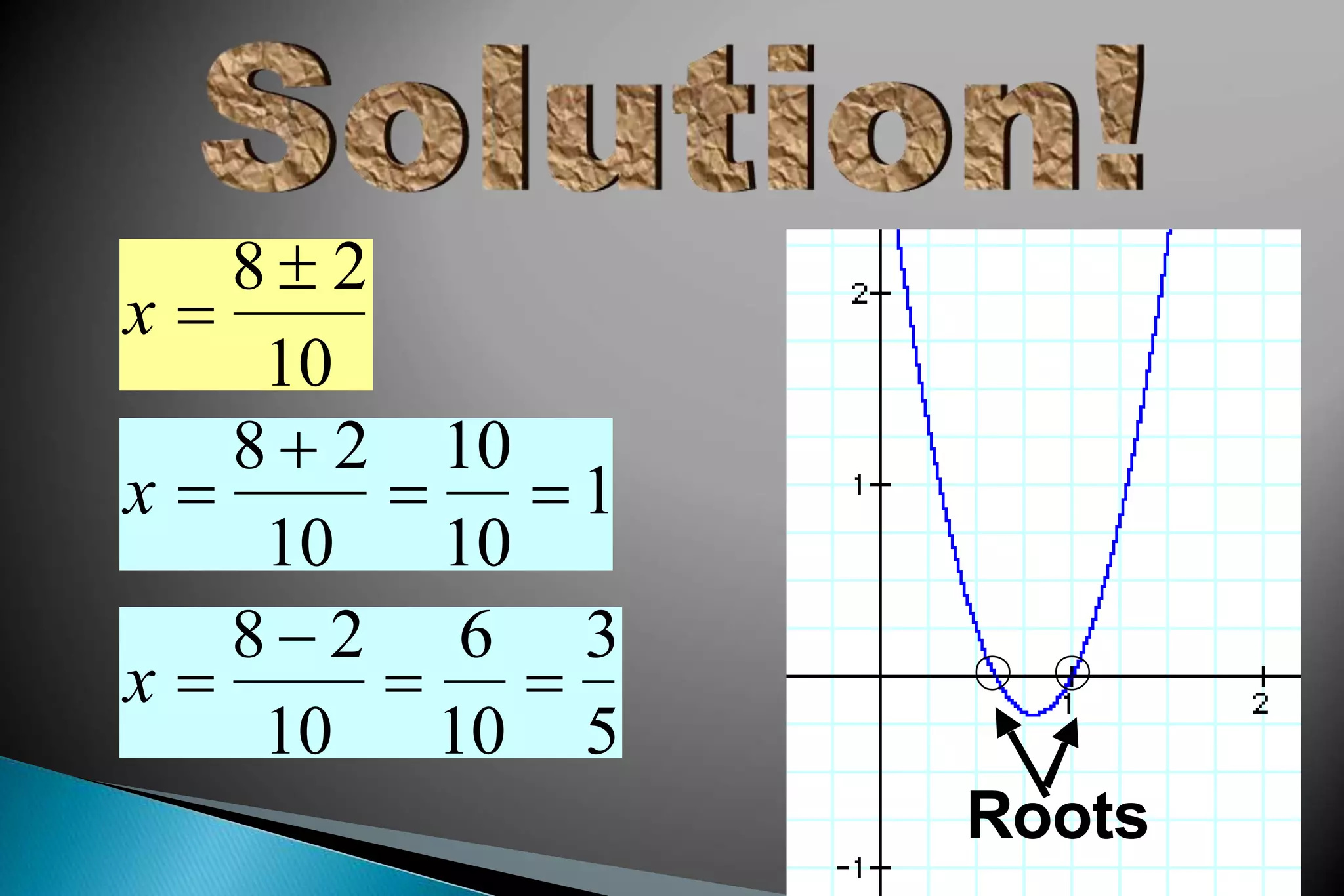
x 
8  2
10
x 
8  2
10

10
10
 1
x 
8  2
10

6
10

3
5
Roots
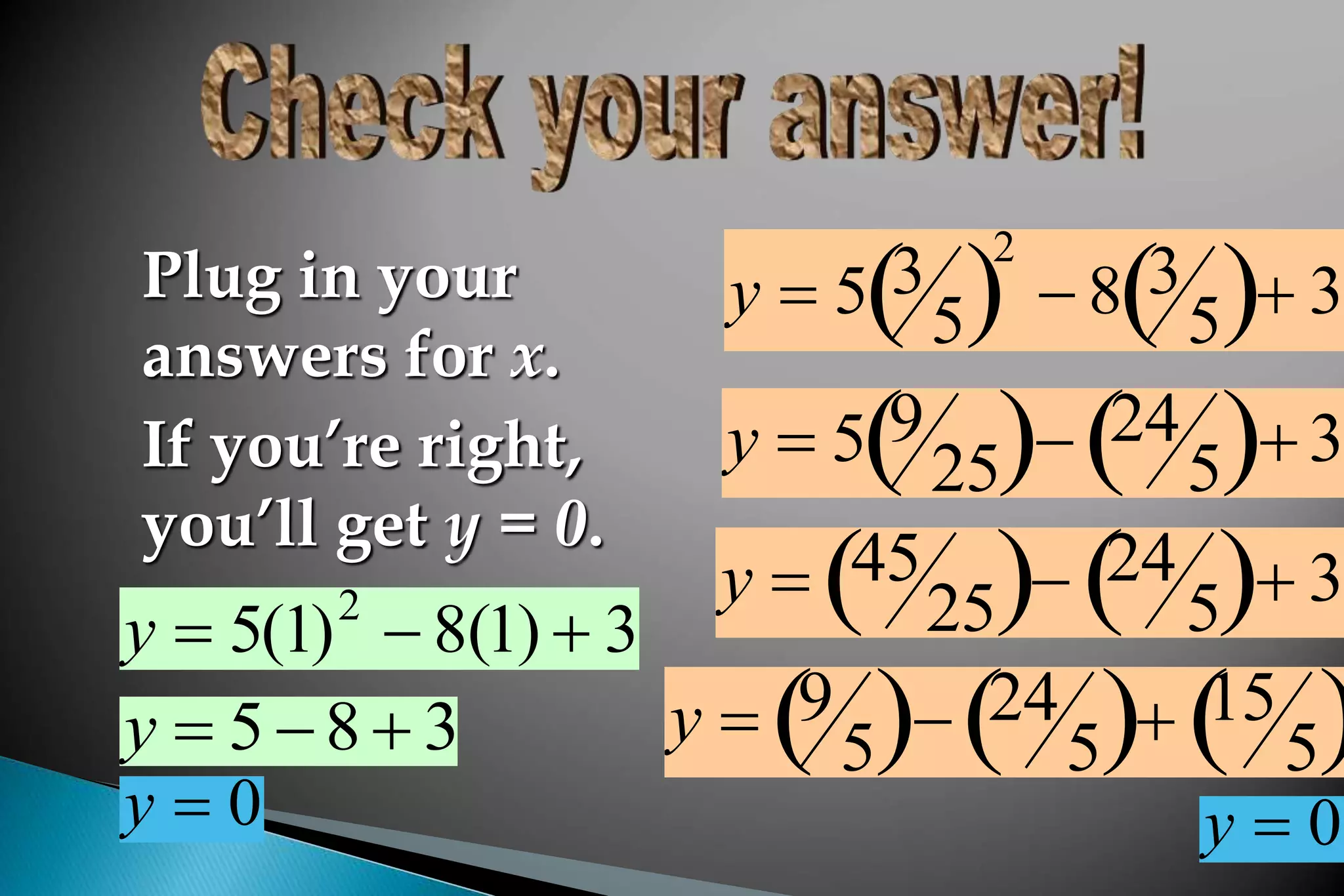
y  5(1)2
 8(1)  3
y  5 8  3
y  0
y  5 3
5
 
2
 8 3
5
  3
y  5 9
25
  24
5
 3
y  45
25
  24
5
  3
y  9
5
  24
5
  15
5
 
y  0
Plug in your
answers for x.
If you’re right,
you’ll get y = 0.
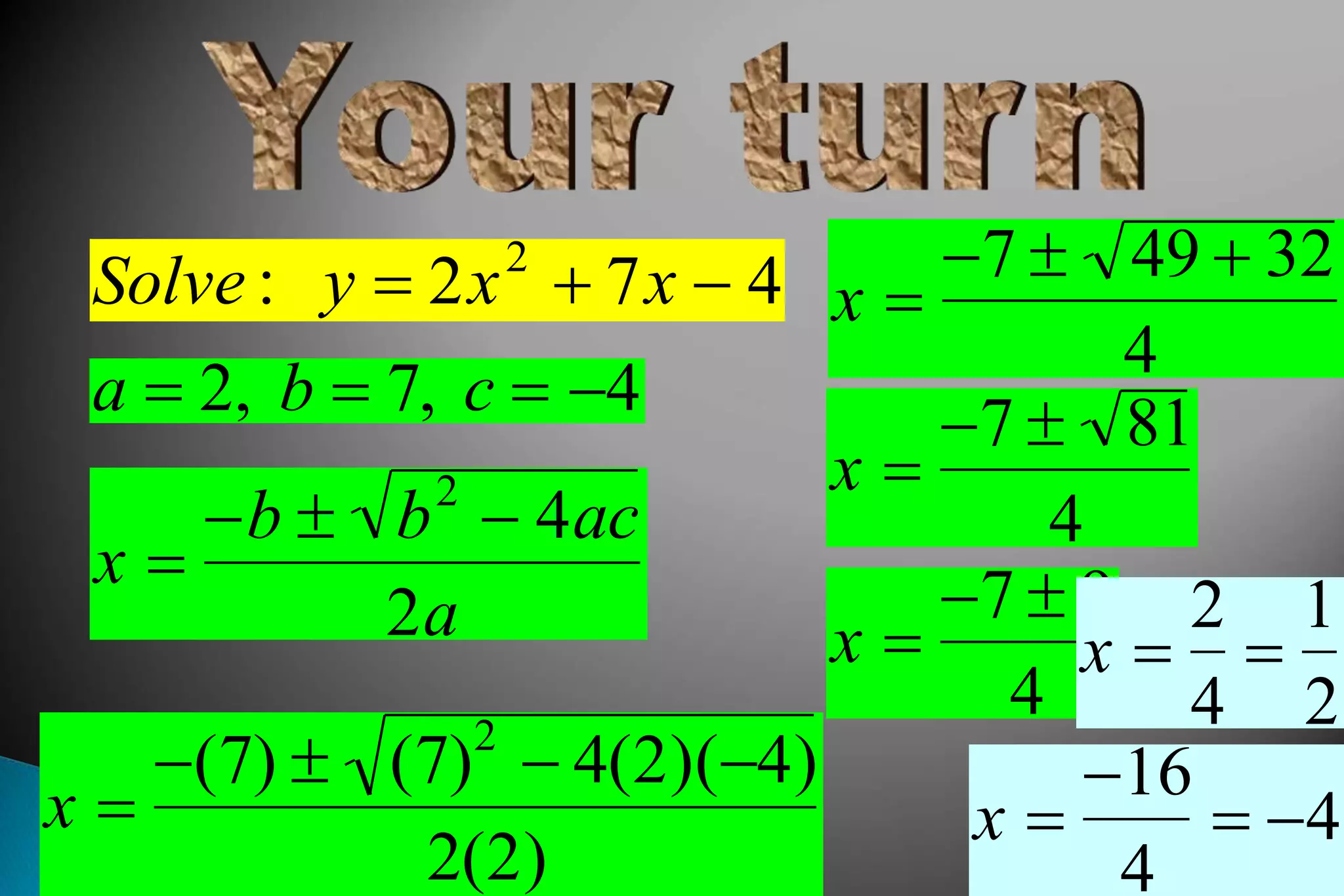
Solve : y  2x2
 7x  4
a  2, b  7, c  4
x 
b  b2
 4ac
2a
x 
(7)  (7)2
 4(2)(4)
2(2)
x 
7  49  32
4
x 
7  81
4
x 
7  9
4
x 
2
4

1
2
x 
16
4
 4
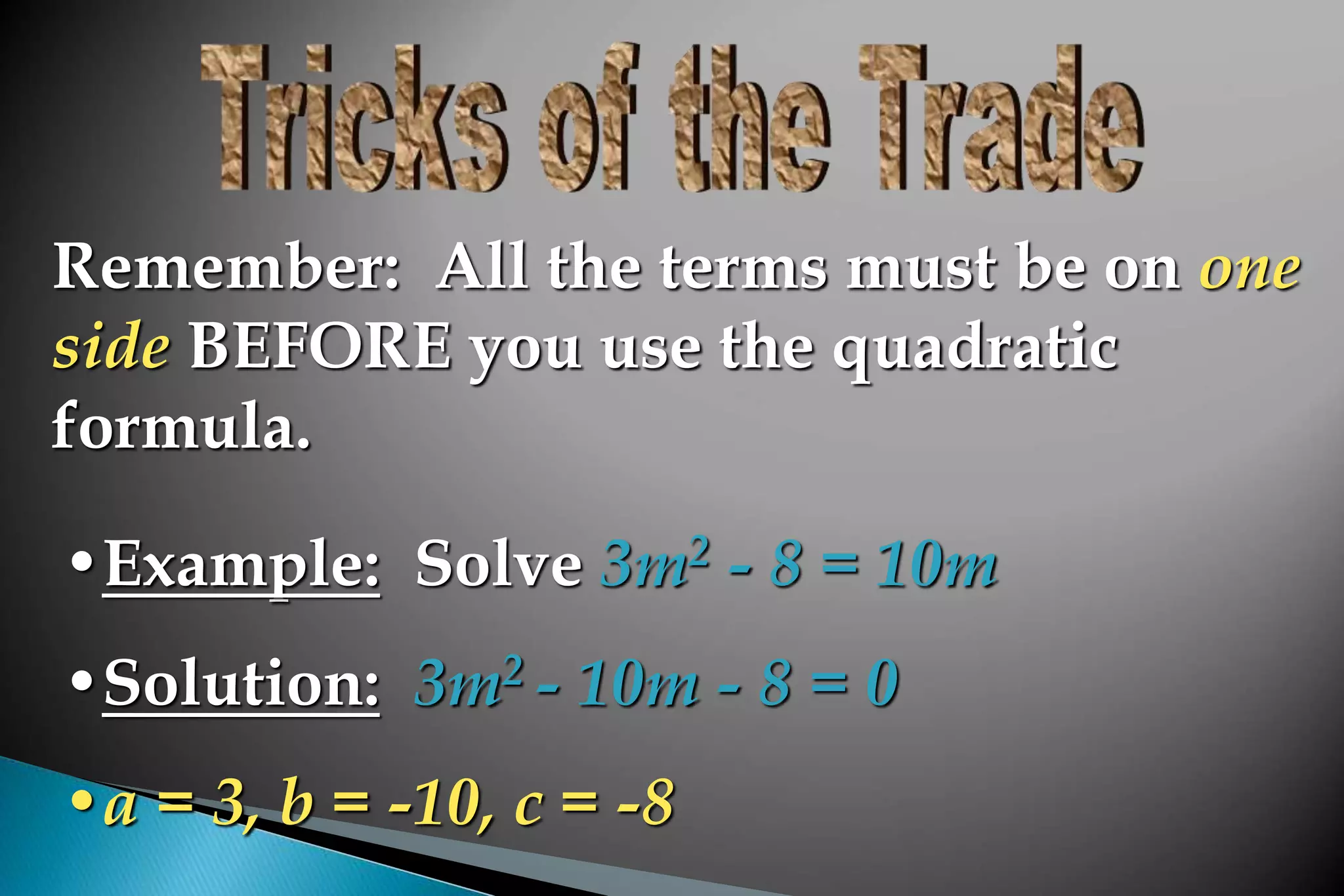
Remember: All the terms must be on one
side BEFORE you use the quadratic
formula.
•Example: Solve 3m2 - 8 = 10m
•Solution: 3m2 - 10m - 8 = 0
•a = 3, b = -10, c = -8
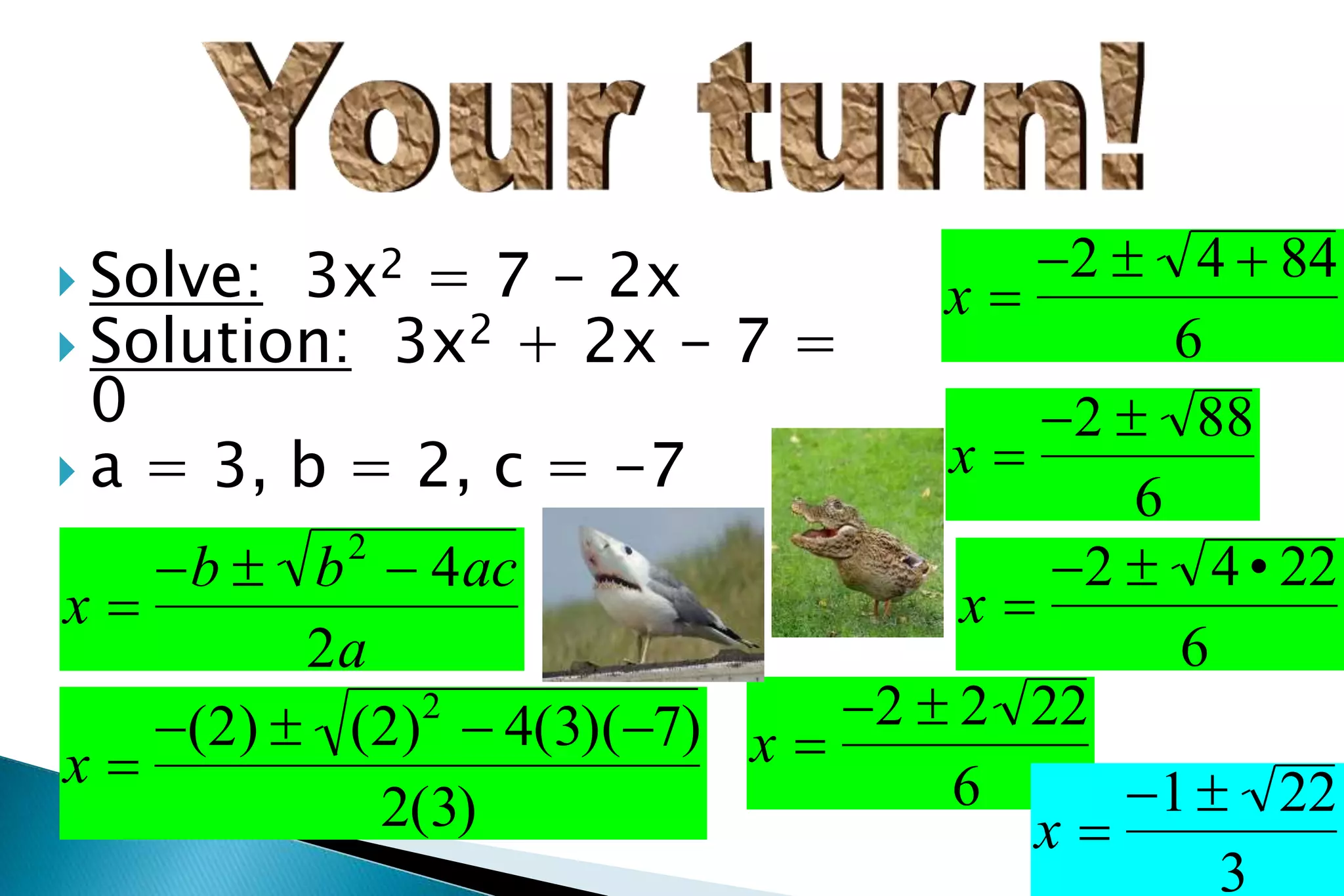
 Solve: 3x2 = 7 - 2x
 Solution: 3x2 + 2x - 7 =
0
 a = 3, b = 2, c = -7
x 
b  b2
 4ac
2a
x 
(2)  (2)2
 4(3)(7)
2(3)
x 
2  4  84
6
x 
2  88
6
x 
2  4• 22
6
x 
2  2 22
6
x 
1 22
3
 Watch this:
http://www.youtube.com/watch?v=jGJrH49Z2ZA
THANKS!!!

Quadratic Formula Demo.ppt

  • 1.
     Intro: Wealready know the standard form of a quadratic equation is: y = ax2 + bx + c  The coefficients are: a , b, c  The variables are: y, x
  • 2.
     The ROOTS(or solutions) of a polynomial are its x-intercepts  The x-intercepts occur where y = 0. Roots
  • 3.
     Example: Findthe roots: y = x2 + x - 6  Solution: Factoring: y = (x + 3)(x - 2)  0 = (x + 3)(x - 2)  The roots are:  x = -3; x = 2 Roots
  • 4.
     After centuriesof work, mathematicians realized that as long as you know the coefficients, you can find the roots of the quadratic. Even if it doesn’t factor! y  ax2  bx  c, a  0 x  b  b2  4ac 2a
  • 5.
    Solve: y =5x2  8x  3 x  b  b2  4ac 2a a  5, b  8, c  3 x  (8)  (8)2  4(5)(3) 2(5) x  8  64  60 10 x  8  4 10 x  8  2 10
  • 6.
    x  8 2 10 x  8  2 10  10 10  1 x  8  2 10  6 10  3 5 Roots
  • 7.
    y  5(1)2 8(1)  3 y  5 8  3 y  0 y  5 3 5   2  8 3 5   3 y  5 9 25   24 5  3 y  45 25   24 5   3 y  9 5   24 5   15 5   y  0 Plug in your answers for x. If you’re right, you’ll get y = 0.
  • 8.
    Solve : y 2x2  7x  4 a  2, b  7, c  4 x  b  b2  4ac 2a x  (7)  (7)2  4(2)(4) 2(2) x  7  49  32 4 x  7  81 4 x  7  9 4 x  2 4  1 2 x  16 4  4
  • 9.
    Remember: All theterms must be on one side BEFORE you use the quadratic formula. •Example: Solve 3m2 - 8 = 10m •Solution: 3m2 - 10m - 8 = 0 •a = 3, b = -10, c = -8
  • 10.
     Solve: 3x2= 7 - 2x  Solution: 3x2 + 2x - 7 = 0  a = 3, b = 2, c = -7 x  b  b2  4ac 2a x  (2)  (2)2  4(3)(7) 2(3) x  2  4  84 6 x  2  88 6 x  2  4• 22 6 x  2  2 22 6 x  1 22 3
  • 11.