!  Proven PR Tools to Build School District Reputation—And Support Student Success! QESBA-Sherbrooke, October 2011
You’ve Got the Power!  Brian Woodland, APR Director of Communications and Strategic Partnerships Peel District School Board Mississauga, Ontario (905) 890-1010, ext 2812 [email_address] See more on  LinkedIn
 
 
We are too busy even when we try to relax...


The doors we  open  and close each day decide the lives we live Flora Whittemore
Praise where it is due… Thank you  for your exceptional daily work to serve students—and your personal  leadership  as Commissioners !
 
 
Leadership is  action , not position. Source: Donald H. McGannon
 
 
Great leadership—and PR-- starts with engagement
 
 
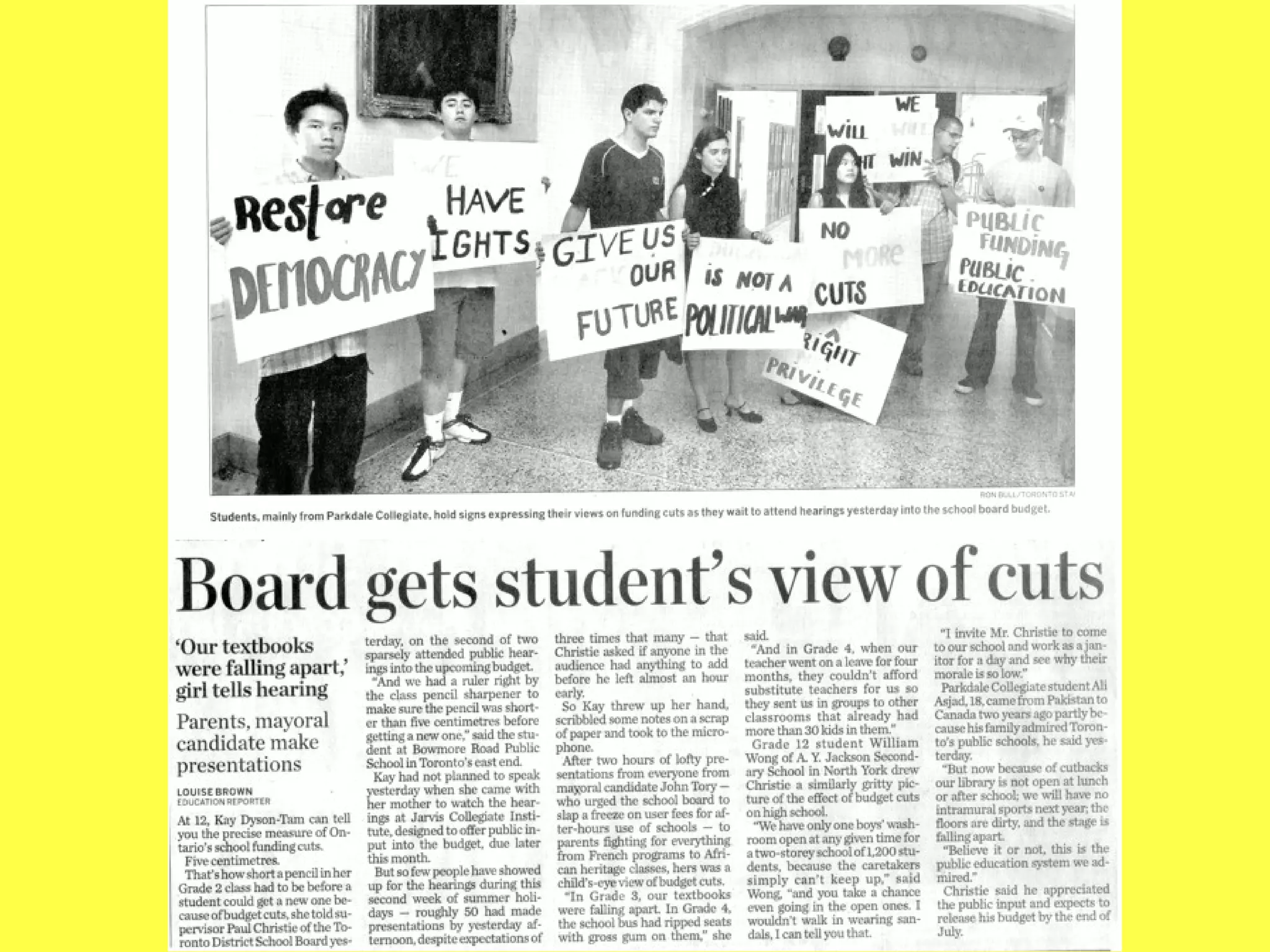
What’s Changed? Information explosion/constant radical    change Skills revolution Sophisticated/discerning public  “Where is June Cleaver?” Societal issues -  violence, funding, demographics Personal experience/reality GAP
 
Beyond “drive-by management”...Good district leaders manage change...but change sometimes happens without our even noticing...
 
 
Show of hands
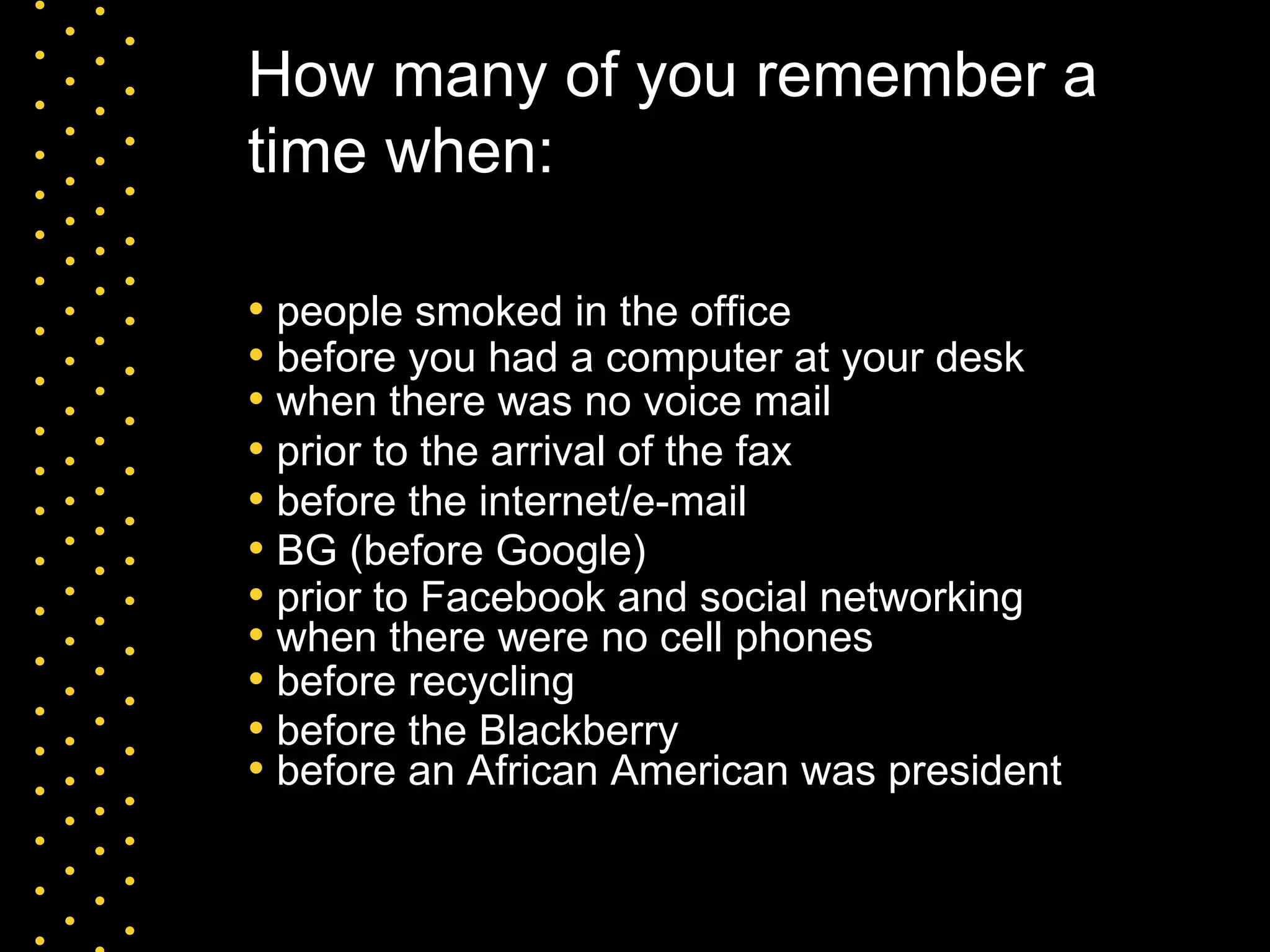
How many of you remember a time when: people smoked in the office before you had a computer at your desk prior to the arrival of the fax when there was no voice mail when there were no cell phones before the internet/e-mail BG (before Google) before the Blackberry prior to Facebook and social networking before an African American was president before recycling
A “transparent moment ” You need to practice “grounding”
Why?  Because you are here: ? I could use a drink—of water or something.  Should I call my spouse? I could sleep for five days straight. When is lunch? Why do they always bring these people from Toronto? Do you have them at hello?
 
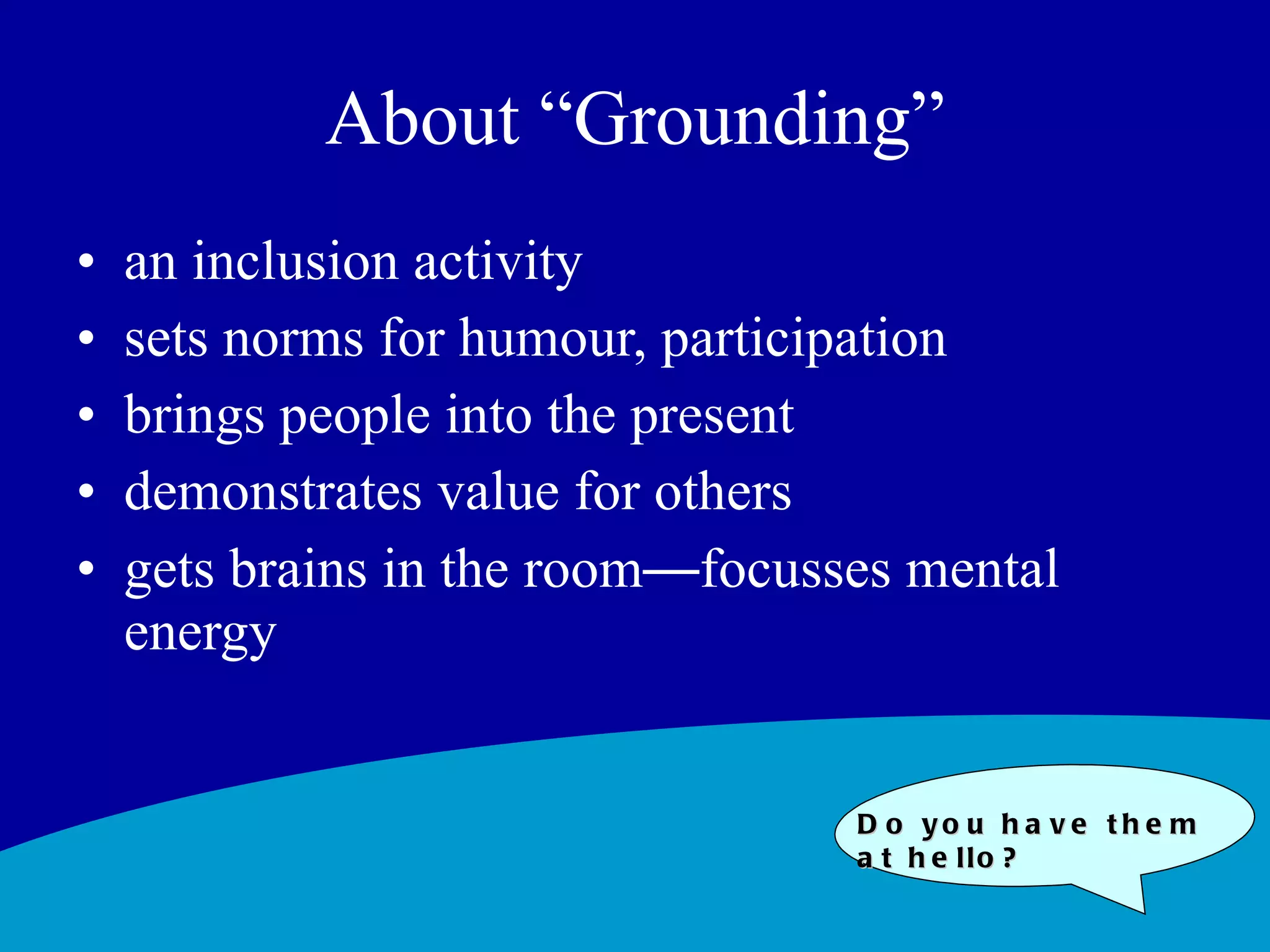
About “Grounding” an inclusion activity sets norms for humour, participation brings people into the present demonstrates value for others gets brains in the room — focusses mental energy Do you have them at hello?
What’s Changed? Information explosion/constant radical    change Skills revolution Sophisticated/discerning public  “Where is June Cleaver?” Societal issues -  violence, funding, demographics Personal experience/reality GAP
 
The translation? “ The entire future of the civilized world rests on how well we do in public schools today”
Survey says Health care and education are the top two issues of public concern
 
The Brian Woodland rule: Everything really wonderful that happens in a community, and everything really terrible that happens in a community, connects back to a school
What’s Changed? Information explosion/constant radical    change Skills revolution Sophisticated/discerning public  “Where is June Cleaver?” Societal issues -  violence, funding, demographics Personal experience/reality GAP
 
What’s Changed? Information explosion/constant radical    change Skills revolution Sophisticated/discerning public  “Where is June Cleaver?” Societal issues -  violence, funding, demographics Personal experience/reality GAP


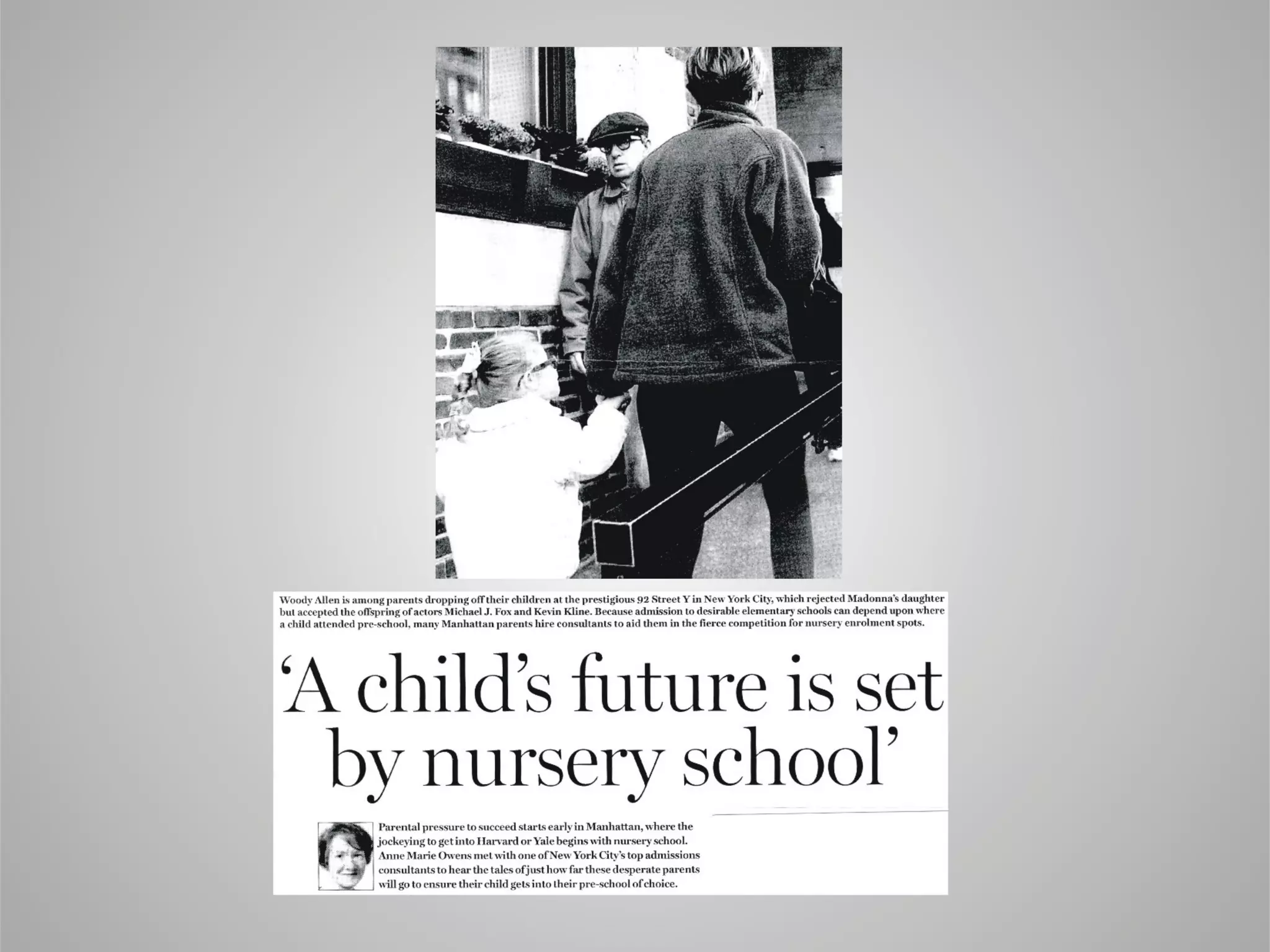
So what is the bottom line? The emergence of  Super parents  also known as  hyper parents or  high maintenance  parents
 
My child
 
Half of preschooler parents believe their kids are above average. The number jumps to a dazzling 72% for parents of teens. Source: Macleans


“ Why should I have my kid come to your school?” Learning About Schools: What Parents Need to Know and How They Can Find Out, Prof. P. Coleman
Why should my child come to your school? high educational standards high graduate rate we help students make a difference full range of extra curricular activities warm supportive and challenging vibrant, caring community of learners exceptional staff great technology focus nurturing and respectful diverse community
The source? Private Schools A special interest supplement   The Globe and Mail,
The best source? YOU! What are your top 5?
What’s Changed? Information explosion/constant radical    change Skills revolution Sophisticated/discerning public  “Where is June Cleaver?” Societal issues -  violence, funding, demographics Personal experience/reality GAP


When the oasis dries up the animals look at each other differently
What’s Changed? Information explosion/constant radical    change Skills revolution Sophisticated/discerning public  “Where is June Cleaver?” Societal issues -  violence, funding, demographics Personal experience/reality GAP
 
 
Do you practice quality response?
What is quality response? When things go wrong—what do we do at school and education centre? If not our fault we are still judged It is at the core of reputation management Not just the “big bad” but also the “little bad” Judged on process and product – watch...
 
The Delta Sherbrooke -room not  clean  -power blackout
The good news… It makes a difference Look at this example—and find the quality response leader
 
How often have you been the one to lead people “around the leaf”?
 
 
Survey says … How many of you have a district PR person?
Do you sometimes see them only in the “usual” roles?
 
Not this…
Question: What is the role and value of your school district PR person?


There is a key difference between a  communications plan  and this...
 
Only one of them is actually  magic !
 
 
  On ounce of prevention…   Unless communications is: A voice at the table Focussed on learning Part of the learning team Integrated into the organization Seen as more than a frill or budget cut fodder Then they cannot manage hot issues
 
The communication department’s work is focused on service to schools and their staff Janet McDougald Chair of the Board Peel District School Board
Where does your communicator belong: Business?  Education?
Late breaking news…I do not have a strategic communications plan!


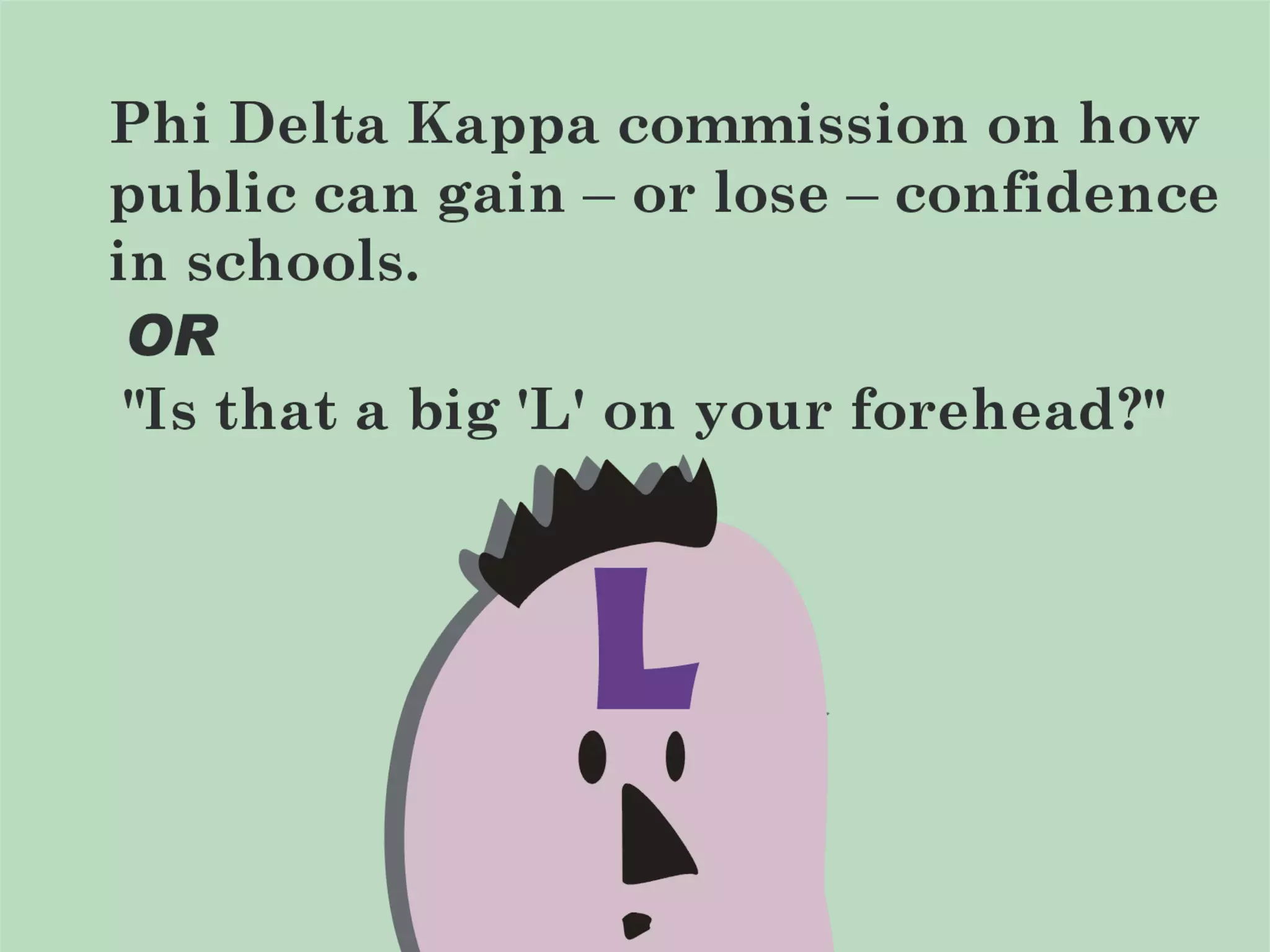
Phi Delta Kappa says schools with high confidence ratings: have clear goals, and they communicate these goals clearly within the school and to the community have high quality curriculum and extracurricular programs -  they are seen to have “extras” over and above what the “average” school offers are safe and orderly have significant parent and community involvement exhibit openness, warmth and caring systematically do “need sensing” to find out what parents and others in the community want from schools work hard at building and retaining public confidence
 
Hierarchy of Effective Communications 1. One-to-one, face-to-face 2. Small group discussion/meeting 3. Speaking before a large group 4. Phone conversation 5. Handwritten, personal note 6. Typewritten, personal letter not generated by computer 7. Computer generated or word-processing-generated “personal letter” 8. Mass-produced, non-personal letter 9. Brochure or pamphlet sent out as a “direct mail” piece 10. Article in organizational newsletter, magazine, tabloid 11. News carried in popular press 12. Advertising in newspapers, radio, TV, magazines, posters 13. Other less effective forms of communication (billboards, skywriters, etc.)
That means …  director and PR person have less power  over public image than does the average school secretary or custodian
How can that be…
 
 
Your frontline people have enormous power… Do they use it for good, or for evil?
What is the voice in your schools and offices?
 
Are there people in your schools or offices who slam the door on others?
Sign of the times Catering for elegant social events
Sign of the times Our specialty—do-it-yourself roast a whole pig parties!!
There is no inside/outside voice “ everything is great!” and “ everything is a disaster” cannot co-exist !
Do you have a psychic vampire…
 
Think about your school district Do you have a “fall in the salad” person?
 
Leaders? Do you as leaders understand your  personal  power over reputation? That the power starts with how as Commissioners you treat your own people…
 
Gremmar? Grammer? Gremmer?  What is the voice of  your  school board?
Pick the right PR tool for the right job
The  5  Power Tools
1   Do a good job
The   BIG   picture What public relations can’t do--NSPRA The 90-7-3 rule 90% of reputation is based on quality service 7% on listening 3% on telling
The   BIG   picture It’s a simple rule to get good PR-- Always do a good job!


2   Connect PR to learning
 
 
Within 10 percentage points, what per cent of recent research studies indicate that parents DO have an important impact on children’s school achievement? What percentage DO NOT? DO  100% DO NOT  0%
A Michigan study of student test scores found one factor that stood out as “The most frequently recurring theme of high-scoring districts.” What was it? Intensive involvement of parents in their children’s schooling.
Research is clear that the vast majority of parents want to help their child be successful in school. What are the three key reasons they say they do not? 1. No time 2. Don’t know what to do 3. Language
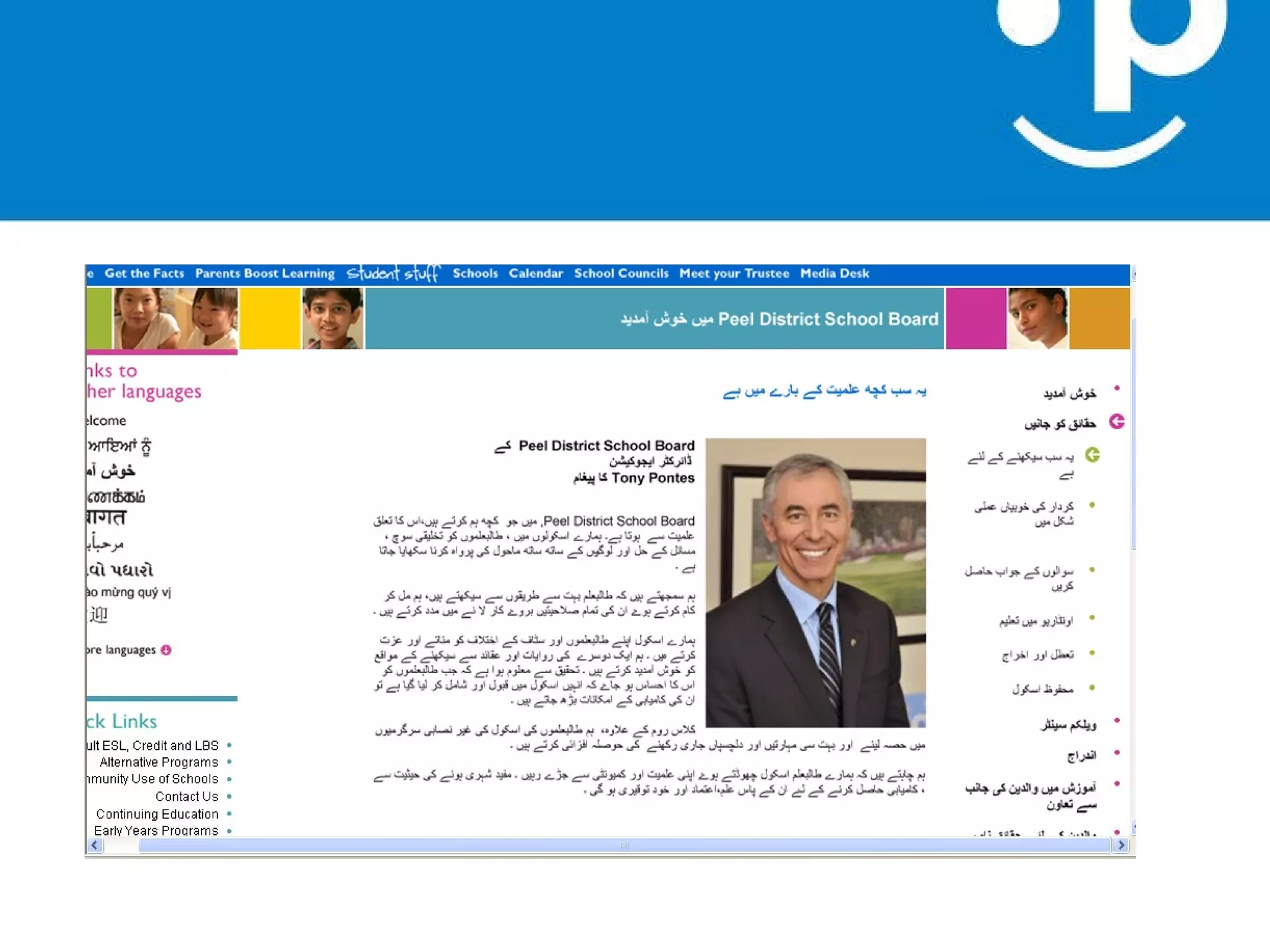
Who we are Peel District School Board 1 in 2 new students new to Canada over past three years, registered 10,000  students new to Canada in past three years 90% of newcomer families don’t speak or  read English 47% of student population speaks language  other than English at home
 
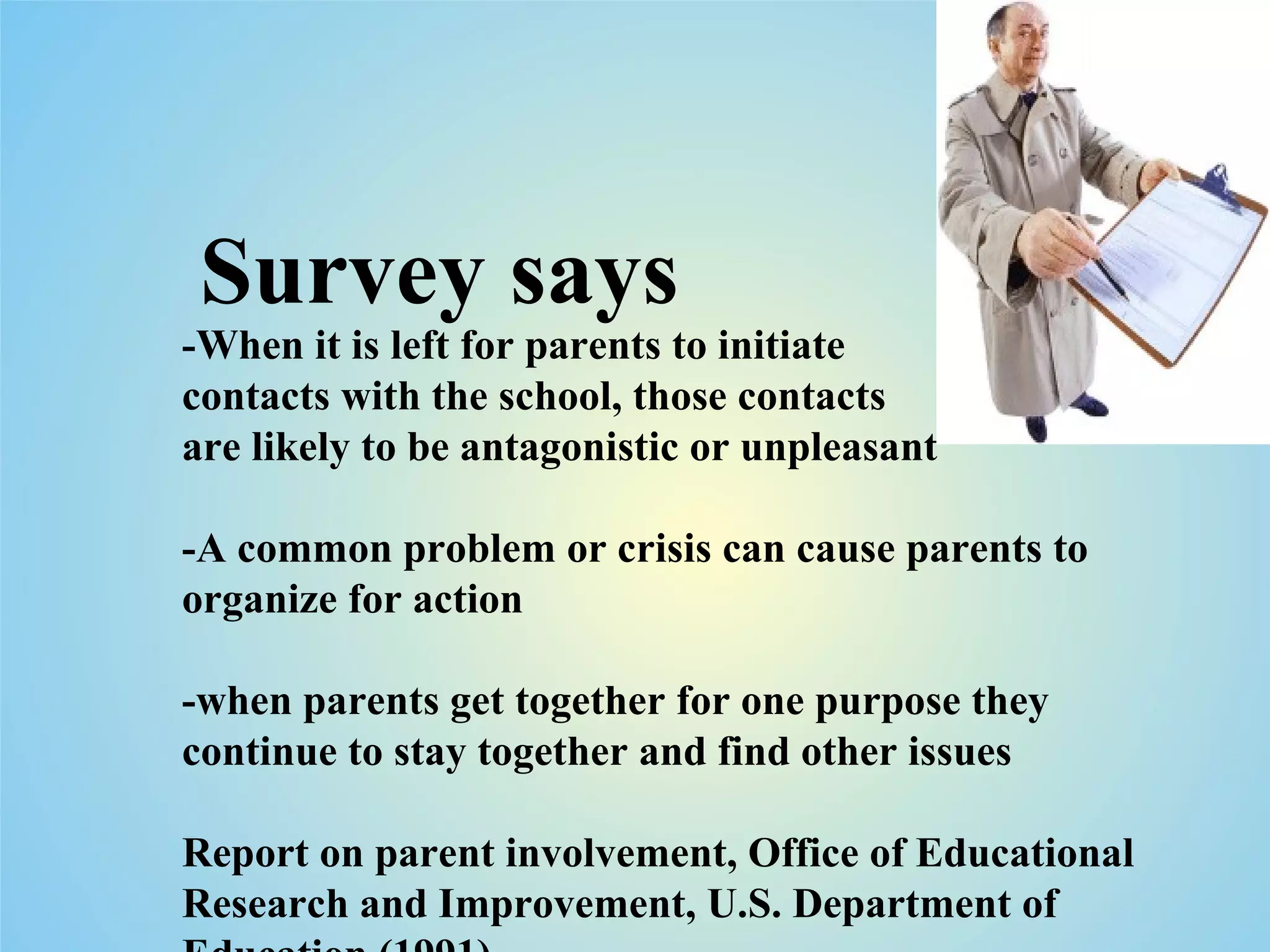
Survey says -When it is left for parents to initiate  contacts with the school, those contacts  are likely to be antagonistic or unpleasant -A common problem or crisis can cause parents to organize for action  -when parents get together for one purpose they continue to stay together and find other issues Report on parent involvement, Office of Educational Research and Improvement, U.S. Department of Education (1991)


Quick Tip: Make sure the bad news comes from you … quickly!
3   WOW service


Quick Tip : If you do not like the use of  customer service …get over yourself!
A very short guide on how  not  to build customer relationships…
 
Moving to WOW Give a corporate example for:   Pathetic Adequate WOW!
Defining adequate…
 
 
Moving to WOW Give a  personal  example for:   Pathetic Adequate WOW!
Each customer interaction can be either magic or tragic  How to Talk to Customers Diane Berenbaum & Tom Larkin
 
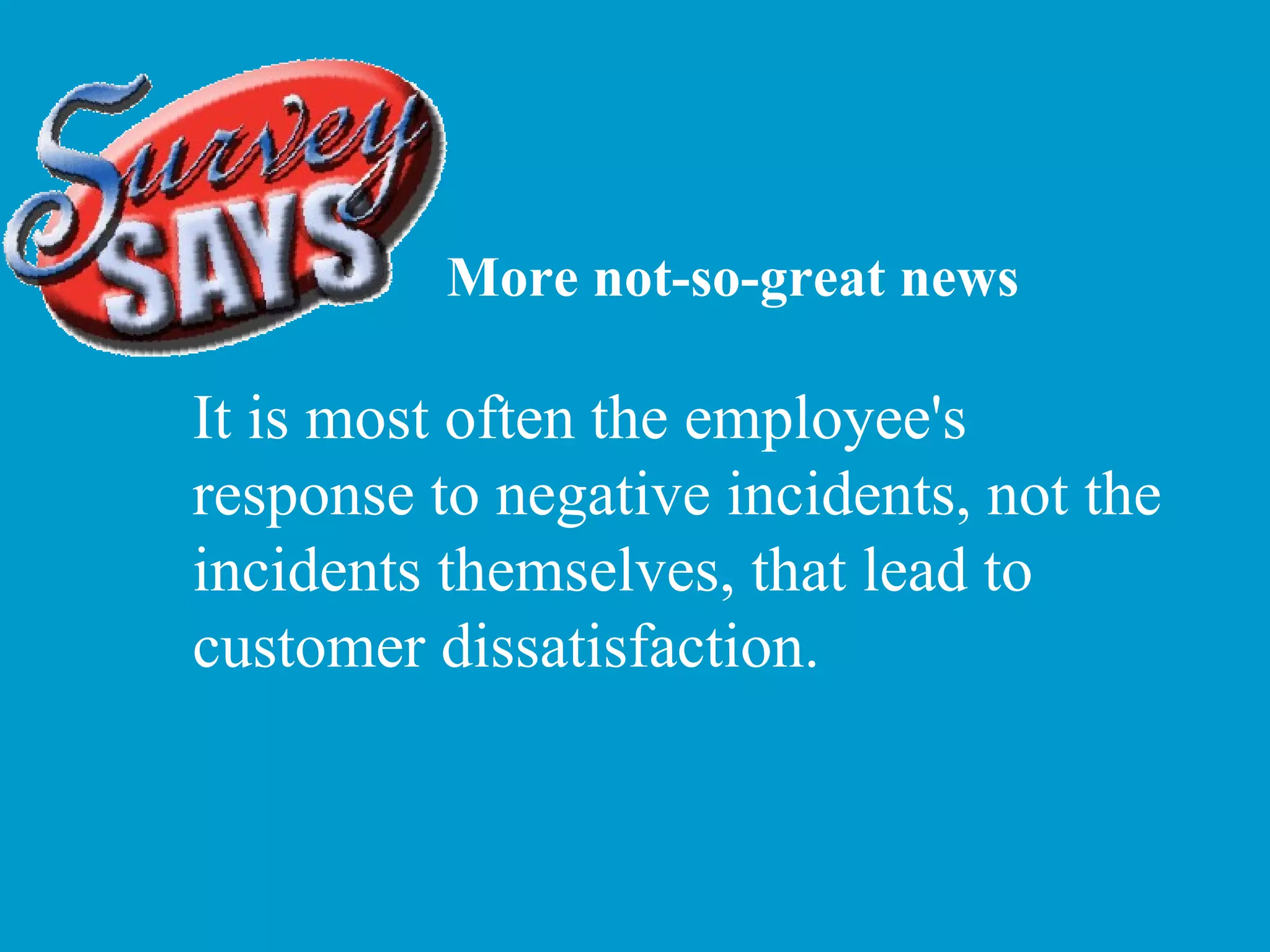
More not-so-great news It is most often the employee's response to negative incidents, not the incidents themselves, that lead to customer dissatisfaction.
 
4   Power of three


Would your dictionary definition of you include words like “positive”, “kind”, “nice", or are you…
 
Let your smile be your….
Your task To be a district Power of Three  leader
5   Trumpet good news


A last word… Never forget that even the smallest acts of kindness by each of us can have a major impact on the lives of the children we serve…
 
Always remember our greatest common bond
Come to the edge…
We can't, we can't, we are afraid.
Come to the edge…
We can't, we will fall.
Come to the edge…
And they came, and  Life  pushed them
And they  flew Guillaume Apollinaire
 

Qesba power

  • 1.
  • 2.
    ! ProvenPR Tools to Build School District Reputation—And Support Student Success! QESBA-Sherbrooke, October 2011
  • 3.
    You’ve Got thePower! Brian Woodland, APR Director of Communications and Strategic Partnerships Peel District School Board Mississauga, Ontario (905) 890-1010, ext 2812 [email_address] See more on LinkedIn
  • 4.
  • 5.
  • 6.
    We are toobusy even when we try to relax...
  • 7.
  • 8.
  • 9.
  • 10.
    The doors we open and close each day decide the lives we live Flora Whittemore
  • 11.
    Praise where itis due… Thank you for your exceptional daily work to serve students—and your personal leadership as Commissioners !
  • 12.
  • 13.
  • 14.
    Leadership is action , not position. Source: Donald H. McGannon
  • 15.
  • 16.
  • 17.
    Great leadership—and PR--starts with engagement
  • 18.
  • 19.
  • 20.
    What’s Changed? Informationexplosion/constant radical change Skills revolution Sophisticated/discerning public “Where is June Cleaver?” Societal issues - violence, funding, demographics Personal experience/reality GAP
  • 21.
  • 22.
    Beyond “drive-by management”...Gooddistrict leaders manage change...but change sometimes happens without our even noticing...
  • 23.
  • 24.
  • 25.
  • 26.
    How many ofyou remember a time when: people smoked in the office before you had a computer at your desk prior to the arrival of the fax when there was no voice mail when there were no cell phones before the internet/e-mail BG (before Google) before the Blackberry prior to Facebook and social networking before an African American was president before recycling
  • 27.
    A “transparent moment” You need to practice “grounding”
  • 28.
    Why? Becauseyou are here: ? I could use a drink—of water or something. Should I call my spouse? I could sleep for five days straight. When is lunch? Why do they always bring these people from Toronto? Do you have them at hello?
  • 29.
  • 30.
    About “Grounding” aninclusion activity sets norms for humour, participation brings people into the present demonstrates value for others gets brains in the room — focusses mental energy Do you have them at hello?
  • 31.
    What’s Changed? Informationexplosion/constant radical change Skills revolution Sophisticated/discerning public “Where is June Cleaver?” Societal issues - violence, funding, demographics Personal experience/reality GAP
  • 32.
  • 33.
    The translation? “The entire future of the civilized world rests on how well we do in public schools today”
  • 34.
    Survey says Healthcare and education are the top two issues of public concern
  • 35.
  • 36.
    The Brian Woodlandrule: Everything really wonderful that happens in a community, and everything really terrible that happens in a community, connects back to a school
  • 37.
    What’s Changed? Informationexplosion/constant radical change Skills revolution Sophisticated/discerning public “Where is June Cleaver?” Societal issues - violence, funding, demographics Personal experience/reality GAP
  • 38.
  • 39.
    What’s Changed? Informationexplosion/constant radical change Skills revolution Sophisticated/discerning public “Where is June Cleaver?” Societal issues - violence, funding, demographics Personal experience/reality GAP
  • 40.
  • 41.
  • 42.
  • 43.
    So what isthe bottom line? The emergence of Super parents also known as hyper parents or high maintenance parents
  • 44.
  • 45.
  • 46.
  • 47.
    Half of preschoolerparents believe their kids are above average. The number jumps to a dazzling 72% for parents of teens. Source: Macleans
  • 48.
  • 49.
  • 50.
  • 51.
  • 52.
  • 53.
  • 54.
  • 55.
    “ Why shouldI have my kid come to your school?” Learning About Schools: What Parents Need to Know and How They Can Find Out, Prof. P. Coleman
  • 56.
    Why should mychild come to your school? high educational standards high graduate rate we help students make a difference full range of extra curricular activities warm supportive and challenging vibrant, caring community of learners exceptional staff great technology focus nurturing and respectful diverse community
  • 57.
    The source? PrivateSchools A special interest supplement The Globe and Mail,
  • 58.
    The best source?YOU! What are your top 5?
  • 59.
    What’s Changed? Informationexplosion/constant radical change Skills revolution Sophisticated/discerning public “Where is June Cleaver?” Societal issues - violence, funding, demographics Personal experience/reality GAP
  • 60.
  • 61.
  • 62.
  • 63.
    When the oasisdries up the animals look at each other differently
  • 64.
    What’s Changed? Informationexplosion/constant radical change Skills revolution Sophisticated/discerning public “Where is June Cleaver?” Societal issues - violence, funding, demographics Personal experience/reality GAP
  • 65.
  • 66.
  • 67.
    Do you practicequality response?
  • 68.
    What is qualityresponse? When things go wrong—what do we do at school and education centre? If not our fault we are still judged It is at the core of reputation management Not just the “big bad” but also the “little bad” Judged on process and product – watch...
  • 69.
  • 70.
    The Delta Sherbrooke-room not clean -power blackout
  • 71.
    The good news…It makes a difference Look at this example—and find the quality response leader
  • 72.
  • 73.
    How often haveyou been the one to lead people “around the leaf”?
  • 74.
  • 75.
  • 76.
    Survey says …How many of you have a district PR person?
  • 77.
    Do you sometimessee them only in the “usual” roles?
  • 78.
  • 79.
  • 80.
    Question: What isthe role and value of your school district PR person?
  • 81.
  • 82.
  • 83.
  • 84.
  • 85.
  • 86.
  • 87.
  • 88.
  • 89.
  • 90.
  • 91.
  • 92.
    There is akey difference between a communications plan and this...
  • 93.
  • 94.
    Only one ofthem is actually magic !
  • 95.
  • 96.
  • 97.
      On ounceof prevention…   Unless communications is: A voice at the table Focussed on learning Part of the learning team Integrated into the organization Seen as more than a frill or budget cut fodder Then they cannot manage hot issues
  • 98.
  • 99.
    The communication department’swork is focused on service to schools and their staff Janet McDougald Chair of the Board Peel District School Board
  • 100.
    Where does yourcommunicator belong: Business? Education?
  • 101.
    Late breaking news…Ido not have a strategic communications plan!
  • 102.
  • 103.
  • 104.
  • 105.
  • 106.
    Phi Delta Kappasays schools with high confidence ratings: have clear goals, and they communicate these goals clearly within the school and to the community have high quality curriculum and extracurricular programs - they are seen to have “extras” over and above what the “average” school offers are safe and orderly have significant parent and community involvement exhibit openness, warmth and caring systematically do “need sensing” to find out what parents and others in the community want from schools work hard at building and retaining public confidence
  • 107.
  • 108.
    Hierarchy of EffectiveCommunications 1. One-to-one, face-to-face 2. Small group discussion/meeting 3. Speaking before a large group 4. Phone conversation 5. Handwritten, personal note 6. Typewritten, personal letter not generated by computer 7. Computer generated or word-processing-generated “personal letter” 8. Mass-produced, non-personal letter 9. Brochure or pamphlet sent out as a “direct mail” piece 10. Article in organizational newsletter, magazine, tabloid 11. News carried in popular press 12. Advertising in newspapers, radio, TV, magazines, posters 13. Other less effective forms of communication (billboards, skywriters, etc.)
  • 109.
    That means … director and PR person have less power over public image than does the average school secretary or custodian
  • 110.
  • 111.
  • 112.
  • 113.
    Your frontline peoplehave enormous power… Do they use it for good, or for evil?
  • 114.
    What is thevoice in your schools and offices?
  • 115.
  • 116.
    Are there peoplein your schools or offices who slam the door on others?
  • 117.
    Sign of thetimes Catering for elegant social events
  • 118.
    Sign of thetimes Our specialty—do-it-yourself roast a whole pig parties!!
  • 119.
    There is noinside/outside voice “ everything is great!” and “ everything is a disaster” cannot co-exist !
  • 120.
    Do you havea psychic vampire…
  • 121.
  • 122.
    Think about yourschool district Do you have a “fall in the salad” person?
  • 123.
  • 124.
    Leaders? Do youas leaders understand your personal power over reputation? That the power starts with how as Commissioners you treat your own people…
  • 125.
  • 126.
    Gremmar? Grammer? Gremmer? What is the voice of your school board?
  • 127.
    Pick the rightPR tool for the right job
  • 128.
    The 5 Power Tools
  • 129.
    1 Do a good job
  • 130.
    The BIG picture What public relations can’t do--NSPRA The 90-7-3 rule 90% of reputation is based on quality service 7% on listening 3% on telling
  • 131.
    The BIG picture It’s a simple rule to get good PR-- Always do a good job!
  • 132.
  • 133.
  • 134.
  • 135.
  • 136.
  • 137.
  • 138.
  • 139.
  • 140.
    2 Connect PR to learning
  • 141.
  • 142.
  • 143.
    Within 10 percentagepoints, what per cent of recent research studies indicate that parents DO have an important impact on children’s school achievement? What percentage DO NOT? DO 100% DO NOT 0%
  • 144.
    A Michigan studyof student test scores found one factor that stood out as “The most frequently recurring theme of high-scoring districts.” What was it? Intensive involvement of parents in their children’s schooling.
  • 145.
    Research is clearthat the vast majority of parents want to help their child be successful in school. What are the three key reasons they say they do not? 1. No time 2. Don’t know what to do 3. Language
  • 146.
    Who we arePeel District School Board 1 in 2 new students new to Canada over past three years, registered 10,000 students new to Canada in past three years 90% of newcomer families don’t speak or read English 47% of student population speaks language other than English at home
  • 147.
  • 148.
    Survey says -Whenit is left for parents to initiate contacts with the school, those contacts are likely to be antagonistic or unpleasant -A common problem or crisis can cause parents to organize for action -when parents get together for one purpose they continue to stay together and find other issues Report on parent involvement, Office of Educational Research and Improvement, U.S. Department of Education (1991)
  • 149.
  • 150.
  • 151.
  • 152.
  • 153.
  • 154.
  • 155.
  • 156.
    Quick Tip: Makesure the bad news comes from you … quickly!
  • 157.
    3 WOW service
  • 158.
  • 159.
  • 160.
  • 161.
    Quick Tip :If you do not like the use of customer service …get over yourself!
  • 162.
    A very shortguide on how not to build customer relationships…
  • 163.
  • 164.
    Moving to WOWGive a corporate example for: Pathetic Adequate WOW!
  • 165.
  • 166.
  • 167.
  • 168.
    Moving to WOWGive a personal example for: Pathetic Adequate WOW!
  • 169.
    Each customer interactioncan be either magic or tragic How to Talk to Customers Diane Berenbaum & Tom Larkin
  • 170.
  • 171.
    More not-so-great newsIt is most often the employee's response to negative incidents, not the incidents themselves, that lead to customer dissatisfaction.
  • 172.
  • 173.
    4 Power of three
  • 174.
  • 175.
  • 176.
  • 177.
  • 178.
    Would your dictionarydefinition of you include words like “positive”, “kind”, “nice", or are you…
  • 179.
  • 180.
    Let your smilebe your….
  • 181.
    Your task Tobe a district Power of Three leader
  • 182.
    5 Trumpet good news
  • 183.
  • 184.
  • 185.
  • 186.
  • 187.
  • 188.
  • 189.
    A last word…Never forget that even the smallest acts of kindness by each of us can have a major impact on the lives of the children we serve…
  • 190.
  • 191.
    Always remember ourgreatest common bond
  • 192.
    Come to theedge…
  • 193.
    We can't, wecan't, we are afraid.
  • 194.
    Come to theedge…
  • 195.
    We can't, wewill fall.
  • 196.
    Come to theedge…
  • 197.
    And they came,and Life pushed them
  • 198.
    And they flew Guillaume Apollinaire
  • 199.