Tell whether the statement is
CORRECT or INCORRECT.
1
Hazards are natural processes
that can be dangerous, but have
not yet caused damage.
2
• An event that produces
greater loss than a community
can handle, including
casualties, property damage,
and significant environmental
damage is called disaster.
3
• An inherent weakness in a system or its
operating environment that may be
exploited to cause harm to the system is
called vulnerability.
4
• Risk refers to the probability of harmful
consequences, or expected loss of lives,
people injured, livelihoods, disruption of
economic activities and damages to the
environment as a result of interactions
between natural or human induced hazards
and vulnerable/ capable condition.
5
• The more severe the geophysical
event and/or the more vulnerable
the human population, the more the
two overlap and the larger the
disaster.
6
• Quasi-natural hazards are elements of
the physical environment, harmful to
man and caused by forces extraneous to
him; these may include extreme event
that occurs naturally and causes harm to
humans.
7
• Epidemic is a disease outbreak that
spreads across countries or
continents.
8
• Calamity is any phenomenon that has
the potential to cause disruption or
damage to humans and their
environment. Or an event or occurrence
that has the potential for causing injury
to life, property and environment.
9
• Extreme natural events (hazards) always
necessarily turn into disasters.
10
• Meteorology deals with the physics of
the Earth, including weather, winds,
tides, earthquakes, volcanoes, etc. and
their effect on the planet Earth.
11
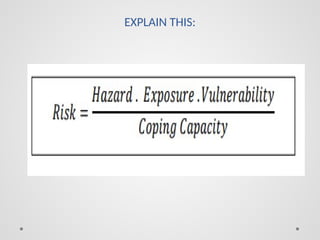
• Disaster risk is expressed as a
function/relationship between hazard,
exposure and vulnerability
12
• Level of vulnerability and exposure can be
reduced by: • Keeping people and property
away from hazards. • Relocation must come
hand in hand with mitigation and prevention
measures.
13
• Adaptive capacity refers to the size of the
population that can survive on available
resources.
• Exposure refers to the extent of the effect in
terms of land area or number of persons of a
natural hazard towards a community.
15
• Resiliency is the ability of a
community to resist and adapt upon
exposure to hazard.
16
• Primary effects refer to the long-term effects that
are set off as a result of a primary event. These
include things like loss of habitat, changes in the
landscape and natural features caused by a flood,
permanent changes in the position of river channel
caused by flood, crop failure or reduction.
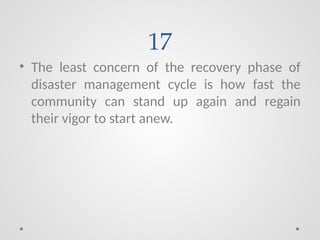
17
• The least concern of the recovery phase of
disaster management cycle is how fast the
community can stand up again and regain
their vigor to start anew.
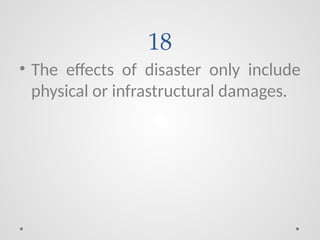
18
• The effects of disaster only include
physical or infrastructural damages.
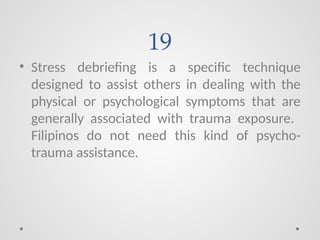
19
• Stress debriefing is a specific technique
designed to assist others in dealing with the
physical or psychological symptoms that are
generally associated with trauma exposure.
Filipinos do not need this kind of psycho-
trauma assistance.
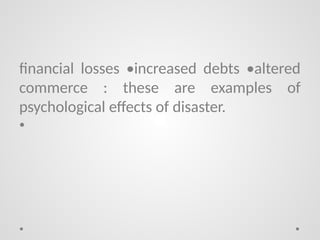
financial losses •increased debts •altered
commerce : these are examples of
psychological effects of disaster.
•
EXPLAIN THIS:

q1-pptx.pptx first quiz to be answer by students

  • 1.
    Tell whether thestatement is CORRECT or INCORRECT.
  • 2.
    1 Hazards are naturalprocesses that can be dangerous, but have not yet caused damage.
  • 3.
    2 • An eventthat produces greater loss than a community can handle, including casualties, property damage, and significant environmental damage is called disaster.
  • 4.
    3 • An inherentweakness in a system or its operating environment that may be exploited to cause harm to the system is called vulnerability.
  • 5.
    4 • Risk refersto the probability of harmful consequences, or expected loss of lives, people injured, livelihoods, disruption of economic activities and damages to the environment as a result of interactions between natural or human induced hazards and vulnerable/ capable condition.
  • 6.
    5 • The moresevere the geophysical event and/or the more vulnerable the human population, the more the two overlap and the larger the disaster.
  • 7.
    6 • Quasi-natural hazardsare elements of the physical environment, harmful to man and caused by forces extraneous to him; these may include extreme event that occurs naturally and causes harm to humans.
  • 8.
    7 • Epidemic isa disease outbreak that spreads across countries or continents.
  • 9.
    8 • Calamity isany phenomenon that has the potential to cause disruption or damage to humans and their environment. Or an event or occurrence that has the potential for causing injury to life, property and environment.
  • 10.
    9 • Extreme naturalevents (hazards) always necessarily turn into disasters.
  • 11.
    10 • Meteorology dealswith the physics of the Earth, including weather, winds, tides, earthquakes, volcanoes, etc. and their effect on the planet Earth.
  • 12.
    11 • Disaster riskis expressed as a function/relationship between hazard, exposure and vulnerability
  • 13.
    12 • Level ofvulnerability and exposure can be reduced by: • Keeping people and property away from hazards. • Relocation must come hand in hand with mitigation and prevention measures.
  • 14.
    13 • Adaptive capacityrefers to the size of the population that can survive on available resources.
  • 15.
    • Exposure refersto the extent of the effect in terms of land area or number of persons of a natural hazard towards a community.
  • 16.
    15 • Resiliency isthe ability of a community to resist and adapt upon exposure to hazard.
  • 17.
    16 • Primary effectsrefer to the long-term effects that are set off as a result of a primary event. These include things like loss of habitat, changes in the landscape and natural features caused by a flood, permanent changes in the position of river channel caused by flood, crop failure or reduction.
  • 18.
    17 • The leastconcern of the recovery phase of disaster management cycle is how fast the community can stand up again and regain their vigor to start anew.
  • 19.
    18 • The effectsof disaster only include physical or infrastructural damages.
  • 20.
    19 • Stress debriefingis a specific technique designed to assist others in dealing with the physical or psychological symptoms that are generally associated with trauma exposure. Filipinos do not need this kind of psycho- trauma assistance.
  • 21.
    financial losses •increaseddebts •altered commerce : these are examples of psychological effects of disaster. •
  • 22.