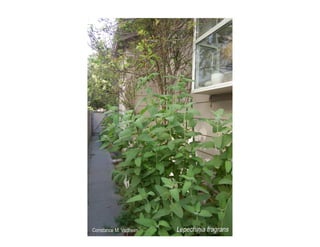
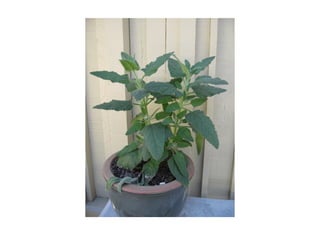
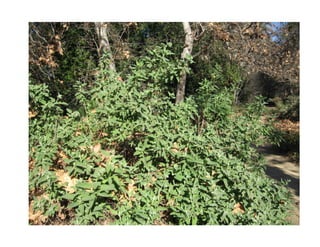
Fragrant Pitcher Sage – Lepechinia fragrans (lep-uh-CHIN-ee-uh FRAY-granz)
Family: Lamiaceae (Mint family)
Native to: South Coast, Channel Islands, Santa Monica and San Gabriel mountains. Uncommon in
canyons and on north slopes (areas with some shade and water).
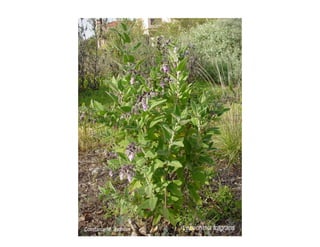
Growth characteristics: woody shrub mature height: 4-6 ft mature width: 4-6 ft
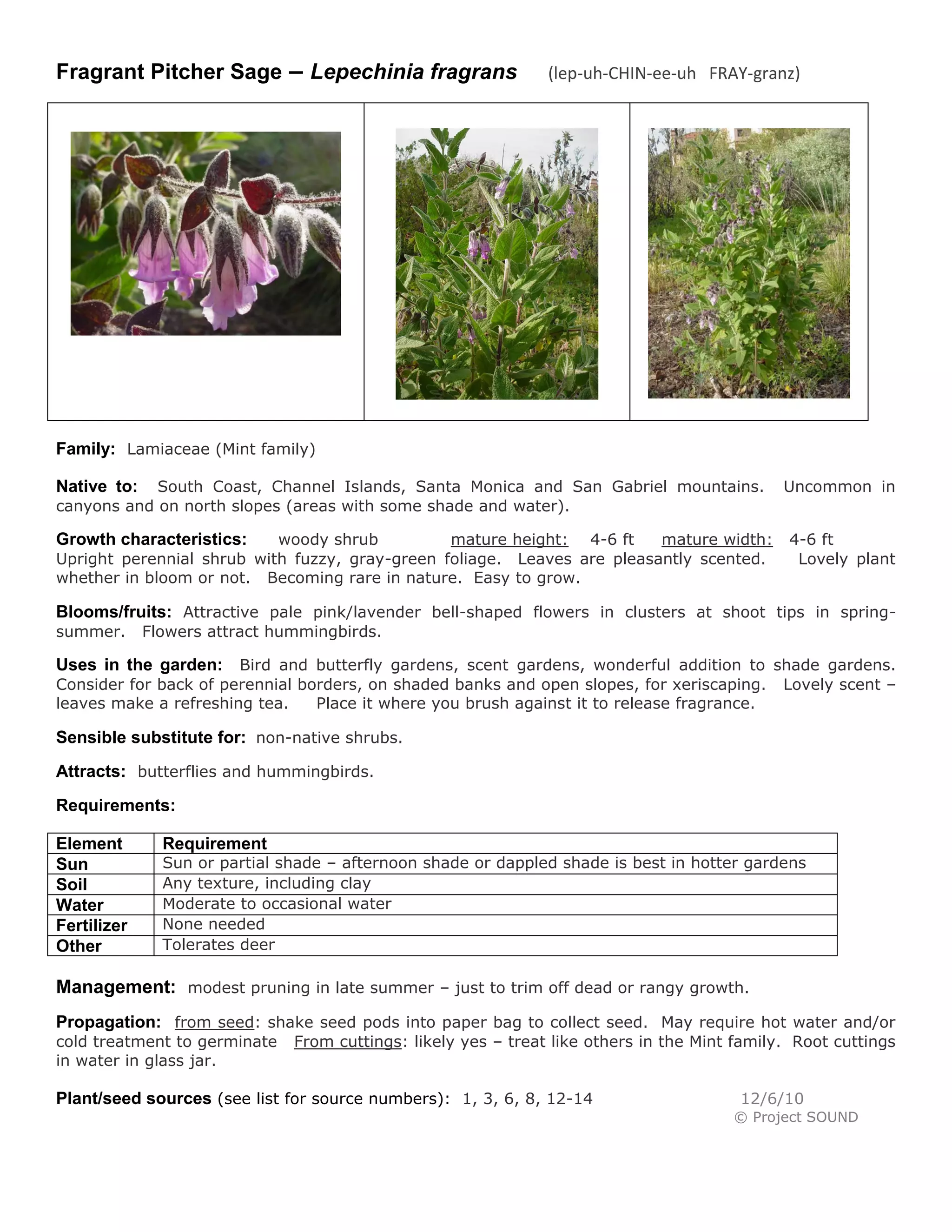
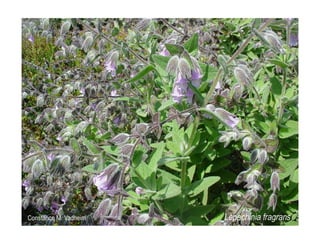
Upright perennial shrub with fuzzy, gray-green foliage. Leaves are pleasantly scented. Lovely plant
whether in bloom or not. Becoming rare in nature. Easy to grow.
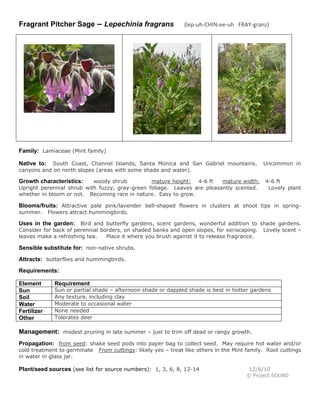
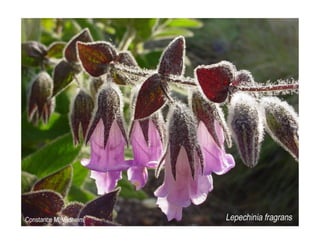
Blooms/fruits: Attractive pale pink/lavender bell-shaped flowers in clusters at shoot tips in spring-
summer. Flowers attract hummingbirds.
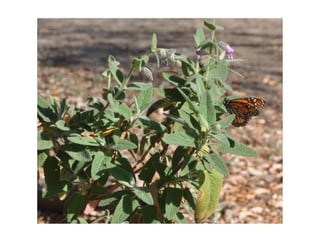
Uses in the garden: Bird and butterfly gardens, scent gardens, wonderful addition to shade gardens.
Consider for back of perennial borders, on shaded banks and open slopes, for xeriscaping. Lovely scent –
leaves make a refreshing tea. Place it where you brush against it to release fragrance.
Sensible substitute for: non-native shrubs.
Attracts: butterflies and hummingbirds.
Requirements:
Element Requirement
Sun Sun or partial shade – afternoon shade or dappled shade is best in hotter gardens
Soil Any texture, including clay
Water Moderate to occasional water
Fertilizer None needed
Other Tolerates deer
Management: modest pruning in late summer – just to trim off dead or rangy growth.
Propagation: from seed: shake seed pods into paper bag to collect seed. May require hot water and/or
cold treatment to germinate From cuttings: likely yes – treat like others in the Mint family. Root cuttings
in water in glass jar.
Plant/seed sources (see list for source numbers): 1, 3, 6, 8, 12-14 12/6/10
© Project SOUND
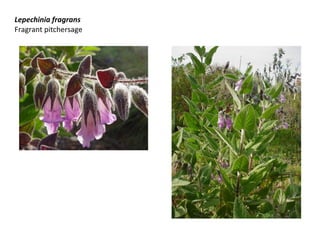
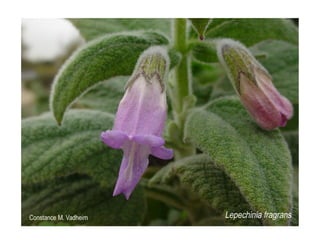
Lepechinia fragrans
Fragrant pitchersage
Q lepechinia-fragrans

Q lepechinia-fragrans

  • 1.
    Fragrant Pitcher Sage– Lepechinia fragrans (lep-uh-CHIN-ee-uh FRAY-granz) Family: Lamiaceae (Mint family) Native to: South Coast, Channel Islands, Santa Monica and San Gabriel mountains. Uncommon in canyons and on north slopes (areas with some shade and water). Growth characteristics: woody shrub mature height: 4-6 ft mature width: 4-6 ft Upright perennial shrub with fuzzy, gray-green foliage. Leaves are pleasantly scented. Lovely plant whether in bloom or not. Becoming rare in nature. Easy to grow. Blooms/fruits: Attractive pale pink/lavender bell-shaped flowers in clusters at shoot tips in spring- summer. Flowers attract hummingbirds. Uses in the garden: Bird and butterfly gardens, scent gardens, wonderful addition to shade gardens. Consider for back of perennial borders, on shaded banks and open slopes, for xeriscaping. Lovely scent – leaves make a refreshing tea. Place it where you brush against it to release fragrance. Sensible substitute for: non-native shrubs. Attracts: butterflies and hummingbirds. Requirements: Element Requirement Sun Sun or partial shade – afternoon shade or dappled shade is best in hotter gardens Soil Any texture, including clay Water Moderate to occasional water Fertilizer None needed Other Tolerates deer Management: modest pruning in late summer – just to trim off dead or rangy growth. Propagation: from seed: shake seed pods into paper bag to collect seed. May require hot water and/or cold treatment to germinate From cuttings: likely yes – treat like others in the Mint family. Root cuttings in water in glass jar. Plant/seed sources (see list for source numbers): 1, 3, 6, 8, 12-14 12/6/10 © Project SOUND
  • 2.