CERTIFICATE
This is to certify that SUJEET KUMAR of class
X,B has successfully completed the project on
the topic PYTHON THE PROGRAMMING
LANGUAGE of subject IT under the guidance
of MR. RAHUL MITRA SIR .
PYTHON
CONTENTS
1. History of python
2. Overview python
3. Major uses of python
4. Language features
5. Comparisons
6. Comparisons, cont’d
7. Samples
History of Python
 Created in 1990 by Guido van Rossum
 Named after Monty Python
 First public release in 1991
 comp.lang.python founded in 1994
 Open source from the start
Python Overview
 Scripting Language
 Object-Oriented
 Portable
 Powerful
 Easy to learn and use
 Mixes good features from Java, Perl and
Scheme
Major Uses of Python
 System Utilities
 GUIs (Tkinter, gtk, Qt, Windows)
 Internet Scripting
 Embedded Scripting
 Database Programming
 Artificial Intelligence
 Image Processing
Language Features
 Object-Oriented
 Interpreted
 Interactive
 Dynamic
 Functional
 Highly readable
Comparsions
Java
 Typically 3-5 times shorter than equivalent
Java programs
 Run-time works harder than Java’s
 Components can be developed in Java and
combined to form applications in Python
 Python can be used to prototype components
into Java implementation
Comparsions, cont’d
Perl
 Come from similar backgrounds
 Python is more applicable than Perl
 Perl emphasizes support for common
application-oriented tasks
 Python emphasizes support for common
programming methodologies
Comparsions, cont’d
C++
 Differences are similar to Java’s
 Often 5-10 times shorter than equivalent C++
code
 Python shines as a glue language; used to
combine components written in C++
Comparsions, cont’d
Common Lisp and Scheme
 Similar in dynamic semantics, different in
approach to syntax
 Common Lisp is big and Scheme world is
fragmented between many incompatible
versions
 Python has a single, free compact
implementation
Samples
 System Utility
 Functional Programming
 Object Oriented networking
Samples
 The Weather Server product family consists of a
number of products for production and display of
forecast data, satellite images, and radar data.
 Secret Labs AB currently offers the following
products:
 Weather Production Server, for mission-critical
processing and distribution of weather data. Servers
based on this technology has been used in
production since 1995.
 Weather Media Server, for production and
distribution of end-user products, for use via web
browsers or custom weather workstations.
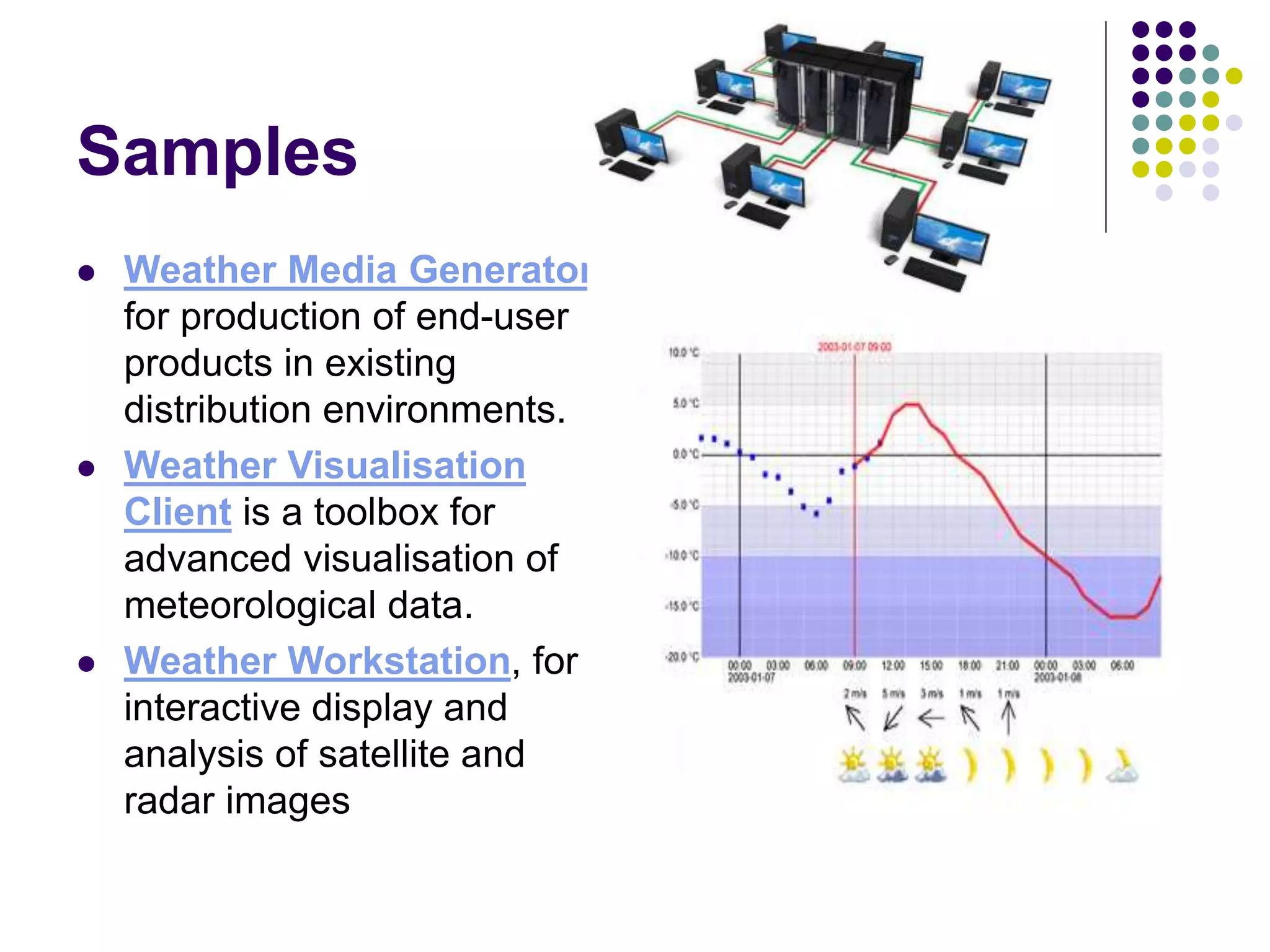
Samples
 Weather Media Generator,
for production of end-user
products in existing
distribution environments.
 Weather Visualisation
Client is a toolbox for
advanced visualisation of
meteorological data.
 Weather Workstation, for
interactive display and
analysis of satellite and
radar images
Sample Code
 Here's a simple function written in Python, which
inverts a table (represented as a Python dictionary):
def invert(table):
index = {} # empty dictionary
for key in table.keys():
value = table[key]
if not index.has_key(value):
index[value] = [] # empty list
index[value].append(key)
return index
Comments are introduced by a # character
References
 Python homepage: http://www.python.org/
 Programming Python and Learning Python:
http://python.oreilly.com/
 Weather Server http://www.pythonware.com/products/index.htm
Python ppt.pptx

Python ppt.pptx

  • 1.
    CERTIFICATE This is tocertify that SUJEET KUMAR of class X,B has successfully completed the project on the topic PYTHON THE PROGRAMMING LANGUAGE of subject IT under the guidance of MR. RAHUL MITRA SIR .
  • 2.
  • 3.
    CONTENTS 1. History ofpython 2. Overview python 3. Major uses of python 4. Language features 5. Comparisons 6. Comparisons, cont’d 7. Samples
  • 4.
    History of Python Created in 1990 by Guido van Rossum  Named after Monty Python  First public release in 1991  comp.lang.python founded in 1994  Open source from the start
  • 5.
    Python Overview  ScriptingLanguage  Object-Oriented  Portable  Powerful  Easy to learn and use  Mixes good features from Java, Perl and Scheme
  • 6.
    Major Uses ofPython  System Utilities  GUIs (Tkinter, gtk, Qt, Windows)  Internet Scripting  Embedded Scripting  Database Programming  Artificial Intelligence  Image Processing
  • 7.
    Language Features  Object-Oriented Interpreted  Interactive  Dynamic  Functional  Highly readable
  • 8.
    Comparsions Java  Typically 3-5times shorter than equivalent Java programs  Run-time works harder than Java’s  Components can be developed in Java and combined to form applications in Python  Python can be used to prototype components into Java implementation
  • 9.
    Comparsions, cont’d Perl  Comefrom similar backgrounds  Python is more applicable than Perl  Perl emphasizes support for common application-oriented tasks  Python emphasizes support for common programming methodologies
  • 10.
    Comparsions, cont’d C++  Differencesare similar to Java’s  Often 5-10 times shorter than equivalent C++ code  Python shines as a glue language; used to combine components written in C++
  • 11.
    Comparsions, cont’d Common Lispand Scheme  Similar in dynamic semantics, different in approach to syntax  Common Lisp is big and Scheme world is fragmented between many incompatible versions  Python has a single, free compact implementation
  • 12.
    Samples  System Utility Functional Programming  Object Oriented networking
  • 13.
    Samples  The WeatherServer product family consists of a number of products for production and display of forecast data, satellite images, and radar data.  Secret Labs AB currently offers the following products:  Weather Production Server, for mission-critical processing and distribution of weather data. Servers based on this technology has been used in production since 1995.  Weather Media Server, for production and distribution of end-user products, for use via web browsers or custom weather workstations.
  • 14.
    Samples  Weather MediaGenerator, for production of end-user products in existing distribution environments.  Weather Visualisation Client is a toolbox for advanced visualisation of meteorological data.  Weather Workstation, for interactive display and analysis of satellite and radar images
  • 15.
    Sample Code  Here'sa simple function written in Python, which inverts a table (represented as a Python dictionary): def invert(table): index = {} # empty dictionary for key in table.keys(): value = table[key] if not index.has_key(value): index[value] = [] # empty list index[value].append(key) return index Comments are introduced by a # character
  • 16.
    References  Python homepage:http://www.python.org/  Programming Python and Learning Python: http://python.oreilly.com/  Weather Server http://www.pythonware.com/products/index.htm