Download to read offline





![Creating Series
import pandas as pd
s1 = pd.Series([1, 2, 3, 4])
0 1
1 2
2 3
3 4
s2 = pd.Series([1, 2, 3, 4], index=[‘A’, ‘B’, ‘C’, ‘D’])
A 1
B 2
C 3
D 4](https://image.slidesharecdn.com/14484088-240409005007-b1128cb0/85/Python-example-Introduction-the-Pandas-module-6-320.jpg)
![Creating DataFrame
df = pd.DataFrame({‘foo’: [‘x’, ‘y’, ‘z’],
‘bar’: [6, 10, None],
‘baz’: [True, True, False]})
foo bar baz
0 x 6 True
1 y 10 True
2 z NaN False](https://image.slidesharecdn.com/14484088-240409005007-b1128cb0/85/Python-example-Introduction-the-Pandas-module-7-320.jpg)
![Column Selection
foo bar baz
0 x 6 True
1 y 10 True
2 z NaN False
df[‘foo’]
0 x
1 y
2 z](https://image.slidesharecdn.com/14484088-240409005007-b1128cb0/85/Python-example-Introduction-the-Pandas-module-8-320.jpg)
![Column Selection
df[[‘foo’, ‘bar’]]
foo bar baz
0 x 6 True
1 y 10 True
2 z NaN False
foo bar
0 x 6
1 y 10
2 z NaN](https://image.slidesharecdn.com/14484088-240409005007-b1128cb0/85/Python-example-Introduction-the-Pandas-module-9-320.jpg)
![Row Selection
foo bar baz
0 x 6 True
1 y 10 True
2 z NaN False
df.loc[0]
foo x
bar 6
baz True](https://image.slidesharecdn.com/14484088-240409005007-b1128cb0/85/Python-example-Introduction-the-Pandas-module-10-320.jpg)
![Row Selection
df.loc[0:2]
foo bar baz
0 x 6 True
1 y 10 True
2 z NaN False
foo bar baz
0 x 6 True
1 y 10 True](https://image.slidesharecdn.com/14484088-240409005007-b1128cb0/85/Python-example-Introduction-the-Pandas-module-11-320.jpg)
![Conditional Filtering
foo bar baz
0 x 6 True
1 y 10 True
2 z NaN False
df[ (df[‘baz’]) ]
foo bar baz
0 x 6 True
1 y 10 True](https://image.slidesharecdn.com/14484088-240409005007-b1128cb0/85/Python-example-Introduction-the-Pandas-module-12-320.jpg)
![Conditional Filtering
foo bar baz
0 x 6 True
1 y 10 True
2 z NaN False
df[ (df['foo'] == 'x') |
(df['foo'] == 'z') ]
foo bar baz
0 x 6 True
2 z NaN False](https://image.slidesharecdn.com/14484088-240409005007-b1128cb0/85/Python-example-Introduction-the-Pandas-module-13-320.jpg)
![Indexing
df.loc[‘a’]
bar baz
foo
a 6 True
b 10 True
c -2 False
d 1 True
bar 6
baz True
df.iloc[0]](https://image.slidesharecdn.com/14484088-240409005007-b1128cb0/85/Python-example-Introduction-the-Pandas-module-22-320.jpg)
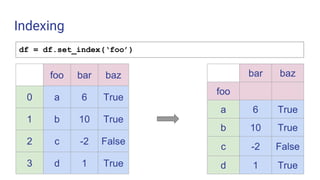
![Indexing
df.set_index([[‘one’, ‘one’, ‘two’, ‘two’], df.index])
bar baz
foo
a 6 True
b 10 True
c -2 False
d 1 True
bar baz
foo
one a 6 True
b 10 True
two c -2 False
d 1 True](https://image.slidesharecdn.com/14484088-240409005007-b1128cb0/85/Python-example-Introduction-the-Pandas-module-23-320.jpg)
![Indexing
one = df.loc[‘one’]
bar baz
foo
one a 6 True
b 10 True
two c -2 False
d 1 True
bar baz
foo
a 6 True
b 10 True](https://image.slidesharecdn.com/14484088-240409005007-b1128cb0/85/Python-example-Introduction-the-Pandas-module-24-320.jpg)
![Indexing
one = df.loc[‘one’, ‘a’]
bar baz
foo
one a 6 True
b 10 True
two c -2 False
d 1 True
bar 6
baz True](https://image.slidesharecdn.com/14484088-240409005007-b1128cb0/85/Python-example-Introduction-the-Pandas-module-25-320.jpg)
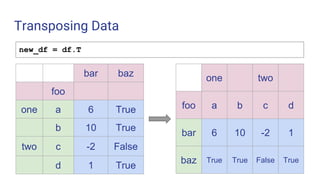
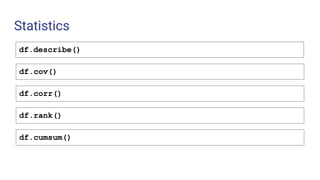



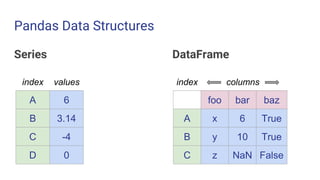
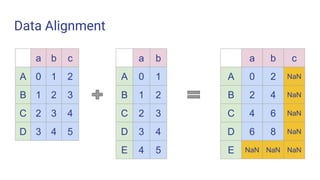
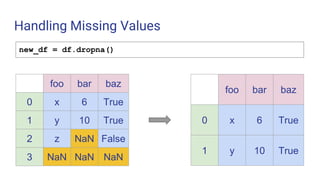
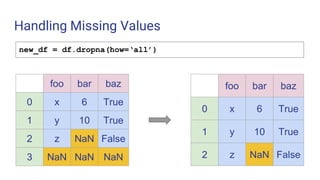
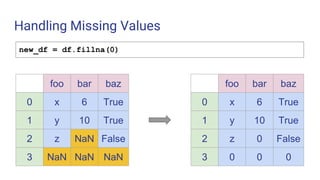
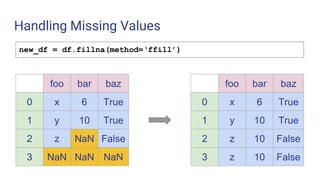
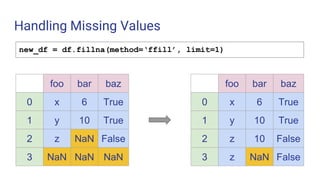
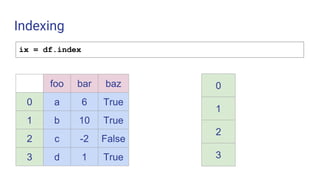
Sahil Dua introduces pandas, a Python library used for data manipulation and analysis. Pandas allows users to store and manipulate data in two main data structures: Series (one-dimensional labeled array) and DataFrame (two-dimensional labeled data structure with columns of potentially different types). The document then demonstrates various pandas functions for creating, selecting, filtering, handling missing values, indexing, transposing, and analyzing data in DataFrames.


