Publishers “in” Libraries: New Agents, New Roles, New Challenges Terence K. Huwe Institute for Research on Labor and Employment Library University of California, Berkeley Long Island Library Resources Council October 30, 2009
What I’ll Be Covering Today The growing culture of library-based publishing, editorial work and marketing Publishers, libraries and readers (“users”) in an era of mutable information and self-directed publishing How the Internet still challenges us to adapt—collectively and individually Some examples of how “publishers in libraries” can influence scholarship
A Little More About Me… My first career:  independent bookselling! College store, co-op style outlet, million-plus dollar sales (1986 dollars) Lots of contact with marketers, sales people and editors Publishers Weekly was my “Bible” I know and love the publishing industry It’s been a great basis for a library career
But…“Publishers in Libraries?” A play on words with a tip of the hat to  Computers in Libraries  ( CIL ), which publishes my column A “poke” at Dan Chudnov, whose column in  CIL  is titled “Libraries in Computers” An apt description of my job A viable term to describe the new library “skill set” that we need A provocative statement
A Not-So-New Expertise Librarians have been practicing editorial work for a long time Marketing is now essential Librarians’ scholarly profile (degrees, experience, etc) shares common ground with editors and their career ladders New media make it possible to shift the points of production along the “information continuum.” This creates  new competition for “attention.”   Ergo:  There can be more than one publisher-outlet Libraries have adapted well to the climate—at a high price
Adapt or Die:  A Seminal Moment A copyright presentation at ASIS (now ASIS&T) in November 1997 Counsel for ALA and AAP, talking about how to manage access to digital copyrighted works The ALA lawyer had an enormously well-articulated vision The AAP lawyer was on the defensive, and short on ideas
“ Wow,” I thought: Librarians were  “getting it”  and  going for it We had developed tough evaluative skills to assess our legacy charges and our future  roles—freeing space for creativity Publishers were struggling with new pricing and access models The faculty, back home, was basically “clueless” at the time Opportunity strikes!
Since Then… SPARC Engaging the faculty re: scholarly communications Mellon Foundation initiatives New “metrics” for libraries Endless opportunities for communication A growing need for  “interpretation”  of collections All-new entrants with big ideas:  Google
Publishing in Libraries is Underway Reasonable minds may disagree about how much we should do “ mission creep” –a scary prospect  (“Even more to do?”) The role is to some degree  being forced upon us In light of that force, I will take a look two theories of convergence and shifting roles I’ll give some examples of projects underway
Understanding the Knowledge Creation Process Two theories of information that are particularly compelling: The Getty Information Institute and the “Information Continuum” Professional culture and the process of “Treatment Substitution” (Abbott, 1988)
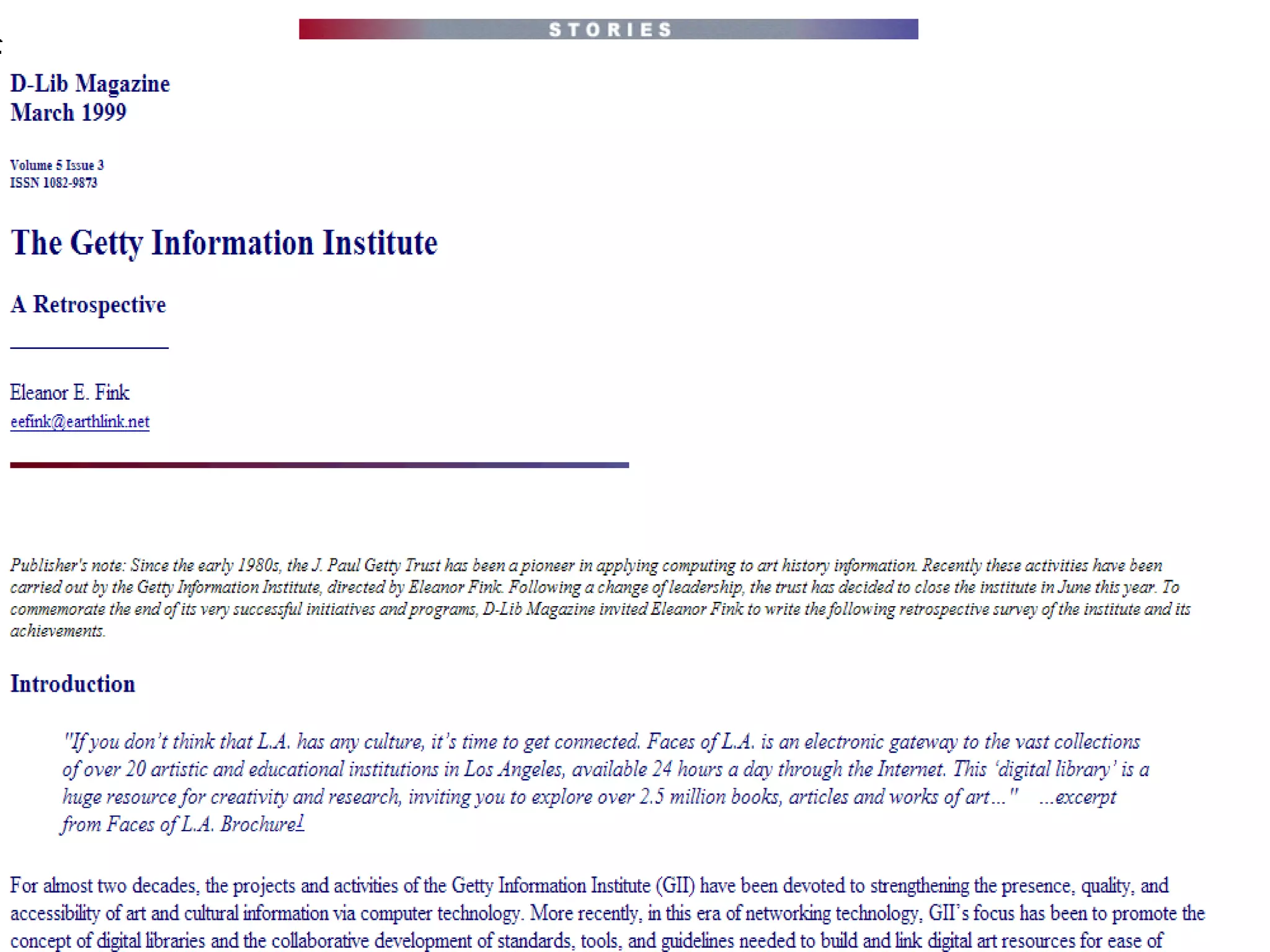
The Getty Information Institute (GII) GII Published several Web-based reports in the mid to late 1990s The analysis of GII informs much of what we now accept about digital life
 
The Information Continuum It runs from author to user It includes several agents:  editors  Marketers outlets (bookstores, journals, even e-books) Information managers (libraries, archives, repositories) The information continuum democratizes information production and “expertise” These agents have been in creative turmoil for three decades by my estimation
But People Make Things Happen Sociologists study how people change systems and ways of thinking Librarianship need look no further than this related field to find clues to its future
Andrew Abott’s Assessment of Professional Roles Abbott, Andrew.  The system of professions .   Chicago, University of Chicago Press, 1988 “ The Traditional Future: A Computational Theory of Library Research"   College and Research Libraries , November 2008, Vol. 69, No. 6
“ Treatment Substitution” Abbott provides an in-depth analysis of how the U.S. system of professions works A focus on the information professions Treatment substitution:  competition among the professions Treatment substitution is the application of abstract knowledge to real-life situations It often utilizes special language to be unique (e.g., use of latin in law)
An Example of Dynamic Treatment Substitution:  Medicine Licensed Acupuncture Chiropractic Osteopathy Medical Doctors “ Allied Health Professionals” Even nurses (NPs, PAs ) A  battle royal  for the right to use the word “medical” and to diagnose
And Closer to Home… Librarians California Digital Library staff:  they’re not librarians—more on that in a moment… Systems Administrators:  they manage content University administrators with downsizing on their minds Editors Faculty: they also manage content Booksellers:  they make content accessible MIS managers in private firms and colleges:  they rule Users themselves! (Blogging, Twittering) Repository managers and records managers Treatment Substitution  is our daily life
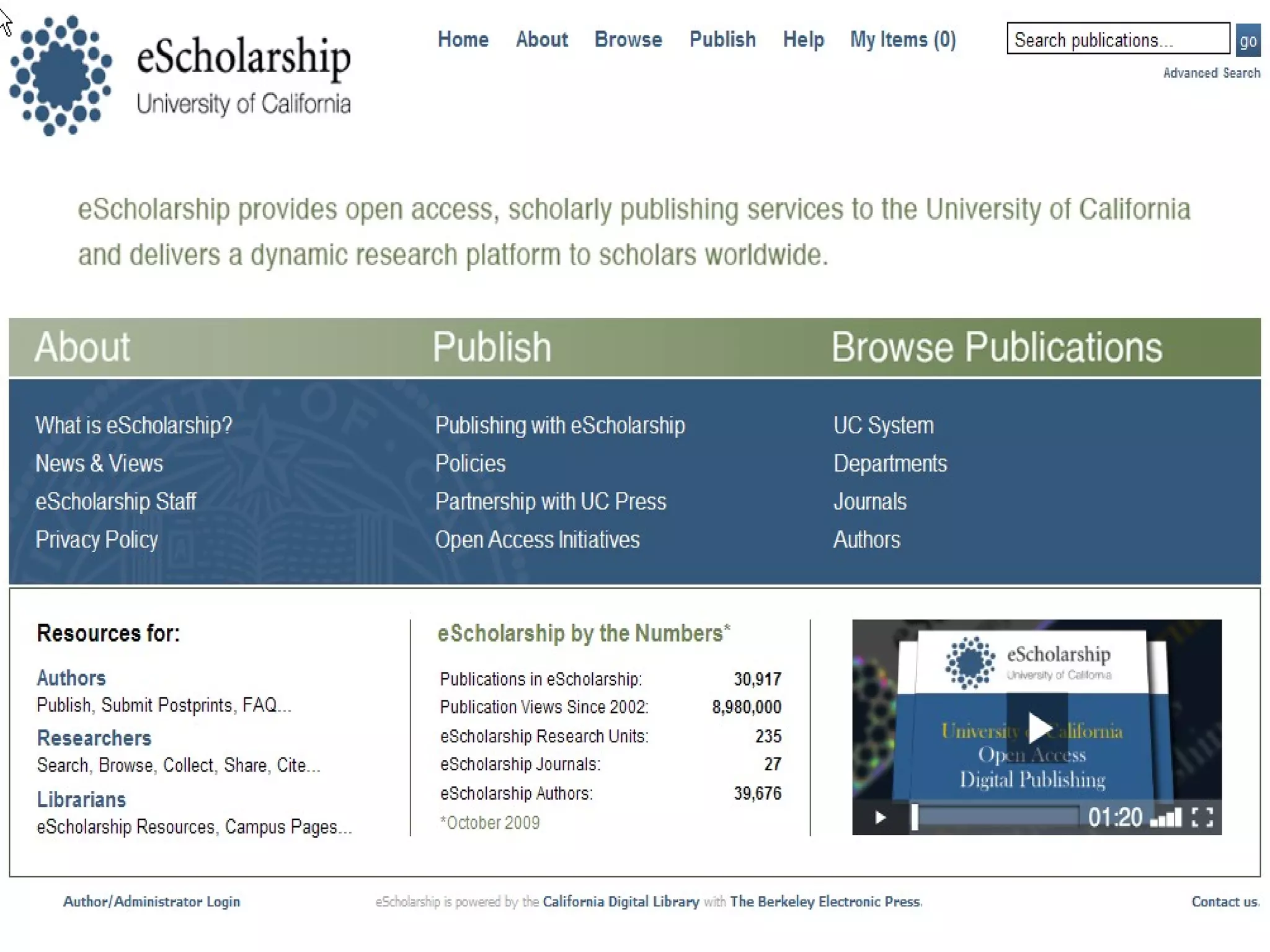
Too Close to Home? The University of California Information, Publishing and Broadcast Services (IPBS) initiative “ UCverse and UCpublic Integrating: A gateway to all content, built or purchased A social network A “tool” to secure the future for academic content The faculty will be  “Topical Editorial Advisors” Talk about Treatment Substitution!
How Are Librarians Doing? Close ties to users have helped us see opportunity in the digital forum New generations of colleagues are bold Senior visionaries have a sharp understanding of scholarship We became content creators even as we gained a charge to collect digital content We have laid a foundation for new roles that flow beyond the library, and “follow the user”
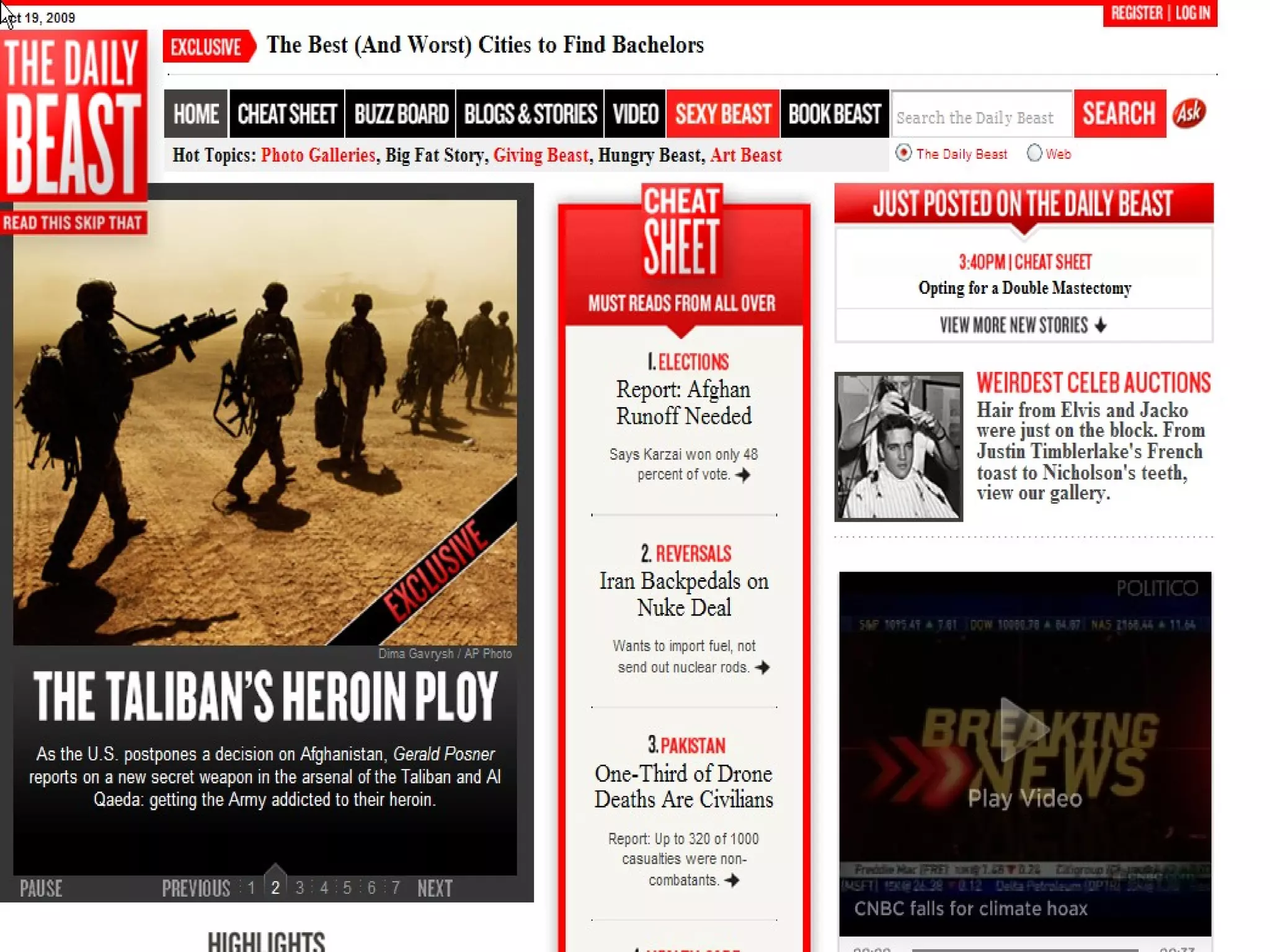
Publishing’s Evolution Has Helped Newspapers:  from “take it or leave it” to “talking back” Journals: multiple formats, pricing structures, pushback from libraries Books:  blockbusters pay the rent, “mid-list” suffers, niche markets (like sci-fi) can thrive, but: Ebooks are here Self-publishing is happening How to deal with fewer outlets (Amazon, etc)?
The Climate Favors Bold Ideas Forward thinking librarians have seized the Web 2.0 tools Librarians participate in substantive discourse, opinions and research Research libraries boast large cohorts of dual-degreed and Ph.D-librarians Universities and coalitions are building publishing tools that directly address faculty needs Web applications and cloud computing place all the necessary tools in our hands


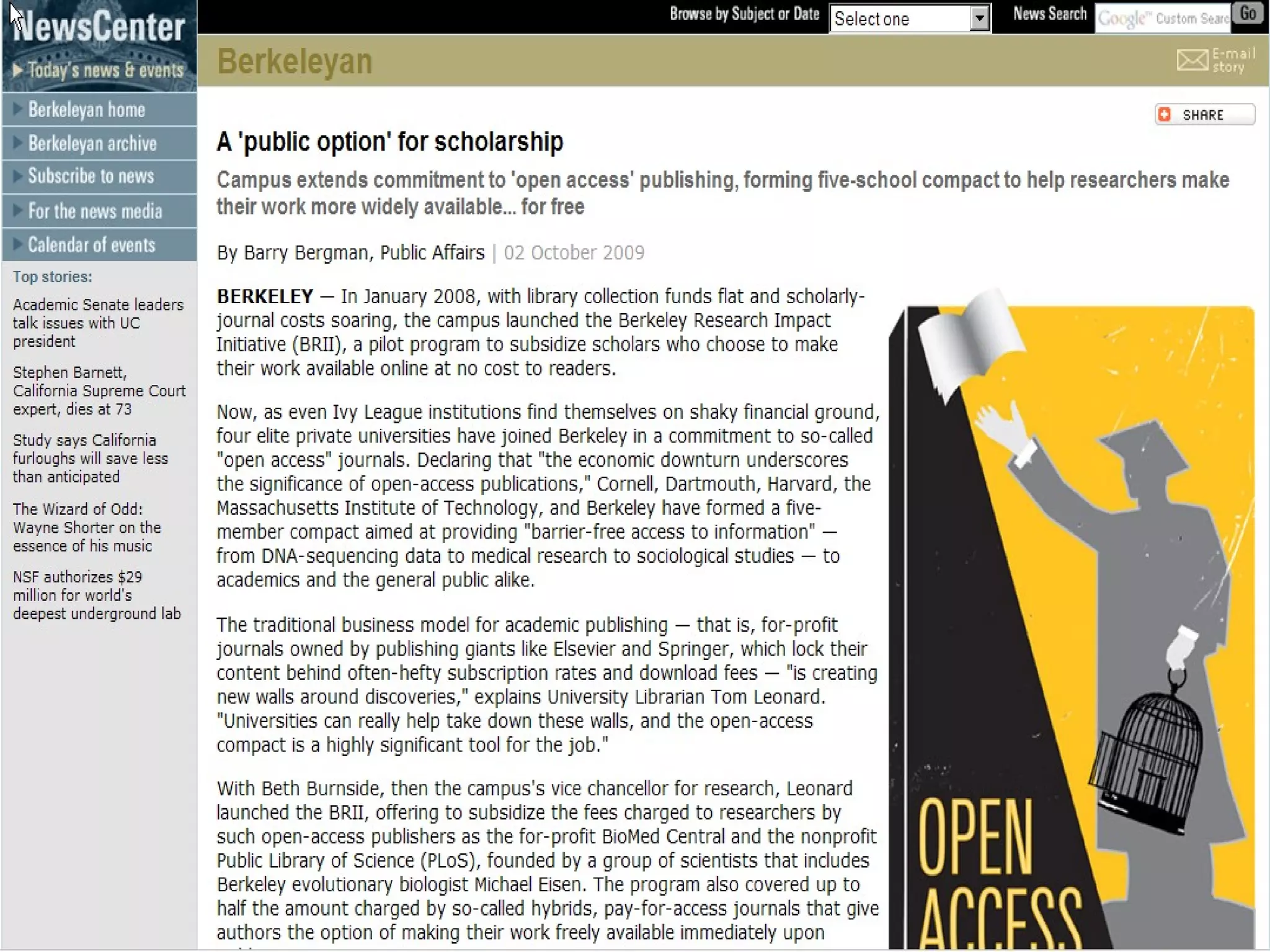
Some Questions: Can we re-purpose our collections as a “list”  –a publishers’ new list—  of e-books in series, or as print-on-demand” (POD) volumes? Can we manage our digital publishing to advance the “imprimatur” of the library and the university? Harvard, MIT, Berkeley, Dartmouth and Cornell have signed a five-way “Compact” Can we become publishers?  If so, should we want to?
The Columnist Speaks Out My views are my own—the “marketplace of ideas” is their crucible I see a nascent demand for more scholarship, more metadata, and more taxonomy  that is conducted by librarians  —and we can do that The profession’s core skills are indispensable on the information continuum I see a  much lower threshold  for the creation of extremely high quality digital publications I see a  vast cohort of like-minded colleagues  who can curate, edit and write I believe that reference and collections experts are just one step away from high-level publishing, right now
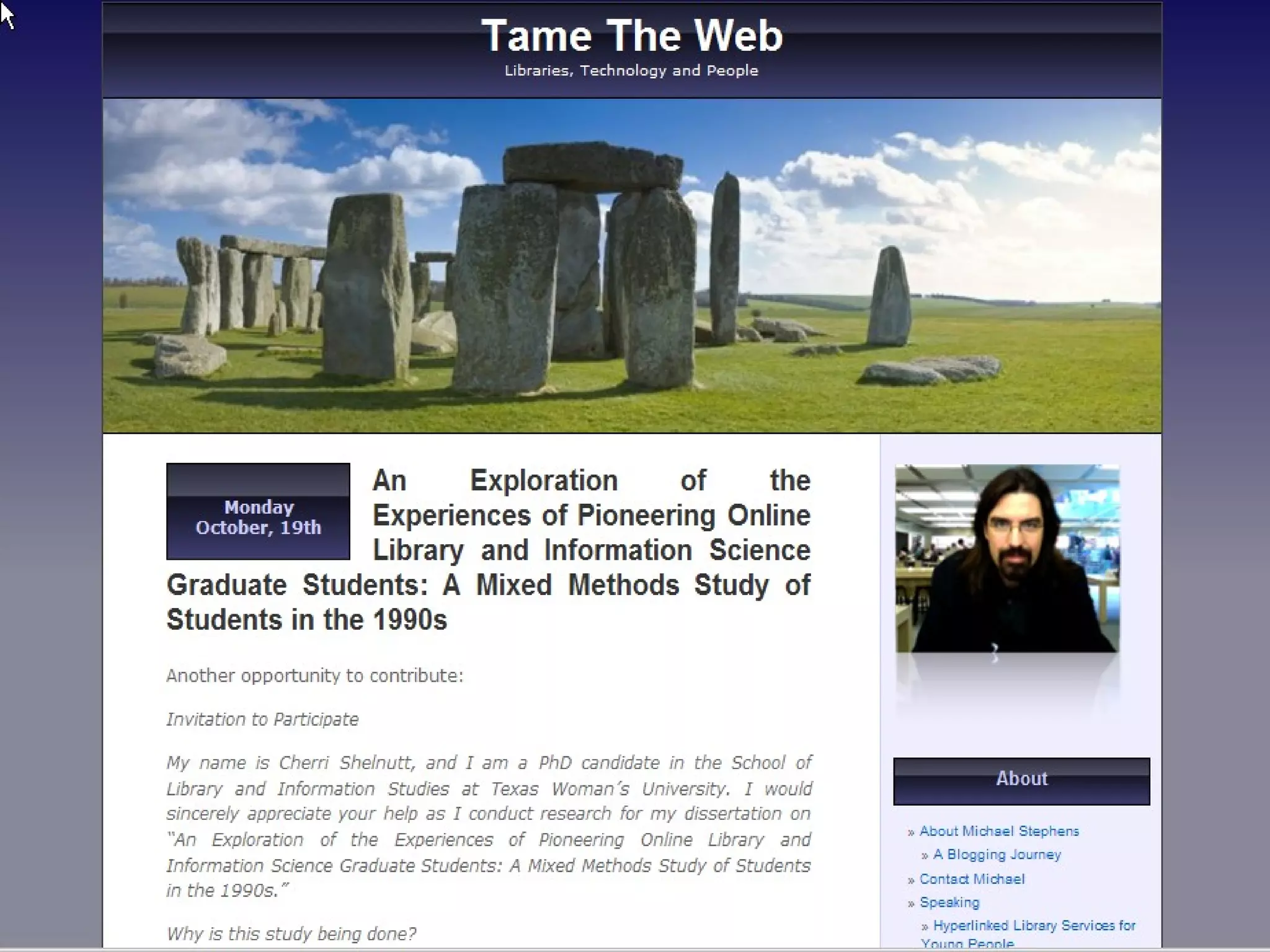
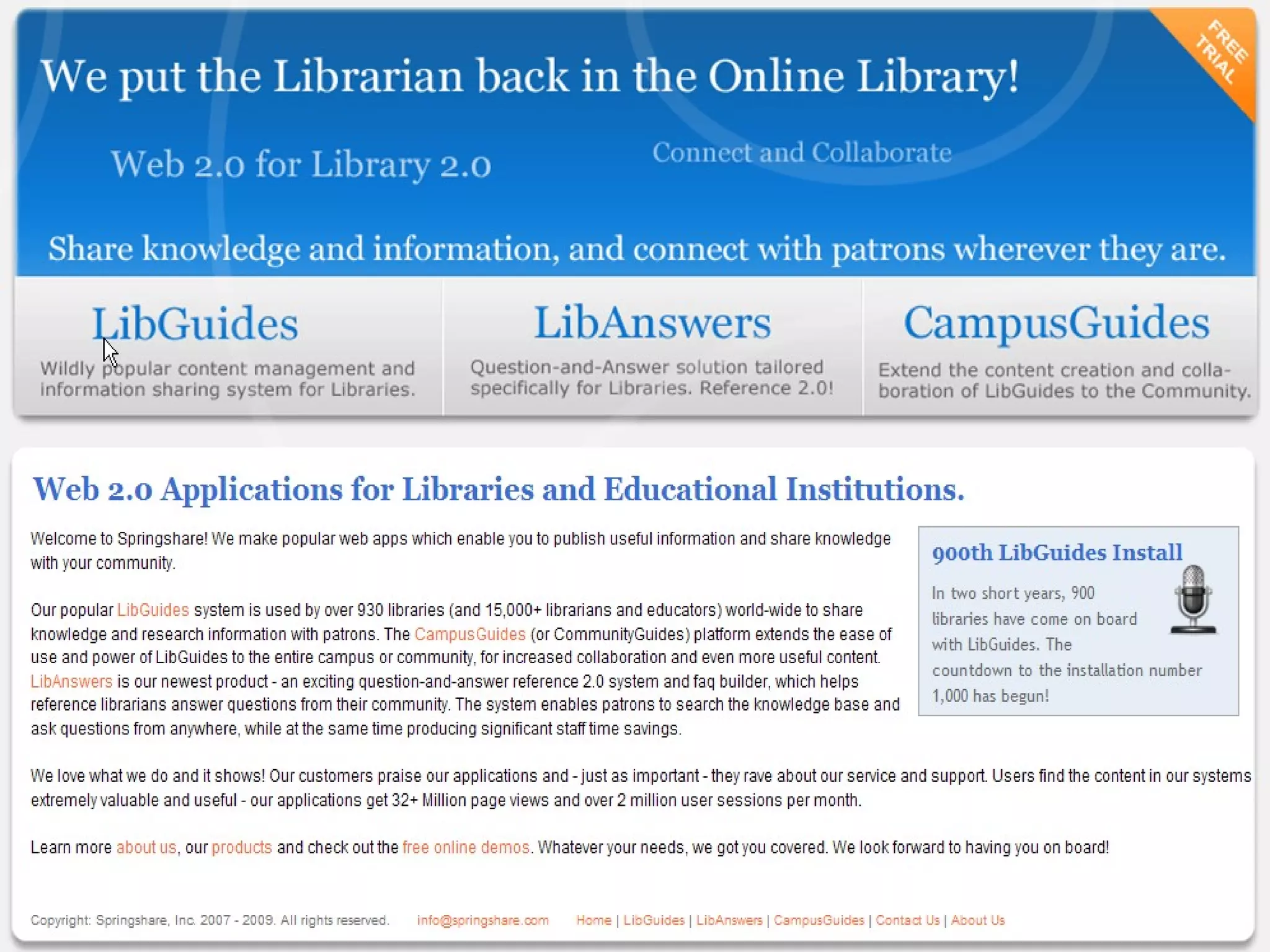
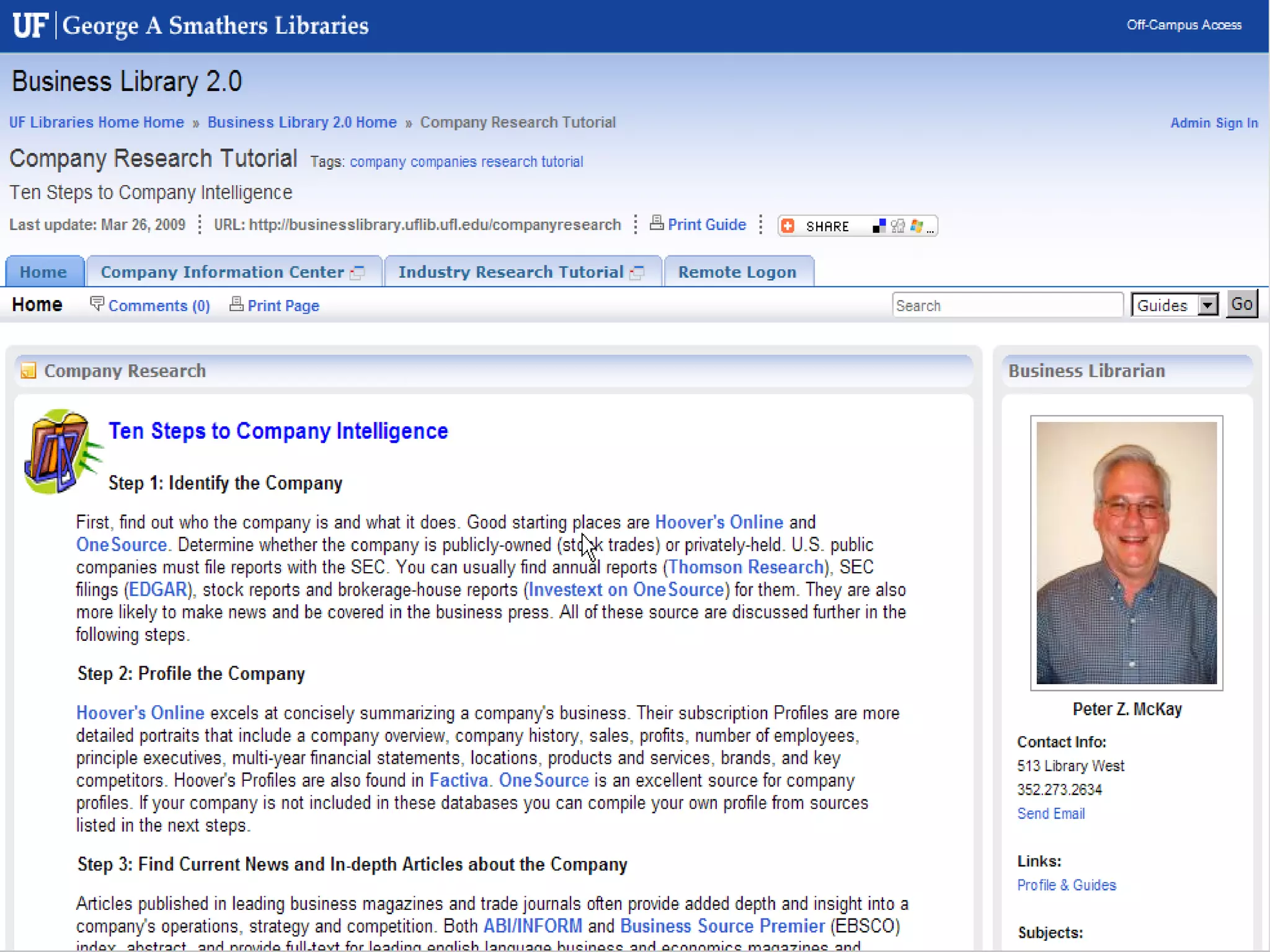
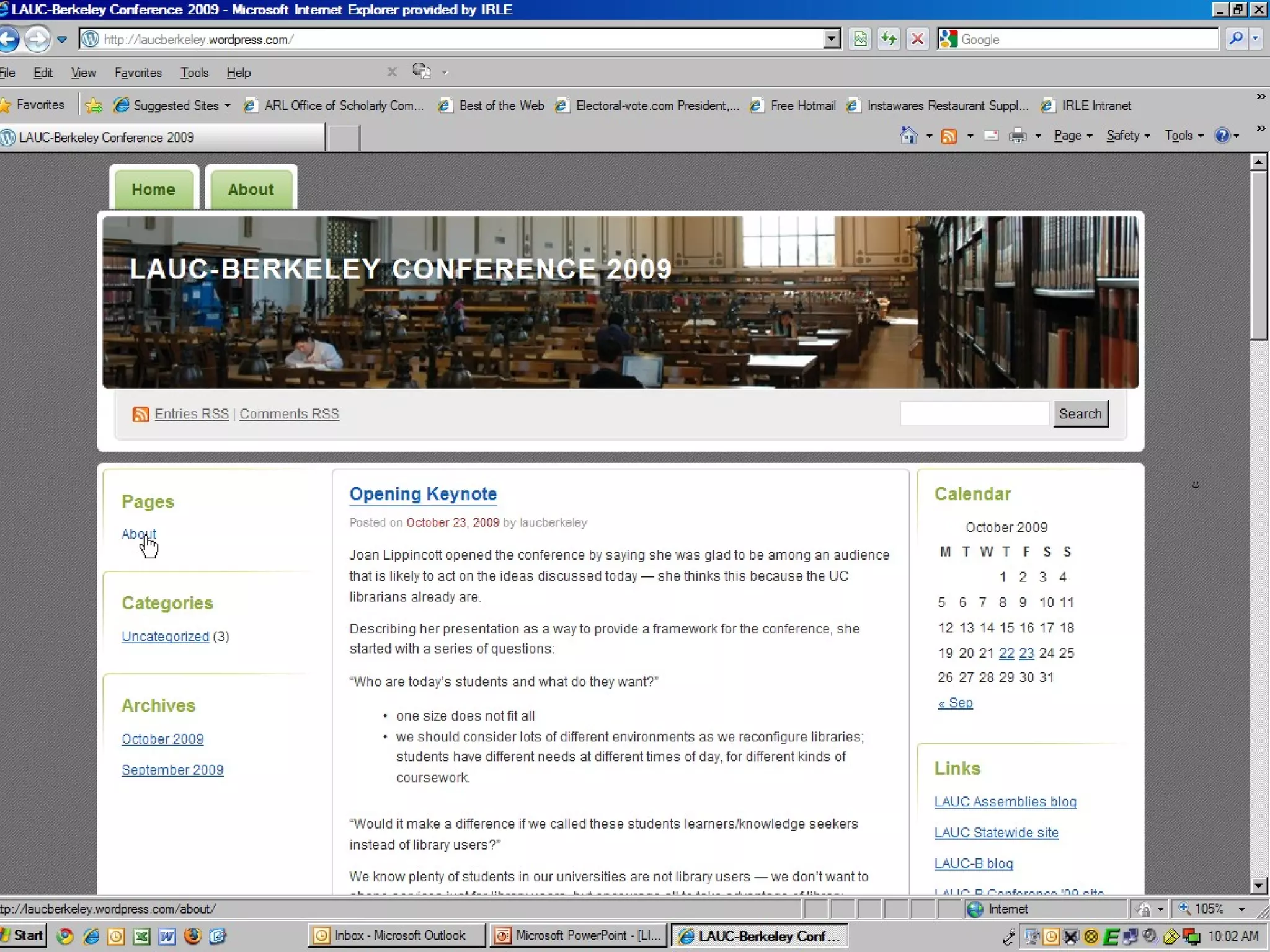
Talk and Opinion are Cheap… How about some examples: Blogs, Blogs, Blogs Library Guides “New” library work:  existing editorial roles POD technology:  it’s here


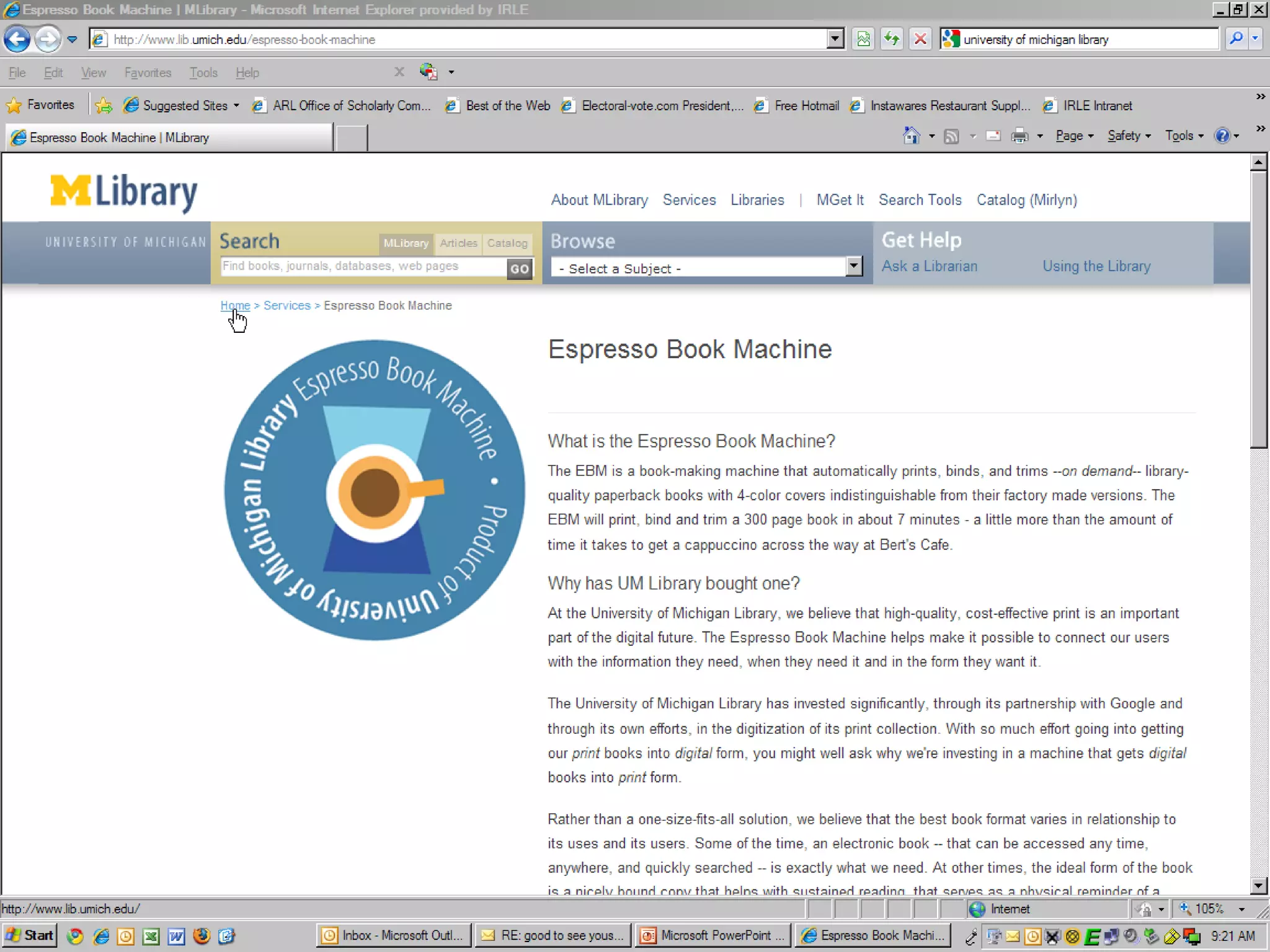
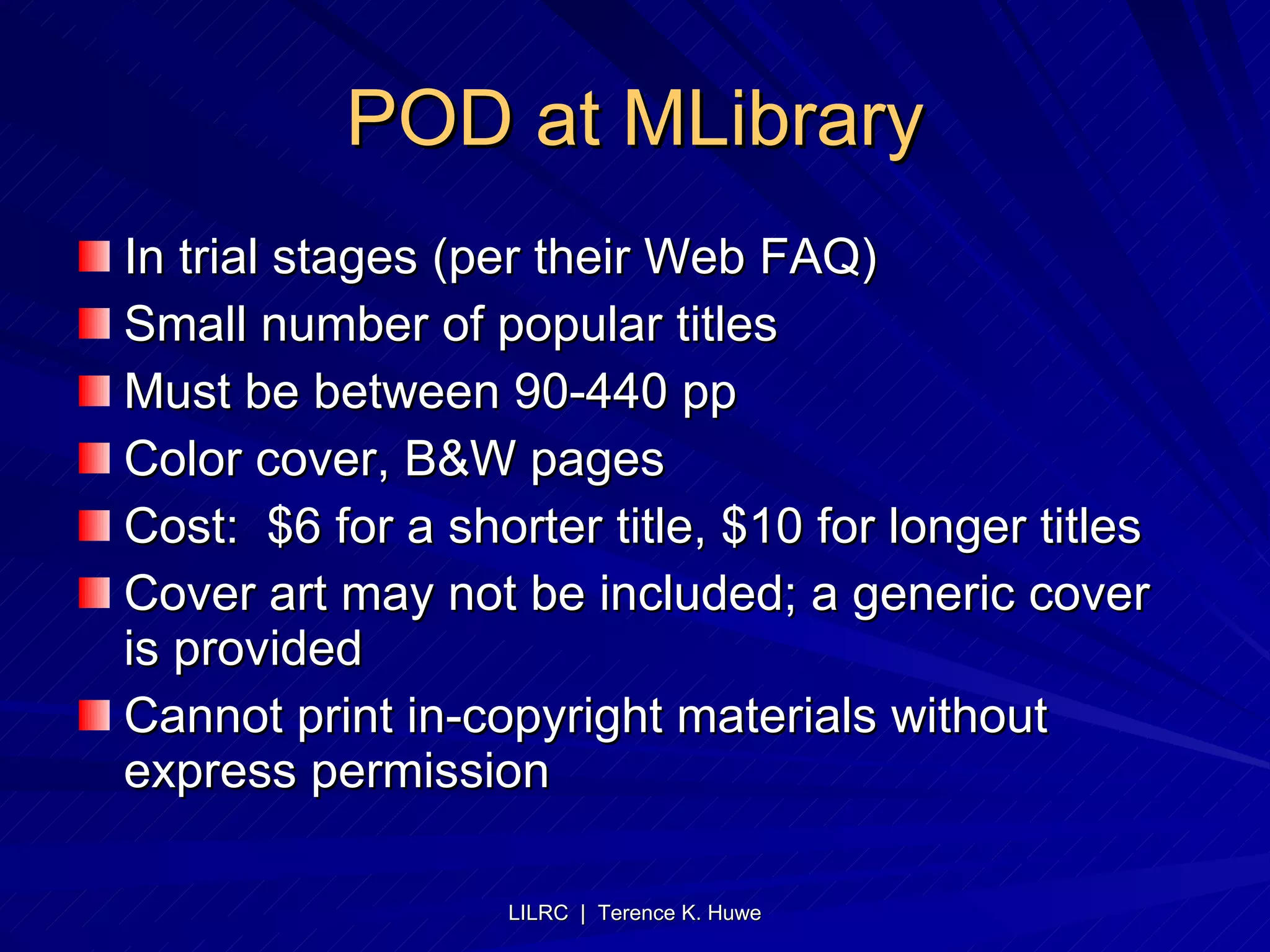
POD at MLibrary In trial stages (per their Web FAQ) Small number of popular titles Must be between 90-440 pp Color cover, B&W pages Cost:  $6 for a shorter title, $10 for longer titles Cover art may not be included; a generic cover is provided Cannot print in-copyright materials without express permission
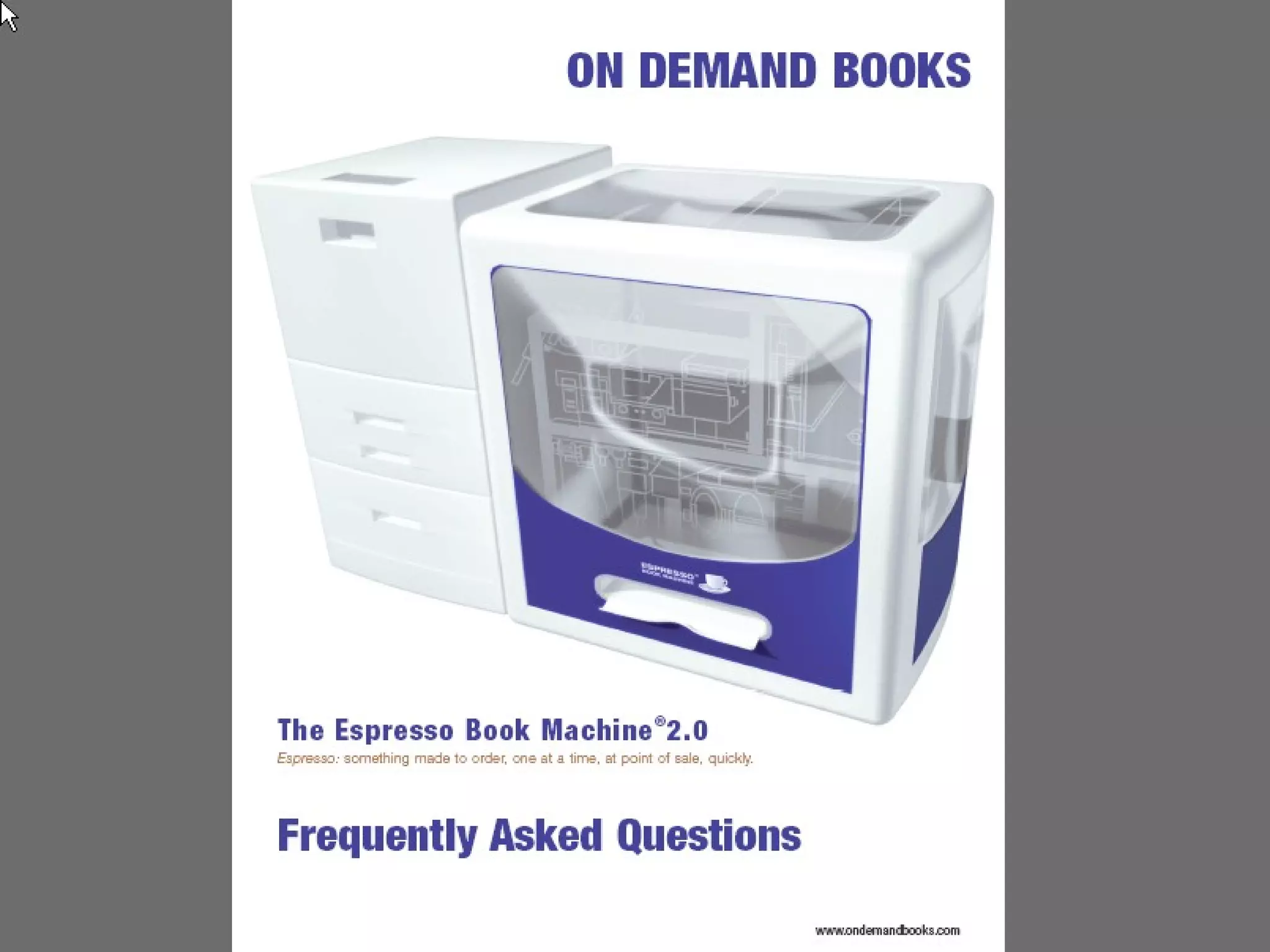
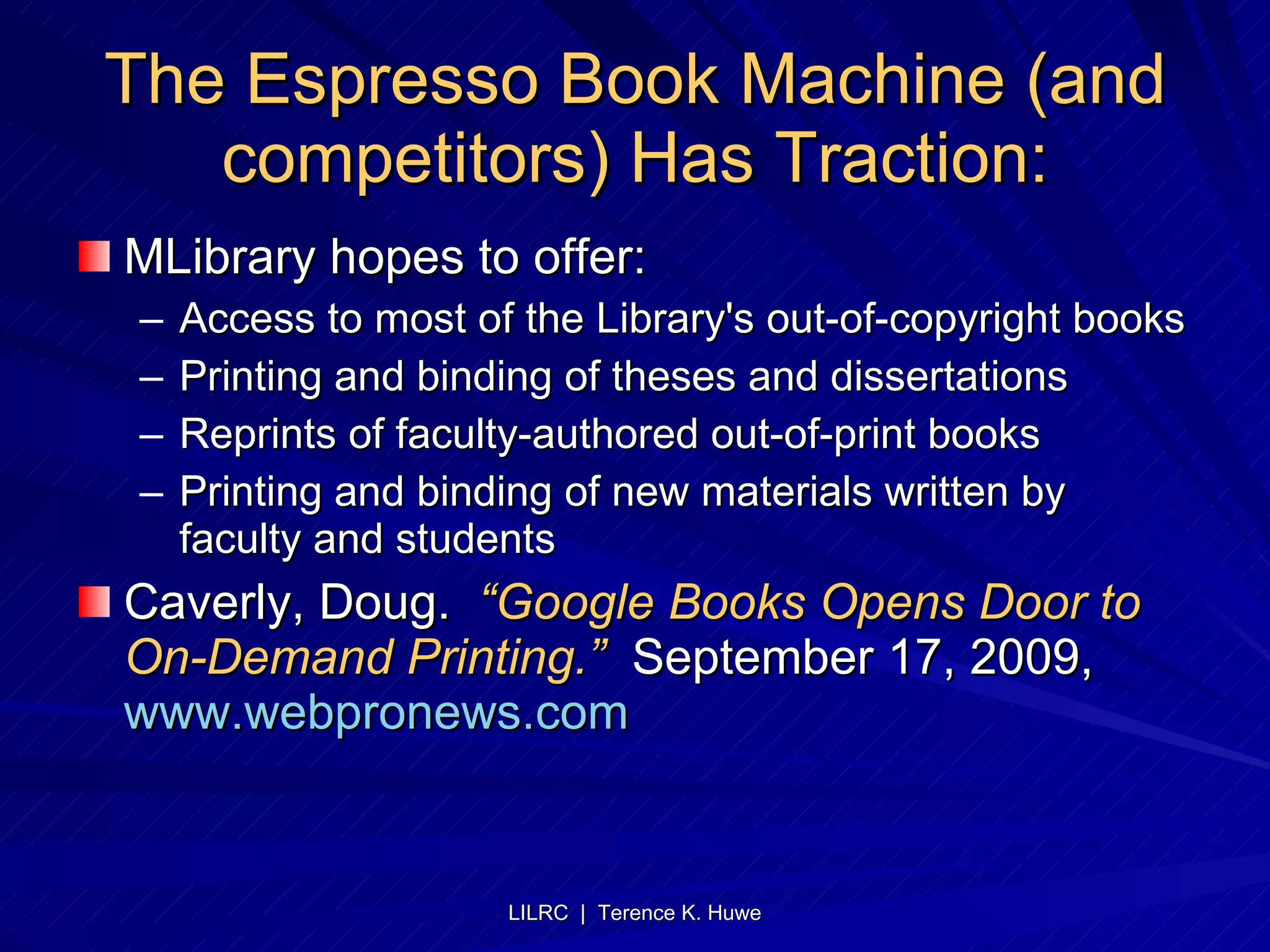
The Espresso Book Machine (and competitors) Has Traction: MLibrary hopes to offer: Access to most of the Library's out-of-copyright books  Printing and binding of theses and dissertations  Reprints of faculty-authored out-of-print books  Printing and binding of new materials written by faculty and students Caverly, Doug.  “Google Books Opens Door to On-Demand Printing.”   September 17, 2009,  www.webpronews.com
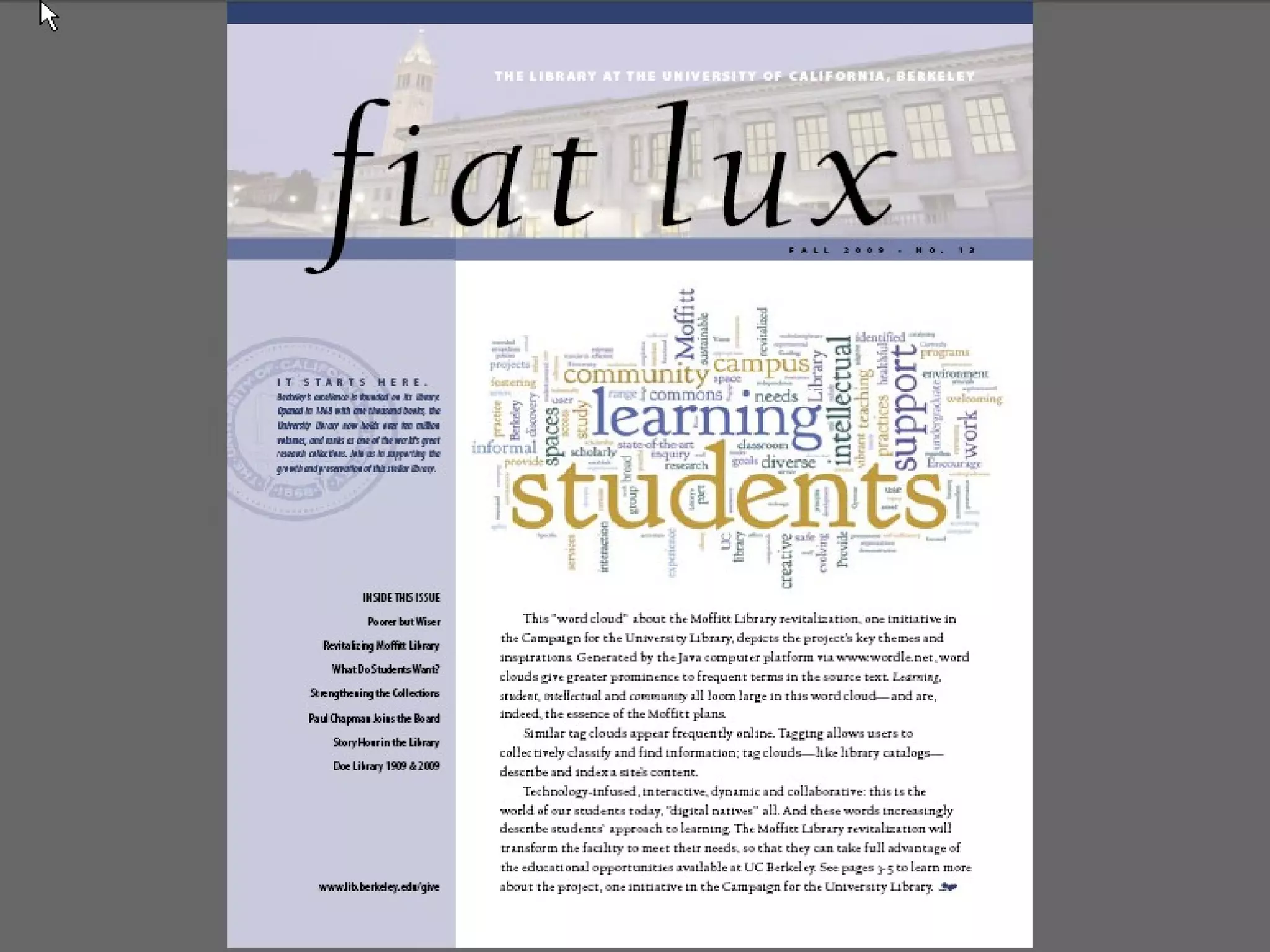
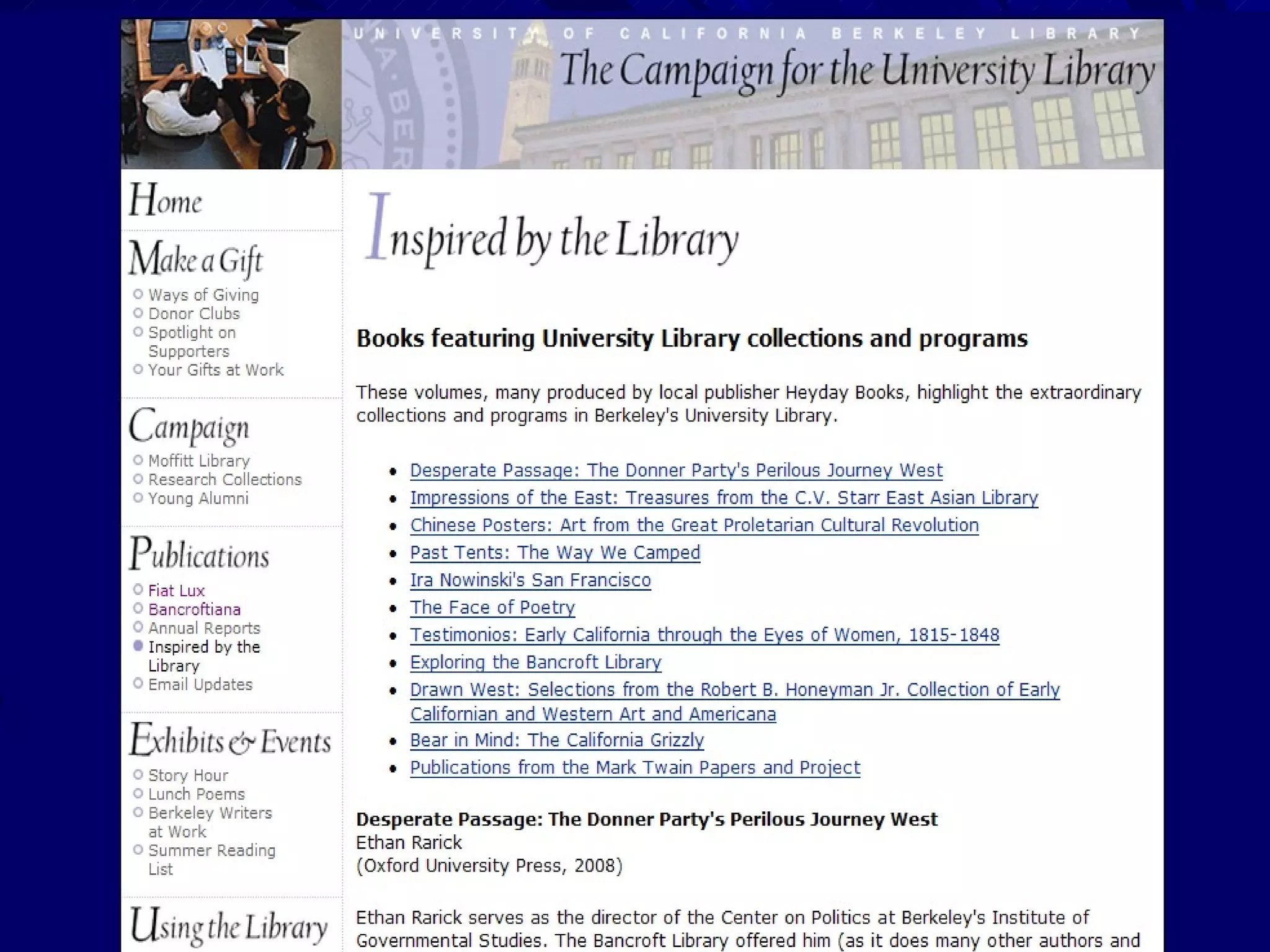
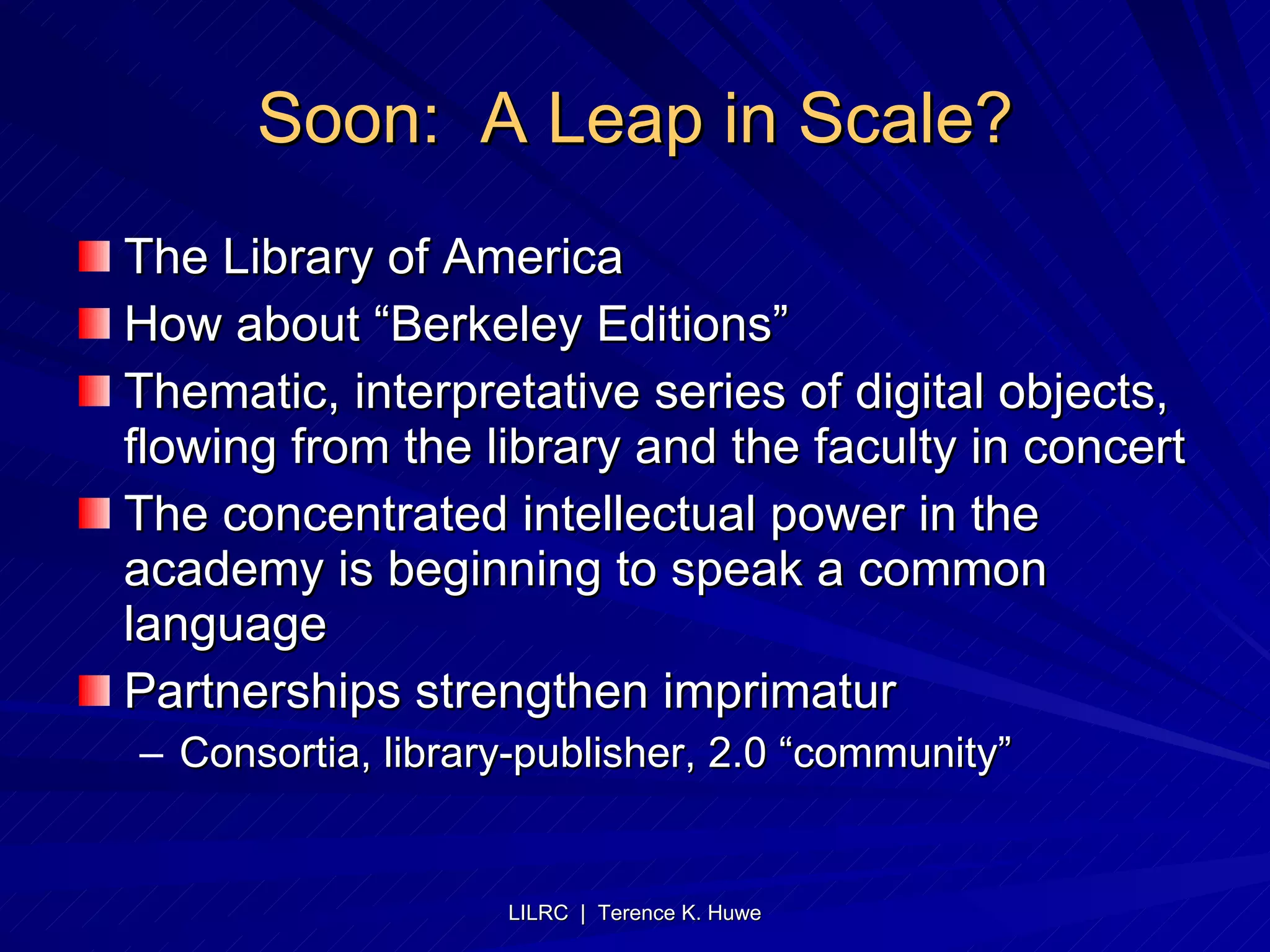
Soon:  A Leap in Scale? The Library of America  How about “Berkeley Editions” Thematic, interpretative series of digital objects, flowing from the library and the faculty in concert The concentrated intellectual power in the academy is beginning to speak a common language Partnerships strengthen imprimatur  Consortia, library-publisher, 2.0 “community”
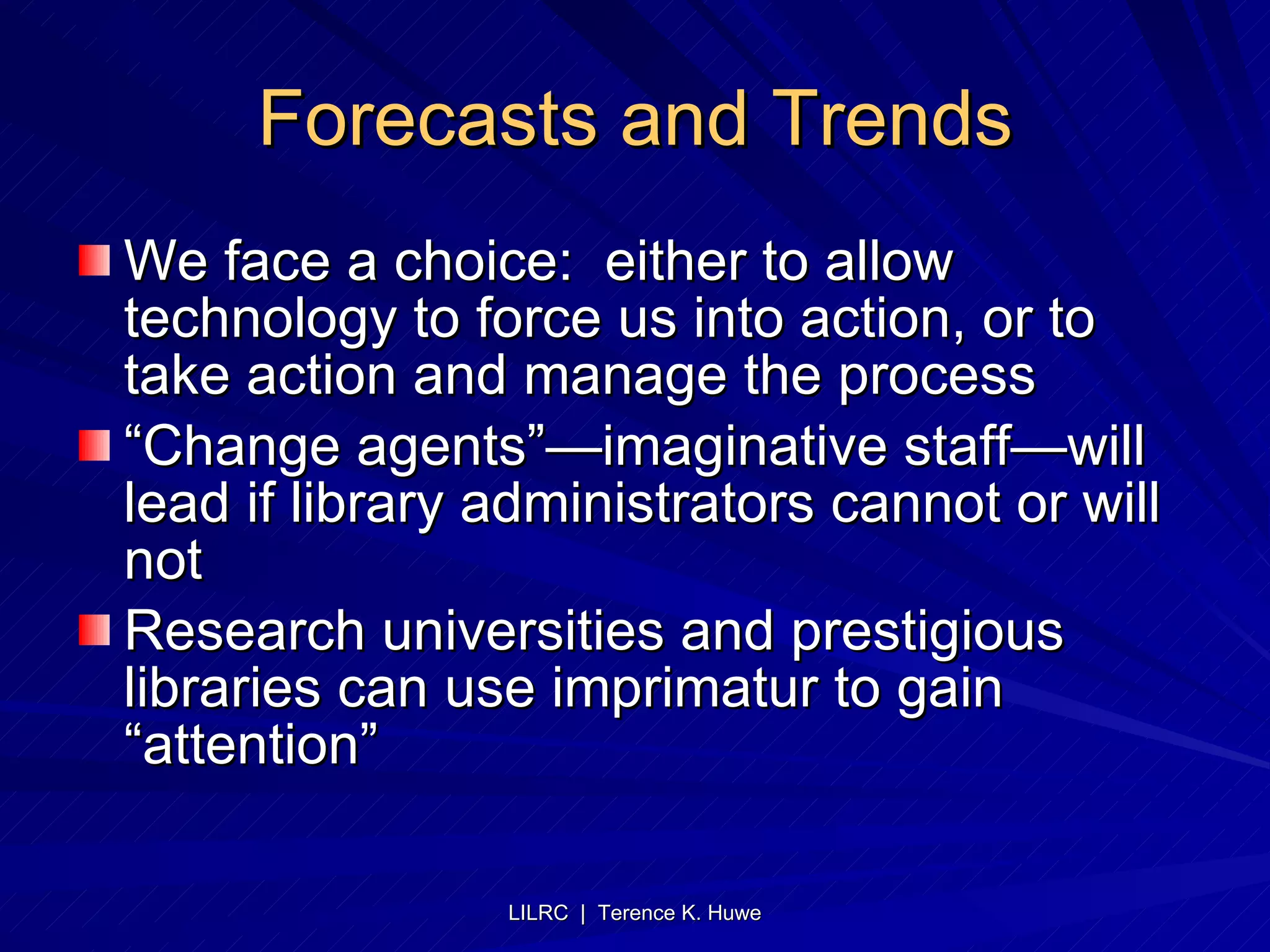
Forecasts and Trends We face a choice:  either to allow technology to force us into action, or to take action and manage the process “Change agents”—imaginative staff—will lead if library administrators cannot or will not Research universities and prestigious libraries can use imprimatur to gain “attention”
Conclusions We are becoming publishers We can embrace that role There are many venues to engage in It is possible to integrate rigorous publishing into our existing workflows Our core skills inform our future “interpretative” skills It’s all worth a try
References  (in order of presentation) Huwe, Terence K. “Publishers in Libraries.”  Computers in Libraries  29 (No. 4), April 2009 The Scholarly Publishing and Academic Resources Coalition,  http://www.arl.org/sparc/   The Andrew W. Mellon Foundation,  http://www.mellon.org/   Fink, Eleanor E.  “The Getty Information Institute:  A Retrospective.”  D-Lib Magazine  5 (No. 3), March 1999 Abbott, Andrew.  The system of professions .  Chicago, University of Chicago Press, 1988 Abbott, Andrew.  “The Traditional Future: A Computational Theory of Library Research"   College and Research Libraries , 69 (No. 6), November 2008 Bergman, Barry.  “A Public Option for Scholarship.  The Berkeleyan , October 2, 2009,  http://berkeley.edu/news/berkeleyan/2009/10/02_open-access.shtml Caverly, Doug.  “Google Books Opens Door to On-Demand Printing.”   September 17, 2009,  www.webpronews.com
Publishers “in” Libraries: New Agents, New Roles, New Challenges Terence K. Huwe Institute for Research on Labor and Employment Library University of California, Berkeley Long Island Library Resources Council October 30, 2009

Publishers “in” Libraries: New Agents, New Roles, New Challenges

  • 1.
    Publishers “in” Libraries:New Agents, New Roles, New Challenges Terence K. Huwe Institute for Research on Labor and Employment Library University of California, Berkeley Long Island Library Resources Council October 30, 2009
  • 2.
    What I’ll BeCovering Today The growing culture of library-based publishing, editorial work and marketing Publishers, libraries and readers (“users”) in an era of mutable information and self-directed publishing How the Internet still challenges us to adapt—collectively and individually Some examples of how “publishers in libraries” can influence scholarship
  • 3.
    A Little MoreAbout Me… My first career: independent bookselling! College store, co-op style outlet, million-plus dollar sales (1986 dollars) Lots of contact with marketers, sales people and editors Publishers Weekly was my “Bible” I know and love the publishing industry It’s been a great basis for a library career
  • 4.
    But…“Publishers in Libraries?”A play on words with a tip of the hat to Computers in Libraries ( CIL ), which publishes my column A “poke” at Dan Chudnov, whose column in CIL is titled “Libraries in Computers” An apt description of my job A viable term to describe the new library “skill set” that we need A provocative statement
  • 5.
    A Not-So-New ExpertiseLibrarians have been practicing editorial work for a long time Marketing is now essential Librarians’ scholarly profile (degrees, experience, etc) shares common ground with editors and their career ladders New media make it possible to shift the points of production along the “information continuum.” This creates new competition for “attention.” Ergo: There can be more than one publisher-outlet Libraries have adapted well to the climate—at a high price
  • 6.
    Adapt or Die: A Seminal Moment A copyright presentation at ASIS (now ASIS&T) in November 1997 Counsel for ALA and AAP, talking about how to manage access to digital copyrighted works The ALA lawyer had an enormously well-articulated vision The AAP lawyer was on the defensive, and short on ideas
  • 7.
    “ Wow,” Ithought: Librarians were “getting it” and going for it We had developed tough evaluative skills to assess our legacy charges and our future roles—freeing space for creativity Publishers were struggling with new pricing and access models The faculty, back home, was basically “clueless” at the time Opportunity strikes!
  • 8.
    Since Then… SPARCEngaging the faculty re: scholarly communications Mellon Foundation initiatives New “metrics” for libraries Endless opportunities for communication A growing need for “interpretation” of collections All-new entrants with big ideas: Google
  • 9.
    Publishing in Librariesis Underway Reasonable minds may disagree about how much we should do “ mission creep” –a scary prospect (“Even more to do?”) The role is to some degree being forced upon us In light of that force, I will take a look two theories of convergence and shifting roles I’ll give some examples of projects underway
  • 10.
    Understanding the KnowledgeCreation Process Two theories of information that are particularly compelling: The Getty Information Institute and the “Information Continuum” Professional culture and the process of “Treatment Substitution” (Abbott, 1988)
  • 11.
    The Getty InformationInstitute (GII) GII Published several Web-based reports in the mid to late 1990s The analysis of GII informs much of what we now accept about digital life
  • 12.
  • 13.
    The Information ContinuumIt runs from author to user It includes several agents: editors Marketers outlets (bookstores, journals, even e-books) Information managers (libraries, archives, repositories) The information continuum democratizes information production and “expertise” These agents have been in creative turmoil for three decades by my estimation
  • 14.
    But People MakeThings Happen Sociologists study how people change systems and ways of thinking Librarianship need look no further than this related field to find clues to its future
  • 15.
    Andrew Abott’s Assessmentof Professional Roles Abbott, Andrew. The system of professions . Chicago, University of Chicago Press, 1988 “ The Traditional Future: A Computational Theory of Library Research" College and Research Libraries , November 2008, Vol. 69, No. 6
  • 16.
    “ Treatment Substitution”Abbott provides an in-depth analysis of how the U.S. system of professions works A focus on the information professions Treatment substitution: competition among the professions Treatment substitution is the application of abstract knowledge to real-life situations It often utilizes special language to be unique (e.g., use of latin in law)
  • 17.
    An Example ofDynamic Treatment Substitution: Medicine Licensed Acupuncture Chiropractic Osteopathy Medical Doctors “ Allied Health Professionals” Even nurses (NPs, PAs ) A battle royal for the right to use the word “medical” and to diagnose
  • 18.
    And Closer toHome… Librarians California Digital Library staff: they’re not librarians—more on that in a moment… Systems Administrators: they manage content University administrators with downsizing on their minds Editors Faculty: they also manage content Booksellers: they make content accessible MIS managers in private firms and colleges: they rule Users themselves! (Blogging, Twittering) Repository managers and records managers Treatment Substitution is our daily life
  • 19.
    Too Close toHome? The University of California Information, Publishing and Broadcast Services (IPBS) initiative “ UCverse and UCpublic Integrating: A gateway to all content, built or purchased A social network A “tool” to secure the future for academic content The faculty will be “Topical Editorial Advisors” Talk about Treatment Substitution!
  • 20.
    How Are LibrariansDoing? Close ties to users have helped us see opportunity in the digital forum New generations of colleagues are bold Senior visionaries have a sharp understanding of scholarship We became content creators even as we gained a charge to collect digital content We have laid a foundation for new roles that flow beyond the library, and “follow the user”
  • 21.
    Publishing’s Evolution HasHelped Newspapers: from “take it or leave it” to “talking back” Journals: multiple formats, pricing structures, pushback from libraries Books: blockbusters pay the rent, “mid-list” suffers, niche markets (like sci-fi) can thrive, but: Ebooks are here Self-publishing is happening How to deal with fewer outlets (Amazon, etc)?
  • 22.
    The Climate FavorsBold Ideas Forward thinking librarians have seized the Web 2.0 tools Librarians participate in substantive discourse, opinions and research Research libraries boast large cohorts of dual-degreed and Ph.D-librarians Universities and coalitions are building publishing tools that directly address faculty needs Web applications and cloud computing place all the necessary tools in our hands
  • 23.
  • 24.
  • 25.
  • 26.
    Some Questions: Canwe re-purpose our collections as a “list” –a publishers’ new list— of e-books in series, or as print-on-demand” (POD) volumes? Can we manage our digital publishing to advance the “imprimatur” of the library and the university? Harvard, MIT, Berkeley, Dartmouth and Cornell have signed a five-way “Compact” Can we become publishers? If so, should we want to?
  • 27.
    The Columnist SpeaksOut My views are my own—the “marketplace of ideas” is their crucible I see a nascent demand for more scholarship, more metadata, and more taxonomy that is conducted by librarians —and we can do that The profession’s core skills are indispensable on the information continuum I see a much lower threshold for the creation of extremely high quality digital publications I see a vast cohort of like-minded colleagues who can curate, edit and write I believe that reference and collections experts are just one step away from high-level publishing, right now
  • 28.
    Talk and Opinionare Cheap… How about some examples: Blogs, Blogs, Blogs Library Guides “New” library work: existing editorial roles POD technology: it’s here
  • 29.
  • 30.
  • 31.
  • 32.
  • 33.
  • 34.
  • 35.
  • 36.
  • 37.
  • 38.
  • 39.
  • 40.
  • 41.
  • 42.
    POD at MLibraryIn trial stages (per their Web FAQ) Small number of popular titles Must be between 90-440 pp Color cover, B&W pages Cost: $6 for a shorter title, $10 for longer titles Cover art may not be included; a generic cover is provided Cannot print in-copyright materials without express permission
  • 43.
    The Espresso BookMachine (and competitors) Has Traction: MLibrary hopes to offer: Access to most of the Library's out-of-copyright books Printing and binding of theses and dissertations Reprints of faculty-authored out-of-print books Printing and binding of new materials written by faculty and students Caverly, Doug. “Google Books Opens Door to On-Demand Printing.” September 17, 2009, www.webpronews.com
  • 44.
    Soon: ALeap in Scale? The Library of America How about “Berkeley Editions” Thematic, interpretative series of digital objects, flowing from the library and the faculty in concert The concentrated intellectual power in the academy is beginning to speak a common language Partnerships strengthen imprimatur Consortia, library-publisher, 2.0 “community”
  • 45.
    Forecasts and TrendsWe face a choice: either to allow technology to force us into action, or to take action and manage the process “Change agents”—imaginative staff—will lead if library administrators cannot or will not Research universities and prestigious libraries can use imprimatur to gain “attention”
  • 46.
    Conclusions We arebecoming publishers We can embrace that role There are many venues to engage in It is possible to integrate rigorous publishing into our existing workflows Our core skills inform our future “interpretative” skills It’s all worth a try
  • 47.
    References (inorder of presentation) Huwe, Terence K. “Publishers in Libraries.” Computers in Libraries 29 (No. 4), April 2009 The Scholarly Publishing and Academic Resources Coalition, http://www.arl.org/sparc/ The Andrew W. Mellon Foundation, http://www.mellon.org/ Fink, Eleanor E. “The Getty Information Institute: A Retrospective.” D-Lib Magazine 5 (No. 3), March 1999 Abbott, Andrew. The system of professions . Chicago, University of Chicago Press, 1988 Abbott, Andrew. “The Traditional Future: A Computational Theory of Library Research" College and Research Libraries , 69 (No. 6), November 2008 Bergman, Barry. “A Public Option for Scholarship. The Berkeleyan , October 2, 2009, http://berkeley.edu/news/berkeleyan/2009/10/02_open-access.shtml Caverly, Doug. “Google Books Opens Door to On-Demand Printing.” September 17, 2009, www.webpronews.com
  • 48.
    Publishers “in” Libraries:New Agents, New Roles, New Challenges Terence K. Huwe Institute for Research on Labor and Employment Library University of California, Berkeley Long Island Library Resources Council October 30, 2009