Landon
An Evaluation of a London Public Library Branch
             by Miranda Koshelek
Branch Background


Modest Beginnings: South Branch, 1918

New Location & New Name: Fred Landon Branch

Facelifts & Rebranding: Landon Branch, present

Structure & Art

Attendance & Circulation
Community Background

South London, including Old South and Wortley Village

Demographics

  Ethnicity/Cultural Ancestry & Languages Spoken

  Income & Employment

  Age

  Family Size
Neighbourhood Profile

Nestled between Wharncliffe & Wellington

  Wortley Village: One of Canada’s Coolest
  Neighbourhoods!

Commercial: Many are Independently Owned Businesses

Residential: Primary Type of Dwellings, Mostly Single
Family Homes

Others: Thames Park, Schools, Playgrounds, Senior
Complexes, and Churches
Landon in the community


Landon as a Community-Centred Library

  Local Focus of Art, Collections, Texts, and Displays

Programs

  Current Offerings

  But What About the Marginalized Groups?
Landon in the community

Social Capital

  Why is it Important?

  How is it Created?

Landon and the Production of Social Capital

  It succeeds in producing an adequate level of Social
  Capital
Analysis & Evaluation

Mission Statement: “We are passionate about making a
difference in our community, one person at a time, by
enriching lives and empowering people through relevant,
accessible, high quality Library services.” (London Public
Library, 2013)

Landon Meets LPL’s Mission Statement

  Accessibility: In-Person & Outreach

  Support for Community Endeavors (i.e. Rag Bag Bazaar)
Analysis & Evaluation

Physical Structure: Functional but Unappealing

Staff: Potential Hindrance of Improved Programming?

Programming

  Deficit

  Landon ought to move “toward a model in which every
  user is viewed as a complex individual, with history and
  community, requiring human contact to fully meet their
  needs” (Community-Led Library Toolkit, p.8).
Future & Forecast

Landon & the Community: Increasingly Closer

  Showcase Local Talent

  Partnerships With Other Cultural Institutions

    Art Galleries, Museums, Archives

      Benefits

    Fundraising Through Collaboration
Future & Forecast

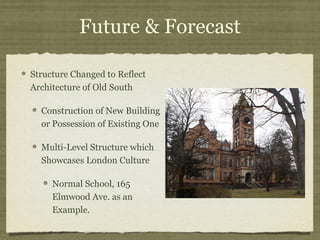
Structure Changed to Reflect
Architecture of Old South

  Construction of New Building
  or Possession of Existing One

  Multi-Level Structure which
  Showcases London Culture

     Normal School, 165
     Elmwood Ave. as an
     Example.
References
City of London (2012), Information about South London.

Community Led Libraries Toolkit

Leckie, Gloria J. (2004). Three perspectives on libraries as public space, Feliciter, 50 (6),
pp. 233-236

London Public Library

London Public Library Sustainability Case (2007)

Southern Ontario Library Service (n.d.), 6 ways to describe your community, Creating the
Future You’ve Imagined: A Guide to Essential Planning.

Varheim, A., Steinmo, S., & Ide, E. (2008). Do libraries matter? Public libraries and the
creation of social capital. Journal of Documentation, 64(6), 877-892.

Wortley Village Business Association

Landon: An Evaluation of a London Public Library Branch

  • 1.
    Landon An Evaluation ofa London Public Library Branch by Miranda Koshelek
  • 2.
    Branch Background Modest Beginnings:South Branch, 1918 New Location & New Name: Fred Landon Branch Facelifts & Rebranding: Landon Branch, present Structure & Art Attendance & Circulation
  • 3.
    Community Background South London,including Old South and Wortley Village Demographics Ethnicity/Cultural Ancestry & Languages Spoken Income & Employment Age Family Size
  • 4.
    Neighbourhood Profile Nestled betweenWharncliffe & Wellington Wortley Village: One of Canada’s Coolest Neighbourhoods! Commercial: Many are Independently Owned Businesses Residential: Primary Type of Dwellings, Mostly Single Family Homes Others: Thames Park, Schools, Playgrounds, Senior Complexes, and Churches
  • 5.
    Landon in thecommunity Landon as a Community-Centred Library Local Focus of Art, Collections, Texts, and Displays Programs Current Offerings But What About the Marginalized Groups?
  • 6.
    Landon in thecommunity Social Capital Why is it Important? How is it Created? Landon and the Production of Social Capital It succeeds in producing an adequate level of Social Capital
  • 7.
    Analysis & Evaluation MissionStatement: “We are passionate about making a difference in our community, one person at a time, by enriching lives and empowering people through relevant, accessible, high quality Library services.” (London Public Library, 2013) Landon Meets LPL’s Mission Statement Accessibility: In-Person & Outreach Support for Community Endeavors (i.e. Rag Bag Bazaar)
  • 8.
    Analysis & Evaluation PhysicalStructure: Functional but Unappealing Staff: Potential Hindrance of Improved Programming? Programming Deficit Landon ought to move “toward a model in which every user is viewed as a complex individual, with history and community, requiring human contact to fully meet their needs” (Community-Led Library Toolkit, p.8).
  • 9.
    Future & Forecast Landon& the Community: Increasingly Closer Showcase Local Talent Partnerships With Other Cultural Institutions Art Galleries, Museums, Archives Benefits Fundraising Through Collaboration
  • 10.
    Future & Forecast StructureChanged to Reflect Architecture of Old South Construction of New Building or Possession of Existing One Multi-Level Structure which Showcases London Culture Normal School, 165 Elmwood Ave. as an Example.
  • 11.
    References City of London(2012), Information about South London. Community Led Libraries Toolkit Leckie, Gloria J. (2004). Three perspectives on libraries as public space, Feliciter, 50 (6), pp. 233-236 London Public Library London Public Library Sustainability Case (2007) Southern Ontario Library Service (n.d.), 6 ways to describe your community, Creating the Future You’ve Imagined: A Guide to Essential Planning. Varheim, A., Steinmo, S., & Ide, E. (2008). Do libraries matter? Public libraries and the creation of social capital. Journal of Documentation, 64(6), 877-892. Wortley Village Business Association

Editor's Notes

  • #3 Landon is one of the oldest branches of LPL. It was originally called the South Branch when it opened in 1918. In 1924 it moved it its present location. In 1955, a new structure was rebuilt on the same spot and the the branch was renamed the Fred Landon Branch. Two facelifts later, it is now known as simply Landon. The structure is 7 040 sq. ft. divided between a main level and a basement. The collection is located on the main level and the bottom level is primarily used for programming. The interior of the library is decorated with an abundance of local art. As of 2006, the attendance of the library reached 136 983 patrons and 169 118 items were circulated.
  • #4 Landon serves the community of South London which includes Old South and Wortley Village. The population is 14 055. In terms of demographics, the population is culturally diverse. 60% of the total immigration population is from Europe, 29% are from outside of North America and Europe. 100% of the population reports knowledge of English, but for 11% it is not their mother tongue. The average income for adults is $33 862 while nearly 60% of residents possess education higher than secondary school. The unemployment rate is 5%. In terms of age, 72.5% of the population is over 25 years old. Census data also reveals that many adults have young children, which suggests that in the future this area will see an increasing amount of children.
  • #5 Landon is located in the centre of Wortley Village (which is nestled between Wharncliffe and Wellington roads. Wortley Village has been called “One of Canada’s Coolest Neighbourhoods.” The neighbourhood features independently owned businesses, though businesses of all sorts are located elsewhere in South London. However most dwellings are residential, single-family homes. The neighbourhood also includes a variety of other services and recreational facilities.
  • #6 Inside of Landon, a visitor will see a large collection of art from local artists, art collections on loan from local proprietors, book displays written by local authors or which feature local history, and displays which highlight aspects of the neighbourhood. These culminate to reflects the importance the branch places on community. The programs, as well, reflect Landon’s community’s needs. Many are designed for families with young children, but also for other interests. However, there is a lack of programs offered which highlight the different cultural identities of Landon’s community, but I’ll discuss that further in my analysis.
  • #7 Landon’s community-centred mentality contributes positively to the production of social capital. In fact, community building is strengthened through those activities which produce social capital. Therefore, Landon community-centered initiatives have actually improved the quality of life for its patrons, a result of high social capital. Landon is a credit to its community and to its library system.
  • #8 Landon does a fine job of measuring up to LPL’s mission statement. Not only is the physical building accessible to patrons of differing levels of mobility, but the outreach activities of LPL in general enable Landon’s patrons to access a wide variety of services from their home computers. Furthermore, as I’ve already discussed, Landon really succeeds at supporting its community through such programs as the Rag Bag Bazaar which featured local crafts and music.
  • #9 Unfortunately, the exterior of Landon’s physical structure is visually unappealing, especially in the presence of the beautiful architecture of the Old South. However, the interior is very functional and welcoming. It includes ample space for programming and public usage. Landon seems to function well with the levels of staff it maintains, however, it would be interesting to see if programming could be improved with an increase amount of staff. Not that Landon’s programming is poor, but, as I mentioned previously, there is certainly a deficit in programs which support/highlight the multi-cultural component of Landon’s community. Instead of viewing it’s population as potential “anglo-saxons,” Landon should move “toward a model in which every user is viewed as a complex individual, with history and community, requiring human contact to fully meet their needs.” I would recommend ESL classes for the 11% who do not possess English as their mother tongue (should research reveal there’s interest), or programs which explore the cultural diversity, such as arm chair travels or book clubs which feature national authors.
  • #10 In the future, I see the relationship between Landon and its community growing stronger. I think there will be an increase of showcasing local talent (building upon the way in which Landon already does) which will lead to a potential partnership with other cultural institutions. The benefit being that Landon will bring foot traffic to its partners, while Landon will be visited as a “sight to see” or a natural stopover for further learning from its partners. As well, a collaboration presents the opportunity for fundraising or an improved raising of funds.
  • #11 I also hope that Landon will somehow improve it’s physical appearance. As I mentioned before, the structure does not reflect the aesthetically pleasing architecture of its surroundings. Perhaps a new building could be constructed or the library may move to possess an existing one. Considering a potential for future partnerships, a structure like the Normal School may prove to be well suited as a cultural hub. Furthermore, as a the Normal School is a cornerstone for the community, it is well suited to house another cornerstone, Landon Library.