Social Wellbeing:
resources for
libraries in
action
Eli Guinnee
State Librarian, New Mexico
Margo Gustina
Special Projects Librarian
Building on Strengthening Networks, Sparking Change: Museums and Libraries as Community Catalysts (Norton and Dowdall,
2017) https://www.imls.gov/sites/default/files//publications/documents/community-catalyst-report-january-2017.pdf
1
Pathways to Contribution Personal Reflection
Take a minute to think about one community member who has lived an interesting
life.
Think about the unique talents and knowledge they have. Is the community able to
benefit from these?
Now multiply that across the whole population and consider what would your
community would look like if it were able to use all of its collective knowledge.
Reflect on your thinking: do you have a good sense of the skills contained in your
community?
2
Pathways to Contribution Personal Reflection
The next time a new resident walks into the library looking
for a library card, what thoughts or aims do you want to
hold in your head as you talk to them about the library and
about the town?
3
Pathways to Contribution Personal Reflection
Think about the young people who have moved away from
town. When they leave do you assume they will never be
back? Is there some small thing you can do to to help
maintain their connection to their hometown?
4
Hope Decker
Member Services Liaison
Pioneer Library System (NY)
Rick Bonney – Cornell University,
Consulting Methodologist
Bharat Mehra – University of
Alabama, Advisory Board
Cynthia Nikitin – Project for Public
Spaces, Advisory Board
Madeline Peña – REFORMA Past-
President, Advisory Board
Meredith Wickham – ARSL, Advisory
Board
Ebonie Alexander
Black Family Land Trust
Naomi Bishop
AILA Past-President
Miriam Jorgensen
Native Nations Institute
Michael Norton
Reinvestment Fund
Loriene Roy
University of Texas
This project was made possible in part by the Institute of Museum and Library Services [RE-96-18-0134]. The
views, findings, conclusions or recommendations expressed here do not necessarily represent those of the
Institute of Museum and Library Services.
5
Are public libraries a component
of social wellbeing in resource-
poor geographies?
If so, what practices do they
employ?
6
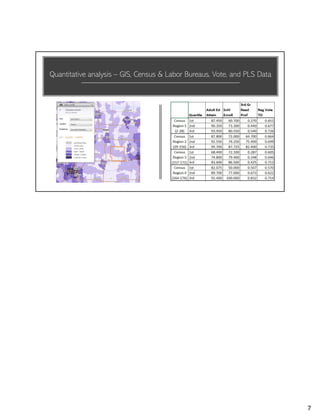
Quantitative analysis – GIS, Census & Labor Bureaus, Vote, and PLS Data
7
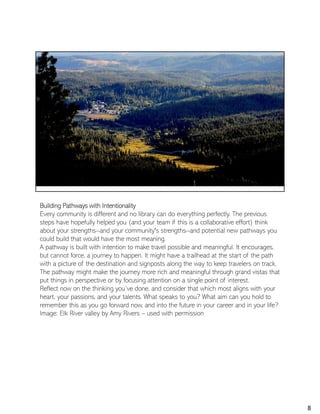
Building Pathways with Intentionality
Every community is different and no library can do everything perfectly. The previous
steps have hopefully helped you (and your team if this is a collaborative effort) think
about your strengths--and your community's strengths--and potential new pathways you
could build that would have the most meaning.
A pathway is built with intention to make travel possible and meaningful. It encourages,
but cannot force, a journey to happen. It might have a trailhead at the start of the path
with a picture of the destination and signposts along the way to keep travelers on track.
The pathway might make the journey more rich and meaningful through grand vistas that
put things in perspective or by focusing attention on a single point of interest.
Reflect now on the thinking you’ve done, and consider that which most aligns with your
heart, your passions, and your talents. What speaks to you? What aim can you hold to
remember this as you go forward now, and into the future in your career and in your life?
Image: Elk River valley by Amy Rivers – used with permission
8
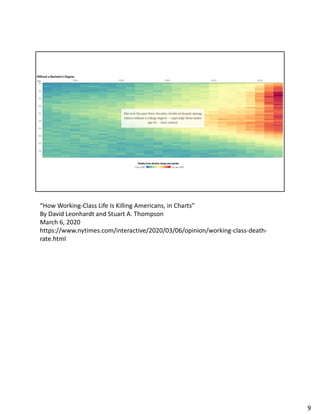
“How Working-Class Life Is Killing Americans, in Charts”
By David Leonhardt and Stuart A. Thompson
March 6, 2020
https://www.nytimes.com/interactive/2020/03/06/opinion/working-class-death-
rate.html
9
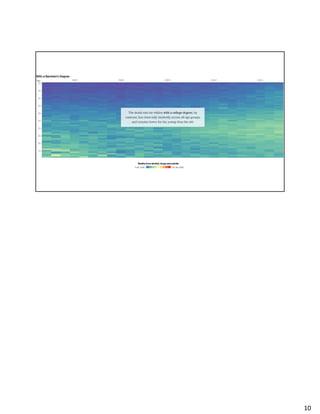
ibid
10
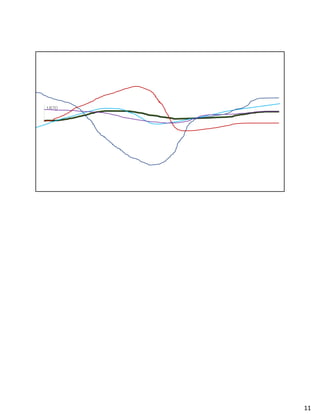
1870
If we see this image as a graph, then we can see how it interprets social wellbeing aggregated out to our four categories for our
example community over the past 150 years.
11
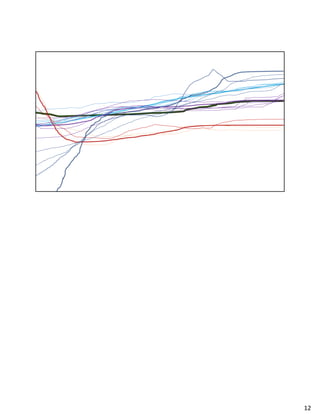
And that were we to zoom in on this image, each of those more nuanced indicators of wellbeing might appear as their own wavy
lines.
Notice that at both the category and the finer dimension level, social wellbeing measures don’t all run parallel. Some might not
lead to others. Some might. And others might work against wellbeing in other categories.
12
Yes!
Public libraries build
pathways to social wellbeing
in rural communities.
Oh! Here I should tell you that the answer is Yes! We found consistent evidence across all eight of our case study communities
that public libraries improve social wellbeing in their communities. In order to see how and what we can do to improve those
outcomes, we have to hang out for a minute more describing what is going on in that social fabric weave and how it relates to the
social wellbeing indicators we discussed before.
13
When I moved here. With being basically a
shut in with no transportation. And I came
into the library it was like I could breathe
again. Because there were books.
Community member interview – direct quote, September 2019.
14
But when I feel like to understand who
you are like yourself as a person you kind
of need to be able to step away from
distraction you know. So it's at least for
me I know that like let's say I'm struggling
with something or whatever emotionally
even it's helpful to not fill my time to such
an extent where I can't listen to my own
general like feelings like.
Community member direct quote, June 2019.
15
Library service is complex, relational,
and context driven.
16
Belonging
& Home
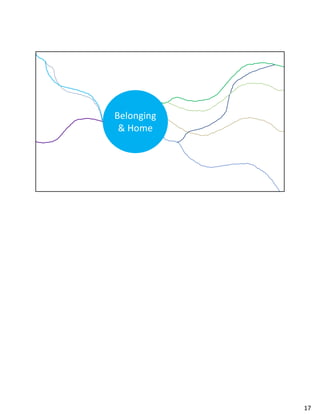
Belonging and feelings of home are both outcomes of community actions AND a reason for community action.
17
Belonging
& Home
Mutualism
Self-determination
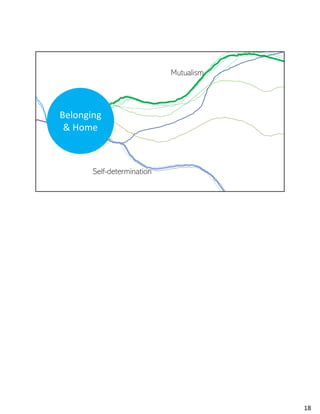
Two of the most common strong paths we observed after the point of belonging were mutualism and self-determination. There are
others you can read about in our findings, but these were so evident across communities, you might even recognize how they work
in your own community or neighborhood.
18
Mutualism
Belonging
& Home
“Everyone here
would give the shirt
off their back for
you.”
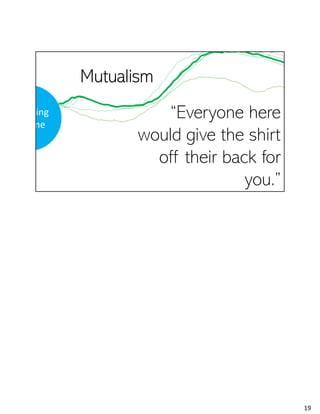
Mutualism, or support, mutual aid, dynamic reciprocity, or “they’d give the shirt off their back for you” has an important place in
providing a sense of physical and emotional security in the town where one lives. Deep running mutualistic networks that are
complex, distributed throughout the community, connecting between individuals, family groups, organizations and institutions –
are built over long time spans, through both routine interactions and special circumstances.
They feed social connections, making them easier to see and the more culturally pervasive mutualism is, the easier it is for a
newcomer to enter the network deeply and more quickly.
19
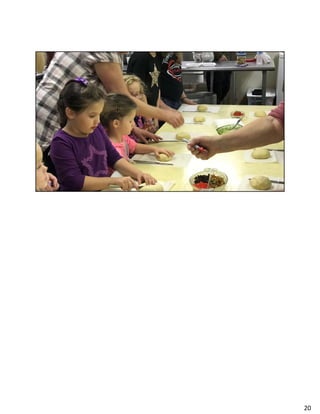
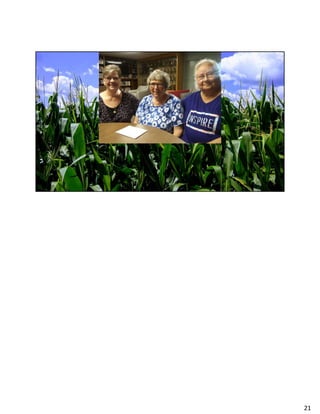
The culture that we saw on display during our field visit was deep mutualism. It was pervasive and evident in every conversation,
even in the built structures throughout the town. In Helvetia, the general store and post office is community owned. The village
may not be incorporated with a state recognized government, but they are organized. Through a collection of committees, nearly
everyone in town contributes to the creation of the village, and participates in decision-making about its future.
20
Meservey, Iowa is quite a bit bigger than Helvetia with a long standing history of mutualism. One of the social markers a resident
pointed to was attendance at funerals. As a community, folks in Meservey grieve together. That cultural norm shows up in action
when there is an accident. In a different story, a resident shared that when her husband was injured in a tractor accident, neighbors
throughout the region showed up to harvest for the family. The community is its own insurance, its own structure of care and
security.
21
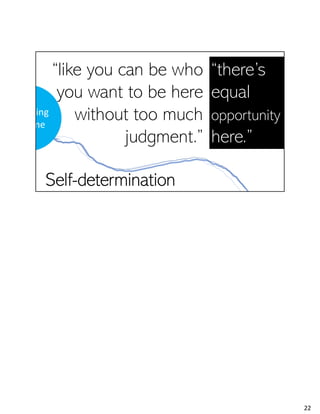
Self-determination
Belonging
& Home
“like you can be who
you want to be here
without too much
judgment.”
“there’s
equal
opportunity
here.”
An other observed strong pathway was of Self-Determination. Self-determination is closely tied to being heard and having access
to infrastructure. This pathway was most obvious in communities which provided infrastructure necessary for residents to access
opportunity and social services, and have multiple outlets for community members to express their opinions and ideas. We saw
this in action through libraries which were connecting residents around topics of common concern, and also common passion.
22
Needs of permanent full-year residents could be easily lost amid those well-heeled people who come and go with second and third
houses in other locations. The library, since its inception when the local school closed, has provided the routine daily gathering
place for residents, the after school kids for town youth, and, the internet for the community at large. Elk River Internet is the ISP
owned by the library to guarantee that the people who live in the valley have access at affordable rates to anything they need to
know or want to interact with. Combined with open hours specifically designed to serve the permanent full year resident
population, gathering them to discuss regional news and local decisions, the library is the sole facilitator of self-determination in
Elk River.
23
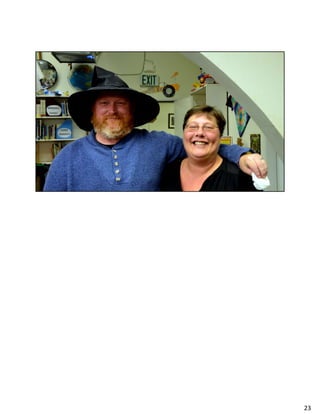
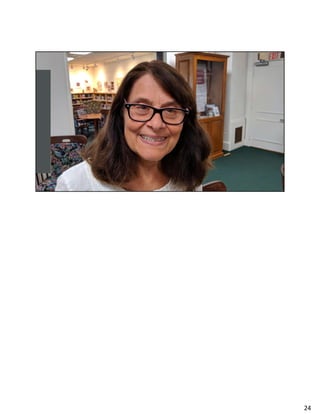
In addition to the infrastructural support for resource access and decision-making power, the library director actively engages in
building the continuous path of belonging to self-determination. She engages every newcomer (and every new baby – see the
Marshfield case study), not only with info on the library, but by asking about them. She sees each community resident as a
resource to the life of the community and investigates those resources for their unique qualities. She invites contribution in person
specific ways, connects them to others with intention, and broadcasts their expression in public forum – art shows, poetry
readings, performances, movie nights, lectures, roundtable discussions, and civic dialogues.
24
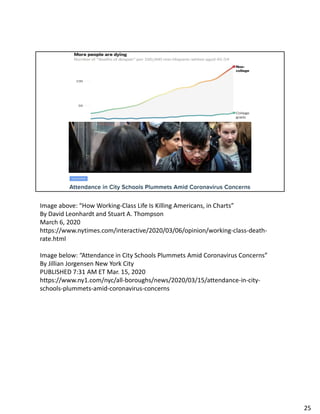
Image above: “How Working-Class Life Is Killing Americans, in Charts”
By David Leonhardt and Stuart A. Thompson
March 6, 2020
https://www.nytimes.com/interactive/2020/03/06/opinion/working-class-death-
rate.html
Image below: “Attendance in City Schools Plummets Amid Coronavirus Concerns”
By Jillian Jorgensen New York City
PUBLISHED 7:31 AM ET Mar. 15, 2020
https://www.ny1.com/nyc/all-boroughs/news/2020/03/15/attendance-in-city-
schools-plummets-amid-coronavirus-concerns
25
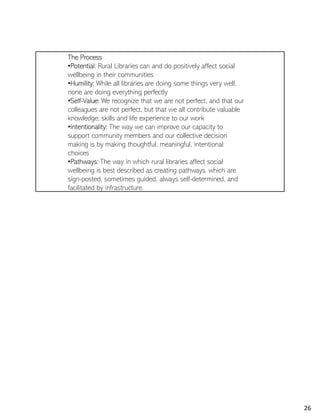
The Process
•Potential: Rural Libraries can and do positively affect social
wellbeing in their communities
•Humility: While all libraries are doing some things very well,
none are doing everything perfectly
•Self-Value: We recognize that we are not perfect, and that our
colleagues are not perfect, but that we all contribute valuable
knowledge, skills and life experience to our work
•Intentionality: The way we can improve our capacity to
support community members and our collective decision
making is by making thoughtful, meaningful, intentional
choices
•Pathways: The way in which rural libraries affect social
wellbeing is best described as creating pathways, which are
sign-posted, sometimes guided, always self-determined, and
facilitated by infrastructure.
26
Since June 2019, the research team has been working to refine our understanding of how libraries impact social wellbeing in their
communities. Since March of 2020 our local library partners in the 8 case study communities have worked with the research team
to take that understanding and turn it into something of practical use.
Communities, libraries, and pathways are infinitely complex, relational, and context dependent. What is incredible about
Abiquiu’s development of self-determination pathways for the pueblo’s youth is not was is incredible in neighboring El Rito.
When we share tools for use and examples of how they work, they are not prescriptions, best-practices, or even programs you
should do.
27
Margo Gustina – research@rurallibraries.org
Please visit our project site, email me, interact on this topic, and, if you feel compelled, call shenanigans on the whole package. I
think we only get nearest the truth when we have the most perspectives. And how we practice so that our practice does the most
good is a truth I am very interested in getting to.
28

NCompass Live: Beta Testing for Social Wellbeing

  • 1.
    Social Wellbeing: resources for librariesin action Eli Guinnee State Librarian, New Mexico Margo Gustina Special Projects Librarian Building on Strengthening Networks, Sparking Change: Museums and Libraries as Community Catalysts (Norton and Dowdall, 2017) https://www.imls.gov/sites/default/files//publications/documents/community-catalyst-report-january-2017.pdf 1
  • 2.
    Pathways to ContributionPersonal Reflection Take a minute to think about one community member who has lived an interesting life. Think about the unique talents and knowledge they have. Is the community able to benefit from these? Now multiply that across the whole population and consider what would your community would look like if it were able to use all of its collective knowledge. Reflect on your thinking: do you have a good sense of the skills contained in your community? 2
  • 3.
    Pathways to ContributionPersonal Reflection The next time a new resident walks into the library looking for a library card, what thoughts or aims do you want to hold in your head as you talk to them about the library and about the town? 3
  • 4.
    Pathways to ContributionPersonal Reflection Think about the young people who have moved away from town. When they leave do you assume they will never be back? Is there some small thing you can do to to help maintain their connection to their hometown? 4
  • 5.
    Hope Decker Member ServicesLiaison Pioneer Library System (NY) Rick Bonney – Cornell University, Consulting Methodologist Bharat Mehra – University of Alabama, Advisory Board Cynthia Nikitin – Project for Public Spaces, Advisory Board Madeline Peña – REFORMA Past- President, Advisory Board Meredith Wickham – ARSL, Advisory Board Ebonie Alexander Black Family Land Trust Naomi Bishop AILA Past-President Miriam Jorgensen Native Nations Institute Michael Norton Reinvestment Fund Loriene Roy University of Texas This project was made possible in part by the Institute of Museum and Library Services [RE-96-18-0134]. The views, findings, conclusions or recommendations expressed here do not necessarily represent those of the Institute of Museum and Library Services. 5
  • 6.
    Are public librariesa component of social wellbeing in resource- poor geographies? If so, what practices do they employ? 6
  • 7.
    Quantitative analysis –GIS, Census & Labor Bureaus, Vote, and PLS Data 7
  • 8.
    Building Pathways withIntentionality Every community is different and no library can do everything perfectly. The previous steps have hopefully helped you (and your team if this is a collaborative effort) think about your strengths--and your community's strengths--and potential new pathways you could build that would have the most meaning. A pathway is built with intention to make travel possible and meaningful. It encourages, but cannot force, a journey to happen. It might have a trailhead at the start of the path with a picture of the destination and signposts along the way to keep travelers on track. The pathway might make the journey more rich and meaningful through grand vistas that put things in perspective or by focusing attention on a single point of interest. Reflect now on the thinking you’ve done, and consider that which most aligns with your heart, your passions, and your talents. What speaks to you? What aim can you hold to remember this as you go forward now, and into the future in your career and in your life? Image: Elk River valley by Amy Rivers – used with permission 8
  • 9.
    “How Working-Class LifeIs Killing Americans, in Charts” By David Leonhardt and Stuart A. Thompson March 6, 2020 https://www.nytimes.com/interactive/2020/03/06/opinion/working-class-death- rate.html 9
  • 10.
  • 11.
    1870 If we seethis image as a graph, then we can see how it interprets social wellbeing aggregated out to our four categories for our example community over the past 150 years. 11
  • 12.
    And that werewe to zoom in on this image, each of those more nuanced indicators of wellbeing might appear as their own wavy lines. Notice that at both the category and the finer dimension level, social wellbeing measures don’t all run parallel. Some might not lead to others. Some might. And others might work against wellbeing in other categories. 12
  • 13.
    Yes! Public libraries build pathwaysto social wellbeing in rural communities. Oh! Here I should tell you that the answer is Yes! We found consistent evidence across all eight of our case study communities that public libraries improve social wellbeing in their communities. In order to see how and what we can do to improve those outcomes, we have to hang out for a minute more describing what is going on in that social fabric weave and how it relates to the social wellbeing indicators we discussed before. 13
  • 14.
    When I movedhere. With being basically a shut in with no transportation. And I came into the library it was like I could breathe again. Because there were books. Community member interview – direct quote, September 2019. 14
  • 15.
    But when Ifeel like to understand who you are like yourself as a person you kind of need to be able to step away from distraction you know. So it's at least for me I know that like let's say I'm struggling with something or whatever emotionally even it's helpful to not fill my time to such an extent where I can't listen to my own general like feelings like. Community member direct quote, June 2019. 15
  • 16.
    Library service iscomplex, relational, and context driven. 16
  • 17.
    Belonging & Home Belonging andfeelings of home are both outcomes of community actions AND a reason for community action. 17
  • 18.
    Belonging & Home Mutualism Self-determination Two ofthe most common strong paths we observed after the point of belonging were mutualism and self-determination. There are others you can read about in our findings, but these were so evident across communities, you might even recognize how they work in your own community or neighborhood. 18
  • 19.
    Mutualism Belonging & Home “Everyone here wouldgive the shirt off their back for you.” Mutualism, or support, mutual aid, dynamic reciprocity, or “they’d give the shirt off their back for you” has an important place in providing a sense of physical and emotional security in the town where one lives. Deep running mutualistic networks that are complex, distributed throughout the community, connecting between individuals, family groups, organizations and institutions – are built over long time spans, through both routine interactions and special circumstances. They feed social connections, making them easier to see and the more culturally pervasive mutualism is, the easier it is for a newcomer to enter the network deeply and more quickly. 19
  • 20.
    The culture thatwe saw on display during our field visit was deep mutualism. It was pervasive and evident in every conversation, even in the built structures throughout the town. In Helvetia, the general store and post office is community owned. The village may not be incorporated with a state recognized government, but they are organized. Through a collection of committees, nearly everyone in town contributes to the creation of the village, and participates in decision-making about its future. 20
  • 21.
    Meservey, Iowa isquite a bit bigger than Helvetia with a long standing history of mutualism. One of the social markers a resident pointed to was attendance at funerals. As a community, folks in Meservey grieve together. That cultural norm shows up in action when there is an accident. In a different story, a resident shared that when her husband was injured in a tractor accident, neighbors throughout the region showed up to harvest for the family. The community is its own insurance, its own structure of care and security. 21
  • 22.
    Self-determination Belonging & Home “like youcan be who you want to be here without too much judgment.” “there’s equal opportunity here.” An other observed strong pathway was of Self-Determination. Self-determination is closely tied to being heard and having access to infrastructure. This pathway was most obvious in communities which provided infrastructure necessary for residents to access opportunity and social services, and have multiple outlets for community members to express their opinions and ideas. We saw this in action through libraries which were connecting residents around topics of common concern, and also common passion. 22
  • 23.
    Needs of permanentfull-year residents could be easily lost amid those well-heeled people who come and go with second and third houses in other locations. The library, since its inception when the local school closed, has provided the routine daily gathering place for residents, the after school kids for town youth, and, the internet for the community at large. Elk River Internet is the ISP owned by the library to guarantee that the people who live in the valley have access at affordable rates to anything they need to know or want to interact with. Combined with open hours specifically designed to serve the permanent full year resident population, gathering them to discuss regional news and local decisions, the library is the sole facilitator of self-determination in Elk River. 23
  • 24.
    In addition tothe infrastructural support for resource access and decision-making power, the library director actively engages in building the continuous path of belonging to self-determination. She engages every newcomer (and every new baby – see the Marshfield case study), not only with info on the library, but by asking about them. She sees each community resident as a resource to the life of the community and investigates those resources for their unique qualities. She invites contribution in person specific ways, connects them to others with intention, and broadcasts their expression in public forum – art shows, poetry readings, performances, movie nights, lectures, roundtable discussions, and civic dialogues. 24
  • 25.
    Image above: “HowWorking-Class Life Is Killing Americans, in Charts” By David Leonhardt and Stuart A. Thompson March 6, 2020 https://www.nytimes.com/interactive/2020/03/06/opinion/working-class-death- rate.html Image below: “Attendance in City Schools Plummets Amid Coronavirus Concerns” By Jillian Jorgensen New York City PUBLISHED 7:31 AM ET Mar. 15, 2020 https://www.ny1.com/nyc/all-boroughs/news/2020/03/15/attendance-in-city- schools-plummets-amid-coronavirus-concerns 25
  • 26.
    The Process •Potential: RuralLibraries can and do positively affect social wellbeing in their communities •Humility: While all libraries are doing some things very well, none are doing everything perfectly •Self-Value: We recognize that we are not perfect, and that our colleagues are not perfect, but that we all contribute valuable knowledge, skills and life experience to our work •Intentionality: The way we can improve our capacity to support community members and our collective decision making is by making thoughtful, meaningful, intentional choices •Pathways: The way in which rural libraries affect social wellbeing is best described as creating pathways, which are sign-posted, sometimes guided, always self-determined, and facilitated by infrastructure. 26
  • 27.
    Since June 2019,the research team has been working to refine our understanding of how libraries impact social wellbeing in their communities. Since March of 2020 our local library partners in the 8 case study communities have worked with the research team to take that understanding and turn it into something of practical use. Communities, libraries, and pathways are infinitely complex, relational, and context dependent. What is incredible about Abiquiu’s development of self-determination pathways for the pueblo’s youth is not was is incredible in neighboring El Rito. When we share tools for use and examples of how they work, they are not prescriptions, best-practices, or even programs you should do. 27
  • 28.
    Margo Gustina –research@rurallibraries.org Please visit our project site, email me, interact on this topic, and, if you feel compelled, call shenanigans on the whole package. I think we only get nearest the truth when we have the most perspectives. And how we practice so that our practice does the most good is a truth I am very interested in getting to. 28