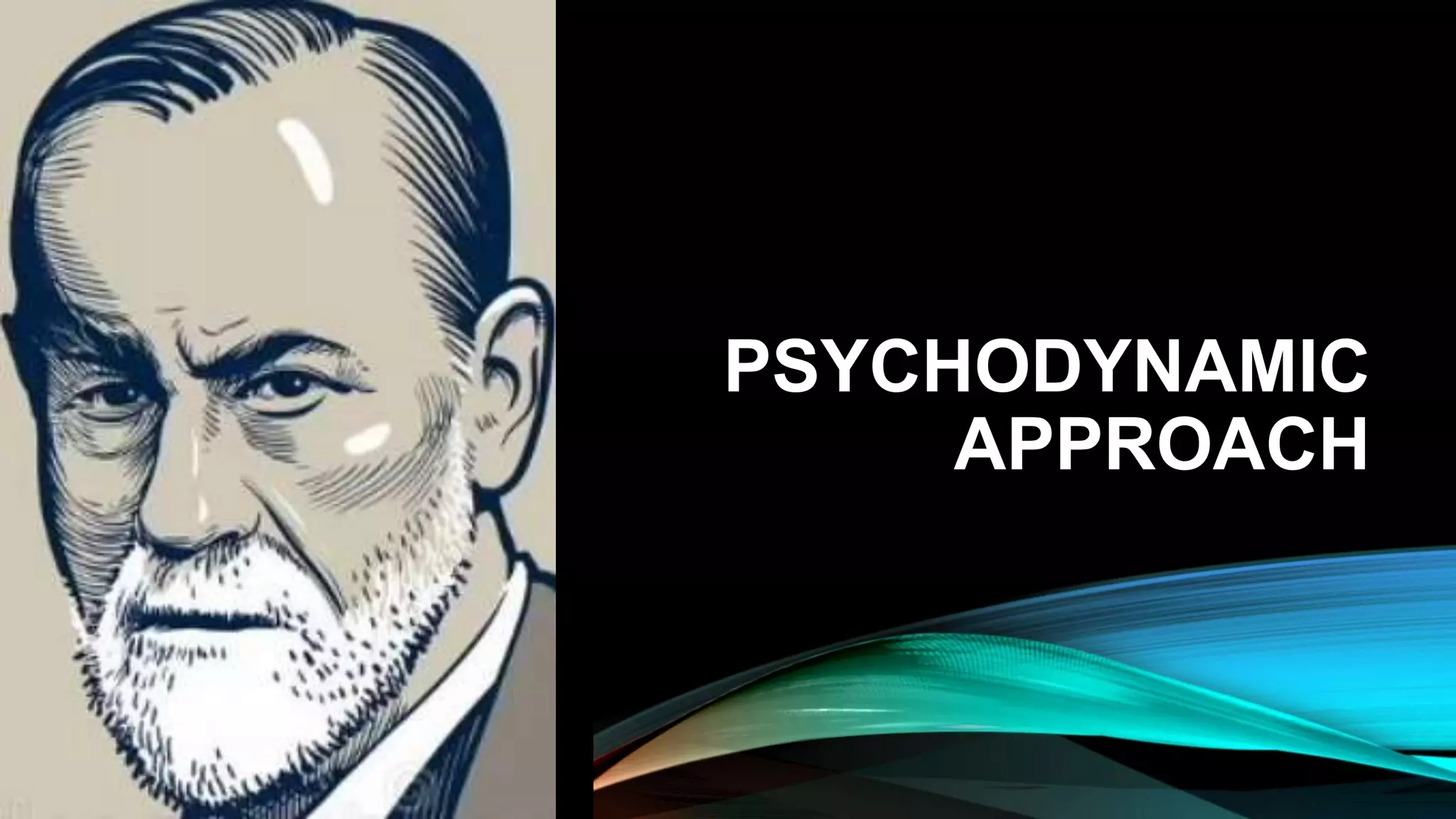
PSYCHODYNAMIC
APPROACH
DESCRIPTION
The psychodynamic approach consists of
several different ways of looking
at leadership. There is no single model or
theory. One fundamental concept
underlies the psychodynamic approach:
Personality
Although it focuses on the personality of the
leader and of followers, the psychodynamic
approach ultimately is a way to look at the
relationship between the leader and follower.
Assumptions
personality characteristics of individuals, being
deeply ingrained, are very difficult to change in
any significant way
people have motives and feelings that are
beneath immediate awareness—that is, in the
unconscious. Thus, a person’s behavior results
from observable actions and responses and the
emotional residue of prior experiences.
The psychodynamic approach begins with an examination of the roots of the individual in the
family. Our first experience with leadership occurs the day we are born. Mom and Dad, or those who are our
primary caregivers, become our leaders
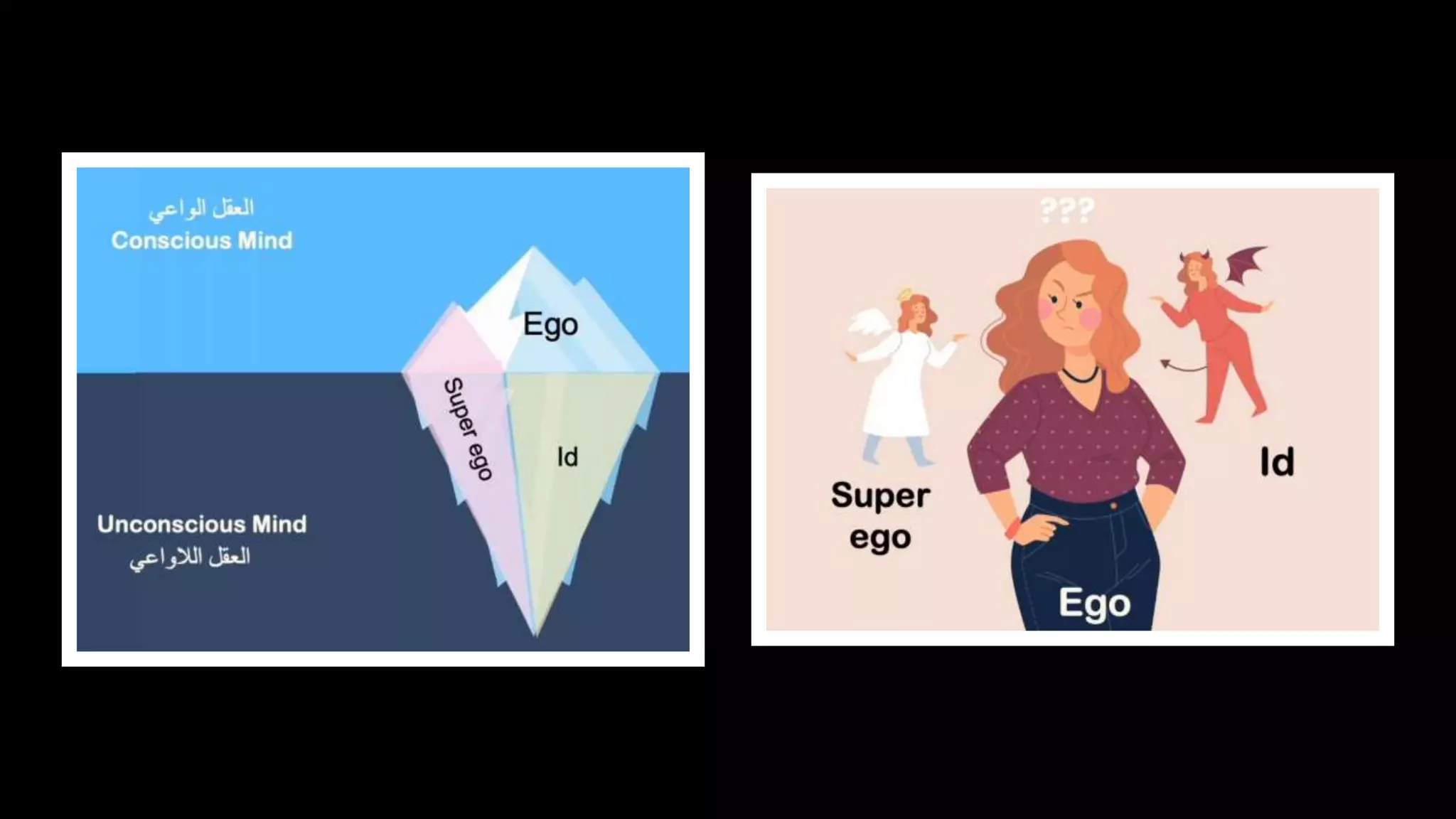
The ego state and the conflict between the 3 ego inside us
Eric Berne and Transactional Analysis
A unified system of individual and social psychiatry.
The important aspect of that title is the notion of social
psychiatry, one that focuses not only on the individual but also
on one’s relationship with others.
There are three ego states in TA: parent, adult, and child
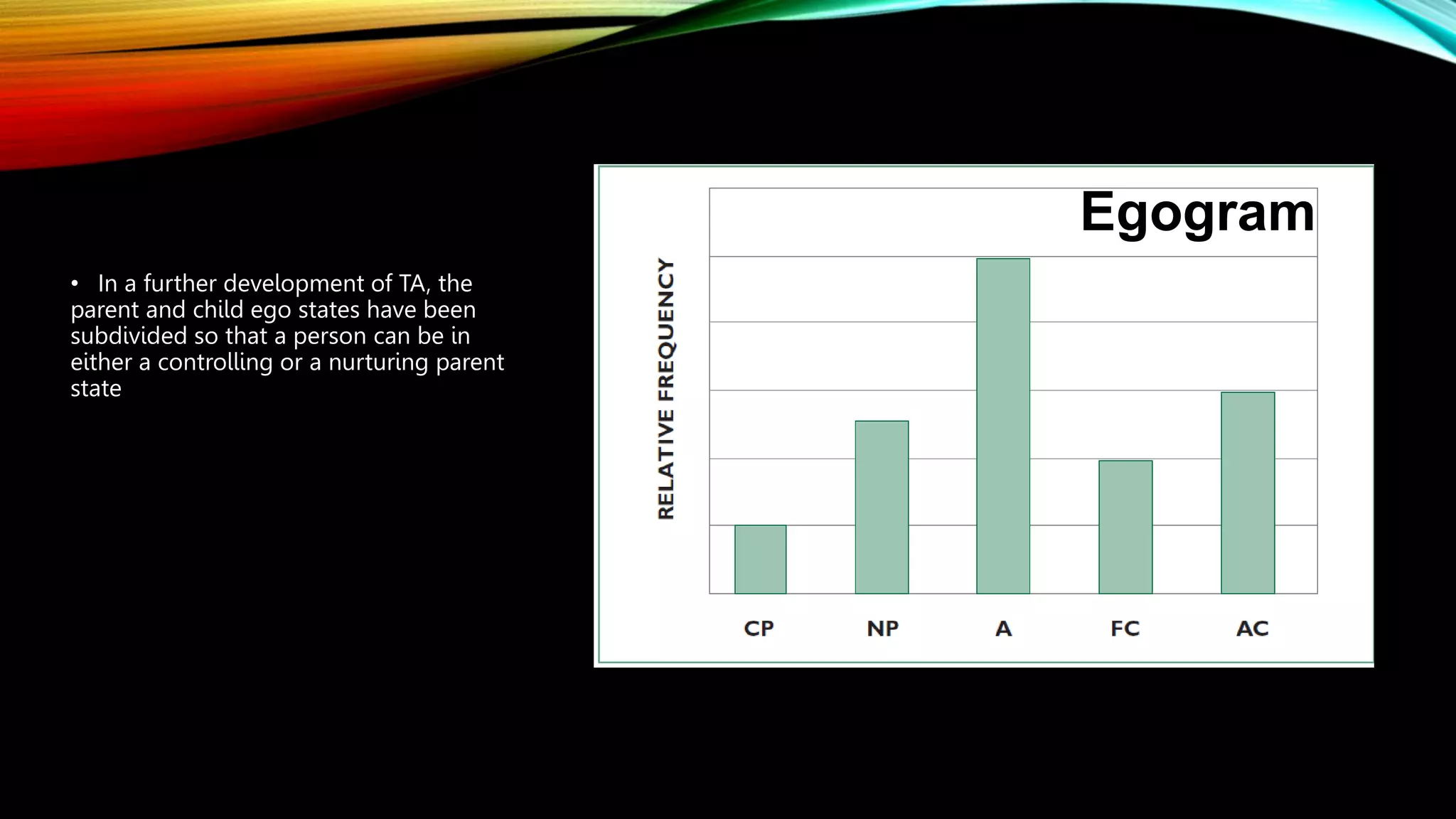
• In a further development of TA, the
parent and child ego states have been
subdivided so that a person can be in
either a controlling or a nurturing parent
state
Egogram
Sigmund Freud and Personality Types
The three personality types Freud
offered were erotic, obsessive, and
narcissistic.
Erich Fromm subsequently added a
fourth: marketing
The erotic personality
• seeks to love and be loved.
• enjoys talking with others for the simple pleasure of
• Enjoy having a conversation and getting to know someone.
• want the group or team to become a close-knit family of nice
people
• who get along.
• dependent and needy.
obsessive personality
• live up to standards
• follow rules, and obey a strict conscience
• stability rather than acceptance and liking.
• following the rules and regulations of society and the organization
• having a strong conscience
• This kind of person searches for ways
• to improve, and particularly to become more knowledgeable and competent.
• can be very aggressive and domineering.
• They believe they are right and do not want to be questioned.
narcissistic personality
• Maccoby stressed the need to clearly set the narcissist
apart from egotistical or egoistic
• The narcissist is not vain and does not attempt to impress,
but takes pride in and will talk about actual
accomplishments. In fact, pointed out that one of the
important characteristics of the narcissist is
• self-directed. On the positive side
• clear vision of what to do and does not take into account
what other people say or do in the pursuit of that vision.
The marketing personality
• highly adaptable
• align themselves with the right people and situations.
• Marketers easily adapt to changes in society
• good at facilitating and networking, and at using and enjoying the process of
collaboration in order to achieve consensus.
Maccoby distinguished between productive and unproductive versions of each type.
There can be productive erotic, unproductive obsessives, and productive
marketing types, or their opposites.
five key elements to define the productive
free and not dependent, active or proactive, understands his or her own situation and has a purpose in life.
Maccoby (2003) added perseverance to the list of
characteristics of a productive person. At the other end of the spectrum are unproductive people, characterized as
limited and averse to risk, irrational, reactive, superficial, aimless, and uncommitted.
Maccoby sensed that the best executives were productive
narcissists.
Why do we need productive narcissists and when?
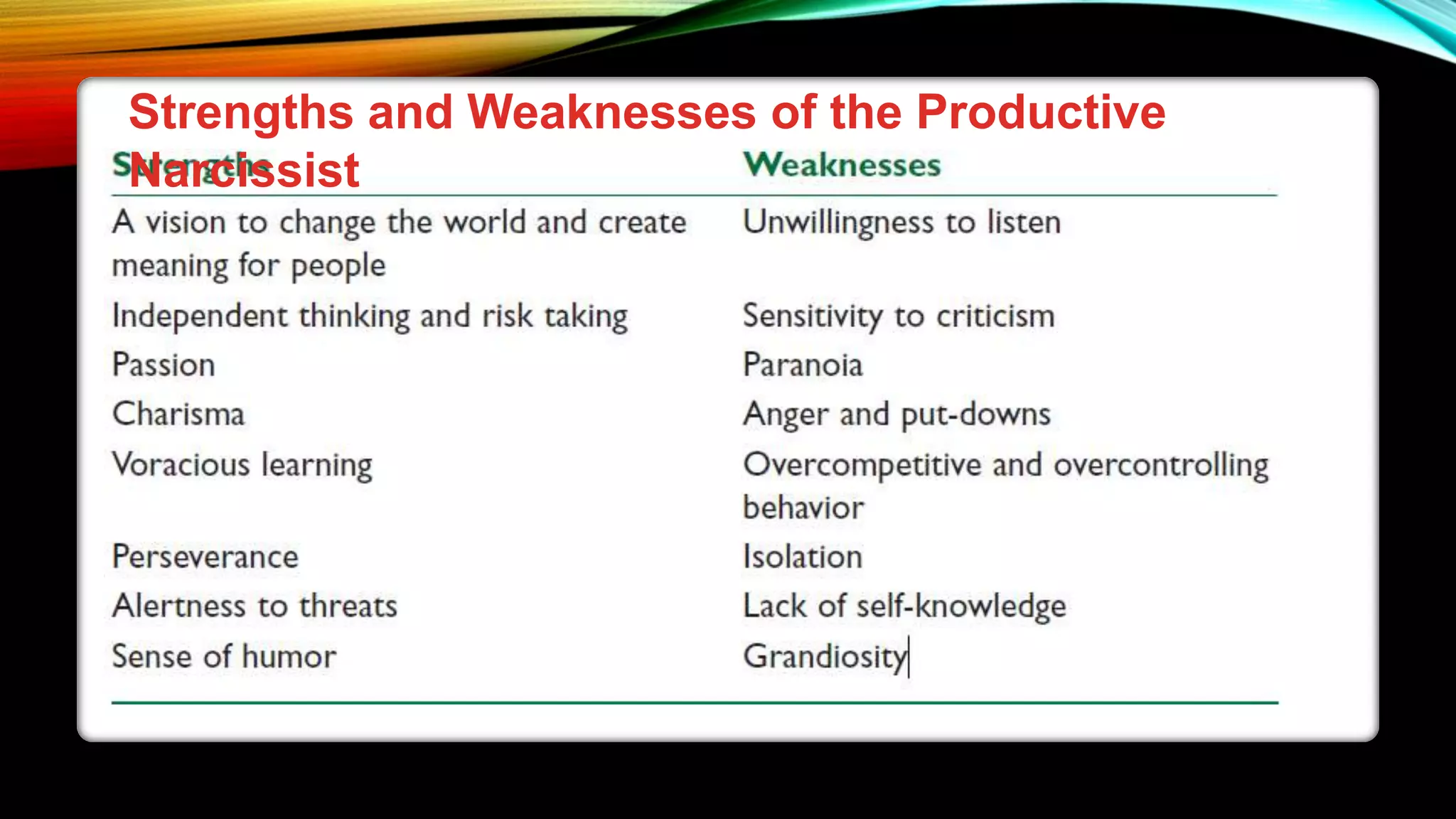
Strengths and Weaknesses of the Productive
Narcissist
Changes in Social Character
The net result of the shift from the bureaucratic to
the interactive social character is that persons in
organizations no longer want to be followers but
rather want to be collaborators in a joint effort
with their leaders
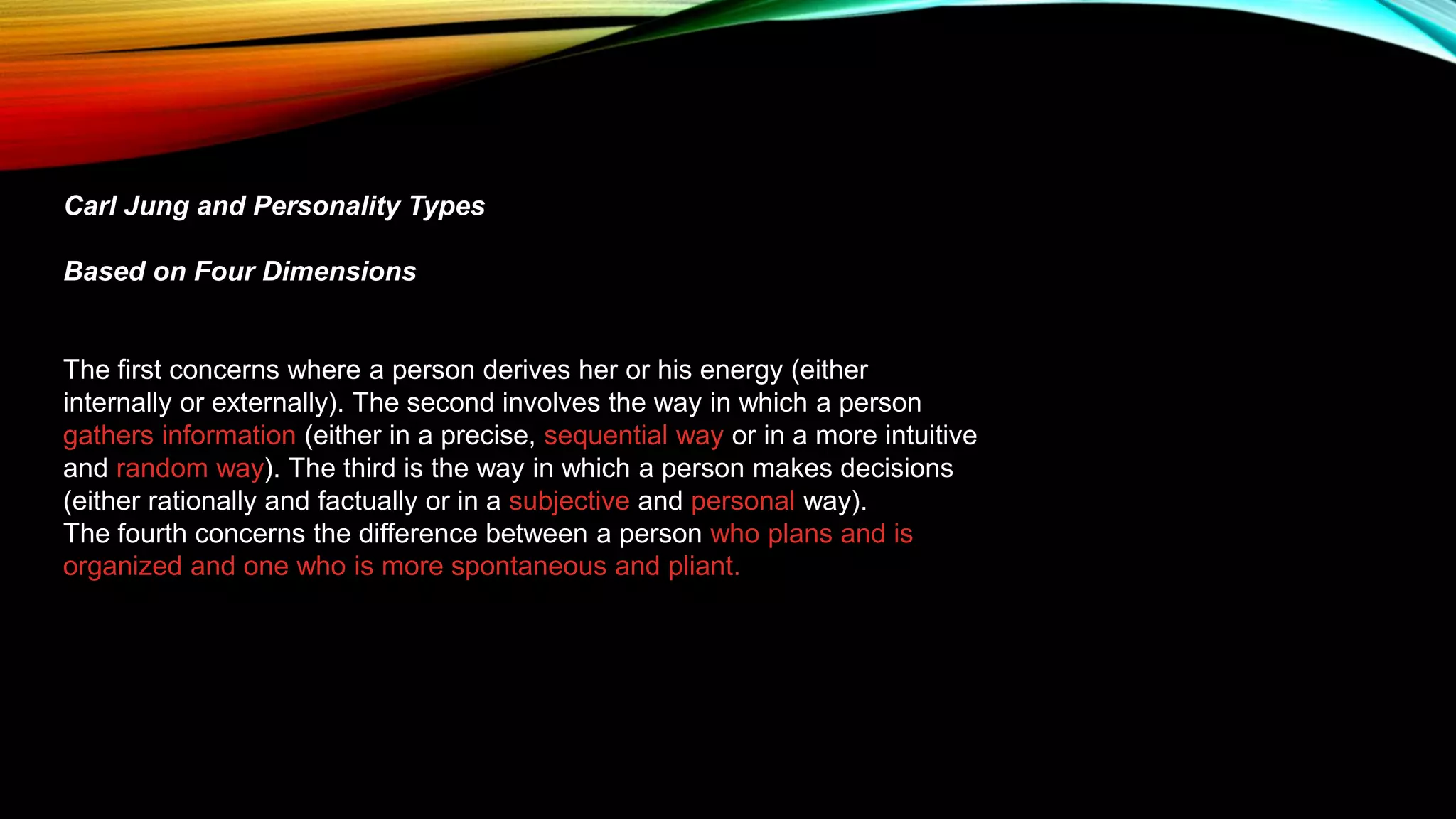
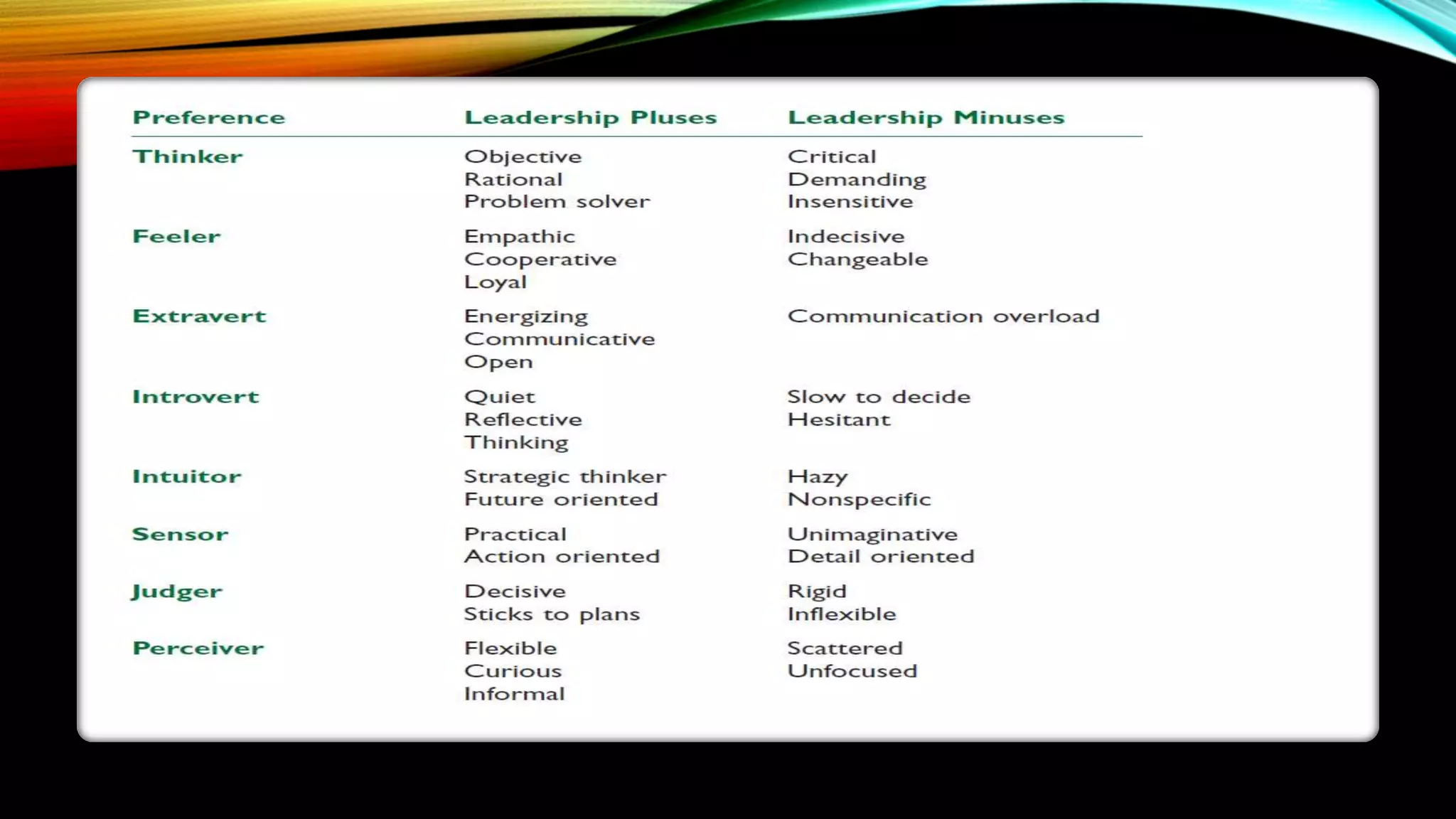
Carl Jung and Personality Types
Based on Four Dimensions
The first concerns where a person derives her or his energy (either
internally or externally). The second involves the way in which a person
gathers information (either in a precise, sequential way or in a more intuitive
and random way). The third is the way in which a person makes decisions
(either rationally and factually or in a subjective and personal way).
The fourth concerns the difference between a person who plans and is
organized and one who is more spontaneous and pliant.
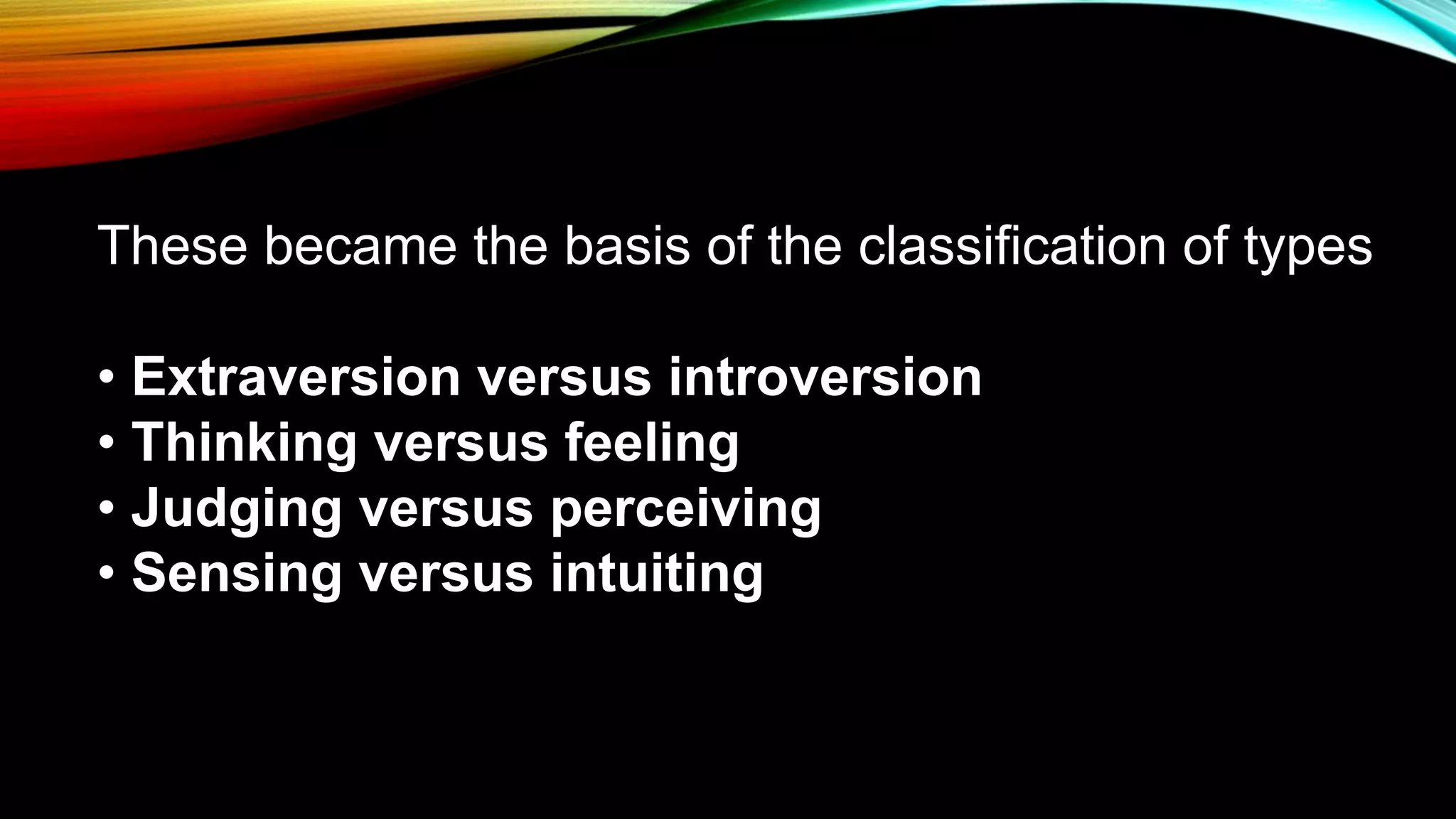
These became the basis of the classification of types
• Extraversion versus introversion
• Thinking versus feeling
• Judging versus perceiving
• Sensing versus intuiting
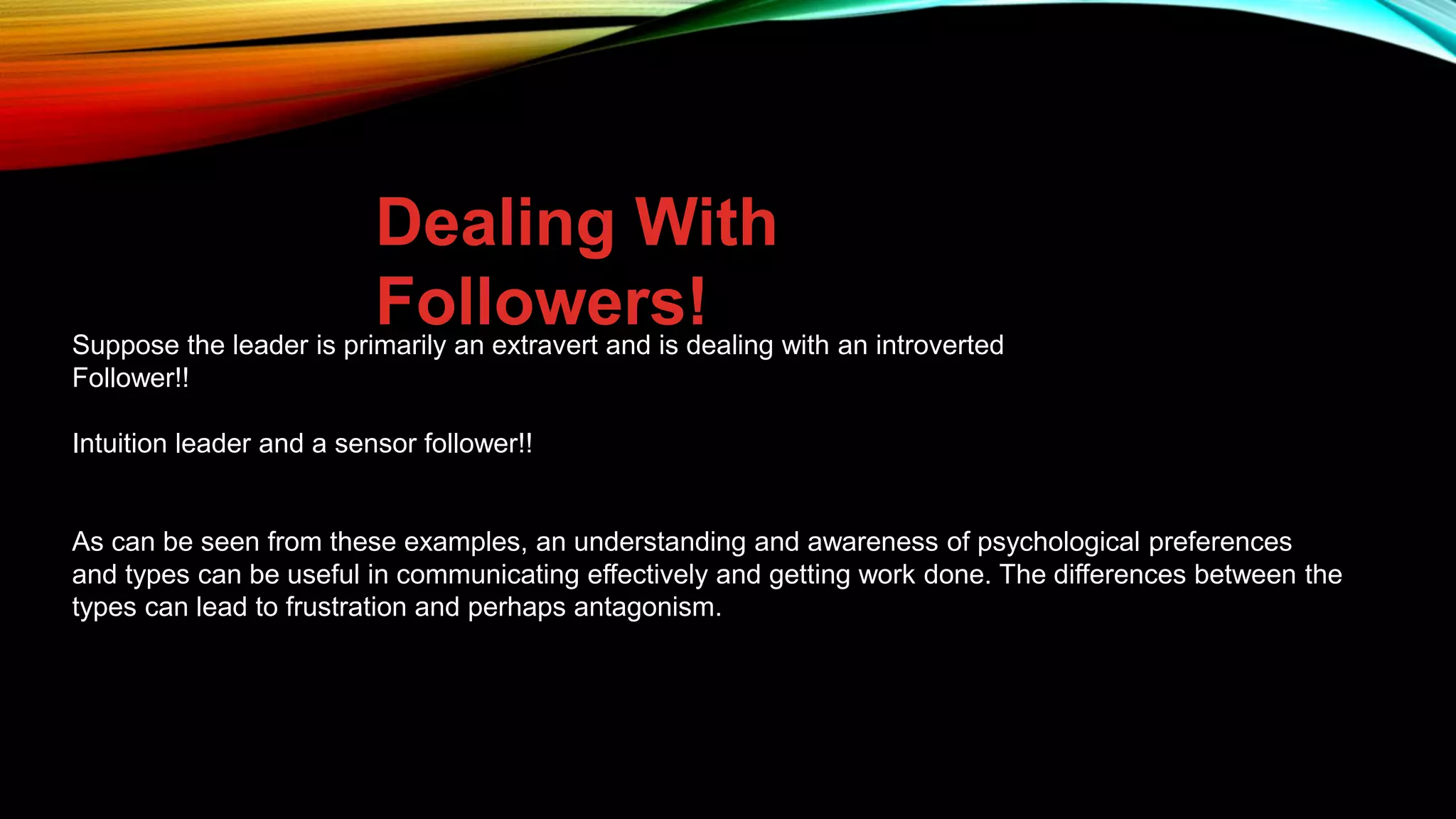
Dealing With
Followers!
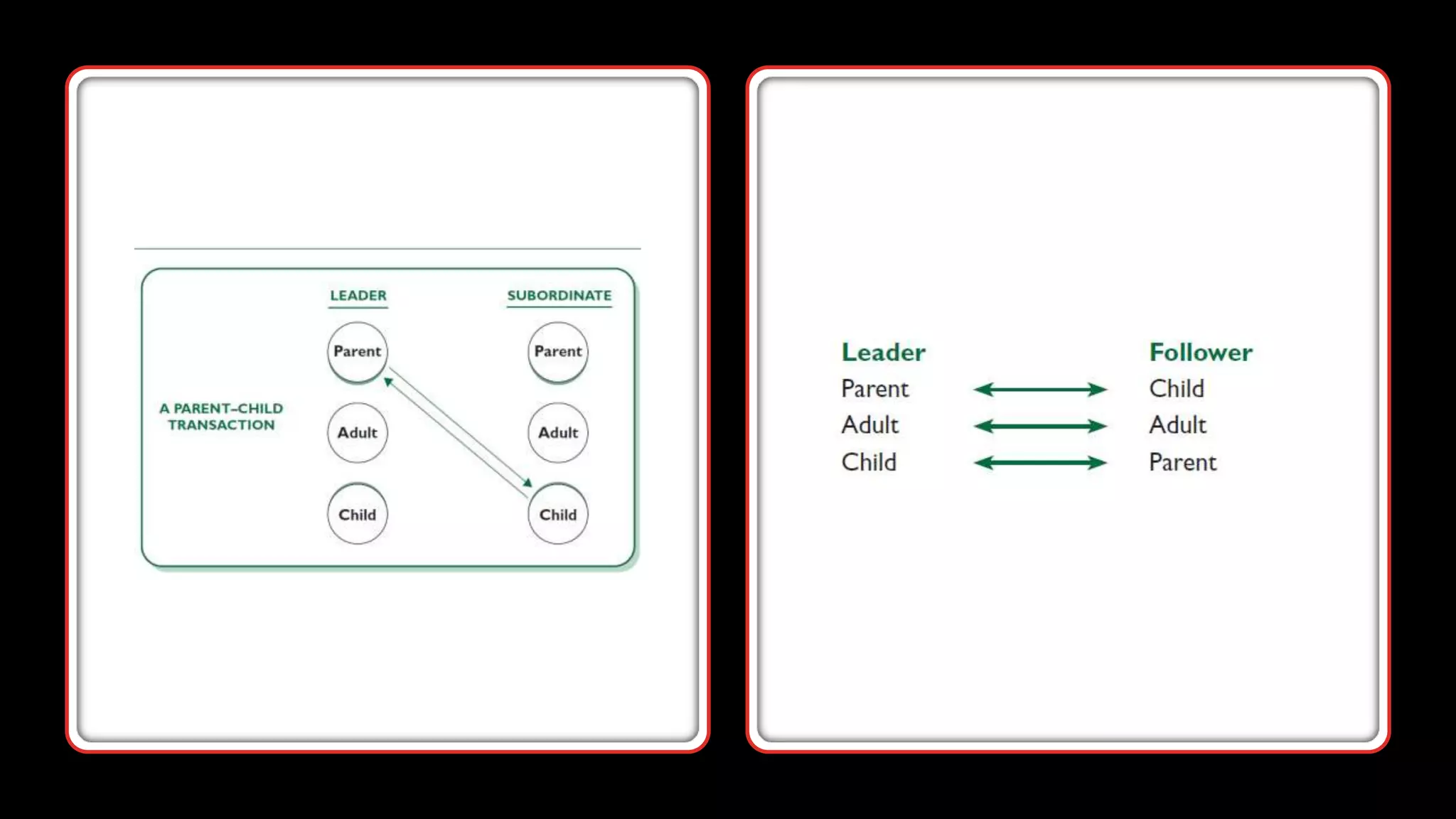
Suppose the leader is primarily an extravert and is dealing with an introverted
Follower!!
Intuition leader and a sensor follower!!
As can be seen from these examples, an understanding and awareness of psychological preferences
and types can be useful in communicating effectively and getting work done. The differences between the
types can lead to frustration and perhaps antagonism.
HOW DOES THE PSYCHODYNAMIC APPROACH
WORK?
The primary aim of the psychodynamic approach is to raise the awareness of leaders and followers to their
own personality types and the implications of those types on work and relationship
STRENGTHS
The greatest strength of the psychodynamic approach is that it results in an
analysis of the relationship between the leader and the follower
Another strength of the psychodynamic approach is that it emphasizes
the need for awareness on the part of the leader. That awareness is obtained
by bringing it into consciousness and dealing with ego states or psychological
types. By being knowledgeable about these issues, the leader comes to
understand his or her reactions to subordinates’ actions and to see why
followers react as they do to certain actions by the leader. The ability to
understand actions and the responses they produce allows the leader to
control these actions.
CRITICISMS
based on clinical observation and treatment of people with serious mental difficulties
It does not take into account organizational factors.
PSYCHODYNAMIC    APPROACH.pptx

PSYCHODYNAMIC APPROACH.pptx

  • 1.
  • 2.
    DESCRIPTION The psychodynamic approachconsists of several different ways of looking at leadership. There is no single model or theory. One fundamental concept underlies the psychodynamic approach: Personality
  • 3.
    Although it focuseson the personality of the leader and of followers, the psychodynamic approach ultimately is a way to look at the relationship between the leader and follower.
  • 4.
    Assumptions personality characteristics ofindividuals, being deeply ingrained, are very difficult to change in any significant way people have motives and feelings that are beneath immediate awareness—that is, in the unconscious. Thus, a person’s behavior results from observable actions and responses and the emotional residue of prior experiences.
  • 5.
    The psychodynamic approachbegins with an examination of the roots of the individual in the family. Our first experience with leadership occurs the day we are born. Mom and Dad, or those who are our primary caregivers, become our leaders The ego state and the conflict between the 3 ego inside us
  • 7.
    Eric Berne andTransactional Analysis A unified system of individual and social psychiatry. The important aspect of that title is the notion of social psychiatry, one that focuses not only on the individual but also on one’s relationship with others. There are three ego states in TA: parent, adult, and child
  • 8.
    • In afurther development of TA, the parent and child ego states have been subdivided so that a person can be in either a controlling or a nurturing parent state Egogram
  • 10.
    Sigmund Freud andPersonality Types The three personality types Freud offered were erotic, obsessive, and narcissistic. Erich Fromm subsequently added a fourth: marketing
  • 11.
    The erotic personality •seeks to love and be loved. • enjoys talking with others for the simple pleasure of • Enjoy having a conversation and getting to know someone. • want the group or team to become a close-knit family of nice people • who get along. • dependent and needy.
  • 12.
    obsessive personality • liveup to standards • follow rules, and obey a strict conscience • stability rather than acceptance and liking. • following the rules and regulations of society and the organization • having a strong conscience • This kind of person searches for ways • to improve, and particularly to become more knowledgeable and competent. • can be very aggressive and domineering. • They believe they are right and do not want to be questioned.
  • 13.
    narcissistic personality • Maccobystressed the need to clearly set the narcissist apart from egotistical or egoistic • The narcissist is not vain and does not attempt to impress, but takes pride in and will talk about actual accomplishments. In fact, pointed out that one of the important characteristics of the narcissist is • self-directed. On the positive side • clear vision of what to do and does not take into account what other people say or do in the pursuit of that vision.
  • 14.
    The marketing personality •highly adaptable • align themselves with the right people and situations. • Marketers easily adapt to changes in society • good at facilitating and networking, and at using and enjoying the process of collaboration in order to achieve consensus.
  • 15.
    Maccoby distinguished betweenproductive and unproductive versions of each type. There can be productive erotic, unproductive obsessives, and productive marketing types, or their opposites. five key elements to define the productive free and not dependent, active or proactive, understands his or her own situation and has a purpose in life. Maccoby (2003) added perseverance to the list of characteristics of a productive person. At the other end of the spectrum are unproductive people, characterized as limited and averse to risk, irrational, reactive, superficial, aimless, and uncommitted.
  • 16.
    Maccoby sensed thatthe best executives were productive narcissists. Why do we need productive narcissists and when?
  • 17.
    Strengths and Weaknessesof the Productive Narcissist
  • 18.
    Changes in SocialCharacter The net result of the shift from the bureaucratic to the interactive social character is that persons in organizations no longer want to be followers but rather want to be collaborators in a joint effort with their leaders
  • 19.
    Carl Jung andPersonality Types Based on Four Dimensions The first concerns where a person derives her or his energy (either internally or externally). The second involves the way in which a person gathers information (either in a precise, sequential way or in a more intuitive and random way). The third is the way in which a person makes decisions (either rationally and factually or in a subjective and personal way). The fourth concerns the difference between a person who plans and is organized and one who is more spontaneous and pliant.
  • 20.
    These became thebasis of the classification of types • Extraversion versus introversion • Thinking versus feeling • Judging versus perceiving • Sensing versus intuiting
  • 22.
    Dealing With Followers! Suppose theleader is primarily an extravert and is dealing with an introverted Follower!! Intuition leader and a sensor follower!! As can be seen from these examples, an understanding and awareness of psychological preferences and types can be useful in communicating effectively and getting work done. The differences between the types can lead to frustration and perhaps antagonism.
  • 23.
    HOW DOES THEPSYCHODYNAMIC APPROACH WORK? The primary aim of the psychodynamic approach is to raise the awareness of leaders and followers to their own personality types and the implications of those types on work and relationship
  • 24.
    STRENGTHS The greatest strengthof the psychodynamic approach is that it results in an analysis of the relationship between the leader and the follower Another strength of the psychodynamic approach is that it emphasizes the need for awareness on the part of the leader. That awareness is obtained by bringing it into consciousness and dealing with ego states or psychological types. By being knowledgeable about these issues, the leader comes to understand his or her reactions to subordinates’ actions and to see why followers react as they do to certain actions by the leader. The ability to understand actions and the responses they produce allows the leader to control these actions. CRITICISMS based on clinical observation and treatment of people with serious mental difficulties It does not take into account organizational factors.