z
CHELATING AGENTS
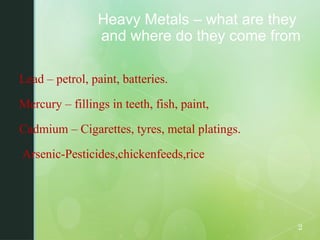
Heavy Metals – what are they
and where do they come from
Lead – petrol, paint, batteries.
Mercury – fillings in teeth, fish, paint,
Cadmium – Cigarettes, tyres, metal platings.
Arsenic-Pesticides,chickenfeeds,rice
2
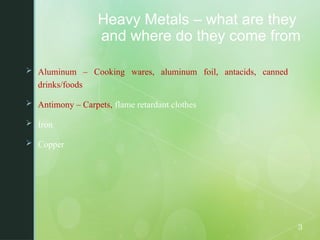
Heavy Metals – what are they
and where do they come from
 Aluminum – Cooking wares, aluminum foil, antacids, canned
drinks/foods
 Antimony – Carpets, flame retardant clothes
 Iron
 Copper
3
z
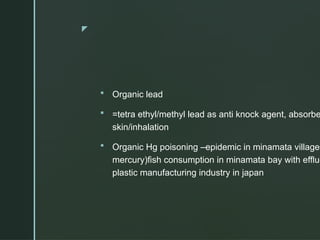
 Organic lead
 =tetra ethyl/methyl lead as anti knock agent, absorbe
skin/inhalation
 Organic Hg poisoning –epidemic in minamata village(
mercury)fish consumption in minamata bay with efflue
plastic manufacturing industry in japan
z
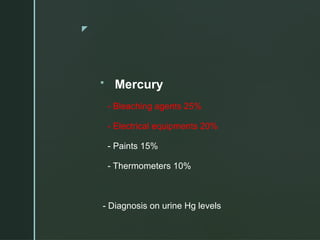
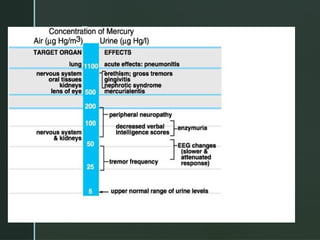
 Mercury
- Bleaching agents 25%
- Electrical equipments 20%
- Paints 15%
- Thermometers 10%
- Diagnosis on urine Hg levels
z
z
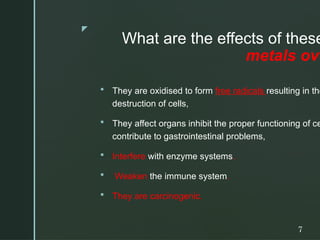
What are the effects of these
metals ove
 They are oxidised to form free radicals resulting in the
destruction of cells,
 They affect organs inhibit the proper functioning of ce
contribute to gastrointestinal problems,
 Interfere with enzyme systems.
 Weaken the immune system.
 They are carcinogenic.
7
z
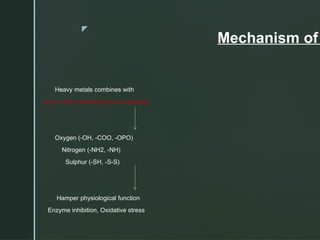
Mechanism of
Heavy metals combines with
one or more reactive groups (Ligands)
Oxygen (-OH, -COO, -OPO)
Nitrogen (-NH2, -NH)
Sulphur (-SH, -S-S)
Hamper physiological function
Enzyme inhibition, Oxidative stress
z
Chelating agents forms
complexes with heavy metals
Stable Chelates
Nontoxic, Easily excreted
( Greek Chele – the compound that holds metal like a
)
z
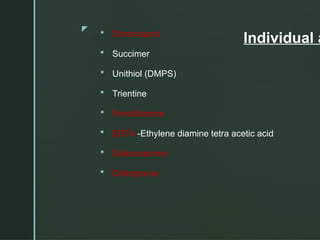
Individual a
 Dimercaprol
 Succimer
 Unithiol (DMPS)
 Trientine
 Penicillamine
 EDTA -Ethylene diamine tetra acetic acid
 Deferoxamine
 Deferiprone
z
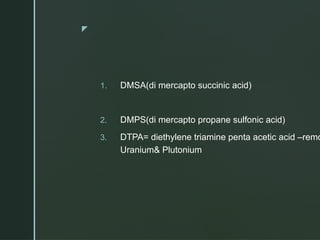
1. DMSA(di mercapto succinic acid)
2. DMPS(di mercapto propane sulfonic acid)
3. DTPA= diethylene triamine penta acetic acid –remo
Uranium& Plutonium
z
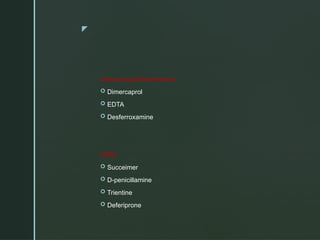
Intramuscular/Intravenous
 Dimercaprol
 EDTA
 Desferroxamine
ORAL
 Succeimer
 D-penicillamine
 Trientine
 Deferiprone
z
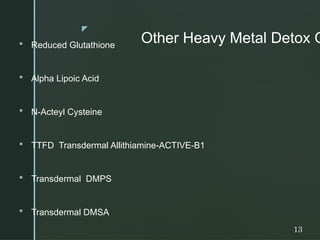
Other Heavy Metal Detox O
 Reduced Glutathione
 Alpha Lipoic Acid
 N-Acteyl Cysteine
 TTFD Transdermal Allithiamine-ACTIVE-B1
 Transdermal DMPS
 Transdermal DMSA
13
z
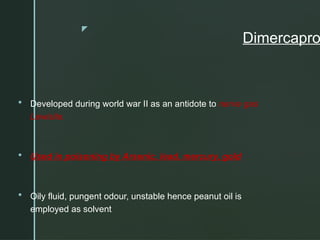
Dimercapro
 Developed during world war II as an antidote to nerve gas
Lewisite.
 Used in poisoning by Arsenic, lead, mercury, gold
 Oily fluid, pungent odour, unstable hence peanut oil is
employed as solvent
z
 Forms chelation complex between its sulfhydryl groups and
heavy metal, and excreted.
 High incidence of S/E- hypertension, tachycardia, nausea,
headache, salivation, lacrimation, pain at injection site.
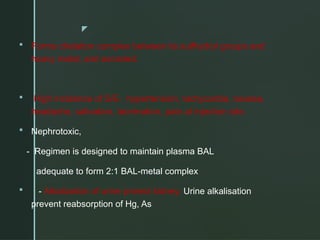
 Nephrotoxic,
- Regimen is designed to maintain plasma BAL
adequate to form 2:1 BAL-metal complex
 - Alkalization of urine protect kidney. Urine alkalisation
prevent reabsorption of Hg, As
z
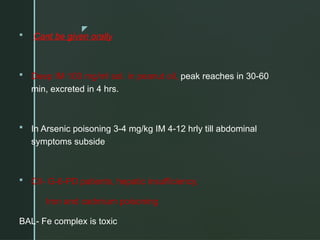
 Cant be given orally
 Deep IM 100 mg/ml sol. in peanut oil, peak reaches in 30-60
min, excreted in 4 hrs.
 In Arsenic poisoning 3-4 mg/kg IM 4-12 hrly till abdominal
symptoms subside
 C/I- G-6-PD patients, hepatic insufficiency,
Iron and cadmium poisoning
BAL- Fe complex is toxic
z
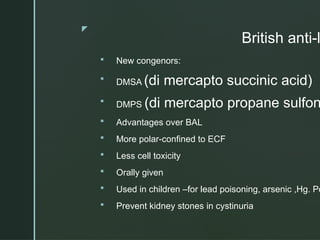
British anti-l
 New congenors:
 DMSA (di mercapto succinic acid)
 DMPS (di mercapto propane sulfon
 Advantages over BAL
 More polar-confined to ECF
 Less cell toxicity
 Orally given
 Used in children –for lead poisoning, arsenic ,Hg. Po
 Prevent kidney stones in cystinuria
z
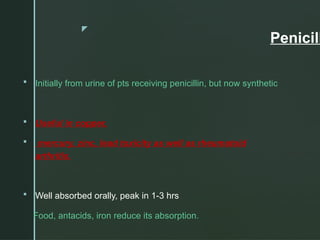
Penicill
 Initially from urine of pts receiving penicillin, but now synthetic
 Useful in copper,
 mercury, zinc, lead toxicity as well as rheumatoid
arthritis.
 Well absorbed orally, peak in 1-3 hrs
Food, antacids, iron reduce its absorption.
z
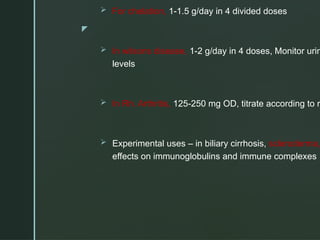
 For chelation, 1-1.5 g/day in 4 divided doses
 In wilsons disease, 1-2 g/day in 4 doses, Monitor urin
levels
 In Rh. Arthritis, 125-250 mg OD, titrate according to r
 Experimental uses – in biliary cirrhosis, scleroderma,
effects on immunoglobulins and immune complexes
z
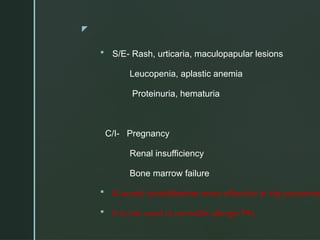
 S/E- Rash, urticaria, maculopapular lesions
Leucopenia, aplastic anemia
Proteinuria, hematuria
C/I- Pregnancy
Renal insufficiency
Bone marrow failure
 N-acetyl penicillamine more effective in Hg poisoning
 It is not used in penicillin allergic Pts
z
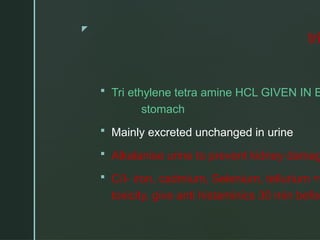
tri
 Tri ethylene tetra amine HCL GIVEN IN E
stomach
 Mainly excreted unchanged in urine
 Alkalanise urine to prevent kidney damag
 C/I- iron, cadmium, Selenium, tellurium =
toxicity, give anti histaminics 30 min befor
z
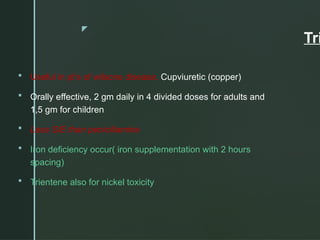
Tri
 Useful in pt’s of wilsons disease. Cupviuretic (copper)
 Orally effective, 2 gm daily in 4 divided doses for adults and
1,5 gm for children
 Less S/E than penicillamine
 Iron deficiency occur( iron supplementation with 2 hours
spacing)
 Trientene also for nickel toxicity
z
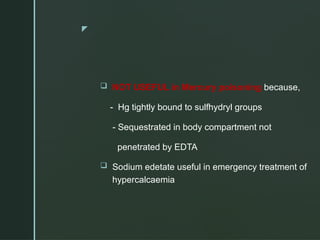
 NOT USEFUL in Mercury poisoning because,
- Hg tightly bound to sulfhydryl groups
- Sequestrated in body compartment not
penetrated by EDTA
 Sodium edetate useful in emergency treatment of
hypercalcaemia
z
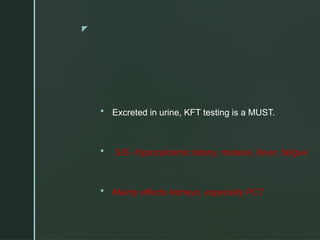
 Excreted in urine, KFT testing is a MUST.
 S/E- Hypocalcemic tetany, malaise, fever, fatigue
 Mainly affects kidneys, especially PCT
z
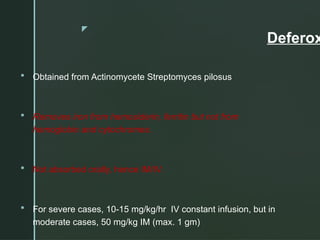
Deferox
 Obtained from Actinomycete Streptomyces pilosus
 Removes iron from hemosiderin, ferritin but not from
hemoglobin and cytochromes.
 Not absorbed orally, hence IM/IV.
 For severe cases, 10-15 mg/kg/hr IV constant infusion, but in
moderate cases, 50 mg/kg IM (max. 1 gm)
z
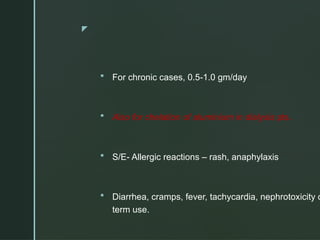
 For chronic cases, 0.5-1.0 gm/day
 Also for chelation of aluminium in dialysis pts.
 S/E- Allergic reactions – rash, anaphylaxis
 Diarrhea, cramps, fever, tachycardia, nephrotoxicity o
term use.

prsentation for presenting allllllllllllll

  • 1.
  • 2.
    Heavy Metals –what are they and where do they come from Lead – petrol, paint, batteries. Mercury – fillings in teeth, fish, paint, Cadmium – Cigarettes, tyres, metal platings. Arsenic-Pesticides,chickenfeeds,rice 2
  • 3.
    Heavy Metals –what are they and where do they come from  Aluminum – Cooking wares, aluminum foil, antacids, canned drinks/foods  Antimony – Carpets, flame retardant clothes  Iron  Copper 3
  • 4.
    z  Organic lead =tetra ethyl/methyl lead as anti knock agent, absorbe skin/inhalation  Organic Hg poisoning –epidemic in minamata village( mercury)fish consumption in minamata bay with efflue plastic manufacturing industry in japan
  • 5.
    z  Mercury - Bleachingagents 25% - Electrical equipments 20% - Paints 15% - Thermometers 10% - Diagnosis on urine Hg levels
  • 6.
  • 7.
    z What are theeffects of these metals ove  They are oxidised to form free radicals resulting in the destruction of cells,  They affect organs inhibit the proper functioning of ce contribute to gastrointestinal problems,  Interfere with enzyme systems.  Weaken the immune system.  They are carcinogenic. 7
  • 8.
    z Mechanism of Heavy metalscombines with one or more reactive groups (Ligands) Oxygen (-OH, -COO, -OPO) Nitrogen (-NH2, -NH) Sulphur (-SH, -S-S) Hamper physiological function Enzyme inhibition, Oxidative stress
  • 9.
    z Chelating agents forms complexeswith heavy metals Stable Chelates Nontoxic, Easily excreted ( Greek Chele – the compound that holds metal like a )
  • 10.
    z Individual a  Dimercaprol Succimer  Unithiol (DMPS)  Trientine  Penicillamine  EDTA -Ethylene diamine tetra acetic acid  Deferoxamine  Deferiprone
  • 11.
    z 1. DMSA(di mercaptosuccinic acid) 2. DMPS(di mercapto propane sulfonic acid) 3. DTPA= diethylene triamine penta acetic acid –remo Uranium& Plutonium
  • 12.
    z Intramuscular/Intravenous  Dimercaprol  EDTA Desferroxamine ORAL  Succeimer  D-penicillamine  Trientine  Deferiprone
  • 13.
    z Other Heavy MetalDetox O  Reduced Glutathione  Alpha Lipoic Acid  N-Acteyl Cysteine  TTFD Transdermal Allithiamine-ACTIVE-B1  Transdermal DMPS  Transdermal DMSA 13
  • 14.
    z Dimercapro  Developed duringworld war II as an antidote to nerve gas Lewisite.  Used in poisoning by Arsenic, lead, mercury, gold  Oily fluid, pungent odour, unstable hence peanut oil is employed as solvent
  • 15.
    z  Forms chelationcomplex between its sulfhydryl groups and heavy metal, and excreted.  High incidence of S/E- hypertension, tachycardia, nausea, headache, salivation, lacrimation, pain at injection site.  Nephrotoxic, - Regimen is designed to maintain plasma BAL adequate to form 2:1 BAL-metal complex  - Alkalization of urine protect kidney. Urine alkalisation prevent reabsorption of Hg, As
  • 16.
    z  Cant begiven orally  Deep IM 100 mg/ml sol. in peanut oil, peak reaches in 30-60 min, excreted in 4 hrs.  In Arsenic poisoning 3-4 mg/kg IM 4-12 hrly till abdominal symptoms subside  C/I- G-6-PD patients, hepatic insufficiency, Iron and cadmium poisoning BAL- Fe complex is toxic
  • 17.
    z British anti-l  Newcongenors:  DMSA (di mercapto succinic acid)  DMPS (di mercapto propane sulfon  Advantages over BAL  More polar-confined to ECF  Less cell toxicity  Orally given  Used in children –for lead poisoning, arsenic ,Hg. Po  Prevent kidney stones in cystinuria
  • 18.
    z Penicill  Initially fromurine of pts receiving penicillin, but now synthetic  Useful in copper,  mercury, zinc, lead toxicity as well as rheumatoid arthritis.  Well absorbed orally, peak in 1-3 hrs Food, antacids, iron reduce its absorption.
  • 19.
    z  For chelation,1-1.5 g/day in 4 divided doses  In wilsons disease, 1-2 g/day in 4 doses, Monitor urin levels  In Rh. Arthritis, 125-250 mg OD, titrate according to r  Experimental uses – in biliary cirrhosis, scleroderma, effects on immunoglobulins and immune complexes
  • 20.
    z  S/E- Rash,urticaria, maculopapular lesions Leucopenia, aplastic anemia Proteinuria, hematuria C/I- Pregnancy Renal insufficiency Bone marrow failure  N-acetyl penicillamine more effective in Hg poisoning  It is not used in penicillin allergic Pts
  • 21.
    z tri  Tri ethylenetetra amine HCL GIVEN IN E stomach  Mainly excreted unchanged in urine  Alkalanise urine to prevent kidney damag  C/I- iron, cadmium, Selenium, tellurium = toxicity, give anti histaminics 30 min befor
  • 22.
    z Tri  Useful inpt’s of wilsons disease. Cupviuretic (copper)  Orally effective, 2 gm daily in 4 divided doses for adults and 1,5 gm for children  Less S/E than penicillamine  Iron deficiency occur( iron supplementation with 2 hours spacing)  Trientene also for nickel toxicity
  • 23.
    z  NOT USEFULin Mercury poisoning because, - Hg tightly bound to sulfhydryl groups - Sequestrated in body compartment not penetrated by EDTA  Sodium edetate useful in emergency treatment of hypercalcaemia
  • 24.
    z  Excreted inurine, KFT testing is a MUST.  S/E- Hypocalcemic tetany, malaise, fever, fatigue  Mainly affects kidneys, especially PCT
  • 25.
    z Deferox  Obtained fromActinomycete Streptomyces pilosus  Removes iron from hemosiderin, ferritin but not from hemoglobin and cytochromes.  Not absorbed orally, hence IM/IV.  For severe cases, 10-15 mg/kg/hr IV constant infusion, but in moderate cases, 50 mg/kg IM (max. 1 gm)
  • 26.
    z  For chroniccases, 0.5-1.0 gm/day  Also for chelation of aluminium in dialysis pts.  S/E- Allergic reactions – rash, anaphylaxis  Diarrhea, cramps, fever, tachycardia, nephrotoxicity o term use.

Editor's Notes