Study Guide
• How do hormones regulate adenylyl cyclase
activity? PLC activity?
• Describe the mechanism of regulation of PKA by
cAMP
• Contrast diabetes mellitus type I and type II
• Describe the architecture of insulin and the insulin
receptor
• How does insulin activate the Raf-MEK-ERK
pathway?
• How does glucagon produce hyperglycemia?
• How does one treat diabetic hypoglycemia?
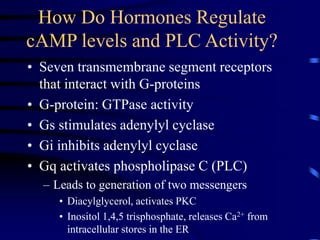
How Do Hormones Regulate
cAMP levels and PLC Activity?
• Seven transmembrane segment receptors
that interact with G-proteins
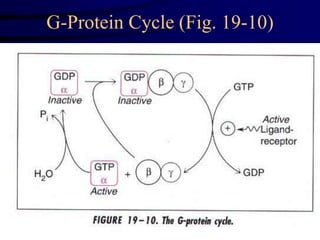
• G-protein: GTPase activity
• Gs stimulates adenylyl cyclase
• Gi inhibits adenylyl cyclase
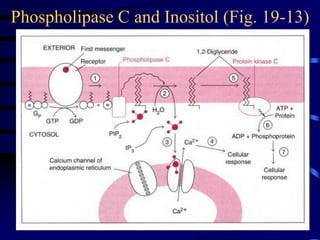
• Gq activates phospholipase C (PLC)
– Leads to generation of two messengers
• Diacylglycerol, activates PKC
• Inositol 1,4,5 trisphosphate, releases Ca2+ from
intracellular stores in the ER
G-Protein Cycle (Fig. 19-10)
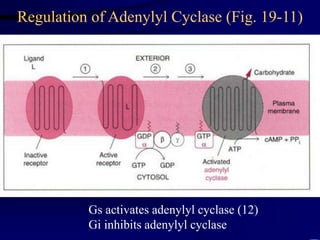
Regulation of Adenylyl Cyclase (Fig. 19-11)
Gs activates adenylyl cyclase (12)
Gi inhibits adenylyl cyclase
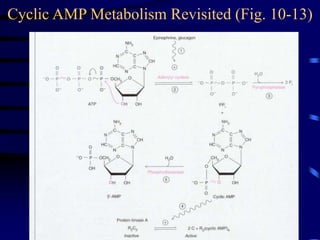
Cyclic AMP Metabolism Revisited (Fig. 10-13)
How Does Glucagon Lead to an Acute
Rise in Blood Glucose?
• Earl W. Sutherland, Jr. asked how does epinephrine
injection in dog lead to hyperglycemia?
– Epinephrine in dogs uses the beta adrenergic receptor and the
cAMP second messenger system (Sutherland’s system)
– Epinephrine in rats, mice, and humans works via the alpha receptor
and not by the cAMP protein kinase A cascade
• In liver, glucagon activates its receptor, Gs, and adenylyl
cyclase to increase cAMP and activate PKA; glucagon in
humans works the same as epinephrine in the dog
– This leads to a cascade that activates glycogen phosphorylase
– This leads to the inhibition of glycogen synthase
– Review Daniel Stewart’s presentation on 11 February 2004
The Protein Kinase Reaction
• ATP + protein 
phosphoprotein + ADP
• PKA is a serine/threonine
kinase
• It is a broad specificity enzyme
with many substrates
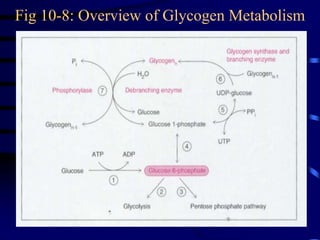
Fig 10-8: Overview of Glycogen Metabolism
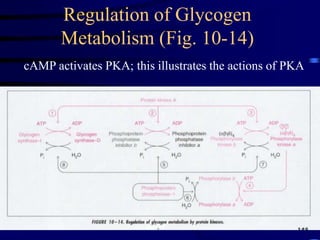
Regulation of Glycogen
Metabolism (Fig. 10-14)
cAMP activates PKA; this illustrates the actions of PKA
Phospholipase C and Inositol (Fig. 19-13)
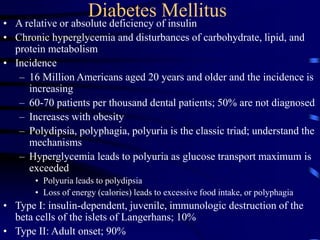
Diabetes Mellitus
• A relative or absolute deficiency of insulin
• Chronic hyperglycemia and disturbances of carbohydrate, lipid, and
protein metabolism
• Incidence
– 16 Million Americans aged 20 years and older and the incidence is
increasing
– 60-70 patients per thousand dental patients; 50% are not diagnosed
– Increases with obesity
– Polydipsia, polyphagia, polyuria is the classic triad; understand the
mechanisms
– Hyperglycemia leads to polyuria as glucose transport maximum is
exceeded
• Polyuria leads to polydipsia
• Loss of energy (calories) leads to excessive food intake, or polyphagia
• Type I: insulin-dependent, juvenile, immunologic destruction of the
beta cells of the islets of Langerhans; 10%
• Type II: Adult onset; 90%
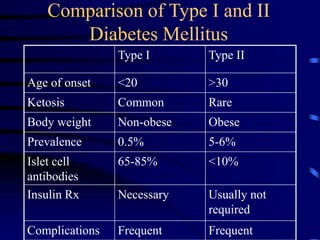
Comparison of Type I and II
Diabetes Mellitus
Type I Type II
Age of onset <20 >30
Ketosis Common Rare
Body weight Non-obese Obese
Prevalence 0.5% 5-6%
Islet cell
antibodies
65-85% <10%
Insulin Rx Necessary Usually not
required
Complications Frequent Frequent
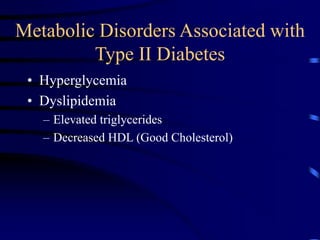
Metabolic Disorders Associated with
Type II Diabetes
• Hyperglycemia
• Dyslipidemia
– Elevated triglycerides
– Decreased HDL (Good Cholesterol)
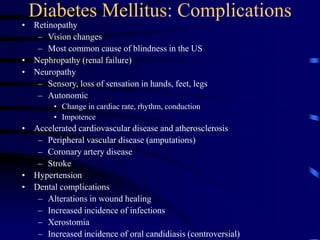
Diabetes Mellitus: Complications
• Retinopathy
– Vision changes
– Most common cause of blindness in the US
• Nephropathy (renal failure)
• Neuropathy
– Sensory, loss of sensation in hands, feet, legs
– Autonomic
• Change in cardiac rate, rhythm, conduction
• Impotence
• Accelerated cardiovascular disease and atherosclerosis
– Peripheral vascular disease (amputations)
– Coronary artery disease
– Stroke
• Hypertension
• Dental complications
– Alterations in wound healing
– Increased incidence of infections
– Xerostomia
– Increased incidence of oral candidiasis (controversial)
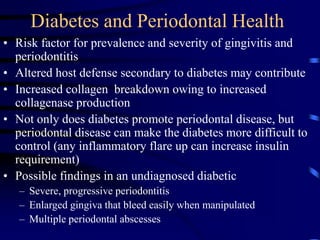
Diabetes and Periodontal Health
• Risk factor for prevalence and severity of gingivitis and
periodontitis
• Altered host defense secondary to diabetes may contribute
• Increased collagen breakdown owing to increased
collagenase production
• Not only does diabetes promote periodontal disease, but
periodontal disease can make the diabetes more difficult to
control (any inflammatory flare up can increase insulin
requirement)
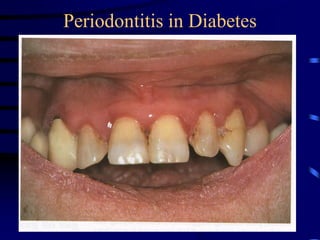
• Possible findings in an undiagnosed diabetic
– Severe, progressive periodontitis
– Enlarged gingiva that bleed easily when manipulated
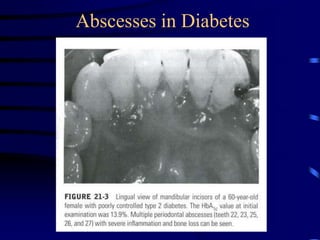
– Multiple periodontal abscesses
Abscesses in Diabetes
Periodontitis in Diabetes
What do I do with a patient suspected of having
diabetes?
• Ask whether the patient has experienced polydipsia, polyphagia, polyuria
– Probably will be negative, but you have to ask
– This classical triad is associated with type I diabetes more often than type II
diabetes
• Symptoms for type II diabetes include lethargy and fatigue
• Recent weight loss (paradoxical in an obese person)
• Family history, i.e., a parent or sibling with diabetes
• Refer to your sister-in-law, the internist
• Diagnosis
– Fasting blood glucose
• Normal < 110 mg/dL; diabetes > 126 mg/dL
– 2-hour serum glucose after 75 g of glucose PO
• <140 mg/dL; diabetes > 200 mg/dL
– Hemoglobin A1c
• Normal <6%; diabetes >7% (usually 10-15%)
– Glucosuria; this was noted by Dr. Thomas Willis (of the circle of Willis)
• The urine of the diabetic patient….the spirits of honey
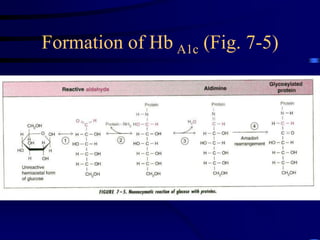
Formation of Hb A1c (Fig. 7-5)
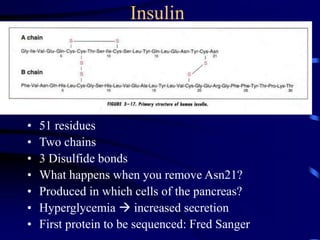
Insulin
• 51 residues
• Two chains
• 3 Disulfide bonds
• What happens when you remove Asn21?
• Produced in which cells of the pancreas?
• Hyperglycemia  increased secretion
• First protein to be sequenced: Fred Sanger
Insulin Receptor Protein-Tyrosine Kinase
• Insulin stimulates glucose uptake in muscle and fat,
glycogen synthesis, lipogenesis, and protein
synthesis, and insulin inhibits lipolysis, proteolysis,
and glycogenolysis
• Insulin receptor undergoes autophosphorylation and
phosphorylates IRS1-4 (Insulin receptor substrates
1-4), PI3 kinase binding protein, and Shc
• Expressed in almost all cells, but at much higher
levels in liver, fat, and muscle
• Insulin does not increase glucose transport into the
liver
Protein-Tyrosine Kinase (PTK) Cascades
• Initial step represents the activation of a PTK
• The enzyme is not active as a monomer; it must
dimerize
• There is transphosphorylation: A phosphorylates
A’, and A’ phosphorylates A to achieve activation
– These phosphotyrosines can function as docking sites
– Attraction of proteins to the docking sites can be
regulatory
• The PTK may phosphorylate other proteins that
can serve as docking sites, or they may activate or
inhibit activity
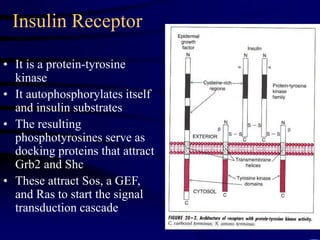
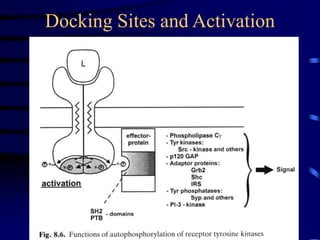
Insulin Receptor
• It is a protein-tyrosine
kinase
• It autophosphorylates itself
and insulin substrates
• The resulting
phosphotyrosines serve as
docking proteins that attract
Grb2 and Shc
• These attract Sos, a GEF,
and Ras to start the signal
transduction cascade
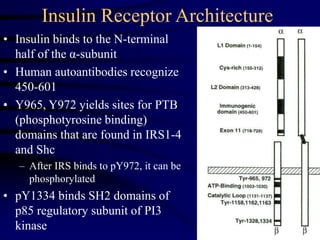
Insulin Receptor Architecture
• Insulin binds to the N-terminal
half of the α-subunit
• Human autoantibodies recognize
450-601
• Y965, Y972 yields sites for PTB
(phosphotyrosine binding)
domains that are found in IRS1-4
and Shc
– After IRS binds to pY972, it can be
phosphorylated
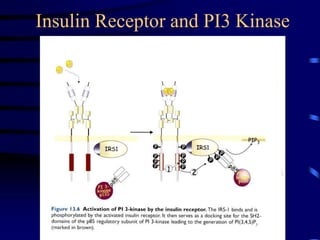
• pY1334 binds SH2 domains of
p85 regulatory subunit of PI3
kinase
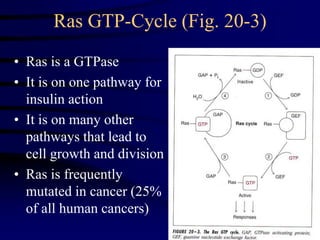
Ras GTP-Cycle (Fig. 20-3)
• Ras is a GTPase
• It is on one pathway for
insulin action
• It is on many other
pathways that lead to
cell growth and division
• Ras is frequently
mutated in cancer (25%
of all human cancers)
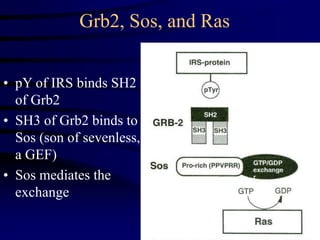
Grb2, Sos, and Ras
• pY of IRS binds SH2
of Grb2
• SH3 of Grb2 binds to
Sos (son of sevenless,
a GEF)
• Sos mediates the
exchange
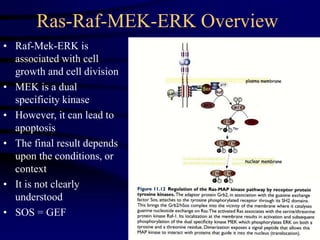
Ras-Raf-MEK-ERK Overview
• Raf-Mek-ERK is
associated with cell
growth and cell division
• MEK is a dual
specificity kinase
• However, it can lead to
apoptosis
• The final result depends
upon the conditions, or
context
• It is not clearly
understood
• SOS = GEF
Docking Sites and Activation
Insulin Receptor and PI3 Kinase
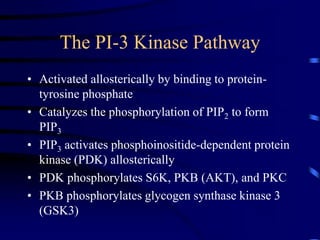
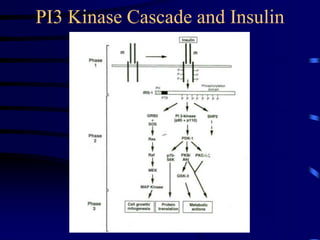
The PI-3 Kinase Pathway
• Activated allosterically by binding to protein-
tyrosine phosphate
• Catalyzes the phosphorylation of PIP2 to form
PIP3
• PIP3 activates phosphoinositide-dependent protein
kinase (PDK) allosterically
• PDK phosphorylates S6K, PKB (AKT), and PKC
• PKB phosphorylates glycogen synthase kinase 3
(GSK3)
PI3 Kinase Cascade and Insulin
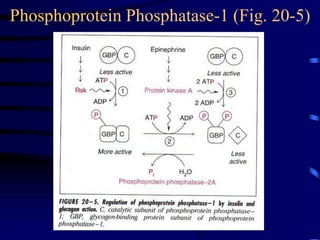
Phosphoprotein Phosphatase-1
• Insulin stimulates glycogenesis in muscle, but epinephrine
stimulates glycogenolysis
– Glycogenolyis (breakdown) is associated with
phosphorylation (the cascade)
– Glycogenesis (build up) is associated with
dephosphorylation
• Insulin promotes the dephosphorylation of glycogen
synthase and phosphorylase
– These reactions are catalyzed by the catalytic subunit of
PPase-1
– Insulin leads to the phosphorylation and activation of
PPase-1
– Epinephrine leads to the phosphorylation and
inactivation of PPase-1
Phosphoprotein Phosphatase-1 (Fig. 20-5)
Diabetes: the Glucagon/Insulin Ratio
• Glucagon
– Produced by the alpha cells of the islets of Langerhans
– Early preparations of “insulin” produced hyperglycemia followed by
hypoglycemia
• The hyperglycemic factor represented contamination
• This factor was purified, characterized, and re-named glucagon
– It produces hyperglycemia by at least three mechanisms
• It promotes glycogen breakdown as noted above
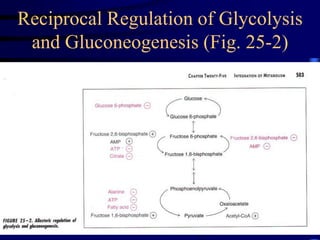
• It inhibits glycolysis and increases gluconeogenesis
– cAMP activates PKA, which phosphorylates fructose-6-phosphate-2-
kinase/fructose-2,6-bisphosphatase
– This decreases [fructose-2,6-bisphosphate]
» This removes a stimulant of glycolysis at the PFK step
» This removes an inhibitor of gluconeogenesis at the fructose-1,6-
bisphosphatase step
• PKA promotes transcription of PEP carboxykinase, an important enzyme
in gluconeogenesis
– The high ratio of glucagon/insulin action promotes
hyperglycemia
Regulation
of [Fructose
2,6-BP]
• Glucagon increases cAMP and PKA activity
• PKA increases Frc 2,6 BPase activity and decreases
[Frc 2,6 BP]
• Glycolysis decreased, gluconeogenesis increased
Fig 7-11
Reciprocal Regulation of Glycolysis
and Gluconeogenesis (Fig. 25-2)
Insulin Action
• Stimulates glucose transport into muscle, adipose
tissue, and many other cells EXCEPT liver
– This results from the recruitment of GLUT4 (of
GLUT1-GLUT7)
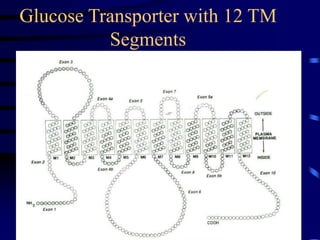
– Glucose transporters contains 12 transmembrane
segments
– Mechanism of recruitment is unclear
• It does not rely on new transporter synthesis
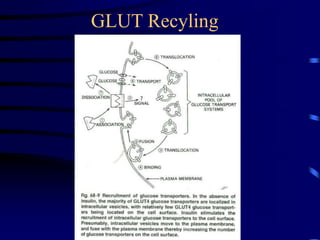
• GLUT4 associated with internal membranes fuses with the
plasma membrane
• Insulin promotes glycogen synthesis by inducing
the production of glycogen synthase
Glucose Transporter with 12 TM
Segments
GLUT Recyling
Diabetic Hypoglycemia
• One of the five most common dental emergencies
• Usually due to inadequate food intake
– Ask every person receiving insulin whether they have eaten prior
to Rx
– If the answer is no, provide food before providing Rx
• Characterized by confusion, agitation, anxiety, hostility (the previous
four can be described as “acting weird”), dizziness, tachycardia,
sweating, tremor
• Severe: loss of consciousness
• Make presumptive Dx of hypoglycemia
• Rx
– If conscious, give 15 g oral carbohydrate; 4-6 oz fruit juice or soda; hard candy;
usually respond in a few minutes
– If unable to take food by mouth, give 50% glucose IV (LSUHSC SOD)
– If unable to take food by mouth, give 1 mg glucagon sq or im (This is not
standard practice here.)
Angiotensin System
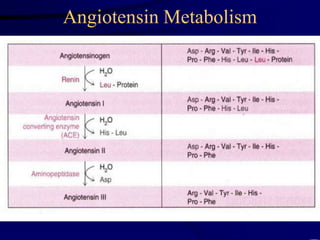
• Renin, a proteolytic enzyme, is released from the
juxtaglomerular (JG) cells of the kidney and
converts angiotensinogen to angiotensin I
• Angiotensin converting enzyme (ACE) catalyses the
conversion of angiotensin I to angiotensin II
– Angiotensin II is a potent vasoconstrictor and promotes
the formation of aldosterone (increases Na+ reabsorption)
Angiotensin Metabolism
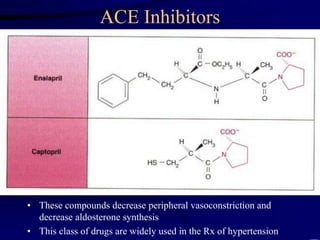
ACE Inhibitors
• These compounds decrease peripheral vasoconstriction and
decrease aldosterone synthesis
• This class of drugs are widely used in the Rx of hypertension
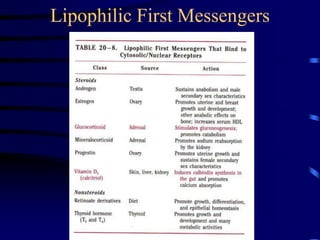
Lipophilic First Messengers
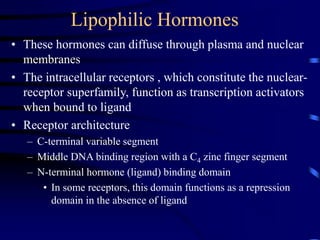
Lipophilic Hormones
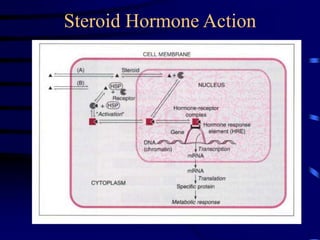
• These hormones can diffuse through plasma and nuclear
membranes
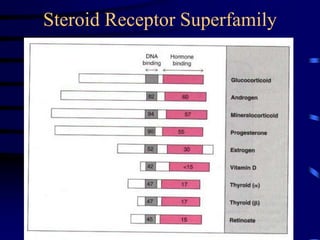
• The intracellular receptors , which constitute the nuclear-
receptor superfamily, function as transcription activators
when bound to ligand
• Receptor architecture
– C-terminal variable segment
– Middle DNA binding region with a C4 zinc finger segment
– N-terminal hormone (ligand) binding domain
• In some receptors, this domain functions as a repression
domain in the absence of ligand
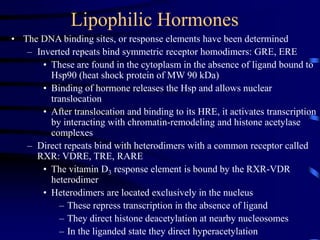
Lipophilic Hormones
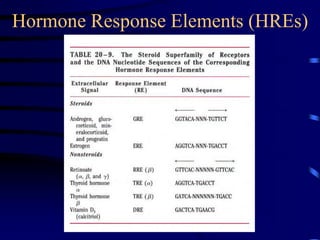
• The DNA binding sites, or response elements have been determined
– Inverted repeats bind symmetric receptor homodimers: GRE, ERE
• These are found in the cytoplasm in the absence of ligand bound to
Hsp90 (heat shock protein of MW 90 kDa)
• Binding of hormone releases the Hsp and allows nuclear
translocation
• After translocation and binding to its HRE, it activates transcription
by interacting with chromatin-remodeling and histone acetylase
complexes
– Direct repeats bind with heterodimers with a common receptor called
RXR: VDRE, TRE, RARE
• The vitamin D3 response element is bound by the RXR-VDR
heterodimer
• Heterodimers are located exclusively in the nucleus
– These repress transcription in the absence of ligand
– They direct histone deacetylation at nearby nucleosomes
– In the liganded state they direct hyperacetylation
Steroid Receptor Superfamily
Steroid Hormone Action
Hormone Response Elements (HREs)
The End
Biochemistry is fun!!!

insulin hormone - synthesis, moa, uses, adverse effects

  • 1.
    Study Guide • Howdo hormones regulate adenylyl cyclase activity? PLC activity? • Describe the mechanism of regulation of PKA by cAMP • Contrast diabetes mellitus type I and type II • Describe the architecture of insulin and the insulin receptor • How does insulin activate the Raf-MEK-ERK pathway? • How does glucagon produce hyperglycemia? • How does one treat diabetic hypoglycemia?
  • 2.
    How Do HormonesRegulate cAMP levels and PLC Activity? • Seven transmembrane segment receptors that interact with G-proteins • G-protein: GTPase activity • Gs stimulates adenylyl cyclase • Gi inhibits adenylyl cyclase • Gq activates phospholipase C (PLC) – Leads to generation of two messengers • Diacylglycerol, activates PKC • Inositol 1,4,5 trisphosphate, releases Ca2+ from intracellular stores in the ER
  • 3.
  • 4.
    Regulation of AdenylylCyclase (Fig. 19-11) Gs activates adenylyl cyclase (12) Gi inhibits adenylyl cyclase
  • 5.
    Cyclic AMP MetabolismRevisited (Fig. 10-13)
  • 6.
    How Does GlucagonLead to an Acute Rise in Blood Glucose? • Earl W. Sutherland, Jr. asked how does epinephrine injection in dog lead to hyperglycemia? – Epinephrine in dogs uses the beta adrenergic receptor and the cAMP second messenger system (Sutherland’s system) – Epinephrine in rats, mice, and humans works via the alpha receptor and not by the cAMP protein kinase A cascade • In liver, glucagon activates its receptor, Gs, and adenylyl cyclase to increase cAMP and activate PKA; glucagon in humans works the same as epinephrine in the dog – This leads to a cascade that activates glycogen phosphorylase – This leads to the inhibition of glycogen synthase – Review Daniel Stewart’s presentation on 11 February 2004
  • 7.
    The Protein KinaseReaction • ATP + protein  phosphoprotein + ADP • PKA is a serine/threonine kinase • It is a broad specificity enzyme with many substrates
  • 8.
    Fig 10-8: Overviewof Glycogen Metabolism
  • 9.
    Regulation of Glycogen Metabolism(Fig. 10-14) cAMP activates PKA; this illustrates the actions of PKA
  • 10.
    Phospholipase C andInositol (Fig. 19-13)
  • 11.
    Diabetes Mellitus • Arelative or absolute deficiency of insulin • Chronic hyperglycemia and disturbances of carbohydrate, lipid, and protein metabolism • Incidence – 16 Million Americans aged 20 years and older and the incidence is increasing – 60-70 patients per thousand dental patients; 50% are not diagnosed – Increases with obesity – Polydipsia, polyphagia, polyuria is the classic triad; understand the mechanisms – Hyperglycemia leads to polyuria as glucose transport maximum is exceeded • Polyuria leads to polydipsia • Loss of energy (calories) leads to excessive food intake, or polyphagia • Type I: insulin-dependent, juvenile, immunologic destruction of the beta cells of the islets of Langerhans; 10% • Type II: Adult onset; 90%
  • 12.
    Comparison of TypeI and II Diabetes Mellitus Type I Type II Age of onset <20 >30 Ketosis Common Rare Body weight Non-obese Obese Prevalence 0.5% 5-6% Islet cell antibodies 65-85% <10% Insulin Rx Necessary Usually not required Complications Frequent Frequent
  • 13.
    Metabolic Disorders Associatedwith Type II Diabetes • Hyperglycemia • Dyslipidemia – Elevated triglycerides – Decreased HDL (Good Cholesterol)
  • 14.
    Diabetes Mellitus: Complications •Retinopathy – Vision changes – Most common cause of blindness in the US • Nephropathy (renal failure) • Neuropathy – Sensory, loss of sensation in hands, feet, legs – Autonomic • Change in cardiac rate, rhythm, conduction • Impotence • Accelerated cardiovascular disease and atherosclerosis – Peripheral vascular disease (amputations) – Coronary artery disease – Stroke • Hypertension • Dental complications – Alterations in wound healing – Increased incidence of infections – Xerostomia – Increased incidence of oral candidiasis (controversial)
  • 15.
    Diabetes and PeriodontalHealth • Risk factor for prevalence and severity of gingivitis and periodontitis • Altered host defense secondary to diabetes may contribute • Increased collagen breakdown owing to increased collagenase production • Not only does diabetes promote periodontal disease, but periodontal disease can make the diabetes more difficult to control (any inflammatory flare up can increase insulin requirement) • Possible findings in an undiagnosed diabetic – Severe, progressive periodontitis – Enlarged gingiva that bleed easily when manipulated – Multiple periodontal abscesses
  • 16.
  • 17.
  • 18.
    What do Ido with a patient suspected of having diabetes? • Ask whether the patient has experienced polydipsia, polyphagia, polyuria – Probably will be negative, but you have to ask – This classical triad is associated with type I diabetes more often than type II diabetes • Symptoms for type II diabetes include lethargy and fatigue • Recent weight loss (paradoxical in an obese person) • Family history, i.e., a parent or sibling with diabetes • Refer to your sister-in-law, the internist • Diagnosis – Fasting blood glucose • Normal < 110 mg/dL; diabetes > 126 mg/dL – 2-hour serum glucose after 75 g of glucose PO • <140 mg/dL; diabetes > 200 mg/dL – Hemoglobin A1c • Normal <6%; diabetes >7% (usually 10-15%) – Glucosuria; this was noted by Dr. Thomas Willis (of the circle of Willis) • The urine of the diabetic patient….the spirits of honey
  • 19.
    Formation of HbA1c (Fig. 7-5)
  • 20.
    Insulin • 51 residues •Two chains • 3 Disulfide bonds • What happens when you remove Asn21? • Produced in which cells of the pancreas? • Hyperglycemia  increased secretion • First protein to be sequenced: Fred Sanger
  • 21.
    Insulin Receptor Protein-TyrosineKinase • Insulin stimulates glucose uptake in muscle and fat, glycogen synthesis, lipogenesis, and protein synthesis, and insulin inhibits lipolysis, proteolysis, and glycogenolysis • Insulin receptor undergoes autophosphorylation and phosphorylates IRS1-4 (Insulin receptor substrates 1-4), PI3 kinase binding protein, and Shc • Expressed in almost all cells, but at much higher levels in liver, fat, and muscle • Insulin does not increase glucose transport into the liver
  • 22.
    Protein-Tyrosine Kinase (PTK)Cascades • Initial step represents the activation of a PTK • The enzyme is not active as a monomer; it must dimerize • There is transphosphorylation: A phosphorylates A’, and A’ phosphorylates A to achieve activation – These phosphotyrosines can function as docking sites – Attraction of proteins to the docking sites can be regulatory • The PTK may phosphorylate other proteins that can serve as docking sites, or they may activate or inhibit activity
  • 23.
    Insulin Receptor • Itis a protein-tyrosine kinase • It autophosphorylates itself and insulin substrates • The resulting phosphotyrosines serve as docking proteins that attract Grb2 and Shc • These attract Sos, a GEF, and Ras to start the signal transduction cascade
  • 24.
    Insulin Receptor Architecture •Insulin binds to the N-terminal half of the α-subunit • Human autoantibodies recognize 450-601 • Y965, Y972 yields sites for PTB (phosphotyrosine binding) domains that are found in IRS1-4 and Shc – After IRS binds to pY972, it can be phosphorylated • pY1334 binds SH2 domains of p85 regulatory subunit of PI3 kinase
  • 25.
    Ras GTP-Cycle (Fig.20-3) • Ras is a GTPase • It is on one pathway for insulin action • It is on many other pathways that lead to cell growth and division • Ras is frequently mutated in cancer (25% of all human cancers)
  • 26.
    Grb2, Sos, andRas • pY of IRS binds SH2 of Grb2 • SH3 of Grb2 binds to Sos (son of sevenless, a GEF) • Sos mediates the exchange
  • 27.
    Ras-Raf-MEK-ERK Overview • Raf-Mek-ERKis associated with cell growth and cell division • MEK is a dual specificity kinase • However, it can lead to apoptosis • The final result depends upon the conditions, or context • It is not clearly understood • SOS = GEF
  • 28.
  • 29.
  • 30.
    The PI-3 KinasePathway • Activated allosterically by binding to protein- tyrosine phosphate • Catalyzes the phosphorylation of PIP2 to form PIP3 • PIP3 activates phosphoinositide-dependent protein kinase (PDK) allosterically • PDK phosphorylates S6K, PKB (AKT), and PKC • PKB phosphorylates glycogen synthase kinase 3 (GSK3)
  • 31.
    PI3 Kinase Cascadeand Insulin
  • 32.
    Phosphoprotein Phosphatase-1 • Insulinstimulates glycogenesis in muscle, but epinephrine stimulates glycogenolysis – Glycogenolyis (breakdown) is associated with phosphorylation (the cascade) – Glycogenesis (build up) is associated with dephosphorylation • Insulin promotes the dephosphorylation of glycogen synthase and phosphorylase – These reactions are catalyzed by the catalytic subunit of PPase-1 – Insulin leads to the phosphorylation and activation of PPase-1 – Epinephrine leads to the phosphorylation and inactivation of PPase-1
  • 33.
  • 34.
    Diabetes: the Glucagon/InsulinRatio • Glucagon – Produced by the alpha cells of the islets of Langerhans – Early preparations of “insulin” produced hyperglycemia followed by hypoglycemia • The hyperglycemic factor represented contamination • This factor was purified, characterized, and re-named glucagon – It produces hyperglycemia by at least three mechanisms • It promotes glycogen breakdown as noted above • It inhibits glycolysis and increases gluconeogenesis – cAMP activates PKA, which phosphorylates fructose-6-phosphate-2- kinase/fructose-2,6-bisphosphatase – This decreases [fructose-2,6-bisphosphate] » This removes a stimulant of glycolysis at the PFK step » This removes an inhibitor of gluconeogenesis at the fructose-1,6- bisphosphatase step • PKA promotes transcription of PEP carboxykinase, an important enzyme in gluconeogenesis – The high ratio of glucagon/insulin action promotes hyperglycemia
  • 35.
    Regulation of [Fructose 2,6-BP] • Glucagonincreases cAMP and PKA activity • PKA increases Frc 2,6 BPase activity and decreases [Frc 2,6 BP] • Glycolysis decreased, gluconeogenesis increased Fig 7-11
  • 36.
    Reciprocal Regulation ofGlycolysis and Gluconeogenesis (Fig. 25-2)
  • 37.
    Insulin Action • Stimulatesglucose transport into muscle, adipose tissue, and many other cells EXCEPT liver – This results from the recruitment of GLUT4 (of GLUT1-GLUT7) – Glucose transporters contains 12 transmembrane segments – Mechanism of recruitment is unclear • It does not rely on new transporter synthesis • GLUT4 associated with internal membranes fuses with the plasma membrane • Insulin promotes glycogen synthesis by inducing the production of glycogen synthase
  • 38.
  • 39.
  • 40.
    Diabetic Hypoglycemia • Oneof the five most common dental emergencies • Usually due to inadequate food intake – Ask every person receiving insulin whether they have eaten prior to Rx – If the answer is no, provide food before providing Rx • Characterized by confusion, agitation, anxiety, hostility (the previous four can be described as “acting weird”), dizziness, tachycardia, sweating, tremor • Severe: loss of consciousness • Make presumptive Dx of hypoglycemia • Rx – If conscious, give 15 g oral carbohydrate; 4-6 oz fruit juice or soda; hard candy; usually respond in a few minutes – If unable to take food by mouth, give 50% glucose IV (LSUHSC SOD) – If unable to take food by mouth, give 1 mg glucagon sq or im (This is not standard practice here.)
  • 41.
    Angiotensin System • Renin,a proteolytic enzyme, is released from the juxtaglomerular (JG) cells of the kidney and converts angiotensinogen to angiotensin I • Angiotensin converting enzyme (ACE) catalyses the conversion of angiotensin I to angiotensin II – Angiotensin II is a potent vasoconstrictor and promotes the formation of aldosterone (increases Na+ reabsorption)
  • 42.
  • 43.
    ACE Inhibitors • Thesecompounds decrease peripheral vasoconstriction and decrease aldosterone synthesis • This class of drugs are widely used in the Rx of hypertension
  • 44.
  • 45.
    Lipophilic Hormones • Thesehormones can diffuse through plasma and nuclear membranes • The intracellular receptors , which constitute the nuclear- receptor superfamily, function as transcription activators when bound to ligand • Receptor architecture – C-terminal variable segment – Middle DNA binding region with a C4 zinc finger segment – N-terminal hormone (ligand) binding domain • In some receptors, this domain functions as a repression domain in the absence of ligand
  • 46.
    Lipophilic Hormones • TheDNA binding sites, or response elements have been determined – Inverted repeats bind symmetric receptor homodimers: GRE, ERE • These are found in the cytoplasm in the absence of ligand bound to Hsp90 (heat shock protein of MW 90 kDa) • Binding of hormone releases the Hsp and allows nuclear translocation • After translocation and binding to its HRE, it activates transcription by interacting with chromatin-remodeling and histone acetylase complexes – Direct repeats bind with heterodimers with a common receptor called RXR: VDRE, TRE, RARE • The vitamin D3 response element is bound by the RXR-VDR heterodimer • Heterodimers are located exclusively in the nucleus – These repress transcription in the absence of ligand – They direct histone deacetylation at nearby nucleosomes – In the liganded state they direct hyperacetylation
  • 47.
  • 48.
  • 49.
  • 50.