NRS 101
About Legal Issues
 Rights, responsibilities, scope of nursing practice
 As defined by state nursing practice acts
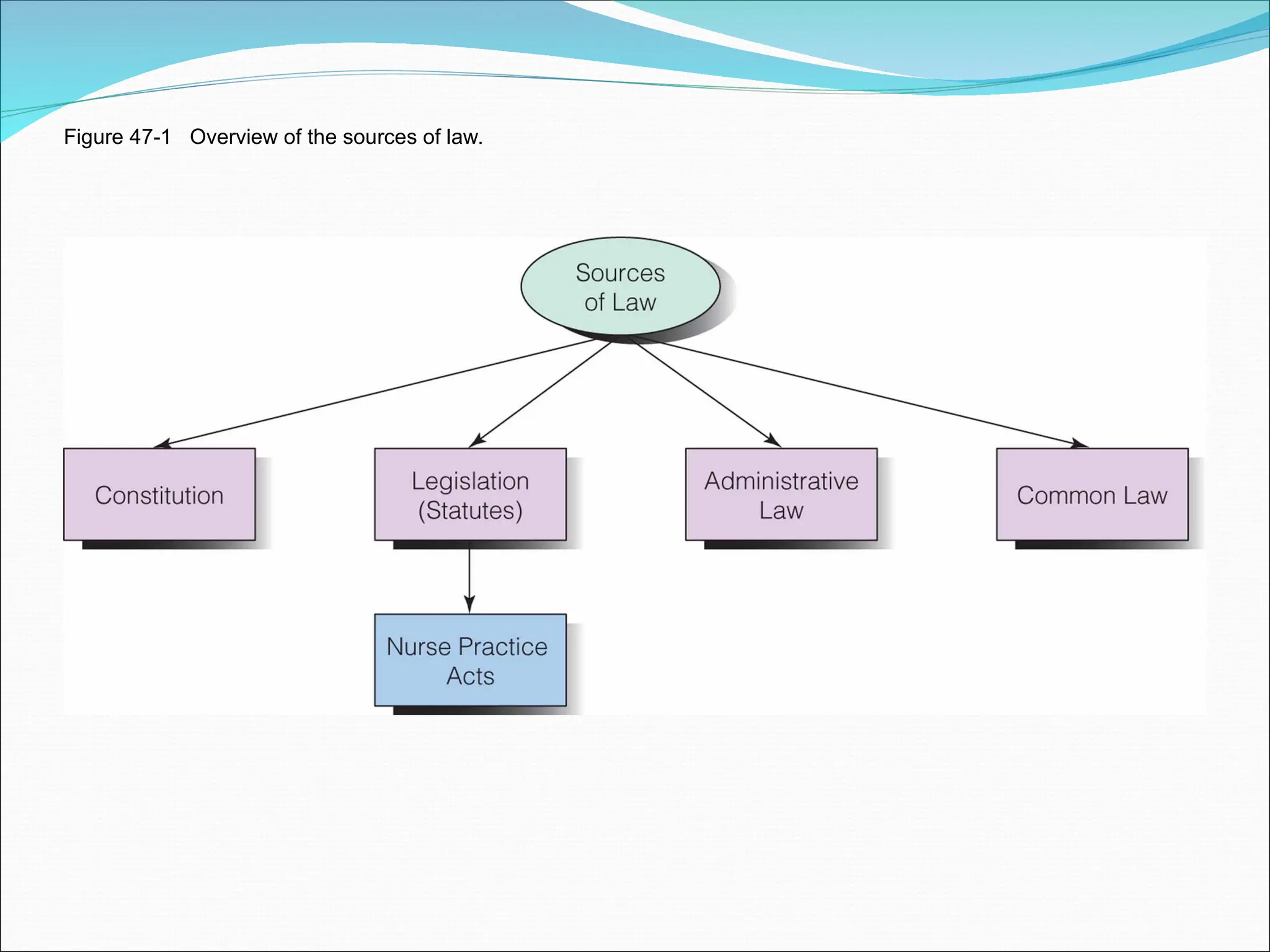
 Sources of laws
 Sum total of rules and regulations by which a
society is governed
 Law made at federal, state, and local levels
Figure 47-1 Overview of the sources of law.
About Legal Issues, continued
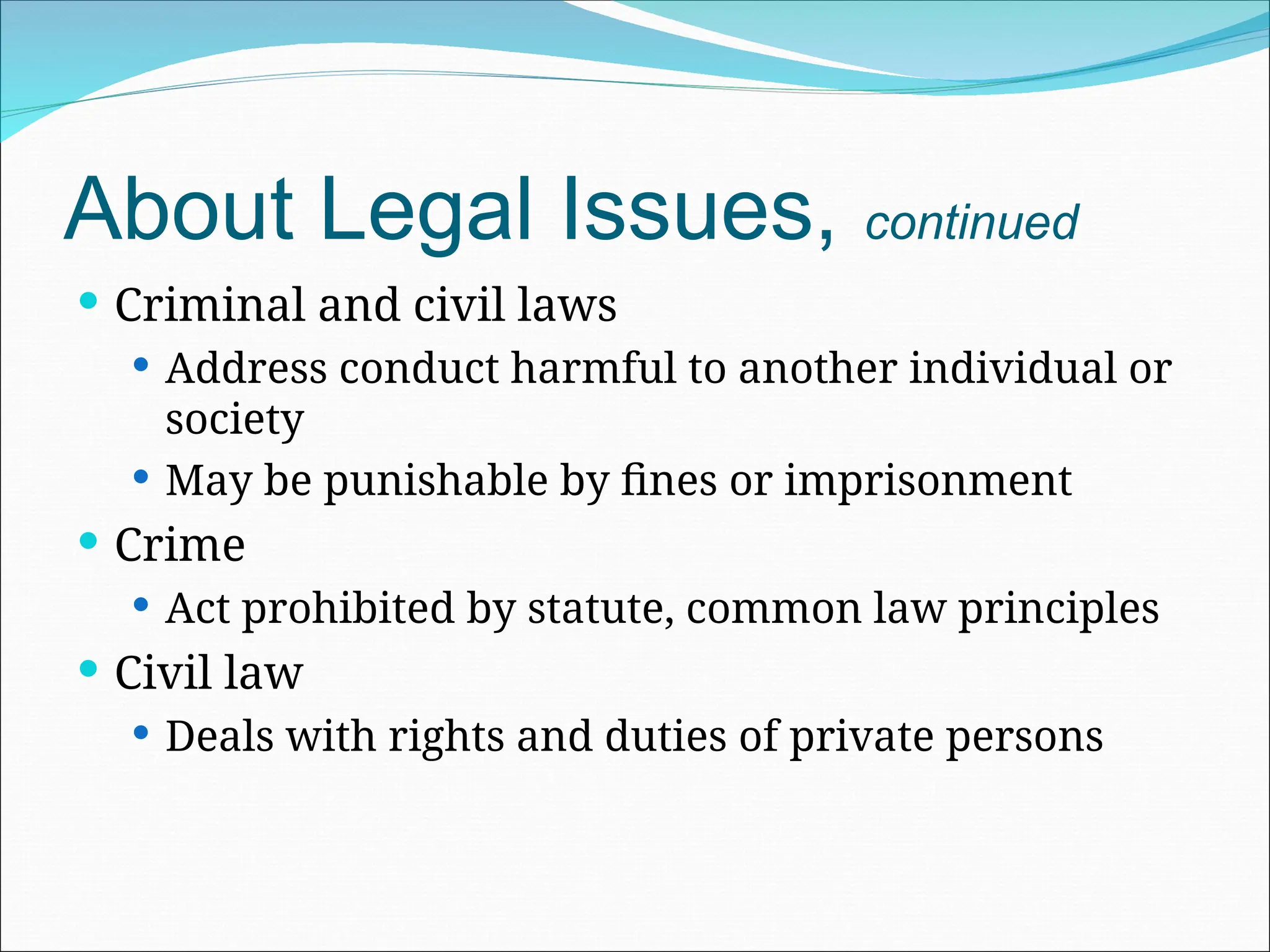
 Criminal and civil laws
 Address conduct harmful to another individual or
society
 May be punishable by fines or imprisonment
 Crime
 Act prohibited by statute, common law principles
 Civil law
 Deals with rights and duties of private persons
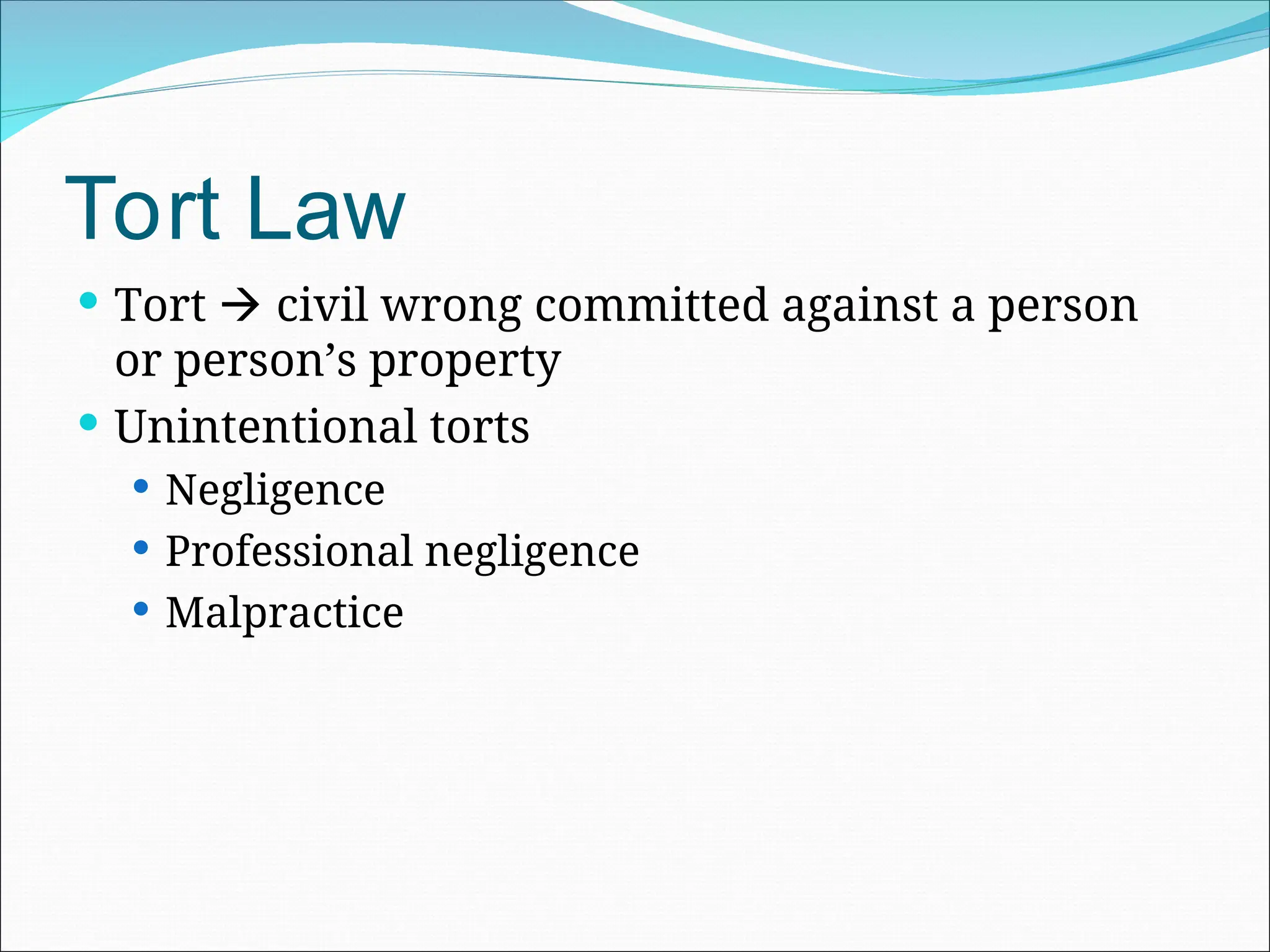
Tort Law
 Tort  civil wrong committed against a person
or person’s property
 Unintentional torts
 Negligence
 Professional negligence
 Malpractice
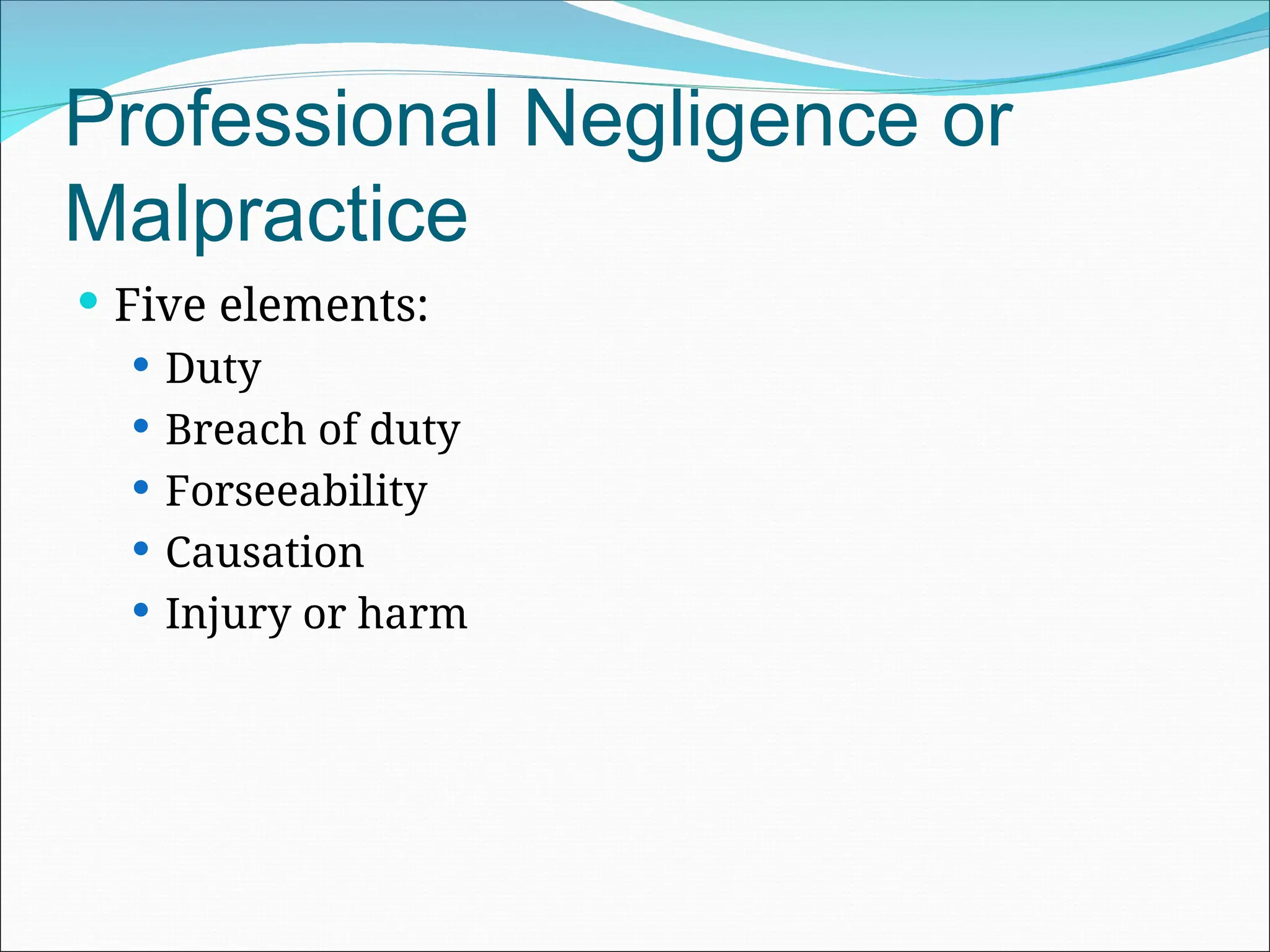
Professional Negligence or
Malpractice
 Five elements:
 Duty
 Breach of duty
 Forseeability
 Causation
 Injury or harm
Professional Negligence or
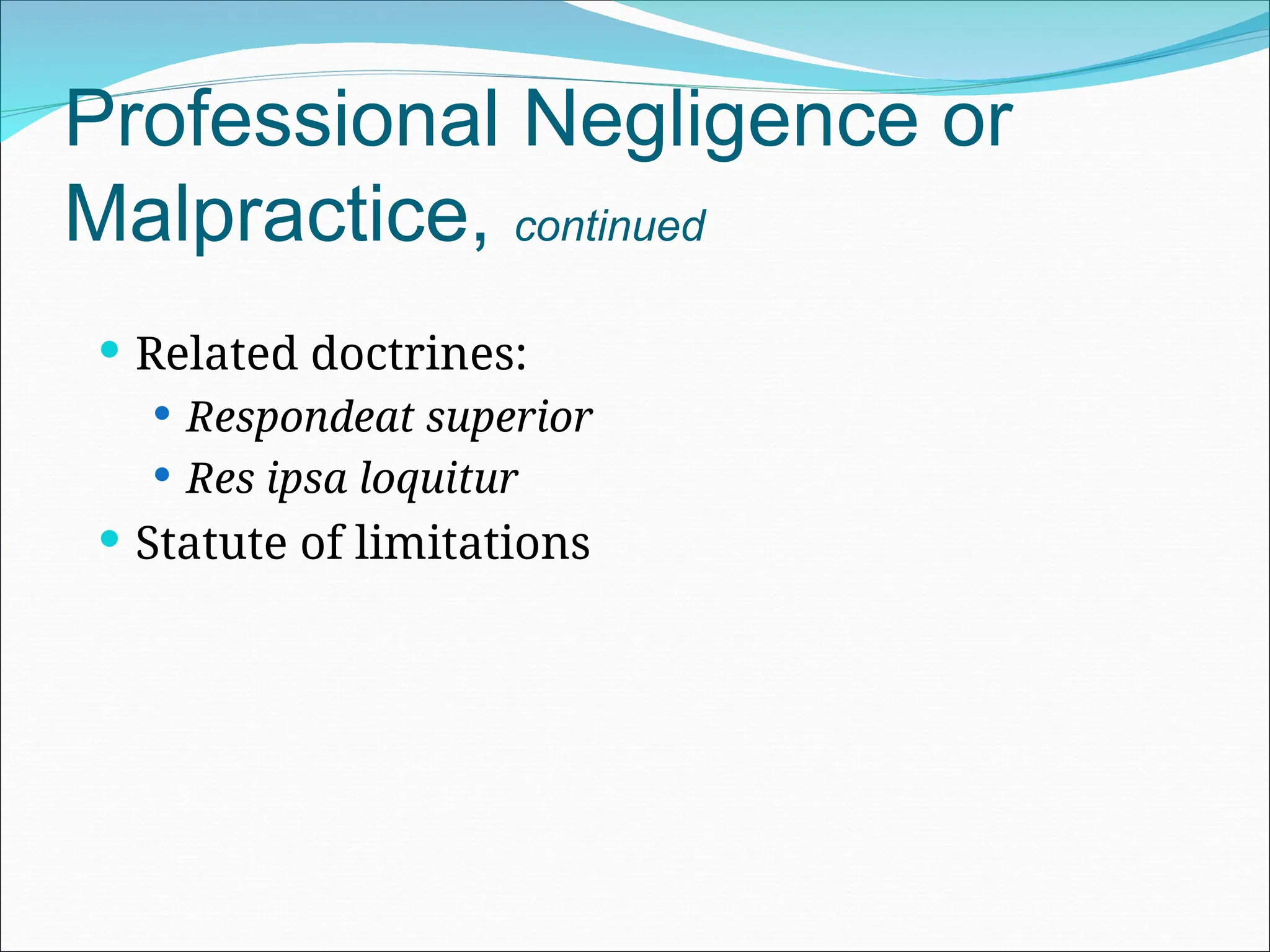
Malpractice, continued
 Related doctrines:
 Respondeat superior
 Res ipsa loquitur
 Statute of limitations
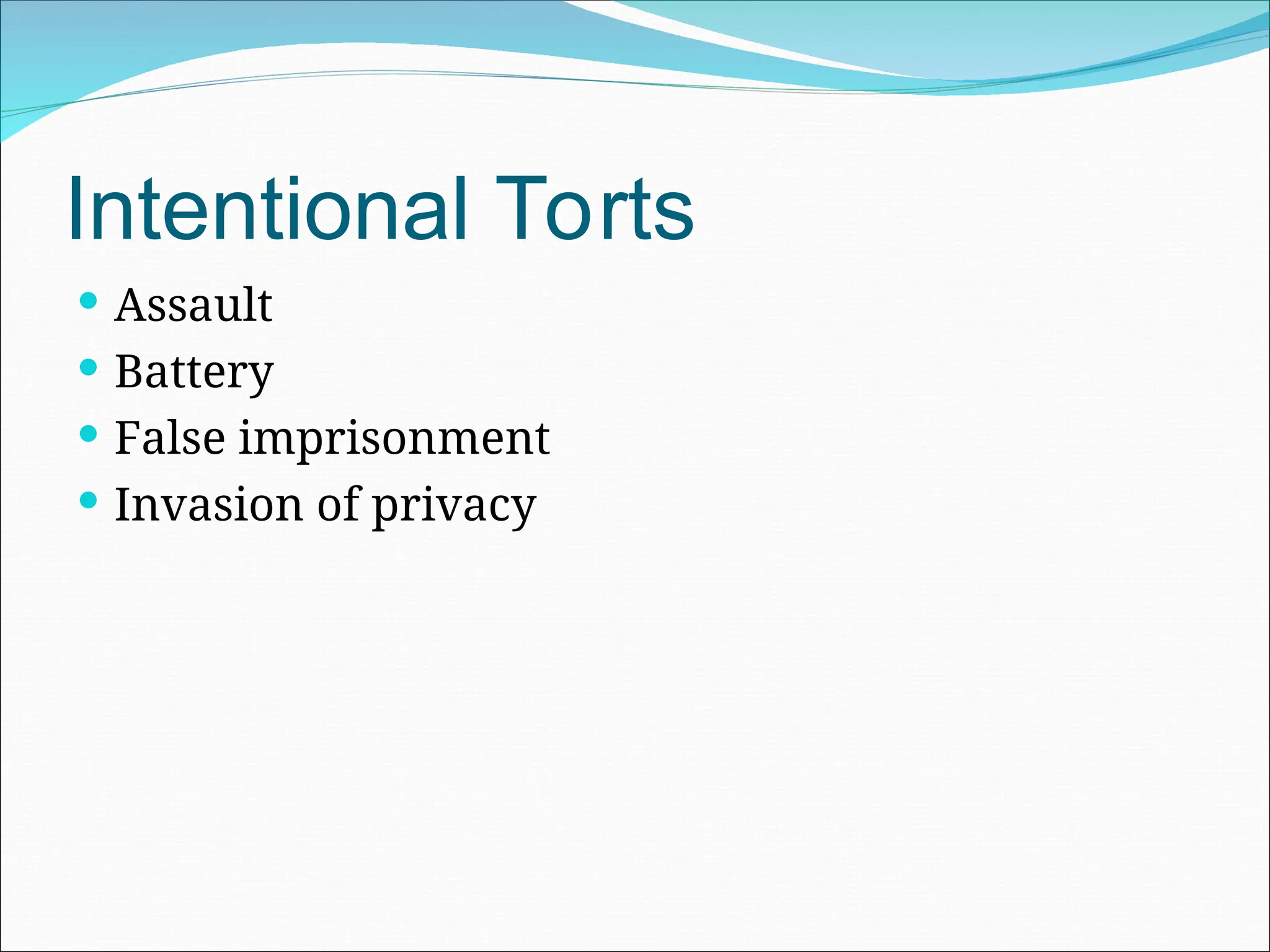
Intentional Torts
 Assault
 Battery
 False imprisonment
 Invasion of privacy
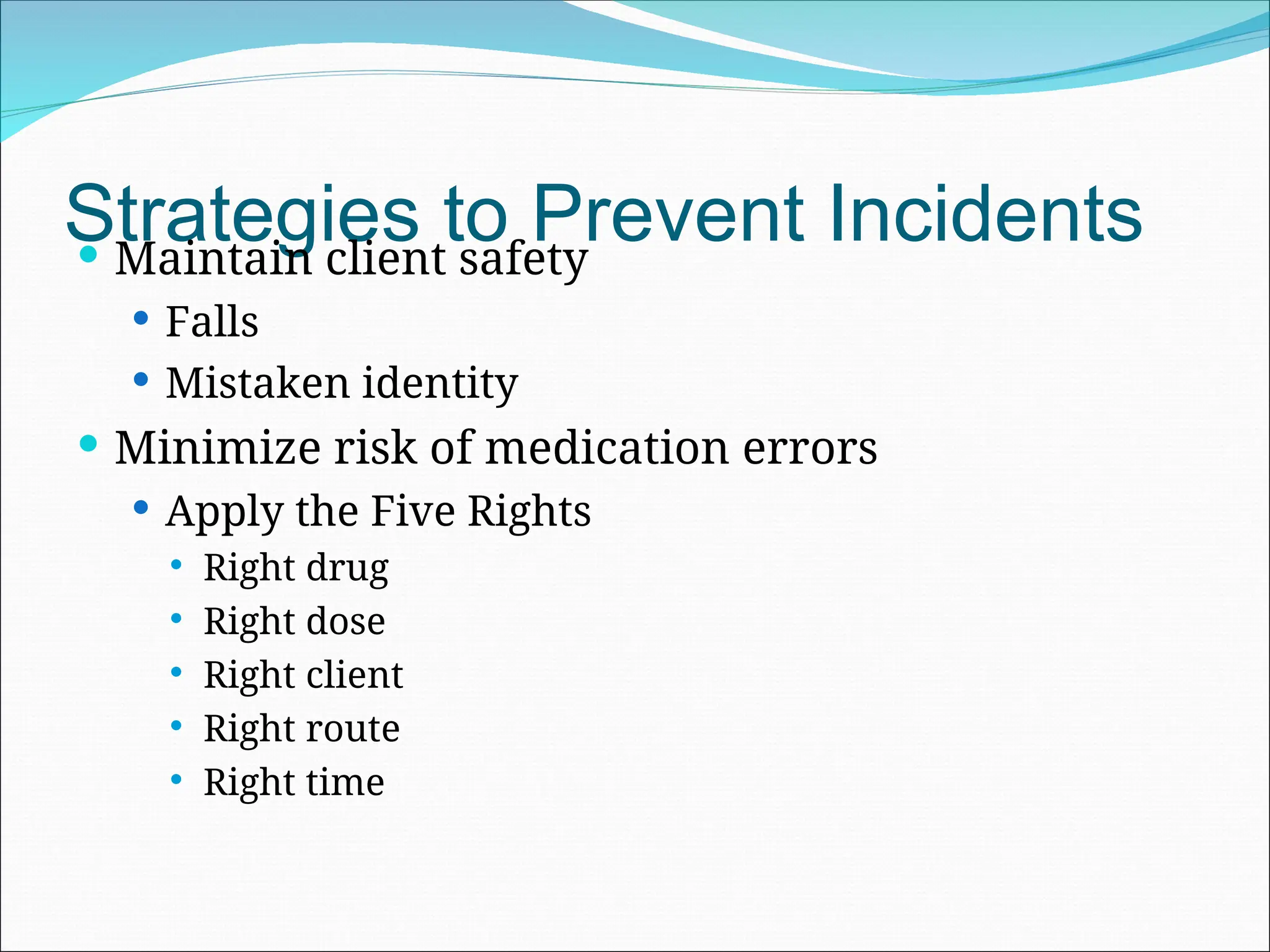
Strategies to Prevent Incidents
 Maintain client safety
 Falls
 Mistaken identity
 Minimize risk of medication errors
 Apply the Five Rights
 Right drug
 Right dose
 Right client
 Right route
 Right time
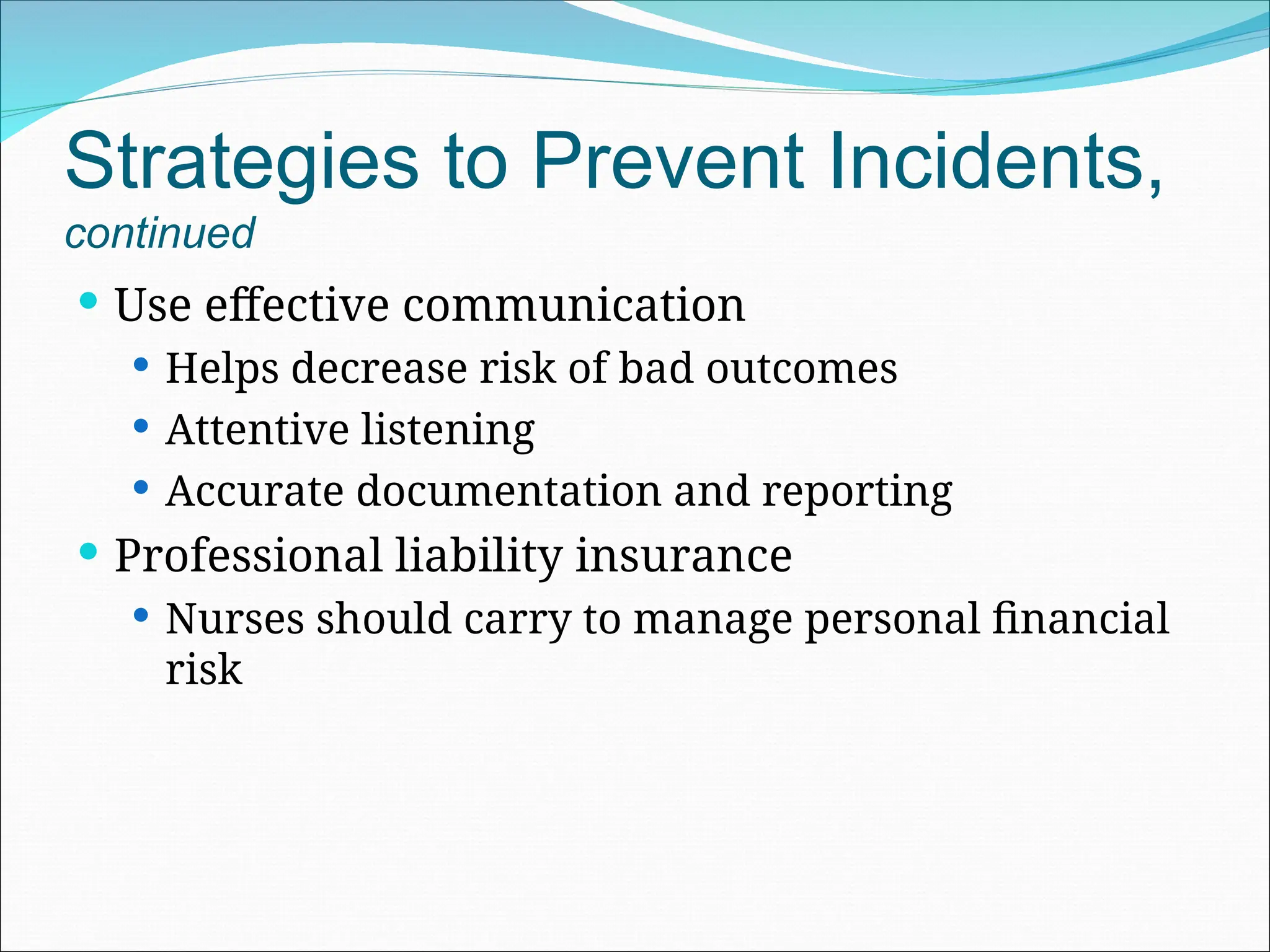
Strategies to Prevent Incidents,
continued
 Use effective communication
 Helps decrease risk of bad outcomes
 Attentive listening
 Accurate documentation and reporting
 Professional liability insurance
 Nurses should carry to manage personal financial
risk
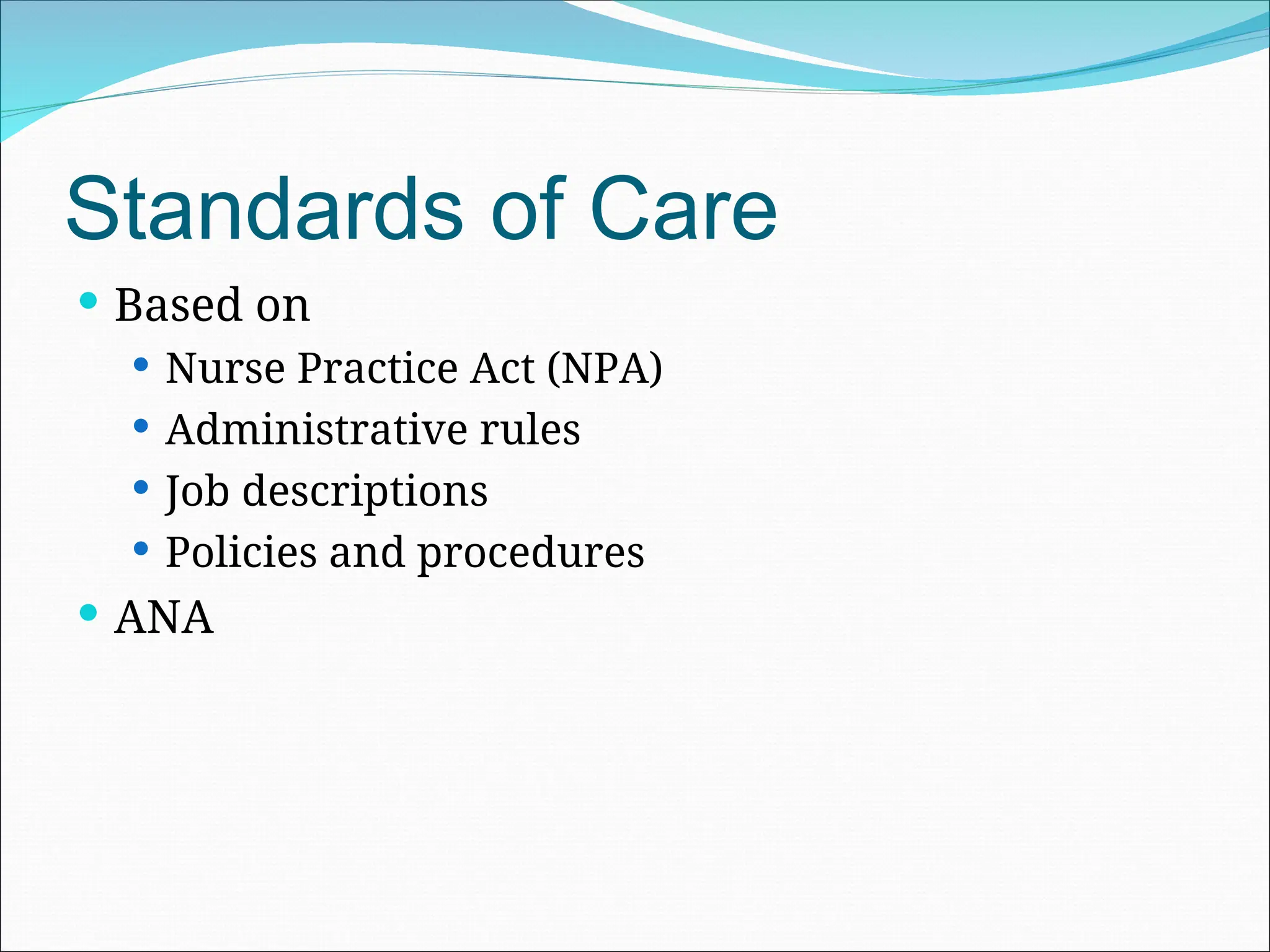
Standards of Care
 Based on
 Nurse Practice Act (NPA)
 Administrative rules
 Job descriptions
 Policies and procedures
 ANA
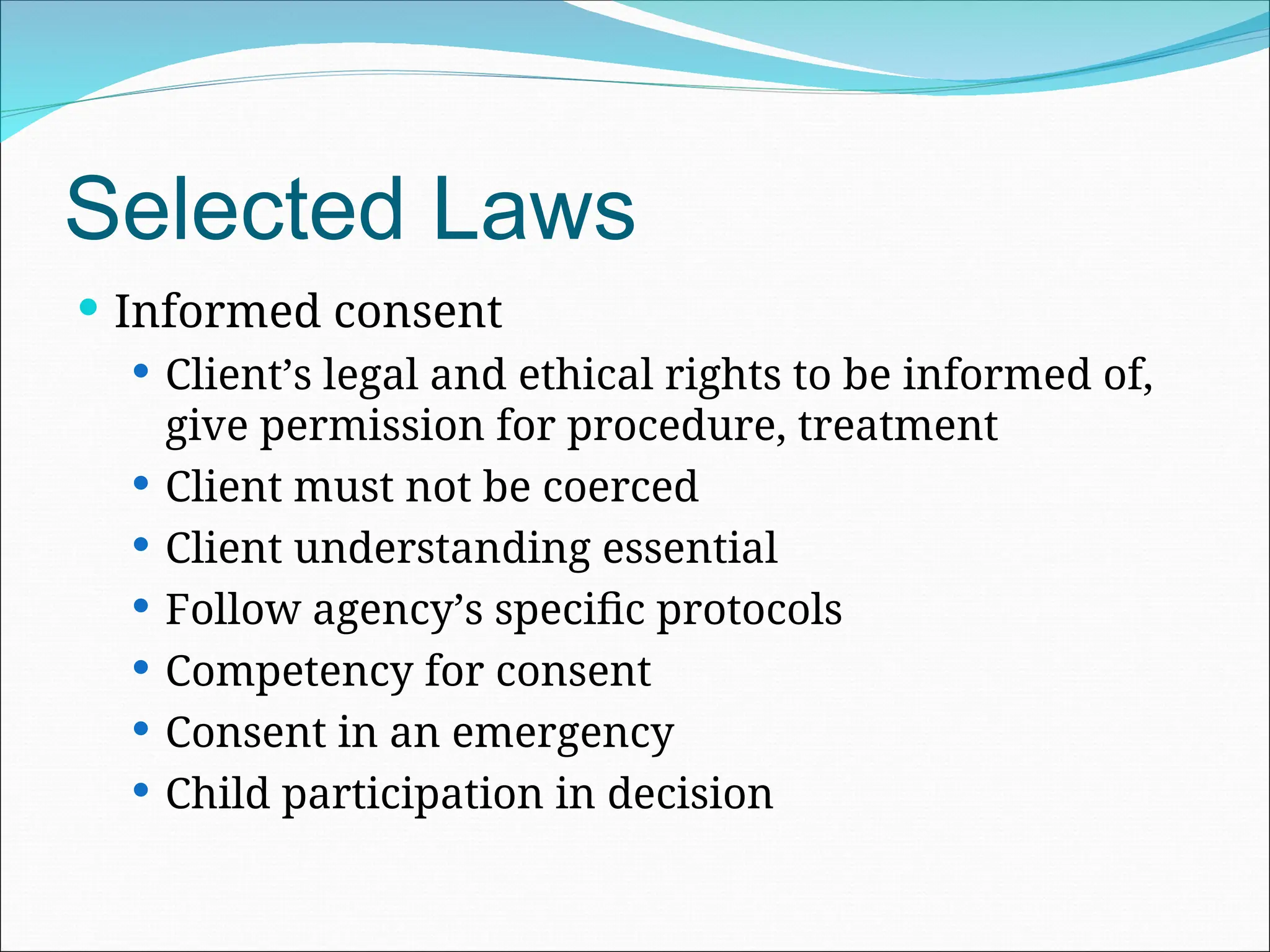
Selected Laws
 Informed consent
 Client’s legal and ethical rights to be informed of,
give permission for procedure, treatment
 Client must not be coerced
 Client understanding essential
 Follow agency’s specific protocols
 Competency for consent
 Consent in an emergency
 Child participation in decision
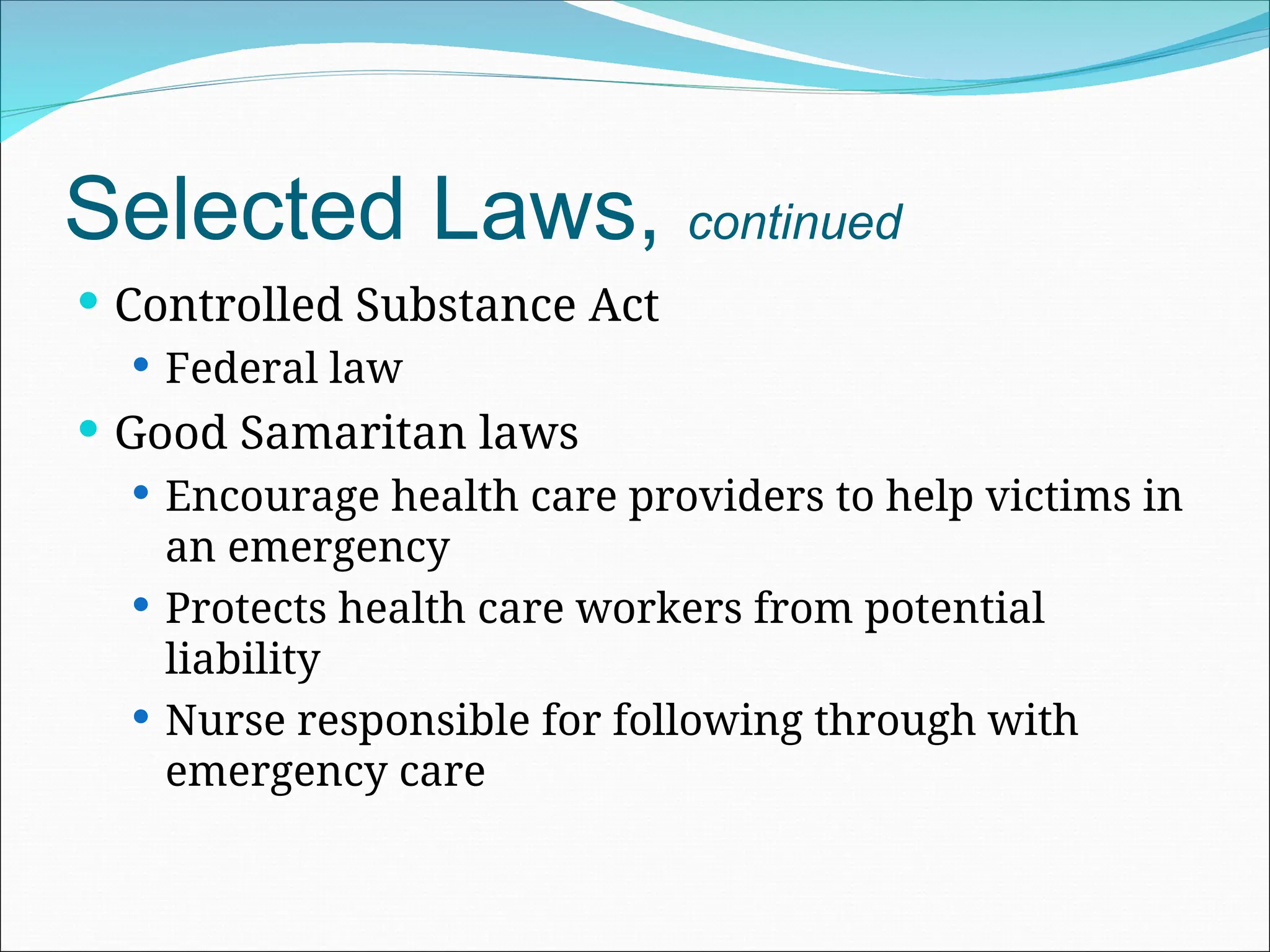
Selected Laws, continued
 Controlled Substance Act
 Federal law
 Good Samaritan laws
 Encourage health care providers to help victims in
an emergency
 Protects health care workers from potential
liability
 Nurse responsible for following through with
emergency care
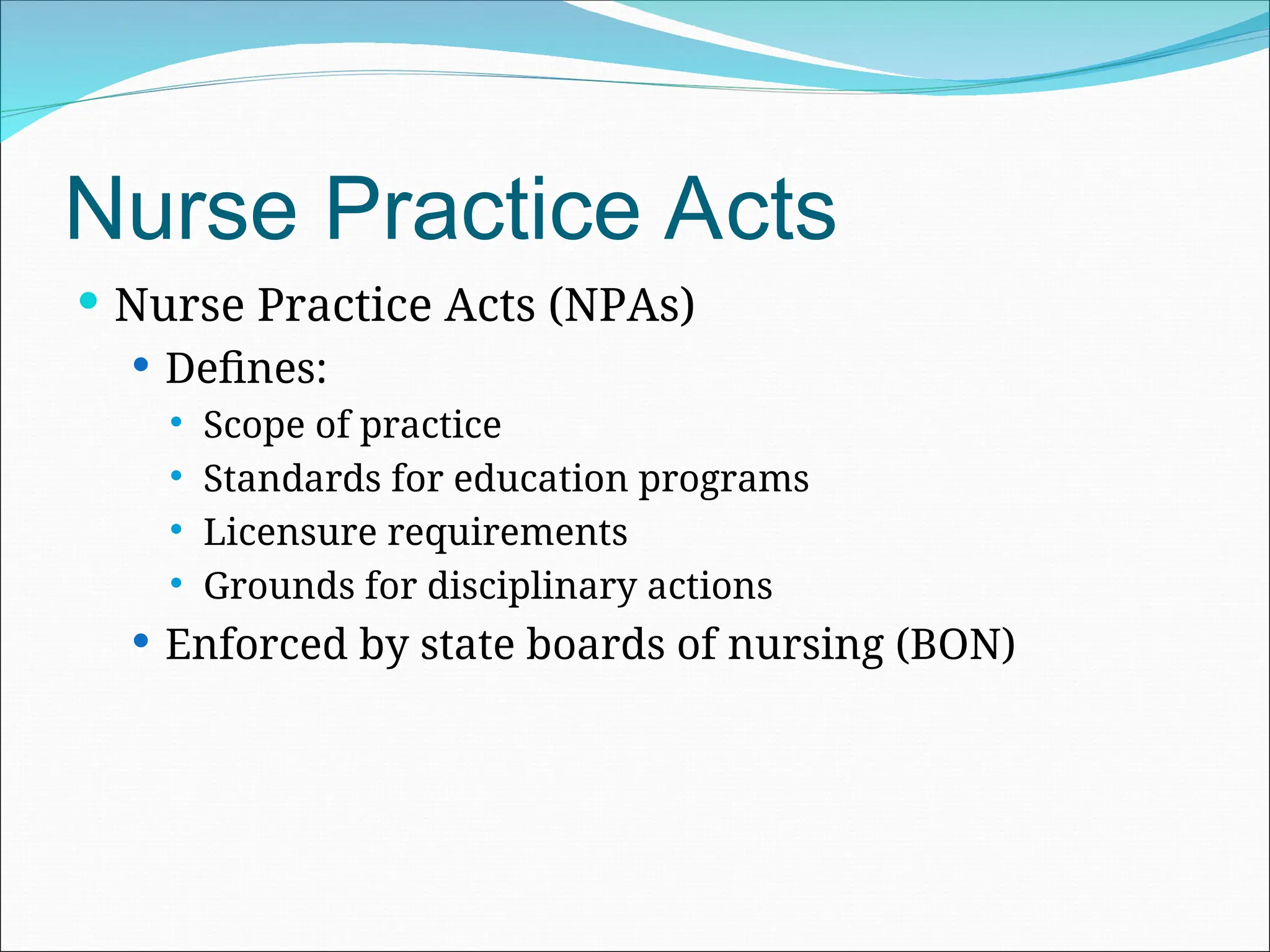
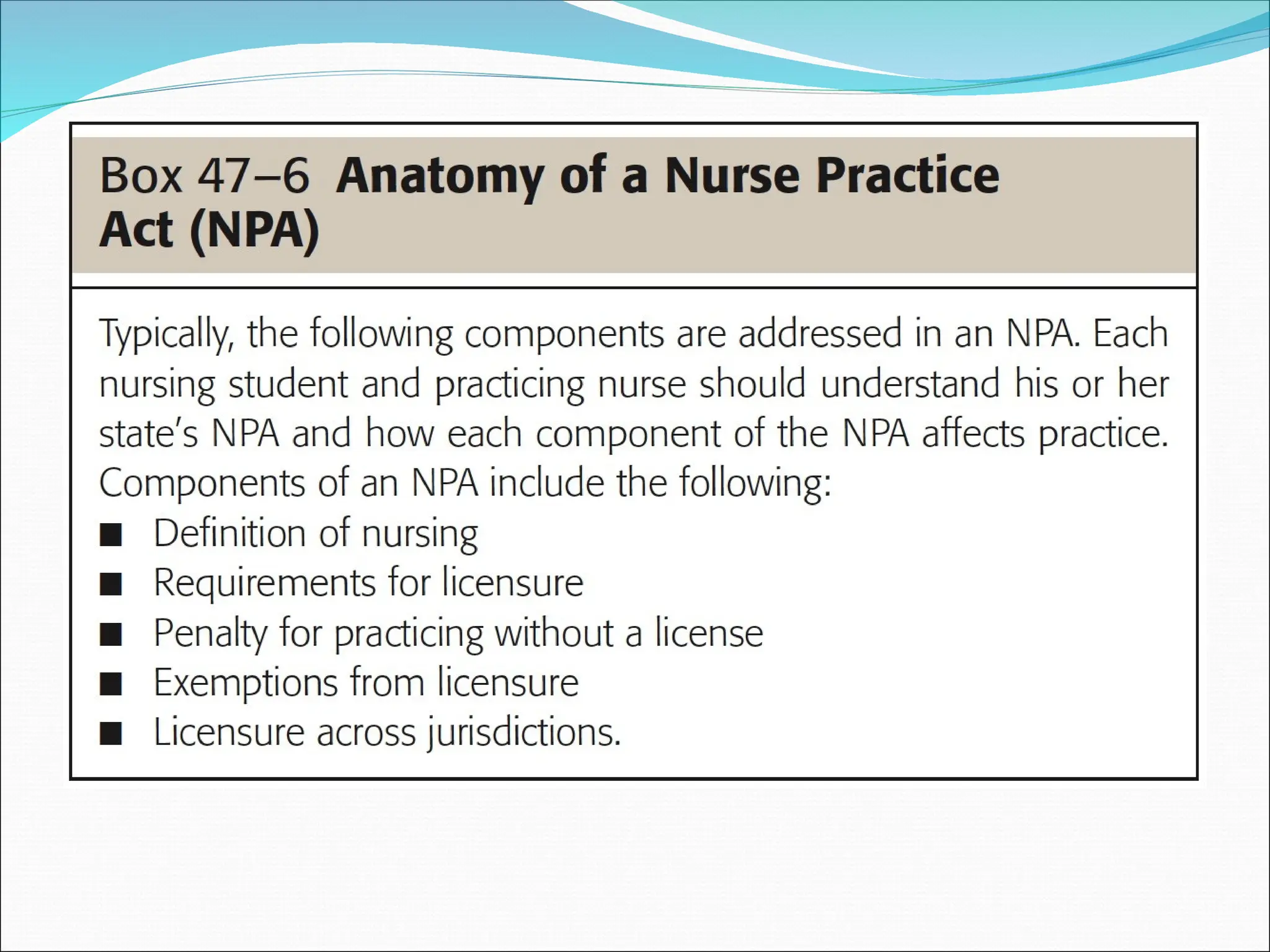
Nurse Practice Acts
 Nurse Practice Acts (NPAs)
 Defines:
 Scope of practice
 Standards for education programs
 Licensure requirements
 Grounds for disciplinary actions
 Enforced by state boards of nursing (BON)
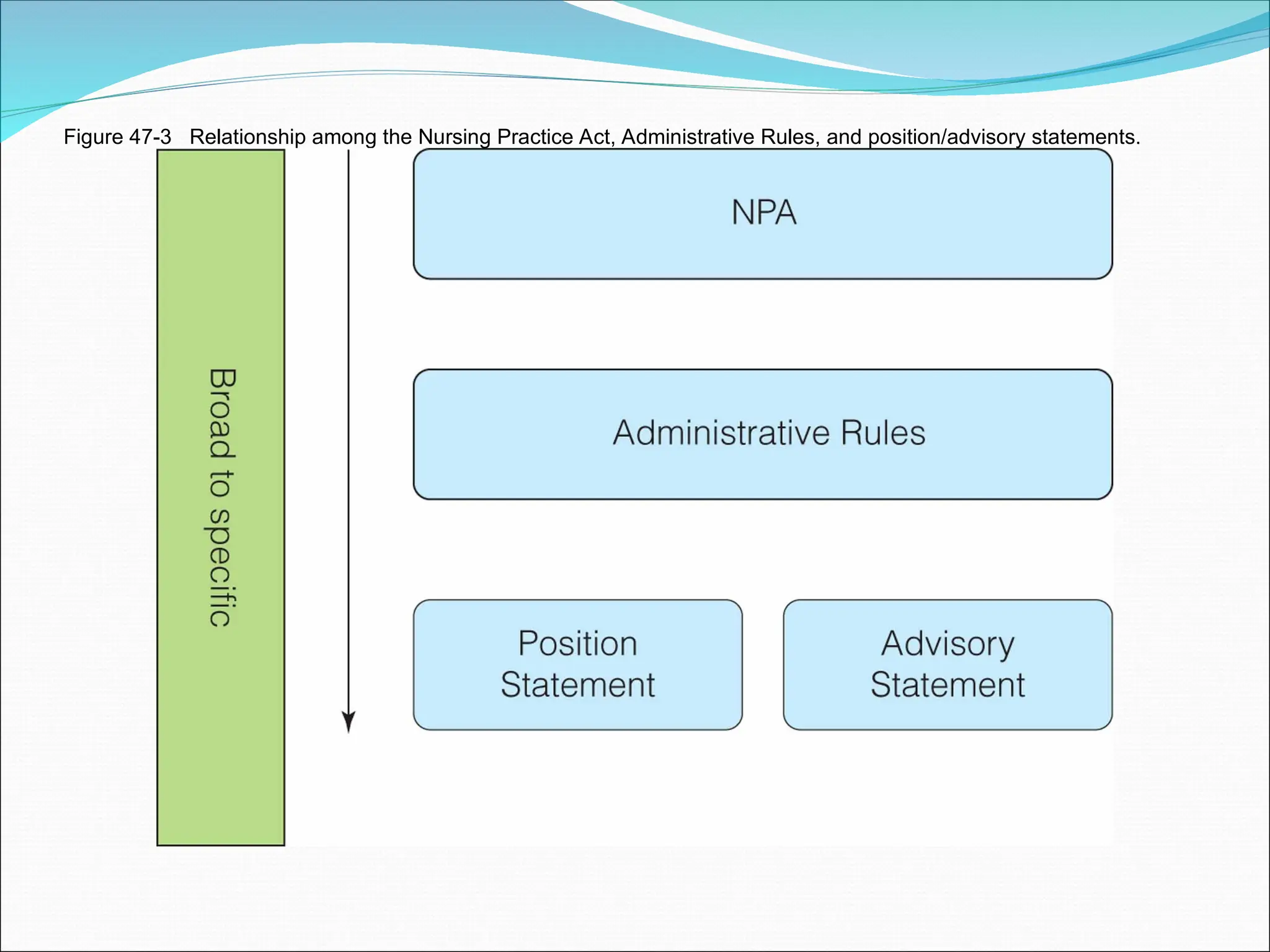
Figure 47-3 Relationship among the Nursing Practice Act, Administrative Rules, and position/advisory statements.
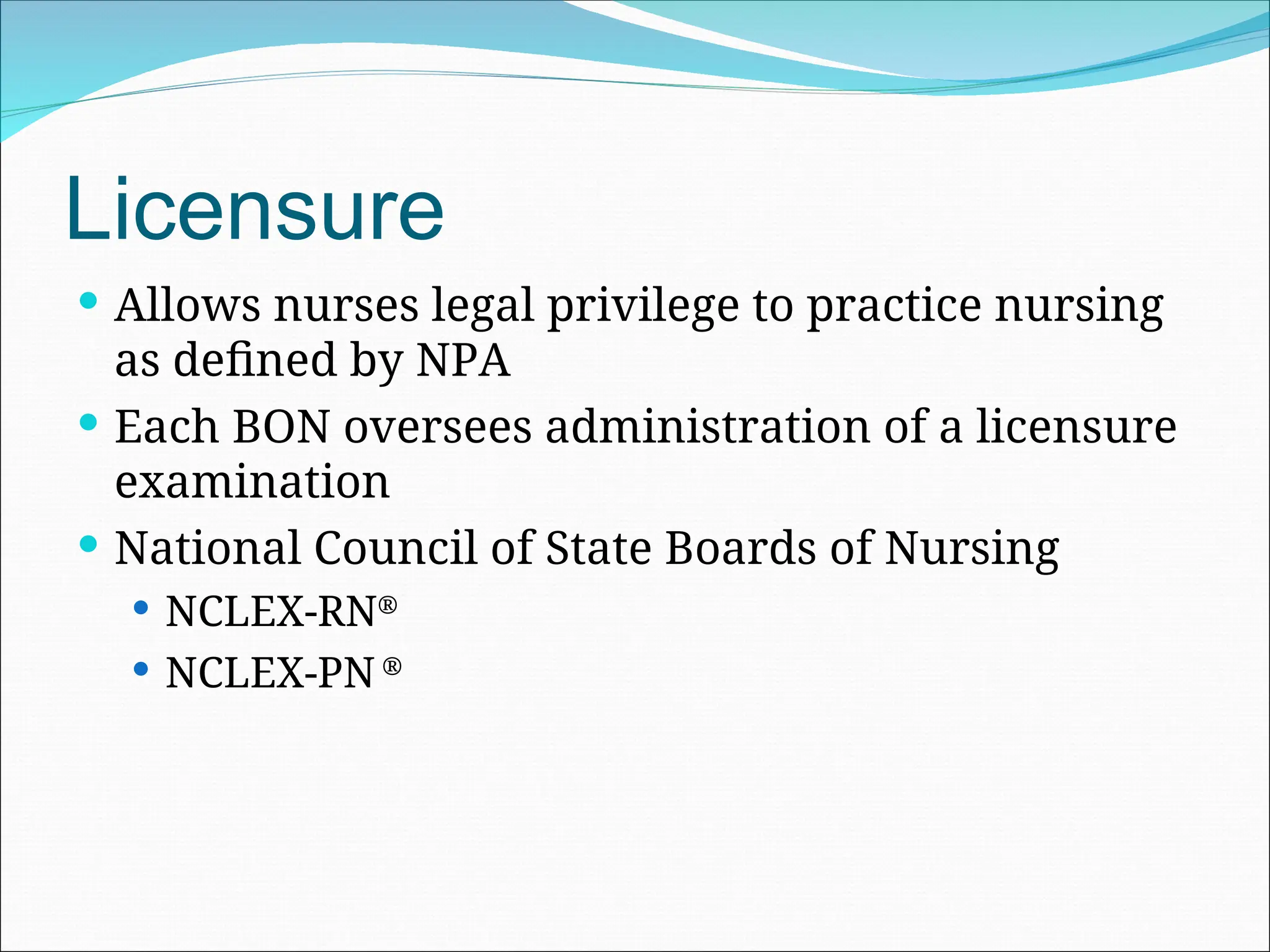
Licensure
 Allows nurses legal privilege to practice nursing
as defined by NPA
 Each BON oversees administration of a licensure
examination
 National Council of State Boards of Nursing
 NCLEX-RN®
 NCLEX-PN ®
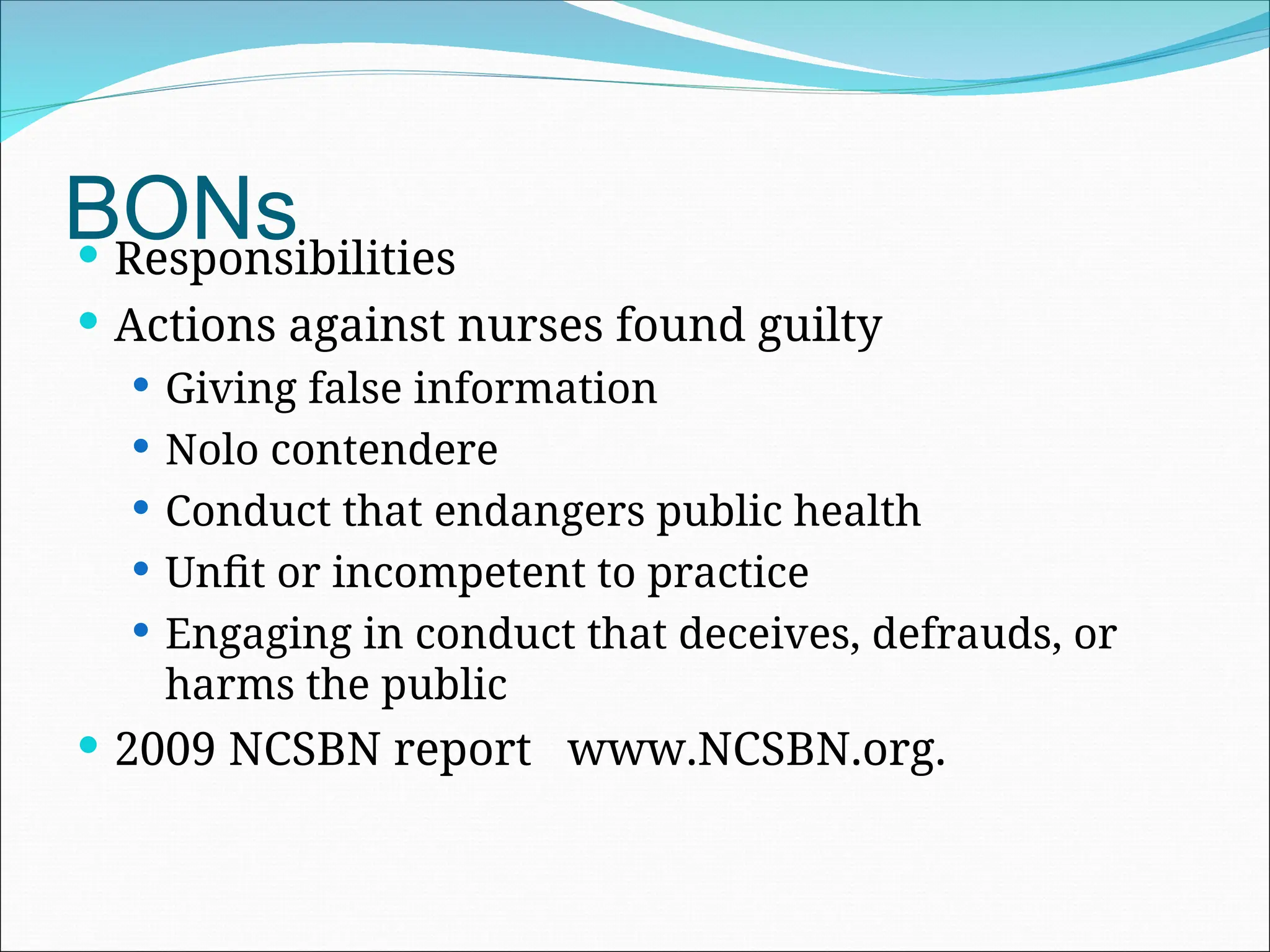
BONs
 Responsibilities
 Actions against nurses found guilty
 Giving false information
 Nolo contendere
 Conduct that endangers public health
 Unfit or incompetent to practice
 Engaging in conduct that deceives, defrauds, or
harms the public
 2009 NCSBN report www.NCSBN.org.
National Council of State
Boards of Nursing
 Membership
 Functions
 Nurse Licensure Compact
 Mutual recognition model
NPAs
 Certification
 Federal organizations
 Joint Commission
 Centers for Medicare and Medicaid Services
 Nursing students
 Standards of Practice
Standards of Nursing Practice
 ANA Standards of Nursing Practice
 Standards are authoritative statements by which the
nursing profession describes the responsibilities for which
its practitioners are accountable. Standards reflect the
values and priorities of the profession and provide direction
for professional nursing practice and a framework for the
evaluation of this practice. They also define the nursing
profession’s accountability to the public and the outcomes
for which registered nurses are responsible.
 http://www.nursingworld.org/MainMenuCategories/ThePracticeofProfessionalNursing/
NursingStandards.aspx
ANA
Standards of Professional Performance
 Quality of practice
 Professional Practice Evaluation
 Education
 Collegiality
 Ethics
 Collaboration
 Research
 Resource Utilization
 Leadership
Professional Nursing Practice
 Nurse Practice Acts
 Licensure and Certification
 Science and Art of Nursing practice
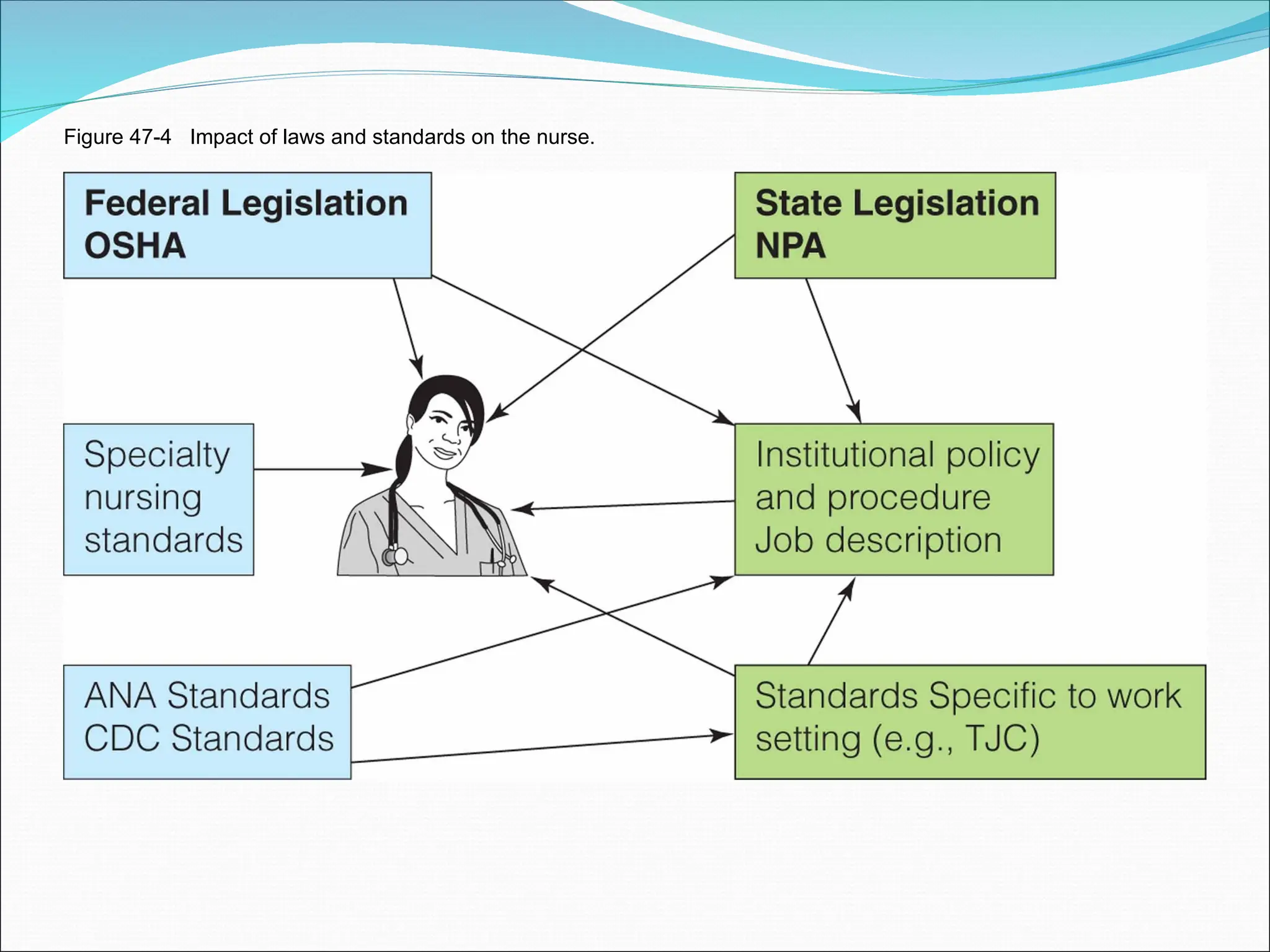
Figure 47-4 Impact of laws and standards on the nurse.
Advance Directives
 Legal document
 Expresses an individual’s desires regarding
medical treatment
 Patient Self-Determination Act
 Types of advance directives
 Living will
 Durable power of attorney for health care
Elements of Advance
Directives
 Surrogate decision maker authority to:
 Consent to or refuse medical treatment or
diagnostic procedure
 Hire or discharge medical providers
 Authorize admission to medical and long-term
care facilities
 Have access to all medical records
 Consent to comfort care, pain relief measures
 Any measures to carry out wishes
Role of Nurse
 Reassure clients and families that they have
option to change their decision
 Assess whether clients, families have accurate
understanding of life-sustaining measures
 Be supportive of clients’ decisions
Health Information and Portability and
Accountability Act
 HIPAA
 Purposes
 Minimizes exclusion of preexisting conditions
 Designates special rights for those who lose other
health coverage
 Eliminates medical underwriting in group plans
 Includes Privacy Rule
Protected Health Information
 Protected by Privacy Rule:
 Individually identifiable health information
 Information that identifies individual
 Access to medical records
 Required notice of privacy practices and
opportunity for confidential communications
 Limits on use of medical information
 Prohibition of use of personal information for
marketing
Privacy vs. Confidentiality
 Privacy  right of individuals to keep their
personal information from being disclosed
 Confidentiality  the assurance client has that
private information will not be disclosed without
client’s consent
NRS101Session2LegalIssuesinNursingPracticeWI.ppt

  • 1.
  • 2.
    About Legal Issues Rights, responsibilities, scope of nursing practice  As defined by state nursing practice acts  Sources of laws  Sum total of rules and regulations by which a society is governed  Law made at federal, state, and local levels
  • 3.
    Figure 47-1 Overviewof the sources of law.
  • 4.
    About Legal Issues,continued  Criminal and civil laws  Address conduct harmful to another individual or society  May be punishable by fines or imprisonment  Crime  Act prohibited by statute, common law principles  Civil law  Deals with rights and duties of private persons
  • 5.
    Tort Law  Tort civil wrong committed against a person or person’s property  Unintentional torts  Negligence  Professional negligence  Malpractice
  • 6.
    Professional Negligence or Malpractice Five elements:  Duty  Breach of duty  Forseeability  Causation  Injury or harm
  • 7.
    Professional Negligence or Malpractice,continued  Related doctrines:  Respondeat superior  Res ipsa loquitur  Statute of limitations
  • 8.
    Intentional Torts  Assault Battery  False imprisonment  Invasion of privacy
  • 9.
    Strategies to PreventIncidents  Maintain client safety  Falls  Mistaken identity  Minimize risk of medication errors  Apply the Five Rights  Right drug  Right dose  Right client  Right route  Right time
  • 10.
    Strategies to PreventIncidents, continued  Use effective communication  Helps decrease risk of bad outcomes  Attentive listening  Accurate documentation and reporting  Professional liability insurance  Nurses should carry to manage personal financial risk
  • 11.
    Standards of Care Based on  Nurse Practice Act (NPA)  Administrative rules  Job descriptions  Policies and procedures  ANA
  • 12.
    Selected Laws  Informedconsent  Client’s legal and ethical rights to be informed of, give permission for procedure, treatment  Client must not be coerced  Client understanding essential  Follow agency’s specific protocols  Competency for consent  Consent in an emergency  Child participation in decision
  • 13.
    Selected Laws, continued Controlled Substance Act  Federal law  Good Samaritan laws  Encourage health care providers to help victims in an emergency  Protects health care workers from potential liability  Nurse responsible for following through with emergency care
  • 14.
    Nurse Practice Acts Nurse Practice Acts (NPAs)  Defines:  Scope of practice  Standards for education programs  Licensure requirements  Grounds for disciplinary actions  Enforced by state boards of nursing (BON)
  • 16.
    Figure 47-3 Relationshipamong the Nursing Practice Act, Administrative Rules, and position/advisory statements.
  • 17.
    Licensure  Allows nurseslegal privilege to practice nursing as defined by NPA  Each BON oversees administration of a licensure examination  National Council of State Boards of Nursing  NCLEX-RN®  NCLEX-PN ®
  • 18.
    BONs  Responsibilities  Actionsagainst nurses found guilty  Giving false information  Nolo contendere  Conduct that endangers public health  Unfit or incompetent to practice  Engaging in conduct that deceives, defrauds, or harms the public  2009 NCSBN report www.NCSBN.org.
  • 19.
    National Council ofState Boards of Nursing  Membership  Functions  Nurse Licensure Compact  Mutual recognition model
  • 20.
    NPAs  Certification  Federalorganizations  Joint Commission  Centers for Medicare and Medicaid Services  Nursing students  Standards of Practice
  • 21.
    Standards of NursingPractice  ANA Standards of Nursing Practice  Standards are authoritative statements by which the nursing profession describes the responsibilities for which its practitioners are accountable. Standards reflect the values and priorities of the profession and provide direction for professional nursing practice and a framework for the evaluation of this practice. They also define the nursing profession’s accountability to the public and the outcomes for which registered nurses are responsible.  http://www.nursingworld.org/MainMenuCategories/ThePracticeofProfessionalNursing/ NursingStandards.aspx
  • 22.
    ANA Standards of ProfessionalPerformance  Quality of practice  Professional Practice Evaluation  Education  Collegiality  Ethics  Collaboration  Research  Resource Utilization  Leadership
  • 23.
    Professional Nursing Practice Nurse Practice Acts  Licensure and Certification  Science and Art of Nursing practice
  • 24.
    Figure 47-4 Impactof laws and standards on the nurse.
  • 25.
    Advance Directives  Legaldocument  Expresses an individual’s desires regarding medical treatment  Patient Self-Determination Act  Types of advance directives  Living will  Durable power of attorney for health care
  • 26.
    Elements of Advance Directives Surrogate decision maker authority to:  Consent to or refuse medical treatment or diagnostic procedure  Hire or discharge medical providers  Authorize admission to medical and long-term care facilities  Have access to all medical records  Consent to comfort care, pain relief measures  Any measures to carry out wishes
  • 27.
    Role of Nurse Reassure clients and families that they have option to change their decision  Assess whether clients, families have accurate understanding of life-sustaining measures  Be supportive of clients’ decisions
  • 28.
    Health Information andPortability and Accountability Act  HIPAA  Purposes  Minimizes exclusion of preexisting conditions  Designates special rights for those who lose other health coverage  Eliminates medical underwriting in group plans  Includes Privacy Rule
  • 29.
    Protected Health Information Protected by Privacy Rule:  Individually identifiable health information  Information that identifies individual  Access to medical records  Required notice of privacy practices and opportunity for confidential communications  Limits on use of medical information  Prohibition of use of personal information for marketing
  • 30.
    Privacy vs. Confidentiality Privacy  right of individuals to keep their personal information from being disclosed  Confidentiality  the assurance client has that private information will not be disclosed without client’s consent