Project Management
- By:
Project:
 Project is a temporary endeavor undertaken to create a unique product
or service.
 Project can also be defined as a collection of tasks aimed towards a
single set of objectives, culminating in a definable end point and having a
finite life span.
 unique purpose.
 temporary.
 require resources, often from various areas.
 should have a primary sponsor and/or customer.
 involve uncertainty .
Attributes of project:
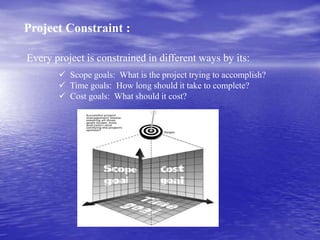
Project Constraint :
Every project is constrained in different ways by its:
 Scope goals: What is the project trying to accomplish?
 Time goals: How long should it take to complete?
 Cost goals: What should it cost?
Project Management:
 Project management is “the application of knowledge, skills, tools, and
techniques to project activities in order to meet project requirements”.
Project management can also be defined as having two major aspects:
 the art - leading the people on the project.
 the science - defining and coordinating the work to be done.
Successful Project Management:
A Project is said to be managed successfully when it meets the following
points:
 project met the requirements.
 project was well within the budget.
 project was done well in time.
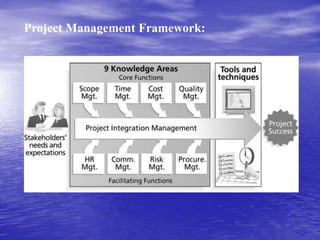
Project Management Framework:
Project Stakeholders:
 Stakeholders are the people involved in or affected by project
activities.
 Stakeholders include:
 the project sponsor and project team.
 support staff.
 customers.
 users.
 suppliers.
 opponents to the project.
Project Management Knowledge Areas:
Knowledge areas describe the key competencies that project managers
must develop. They are as follows:
 4 core knowledge areas lead to specific project objectives.
 scope
 time
 cost
 quality
 4 facilitating knowledge areas are the means through which the project
objectives are achieved.
 human resources
 communication
 risk
 procurement management
 1 knowledge area which affects and is affected by all of the other
knowledge areas.
 project integration management
Advantage of Using Project Management:
 Better control of financial, physical, and human resources.
 Improved customer relations.
 Shorter development times.
 Lower costs.
 Higher quality and increased reliability.
 Higher profit margins.
 Improved productivity.
 Better internal coordination.
 Higher worker morale.
 Provides assurance and reduces risk.
 Provides the tools and environment to plan, monitor, track, and
manage schedules, resources, costs, and quality.
 Provides a history or metrics base for future planning as well as good
documentation.
 Project members learn and grow by working in a cross-functional
team environment.
Project Management Tools:
Project management tools and techniques assist project managers and
their teams in various aspects of project management. Some specific
ones include:
 Project Charter and Work Breakdown Structure (WSB) (scope).
 Gantt charts, network diagrams, critical path analysis, critical chain
scheduling (time).
 Cost estimates and earned value management (cost).
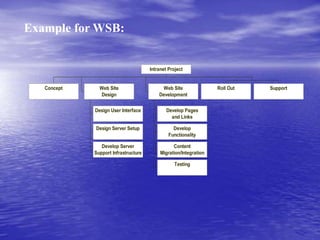
Example for WSB:
Concept
Design User Interface
Design Server Setup
Develop Server
Support Infrastructure
Web Site
Design
Develop Pages
and Links
Develop
Functionality
Content
Migration/Integration
Testing
Web Site
Development
Roll Out Support
Intranet Project
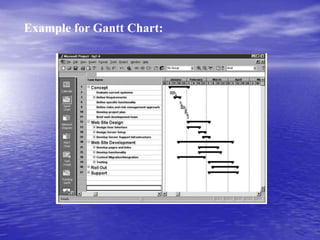
Example for Gantt Chart:
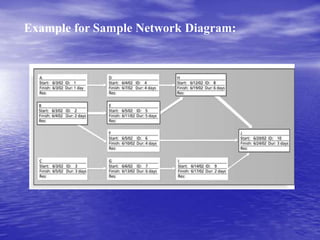
Example for Sample Network Diagram:

Project Management Principles and Best Practices

  • 1.
  • 2.
    Project:  Project isa temporary endeavor undertaken to create a unique product or service.  Project can also be defined as a collection of tasks aimed towards a single set of objectives, culminating in a definable end point and having a finite life span.  unique purpose.  temporary.  require resources, often from various areas.  should have a primary sponsor and/or customer.  involve uncertainty . Attributes of project:
  • 3.
    Project Constraint : Everyproject is constrained in different ways by its:  Scope goals: What is the project trying to accomplish?  Time goals: How long should it take to complete?  Cost goals: What should it cost?
  • 4.
    Project Management:  Projectmanagement is “the application of knowledge, skills, tools, and techniques to project activities in order to meet project requirements”. Project management can also be defined as having two major aspects:  the art - leading the people on the project.  the science - defining and coordinating the work to be done. Successful Project Management: A Project is said to be managed successfully when it meets the following points:  project met the requirements.  project was well within the budget.  project was done well in time.
  • 5.
  • 6.
    Project Stakeholders:  Stakeholdersare the people involved in or affected by project activities.  Stakeholders include:  the project sponsor and project team.  support staff.  customers.  users.  suppliers.  opponents to the project.
  • 7.
    Project Management KnowledgeAreas: Knowledge areas describe the key competencies that project managers must develop. They are as follows:  4 core knowledge areas lead to specific project objectives.  scope  time  cost  quality  4 facilitating knowledge areas are the means through which the project objectives are achieved.  human resources  communication  risk  procurement management  1 knowledge area which affects and is affected by all of the other knowledge areas.  project integration management
  • 8.
    Advantage of UsingProject Management:  Better control of financial, physical, and human resources.  Improved customer relations.  Shorter development times.  Lower costs.  Higher quality and increased reliability.  Higher profit margins.  Improved productivity.  Better internal coordination.  Higher worker morale.  Provides assurance and reduces risk.  Provides the tools and environment to plan, monitor, track, and manage schedules, resources, costs, and quality.  Provides a history or metrics base for future planning as well as good documentation.  Project members learn and grow by working in a cross-functional team environment.
  • 9.
    Project Management Tools: Projectmanagement tools and techniques assist project managers and their teams in various aspects of project management. Some specific ones include:  Project Charter and Work Breakdown Structure (WSB) (scope).  Gantt charts, network diagrams, critical path analysis, critical chain scheduling (time).  Cost estimates and earned value management (cost).
  • 10.
    Example for WSB: Concept DesignUser Interface Design Server Setup Develop Server Support Infrastructure Web Site Design Develop Pages and Links Develop Functionality Content Migration/Integration Testing Web Site Development Roll Out Support Intranet Project
  • 11.
  • 12.
    Example for SampleNetwork Diagram: