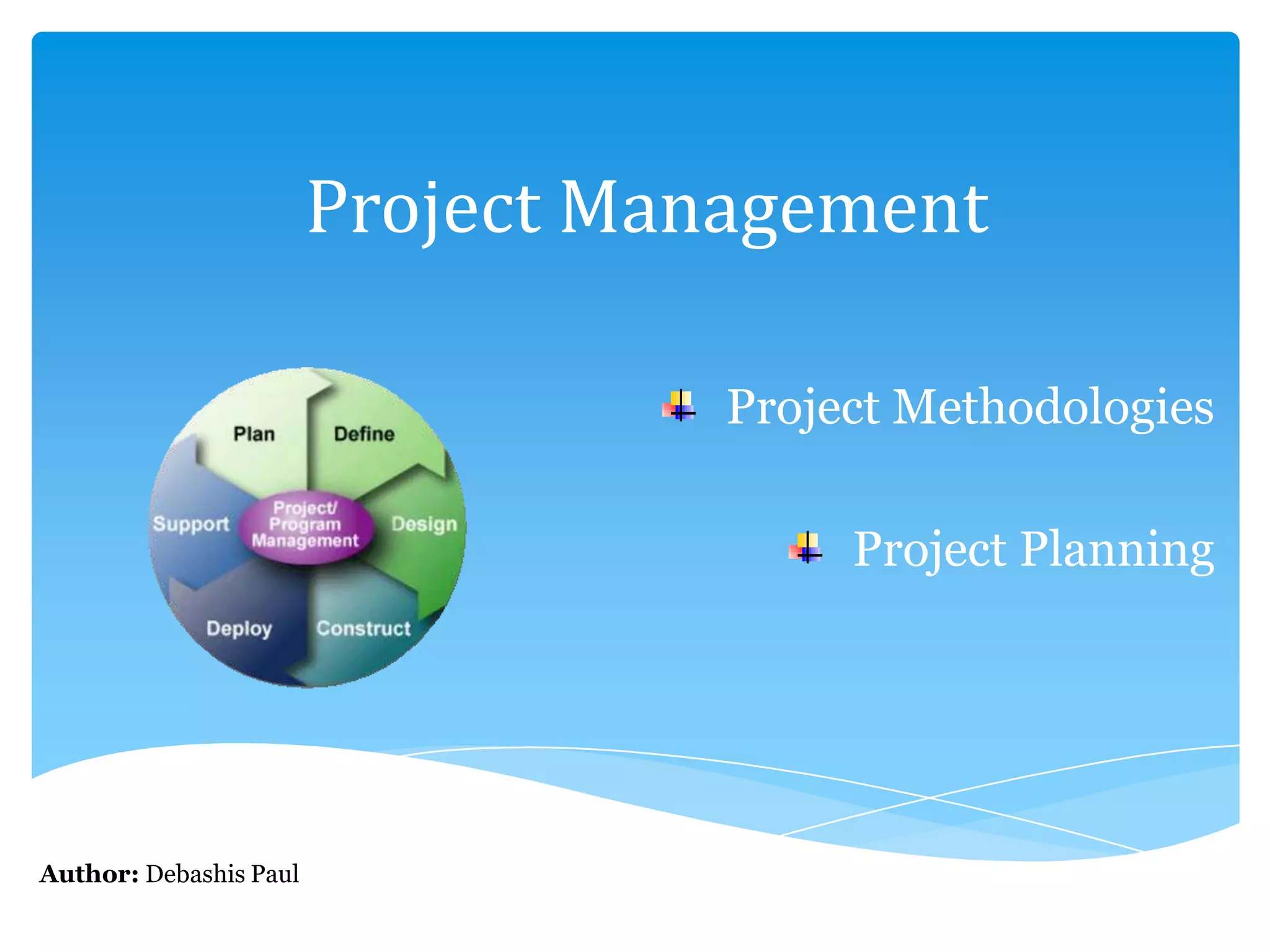
Project Management
Project Methodologies
Project Planning
Author: Debashis Paul
PMM comprise of below approaches to manage events
occurring in SDLC of a project framework :
Defining set of steps i.e. processes
Prepare guidelines & standard methods
Define Activities , tasks , techniques, tools , roles and
responsibilities , milestone
Create principles
Procedure to control risks and changes
Project Management Methodology
It differs from project to project but the backbone is similar having
below set of common activities:
Project Scheduling, Cost & Resource Planning
Risk Management Planning
Quality Assurance
Communication Planning
Estimate and plan Project Effort
Project Tracking and Control
High utilization of Technical resources
Effective management of phases
Define actions with needs
PMM – The Key functions
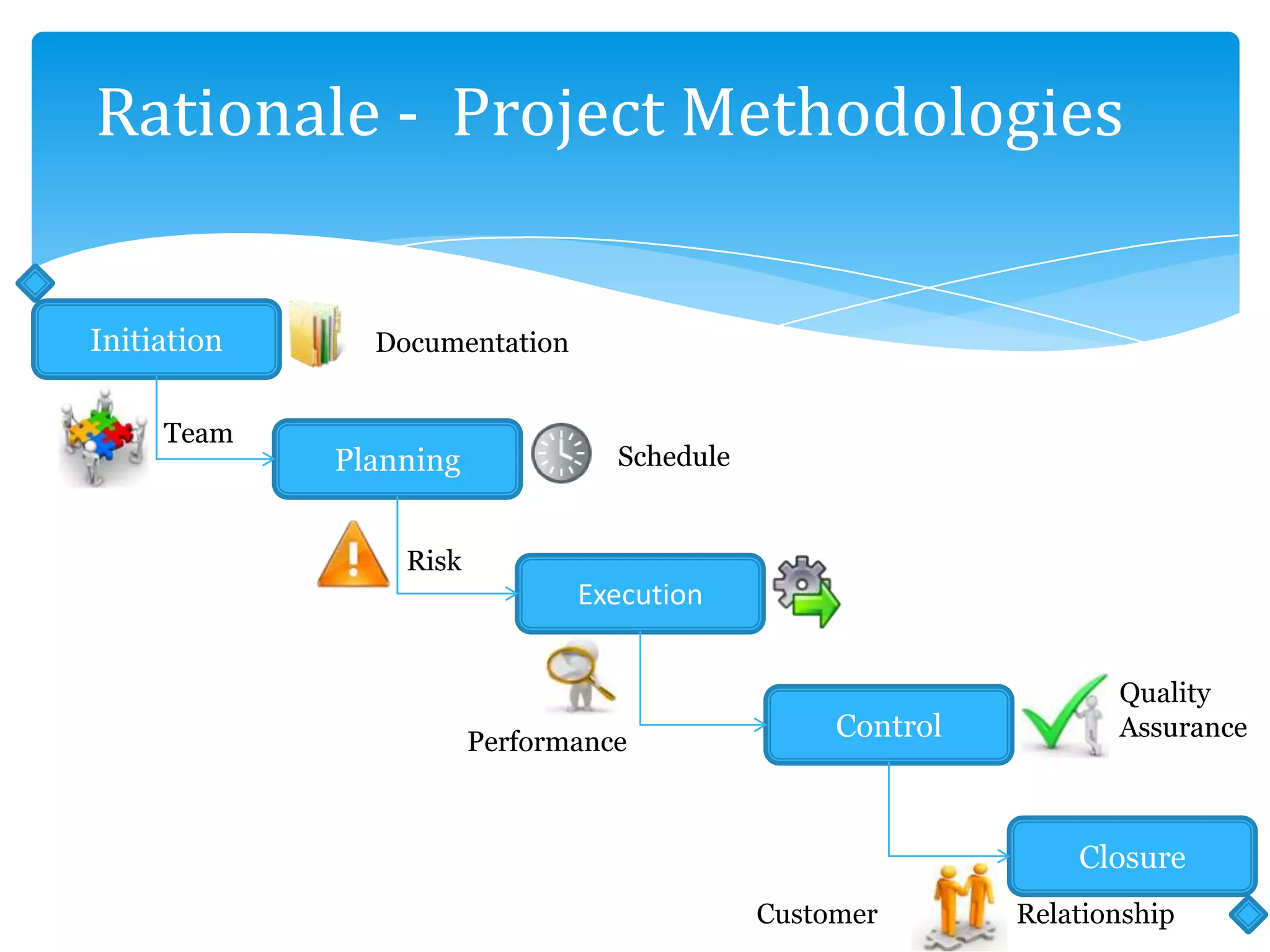
Rationale - Project Methodologies
Initiation
Planning
Execution
Closure
Control
Documentation
Team
Risk
Performance
Schedule
Quality
Assurance
Customer Relationship
Better process & introduce improvements
Flexibility to adapt across multiple projects
Focusing the quality
Manage the complexity
Delivering with consistency
Guiding the team
Eliminate crisis management
Complete the critical documentation
Reusable knowledge asset improve future projects
Maintain the communications and rapport
PMM – The Benefits
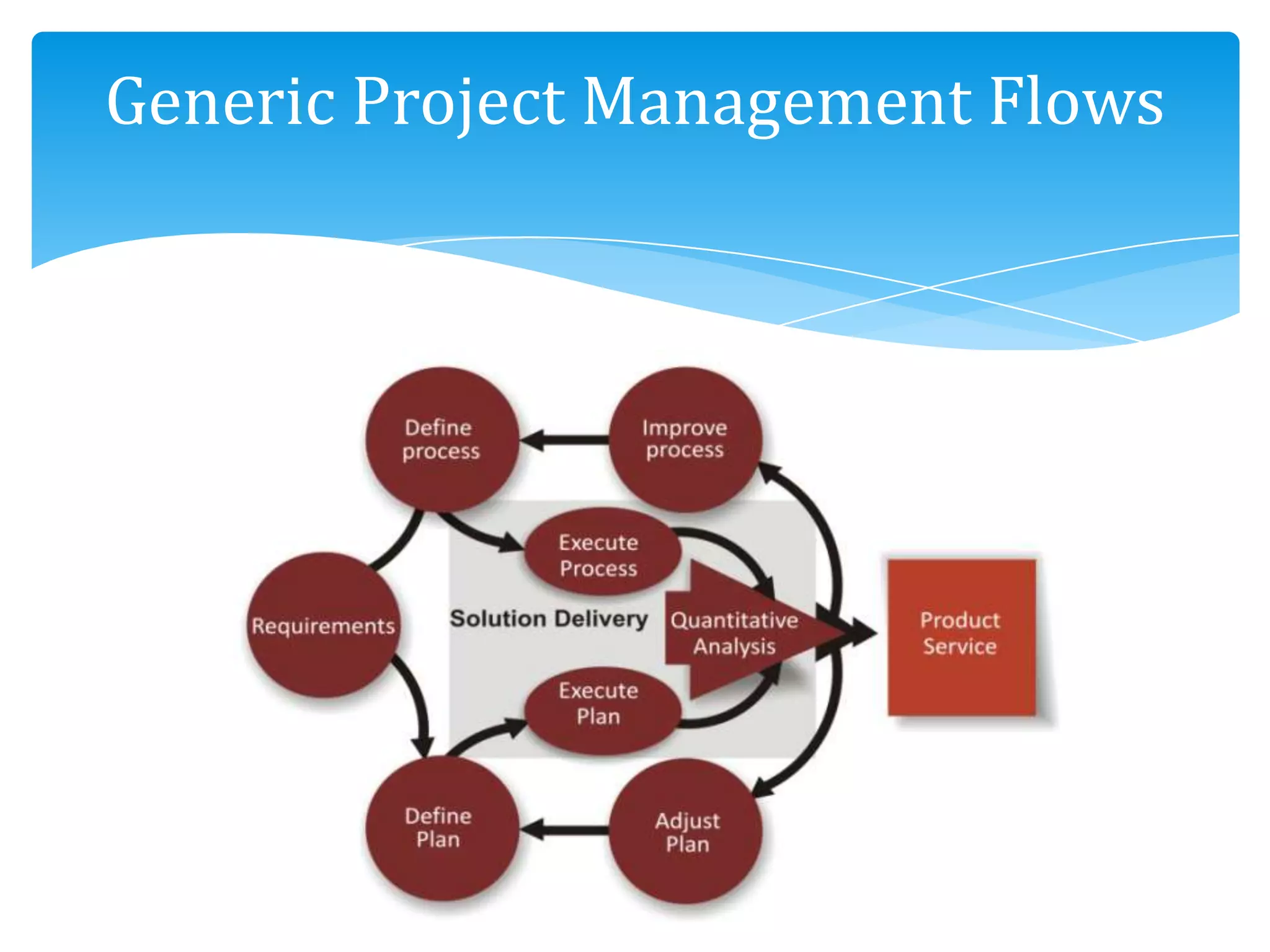
Generic Project Management Flows
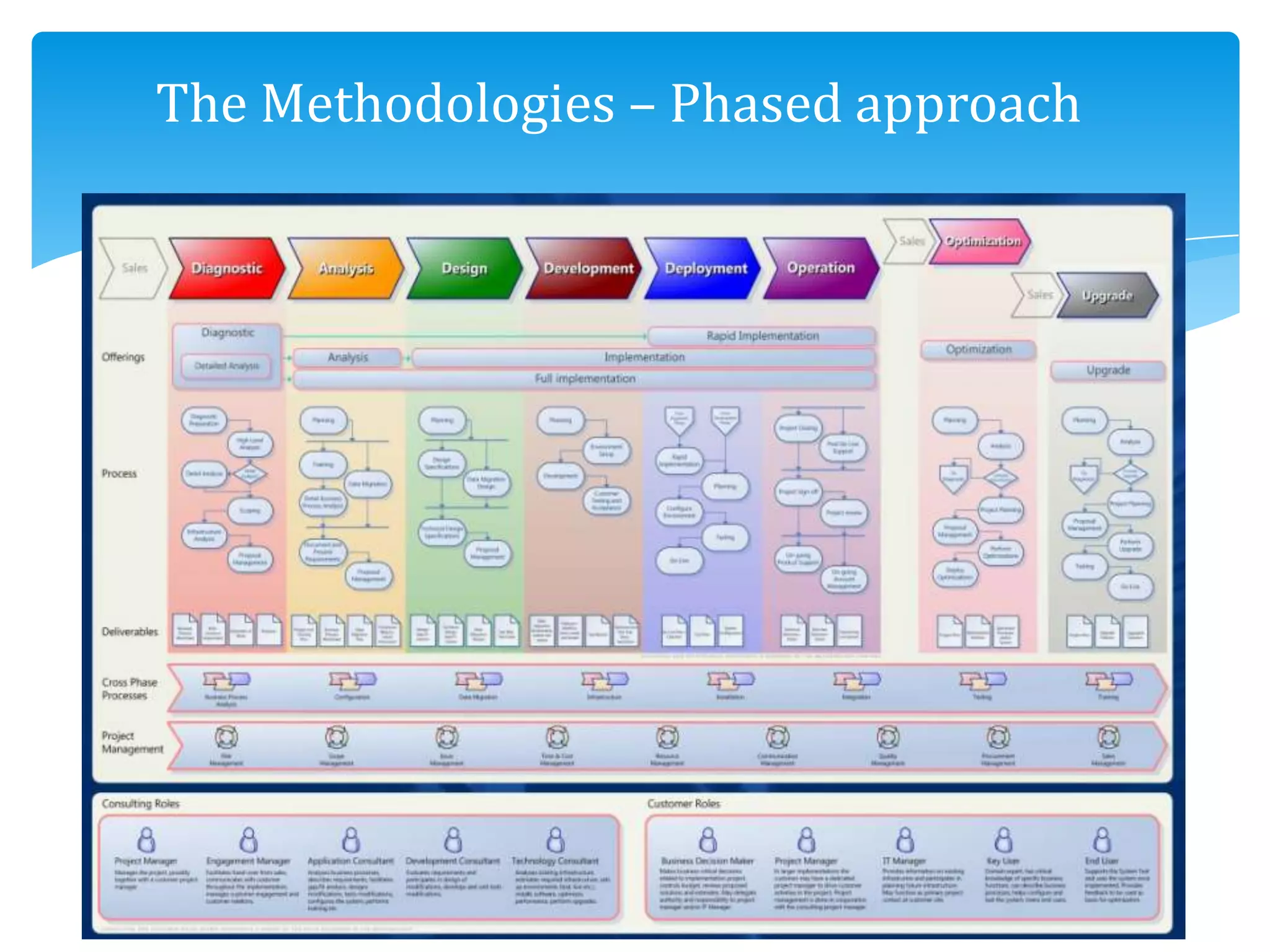
The Methodologies – Phased approach
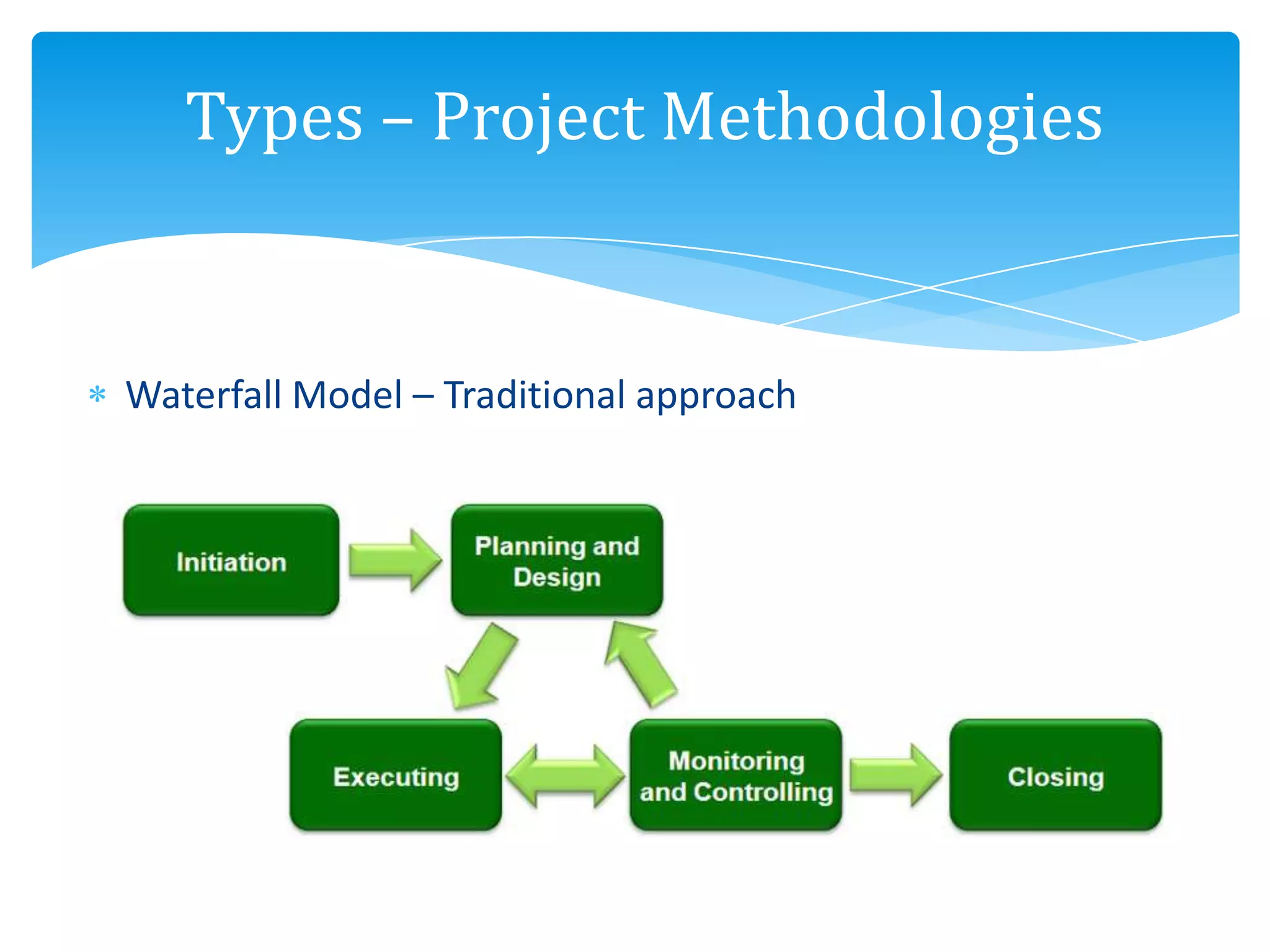
Waterfall Model – Traditional approach
Types – Project Methodologies
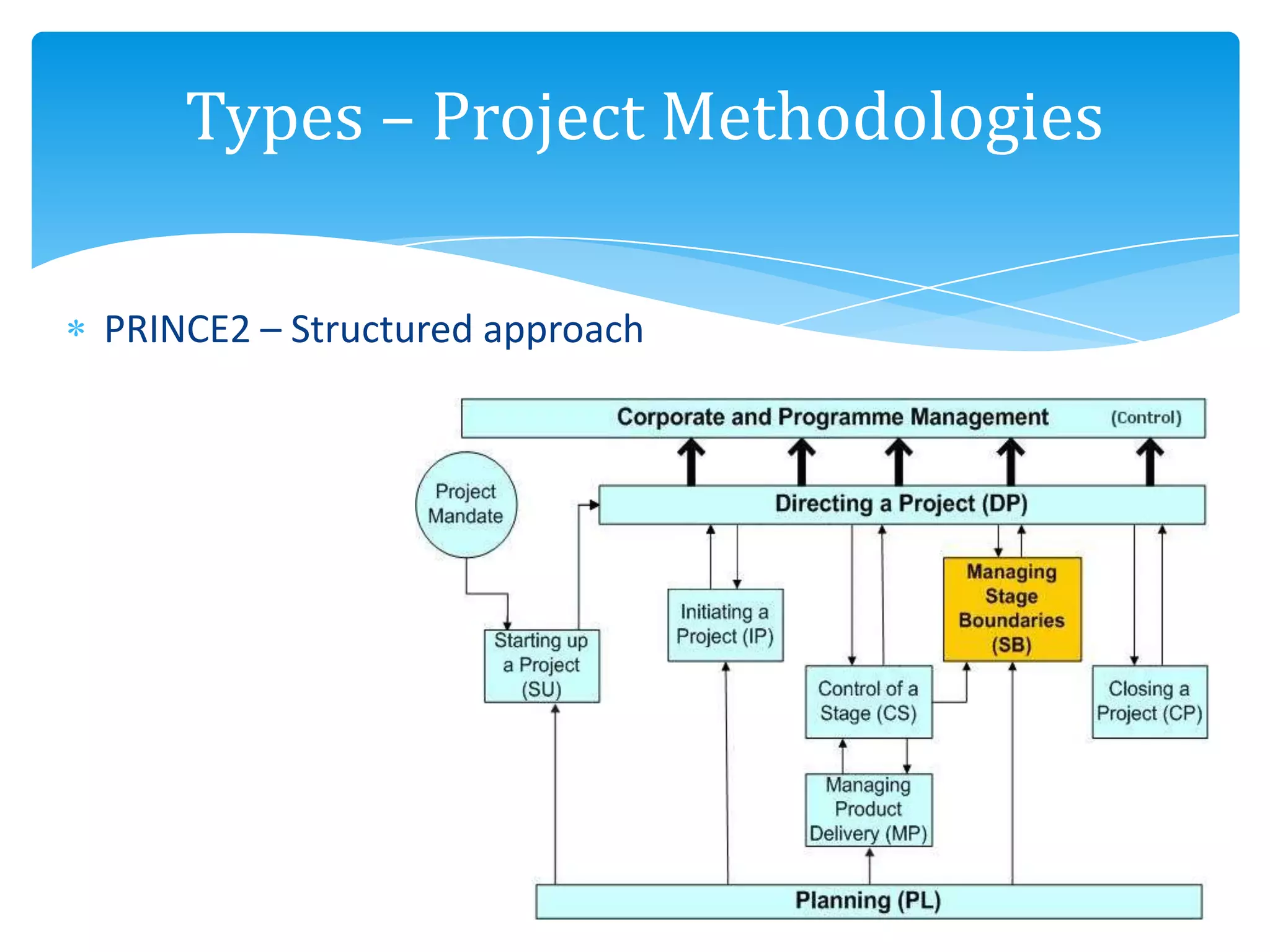
PRINCE2 – Structured approach
Types – Project Methodologies
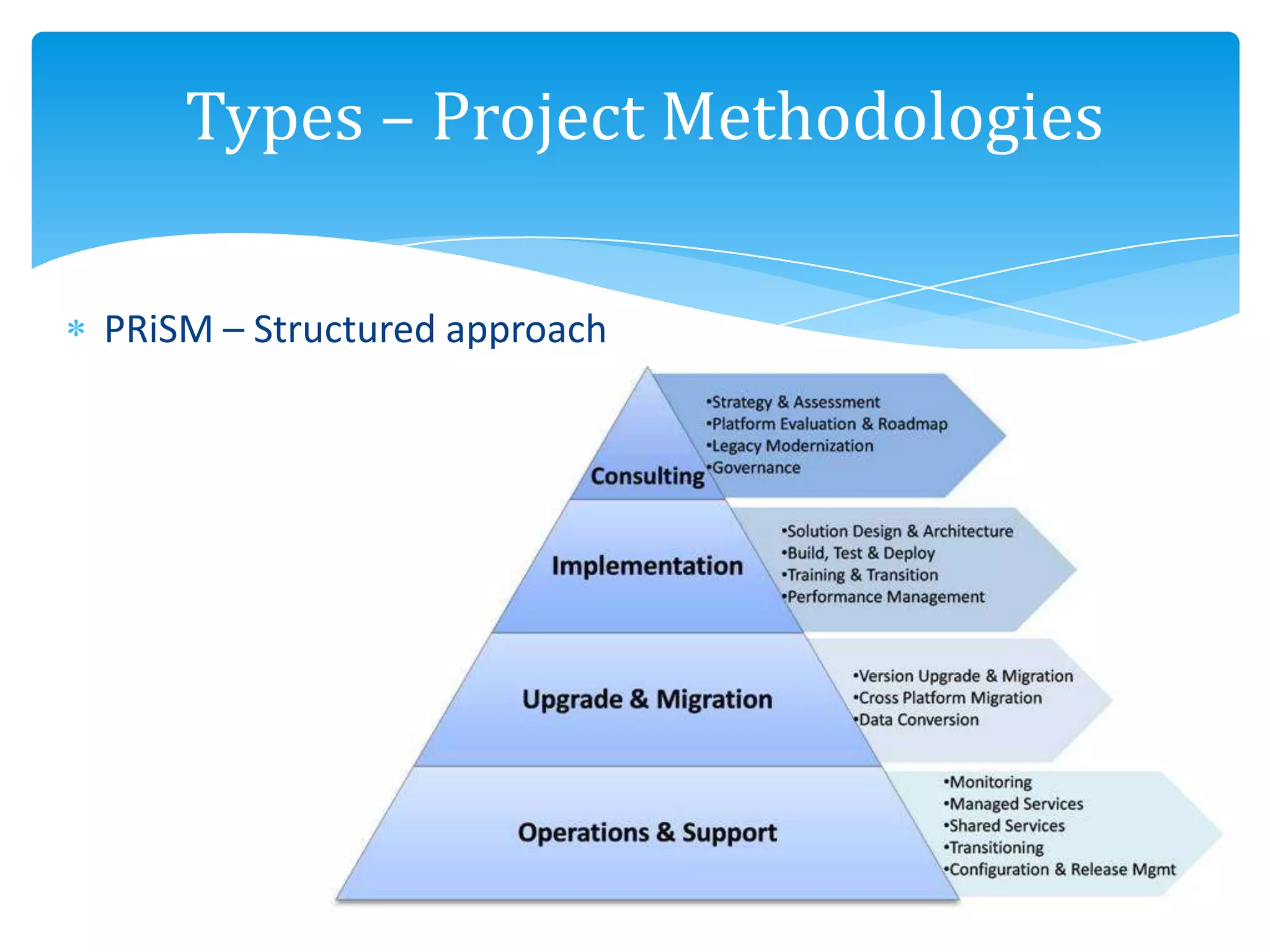
PRiSM – Structured approach
Types – Project Methodologies
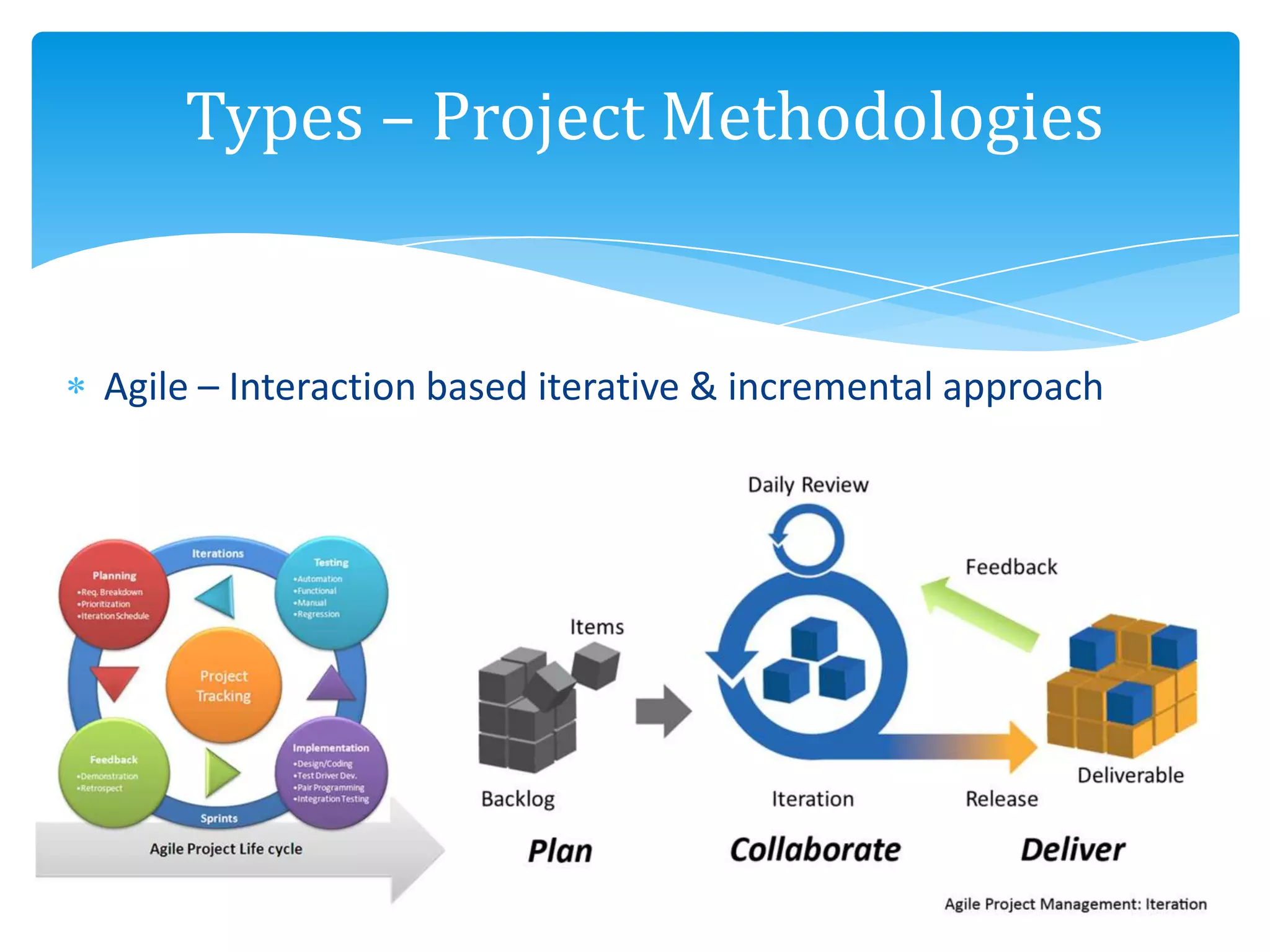
Agile – Interaction based iterative & incremental approach
Types – Project Methodologies
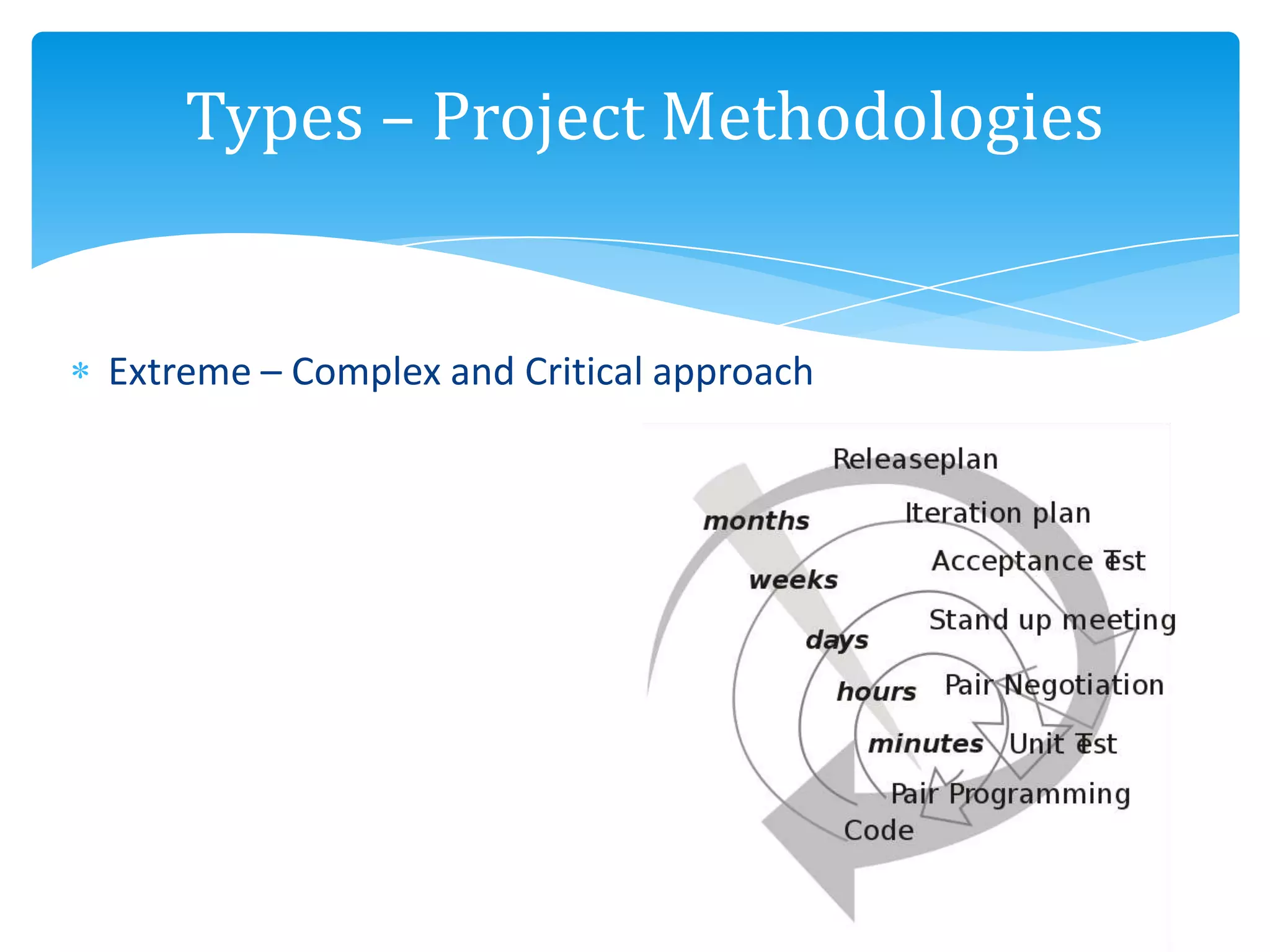
Extreme – Complex and Critical approach
Types – Project Methodologies
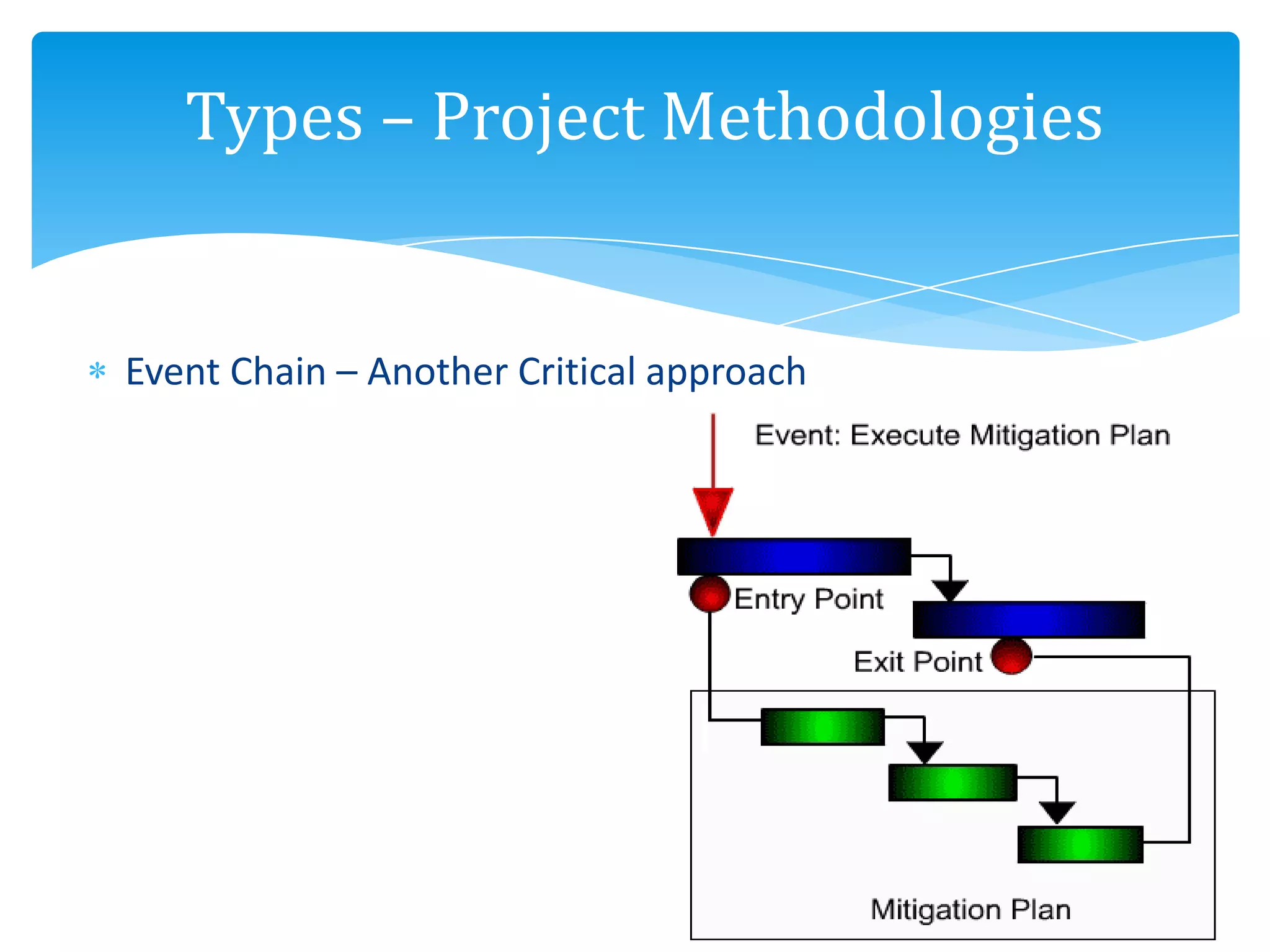
Event Chain – Another Critical approach
Types – Project Methodologies
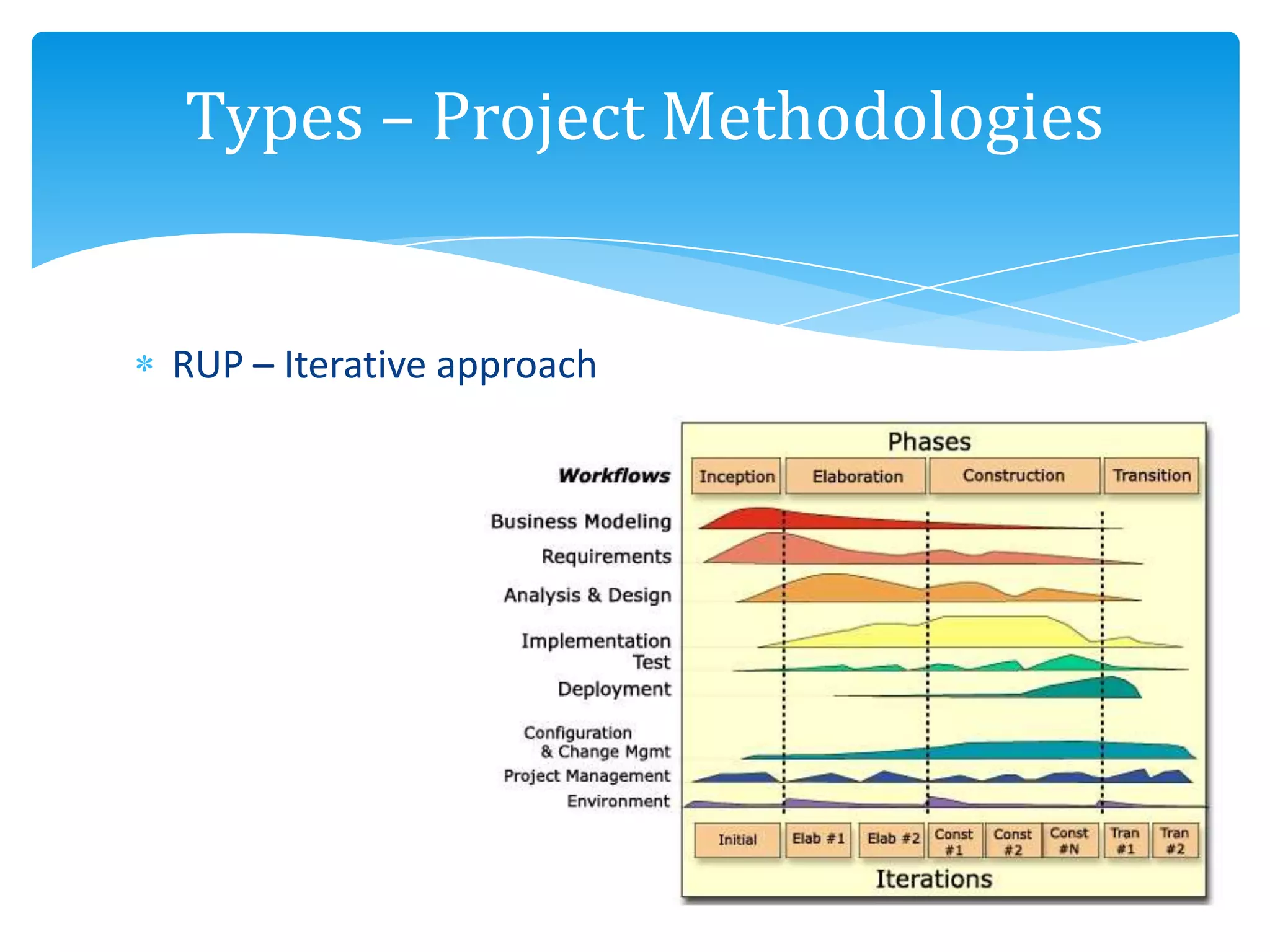
RUP – Iterative approach
Types – Project Methodologies
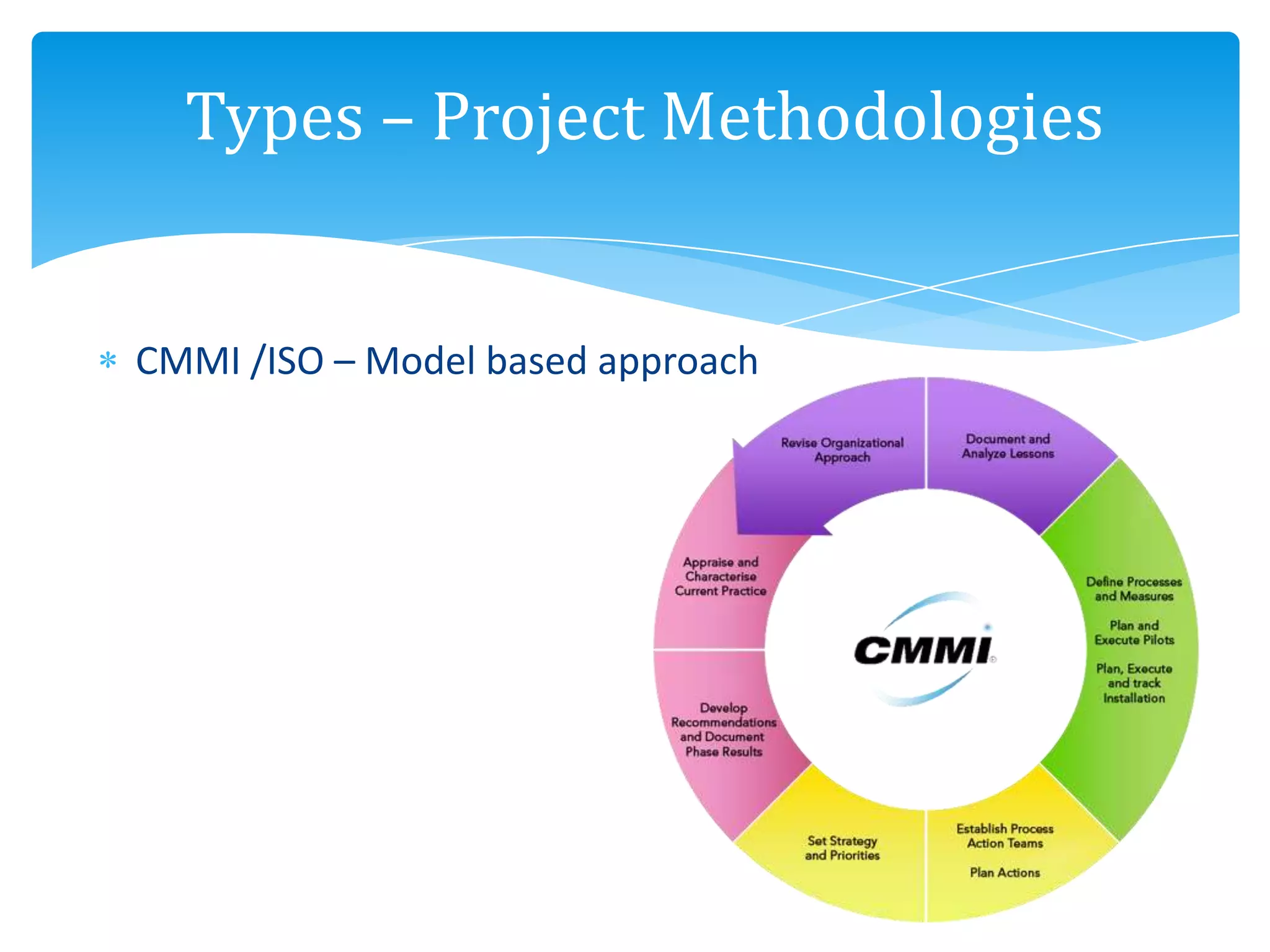
CMMI /ISO – Model based approach
Types – Project Methodologies
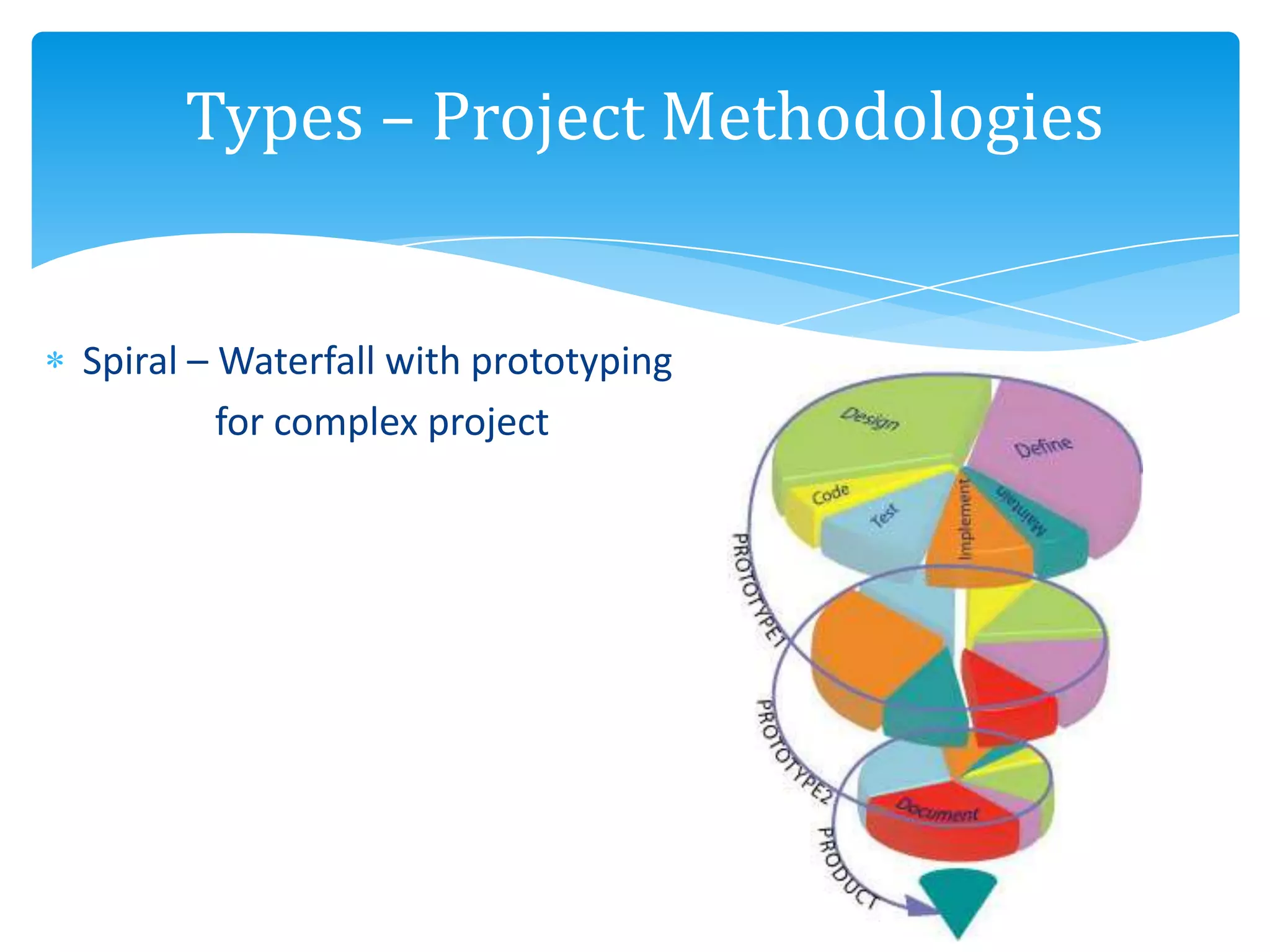
Spiral – Waterfall with prototyping
for complex project
Types – Project Methodologies
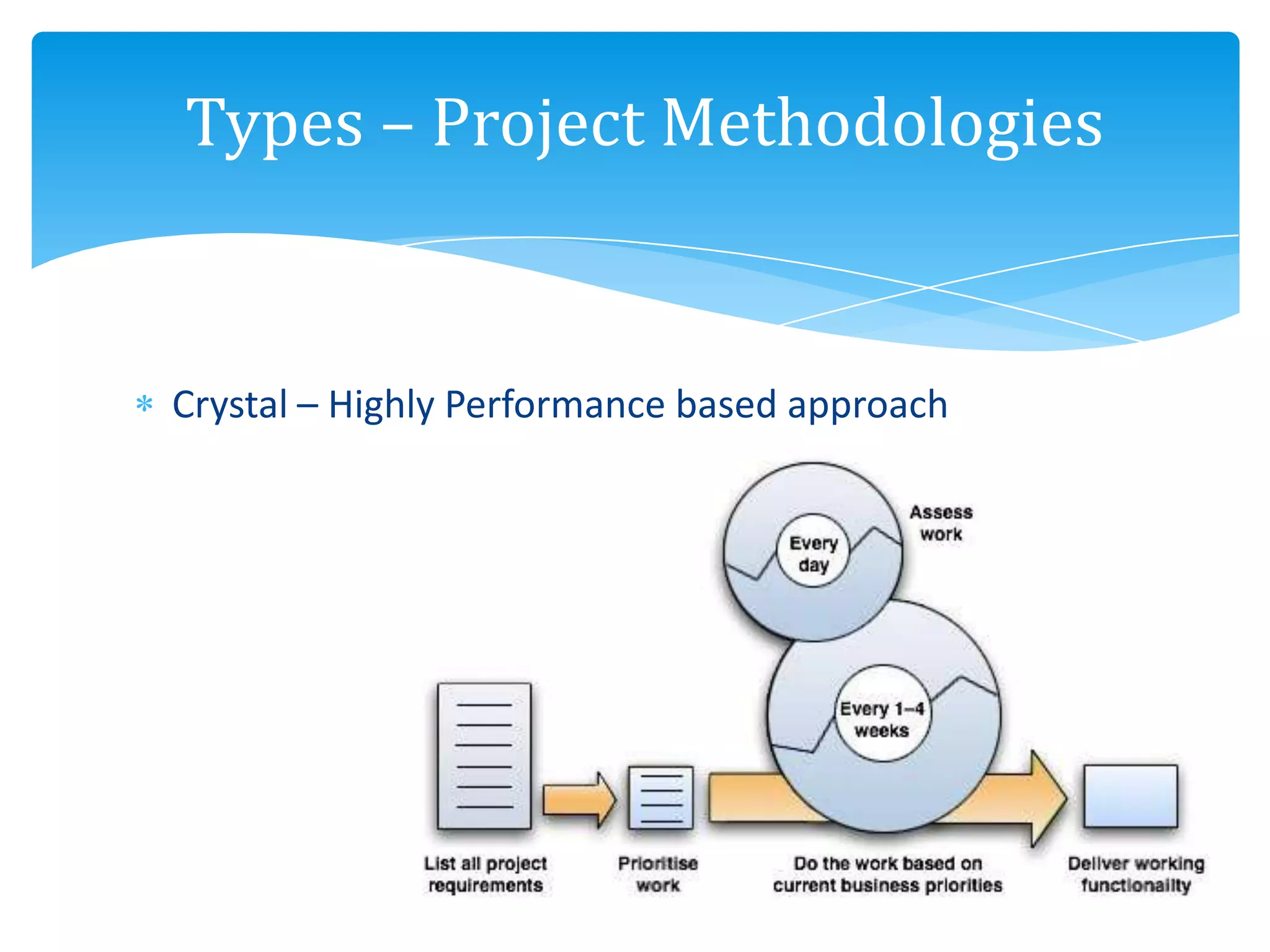
Crystal – Highly Performance based approach
Types – Project Methodologies
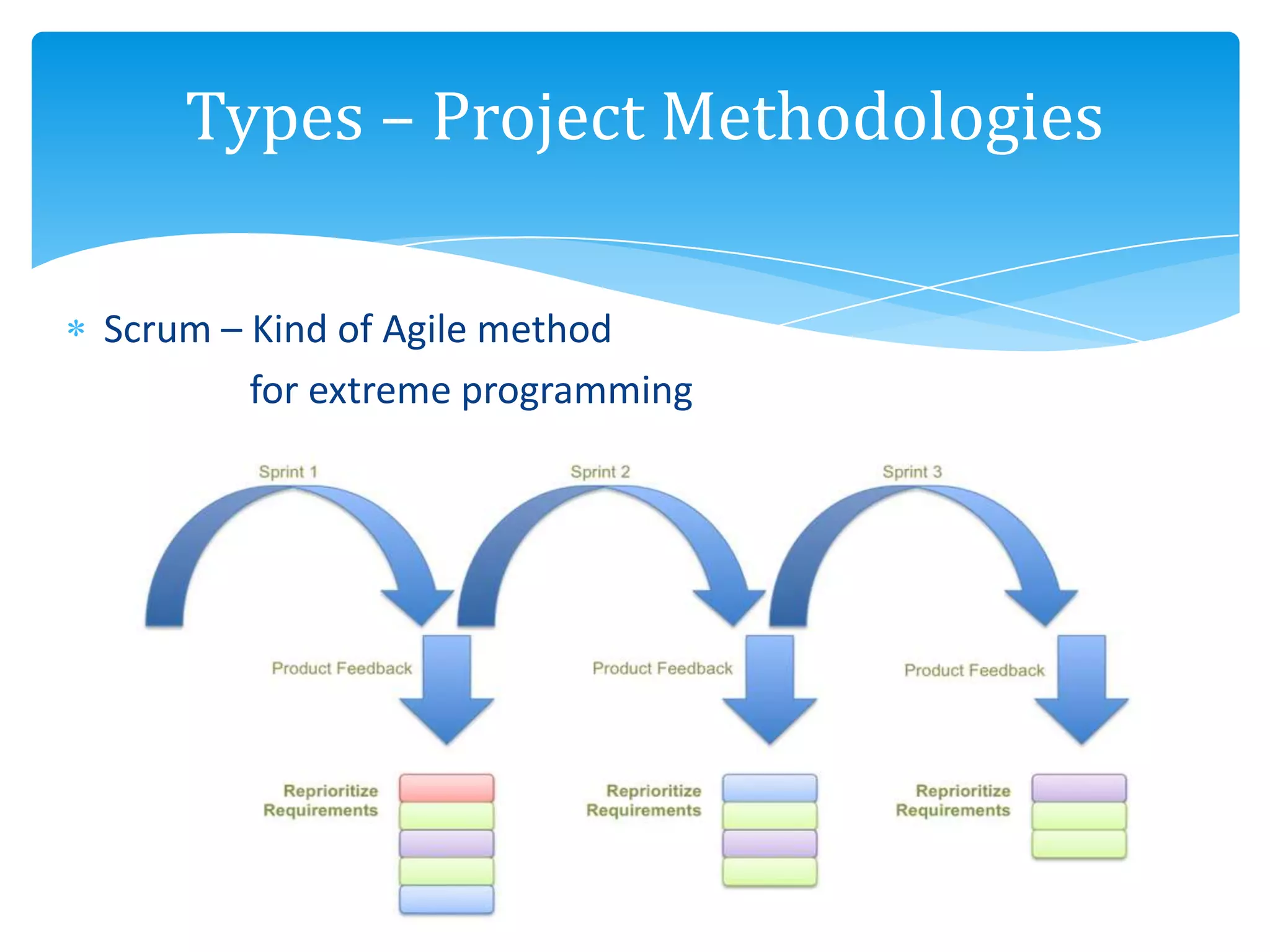
Scrum – Kind of Agile method
for extreme programming
Types – Project Methodologies
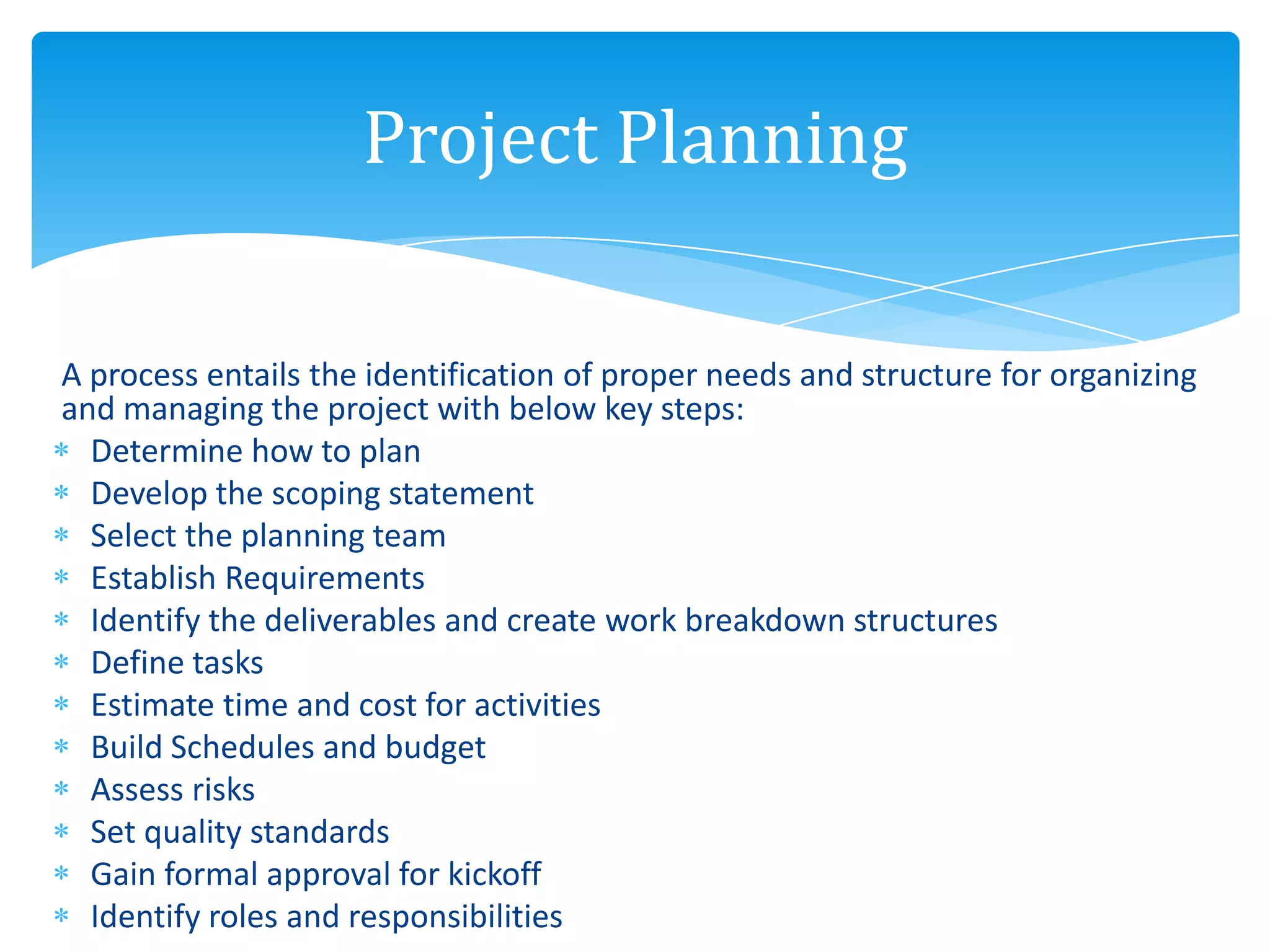
A process entails the identification of proper needs and structure for organizing
and managing the project with below key steps:
Determine how to plan
Develop the scoping statement
Select the planning team
Establish Requirements
Identify the deliverables and create work breakdown structures
Define tasks
Estimate time and cost for activities
Build Schedules and budget
Assess risks
Set quality standards
Gain formal approval for kickoff
Identify roles and responsibilities
Project Planning
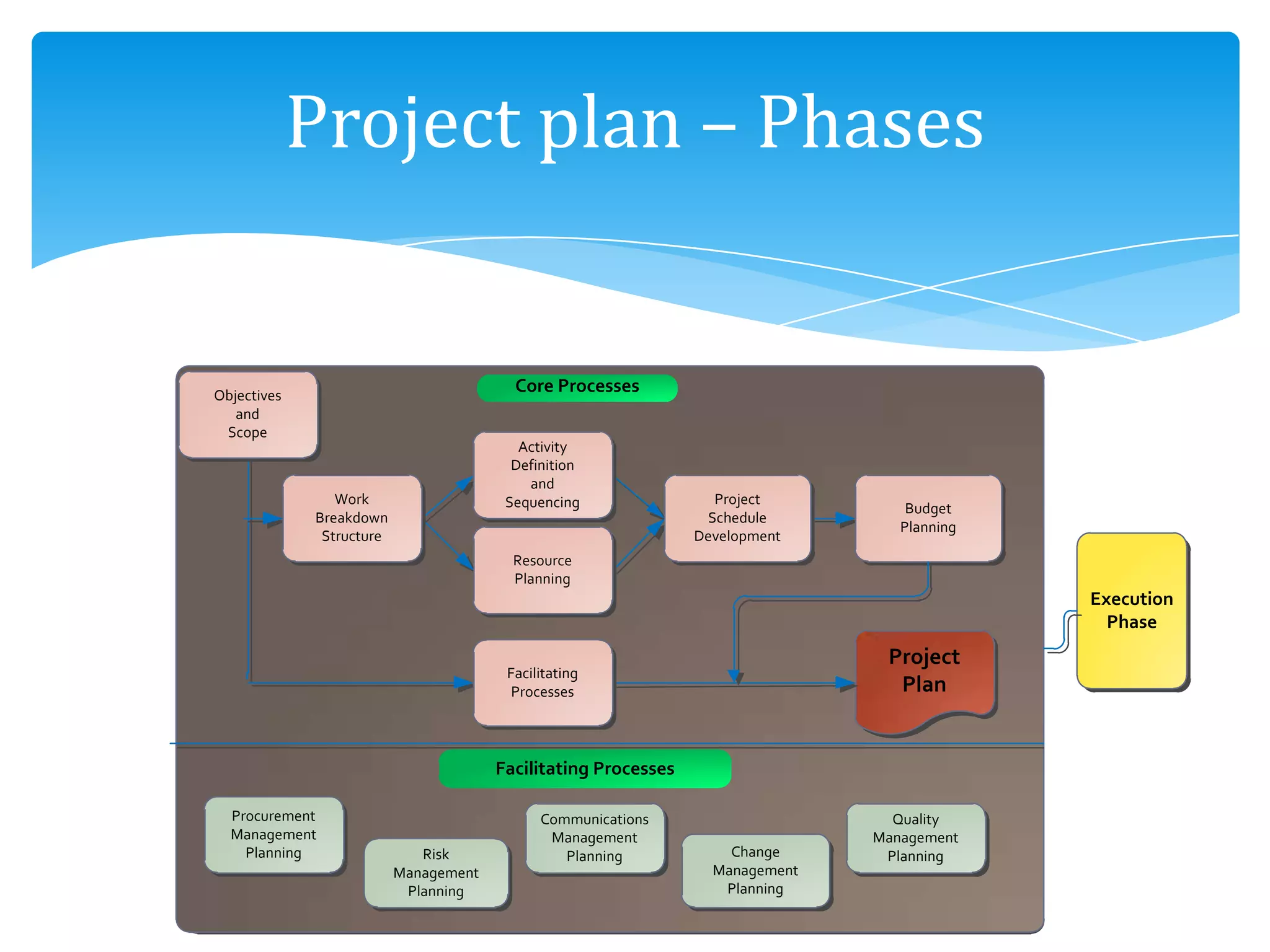
Project plan – Phases
Facilitating Processes
Core Processes
Execution
Phase
Project
Plan
Objectives
and
Scope
Work
Breakdown
Structure
Activity
Definition
and
Sequencing
Resource
Planning
Budget
Planning
Project
Schedule
Development
Facilitating
Processes
Procurement
Management
Planning
Communications
Management
PlanningRisk
Management
Planning
Change
Management
Planning
Quality
Management
Planning

Project management methodologies and planning

  • 1.
  • 2.
    PMM comprise ofbelow approaches to manage events occurring in SDLC of a project framework : Defining set of steps i.e. processes Prepare guidelines & standard methods Define Activities , tasks , techniques, tools , roles and responsibilities , milestone Create principles Procedure to control risks and changes Project Management Methodology
  • 3.
    It differs fromproject to project but the backbone is similar having below set of common activities: Project Scheduling, Cost & Resource Planning Risk Management Planning Quality Assurance Communication Planning Estimate and plan Project Effort Project Tracking and Control High utilization of Technical resources Effective management of phases Define actions with needs PMM – The Key functions
  • 4.
    Rationale - ProjectMethodologies Initiation Planning Execution Closure Control Documentation Team Risk Performance Schedule Quality Assurance Customer Relationship
  • 5.
    Better process &introduce improvements Flexibility to adapt across multiple projects Focusing the quality Manage the complexity Delivering with consistency Guiding the team Eliminate crisis management Complete the critical documentation Reusable knowledge asset improve future projects Maintain the communications and rapport PMM – The Benefits
  • 6.
  • 7.
    The Methodologies –Phased approach
  • 8.
    Waterfall Model –Traditional approach Types – Project Methodologies
  • 9.
    PRINCE2 – Structuredapproach Types – Project Methodologies
  • 10.
    PRiSM – Structuredapproach Types – Project Methodologies
  • 11.
    Agile – Interactionbased iterative & incremental approach Types – Project Methodologies
  • 12.
    Extreme – Complexand Critical approach Types – Project Methodologies
  • 13.
    Event Chain –Another Critical approach Types – Project Methodologies
  • 14.
    RUP – Iterativeapproach Types – Project Methodologies
  • 15.
    CMMI /ISO –Model based approach Types – Project Methodologies
  • 16.
    Spiral – Waterfallwith prototyping for complex project Types – Project Methodologies
  • 17.
    Crystal – HighlyPerformance based approach Types – Project Methodologies
  • 18.
    Scrum – Kindof Agile method for extreme programming Types – Project Methodologies
  • 19.
    A process entailsthe identification of proper needs and structure for organizing and managing the project with below key steps: Determine how to plan Develop the scoping statement Select the planning team Establish Requirements Identify the deliverables and create work breakdown structures Define tasks Estimate time and cost for activities Build Schedules and budget Assess risks Set quality standards Gain formal approval for kickoff Identify roles and responsibilities Project Planning
  • 20.
    Project plan –Phases Facilitating Processes Core Processes Execution Phase Project Plan Objectives and Scope Work Breakdown Structure Activity Definition and Sequencing Resource Planning Budget Planning Project Schedule Development Facilitating Processes Procurement Management Planning Communications Management PlanningRisk Management Planning Change Management Planning Quality Management Planning