



Credit risk of UAE banksSupervised By: Dr. Hussein Al-TamimiStudent Name: MorshedAbdulqaderParkook
Credit RISK analysis: an empirical study OF UAE BANKS
Research MethodologyThe purpose of the study     The purpose of the study is to analyze the significance of some credit factors generally considered important by credit analysisThe Scope of the study      The study focuses on credit risk assessment in a representative selection of UAE banks and corporations.Sources of data      Data were obtained from banks and corporations financial reports (report of condition and income statement)Hypotheses of the study      In this study I predict that there is a really strong relationship between corporate financial performance and credit risk banks may get in if the lend to the wrong borrower.
Credit RiskCredit risk: is the oldest form of risk in the financial markets. If credit can be defined as “nothing but the expectation of a sum of money within some limited time,” then credit risk is the chance that this expectation will not be met. Types: A consumer or business does not make a payment due on a mortgage loan, credit card.A business does not pay a A/R (invoices) when due.A business does not pay an employee's earned wages when due.A business or government bond issuer does not make a payment on a coupon or principal payment when due.An insolvent insurance company does not pay a policy obligationAn insolvent bank won't return funds to a depositor. (FDIC !)
Credit risk managementCredit risk is defined as the risk arising because borrowers may default on their obligations. Or The probability that some financial institution assets, especially its loans, will decline in value and perhaps become worthless (toxic assets)The concept of adverse selection and moral hazard provide a frame work for understanding the principals that financial institution managers must follow to minimize credit risk and make successful loans.
Principals Of Managing Credit RiskScreening and monitoring prime lending (credibility)Long-term customer relationshipsLoan commitmentsCollateralCompensating balancesCredit rationing
Credit risk analysis methods3 QuestionsIs the borrower creditworthy? The 5Cs of credit: CharacterCapacityCash CollateralConditions
Continue Can the loan agreement be properly structured and documented?Can the lender perfect its claim against the borrower’s earnings and any assets that may be pledged as collateral?Collateral and popular assets pledged
Factors determining the growth and mix of loansThe profile of characteristics of the market area that lenders servesLender size The experience and expertise  of lenders officersThe expected yield that each loan offers Rules & Regulations (UAE real estate, and other rules)
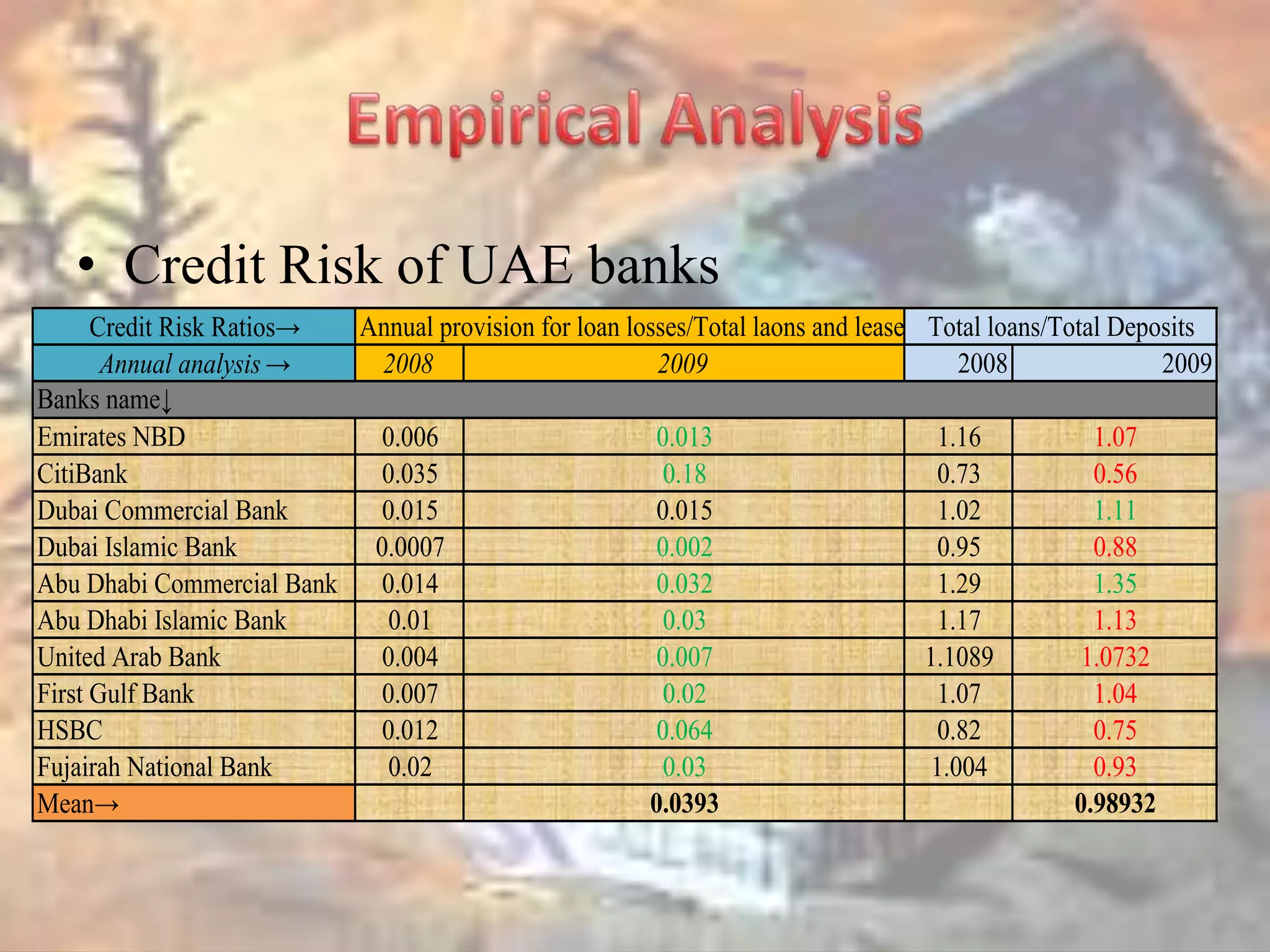
Empirical AnalysisCredit Risk of UAE banks
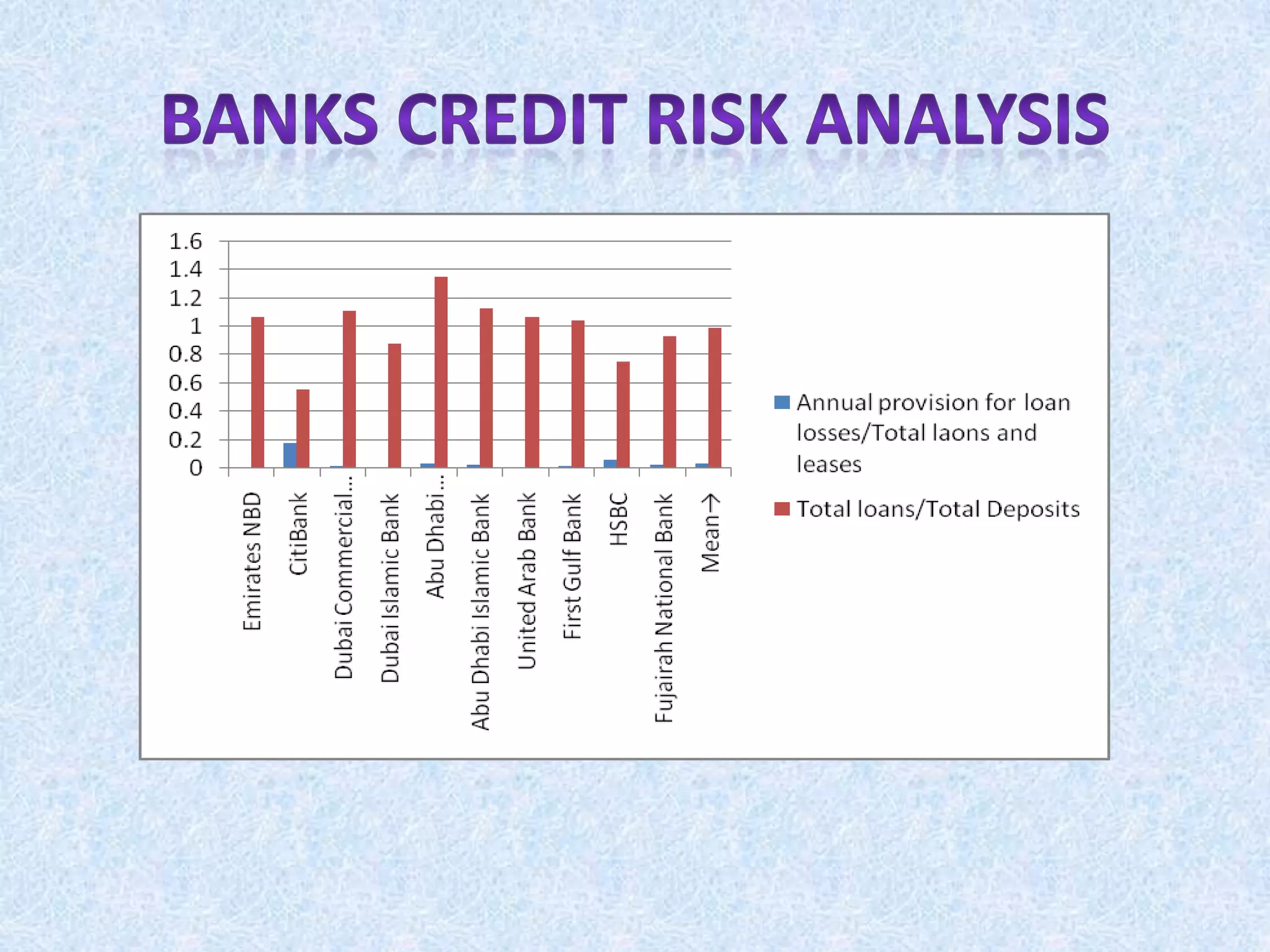
Banks Credit risk analysis
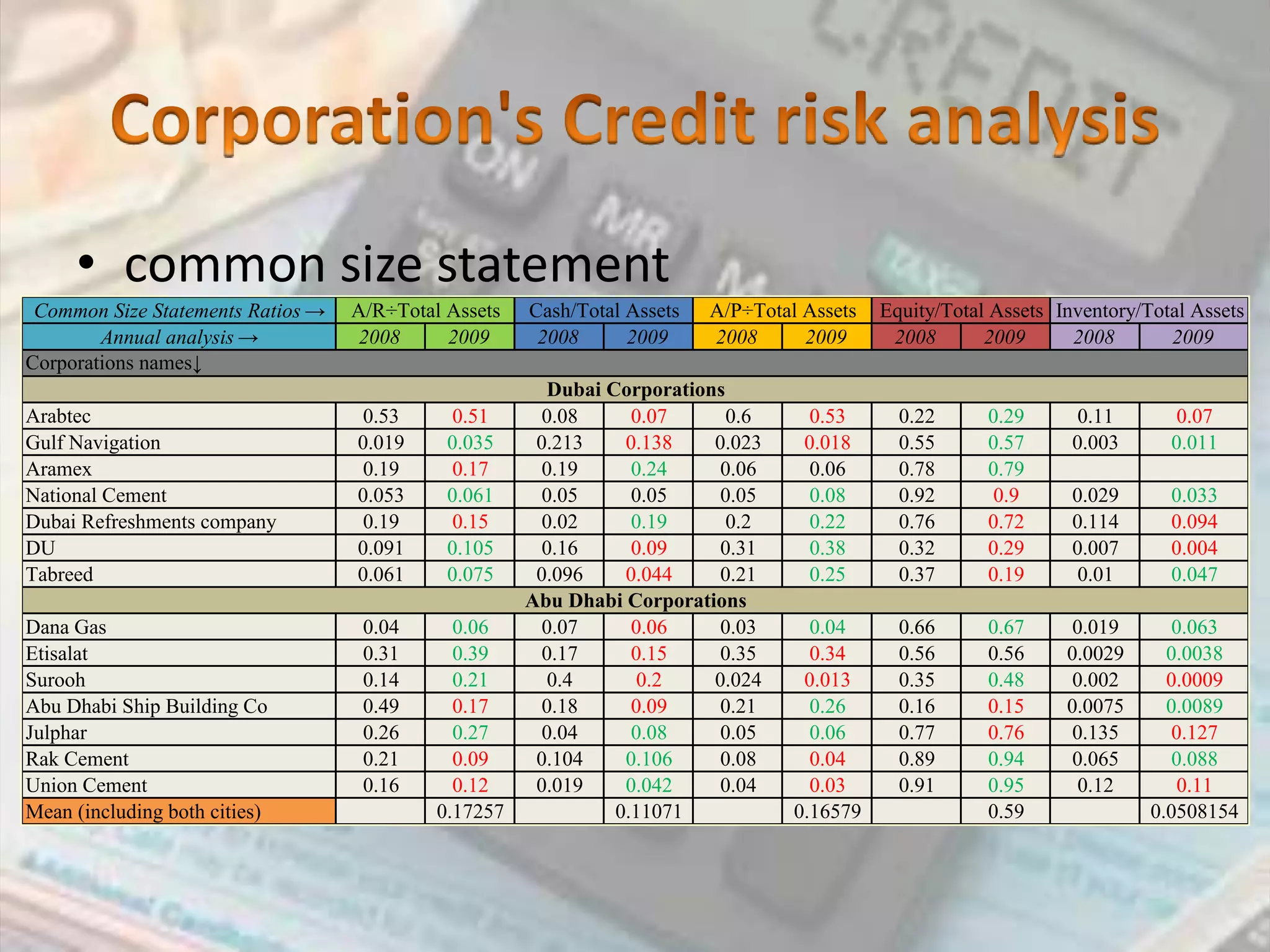
Corporation's Credit risk analysiscommon size statement
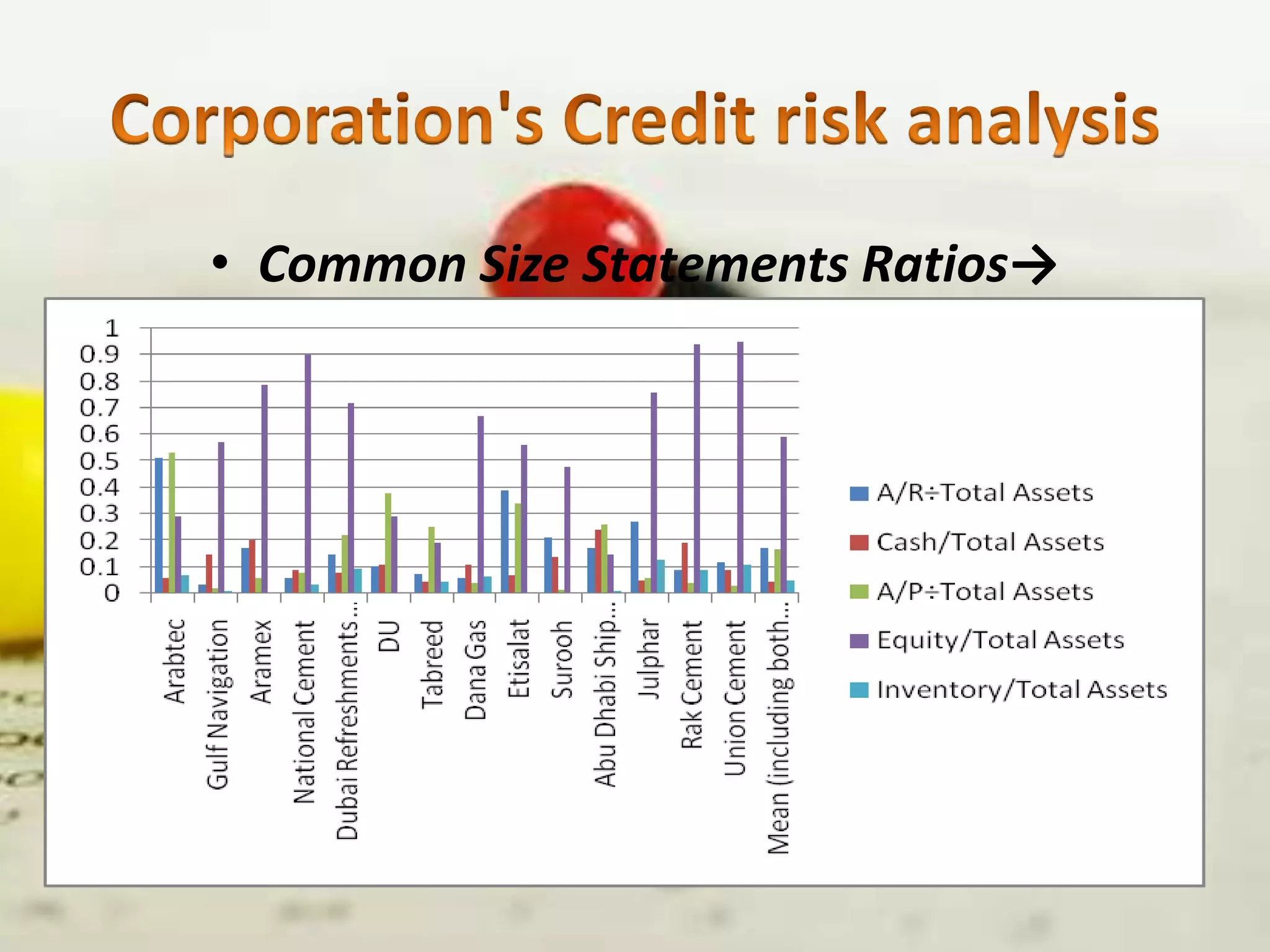
Corporation's Credit risk analysisCommon Size Statements Ratios->
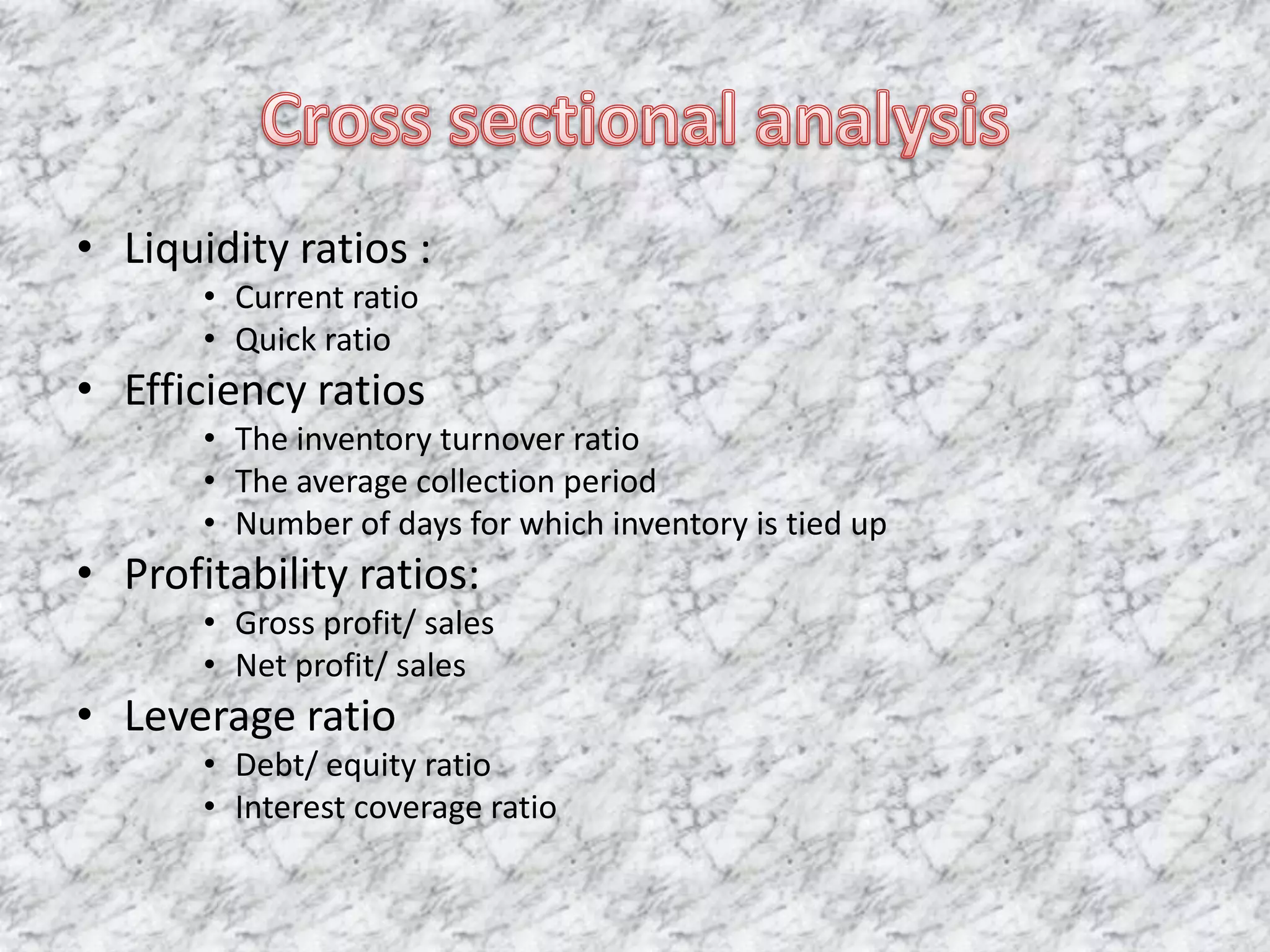
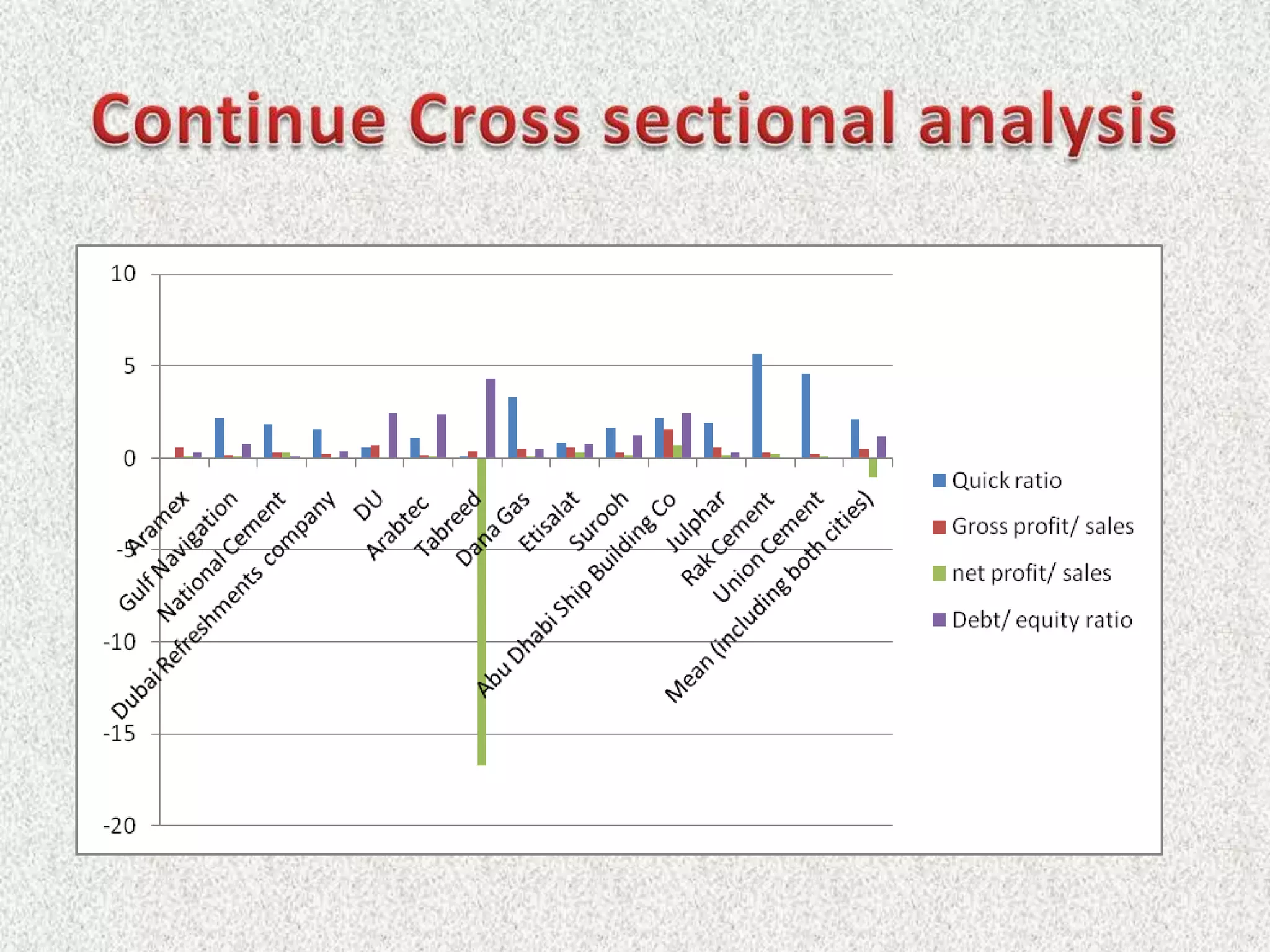
Cross sectional analysis Liquidity ratios : Current ratioQuick ratioEfficiency ratiosThe inventory turnover ratioThe average collection periodNumber of days for which inventory is tied upProfitability ratios: Gross profit/ salesNet profit/ salesLeverage ratioDebt/ equity ratioInterest coverage ratio
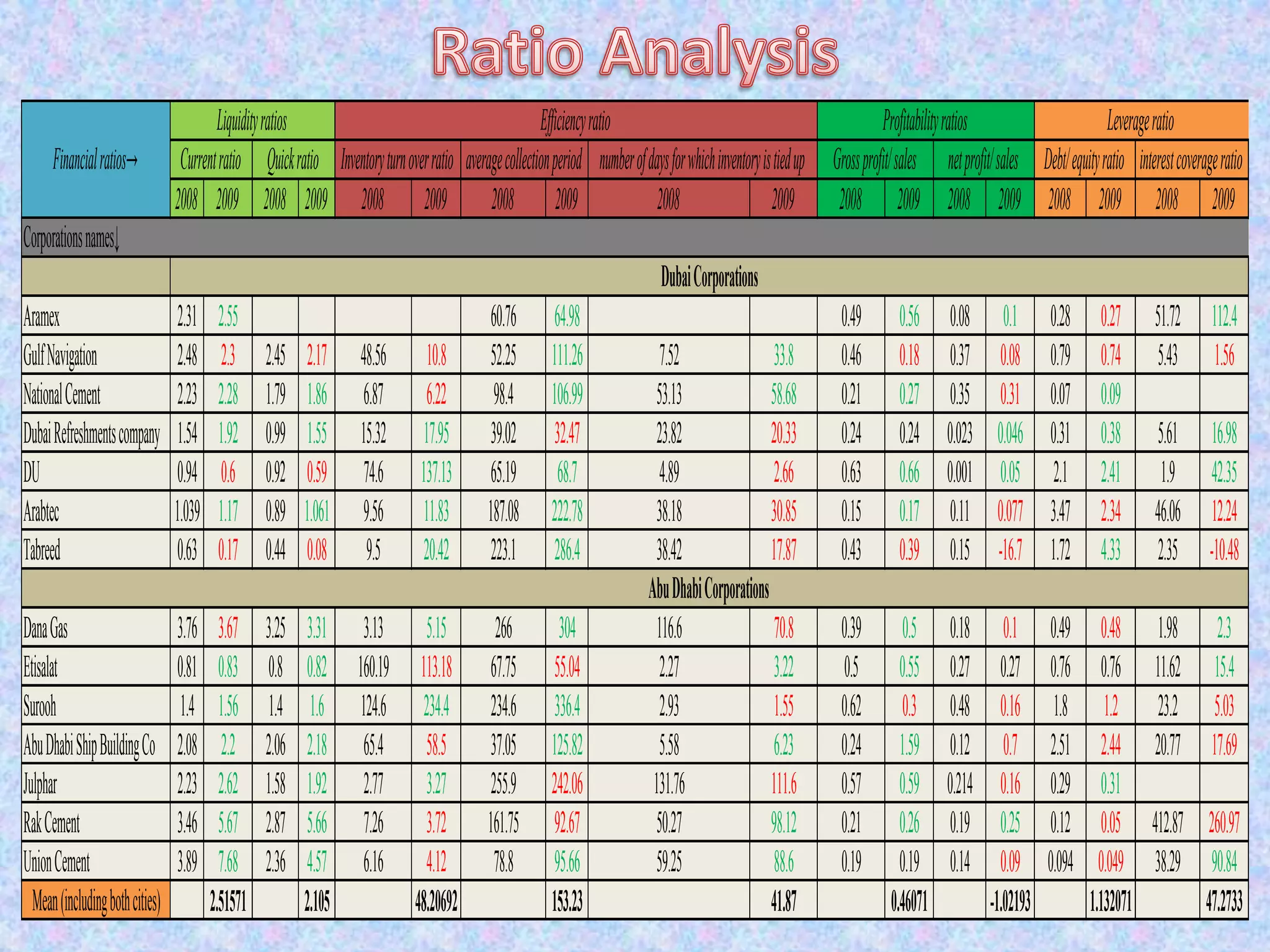
Ratio Analysis
Continue Cross sectional analysis
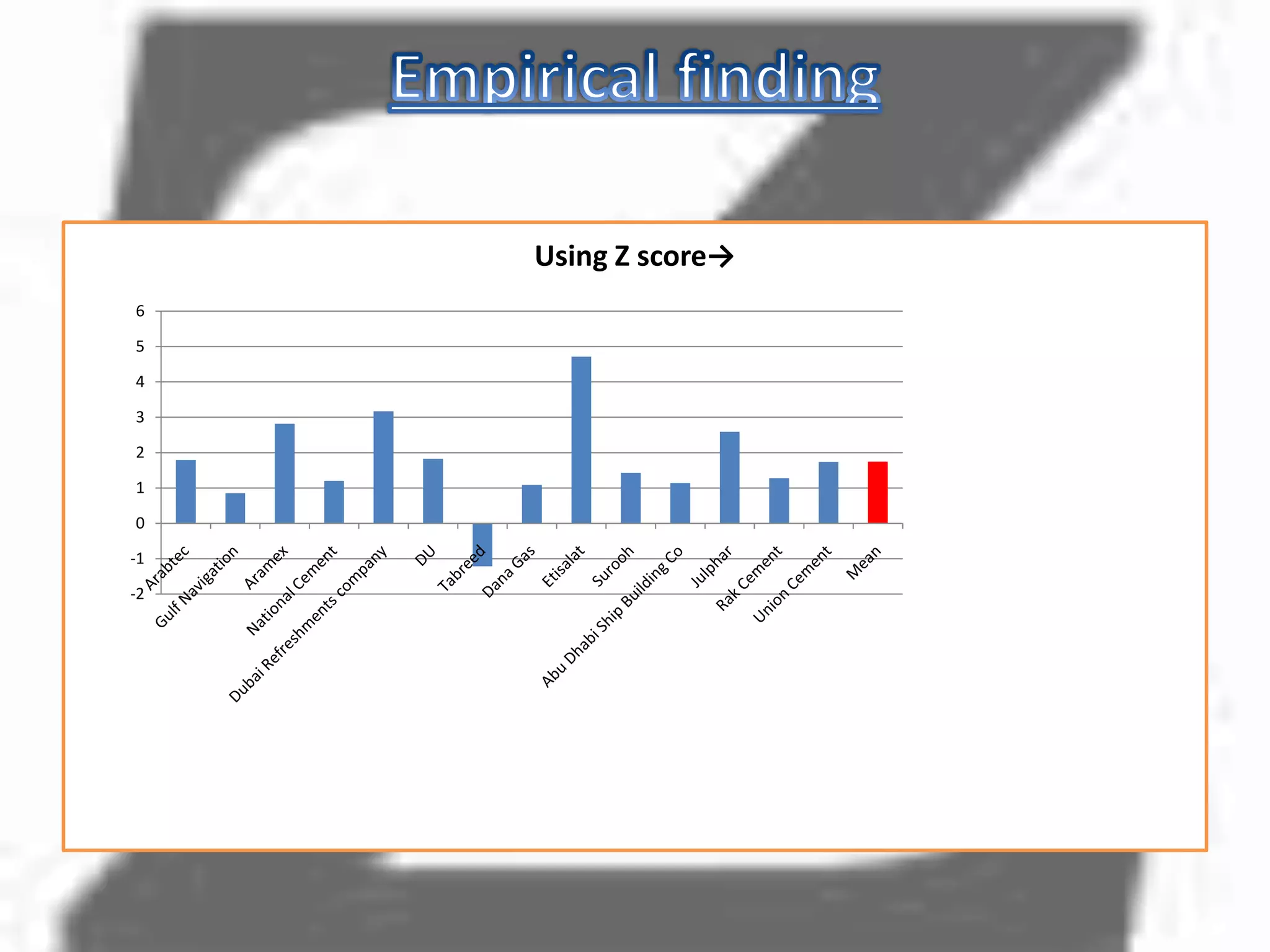
Empirical finding If you remember the previous findings, we mentioned that the best two are Surooh and Etisalat. In this section we found that the best firm is also Etisalat in addition to Abu Dhabi Ship Building Company. And the worse one is Tabreed.
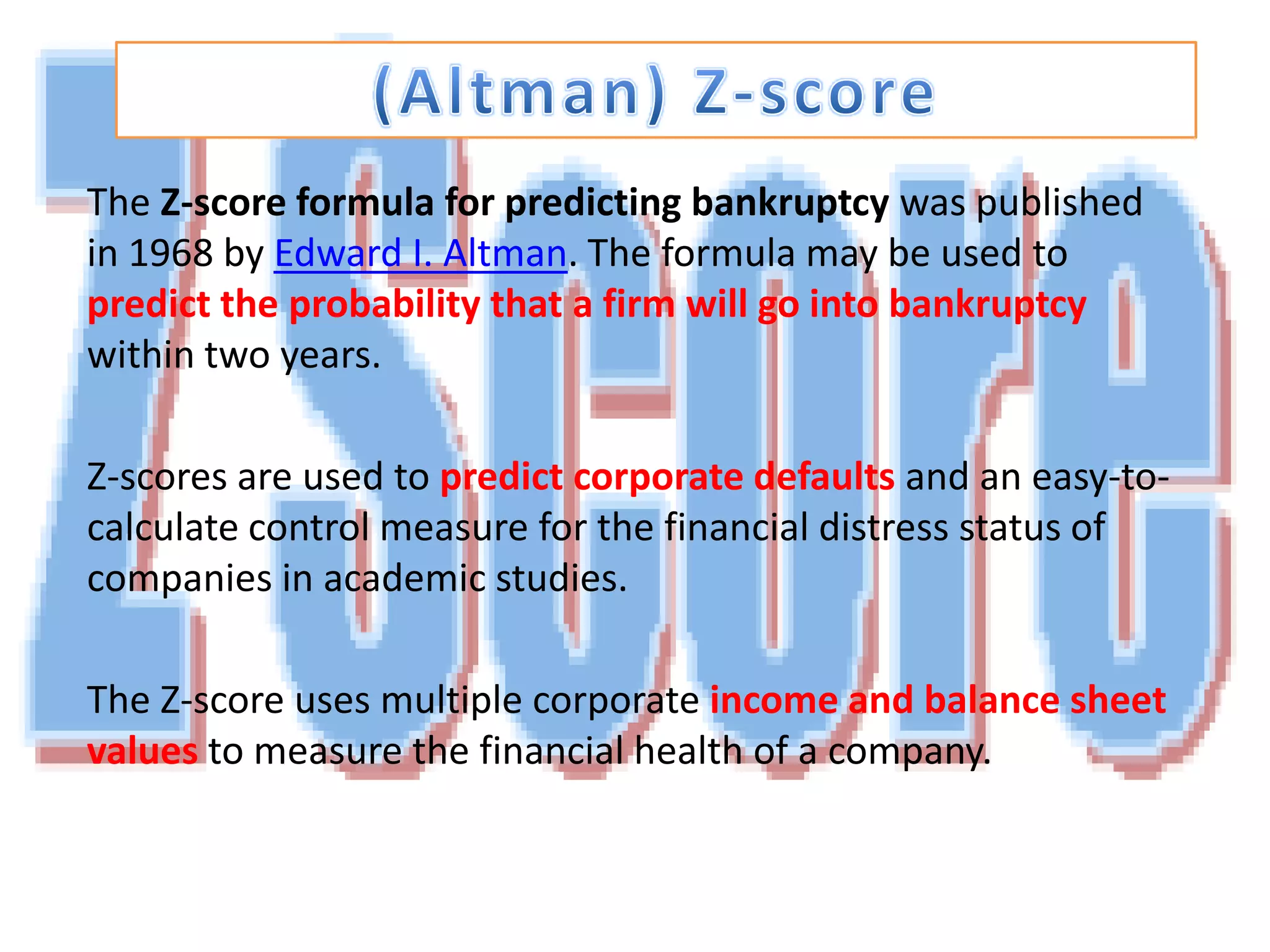
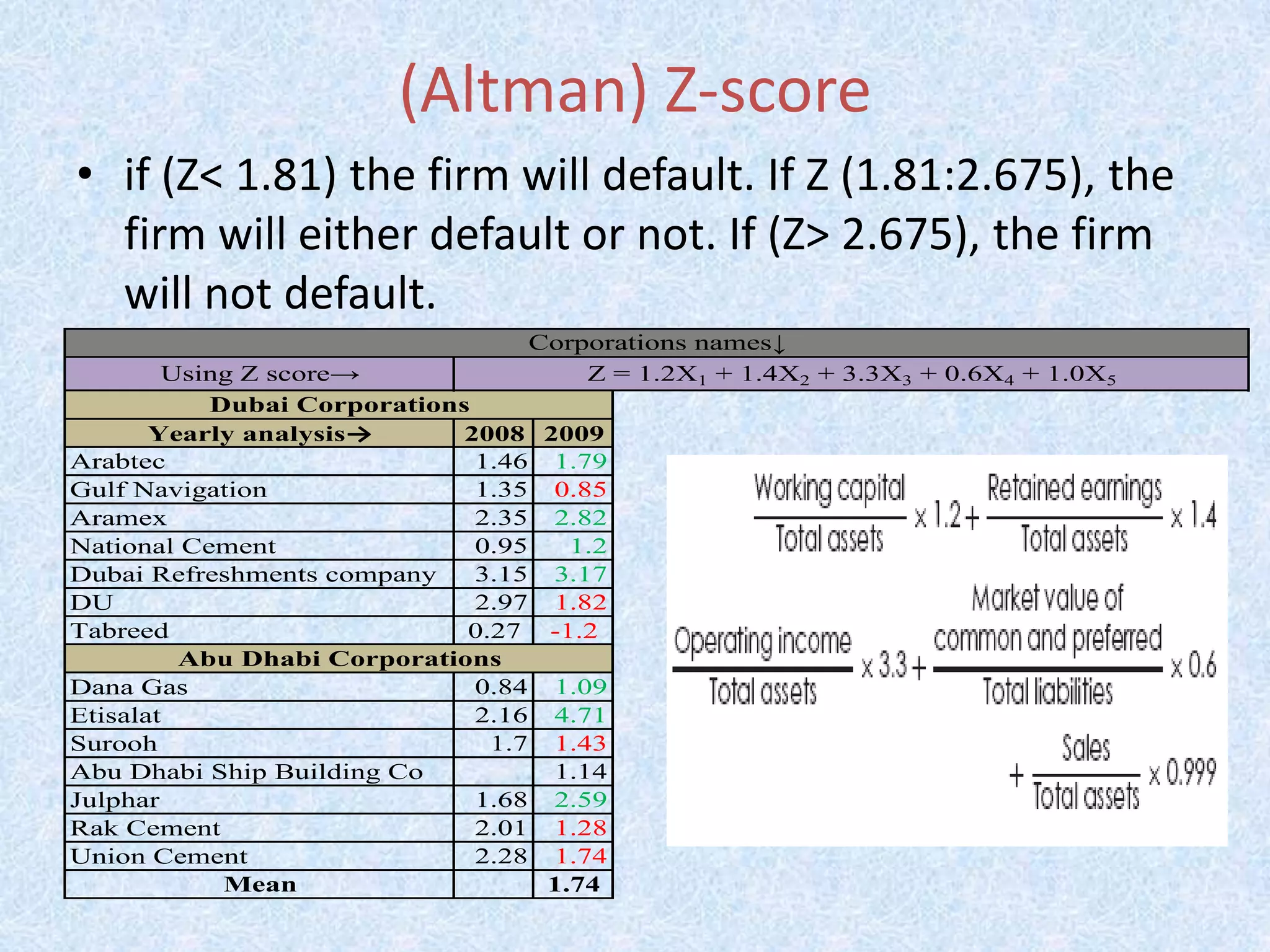
(Altman) Z-scoreThe Z-score formula for predicting bankruptcy was published in 1968 by Edward I. Altman. The formula may be used to predict the probability that a firm will go into bankruptcywithin two years. Z-scores are used to predict corporate defaults and an easy-to-calculate control measure for the financial distress status of companies in academic studies. The Z-score uses multiple corporate income and balance sheet valuesto measure the financial health of a company.
(Altman) Z-scoreif (Z< 1.81) the firm will default. If Z (1.81:2.675), the firm will either default or not. If (Z> 2.675), the firm will not default.
Empirical finding
Risk Premium analyzingThe higher the rate of return will lead to higher the probability of default and high credit risk for lender points of view.Keep in mind also that factors other than credit risk also affect the premium. Financial market participants often mention liquidity of a debt issue as being important for the premium.
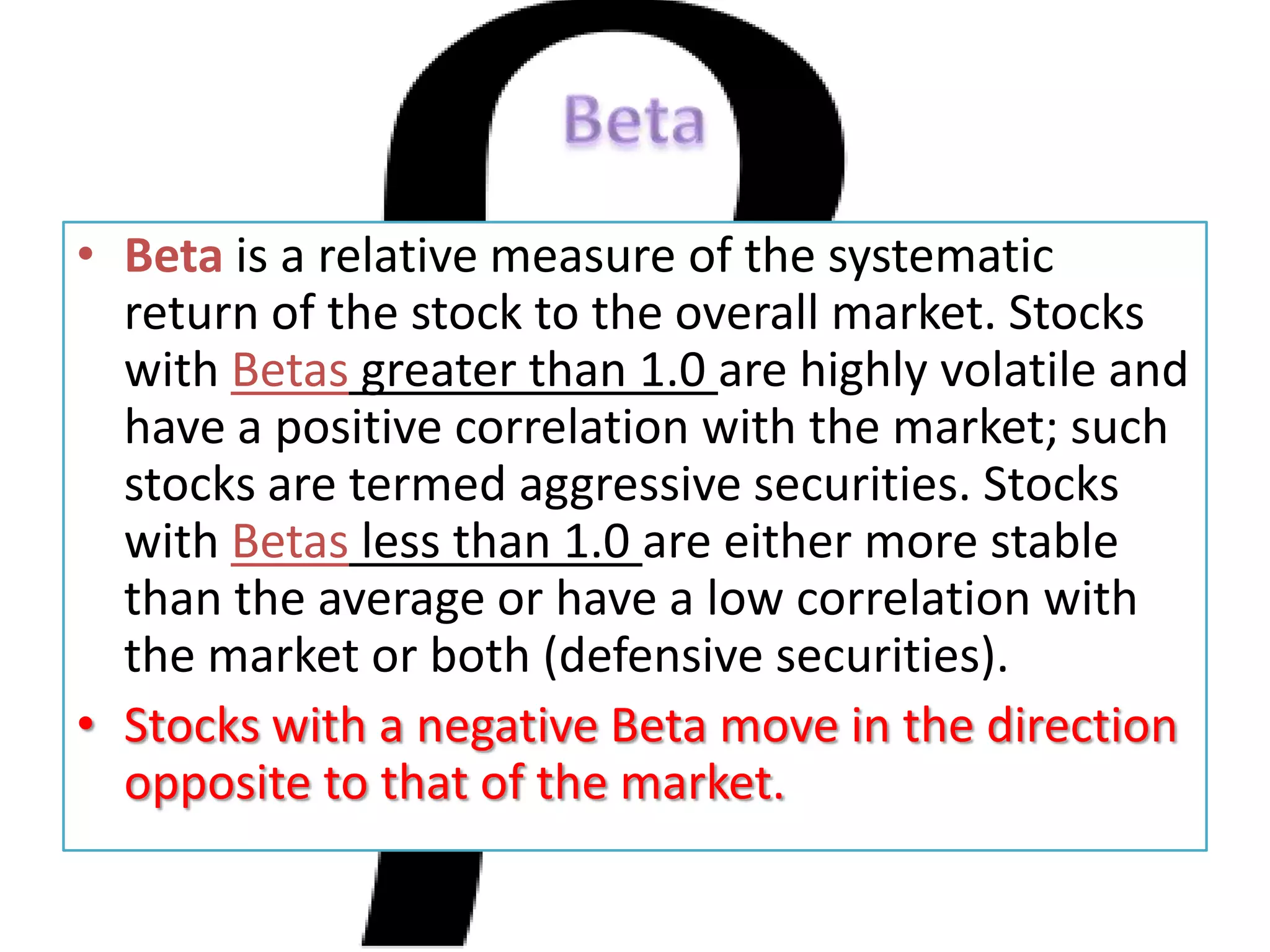
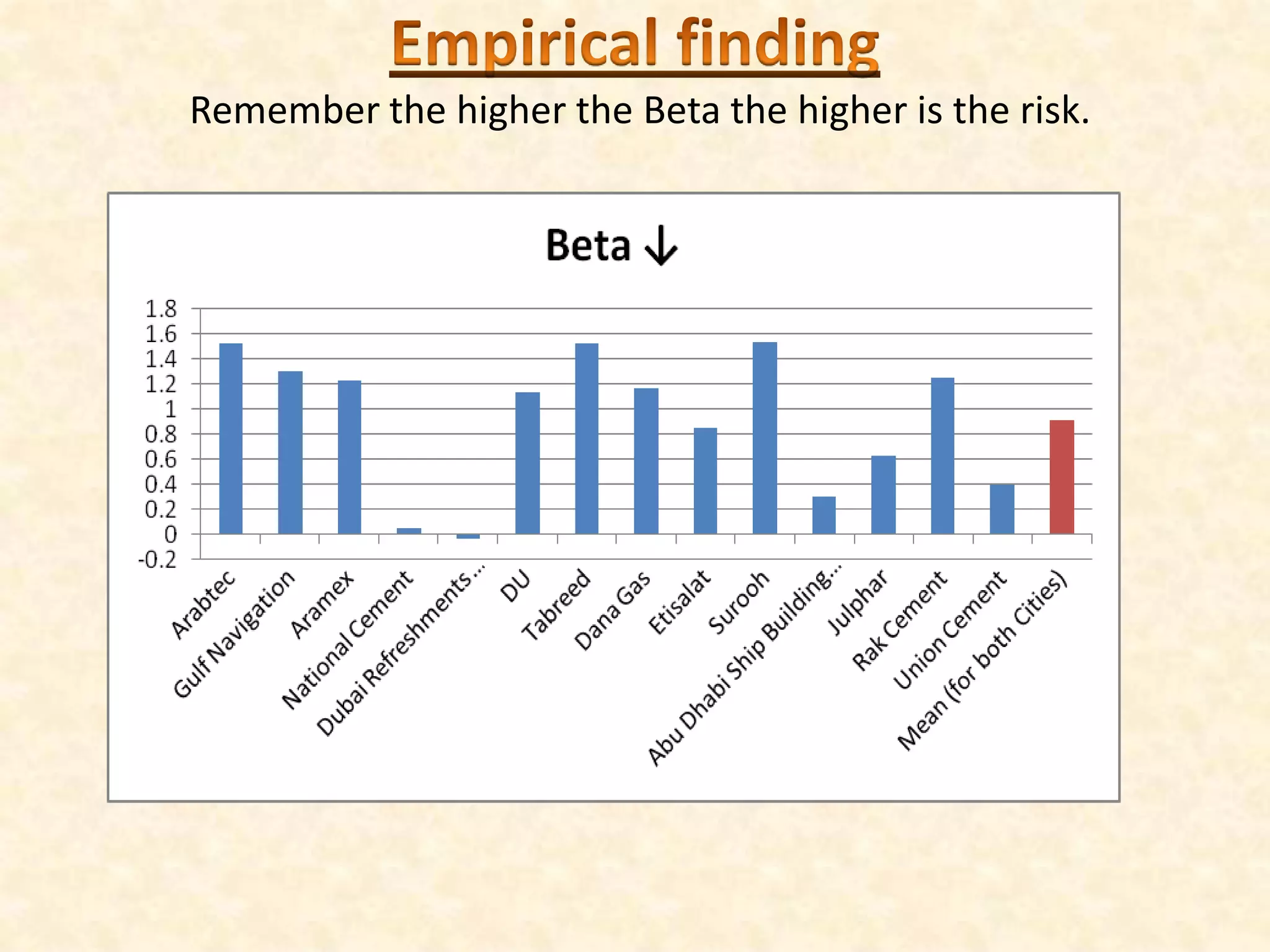
Beta Beta is a relative measure of the systematic return of the stock to the overall market. Stocks with Betas greater than 1.0 are highly volatile and have a positive correlation with the market; such stocks are termed aggressive securities. Stocks with Betas less than 1.0 are either more stable than the average or have a low correlation with the market or both (defensive securities). Stocks with a negative Beta move in the direction opposite to that of the market.
Empirical finding Remember the higher the Beta the higher is the risk.
ConclusionsOur finding showed to us that the best firms are: Etisalat, Surooh and Abu Dhabi Ship Building. The worst firm only is Tabreed. Regarding the banks, we showed that Citibank and HSBC are the lowest credit risk encountered banks.(Business credit instrument and derivatives, business credit insurance, Credit default swap. )  Recovery and real-estate issue .(See http://www.zawya.com/story.cfm/sidZAWYA20110501055100/Is_Dubai_Back) No FDIC !

Credit Risk of UAE banks

  • 1.
    Credit risk ofUAE banksSupervised By: Dr. Hussein Al-TamimiStudent Name: MorshedAbdulqaderParkook
  • 2.
    Credit RISK analysis:an empirical study OF UAE BANKS
  • 3.
    Research MethodologyThe purposeof the study The purpose of the study is to analyze the significance of some credit factors generally considered important by credit analysisThe Scope of the study The study focuses on credit risk assessment in a representative selection of UAE banks and corporations.Sources of data Data were obtained from banks and corporations financial reports (report of condition and income statement)Hypotheses of the study In this study I predict that there is a really strong relationship between corporate financial performance and credit risk banks may get in if the lend to the wrong borrower.
  • 4.
    Credit RiskCredit risk:is the oldest form of risk in the financial markets. If credit can be defined as “nothing but the expectation of a sum of money within some limited time,” then credit risk is the chance that this expectation will not be met. Types: A consumer or business does not make a payment due on a mortgage loan, credit card.A business does not pay a A/R (invoices) when due.A business does not pay an employee's earned wages when due.A business or government bond issuer does not make a payment on a coupon or principal payment when due.An insolvent insurance company does not pay a policy obligationAn insolvent bank won't return funds to a depositor. (FDIC !)
  • 5.
    Credit risk managementCreditrisk is defined as the risk arising because borrowers may default on their obligations. Or The probability that some financial institution assets, especially its loans, will decline in value and perhaps become worthless (toxic assets)The concept of adverse selection and moral hazard provide a frame work for understanding the principals that financial institution managers must follow to minimize credit risk and make successful loans.
  • 6.
    Principals Of ManagingCredit RiskScreening and monitoring prime lending (credibility)Long-term customer relationshipsLoan commitmentsCollateralCompensating balancesCredit rationing
  • 7.
    Credit risk analysismethods3 QuestionsIs the borrower creditworthy? The 5Cs of credit: CharacterCapacityCash CollateralConditions
  • 8.
    Continue Can theloan agreement be properly structured and documented?Can the lender perfect its claim against the borrower’s earnings and any assets that may be pledged as collateral?Collateral and popular assets pledged
  • 9.
    Factors determining thegrowth and mix of loansThe profile of characteristics of the market area that lenders servesLender size The experience and expertise of lenders officersThe expected yield that each loan offers Rules & Regulations (UAE real estate, and other rules)
  • 10.
  • 11.
  • 12.
    Corporation's Credit riskanalysiscommon size statement
  • 13.
    Corporation's Credit riskanalysisCommon Size Statements Ratios->
  • 14.
    Cross sectional analysisLiquidity ratios : Current ratioQuick ratioEfficiency ratiosThe inventory turnover ratioThe average collection periodNumber of days for which inventory is tied upProfitability ratios: Gross profit/ salesNet profit/ salesLeverage ratioDebt/ equity ratioInterest coverage ratio
  • 15.
  • 16.
  • 17.
    Empirical finding Ifyou remember the previous findings, we mentioned that the best two are Surooh and Etisalat. In this section we found that the best firm is also Etisalat in addition to Abu Dhabi Ship Building Company. And the worse one is Tabreed.
  • 18.
    (Altman) Z-scoreThe Z-scoreformula for predicting bankruptcy was published in 1968 by Edward I. Altman. The formula may be used to predict the probability that a firm will go into bankruptcywithin two years. Z-scores are used to predict corporate defaults and an easy-to-calculate control measure for the financial distress status of companies in academic studies. The Z-score uses multiple corporate income and balance sheet valuesto measure the financial health of a company.
  • 19.
    (Altman) Z-scoreif (Z<1.81) the firm will default. If Z (1.81:2.675), the firm will either default or not. If (Z> 2.675), the firm will not default.
  • 20.
  • 21.
    Risk Premium analyzingThehigher the rate of return will lead to higher the probability of default and high credit risk for lender points of view.Keep in mind also that factors other than credit risk also affect the premium. Financial market participants often mention liquidity of a debt issue as being important for the premium.
  • 22.
    Beta Beta isa relative measure of the systematic return of the stock to the overall market. Stocks with Betas greater than 1.0 are highly volatile and have a positive correlation with the market; such stocks are termed aggressive securities. Stocks with Betas less than 1.0 are either more stable than the average or have a low correlation with the market or both (defensive securities). Stocks with a negative Beta move in the direction opposite to that of the market.
  • 23.
    Empirical finding Rememberthe higher the Beta the higher is the risk.
  • 24.
    ConclusionsOur finding showedto us that the best firms are: Etisalat, Surooh and Abu Dhabi Ship Building. The worst firm only is Tabreed. Regarding the banks, we showed that Citibank and HSBC are the lowest credit risk encountered banks.(Business credit instrument and derivatives, business credit insurance, Credit default swap. ) Recovery and real-estate issue .(See http://www.zawya.com/story.cfm/sidZAWYA20110501055100/Is_Dubai_Back) No FDIC !