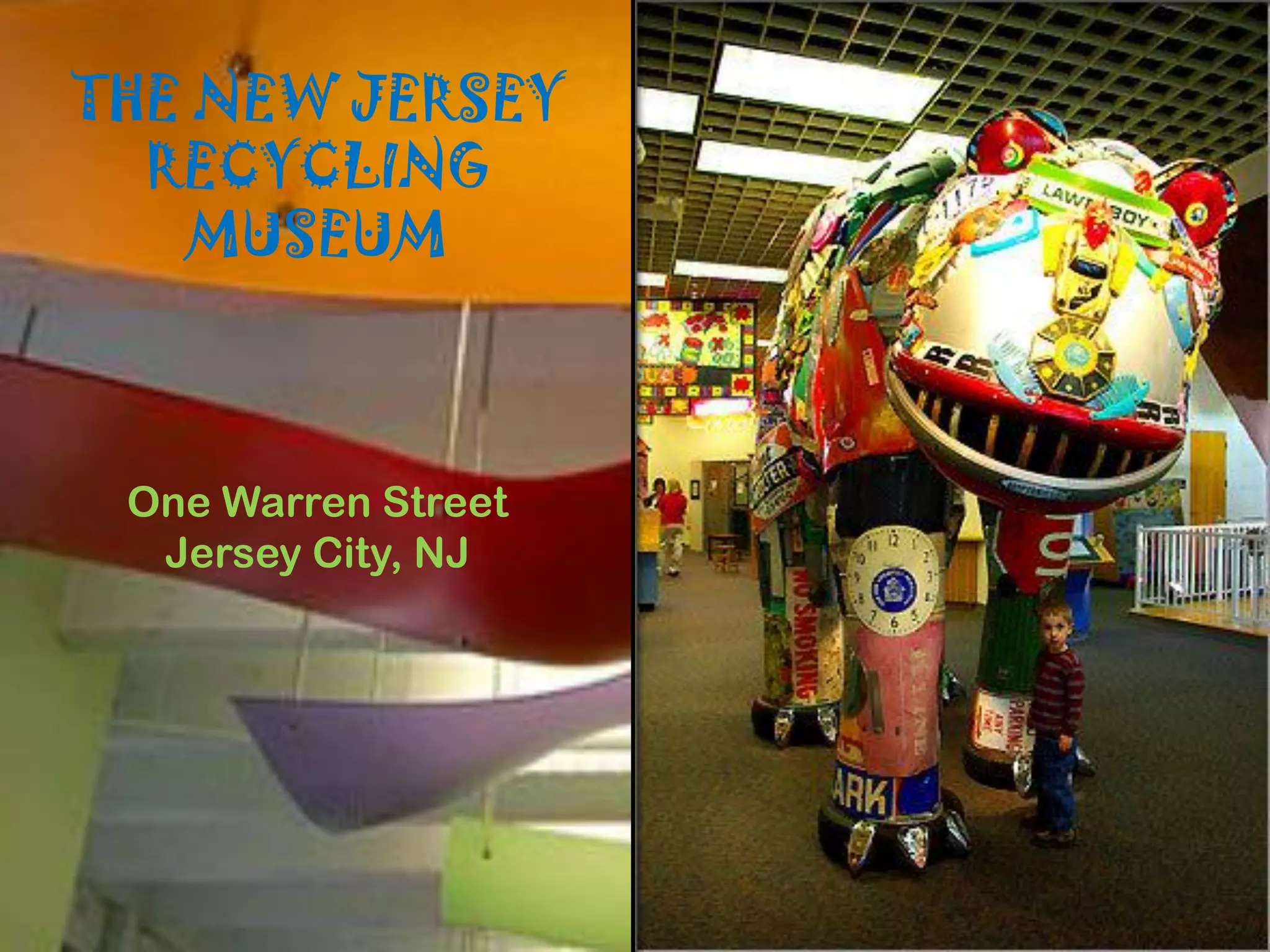
THE NEW JERSEY
  RECYCLING
    MUSEUM


 One Warren Street
  Jersey City, NJ
Table of Contents

   Cover Page
   Table of Contents
   Concept
   Program Description
   Space Analysis
   Floorplans
   Elevations
   Perspectives
   Materials and Finishes
   Exhibit List
   Exhibit Photos
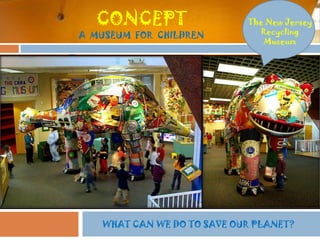
CONCEPT                   The New Jersey
                               Recycling
A MUSEUM FOR CHILDREN
                                Museum


   WHAT CAN WE DO TO SAVE OUR PLANET?
PROGRAM DESCRIPTION                           THE NEW JERSEY
                                              RECYCLING MUSEUM
and Social Justice
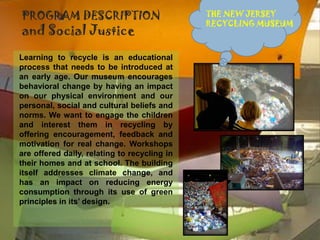
Learning to recycle is an educational
process that needs to be introduced at
an early age. Our museum encourages
behavioral change by having an impact
on our physical environment and our
personal, social and cultural beliefs and
norms. We want to engage the children
and interest them in recycling by
offering encouragement, feedback and
motivation for real change. Workshops
are offered daily, relating to recycling in
their homes and at school. The building
itself addresses climate change, and
has an impact on reducing energy
consumption through its use of green
principles in its’ design.
Proposed New Jersey Recycling Museum
                                          SPACE ANALYSIS
                      SQUARE FOOTAGE: 76’- 8” x 151’- 8” = (11,627 sq. ft.)

       EXISTING CONDITIONS: This space is a (11,627 sq. ft.) converted warehouse located in a
residential neighborhood, at the end of a dead end street on Jersey City’s waterfront. There are no
existing interior walls. The exterior walls are one foot (1’0”) thick. There are two 24” x 24” columns
located 50’-10” from north and south facing exterior walls. Four 24” x 12” interior fixed columns are
located on the east and west walls at 50’10” from north and south facing exterior walls. The ceiling
height is 35’-0”. The building is surrounded by undisturbed indigenous vegetation and river rock.
Parking is pre-existing, and located on the west side of the building.
       CLIENT REQUIREMENTS: Entrance must be located on the “parking side” (west side) of the
building. No cantilevers or balconies may be added to the building. Restrooms must be located on
both first and second floors and must be stacked for efficiency. An outdoor cafe with seating and
landscaping may be added to the east side ground level, overlooking the Hudson River. Additional
floors or a mezzanine may be added to cover one half of the existing space.
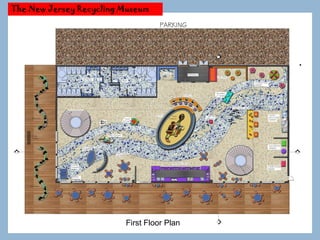
       FOCAL POINTS: A large dinosaur in center of circulation area; the Hudson River, with views of
New York City and the Statue of Liberty.
       NATURAL TRAFFIC FLOW: Foot traffic flows from main entrance into first floor circulation area
       ORIENTATION: East and south sides of the building overlook the Hudson River. The entrance
is located on the west side of the building and proceeds from the parking area.
       PROS: There are views of the Hudson River, Statue of Liberty, midtown and downtown New
York City on the East side of the building.
       CONS: Despite the spectacular views, the client will only allow 75 linear feet of windows
(approximately 1/6th of the perimeter) to be added to the building. No skylights are allowed. This
defeats the principles of green building by allowing for very little natural daylighting of the interior
space.
The New Jersey Recycling Museum


                         First Floor Plan
The New Jersey
Recycling Museum


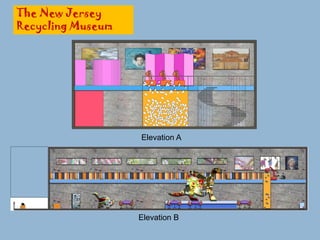
                   Elevation A


                   Elevation B
The New Jersey
Recycling Museum


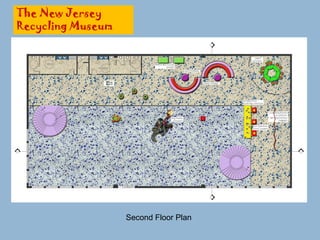
                   Second Floor Plan
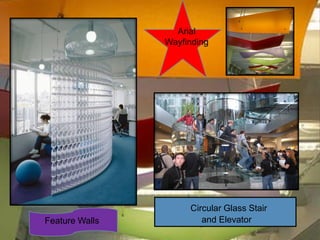
Arial
                Wayfinding


                     Circular Glass Stair
Feature Walls           and Elevator
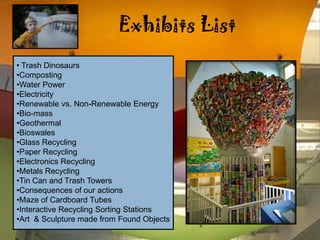
Exhibits List
• Trash Dinosaurs
•Composting
•Water Power
•Electricity
•Renewable vs. Non-Renewable Energy
•Bio-mass
•Geothermal
•Bioswales
•Glass Recycling
•Paper Recycling
•Electronics Recycling
•Metals Recycling
•Tin Can and Trash Towers
•Consequences of our actions
•Maze of Cardboard Tubes
•Interactive Recycling Sorting Stations
•Art & Sculpture made from Found Objects
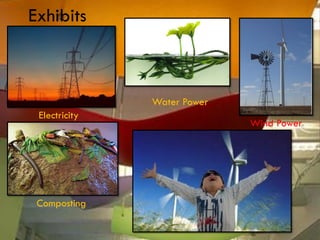
Exhibits


               Water Power
 Electricity
                             Wind Power


 Composting
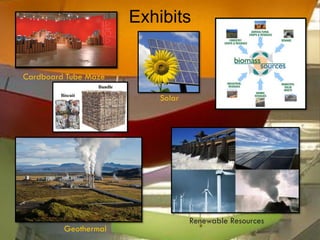
Exhibits


Cardboard Tube Maze

                         Solar


                                 Renewable Resources
         Geothermal
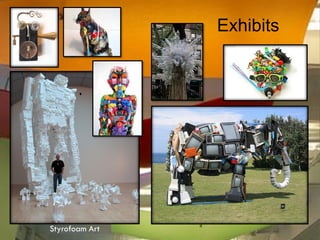
Exhibits


Styrofoam Art
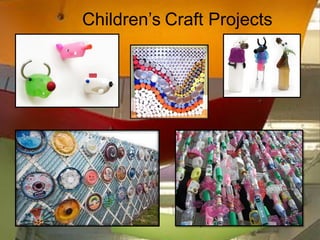
Children’s Craft Projects
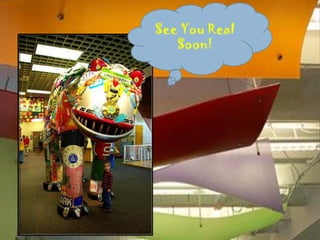
See You Real
   Soon!

Proposed NJ Recycling Museum

  • 1.
    THE NEW JERSEY RECYCLING MUSEUM One Warren Street Jersey City, NJ
  • 2.
    Table of Contents  Cover Page  Table of Contents  Concept  Program Description  Space Analysis  Floorplans  Elevations  Perspectives  Materials and Finishes  Exhibit List  Exhibit Photos
  • 3.
    CONCEPT The New Jersey Recycling A MUSEUM FOR CHILDREN Museum WHAT CAN WE DO TO SAVE OUR PLANET?
  • 4.
    PROGRAM DESCRIPTION THE NEW JERSEY RECYCLING MUSEUM and Social Justice Learning to recycle is an educational process that needs to be introduced at an early age. Our museum encourages behavioral change by having an impact on our physical environment and our personal, social and cultural beliefs and norms. We want to engage the children and interest them in recycling by offering encouragement, feedback and motivation for real change. Workshops are offered daily, relating to recycling in their homes and at school. The building itself addresses climate change, and has an impact on reducing energy consumption through its use of green principles in its’ design.
  • 5.
    Proposed New JerseyRecycling Museum SPACE ANALYSIS SQUARE FOOTAGE: 76’- 8” x 151’- 8” = (11,627 sq. ft.) EXISTING CONDITIONS: This space is a (11,627 sq. ft.) converted warehouse located in a residential neighborhood, at the end of a dead end street on Jersey City’s waterfront. There are no existing interior walls. The exterior walls are one foot (1’0”) thick. There are two 24” x 24” columns located 50’-10” from north and south facing exterior walls. Four 24” x 12” interior fixed columns are located on the east and west walls at 50’10” from north and south facing exterior walls. The ceiling height is 35’-0”. The building is surrounded by undisturbed indigenous vegetation and river rock. Parking is pre-existing, and located on the west side of the building. CLIENT REQUIREMENTS: Entrance must be located on the “parking side” (west side) of the building. No cantilevers or balconies may be added to the building. Restrooms must be located on both first and second floors and must be stacked for efficiency. An outdoor cafe with seating and landscaping may be added to the east side ground level, overlooking the Hudson River. Additional floors or a mezzanine may be added to cover one half of the existing space. FOCAL POINTS: A large dinosaur in center of circulation area; the Hudson River, with views of New York City and the Statue of Liberty. NATURAL TRAFFIC FLOW: Foot traffic flows from main entrance into first floor circulation area ORIENTATION: East and south sides of the building overlook the Hudson River. The entrance is located on the west side of the building and proceeds from the parking area. PROS: There are views of the Hudson River, Statue of Liberty, midtown and downtown New York City on the East side of the building. CONS: Despite the spectacular views, the client will only allow 75 linear feet of windows (approximately 1/6th of the perimeter) to be added to the building. No skylights are allowed. This defeats the principles of green building by allowing for very little natural daylighting of the interior space.
  • 6.
    The New JerseyRecycling Museum First Floor Plan
  • 7.
    The New Jersey RecyclingMuseum Elevation A Elevation B
  • 8.
    The New Jersey RecyclingMuseum Second Floor Plan
  • 9.
    Arial Wayfinding Circular Glass Stair Feature Walls and Elevator
  • 12.
    Exhibits List • TrashDinosaurs •Composting •Water Power •Electricity •Renewable vs. Non-Renewable Energy •Bio-mass •Geothermal •Bioswales •Glass Recycling •Paper Recycling •Electronics Recycling •Metals Recycling •Tin Can and Trash Towers •Consequences of our actions •Maze of Cardboard Tubes •Interactive Recycling Sorting Stations •Art & Sculpture made from Found Objects
  • 13.
    Exhibits Water Power Electricity Wind Power Composting
  • 14.
    Exhibits Cardboard Tube Maze Solar Renewable Resources Geothermal
  • 15.
  • 16.
  • 17.