Etiquettes at
Workplace
Kumar Avinab, Group Lead – Digital Marketing
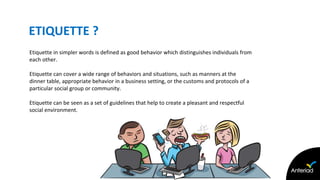
ETIQUETTE ?
• Etiquette in simpler words is defined as good behavior which distinguishes individuals from
each other.
• Etiquette can cover a wide range of behaviors and situations, such as manners at the
dinner table, appropriate behavior in a business setting, or the customs and protocols of a
particular social group or community.
• Etiquette can be seen as a set of guidelines that help to create a pleasant and respectful
social environment.
Common Etiquettes
Saying "please" and "thank you" when making requests or receiving something
Holding the door open for others
Waiting your turn to speak in a conversation
Avoiding offensive or discriminatory language
Not talking with food in your mouth
Addressing people with their proper titles
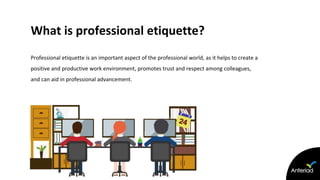
What is professional etiquette?
Professional etiquette is an important aspect of the professional world, as it helps to create a
positive and productive work environment, promotes trust and respect among colleagues,
and can aid in professional advancement.
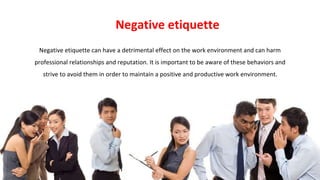
Negative etiquette can have a detrimental effect on the work environment and can harm
professional relationships and reputation. It is important to be aware of these behaviors and
strive to avoid them in order to maintain a positive and productive work environment.
Negative etiquette
Some common examples of negative etiquette in
professional settings:
• Being consistently late or failing to show up for meetings
• Being disrespectful to colleagues, clients, or supervisors, such as using offensive language or making
discriminatory comments
• Using of mobile, sitting gesture and talking with each other in a meeting or presentation
• Being careless with company equipment or resources
• Ignoring or disregarding company policies and procedures
• Gossiping or spreading rumors about colleagues
• Being dishonest or untrustworthy in work or interactions with others
• Being unresponsive or unhelpful to colleagues
• Ignoring or disregarding cultural differences and being insensitive to the cultural backgrounds of
colleagues or clients
The golden
rule of office
etiquette is
to treat
others as you
would like to
be treated.
“
”
Common Office Etiquettes
• Being punctual and arriving on time for meetings and work.
• Being respectful to colleagues, clients, and supervisors, regardless of rank or position.
• Using appropriate language and avoiding offensive or discriminatory language or behavior.
• Being mindful of personal hygiene and maintaining a professional appearance.
• Using office equipment and supplies responsibly and not wasting resources.
• Being mindful of others' need for privacy and quiet, for example, keeping the volume of your voice down,
putting your phone on silent mode, etc.
• Being mindful of personal privacy and maintaining confidentiality
• Being mindful of others and acting with kindness, for example, offering to help a colleague, etc.
• Adhering to company policies and procedures, such as those related to data security and confidentiality.
• Being honest and transparent in your work and interactions with others.
• Showing appreciation and gratitude, for example, saying thank you to someone who helped you, etc.
• Maintaining a professional appearance and grooming
"The difference between something good and
something great is attention to detail."
– Charles R. Swindoll
Charles R. Swindoll is an American pastor, author, and radio preacher, known for his messages that focus on Christian living and personal
development. This quote highlights the importance of attention to detail in professional etiquette. It suggests that paying attention to
small details can make a significant difference in the quality of work and the overall success of a project or a business. It also emphasizes
the importance of being meticulous and conscientious in one's work, which can build trust and respect among colleagues and clients, and
it can also contribute to the overall success of a company.
THANK YOU

Professional ETIQUETTE in corporate world

  • 1.
    Etiquettes at Workplace Kumar Avinab,Group Lead – Digital Marketing
  • 2.
    ETIQUETTE ? • Etiquettein simpler words is defined as good behavior which distinguishes individuals from each other. • Etiquette can cover a wide range of behaviors and situations, such as manners at the dinner table, appropriate behavior in a business setting, or the customs and protocols of a particular social group or community. • Etiquette can be seen as a set of guidelines that help to create a pleasant and respectful social environment.
  • 3.
    Common Etiquettes Saying "please"and "thank you" when making requests or receiving something Holding the door open for others Waiting your turn to speak in a conversation Avoiding offensive or discriminatory language Not talking with food in your mouth Addressing people with their proper titles
  • 4.
    What is professionaletiquette? Professional etiquette is an important aspect of the professional world, as it helps to create a positive and productive work environment, promotes trust and respect among colleagues, and can aid in professional advancement.
  • 5.
    Negative etiquette canhave a detrimental effect on the work environment and can harm professional relationships and reputation. It is important to be aware of these behaviors and strive to avoid them in order to maintain a positive and productive work environment. Negative etiquette
  • 6.
    Some common examplesof negative etiquette in professional settings: • Being consistently late or failing to show up for meetings • Being disrespectful to colleagues, clients, or supervisors, such as using offensive language or making discriminatory comments • Using of mobile, sitting gesture and talking with each other in a meeting or presentation • Being careless with company equipment or resources • Ignoring or disregarding company policies and procedures • Gossiping or spreading rumors about colleagues • Being dishonest or untrustworthy in work or interactions with others • Being unresponsive or unhelpful to colleagues • Ignoring or disregarding cultural differences and being insensitive to the cultural backgrounds of colleagues or clients
  • 7.
    The golden rule ofoffice etiquette is to treat others as you would like to be treated. “ ”
  • 8.
    Common Office Etiquettes •Being punctual and arriving on time for meetings and work. • Being respectful to colleagues, clients, and supervisors, regardless of rank or position. • Using appropriate language and avoiding offensive or discriminatory language or behavior. • Being mindful of personal hygiene and maintaining a professional appearance. • Using office equipment and supplies responsibly and not wasting resources. • Being mindful of others' need for privacy and quiet, for example, keeping the volume of your voice down, putting your phone on silent mode, etc. • Being mindful of personal privacy and maintaining confidentiality • Being mindful of others and acting with kindness, for example, offering to help a colleague, etc. • Adhering to company policies and procedures, such as those related to data security and confidentiality. • Being honest and transparent in your work and interactions with others. • Showing appreciation and gratitude, for example, saying thank you to someone who helped you, etc. • Maintaining a professional appearance and grooming
  • 9.
    "The difference betweensomething good and something great is attention to detail." – Charles R. Swindoll Charles R. Swindoll is an American pastor, author, and radio preacher, known for his messages that focus on Christian living and personal development. This quote highlights the importance of attention to detail in professional etiquette. It suggests that paying attention to small details can make a significant difference in the quality of work and the overall success of a project or a business. It also emphasizes the importance of being meticulous and conscientious in one's work, which can build trust and respect among colleagues and clients, and it can also contribute to the overall success of a company.
  • 10.