LET’S HAVE AN ACTIVITY!
VOICELESS
MESSAGE RELAY
CHAPTER 2:
Globalization and
Cultural and
Multicultural Literacies
GLOBALIZATIO
N
What is Globalization ?
• the process of interaction and
integration between people,
business entities, governments, and
cultures from other nations, driven
by international trade and
investment and support by
information technology.
(Levin Institute, 2017)
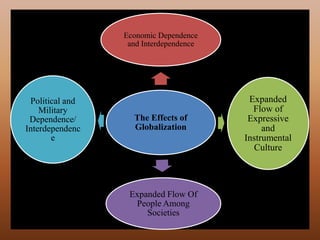
The Effects of
Globalization
Economic Dependence
and Interdependence
Expanded
Flow of
Expressive
and
Instrumental
Culture
Expanded Flow Of
People Among
Societies
Political and
Military
Dependence/
Interdependenc
e
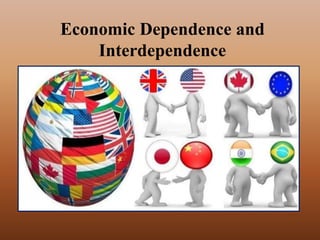
Economic Dependence and
Interdependence
What is Economic
Dependence/Interdependence?
• Refers to a mutual dependence between
countries.
• It occurs when one nation depends on
another for either the same thing or
something else especially key things like
energy and food.
• The result of international trade.
Kentor (2001) notes that foreign
capital dependence increases income
and equality in four ways:
1. It creates a small, highly paid class of
elites to manage these investments, to
create many but usually low-pay jobs;
2. Profits from these investment are
repatriated, rather than invested in the
host country, therefore inhibiting
domestic capital formation;
3. Foreign capital penetration tends to
concentrate land ownership among the
very rich; and
4. Host countries tend to create political
and economic climates favorable to foreign
capital that in turn limit domestic labor’s
ability to obtain better wages in simple
words, “the rich become richer, and poor
become poorer”.
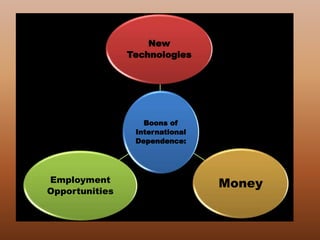
Boons of
International
Dependence:
New
Technologies
Money
Employment
Opportunities
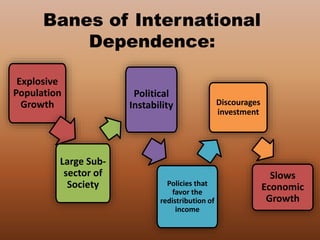
Banes of International
Dependence:
Explosive
Population
Growth
Large Sub-
sector of
Society
Political
Instability
Policies that
favor the
redistribution of
income
Discourages
investment
Slows
Economic
Growth
Political and Military
Dependence/Interdependence
• When a country depends on both
political and military power of
another country in order to
maintain its sovereignty as a nation-
state.
Expanded Flow of Expressive and
Instrumental Culture
Expressive culture
• deals with how a particular culture
expresses itself in its language,
music, arts, and the like
Instrumental culture
• refers to “common models of social
order” (2Meyer,2000)
• that is, models or ways of thinking about
and enacting national identity nation-
state policies both domestic and foreign,
socioeconomic development, human
right, education, and social progress.
• Globalization encourages the
monetization of these cultural
artifacts and their import/ export
among participating cultures; the
increased consumption of which
changes the consuming culture.
How does globalization expand the flow of
expressive and instrumental culture?
Expanded Flow of People among
Societies
The Philippine Statistic
Authority(PSA)estimates that there
were 2.3 million Overseas Filipino
Worker (OFWs) during the period of
April to September 2017, who were
responsible for up to 205.2 billion pesos
in remittances
(Philippine Statistics Authority 2018)
3 Reasons according to Meyer
(2000):
• Socio-economic migration
• Political Expulsion
• Travel/Tourism
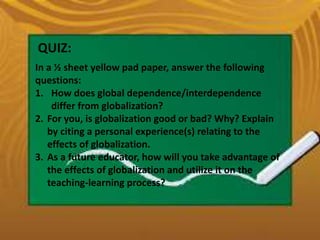
QUIZ:
In a ½ sheet yellow pad paper, answer the following
questions:
1. How does global dependence/interdependence
differ from globalization?
2. For you, is globalization good or bad? Why? Explain
by citing a personal experience(s) relating to the
effects of globalization.
3. As a future educator, how will you take advantage of
the effects of globalization and utilize it on the
teaching-learning process?
THANK YOU!
Hope you learn something.

PROFED 10- CHAPTER 2-GLOBALIZATION_093039.pptx

  • 1.
    LET’S HAVE ANACTIVITY! VOICELESS MESSAGE RELAY
  • 2.
    CHAPTER 2: Globalization and Culturaland Multicultural Literacies
  • 3.
  • 4.
    What is Globalization? • the process of interaction and integration between people, business entities, governments, and cultures from other nations, driven by international trade and investment and support by information technology. (Levin Institute, 2017)
  • 5.
    The Effects of Globalization EconomicDependence and Interdependence Expanded Flow of Expressive and Instrumental Culture Expanded Flow Of People Among Societies Political and Military Dependence/ Interdependenc e
  • 6.
  • 7.
    What is Economic Dependence/Interdependence? •Refers to a mutual dependence between countries. • It occurs when one nation depends on another for either the same thing or something else especially key things like energy and food. • The result of international trade.
  • 8.
    Kentor (2001) notesthat foreign capital dependence increases income and equality in four ways: 1. It creates a small, highly paid class of elites to manage these investments, to create many but usually low-pay jobs; 2. Profits from these investment are repatriated, rather than invested in the host country, therefore inhibiting domestic capital formation;
  • 9.
    3. Foreign capitalpenetration tends to concentrate land ownership among the very rich; and 4. Host countries tend to create political and economic climates favorable to foreign capital that in turn limit domestic labor’s ability to obtain better wages in simple words, “the rich become richer, and poor become poorer”.
  • 10.
  • 11.
    Banes of International Dependence: Explosive Population Growth LargeSub- sector of Society Political Instability Policies that favor the redistribution of income Discourages investment Slows Economic Growth
  • 12.
    Political and Military Dependence/Interdependence •When a country depends on both political and military power of another country in order to maintain its sovereignty as a nation- state.
  • 13.
    Expanded Flow ofExpressive and Instrumental Culture Expressive culture • deals with how a particular culture expresses itself in its language, music, arts, and the like
  • 14.
    Instrumental culture • refersto “common models of social order” (2Meyer,2000) • that is, models or ways of thinking about and enacting national identity nation- state policies both domestic and foreign, socioeconomic development, human right, education, and social progress.
  • 15.
    • Globalization encouragesthe monetization of these cultural artifacts and their import/ export among participating cultures; the increased consumption of which changes the consuming culture. How does globalization expand the flow of expressive and instrumental culture?
  • 16.
    Expanded Flow ofPeople among Societies The Philippine Statistic Authority(PSA)estimates that there were 2.3 million Overseas Filipino Worker (OFWs) during the period of April to September 2017, who were responsible for up to 205.2 billion pesos in remittances (Philippine Statistics Authority 2018)
  • 17.
    3 Reasons accordingto Meyer (2000): • Socio-economic migration • Political Expulsion • Travel/Tourism
  • 18.
    QUIZ: In a ½sheet yellow pad paper, answer the following questions: 1. How does global dependence/interdependence differ from globalization? 2. For you, is globalization good or bad? Why? Explain by citing a personal experience(s) relating to the effects of globalization. 3. As a future educator, how will you take advantage of the effects of globalization and utilize it on the teaching-learning process?
  • 19.
    THANK YOU! Hope youlearn something.