PROCESS
WRITING TASK : 1
WHAT IS PROCESS
A Process Will Have A Number Of Stages That
Are In Time Order.
So You Should Start At The Beginning,
And Describe Each Stage Through To
Last One
TYPES OF
PROCESS
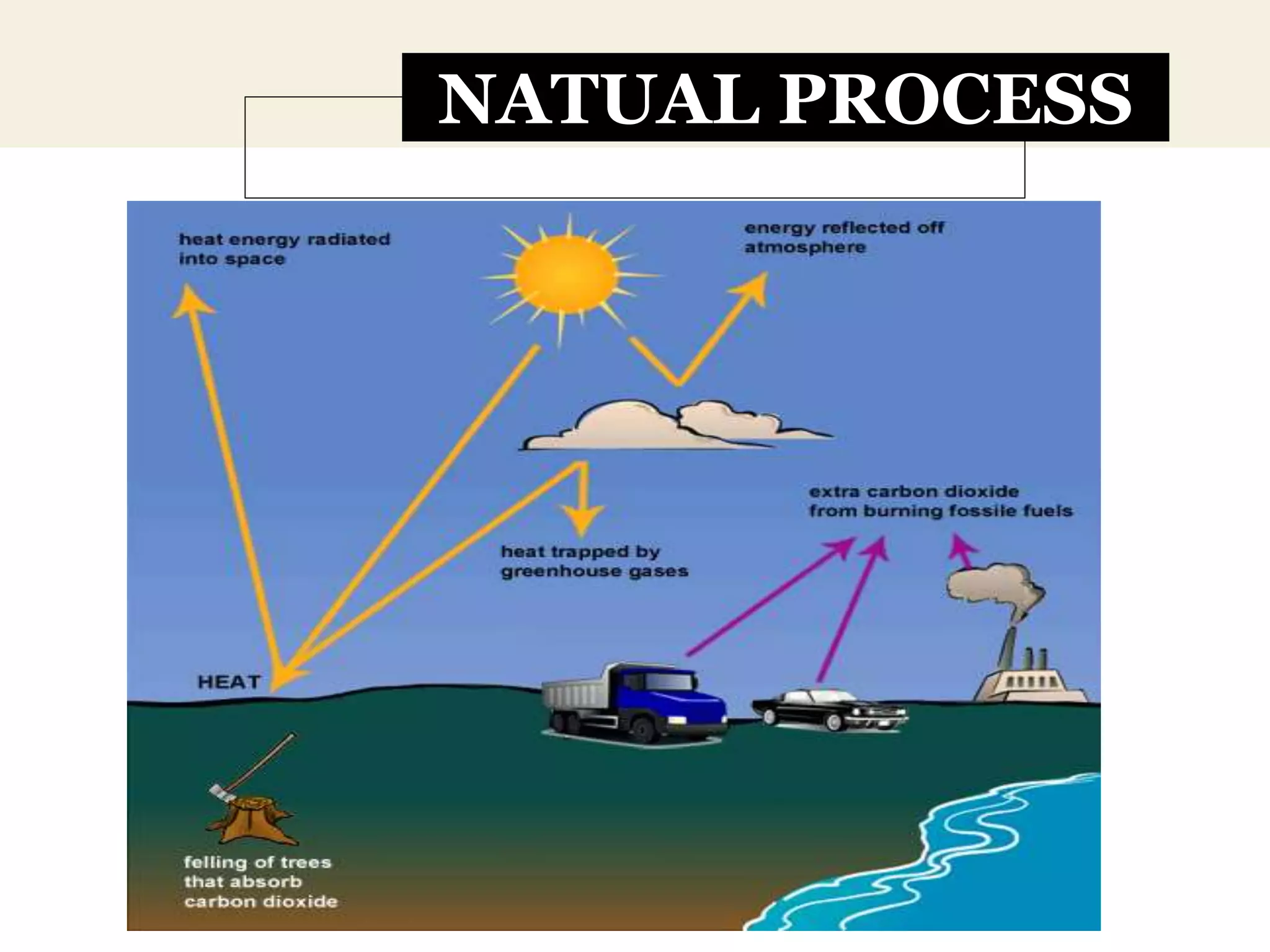
NATUAL PROCESS
MAN MADE PROCESS
How to
Describe?
A process is a series of things which are
done by somebody or naturally
So we have to use
Simple Present Tense Passive Voice
(to describe Natural Process you can use Active voice)
Most sentences use this structure
Subject + Verb + Object
Active Voice
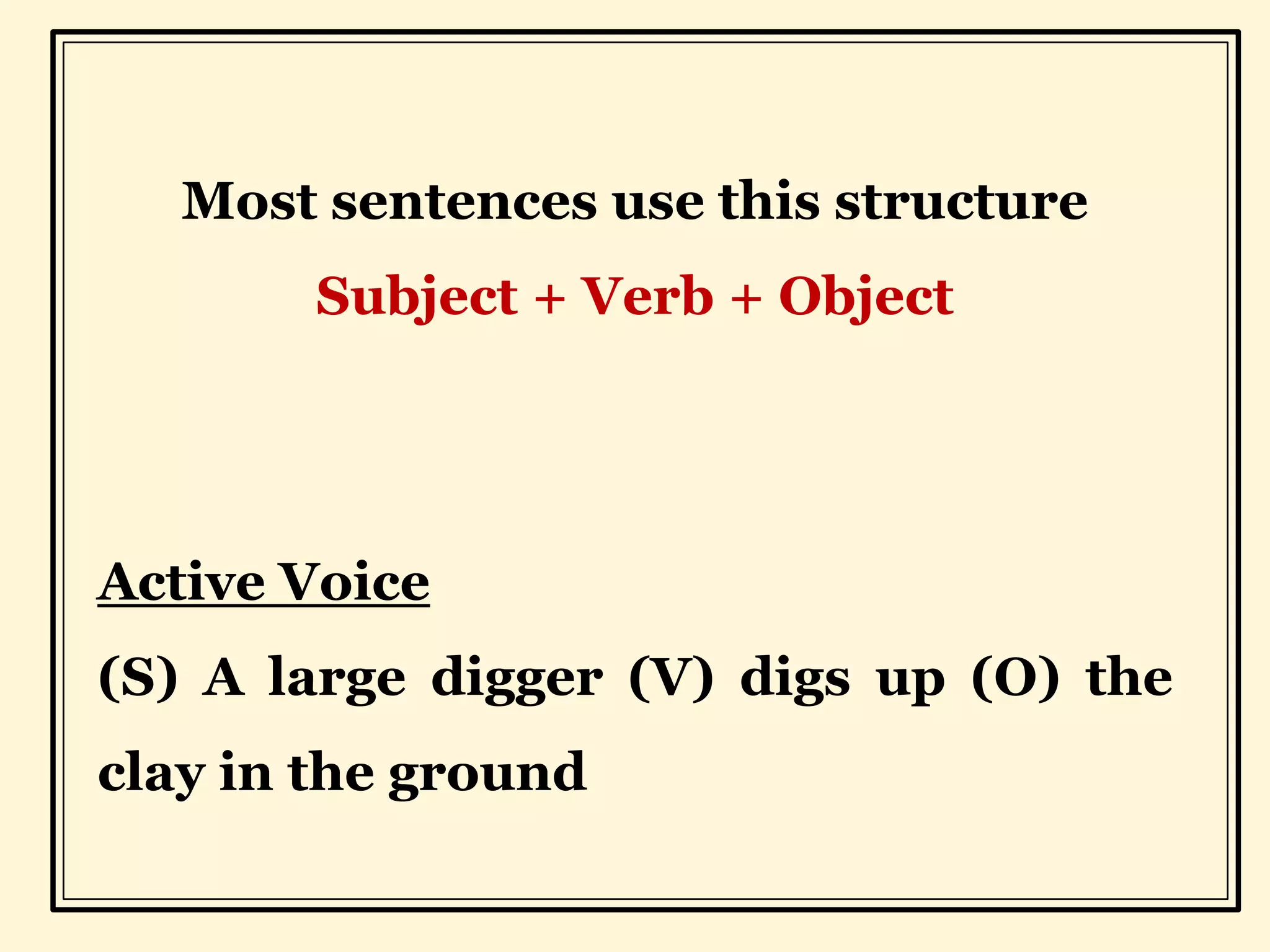
(S) A large digger (V) digs up (O) the
clay in the ground
When we use the passive voice,
Interchange the Subject and Object
Passive Voice
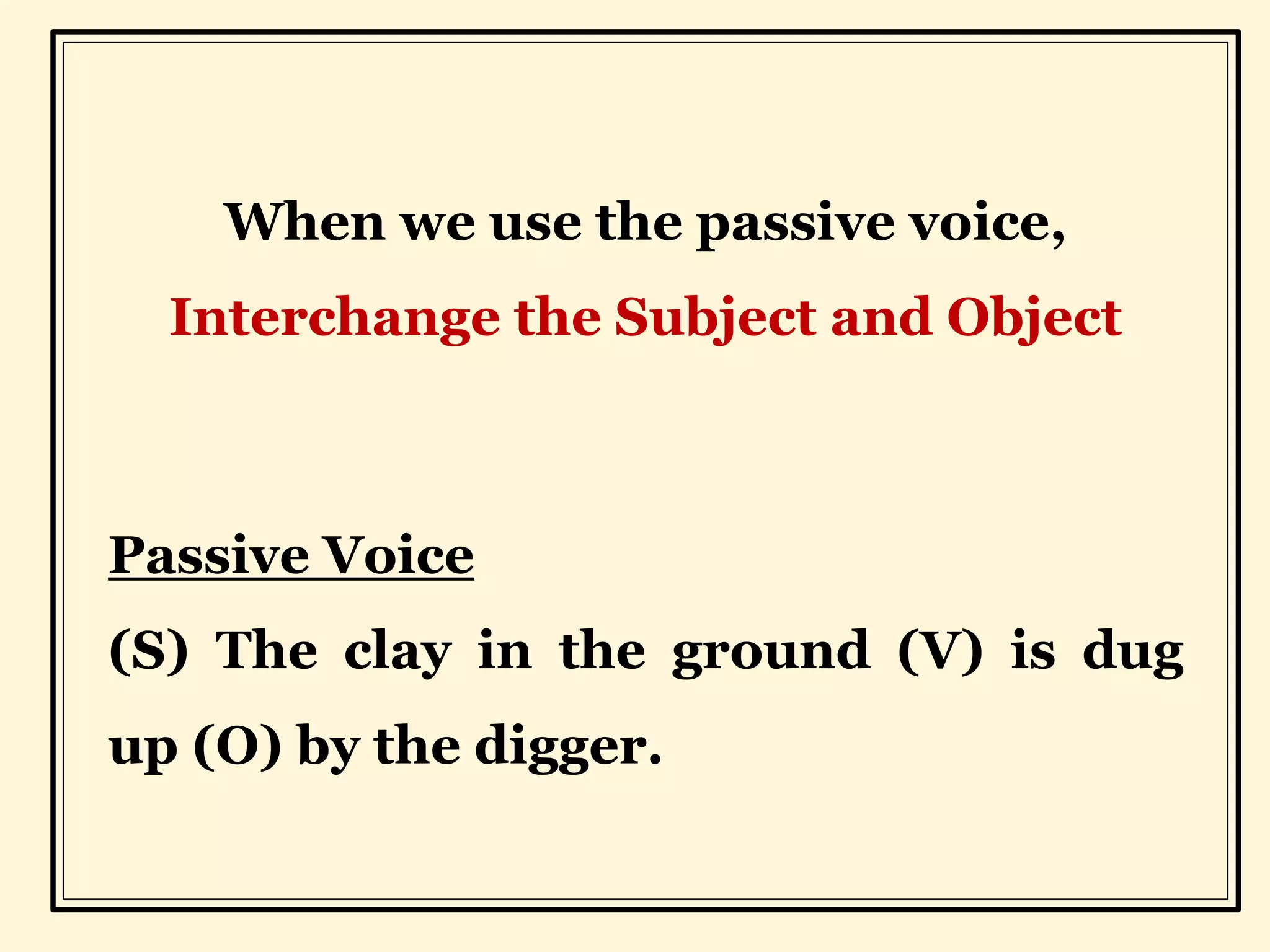
(S) The clay in the ground (V) is dug
up (O) by the digger.
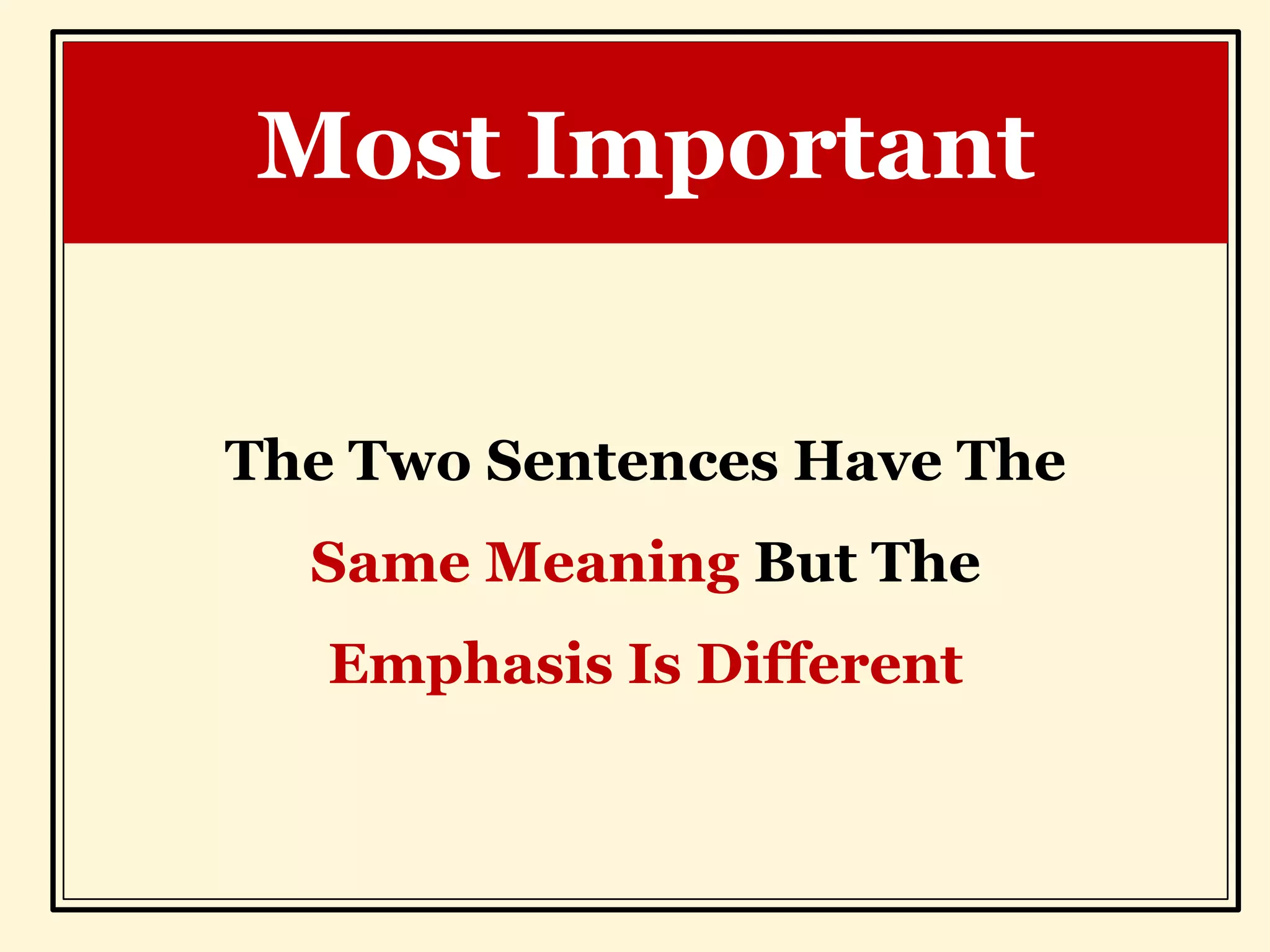
The Two Sentences Have The
Same Meaning But The
Emphasis Is Different
Most Important
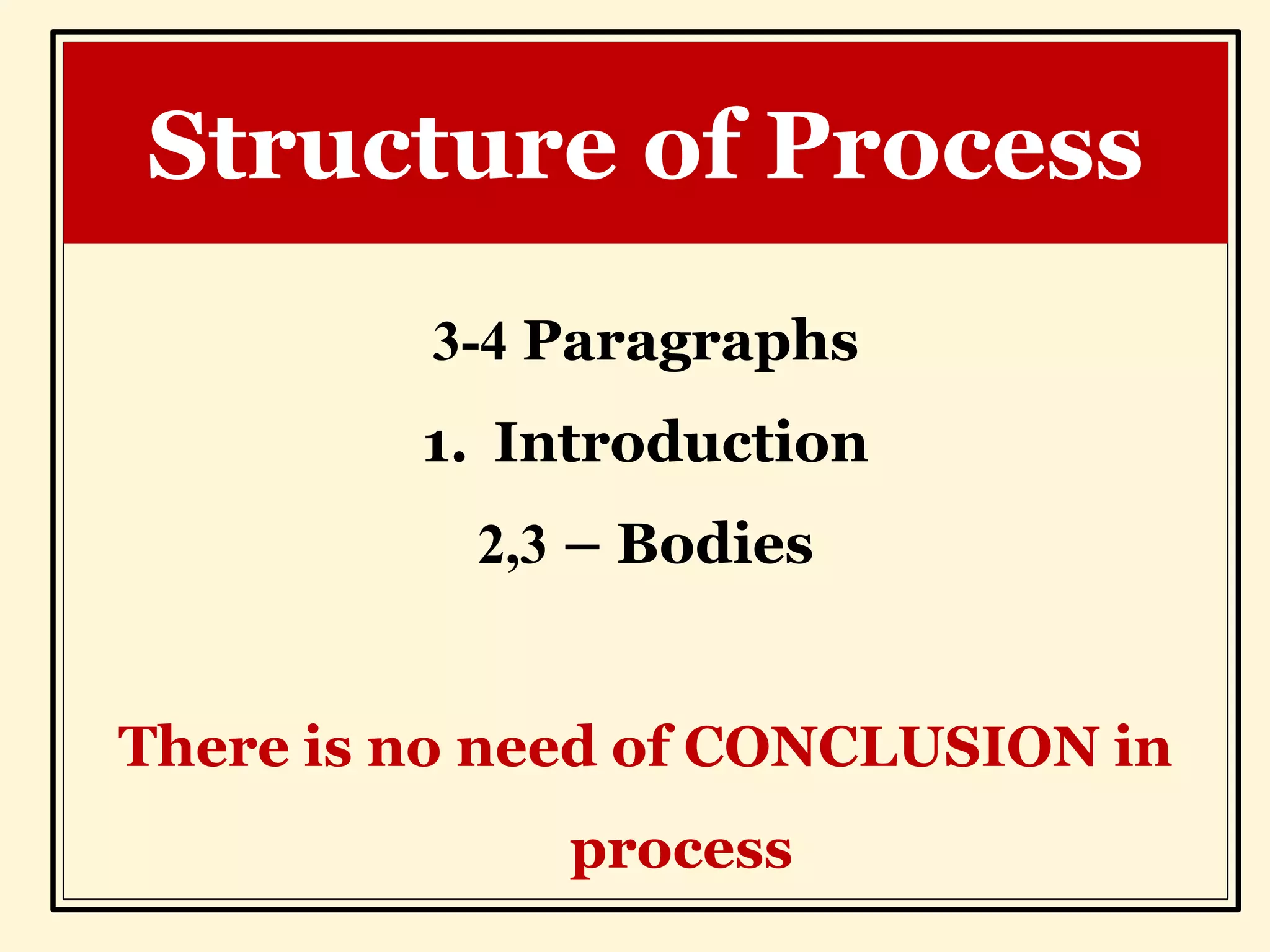
3-4 Paragraphs
1. Introduction
2,3 – Bodies
There is no need of CONCLUSION in
process
Structure of Process
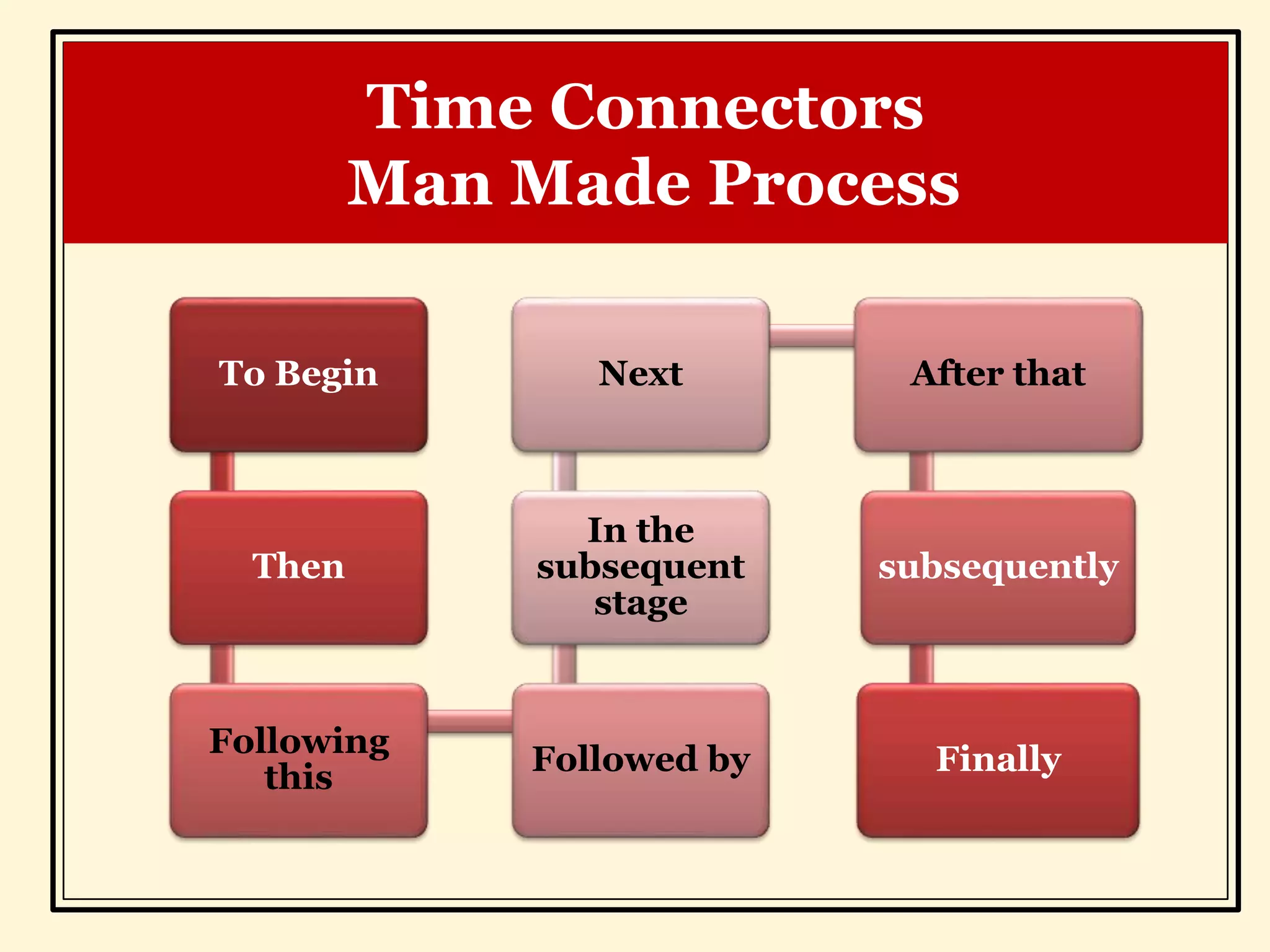
Time Connectors
Man Made Process
To Begin
Then
Following
this
Followed by
In the
subsequent
stage
Next After that
subsequently
Finally
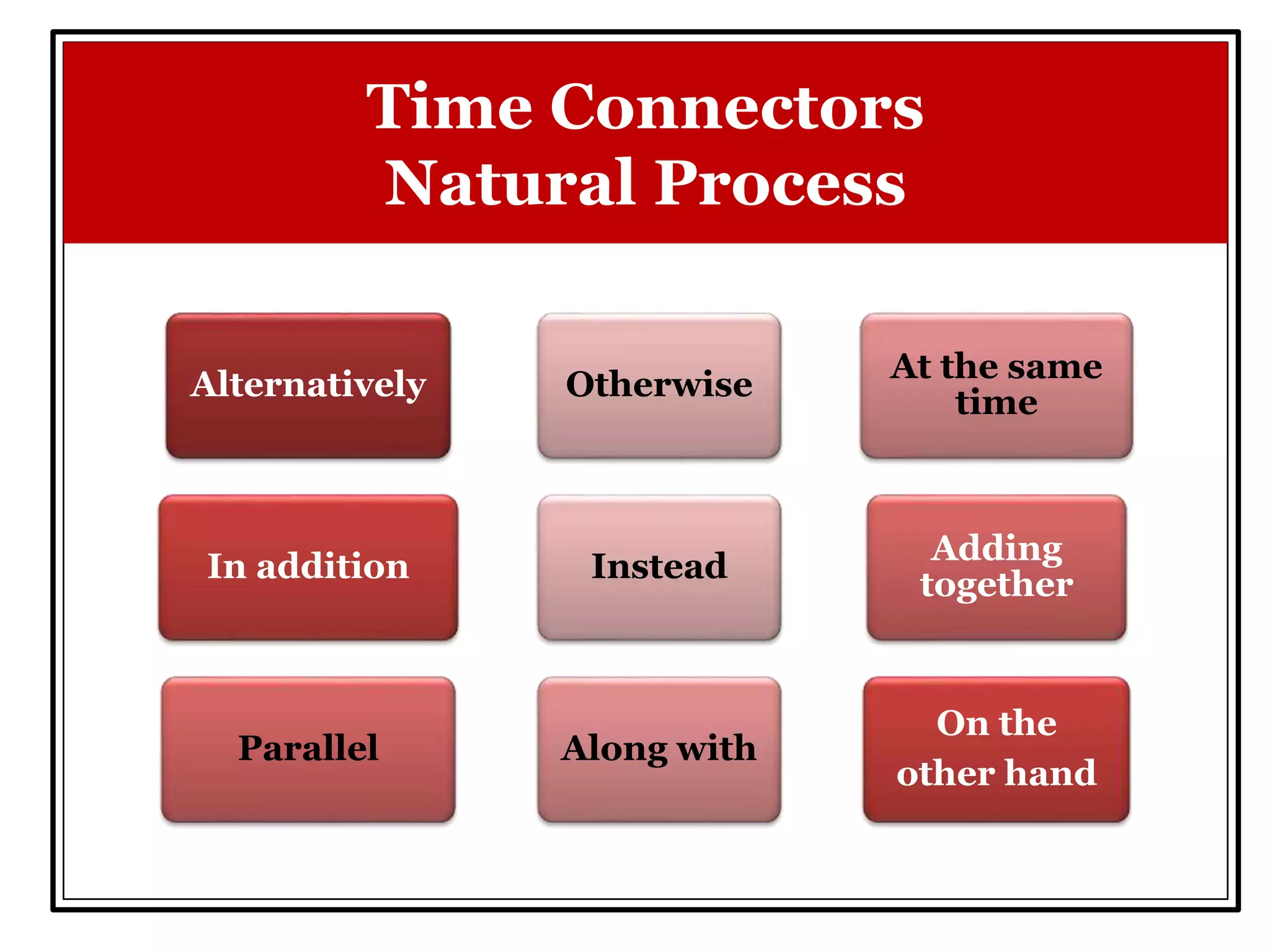
Time Connectors
Natural Process
Alternatively
In addition
Parallel Along with
Instead
Otherwise
At the same
time
Adding
together
On the
other hand
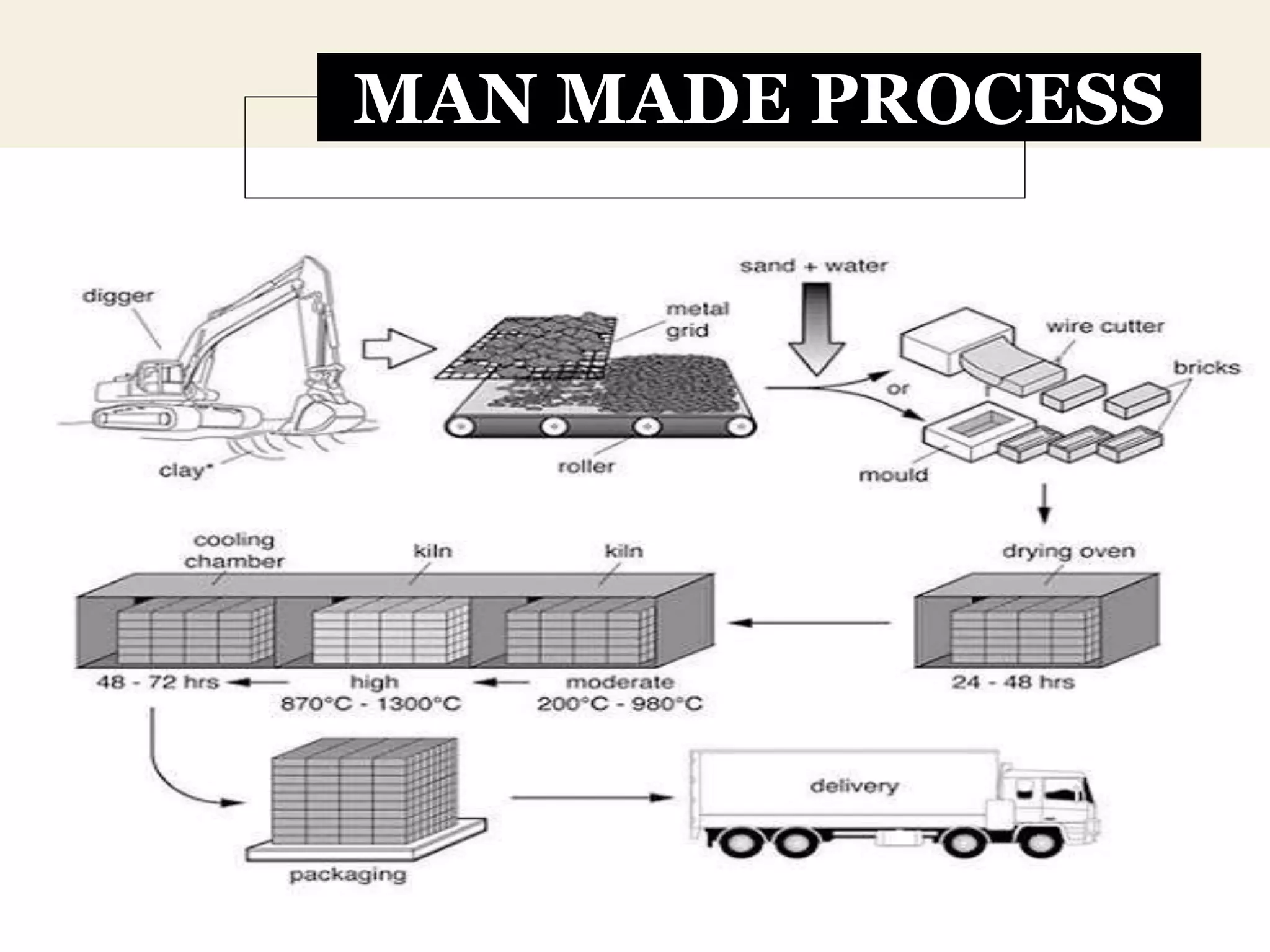
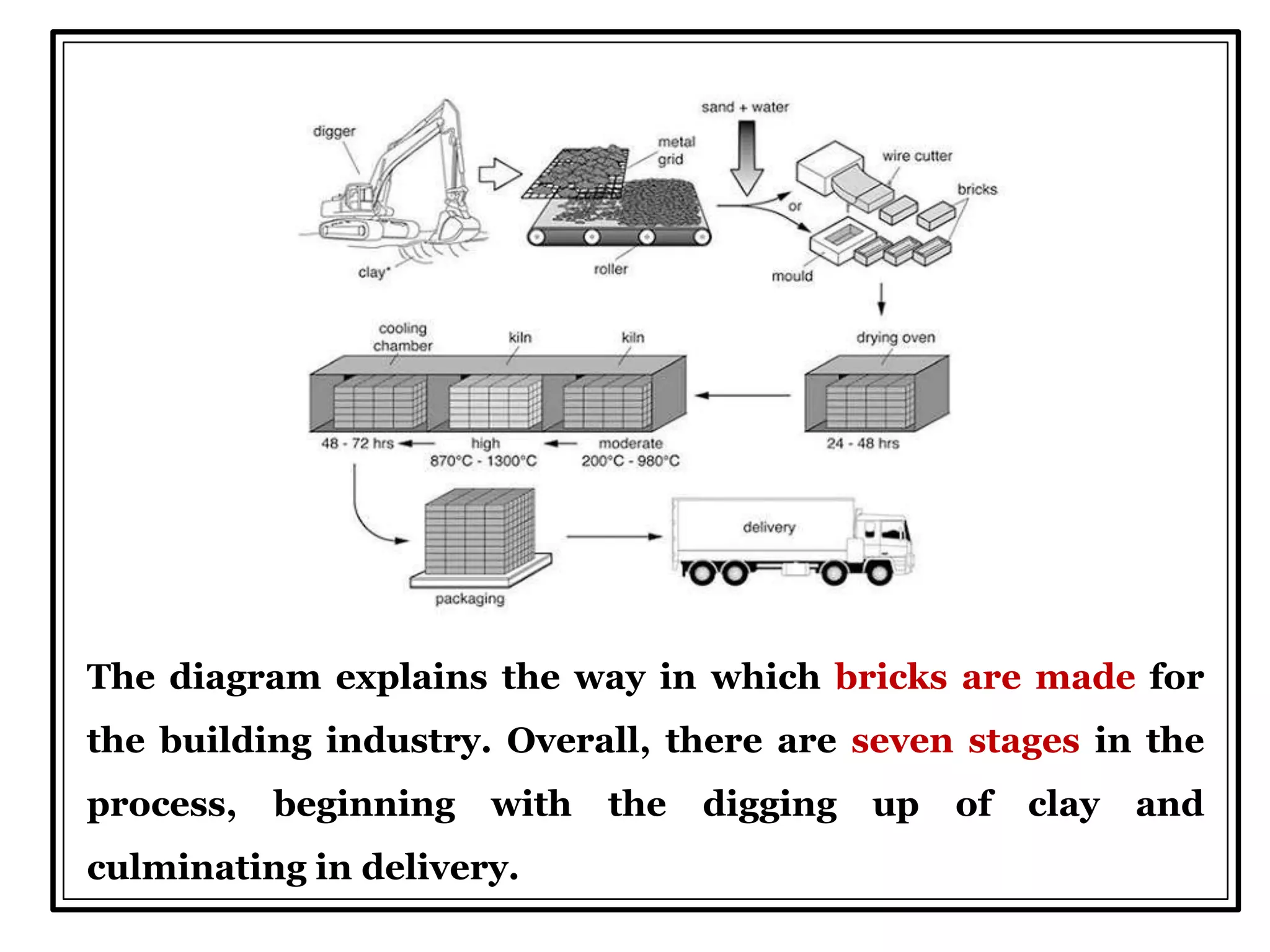
The diagram explains the way in which bricks are made for
the building industry. Overall, there are seven stages in the
process, beginning with the digging up of clay and
culminating in delivery.
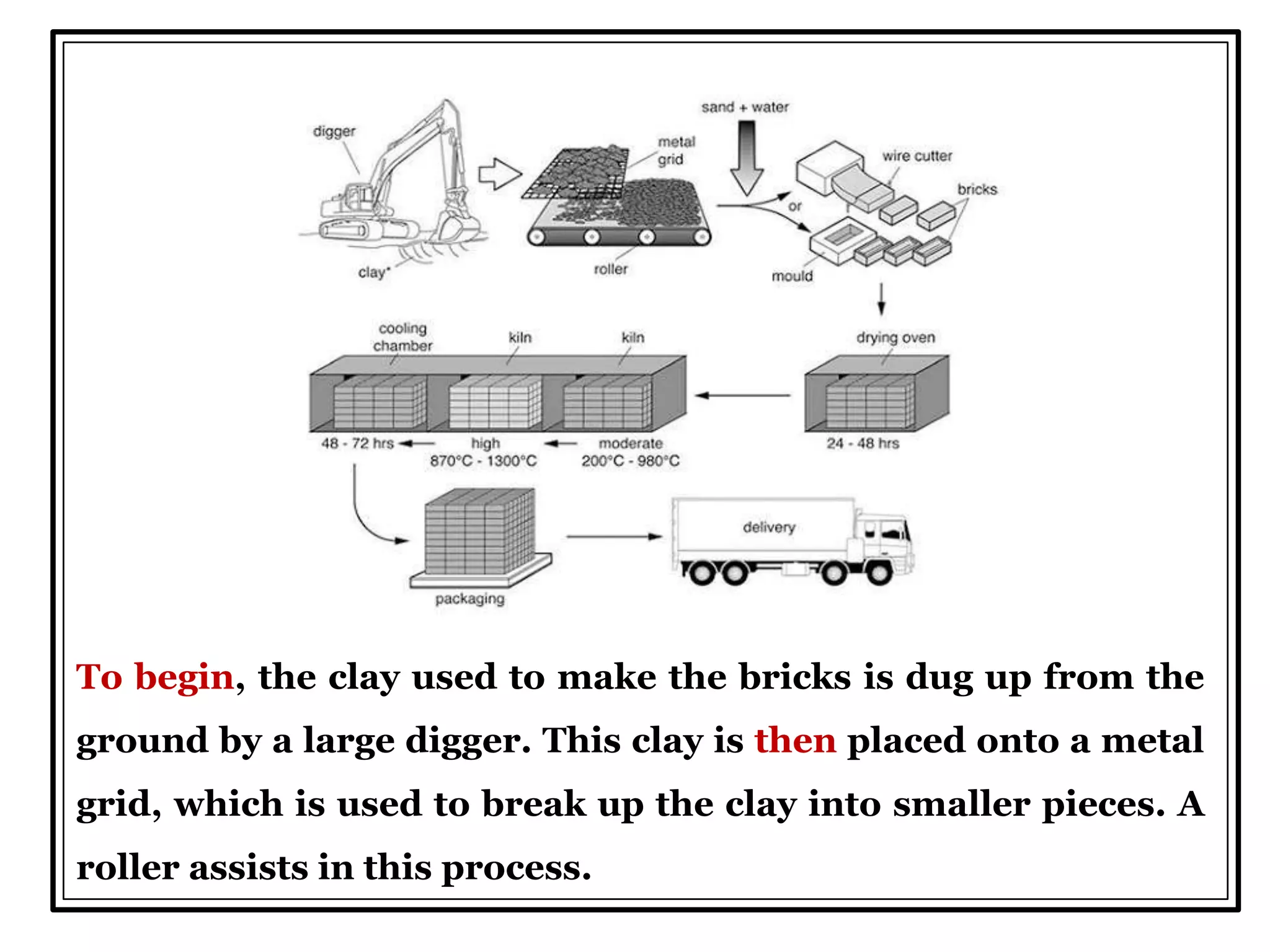
To begin, the clay used to make the bricks is dug up from the
ground by a large digger. This clay is then placed onto a metal
grid, which is used to break up the clay into smaller pieces. A
roller assists in this process.
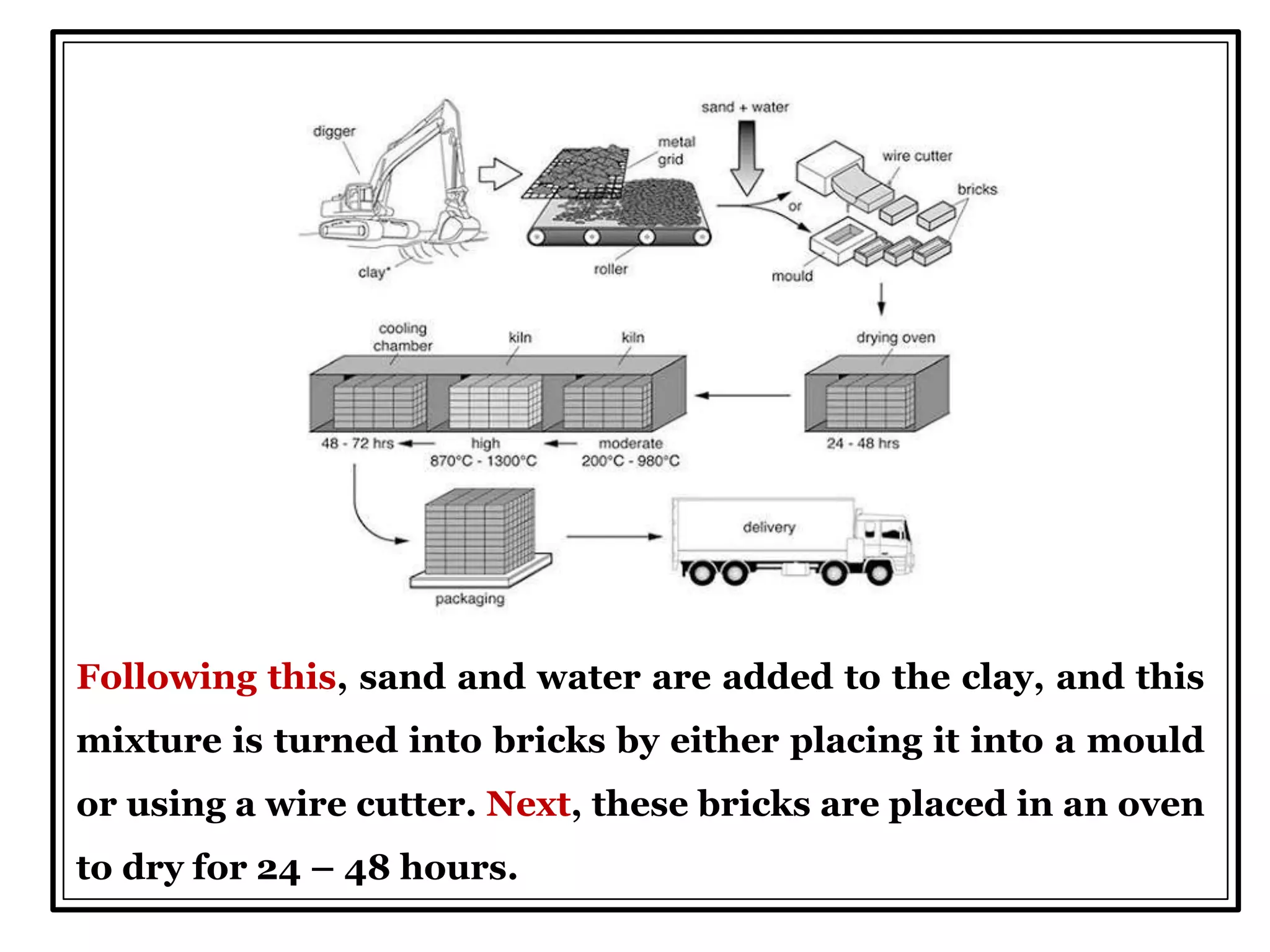
Following this, sand and water are added to the clay, and this
mixture is turned into bricks by either placing it into a mould
or using a wire cutter. Next, these bricks are placed in an oven
to dry for 24 – 48 hours.
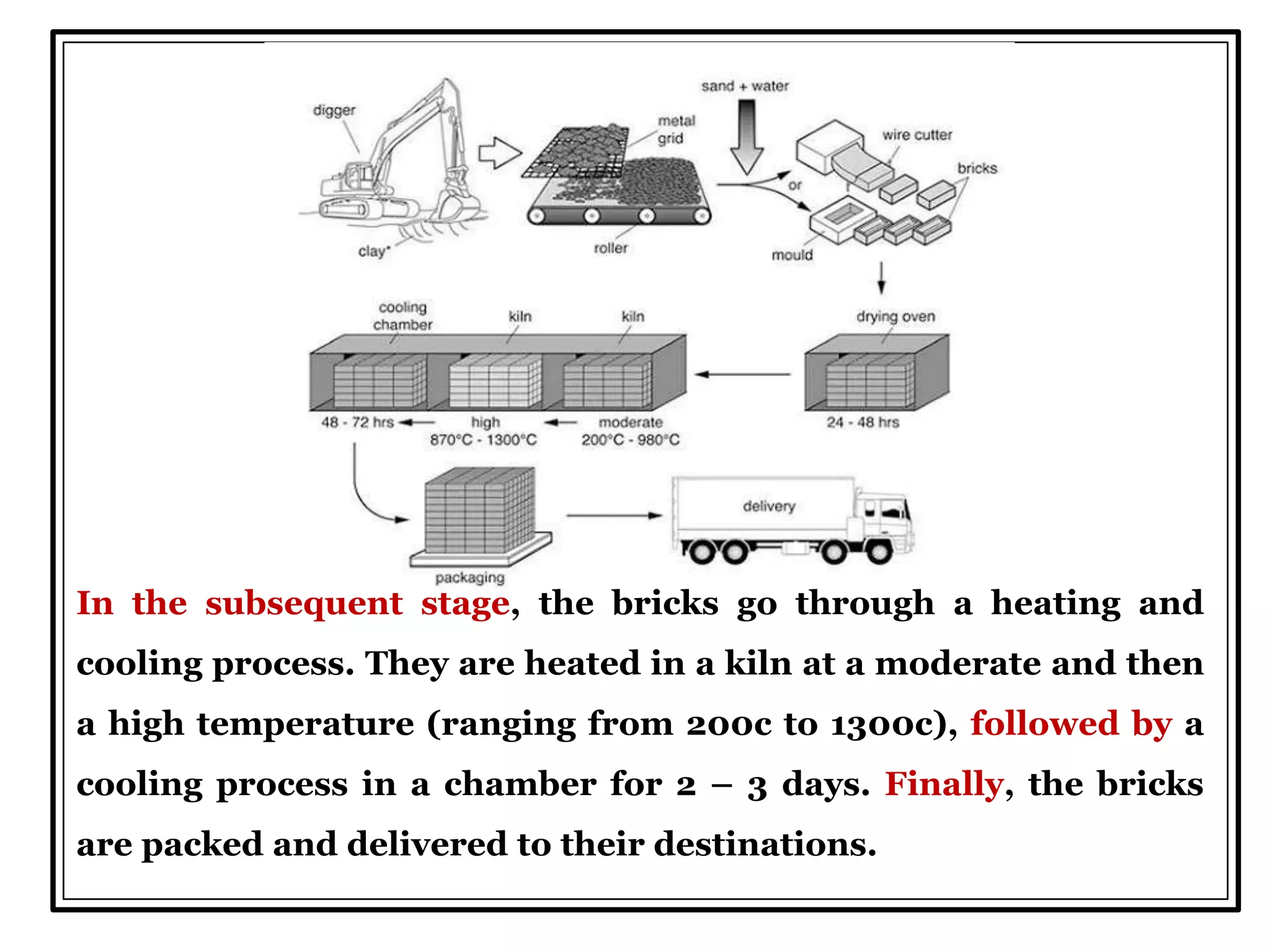
In the subsequent stage, the bricks go through a heating and
cooling process. They are heated in a kiln at a moderate and then
a high temperature (ranging from 200c to 1300c), followed by a
cooling process in a chamber for 2 – 3 days. Finally, the bricks
are packed and delivered to their destinations.

PROCESS PPT.pptx

  • 1.
  • 2.
    WHAT IS PROCESS AProcess Will Have A Number Of Stages That Are In Time Order. So You Should Start At The Beginning, And Describe Each Stage Through To Last One
  • 3.
  • 4.
  • 5.
  • 6.
  • 7.
    A process isa series of things which are done by somebody or naturally So we have to use Simple Present Tense Passive Voice (to describe Natural Process you can use Active voice)
  • 8.
    Most sentences usethis structure Subject + Verb + Object Active Voice (S) A large digger (V) digs up (O) the clay in the ground
  • 9.
    When we usethe passive voice, Interchange the Subject and Object Passive Voice (S) The clay in the ground (V) is dug up (O) by the digger.
  • 10.
    The Two SentencesHave The Same Meaning But The Emphasis Is Different Most Important
  • 11.
    3-4 Paragraphs 1. Introduction 2,3– Bodies There is no need of CONCLUSION in process Structure of Process
  • 12.
    Time Connectors Man MadeProcess To Begin Then Following this Followed by In the subsequent stage Next After that subsequently Finally
  • 13.
    Time Connectors Natural Process Alternatively Inaddition Parallel Along with Instead Otherwise At the same time Adding together On the other hand
  • 14.
    The diagram explainsthe way in which bricks are made for the building industry. Overall, there are seven stages in the process, beginning with the digging up of clay and culminating in delivery.
  • 15.
    To begin, theclay used to make the bricks is dug up from the ground by a large digger. This clay is then placed onto a metal grid, which is used to break up the clay into smaller pieces. A roller assists in this process.
  • 16.
    Following this, sandand water are added to the clay, and this mixture is turned into bricks by either placing it into a mould or using a wire cutter. Next, these bricks are placed in an oven to dry for 24 – 48 hours.
  • 17.
    In the subsequentstage, the bricks go through a heating and cooling process. They are heated in a kiln at a moderate and then a high temperature (ranging from 200c to 1300c), followed by a cooling process in a chamber for 2 – 3 days. Finally, the bricks are packed and delivered to their destinations.