PRESENTED BY:
MUHAMMAD KHAN
Topic:
“Process of communication and
miscommunication”
Communication:
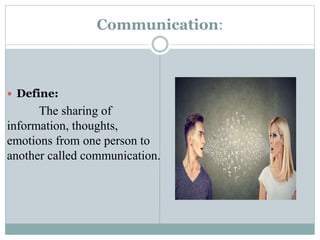
 Define:
The sharing of
information, thoughts,
emotions from one person to
another called communication.
Miscommunication:
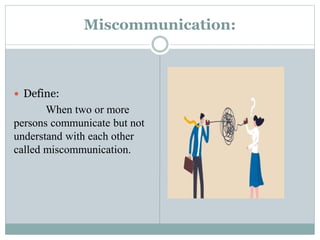
 Define:
When two or more
persons communicate but not
understand with each other
called miscommunication.
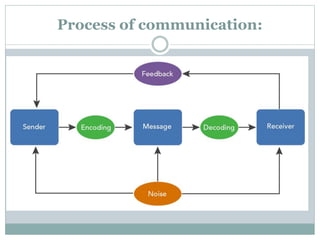
Process of communication:
Message:
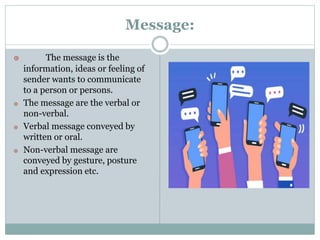
๏ The message is the
information, ideas or feeling of
sender wants to communicate
to a person or persons.
๏ The message are the verbal or
non-verbal.
๏ Verbal message conveyed by
written or oral.
๏ Non-verbal message are
conveyed by gesture, posture
and expression etc.
Sender/Encoder
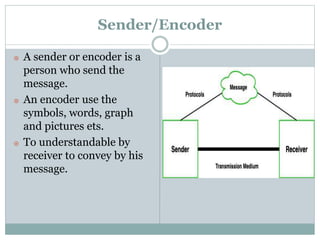
๏ A sender or encoder is a
person who send the
message.
๏ An encoder use the
symbols, words, graph
and pictures ets.
๏ To understandable by
receiver to convey by his
message.
Channel:
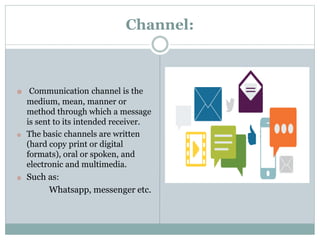
๏ Communication channel is the
medium, mean, manner or
method through which a message
is sent to its intended receiver.
๏ The basic channels are written
(hard copy print or digital
formats), oral or spoken, and
electronic and multimedia.
๏ Such as:
Whatsapp, messenger etc.
Receiver/Decoder
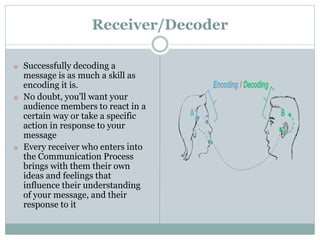
๏ Successfully decoding a
message is as much a skill as
encoding it is.
๏ No doubt, you'll want your
audience members to react in a
certain way or take a specific
action in response to your
message
๏ Every receiver who enters into
the Communication Process
brings with them their own
ideas and feelings that
influence their understanding
of your message, and their
response to it
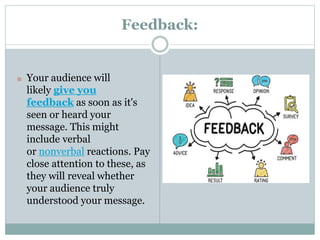
Feedback:
๏ Your audience will
likely give you
feedback as soon as it's
seen or heard your
message. This might
include verbal
or nonverbal reactions. Pay
close attention to these, as
they will reveal whether
your audience truly
understood your message.
Cause of Miscommunication:
 Lack of trust.
 Poor leadership.
 Close mindedness.
 Insufficient model channels.
 insufficient feedback.
 Poor work environment.
 Lack of transparency.

Process of communication and miscommunication..pptx

  • 1.
    PRESENTED BY: MUHAMMAD KHAN Topic: “Processof communication and miscommunication”
  • 2.
    Communication:  Define: The sharingof information, thoughts, emotions from one person to another called communication.
  • 3.
    Miscommunication:  Define: When twoor more persons communicate but not understand with each other called miscommunication.
  • 4.
  • 5.
    Message: ๏ The messageis the information, ideas or feeling of sender wants to communicate to a person or persons. ๏ The message are the verbal or non-verbal. ๏ Verbal message conveyed by written or oral. ๏ Non-verbal message are conveyed by gesture, posture and expression etc.
  • 6.
    Sender/Encoder ๏ A senderor encoder is a person who send the message. ๏ An encoder use the symbols, words, graph and pictures ets. ๏ To understandable by receiver to convey by his message.
  • 7.
    Channel: ๏ Communication channelis the medium, mean, manner or method through which a message is sent to its intended receiver. ๏ The basic channels are written (hard copy print or digital formats), oral or spoken, and electronic and multimedia. ๏ Such as: Whatsapp, messenger etc.
  • 8.
    Receiver/Decoder ๏ Successfully decodinga message is as much a skill as encoding it is. ๏ No doubt, you'll want your audience members to react in a certain way or take a specific action in response to your message ๏ Every receiver who enters into the Communication Process brings with them their own ideas and feelings that influence their understanding of your message, and their response to it
  • 9.
    Feedback: ๏ Your audiencewill likely give you feedback as soon as it's seen or heard your message. This might include verbal or nonverbal reactions. Pay close attention to these, as they will reveal whether your audience truly understood your message.
  • 10.
    Cause of Miscommunication: Lack of trust.  Poor leadership.  Close mindedness.  Insufficient model channels.  insufficient feedback.  Poor work environment.  Lack of transparency.