RNB GLOBAL UNIVERSITY
BCA 3nd SEMESTER
Basics Of Principal’s Of Accounting
SUBMITTED TO : -
Mr. Vikas Sharma
SUBMITTED BY : -
Tanishq Soni
1
2WHAT IS ACCOUNTING ?
Accounting is considered an art,
Concerned with transactions and events having financial character,
 Business transactions are expressed in terms of money, and
 Interpreting the results
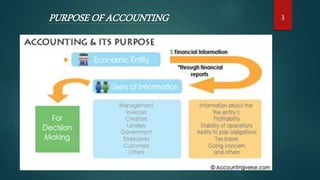
PURPOSE OF ACCOUNTING 3
4
“Accounting is a service activity. Its function is to provide quantitative
information, primarily financial in nature, about economic entities that is
intended to be useful in making economic decisions, in making reasoned choices
among alternative courses of action. And then, we have another definition – one
which has been in use for a long time already.”
5USERS OF FINANCIAL STATEMENTS
1. Owners and investors
2. Management
3. Lenders
4. Trade creditors or suppliers
5. Government
6. Employees
7. Customers
8. General Public
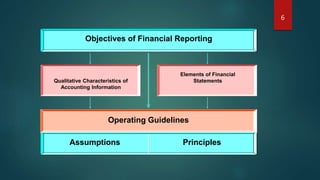
Objectives of Financial Reporting
Assumptions Principles
Operating Guidelines
Qualitative Characteristics of
Accounting Information
Elements of Financial
Statements
6
7
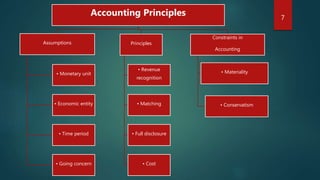
Accounting Principles
Assumptions
• Monetary unit
• Economic entity
• Time period
• Going concern
Principles
• Revenue
recognition
• Matching
• Full disclosure
• Cost
Constraints in
Accounting
• Materiality
• Conservatism
8
The Nature of accounting system
1.) Accounting is the process of recording, classifying, summarizing, reporting and interpreting information about the
economic activities of an organization.
2.) This information is communicated to stakeholders of an organization to help them in decision making.
These stakeholders include :
> Managers
> Investors
> Suppliers
> Government Agencies
> Employees
3.) The financial information captured by the accounting system is usually communicated through reports called
financial statements.
Including :
> Income Statements
> Balance Sheets
> Cash flow statements.
9
Continued………………………
Three Measurement Conventions
(Principles)
Principles are based on a
conceptual framework
that contains three broad
measurement or valuation
conventions (principles) that
underlie accrual accounting:
Recognition
Matching and
cost recovery
10
Recognition Principle
The recognition principle specifies when a company should record
revenue in the accounting records.
Generally, companies recognize revenue when it is both earned and realized or
realizable.
In some industries revenue recognition is not so straightforward. These judgment
issues require company accountants together with its auditor to decide when earning
and realization are sufficiently complete to recognize the revenue.
11
12
Matching and Cost Recovery
The timing of revenue recognition is important
because it leads to the recording of expenses
through the concept of matching—the linking of
revenues with expenses incurred to generate them.
Accountants apply matching as follows:
1. Identify the revenue recognized during the period.
2. Record expenses that relate directly to the
recognized revenue.
3. Record expenses that are costs of operations during
a specific time period that have no measurable benefit
for a future period and must be linked to the current
period’s revenues.
13
THANK YOU

Principles of accounting

  • 1.
    RNB GLOBAL UNIVERSITY BCA3nd SEMESTER Basics Of Principal’s Of Accounting SUBMITTED TO : - Mr. Vikas Sharma SUBMITTED BY : - Tanishq Soni 1
  • 2.
    2WHAT IS ACCOUNTING? Accounting is considered an art, Concerned with transactions and events having financial character,  Business transactions are expressed in terms of money, and  Interpreting the results
  • 3.
  • 4.
    4 “Accounting is aservice activity. Its function is to provide quantitative information, primarily financial in nature, about economic entities that is intended to be useful in making economic decisions, in making reasoned choices among alternative courses of action. And then, we have another definition – one which has been in use for a long time already.”
  • 5.
    5USERS OF FINANCIALSTATEMENTS 1. Owners and investors 2. Management 3. Lenders 4. Trade creditors or suppliers 5. Government 6. Employees 7. Customers 8. General Public
  • 6.
    Objectives of FinancialReporting Assumptions Principles Operating Guidelines Qualitative Characteristics of Accounting Information Elements of Financial Statements 6
  • 7.
    7 Accounting Principles Assumptions • Monetaryunit • Economic entity • Time period • Going concern Principles • Revenue recognition • Matching • Full disclosure • Cost Constraints in Accounting • Materiality • Conservatism
  • 8.
    8 The Nature ofaccounting system 1.) Accounting is the process of recording, classifying, summarizing, reporting and interpreting information about the economic activities of an organization. 2.) This information is communicated to stakeholders of an organization to help them in decision making. These stakeholders include : > Managers > Investors > Suppliers > Government Agencies > Employees
  • 9.
    3.) The financialinformation captured by the accounting system is usually communicated through reports called financial statements. Including : > Income Statements > Balance Sheets > Cash flow statements. 9 Continued………………………
  • 10.
    Three Measurement Conventions (Principles) Principlesare based on a conceptual framework that contains three broad measurement or valuation conventions (principles) that underlie accrual accounting: Recognition Matching and cost recovery 10
  • 11.
    Recognition Principle The recognitionprinciple specifies when a company should record revenue in the accounting records. Generally, companies recognize revenue when it is both earned and realized or realizable. In some industries revenue recognition is not so straightforward. These judgment issues require company accountants together with its auditor to decide when earning and realization are sufficiently complete to recognize the revenue. 11
  • 12.
    12 Matching and CostRecovery The timing of revenue recognition is important because it leads to the recording of expenses through the concept of matching—the linking of revenues with expenses incurred to generate them. Accountants apply matching as follows: 1. Identify the revenue recognized during the period. 2. Record expenses that relate directly to the recognized revenue. 3. Record expenses that are costs of operations during a specific time period that have no measurable benefit for a future period and must be linked to the current period’s revenues.
  • 13.