Downloaded 215 times













![ACID BASE MANAGEMENT IN
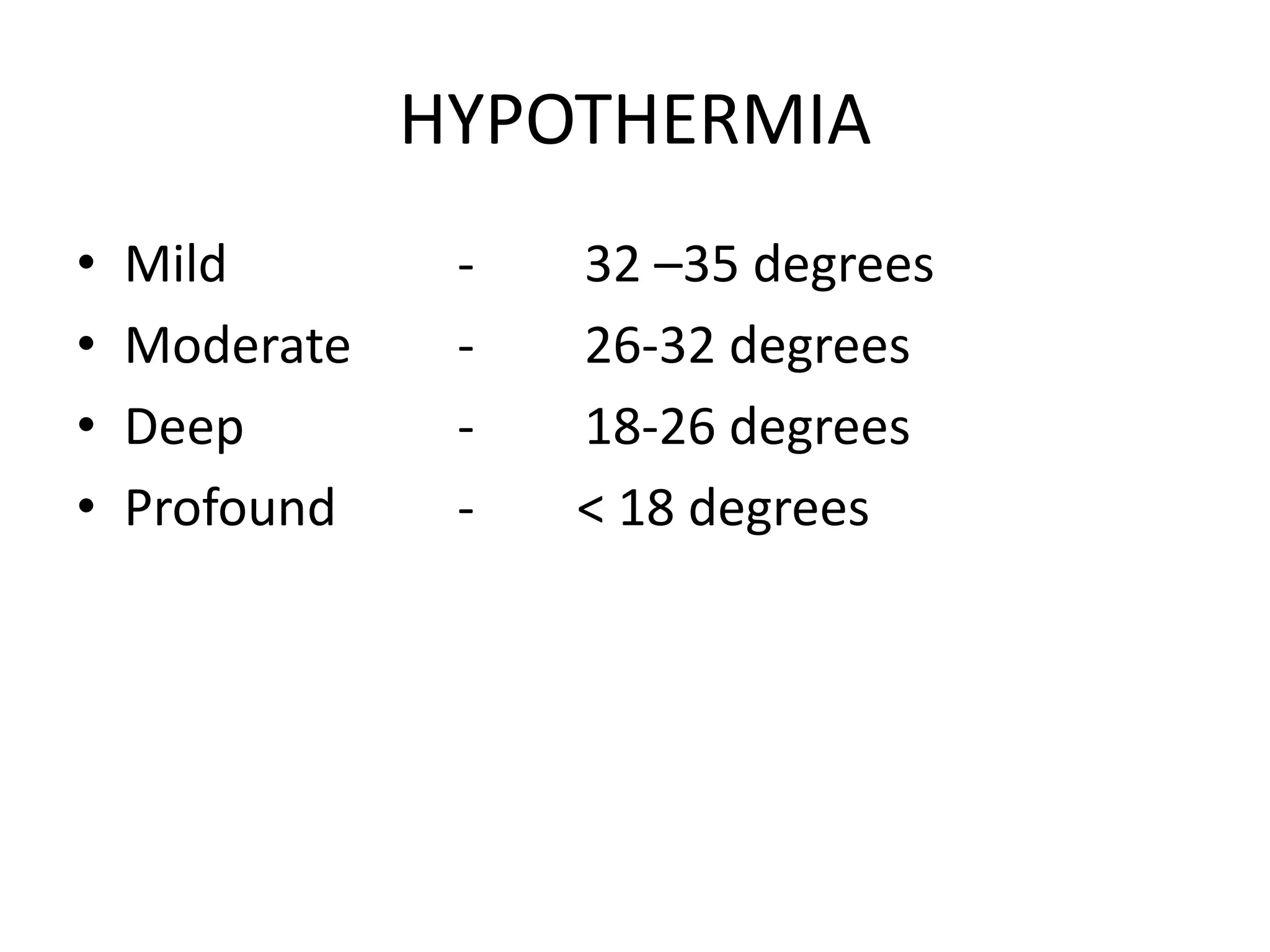
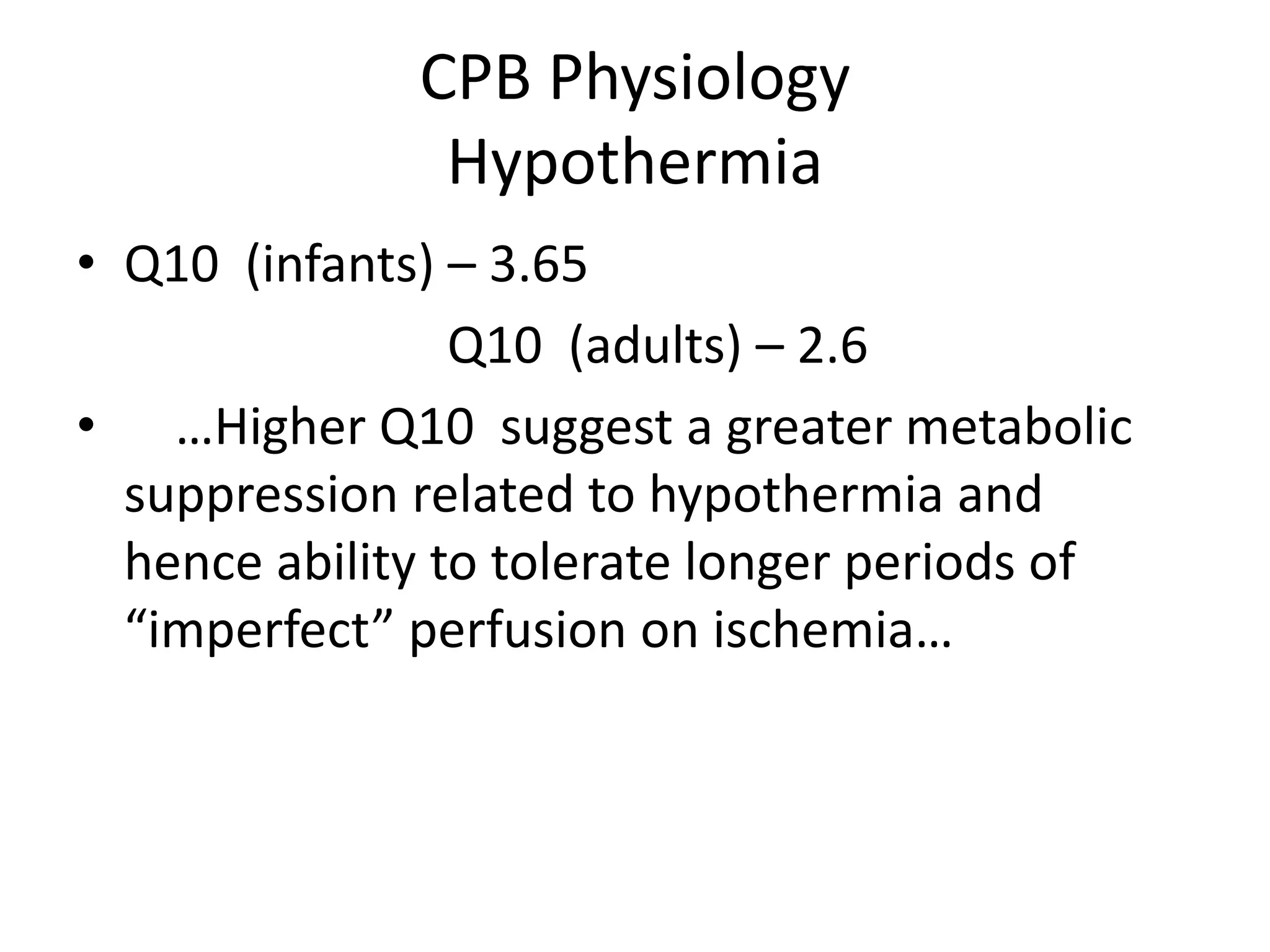
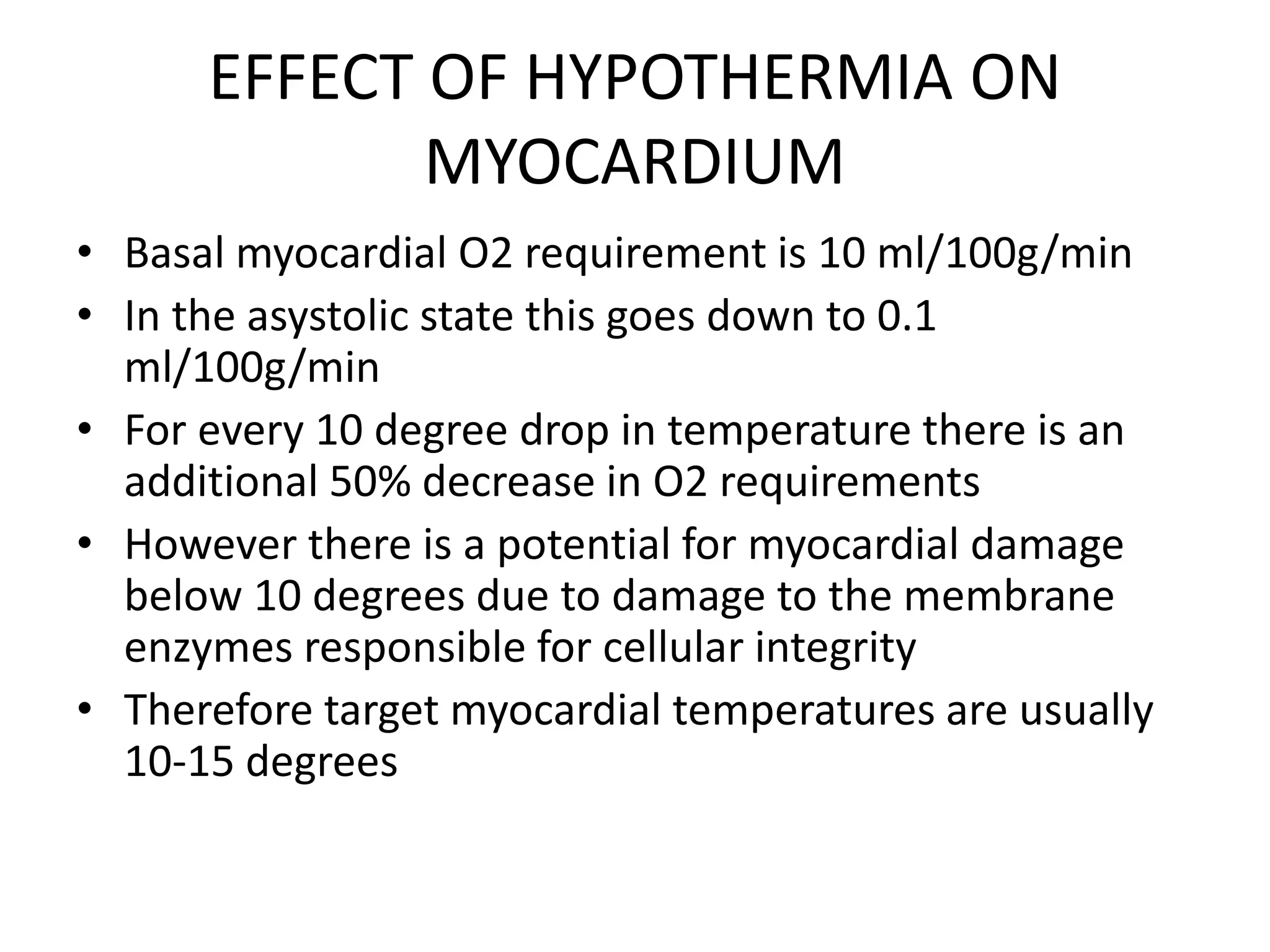
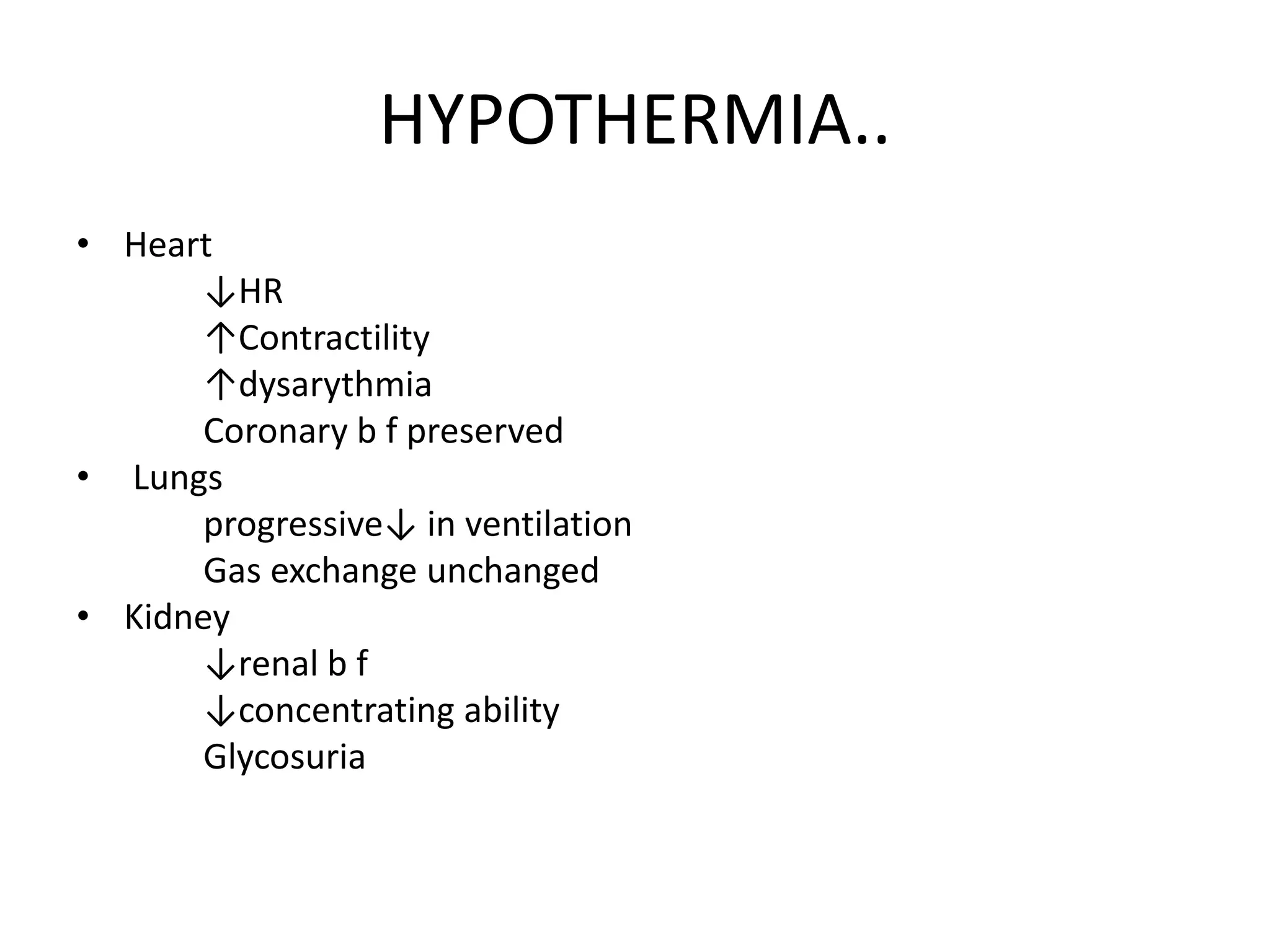
HYPOTHERMIA
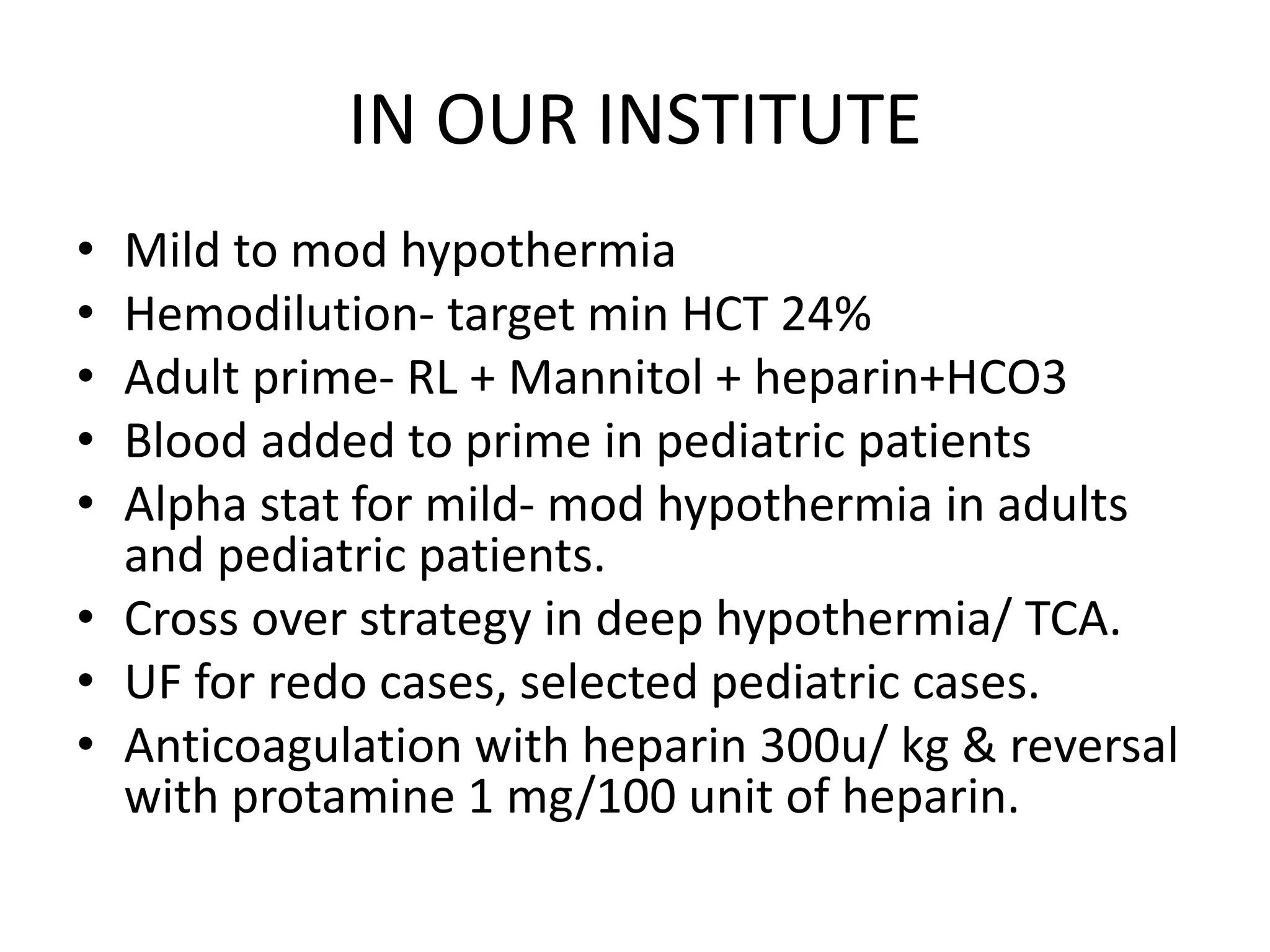
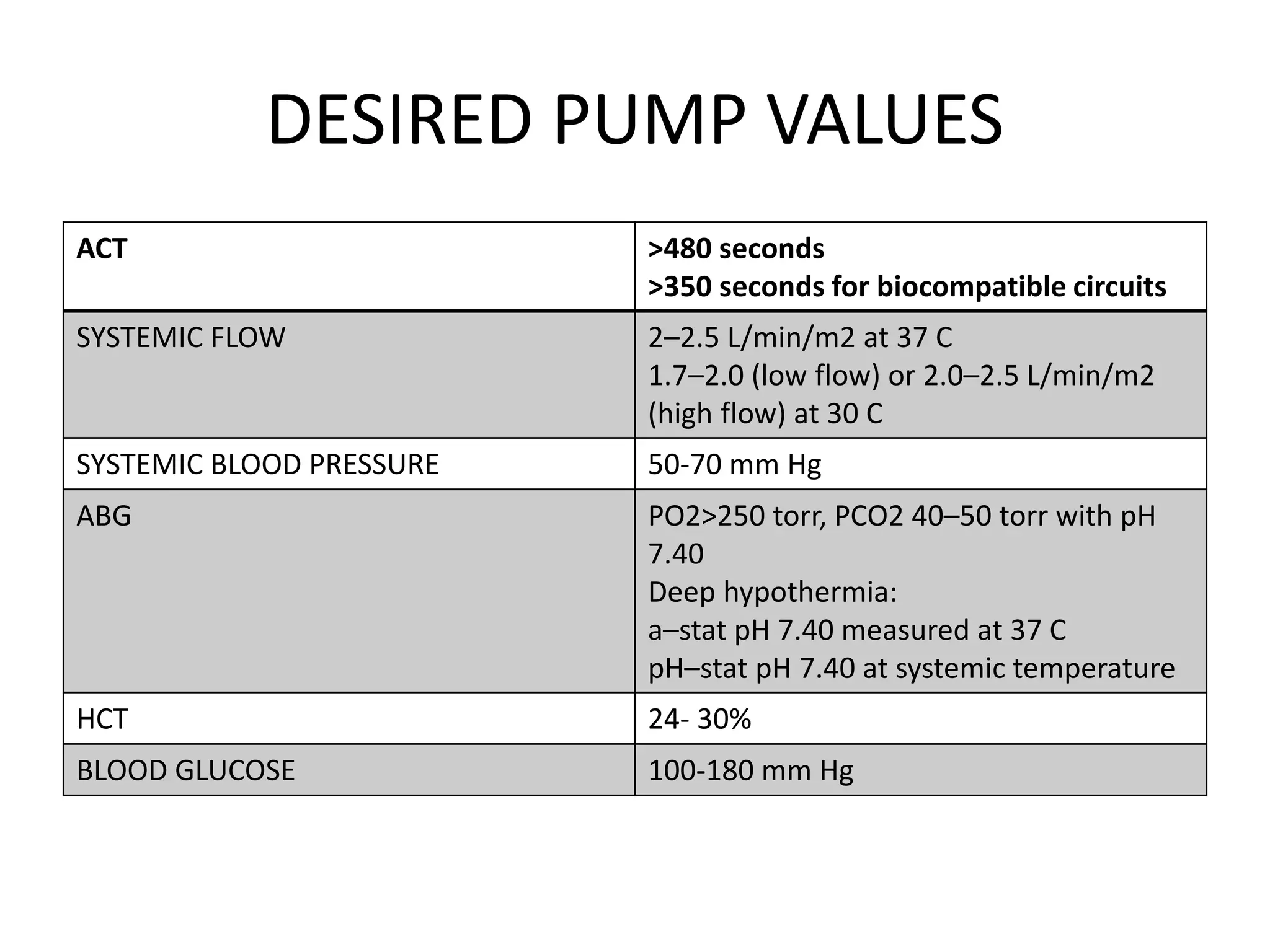
ALPHA STAT
• Alpha = unprotonated
histidine imidazole
group/[H+]
• total CO2 content kept
constant
• PH & PCO2 is allowed to
vary with temperature
PH STAT
• pH kept constant at all
temperatures](https://image.slidesharecdn.com/principlesevolutionofcpb-170426025840/75/Principles-evolution-of-cpb-41-2048.jpg)










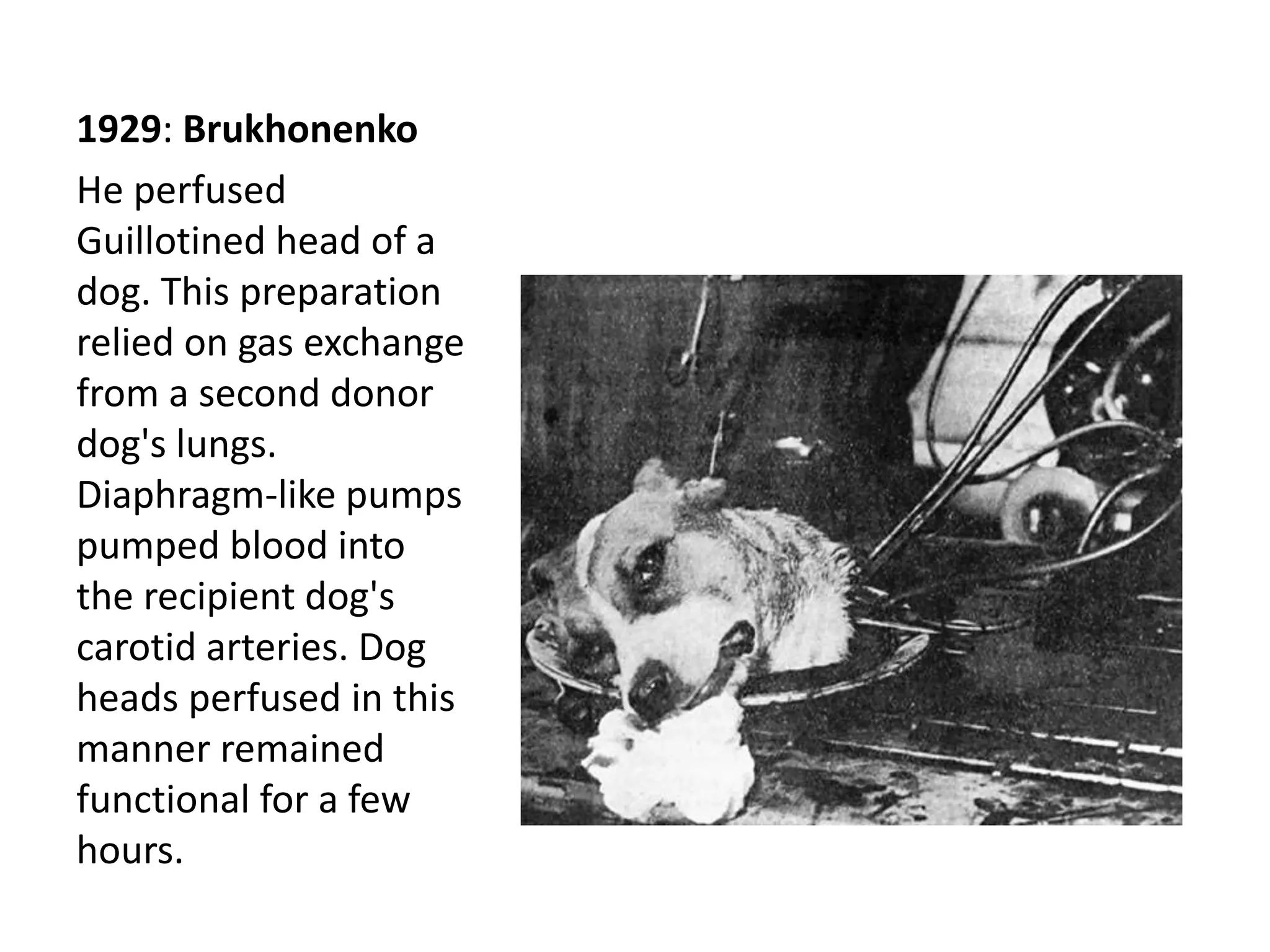
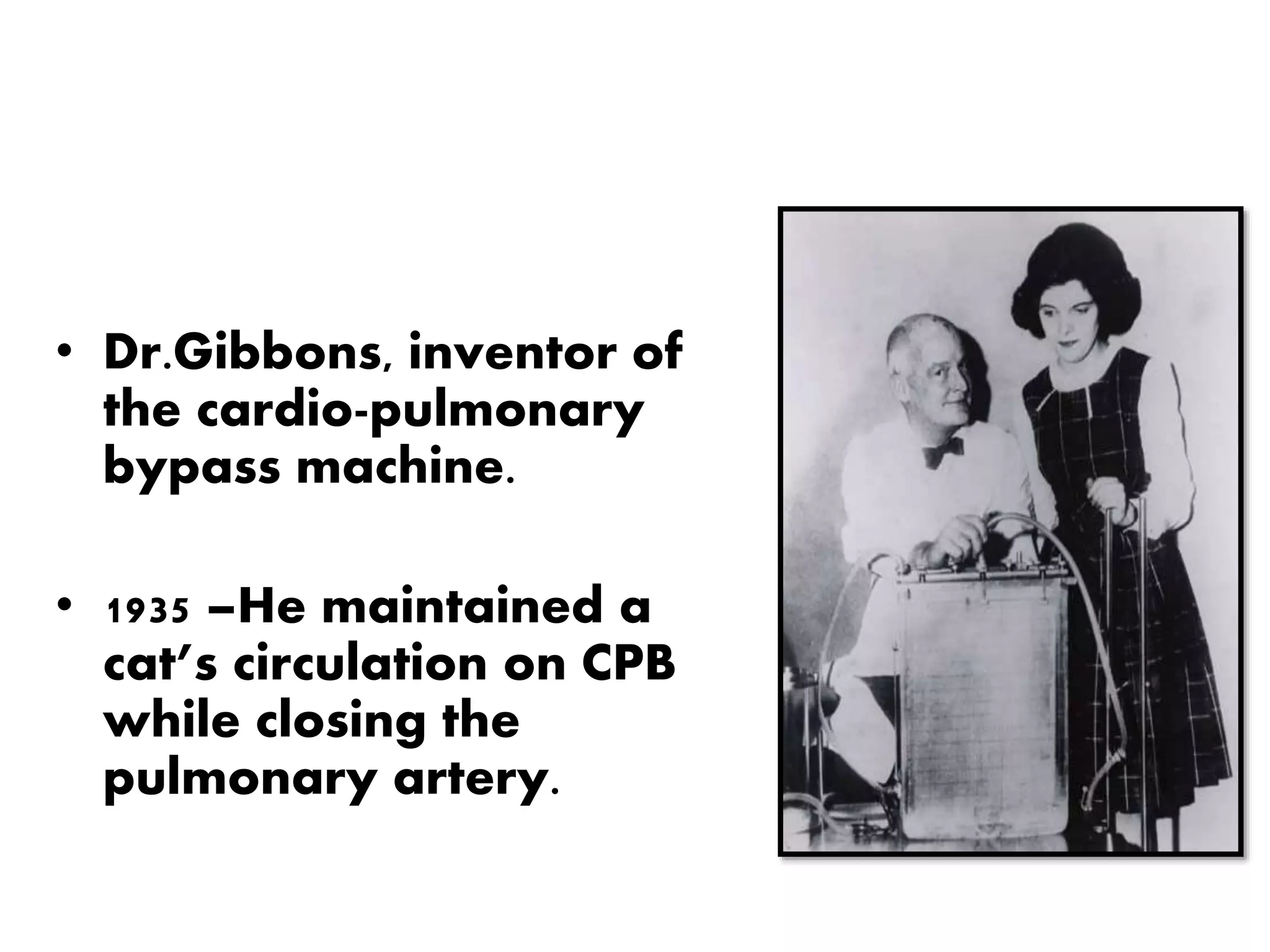
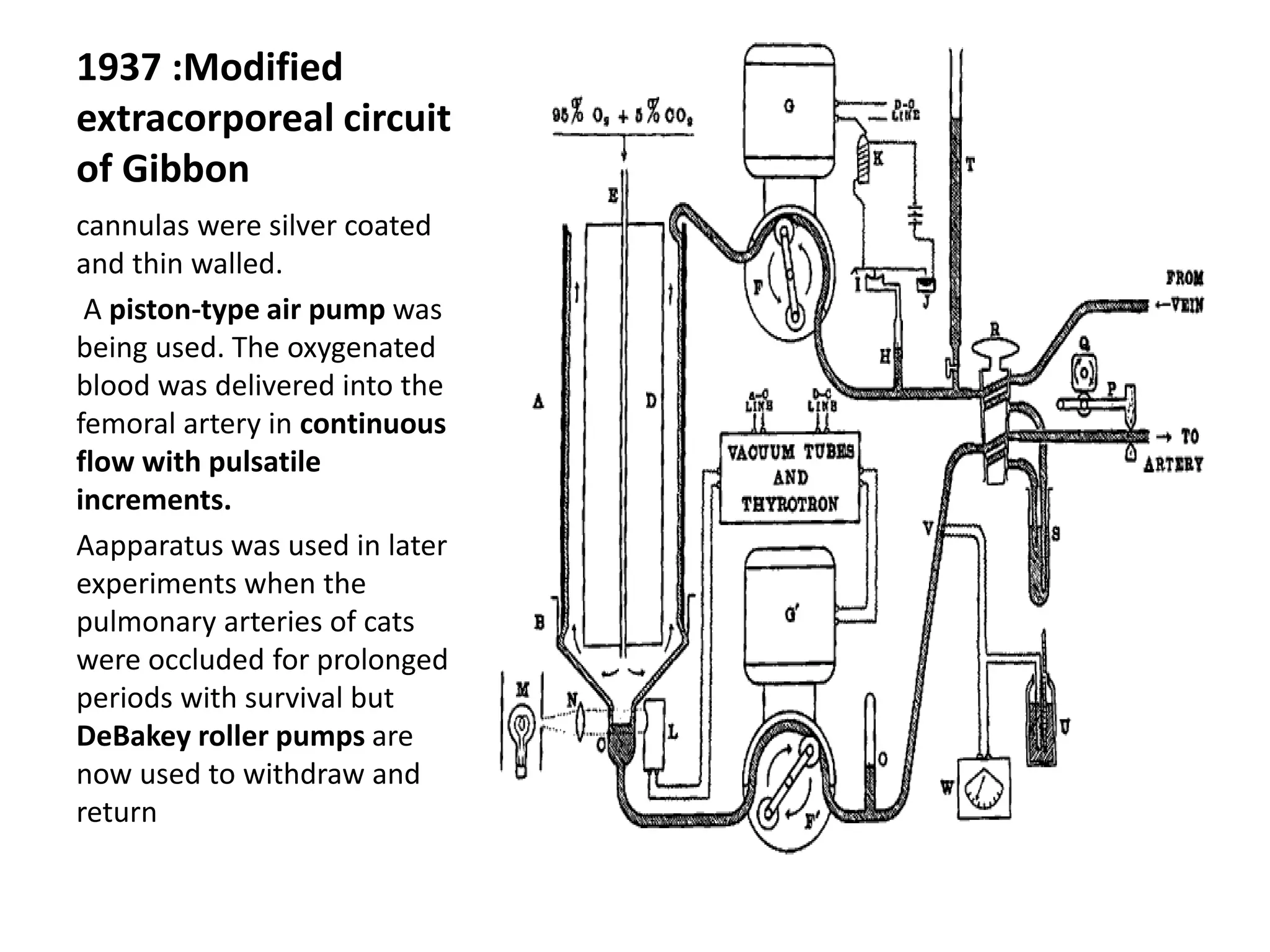
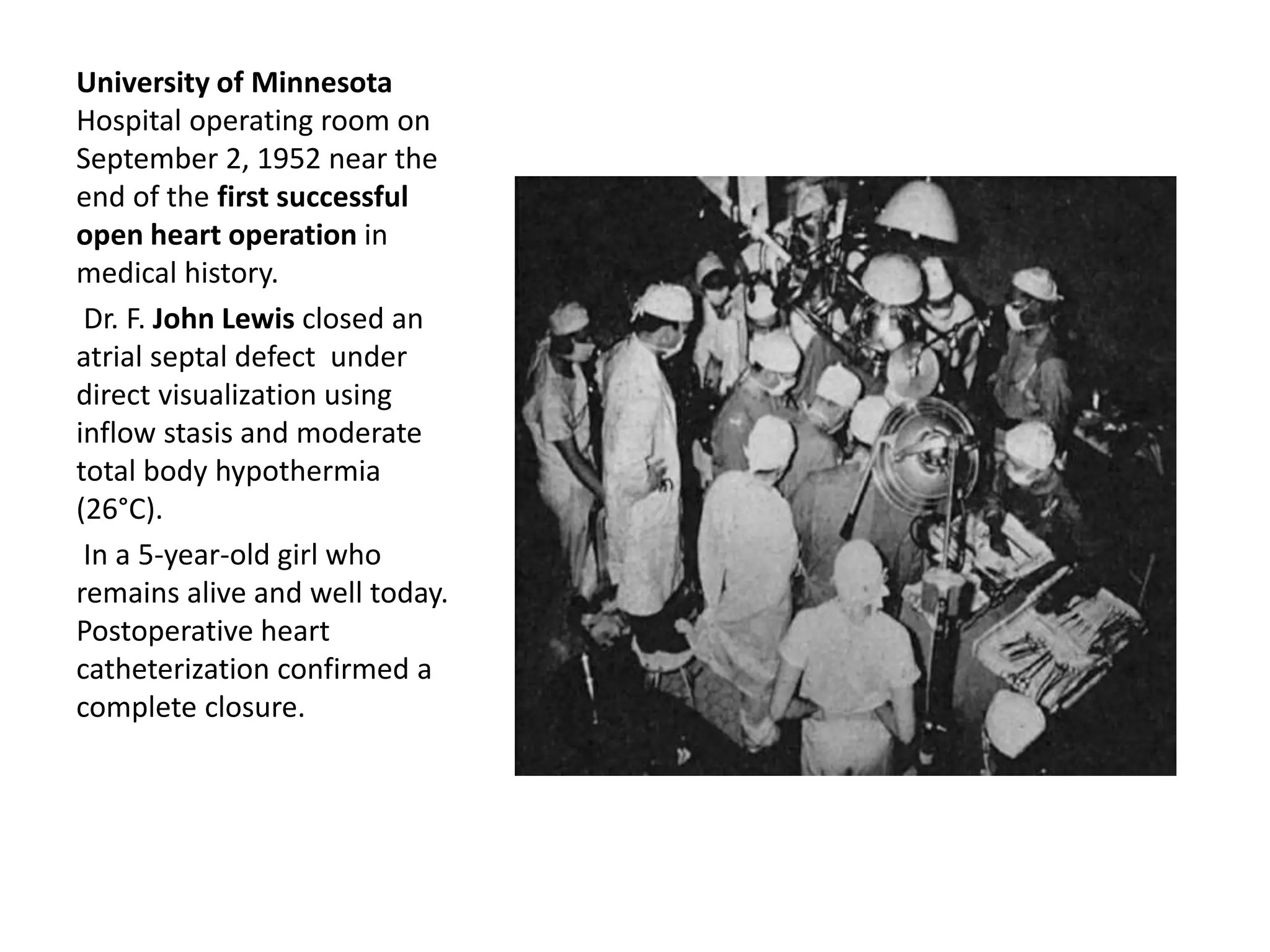
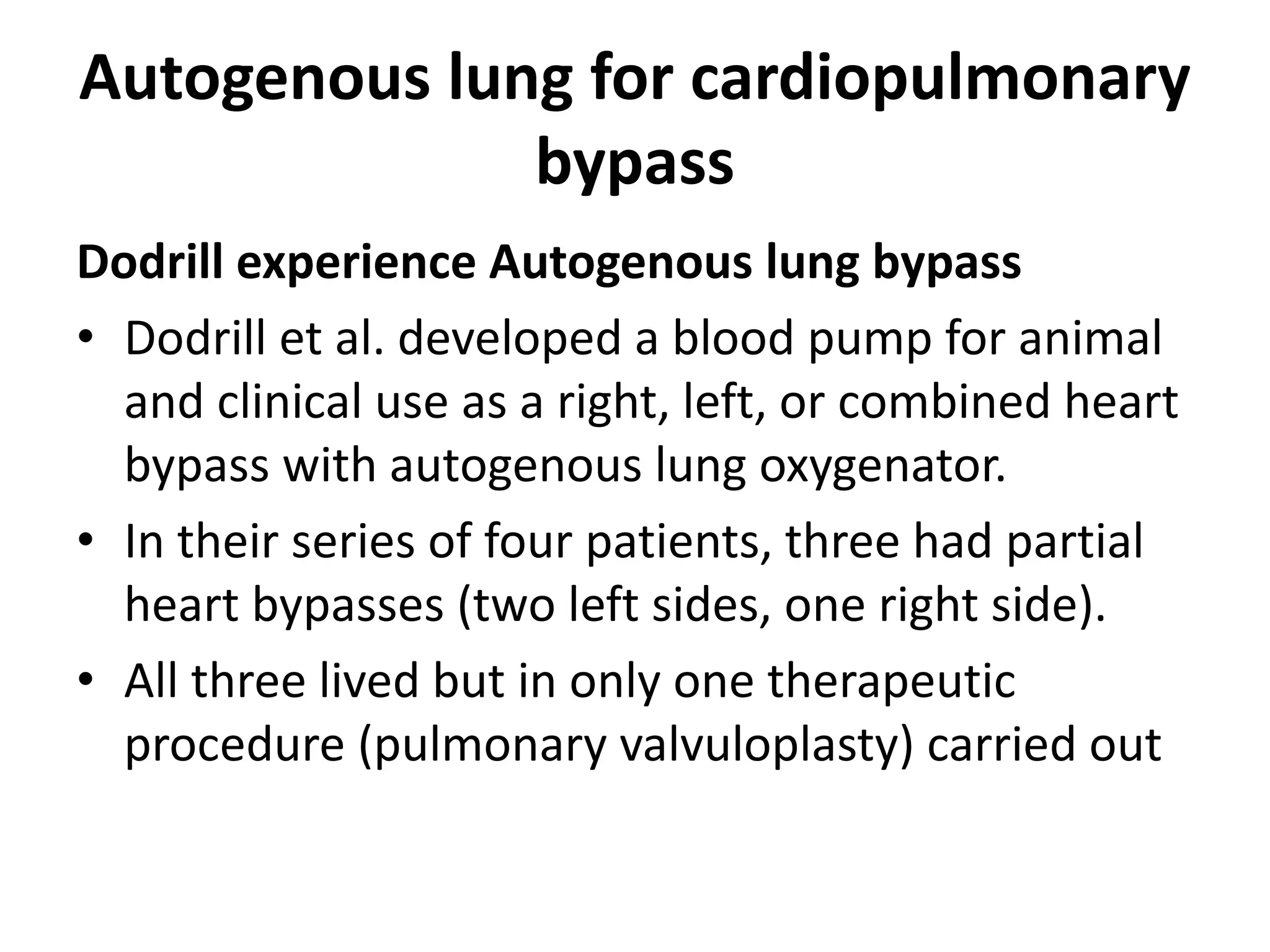
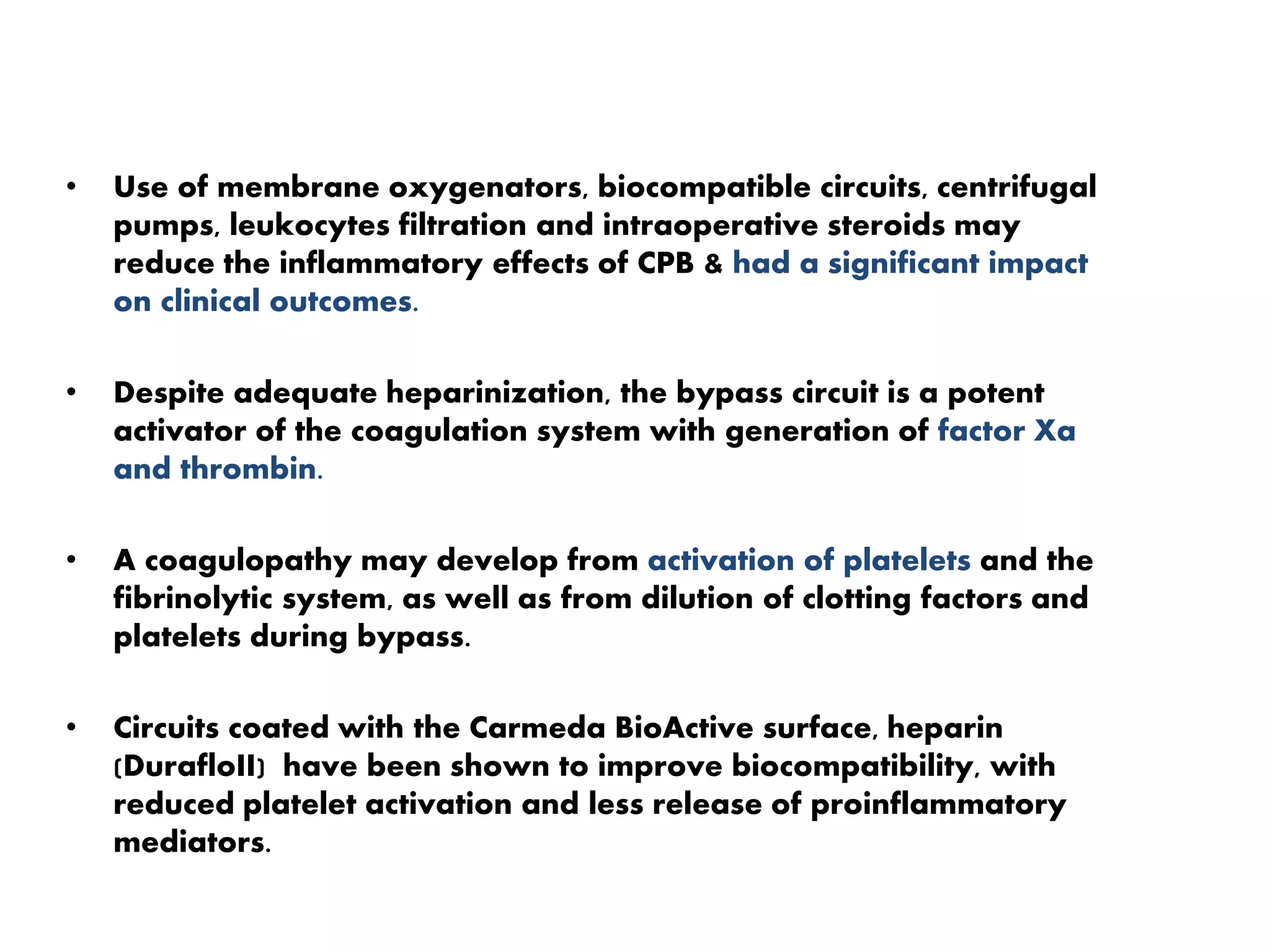
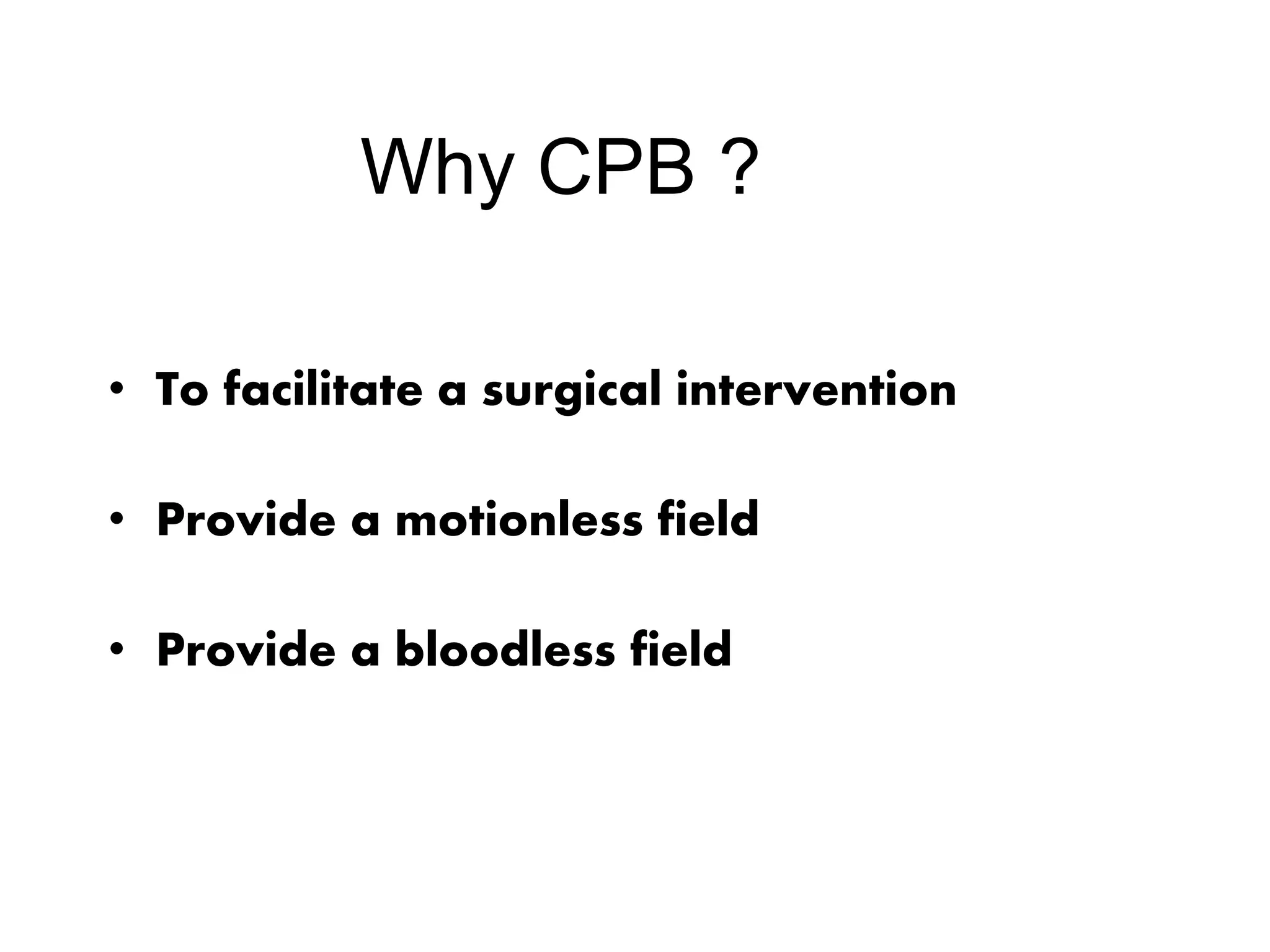
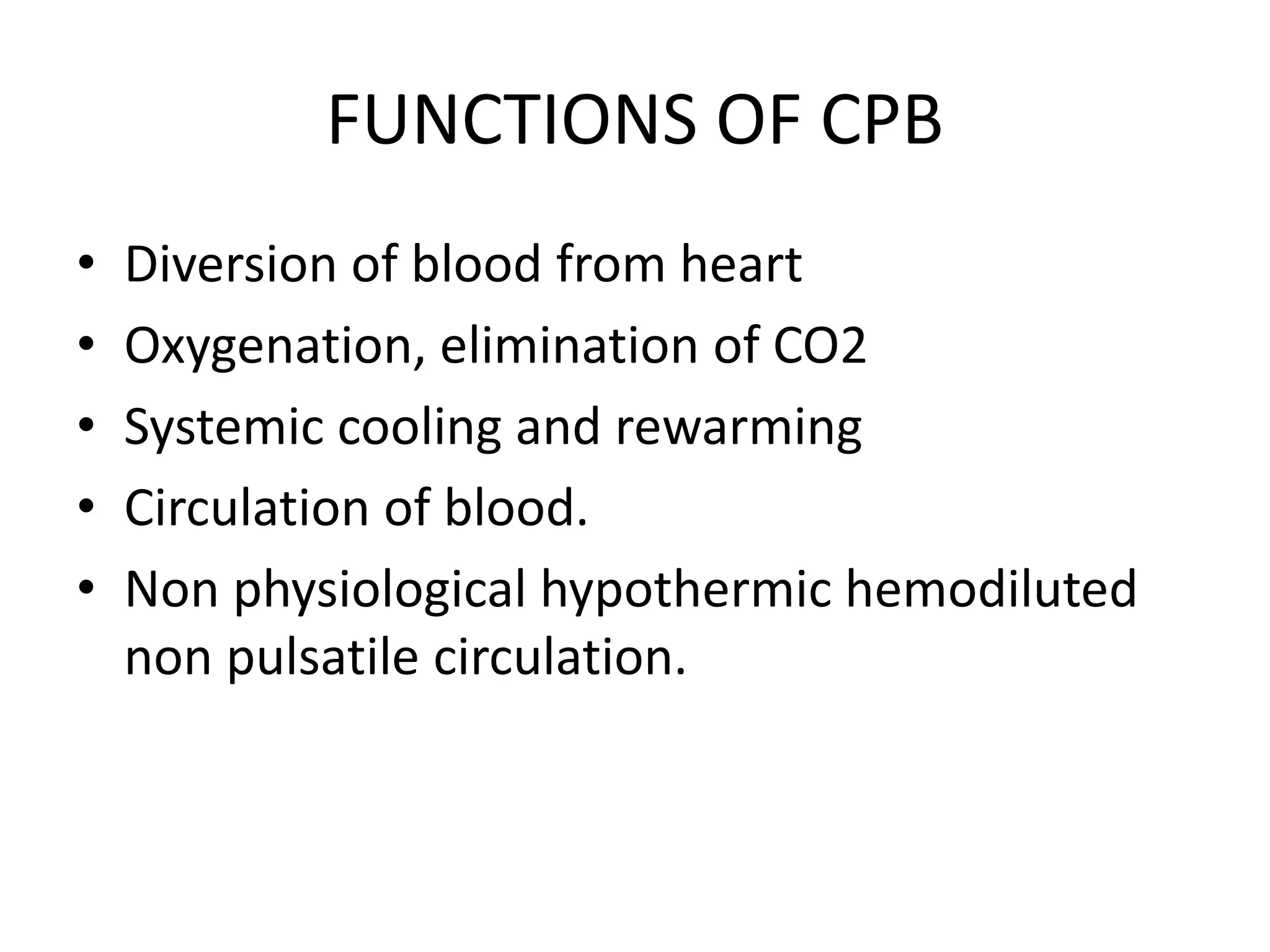
CPB was developed to facilitate open heart surgery by diverting blood from the heart and providing oxygenated blood flow, allowing for a motionless and bloodless surgical field. Early innovations included experiments with external perfusion in animals in the 1800s. The first successful human open heart surgery using surface cooling was performed in 1952. Further developments led to the use of heart-lung machines and controlled cross-circulation techniques in the 1950s. While initial experiences had complications, advances in oxygenators, pumps, circuits and management of coagulation and inflammation improved outcomes and established CPB as essential for cardiac surgery.


