Introducing
    Primo Central

Christopher Mitchell, Mark Baggett, Tianmu Zhang
Definitions

 Web-Scale           Central
  Discovery           Index
 A pre-harvested      The collection
 central index        index of local and
 coupled with a       remote processed
 richly featured      metadata and full
 discovery layer .    text.
“PRIMO Central: Plain and Simple”
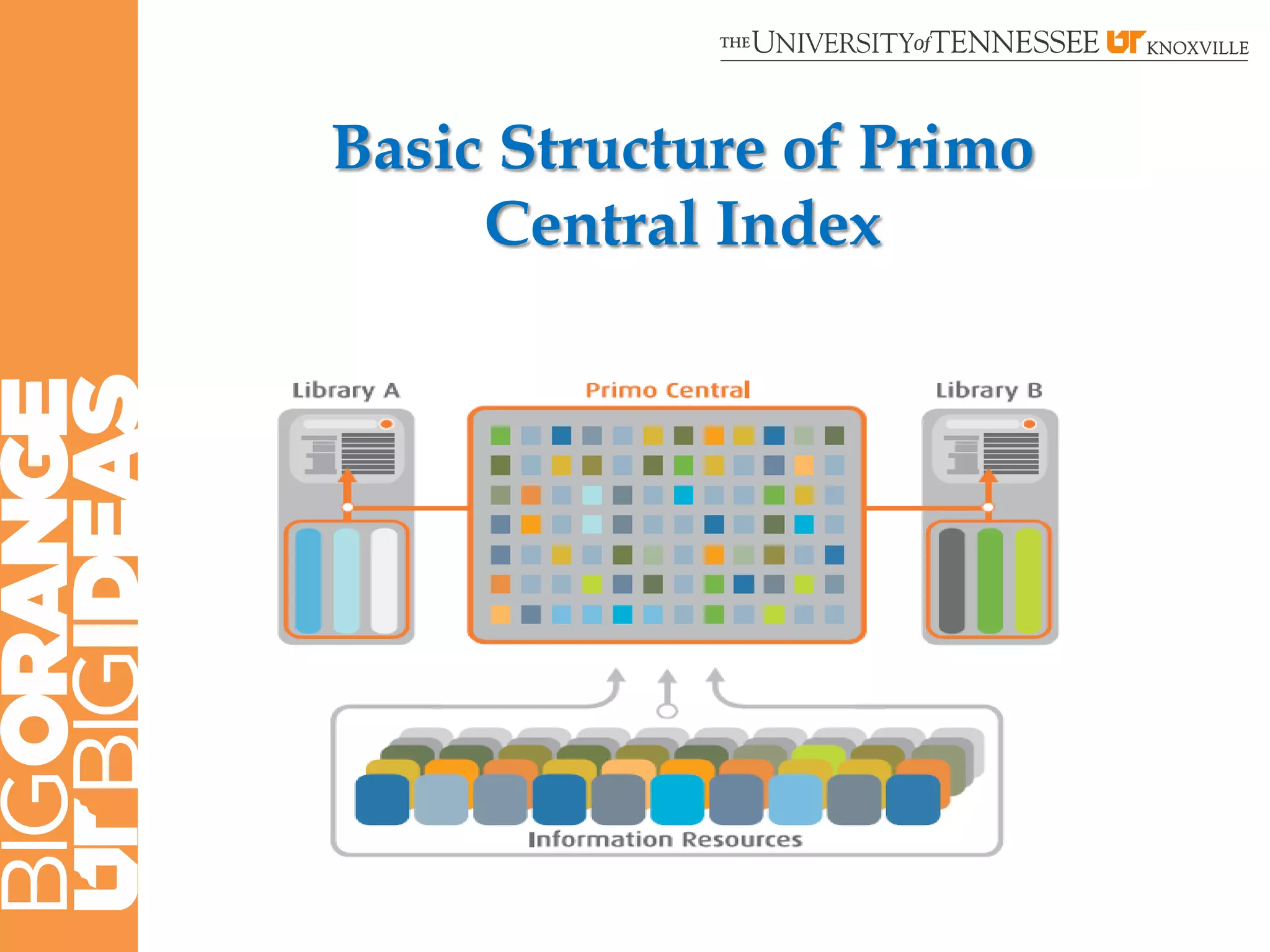
Basic Structure of Primo
     Central Index
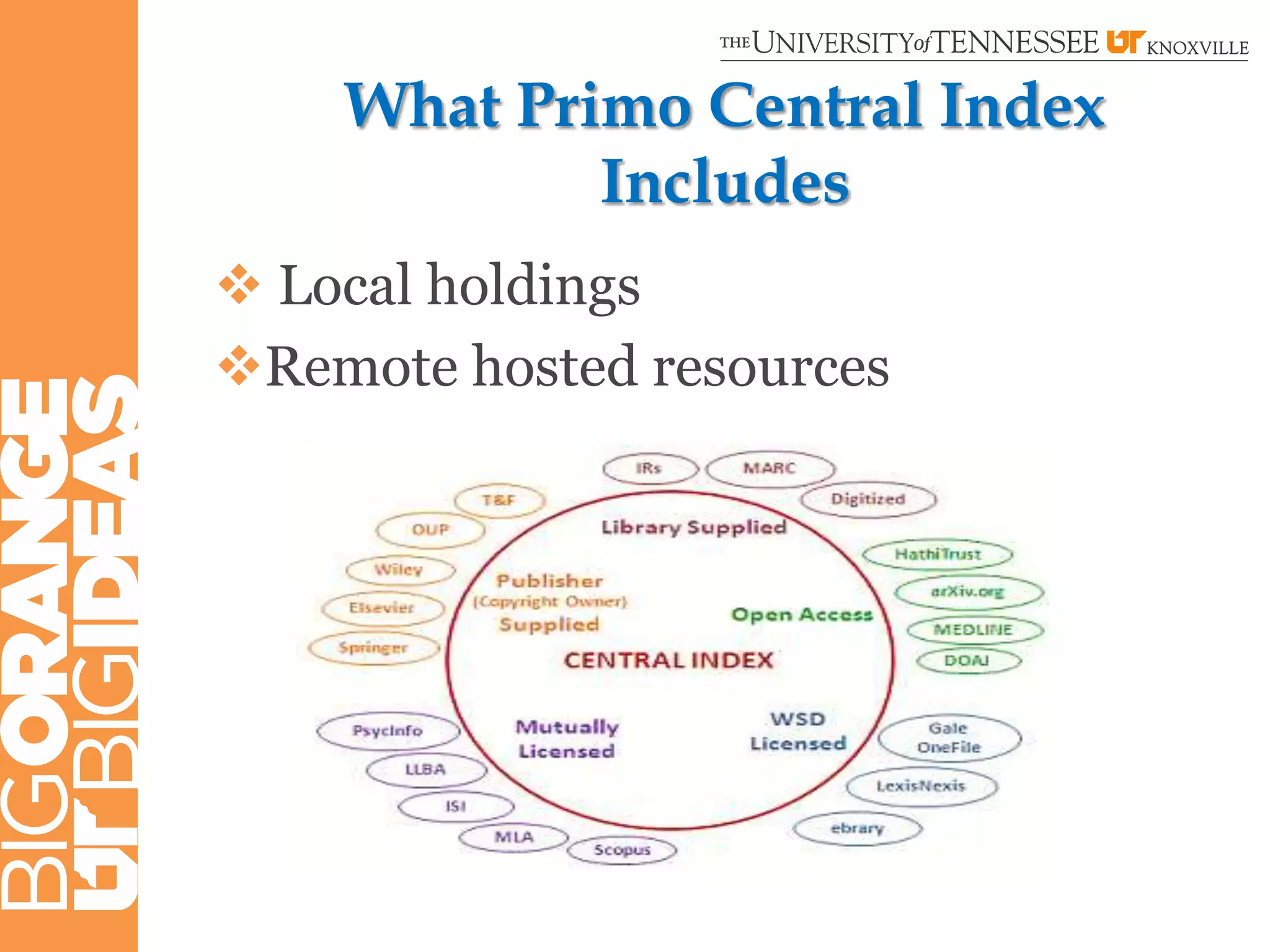
What Primo Central Index
            Includes
 Local holdings
Remote hosted resources
Why libraries need it?

 Easy to use, one stop get all.

 Goes beyond Federated Search.

 Specialized abilities.

 Easy to manage.
Who are the targeted audiences?

 Undergraduate Students


 Procrastinators


 “Hardcore” Researchers
Rich functionalities

 Easy implement, easy customize.

 Flexible relevancy-ranking
  mechanism.

 Multi-lingual support.

 Powerful full-text finding solutions.
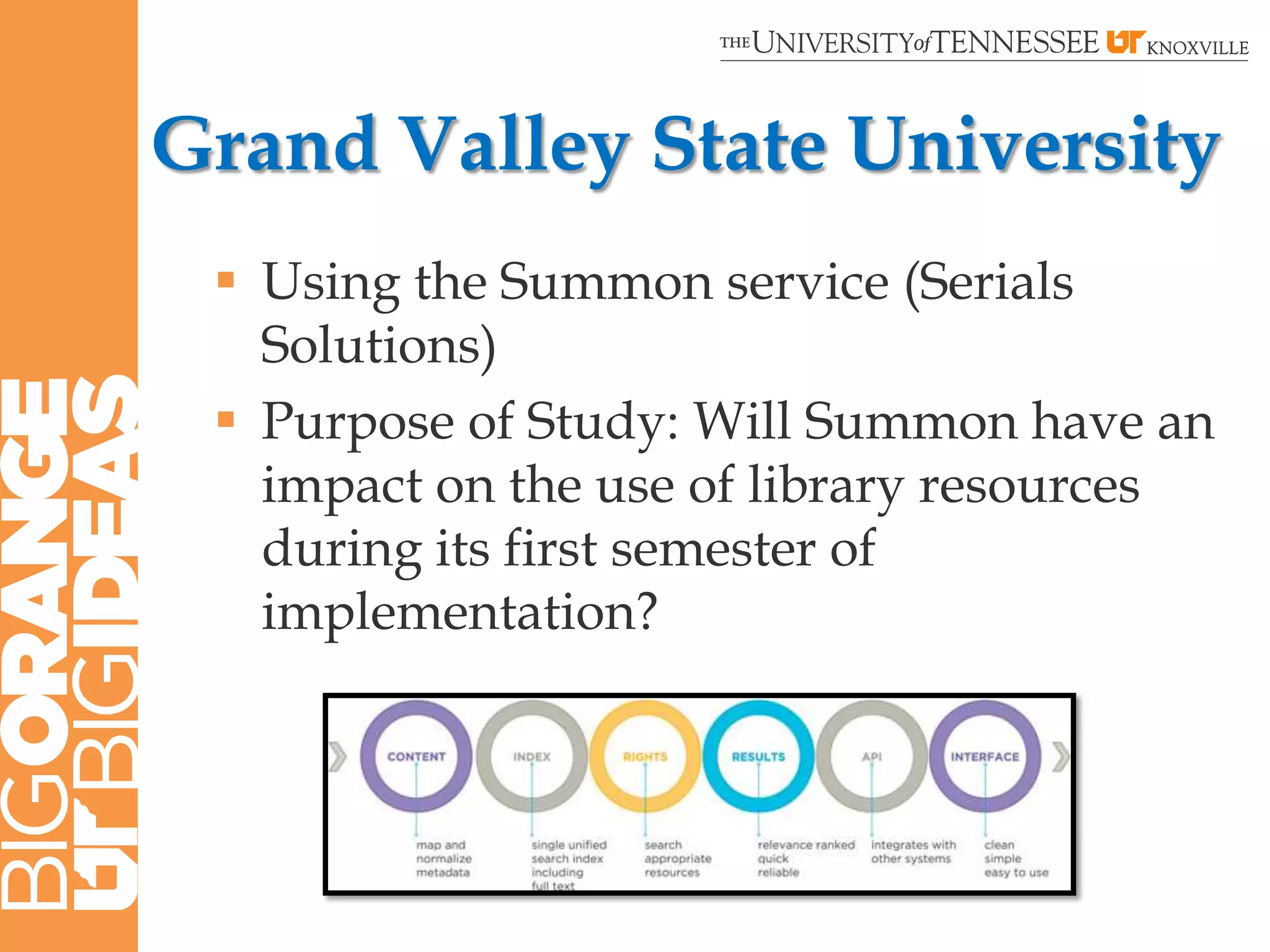
Grand Valley State University
  Using the Summon service (Serials
   Solutions)
  Purpose of Study: Will Summon have an
   impact on the use of library resources
   during its first semester of
   implementation?
Their Findings
 Increase:
 – Use of full-text resources from full-text
   databases and online journal collections
 – Monograph usage


 Decrease:
 – Use of traditional abstracting/indexing
   databases
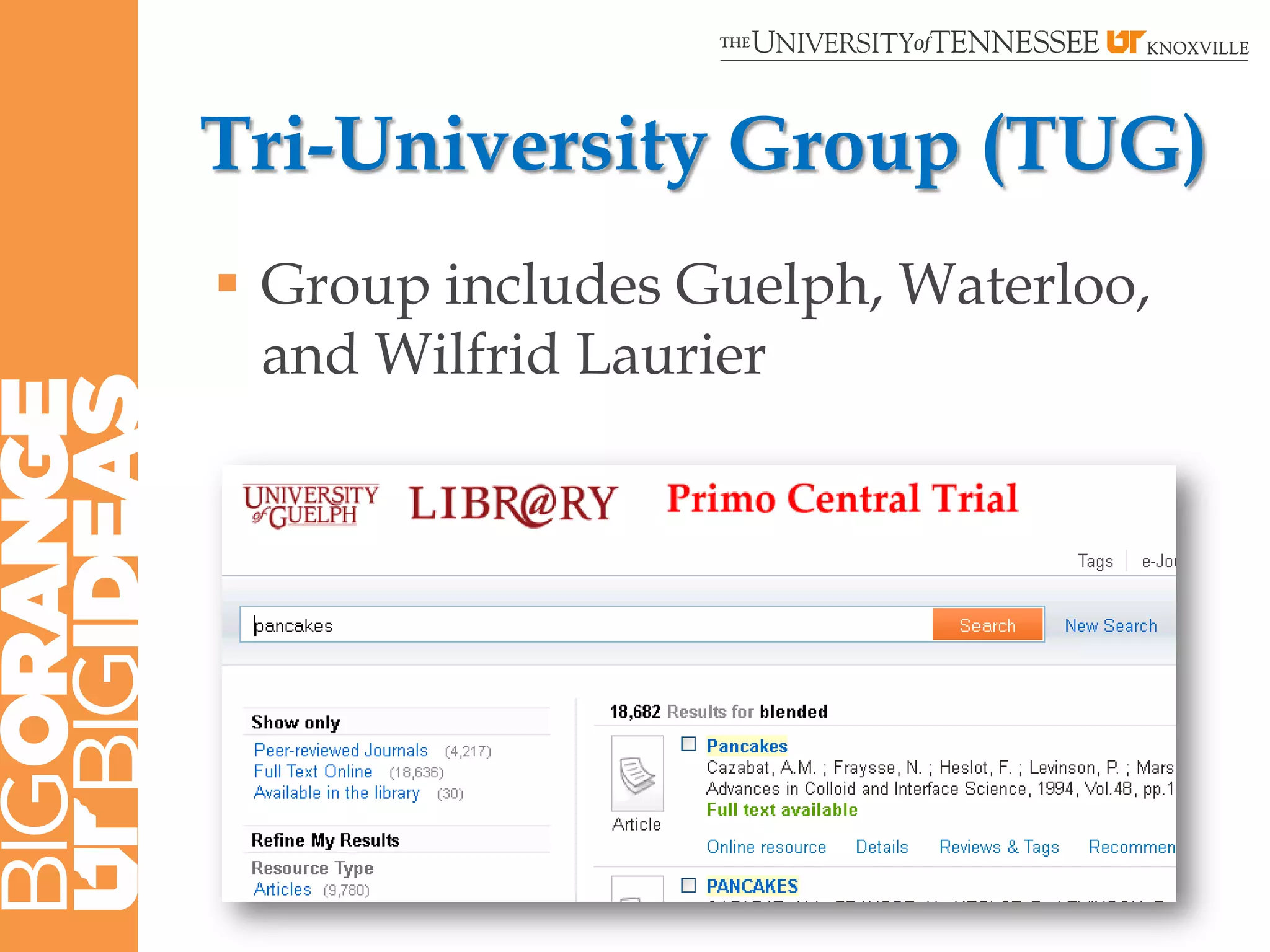
Tri-University Group (TUG)
 Group includes Guelph, Waterloo,
  and Wilfrid Laurier
Their Questions
 Does adding this index enhance the
  discovery experience of our users?

 Does it impact the workload of library
  staff?

 What does web-scale discovery mean
  for information literacy?
Unresolved Issues
 Did not share results or responses.

 Provided info about how they
  implemented and examples of types of
  questions asked.
Sample Scenarios
• “Please search for the journal article title
  Strategic decision-making. Could you tell
  me if you find the search results easy to
  understand? Why, or why not?”

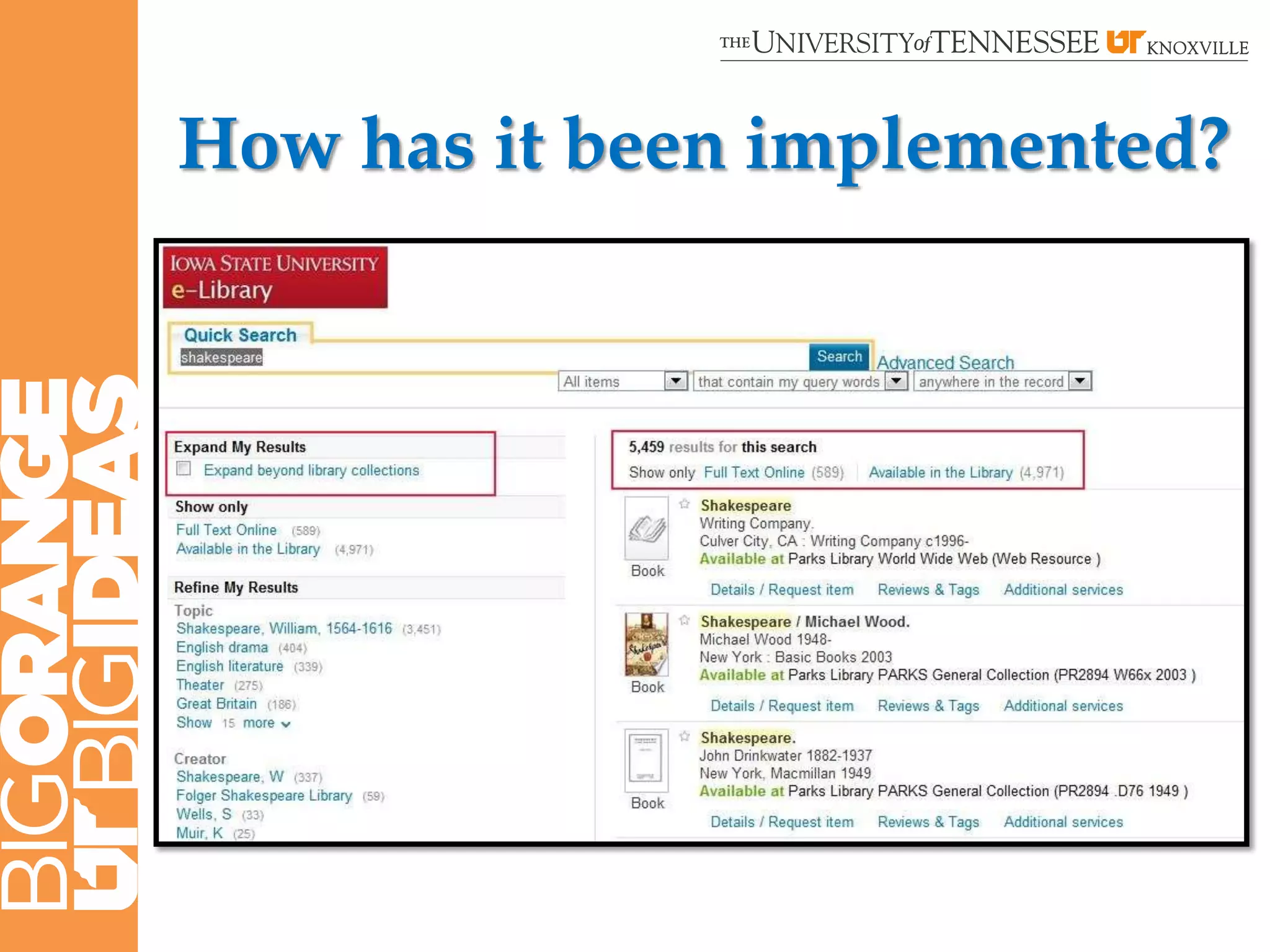
• “I‟d like to draw your attention to the facet
  „Expand beyond library collections‟. Before I
  ask you to click on it, could you tell me
  what it means to you?”
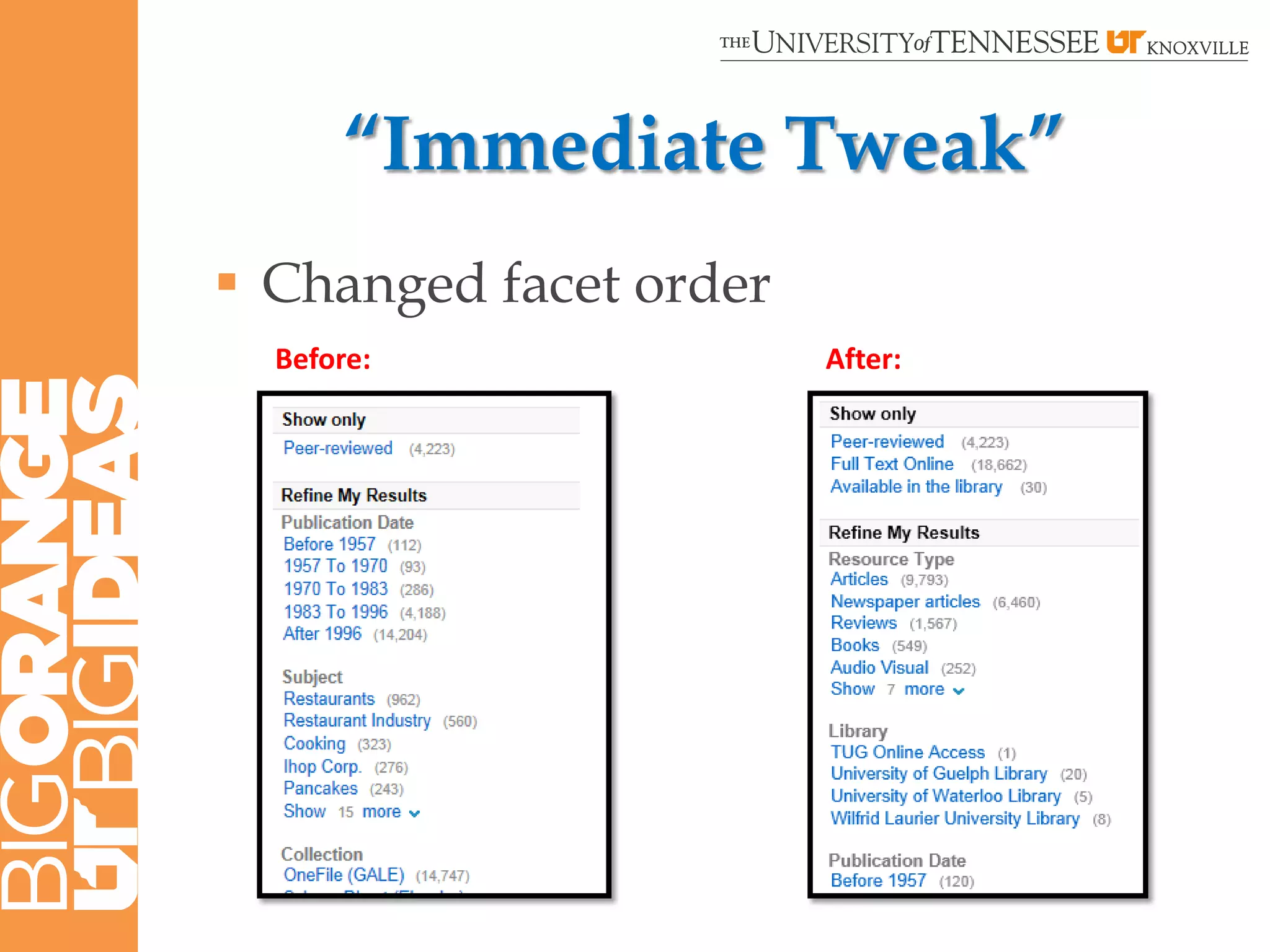
“Immediate Tweak”
 Changed facet order
  Before:               After:
How has it been implemented?
 Looked at 16 institutions
 The overwhelming majority:
  – PRIMO Central is not the default search
    option
  – Options available to expand beyond
    collections
  – Some still in beta
How has it been implemented?
Potential Survey Questions
 How are you introducing Primo Central to
  students, faculty and staff?

 What feedback have you received about Primo
  Central from students, faculty, and staff?

 Why is Primo Central currently not the default
  search on your library's website?

 Do you plan to make Primo Central the default
  search option on your library‟s site? If so, how
  and when do you plan to do so?

Primo Central Presentation by Tianmu Zhang & Chris Mitchell

  • 1.
    Introducing Primo Central Christopher Mitchell, Mark Baggett, Tianmu Zhang
  • 2.
    Definitions  Web-Scale  Central Discovery Index A pre-harvested The collection central index index of local and coupled with a remote processed richly featured metadata and full discovery layer . text.
  • 3.
  • 4.
    Basic Structure ofPrimo Central Index
  • 5.
    What Primo CentralIndex Includes  Local holdings Remote hosted resources
  • 6.
    Why libraries needit?  Easy to use, one stop get all.  Goes beyond Federated Search.  Specialized abilities.  Easy to manage.
  • 7.
    Who are thetargeted audiences?  Undergraduate Students  Procrastinators  “Hardcore” Researchers
  • 8.
    Rich functionalities  Easyimplement, easy customize.  Flexible relevancy-ranking mechanism.  Multi-lingual support.  Powerful full-text finding solutions.
  • 9.
    Grand Valley StateUniversity  Using the Summon service (Serials Solutions)  Purpose of Study: Will Summon have an impact on the use of library resources during its first semester of implementation?
  • 10.
    Their Findings  Increase: – Use of full-text resources from full-text databases and online journal collections – Monograph usage  Decrease: – Use of traditional abstracting/indexing databases
  • 11.
    Tri-University Group (TUG) Group includes Guelph, Waterloo, and Wilfrid Laurier
  • 12.
    Their Questions  Doesadding this index enhance the discovery experience of our users?  Does it impact the workload of library staff?  What does web-scale discovery mean for information literacy?
  • 13.
    Unresolved Issues  Didnot share results or responses.  Provided info about how they implemented and examples of types of questions asked.
  • 14.
    Sample Scenarios • “Pleasesearch for the journal article title Strategic decision-making. Could you tell me if you find the search results easy to understand? Why, or why not?” • “I‟d like to draw your attention to the facet „Expand beyond library collections‟. Before I ask you to click on it, could you tell me what it means to you?”
  • 15.
    “Immediate Tweak”  Changedfacet order Before: After:
  • 16.
    How has itbeen implemented?  Looked at 16 institutions  The overwhelming majority: – PRIMO Central is not the default search option – Options available to expand beyond collections – Some still in beta
  • 17.
    How has itbeen implemented?
  • 18.
    Potential Survey Questions How are you introducing Primo Central to students, faculty and staff?  What feedback have you received about Primo Central from students, faculty, and staff?  Why is Primo Central currently not the default search on your library's website?  Do you plan to make Primo Central the default search option on your library‟s site? If so, how and when do you plan to do so?