Download to read offline
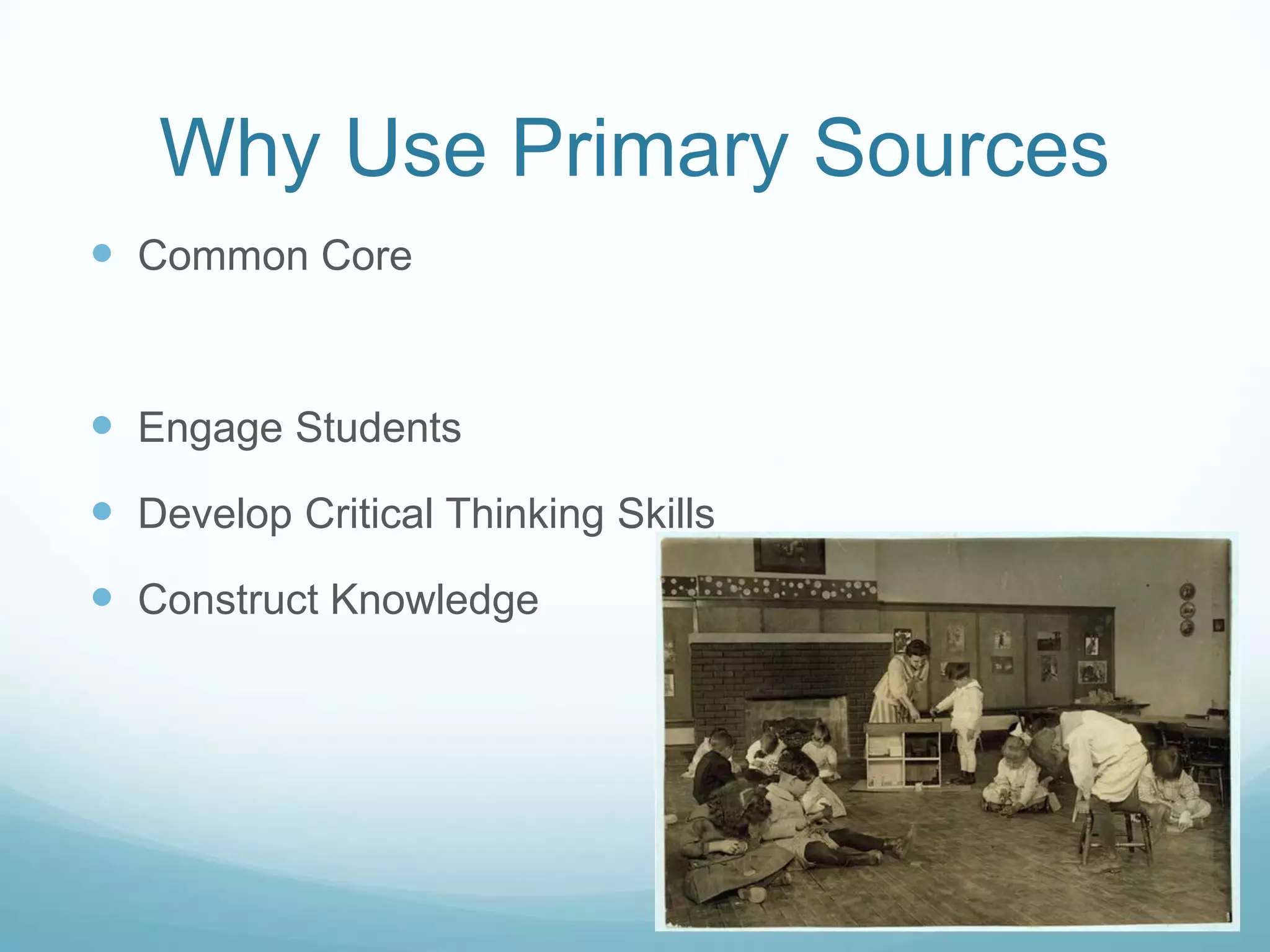






This document provides an overview of primary sources and how to use them in teaching. It defines primary sources as original materials created at the time under study that provide first-hand accounts of history. These include written documents like letters and diaries, government documents, printed materials, visual artifacts, physical artifacts, and digital sources from libraries. Using primary sources engages students, develops critical thinking skills, and helps students construct knowledge. Websites from the Library of Congress, National Archives, and other institutions are listed as sources for primary documents.


