Analysing completion rates of the first French xMOOC
Summary

MOOC Description and Demographics

Understanding Completion Rates

Predicting Completion Rates

EPFL– 12 February 2014
MOOC Description and Demographics
One MOOC, three tracks

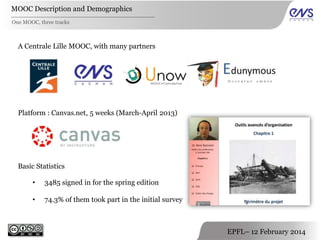
A Centrale Lille MOOC, with many partners

Platform : Canvas.net, 5 weeks (March-April 2013)

Basic Statistics
•

3485 signed in for the spring edition

•

74.3% of them took part in the initial survey

EPFL– 12 February 2014
MOOC Description and Demographics
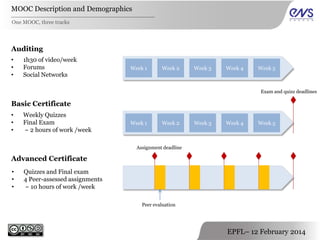
One MOOC, three tracks

Auditing
•
•
•

1h30 of video/week
Forums
Social Networks

Week 1

Week 2

Week 3

Week 4

Week 5

Exam and quizz deadlines

Basic Certificate
•
•
•

Weekly Quizzes
Final Exam
~ 2 hours of work /week

Week 1

Week 2

Week 3

Week 4

Week 5

Assignment deadline

Advanced Certificate
•
•
•

Quizzes and Final exam
4 Peer-assessed assignments
~ 10 hours of work /week
Peer evaluation

EPFL– 12 February 2014
MOOC Description and Demographics
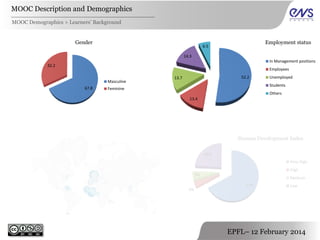
MOOC Demographics > Learners’ Background

Gender

Employment status

6.5
14.3

In Management positions

32.2

Employees
Masculine
67.8

52.2

13.7

Unemployed
Students

Feminine

Others
13.4

Human Development Index
24%
Very High
High
5%

4%

Medium
67%

Low

EPFL– 12 February 2014
Understanding Completion Rates
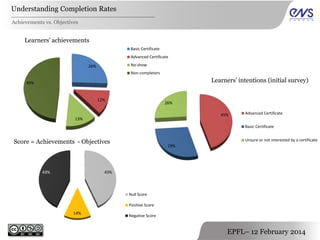
Achievements vs. Objectives

Learners’ achievements
Basic Certificate
Advanced Certificate
No-show

26%

Non-completers

Learners’ intentions (initial survey)

49%

12%

26%
45%

13%

Advanced Certificate
Basic Certificate

Score = Achievements - Objectives

43%

Unsure or not interested by a certificate
29%

43%

Null Score
Positive Score
14%

Negative Score

EPFL– 12 February 2014
Understanding Completion Rates
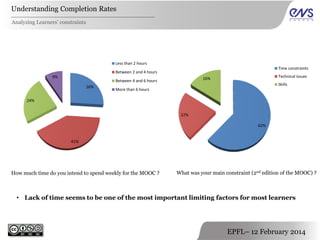
Analyzing Learners’ constraints

Less than 2 hours
Time constraints

Between 2 and 4 hours
9%
26%

Technical issues

16%

Between 4 and 6 hours

Skills

More than 6 hours

24%
22%
62%

41%

How much time do you intend to spend weekly for the MOOC ?

What was your main constraint (2nd edition of the MOOC) ?

• Lack of time seems to be one of the most important limiting factors for most learners

EPFL– 12 February 2014
Understanding Completion Rates
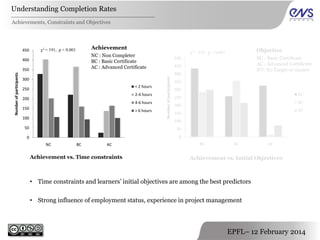
Achievements, Constraints and Objectives

2=

Achievement

191, p < 0.001

400
350
Number of participants

2=

NC : Non Completer
BC : Basic Certificate
AC : Advanced Certificate

300
< 2 hours

250

2-4 hours

200

4-6 hours

150

> 6 hours

100

Objective

193, p < 0.001

BC : Basic Certificate
AC : Advanced Certificate
NT: No Target or unsure

500
450
Number of participants

450

400
350
300

AC

250

BC

200

NT

150
100

50

50

0

0
NC

BC

AC

Achievement vs. Time constraints

NC

BC

AC

Achievement vs. Initial Objectives

• Time constraints and learners’ initial objectives are among the best predictors
• Strong influence of employment status, experience in project management

EPFL– 12 February 2014
Understanding Completion Rates
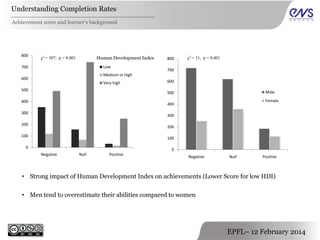
Achievement score and learner’s background

800

2=

Human Development Index

307, p < 0.001

Low

700

800

2=

31, p < 0.001

700

Medium or high

600

Very high

500

600

Male

500

400

Female

400

300

300

200

200

100

100

0

0
Negative

Null

Positive

Negative

Null

Positive

• Strong impact of Human Development Index on achievements (Lower Score for low HDI)
• Men tend to overestimate their abilities compared to women

EPFL– 12 February 2014
Predicting Completion Rates
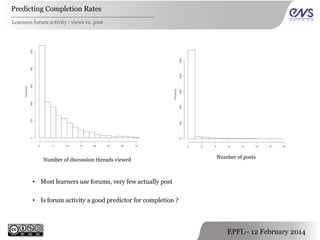
Learners forum activity : views vs. post

Number of discussion threads viewed

Number of posts

• Most learners use forums, very few actually post
• Is forum activity a good predictor for completion ?

EPFL– 12 February 2014
Predicting Completion Rates
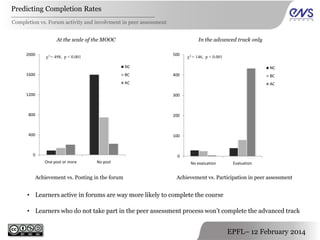
Completion vs. Forum activity and involvment in peer assessment
At the scale of the MOOC
2000

2=

In the advanced track only
500

498, p < 0.001

2=

146, p < 0.001

NC
1600

BC

NC
400

BC

AC

AC

1200

300

800

200

400

100

0

0
One post or more

No post

Achievement vs. Posting in the forum

No evaluation

Evaluation

Achievement vs. Participation in peer assessment

• Learners active in forums are way more likely to complete the course
• Learners who do not take part in the peer assessment process won’t complete the advanced track

EPFL– 12 February 2014
Conclusion

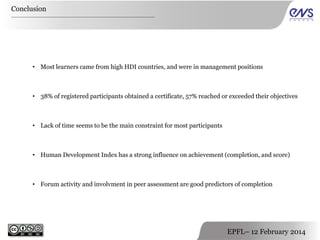
• Most learners came from high HDI countries, and were in management positions

• 38% of registered participants obtained a certificate, 57% reached or exceeded their objectives

• Lack of time seems to be the main constraint for most participants

• Human Development Index has a strong influence on achievement (completion, and score)

• Forum activity and involvment in peer assessment are good predictors of completion

EPFL– 12 February 2014

Prez epfl

  • 1.
    Analysing completion ratesof the first French xMOOC
  • 2.
    Summary MOOC Description andDemographics Understanding Completion Rates Predicting Completion Rates EPFL– 12 February 2014
  • 3.
    MOOC Description andDemographics One MOOC, three tracks A Centrale Lille MOOC, with many partners Platform : Canvas.net, 5 weeks (March-April 2013) Basic Statistics • 3485 signed in for the spring edition • 74.3% of them took part in the initial survey EPFL– 12 February 2014
  • 4.
    MOOC Description andDemographics One MOOC, three tracks Auditing • • • 1h30 of video/week Forums Social Networks Week 1 Week 2 Week 3 Week 4 Week 5 Exam and quizz deadlines Basic Certificate • • • Weekly Quizzes Final Exam ~ 2 hours of work /week Week 1 Week 2 Week 3 Week 4 Week 5 Assignment deadline Advanced Certificate • • • Quizzes and Final exam 4 Peer-assessed assignments ~ 10 hours of work /week Peer evaluation EPFL– 12 February 2014
  • 5.
    MOOC Description andDemographics MOOC Demographics > Learners’ Background Gender Employment status 6.5 14.3 In Management positions 32.2 Employees Masculine 67.8 52.2 13.7 Unemployed Students Feminine Others 13.4 Human Development Index 24% Very High High 5% 4% Medium 67% Low EPFL– 12 February 2014
  • 6.
    Understanding Completion Rates Achievementsvs. Objectives Learners’ achievements Basic Certificate Advanced Certificate No-show 26% Non-completers Learners’ intentions (initial survey) 49% 12% 26% 45% 13% Advanced Certificate Basic Certificate Score = Achievements - Objectives 43% Unsure or not interested by a certificate 29% 43% Null Score Positive Score 14% Negative Score EPFL– 12 February 2014
  • 7.
    Understanding Completion Rates AnalyzingLearners’ constraints Less than 2 hours Time constraints Between 2 and 4 hours 9% 26% Technical issues 16% Between 4 and 6 hours Skills More than 6 hours 24% 22% 62% 41% How much time do you intend to spend weekly for the MOOC ? What was your main constraint (2nd edition of the MOOC) ? • Lack of time seems to be one of the most important limiting factors for most learners EPFL– 12 February 2014
  • 8.
    Understanding Completion Rates Achievements,Constraints and Objectives 2= Achievement 191, p < 0.001 400 350 Number of participants 2= NC : Non Completer BC : Basic Certificate AC : Advanced Certificate 300 < 2 hours 250 2-4 hours 200 4-6 hours 150 > 6 hours 100 Objective 193, p < 0.001 BC : Basic Certificate AC : Advanced Certificate NT: No Target or unsure 500 450 Number of participants 450 400 350 300 AC 250 BC 200 NT 150 100 50 50 0 0 NC BC AC Achievement vs. Time constraints NC BC AC Achievement vs. Initial Objectives • Time constraints and learners’ initial objectives are among the best predictors • Strong influence of employment status, experience in project management EPFL– 12 February 2014
  • 9.
    Understanding Completion Rates Achievementscore and learner’s background 800 2= Human Development Index 307, p < 0.001 Low 700 800 2= 31, p < 0.001 700 Medium or high 600 Very high 500 600 Male 500 400 Female 400 300 300 200 200 100 100 0 0 Negative Null Positive Negative Null Positive • Strong impact of Human Development Index on achievements (Lower Score for low HDI) • Men tend to overestimate their abilities compared to women EPFL– 12 February 2014
  • 10.
    Predicting Completion Rates Learnersforum activity : views vs. post Number of discussion threads viewed Number of posts • Most learners use forums, very few actually post • Is forum activity a good predictor for completion ? EPFL– 12 February 2014
  • 11.
    Predicting Completion Rates Completionvs. Forum activity and involvment in peer assessment At the scale of the MOOC 2000 2= In the advanced track only 500 498, p < 0.001 2= 146, p < 0.001 NC 1600 BC NC 400 BC AC AC 1200 300 800 200 400 100 0 0 One post or more No post Achievement vs. Posting in the forum No evaluation Evaluation Achievement vs. Participation in peer assessment • Learners active in forums are way more likely to complete the course • Learners who do not take part in the peer assessment process won’t complete the advanced track EPFL– 12 February 2014
  • 12.
    Conclusion • Most learnerscame from high HDI countries, and were in management positions • 38% of registered participants obtained a certificate, 57% reached or exceeded their objectives • Lack of time seems to be the main constraint for most participants • Human Development Index has a strong influence on achievement (completion, and score) • Forum activity and involvment in peer assessment are good predictors of completion EPFL– 12 February 2014