COVID Analysis
Maria Roulet Sterkel, Elie Brosset, Sirine Haddouche
Cases and deaths April and May 2020
Introduction
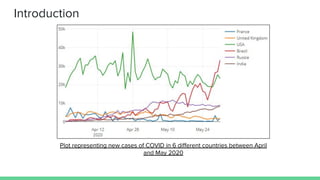
Plot representing new cases of COVID in 6 different countries between April
and May 2020
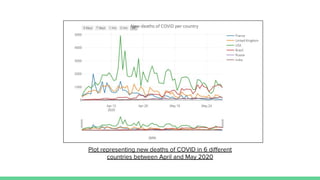
Plot representing new deaths of COVID in 6 different
countries between April and May 2020
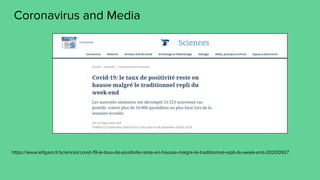
Coronavirus and Media
https://www.lefigaro.fr/sciences/covid-19-le-taux-de-positivite-reste-en-hausse-malgre-le-traditionnel-repli-du-week-end-20200927
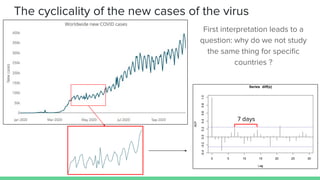
The cyclicality of the new cases of the virus
First interpretation leads to a
question: why do we not study
the same thing for specific
countries ?
7 days
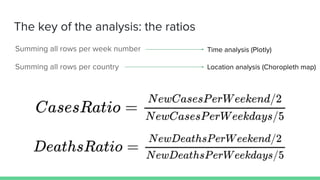
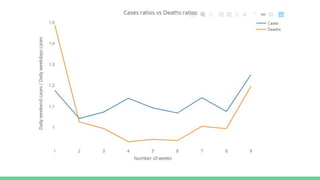
The key of the analysis: the ratios
Summing all rows per week number
Summing all rows per country
Time analysis (Plotly)
Location analysis (Choropleth map)
Problematic of the analysis
● To what extent ratios impact the location of the virus in the world ?
● To what extent ratios evolve through the time ?
Methods
● R studio
● Time Series packages (zoo, xts)
● Data visualization packages (plotly, leaflet)
● First the whole world, then specific cases (countries)
● First the whole period, then 2 months
Results
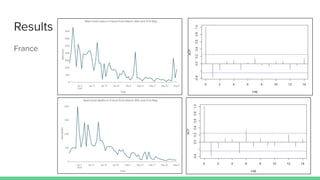
France
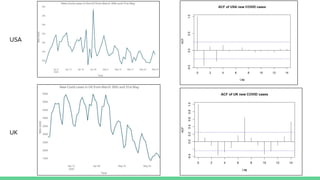
USA
UK
Choropleth map demo
Discussion
Difference between countries and over time
Difference between countries
● Such differences are due to certain unique parameters such as
- Total population
- Measures taken
- Amount of tests done
- Culture
- HDI
Difference over time
● Geographical impact:
- USA 8x more cases than UK and France (late March)
- USA more marked peak (48925 cases on April 26th)
● Impact on cyclicality:
- The difference between weekdays and weekend depends on the period
we looked at. For example, in April and May 2020 in France, the lockdown
made the data less seasonal than the one for UK for example.
Conclusion
● Numerous differences:
- between countries
- over time
● Hypothesis

Time series report