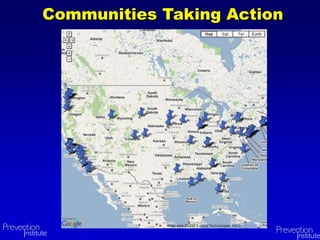
@preventioninst
http://www.facebook.com/PreventionInstitute.org
Antelope Valley Partners for Health Fall Wellness Summit
October 29, 2015
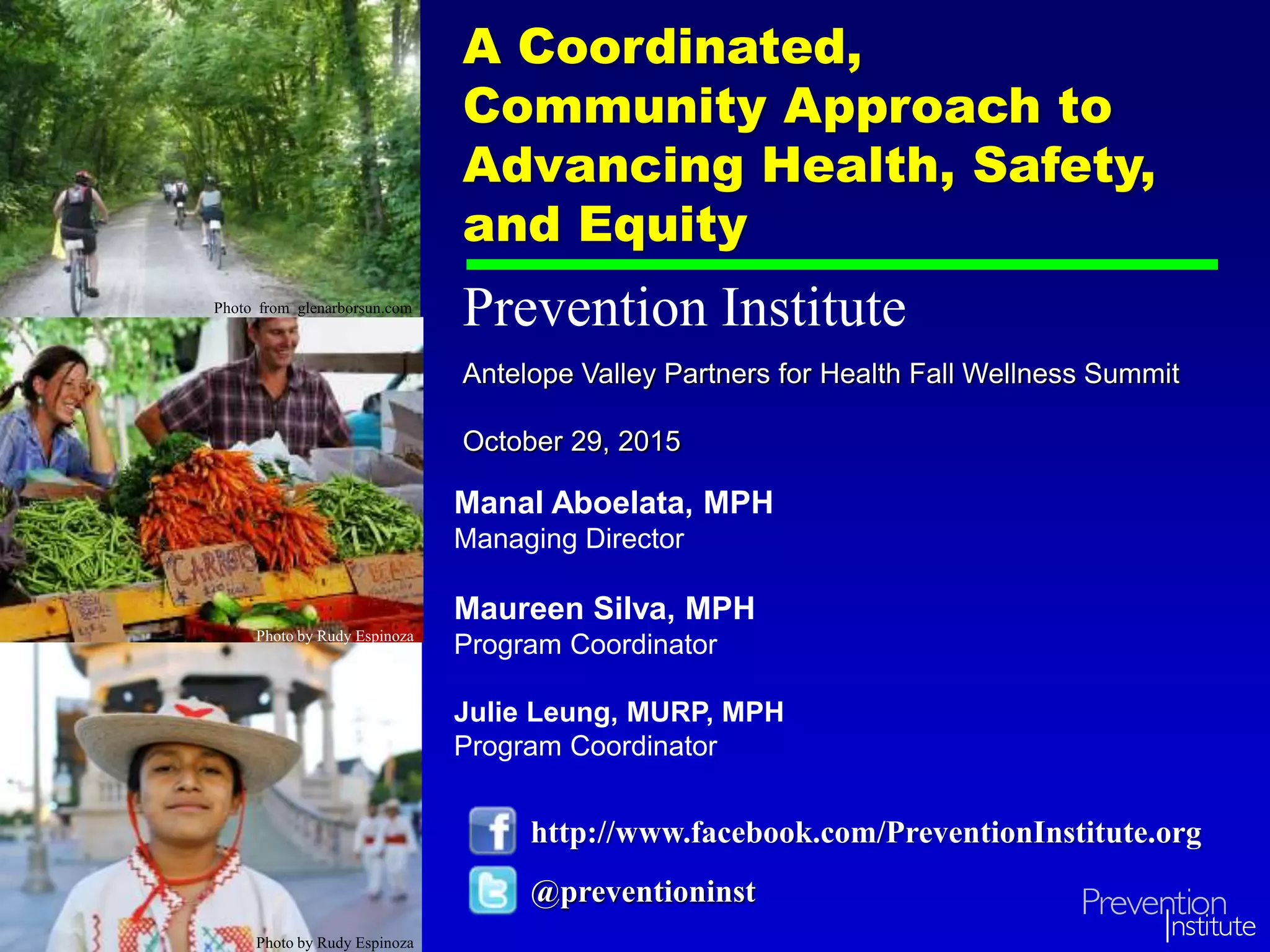
Photo by Rudy Espinoza
Prevention Institute
A Coordinated,
Community Approach to
Advancing Health, Safety,
and Equity
Photo by Rudy Espinoza
Photo from glenarborsun.com
Manal Aboelata, MPH
Managing Director
Maureen Silva, MPH
Program Coordinator
Julie Leung, MURP, MPH
Program Coordinator
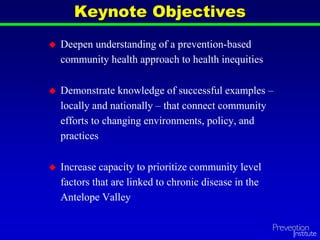
 Deepen understanding of a prevention-based
community health approach to health inequities
 Demonstrate knowledge of successful examples –
locally and nationally – that connect community
efforts to changing environments, policy, and
practices
 Increase capacity to prioritize community level
factors that are linked to chronic disease in the
Antelope Valley
Keynote Objectives
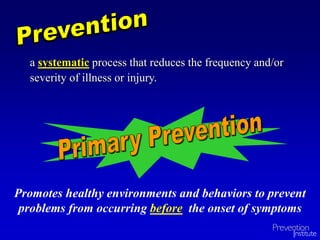
a systematic process that reduces the frequency and/or
severity of illness or injury.
Promotes healthy environments and behaviors to prevent
problems from occurring before the onset of symptoms
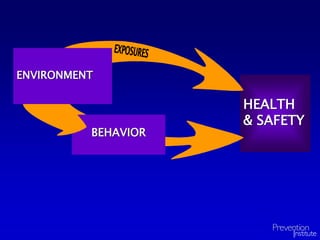
HEALTH
& SAFETY
BEHAVIORBEHAVIOR
ENVIRONMENT
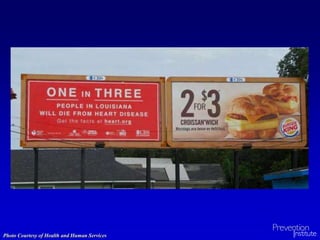
What’s Health and
Equity Got To Do
With It?
Photo Courtesy of Health and Human Services
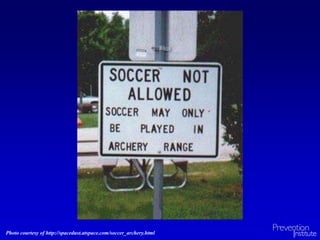
Photo courtesy of http://spacedust.atspace.com/soccer_archery.html
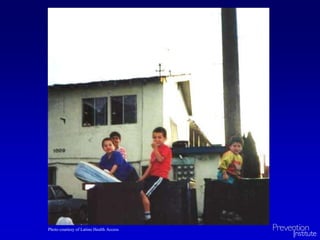
Photo courtesy of Latino Health Access
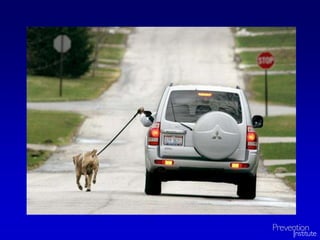
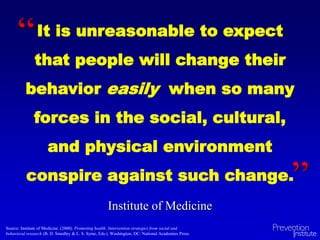
It is unreasonable to expect
that people will change their
behavior easily when so many
forces in the social, cultural,
and physical environment
conspire against such change.
“
”
Institute of Medicine
Source: Institute of Medicine. (2000). Promoting health: Intervention strategies from social and
behavioral research (B. D. Smedley & L. S. Syme, Eds.). Washington, DC: National Academies Press.
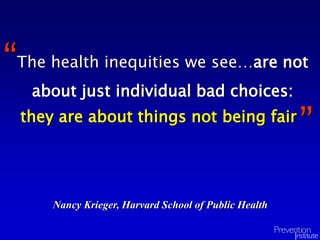
The health inequities we see…are not
about just individual bad choices:
Nancy Krieger, Harvard School of Public Health
“
”they are about things not being fair
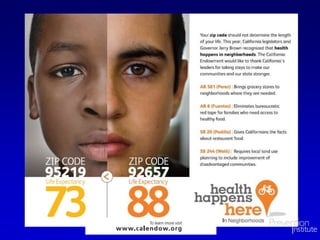
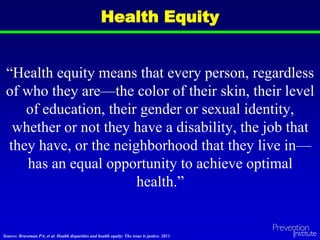
Health Equity
“Health equity means that every person, regardless
of who they are—the color of their skin, their level
of education, their gender or sexual identity,
whether or not they have a disability, the job that
they have, or the neighborhood that they live in—
has an equal opportunity to achieve optimal
health.”
Source: Braveman PA, et al. Health disparities and health equity: The issue is justice. 2011.
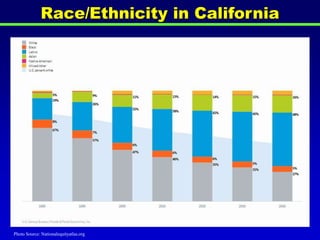
Race/Ethnicity in California
Photo Source: Nationalequityatlas.org
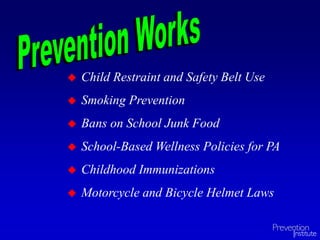
 Child Restraint and Safety Belt Use
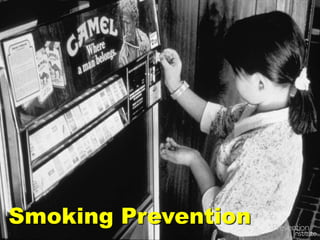
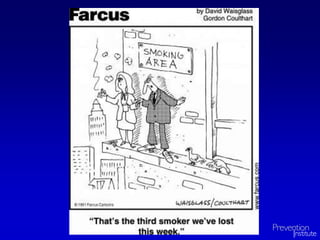
 Smoking Prevention
 Bans on School Junk Food
 School-Based Wellness Policies for PA
 Childhood Immunizations
 Motorcycle and Bicycle Helmet Laws
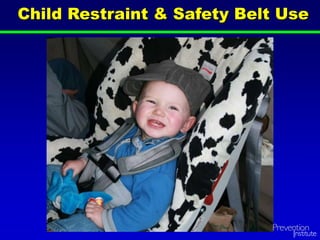
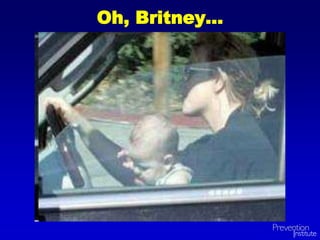
Child Restraint & Safety Belt Use
Oh, Britney…
Smoking Prevention
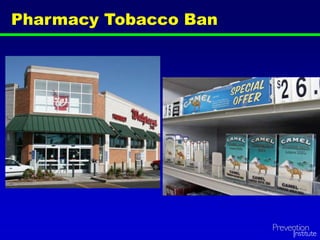
Pharmacy Tobacco Ban
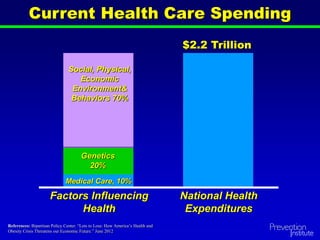
Social, Physical,
Economic
Environment&
Behaviors 70%
Medical Care, 10%
Genetics
20%
$2.2 Trillion
Current Health Care Spending
Factors Influencing
Health
National Health
Expenditures
References: Bipartisan Policy Center. “Lots to Lose: How America’s Health and
Obesity Crisis Threatens our Economic Future.” June 2012
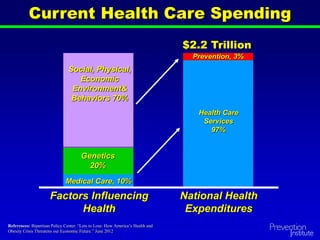
Medical Care, 10%
Genetics
20%
Prevention, 3%
Health Care
Services
97%
$2.2 Trillion
Current Health Care Spending
Factors Influencing
Health
National Health
Expenditures
References: Bipartisan Policy Center. “Lots to Lose: How America’s Health and
Obesity Crisis Threatens our Economic Future.” June 2012
Social, Physical,
Economic
Environment&
Behaviors 70%
Source: 2013 Community Health Needs Assessment Kaiser Permanente
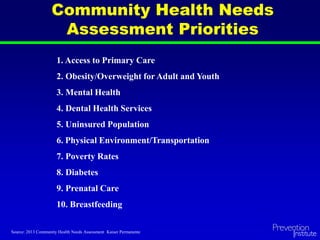
1. Access to Primary Care
2. Obesity/Overweight for Adult and Youth
3. Mental Health
4. Dental Health Services
5. Uninsured Population
6. Physical Environment/Transportation
7. Poverty Rates
8. Diabetes
9. Prenatal Care
10. Breastfeeding
Source: 2013 Community Health Needs Assessment Kaiser Permanente
Community Health Needs
Assessment Priorities
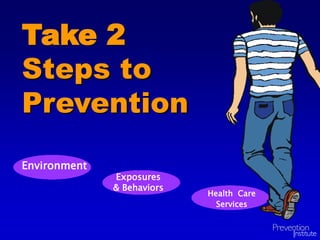
Take 2
Steps to
Prevention
Health Care
Services
Exposures
& Behaviors
Environment
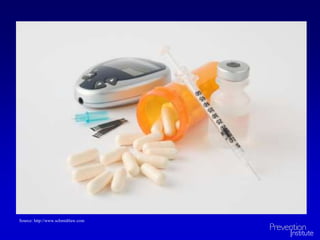
Source: http://www.schmidtlaw.com
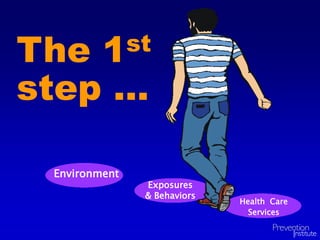
The 1st
step ...
Health Care
Services
Exposures
& Behaviors
Environment
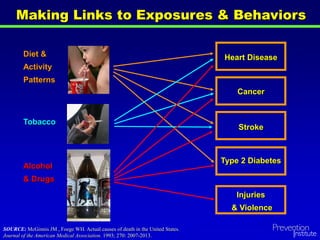
Heart Disease
Cancer
Stroke
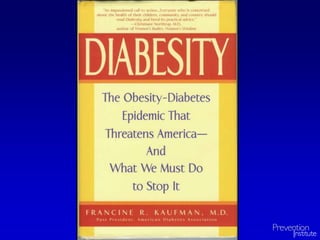
Type 2 Diabetes
Injuries
& Violence
Diet &
Activity
Patterns
Tobacco
Alcohol
& Drugs
Making Links to Exposures & Behaviors
SOURCE: McGinnis JM , Foege WH. Actual causes of death in the United States.
Journal of the American Medical Association. 1993; 270: 2007-2013.
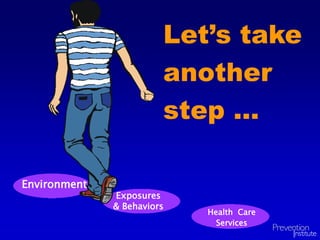
Let’s take
another
step ...
Health Care
Services
Exposures
& Behaviors
Environment
 Parks & open space
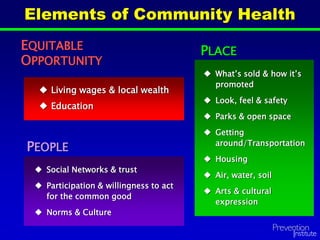
Elements of Community Health
PLACE
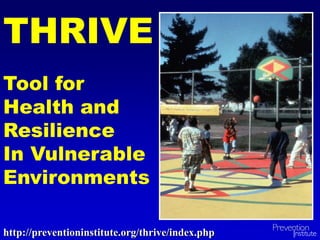
THRIVE
Tool for
Health and
Resilience
In Vulnerable
Environments
http://preventioninstitute.org/thrive/index.php
 Social Networks & trust
 Participation & willingness to act
for the common good
 Norms & Culture
 Living wages & local wealth
 Education
 What’s sold & how it’s
promoted
 Look, feel & safety
 Parks & open space
 Getting
around/Transportation
 Housing
 Air, water, soil
 Arts & cultural
expression
Elements of Community Health
PEOPLE
PLACEEQUITABLE
OPPORTUNITY
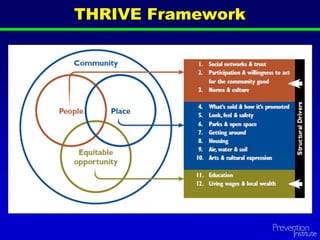
THRIVE Framework
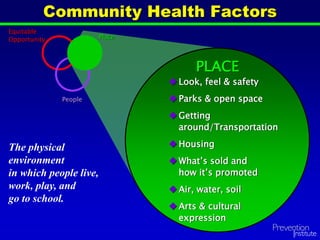
Community Health Factors
PLACE
 Look, feel & safety
 Parks & open space
 Getting
around/Transportation
 Housing
 What’s sold and
how it’s promoted
 Air, water, soil
 Arts & cultural
expression
The physical
environment
in which people live,
work, play, and
go to school.
People
Place
Equitable
Opportunity
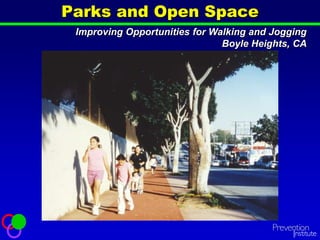
Parks and Open Space
Improving Opportunities for Walking and Jogging
Boyle Heights, CA
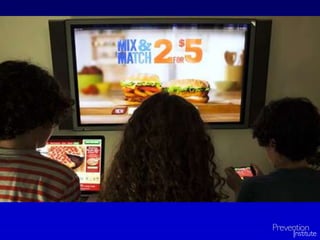
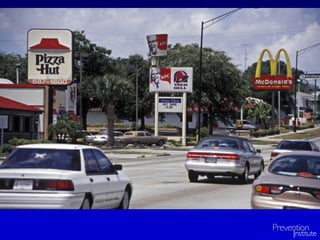
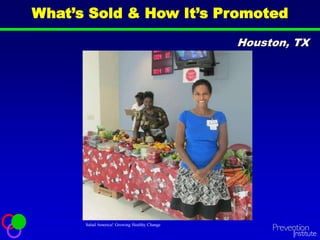
What’s Sold & How It’s Promoted
Houston, TX
Salud America! Growing Healthy Change
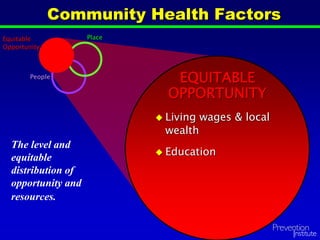
Community Health Factors
EQUITABLE
OPPORTUNITY
 Living wages & local
wealth
 Education
People
PlaceEquitable
Opportunity
The level and
equitable
distribution of
opportunity and
resources.
Library Cards For All
Salinas, CA
Education
Community Health Factors
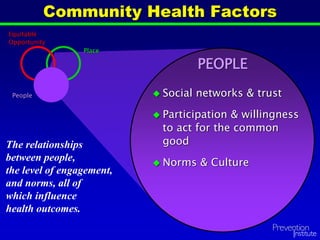
PEOPLE
 Social networks & trust
 Participation & willingness
to act for the common
good
 Norms & Culture
The relationships
between people,
the level of engagement,
and norms, all of
which influence
health outcomes.
Equitable
Opportunity
Place
People
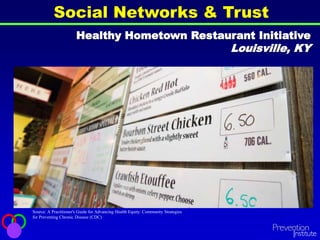
Social Networks & Trust
Healthy Hometown Restaurant Initiative
Louisville, KY
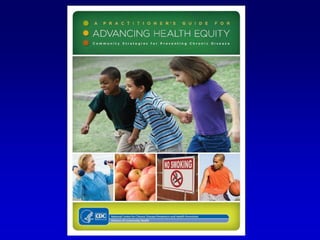
Source: A Practitioner's Guide for Advancing Health Equity: Community Strategies
for Preventing Chronic Disease (CDC)
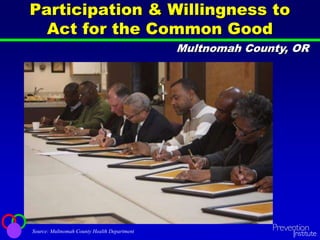
Participation & Willingness to
Act for the Common Good
Source: Multnomah County Health Department
Multnomah County, OR
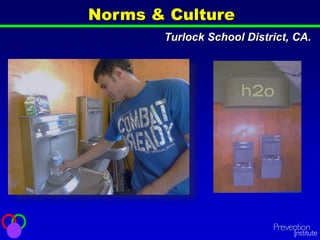
Norms & Culture
Turlock School District, CA.
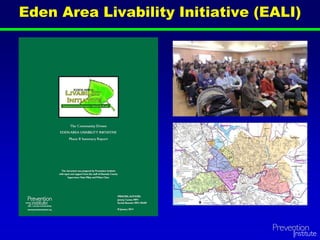
Eden Area Livability Initiative (EALI)
Designing Initiatives for Health
Equity
 Select, Design and Implement Health Equity
Oriented Strategies
 Assess Impacts of Potential Policies on Equity
 Building Organizational Practices that
Support Equity
 Partner and Collaborate for Health Equity
 Focus on Nontraditional Providers with high
degree of contact with populations
experiencing inequities
“Intellectuals solve problems.
Geniuses prevent them.”
Albert Einstein
@preventioninst
http://www.facebook.com/PreventionInstitute.org
Email: manal@preventioninstitute.org
Connect with us at http://bit.ly/1Ke0aup
www.preventioninstitute.org
Photo credit: Emily Barney
TOOLS
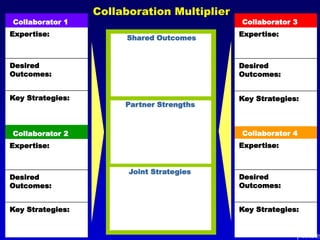
Collaborator 4
Expertise:
Desired
Outcomes:
Key Strategies:
Collaborator 3
Expertise:
Desired
Outcomes:
Key Strategies:
Collaborator 1
Expertise:
Desired
Outcomes:
Key Strategies:
Collaborator 2
Expertise:
Desired
Outcomes:
Key Strategies:
Shared Outcomes
Partner Strengths
Joint Strategies
Collaboration Multiplier
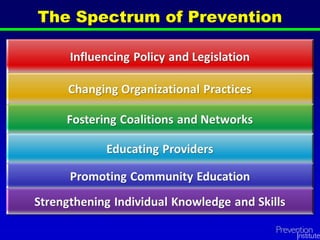
The Spectrum of Prevention
Source: National Academy of Sciences
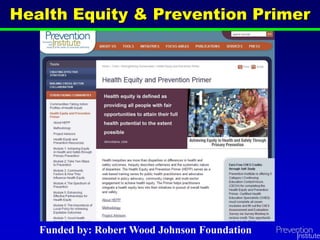
Funded by: Robert Wood Johnson Foundation
Health Equity & Prevention Primer
Communities Taking Action
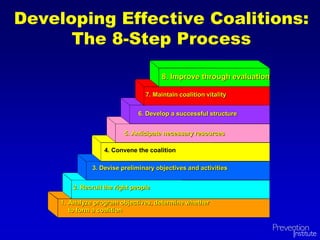
Developing Effective Coalitions:
The 8-Step Process
1. Analyze program objectives, determine whether
to form a coalition
2. Recruit the right people
3. Devise preliminary objectives and activities
4. Convene the coalition
5. Anticipate necessary resources
6. Develop a successful structure
7. Maintain coalition vitality
8. Improve through evaluation
www.preventioninstitute.org/publications
221 Oak Street
Oakland, CA 94607
Tel: (510) 444-7738
Sign up for our media alerts:
http://www.preventioninstitute.org/alerts
www.preventioninstitute.org
Follow us on:

Prevention Institute - Manal Oboeleta

  • 1.
    @preventioninst http://www.facebook.com/PreventionInstitute.org Antelope Valley Partnersfor Health Fall Wellness Summit October 29, 2015 Photo by Rudy Espinoza Prevention Institute A Coordinated, Community Approach to Advancing Health, Safety, and Equity Photo by Rudy Espinoza Photo from glenarborsun.com Manal Aboelata, MPH Managing Director Maureen Silva, MPH Program Coordinator Julie Leung, MURP, MPH Program Coordinator
  • 3.
     Deepen understandingof a prevention-based community health approach to health inequities  Demonstrate knowledge of successful examples – locally and nationally – that connect community efforts to changing environments, policy, and practices  Increase capacity to prioritize community level factors that are linked to chronic disease in the Antelope Valley Keynote Objectives
  • 4.
    a systematic processthat reduces the frequency and/or severity of illness or injury. Promotes healthy environments and behaviors to prevent problems from occurring before the onset of symptoms
  • 6.
  • 7.
    What’s Health and EquityGot To Do With It?
  • 8.
    Photo Courtesy ofHealth and Human Services
  • 12.
    Photo courtesy ofhttp://spacedust.atspace.com/soccer_archery.html
  • 13.
    Photo courtesy ofLatino Health Access
  • 14.
    It is unreasonableto expect that people will change their behavior easily when so many forces in the social, cultural, and physical environment conspire against such change. “ ” Institute of Medicine Source: Institute of Medicine. (2000). Promoting health: Intervention strategies from social and behavioral research (B. D. Smedley & L. S. Syme, Eds.). Washington, DC: National Academies Press.
  • 15.
    The health inequitieswe see…are not about just individual bad choices: Nancy Krieger, Harvard School of Public Health “ ”they are about things not being fair
  • 16.
    Health Equity “Health equitymeans that every person, regardless of who they are—the color of their skin, their level of education, their gender or sexual identity, whether or not they have a disability, the job that they have, or the neighborhood that they live in— has an equal opportunity to achieve optimal health.” Source: Braveman PA, et al. Health disparities and health equity: The issue is justice. 2011.
  • 17.
    Race/Ethnicity in California PhotoSource: Nationalequityatlas.org
  • 18.
     Child Restraintand Safety Belt Use  Smoking Prevention  Bans on School Junk Food  School-Based Wellness Policies for PA  Childhood Immunizations  Motorcycle and Bicycle Helmet Laws
  • 19.
    Child Restraint &Safety Belt Use
  • 20.
  • 21.
  • 23.
  • 24.
    Social, Physical, Economic Environment& Behaviors 70% MedicalCare, 10% Genetics 20% $2.2 Trillion Current Health Care Spending Factors Influencing Health National Health Expenditures References: Bipartisan Policy Center. “Lots to Lose: How America’s Health and Obesity Crisis Threatens our Economic Future.” June 2012
  • 25.
    Medical Care, 10% Genetics 20% Prevention,3% Health Care Services 97% $2.2 Trillion Current Health Care Spending Factors Influencing Health National Health Expenditures References: Bipartisan Policy Center. “Lots to Lose: How America’s Health and Obesity Crisis Threatens our Economic Future.” June 2012 Social, Physical, Economic Environment& Behaviors 70%
  • 26.
    Source: 2013 CommunityHealth Needs Assessment Kaiser Permanente
  • 27.
    1. Access toPrimary Care 2. Obesity/Overweight for Adult and Youth 3. Mental Health 4. Dental Health Services 5. Uninsured Population 6. Physical Environment/Transportation 7. Poverty Rates 8. Diabetes 9. Prenatal Care 10. Breastfeeding Source: 2013 Community Health Needs Assessment Kaiser Permanente Community Health Needs Assessment Priorities
  • 28.
    Take 2 Steps to Prevention HealthCare Services Exposures & Behaviors Environment
  • 30.
  • 31.
    The 1st step ... HealthCare Services Exposures & Behaviors Environment
  • 32.
    Heart Disease Cancer Stroke Type 2Diabetes Injuries & Violence Diet & Activity Patterns Tobacco Alcohol & Drugs Making Links to Exposures & Behaviors SOURCE: McGinnis JM , Foege WH. Actual causes of death in the United States. Journal of the American Medical Association. 1993; 270: 2007-2013.
  • 34.
    Let’s take another step ... HealthCare Services Exposures & Behaviors Environment
  • 37.
     Parks &open space Elements of Community Health PLACE
  • 38.
    THRIVE Tool for Health and Resilience InVulnerable Environments http://preventioninstitute.org/thrive/index.php
  • 39.
     Social Networks& trust  Participation & willingness to act for the common good  Norms & Culture  Living wages & local wealth  Education  What’s sold & how it’s promoted  Look, feel & safety  Parks & open space  Getting around/Transportation  Housing  Air, water, soil  Arts & cultural expression Elements of Community Health PEOPLE PLACEEQUITABLE OPPORTUNITY
  • 40.
  • 41.
    Community Health Factors PLACE Look, feel & safety  Parks & open space  Getting around/Transportation  Housing  What’s sold and how it’s promoted  Air, water, soil  Arts & cultural expression The physical environment in which people live, work, play, and go to school. People Place Equitable Opportunity
  • 42.
    Parks and OpenSpace Improving Opportunities for Walking and Jogging Boyle Heights, CA
  • 43.
    What’s Sold &How It’s Promoted Houston, TX Salud America! Growing Healthy Change
  • 44.
    Community Health Factors EQUITABLE OPPORTUNITY Living wages & local wealth  Education People PlaceEquitable Opportunity The level and equitable distribution of opportunity and resources.
  • 45.
    Library Cards ForAll Salinas, CA Education
  • 46.
    Community Health Factors PEOPLE Social networks & trust  Participation & willingness to act for the common good  Norms & Culture The relationships between people, the level of engagement, and norms, all of which influence health outcomes. Equitable Opportunity Place People
  • 47.
    Social Networks &Trust Healthy Hometown Restaurant Initiative Louisville, KY Source: A Practitioner's Guide for Advancing Health Equity: Community Strategies for Preventing Chronic Disease (CDC)
  • 48.
    Participation & Willingnessto Act for the Common Good Source: Multnomah County Health Department Multnomah County, OR
  • 49.
    Norms & Culture TurlockSchool District, CA.
  • 50.
    Eden Area LivabilityInitiative (EALI)
  • 51.
    Designing Initiatives forHealth Equity  Select, Design and Implement Health Equity Oriented Strategies  Assess Impacts of Potential Policies on Equity  Building Organizational Practices that Support Equity  Partner and Collaborate for Health Equity  Focus on Nontraditional Providers with high degree of contact with populations experiencing inequities
  • 52.
    “Intellectuals solve problems. Geniusesprevent them.” Albert Einstein
  • 54.
  • 55.
  • 56.
    Collaborator 4 Expertise: Desired Outcomes: Key Strategies: Collaborator3 Expertise: Desired Outcomes: Key Strategies: Collaborator 1 Expertise: Desired Outcomes: Key Strategies: Collaborator 2 Expertise: Desired Outcomes: Key Strategies: Shared Outcomes Partner Strengths Joint Strategies Collaboration Multiplier
  • 57.
    The Spectrum ofPrevention
  • 58.
  • 60.
    Funded by: RobertWood Johnson Foundation Health Equity & Prevention Primer
  • 61.
  • 62.
    Developing Effective Coalitions: The8-Step Process 1. Analyze program objectives, determine whether to form a coalition 2. Recruit the right people 3. Devise preliminary objectives and activities 4. Convene the coalition 5. Anticipate necessary resources 6. Develop a successful structure 7. Maintain coalition vitality 8. Improve through evaluation
  • 63.
  • 64.
    221 Oak Street Oakland,CA 94607 Tel: (510) 444-7738 Sign up for our media alerts: http://www.preventioninstitute.org/alerts www.preventioninstitute.org Follow us on: