Teaching Period 1, 2014
COM10003 Learning and
Communicating Online
Assessment 2A: Producing an online
informational resource
By: Michelle Amunugama
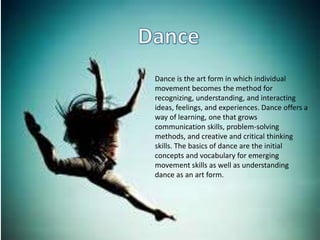
Dance is the art form in which individual
movement becomes the method for
recognizing, understanding, and interacting
ideas, feelings, and experiences. Dance offers a
way of learning, one that grows
communication skills, problem-solving
methods, and creative and critical thinking
skills. The basics of dance are the initial
concepts and vocabulary for emerging
movement skills as well as understanding
dance as an art form.
Dance is an important part of many cultures. It
represent who they are, they can express
themselves and their culture and history with
others. Many cultures use dance in their rituals and
ceremonies to celebrate their occasions and success.
Body, action, space, time and energy are
elements that are concurrently present in a
dance or even in a short movement
expression. The word dance raises different
descriptions for different people. Over the
years, dance has grown into several different
forms. Many things such as shoes, music, and
costumes distinguish different styles of dance.
Some of the dance types that are available are
Jazz, tap, hip-hop, ballet and many more.
Benefit of dance is it increases physical, emotional, and social skills. Whether it's
ballet or ballroom, clogging or jazz, dancing is a great way for people of all ages
and physical abilities to get and stay in shape. Dance offers a full body workout,
using all of the main muscle groups and keeping the heart healthy. Besides keeping
muscles toned, dancing burns body fat it increases stability and organization and
strengthens bones.
Becoming a skillful dancer requires training, self-
control and effort. Dance classes help to inspire
creativity in young children and help them to develop
an obligation for the arts. As children alter to the
actions and attitudes required in dance, they begin to
get a better awareness of their bodies. As they
become more comfortable in their own skin, their
self-confidence and self-esteem also improve.
Even though dance is a physical activity,
dancing is also a great social activity. Dance
lessons can help children progress their social
and communication skills, learn how to work
as part of a team, develop sense of trust and
teamwork and make new friends.
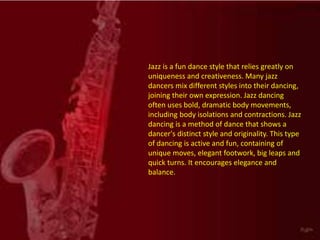
Jazz is a fun dance style that relies greatly on
uniqueness and creativeness. Many jazz
dancers mix different styles into their dancing,
joining their own expression. Jazz dancing
often uses bold, dramatic body movements,
including body isolations and contractions. Jazz
dancing is a method of dance that shows a
dancer's distinct style and originality. This type
of dancing is active and fun, containing of
unique moves, elegant footwork, big leaps and
quick turns. It encourages elegance and
balance.
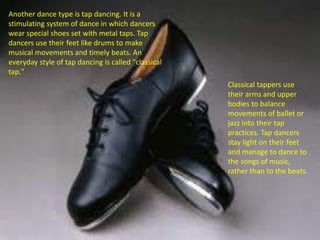
Another dance type is tap dancing. It is a
stimulating system of dance in which dancers
wear special shoes set with metal taps. Tap
dancers use their feet like drums to make
musical movements and timely beats. An
everyday style of tap dancing is called "classical
tap."
Classical tappers use
their arms and upper
bodies to balance
movements of ballet or
jazz into their tap
practices. Tap dancers
stay light on their feet
and manage to dance to
the songs of music,
rather than to the beats.
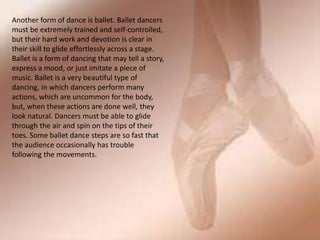
Another form of dance is ballet. Ballet dancers
must be extremely trained and self-controlled,
but their hard work and devotion is clear in
their skill to glide effortlessly across a stage.
Ballet is a form of dancing that may tell a story,
express a mood, or just imitate a piece of
music. Ballet is a very beautiful type of
dancing, in which dancers perform many
actions, which are uncommon for the body,
but, when these actions are done well, they
look natural. Dancers must be able to glide
through the air and spin on the tips of their
toes. Some ballet dance steps are so fast that
the audience occasionally has trouble
following the movements.
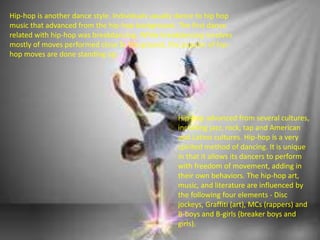
Hip-hop is another dance style. Individuals usually dance to hip hop
music that advanced from the hip-hop background. The first dance
related with hip-hop was breakdancing. While breakdancing involves
mostly of moves performed close to the ground, the popular of hip-
hop moves are done standing up.
Hip-hop advanced from several cultures,
including jazz, rock, tap and American
and Latino cultures. Hip-hop is a very
spirited method of dancing. It is unique
in that it allows its dancers to perform
with freedom of movement, adding in
their own behaviors. The hip-hop art,
music, and literature are influenced by
the following four elements - Disc
jockeys, Graffiti (art), MCs (rappers) and
B-boys and B-girls (breaker boys and
girls).
Dance has always existed during the most
important occasions. Dance engaged a special
place of importance in society, people danced
to express their deepest emotions. They
danced during their happiest occasions, their
sad and desperate request for life. Dance
entertains. It gives joy and sadness, hope and
longing, love and fear to both audiences and
the dancers themselves. It shares the story of
life.
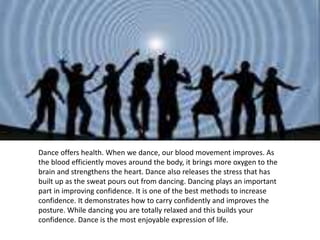
Dance offers health. When we dance, our blood movement improves. As
the blood efficiently moves around the body, it brings more oxygen to the
brain and strengthens the heart. Dance also releases the stress that has
built up as the sweat pours out from dancing. Dancing plays an important
part in improving confidence. It is one of the best methods to increase
confidence. It demonstrates how to carry confidently and improves the
posture. While dancing you are totally relaxed and this builds your
confidence. Dance is the most enjoyable expression of life.
References
http://www.artsalive.ca/en/dan/dance101/wh
ydance.asp
http://www.drfranklipman.com/why-do-we-dance/ Why
Do We Dance, Gabrielle Roth July 14
http://www.slideshare.net/surashree199/types-of-
dance-forms Types of dance forms Follow bySurashree
Sahasrabudhe, Working at Gokhale and Sathe on Mar
05, 2011
http://en.wikipedia.org/wiki/History_of_dance,
From Wikipedia, the free encyclopedia,
This page was last modified on 6 May 2014 at 15:05.

Presentation2 learning and communicating online

  • 1.
    Teaching Period 1,2014 COM10003 Learning and Communicating Online Assessment 2A: Producing an online informational resource By: Michelle Amunugama
  • 2.
    Dance is theart form in which individual movement becomes the method for recognizing, understanding, and interacting ideas, feelings, and experiences. Dance offers a way of learning, one that grows communication skills, problem-solving methods, and creative and critical thinking skills. The basics of dance are the initial concepts and vocabulary for emerging movement skills as well as understanding dance as an art form.
  • 3.
    Dance is animportant part of many cultures. It represent who they are, they can express themselves and their culture and history with others. Many cultures use dance in their rituals and ceremonies to celebrate their occasions and success. Body, action, space, time and energy are elements that are concurrently present in a dance or even in a short movement expression. The word dance raises different descriptions for different people. Over the years, dance has grown into several different forms. Many things such as shoes, music, and costumes distinguish different styles of dance. Some of the dance types that are available are Jazz, tap, hip-hop, ballet and many more.
  • 4.
    Benefit of danceis it increases physical, emotional, and social skills. Whether it's ballet or ballroom, clogging or jazz, dancing is a great way for people of all ages and physical abilities to get and stay in shape. Dance offers a full body workout, using all of the main muscle groups and keeping the heart healthy. Besides keeping muscles toned, dancing burns body fat it increases stability and organization and strengthens bones.
  • 5.
    Becoming a skillfuldancer requires training, self- control and effort. Dance classes help to inspire creativity in young children and help them to develop an obligation for the arts. As children alter to the actions and attitudes required in dance, they begin to get a better awareness of their bodies. As they become more comfortable in their own skin, their self-confidence and self-esteem also improve. Even though dance is a physical activity, dancing is also a great social activity. Dance lessons can help children progress their social and communication skills, learn how to work as part of a team, develop sense of trust and teamwork and make new friends.
  • 6.
    Jazz is afun dance style that relies greatly on uniqueness and creativeness. Many jazz dancers mix different styles into their dancing, joining their own expression. Jazz dancing often uses bold, dramatic body movements, including body isolations and contractions. Jazz dancing is a method of dance that shows a dancer's distinct style and originality. This type of dancing is active and fun, containing of unique moves, elegant footwork, big leaps and quick turns. It encourages elegance and balance.
  • 7.
    Another dance typeis tap dancing. It is a stimulating system of dance in which dancers wear special shoes set with metal taps. Tap dancers use their feet like drums to make musical movements and timely beats. An everyday style of tap dancing is called "classical tap." Classical tappers use their arms and upper bodies to balance movements of ballet or jazz into their tap practices. Tap dancers stay light on their feet and manage to dance to the songs of music, rather than to the beats.
  • 8.
    Another form ofdance is ballet. Ballet dancers must be extremely trained and self-controlled, but their hard work and devotion is clear in their skill to glide effortlessly across a stage. Ballet is a form of dancing that may tell a story, express a mood, or just imitate a piece of music. Ballet is a very beautiful type of dancing, in which dancers perform many actions, which are uncommon for the body, but, when these actions are done well, they look natural. Dancers must be able to glide through the air and spin on the tips of their toes. Some ballet dance steps are so fast that the audience occasionally has trouble following the movements.
  • 9.
    Hip-hop is anotherdance style. Individuals usually dance to hip hop music that advanced from the hip-hop background. The first dance related with hip-hop was breakdancing. While breakdancing involves mostly of moves performed close to the ground, the popular of hip- hop moves are done standing up. Hip-hop advanced from several cultures, including jazz, rock, tap and American and Latino cultures. Hip-hop is a very spirited method of dancing. It is unique in that it allows its dancers to perform with freedom of movement, adding in their own behaviors. The hip-hop art, music, and literature are influenced by the following four elements - Disc jockeys, Graffiti (art), MCs (rappers) and B-boys and B-girls (breaker boys and girls).
  • 10.
    Dance has alwaysexisted during the most important occasions. Dance engaged a special place of importance in society, people danced to express their deepest emotions. They danced during their happiest occasions, their sad and desperate request for life. Dance entertains. It gives joy and sadness, hope and longing, love and fear to both audiences and the dancers themselves. It shares the story of life.
  • 11.
    Dance offers health.When we dance, our blood movement improves. As the blood efficiently moves around the body, it brings more oxygen to the brain and strengthens the heart. Dance also releases the stress that has built up as the sweat pours out from dancing. Dancing plays an important part in improving confidence. It is one of the best methods to increase confidence. It demonstrates how to carry confidently and improves the posture. While dancing you are totally relaxed and this builds your confidence. Dance is the most enjoyable expression of life.
  • 12.
    References http://www.artsalive.ca/en/dan/dance101/wh ydance.asp http://www.drfranklipman.com/why-do-we-dance/ Why Do WeDance, Gabrielle Roth July 14 http://www.slideshare.net/surashree199/types-of- dance-forms Types of dance forms Follow bySurashree Sahasrabudhe, Working at Gokhale and Sathe on Mar 05, 2011 http://en.wikipedia.org/wiki/History_of_dance, From Wikipedia, the free encyclopedia, This page was last modified on 6 May 2014 at 15:05.