During
Pre- Test
Direction: Write T if the statement is wrong and F if it
is False.
1. The two main types of dance
during the Renaissance were Court dance, and Carrier
Dance.
2. Renaissance Dance technique focused on upper body
movements.
3. Court dances required the dancers to be trained
4. The Branle was also known as “low dance“.
During
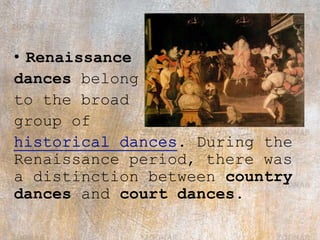
• Renaissance
dances belong
to the broad
group of
. During the
Renaissance period, there was
a distinction between country
dances and court dances.
• Court dances required the
dancers to be trained and were
often for display and
entertainment.
• Whereas country dances could be
attempted by anyone.
• At Court, the formal
entertainment would often be
followed by many hours of
country dances which all
present could join in.
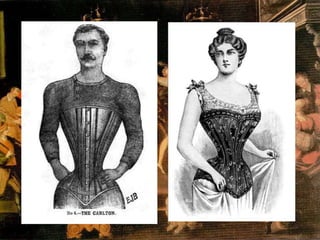
• Fashion changes from the
fifteenth to the sixteenth
century contributed, in no
small measure, to stylistic
changes in social dance. The
clothing of this era was bulky
and the upper bodies were
confined by tight lacing for
men and corsets for women.
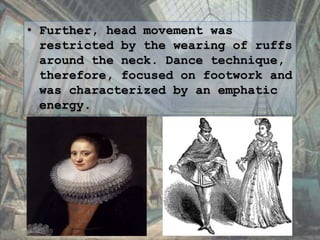
• Further, head movement was
restricted by the wearing of ruffs
around the neck. Dance technique,
therefore, focused on footwork and
was characterized by an emphatic
energy.
• The basse danse, or "low dance",
was a popular in the
15th and early 16th centuries,
especially at the
. The word basse describes
the nature of the dance, in
which partners move quietly and
gracefully in a slow gliding or
walking motion without leaving
the floor. They use Monophonic
song.
• Scottish Dances
• Ballet
• The egg dances
• Quadrille
• Pavan
• Farandole
• Burgundian Dance
• The Pavane (Pavane / Pavanne -
French) or Pavin was a dance
of Court (a renaissance dance)
and was called the "le grand
bal" because it was used on
state occasions.
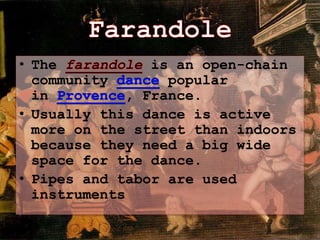
• The is an open-chain
community popular
in France.
• Usually this dance is active
more on the street than indoors
because they need a big wide
space for the dance.
• Pipes and tabor are used
instruments
Dance during Renaissance
period was often done for
entertainment. People during
that day were expected to have a
great dance skills. Dancing was
often done in pairs, and as such.
It was a natural component of
courtship. So, it was important
to dance properly if one didn’t
want to be single forever.
Post-Test
Direction: Write T if the statement is wrong and F if it
is False.
1. Renaissance Dance technique focused on upper body
movements.
2. The Branle was also known as “low dance“.
3. Court dances required the dancers to be trained
4. The two main types of dance
during the Renaissance were Court dance, and Carrier
Dance.
• End

Renaissance (dance)

  • 1.
  • 2.
    Pre- Test Direction: WriteT if the statement is wrong and F if it is False. 1. The two main types of dance during the Renaissance were Court dance, and Carrier Dance. 2. Renaissance Dance technique focused on upper body movements. 3. Court dances required the dancers to be trained 4. The Branle was also known as “low dance“.
  • 3.
  • 4.
    • Renaissance dances belong tothe broad group of . During the Renaissance period, there was a distinction between country dances and court dances.
  • 5.
    • Court dancesrequired the dancers to be trained and were often for display and entertainment. • Whereas country dances could be attempted by anyone. • At Court, the formal entertainment would often be followed by many hours of country dances which all present could join in.
  • 6.
    • Fashion changesfrom the fifteenth to the sixteenth century contributed, in no small measure, to stylistic changes in social dance. The clothing of this era was bulky and the upper bodies were confined by tight lacing for men and corsets for women.
  • 8.
    • Further, headmovement was restricted by the wearing of ruffs around the neck. Dance technique, therefore, focused on footwork and was characterized by an emphatic energy.
  • 10.
    • The bassedanse, or "low dance", was a popular in the 15th and early 16th centuries, especially at the . The word basse describes the nature of the dance, in which partners move quietly and gracefully in a slow gliding or walking motion without leaving the floor. They use Monophonic song.
  • 12.
    • Scottish Dances •Ballet • The egg dances • Quadrille • Pavan • Farandole • Burgundian Dance
  • 13.
    • The Pavane(Pavane / Pavanne - French) or Pavin was a dance of Court (a renaissance dance) and was called the "le grand bal" because it was used on state occasions.
  • 14.
    • The isan open-chain community popular in France. • Usually this dance is active more on the street than indoors because they need a big wide space for the dance. • Pipes and tabor are used instruments
  • 15.
    Dance during Renaissance periodwas often done for entertainment. People during that day were expected to have a great dance skills. Dancing was often done in pairs, and as such. It was a natural component of courtship. So, it was important to dance properly if one didn’t want to be single forever.
  • 16.
    Post-Test Direction: Write Tif the statement is wrong and F if it is False. 1. Renaissance Dance technique focused on upper body movements. 2. The Branle was also known as “low dance“. 3. Court dances required the dancers to be trained 4. The two main types of dance during the Renaissance were Court dance, and Carrier Dance.
  • 17.