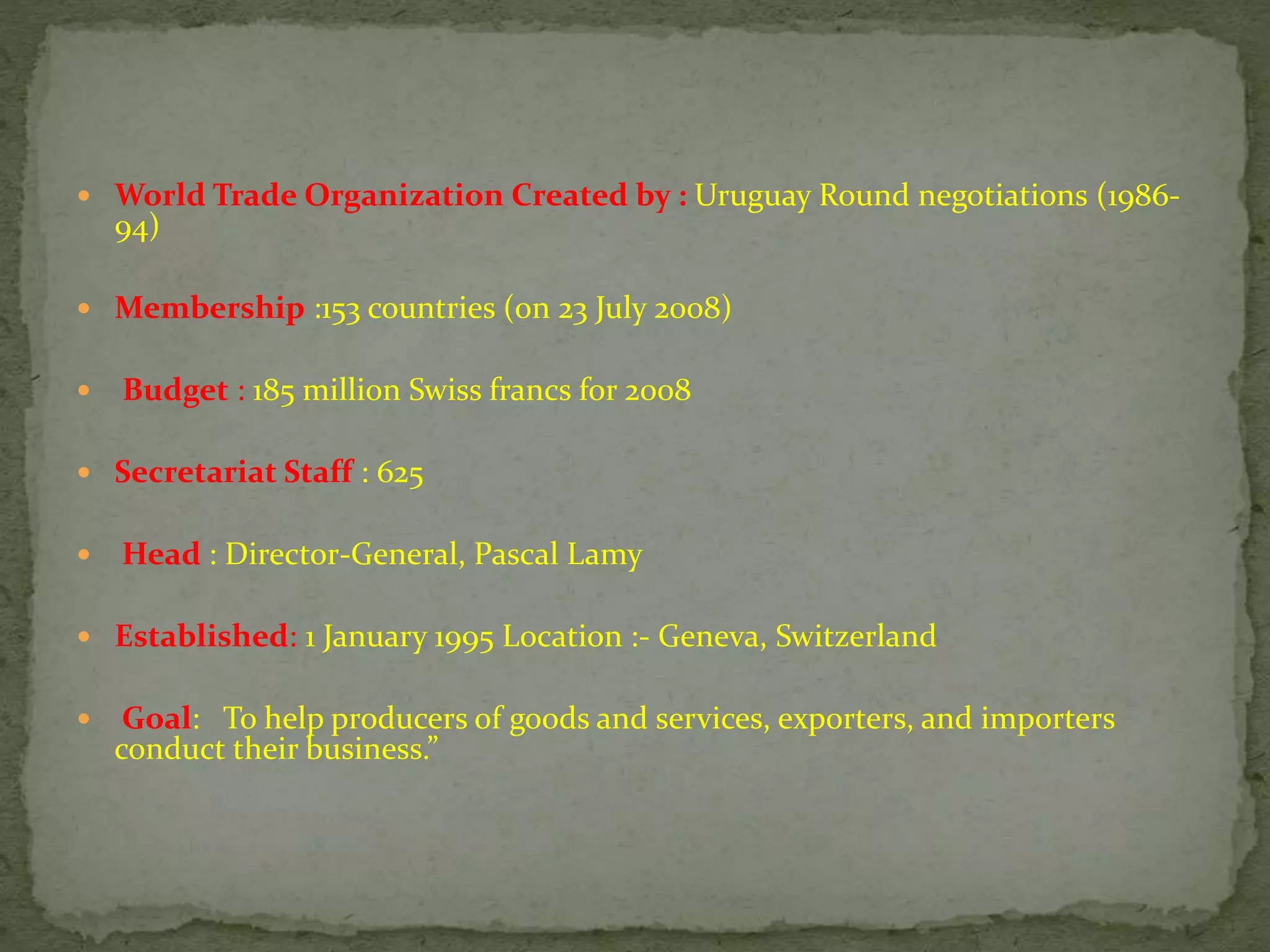
 World Trade Organization Created by : Uruguay Round negotiations (1986-
94)
 Membership :153 countries (on 23 July 2008)
 Budget : 185 million Swiss francs for 2008
 Secretariat Staff : 625
 Head : Director-General, Pascal Lamy
 Established: 1 January 1995 Location :- Geneva, Switzerland
 Goal: To help producers of goods and services, exporters, and importers
conduct their business.”
WTO Established on January 1, 1995 , the successor to the
General Agreement on Tariffs and Trade or GATT formed
in 1948 which provided the framework for the conduct of
international trade.
 Main objective of GATT, and now the WTO:
 Open up (liberalize) trade among its member countries by
reducing tariffs (taxes) and quotas (volume or number) on
traded products.
 Expanded coverage to include not only to trade in agricultural
products, textiles and clothing but also to trade in services
(such as health, education or banking), trade-related aspects of
intellectual property rights and trade-related investment
measures.
 WTO Administering and Implementing the multilateral
trade agreements.
 Acting as a forum for multilateral trade negotiations .
 Seeking to resolve trade disputes.
 Overseeing national trade policies.
 Cooperating with other international institutions.
 Maintaining trade related database.
 Acting as a watchdog of international trade.
 Technical assistance and training for developing countries.
 Taking positive steps to ensure that developing countries.
Introduce sustainable development.
 Raising standard of living and income .
 Administering trade agreements
 Acting as a forum for trade negotiations
 Settling trade disputes
 Reviewing national trade policies
 Assisting developing countries in trade policy issues,
through technical assistance and training programmes
 Cooperating with other international organizations
 The WTO is run by its member governments.
 All major decisions are made by the membership as a
whole, either by ministers (who meet at least once every
two years) or by their ambassadors or delegates (who meet
regularly in Geneva).
 Decisions are normally taken by consensus.
 In this respect, the WTO is different from some other
international organizations such as the World Bank and
International Monetary Fund.
 In the WTO, power is not delegated to a board of directors
or the organization’s head.
 When WTO rules impose disciplines on countries’ policies,
that is the outcome of negotiations among WTO members.
 The rules are enforced by the members themselves under
agreed procedures that they negotiated, including the
possibility of trade sanctions.
 But those sanctions are imposed by member countries, and
authorized by the membership as a whole.
 This is quite different from other agencies whose
bureaucracies can, for example, influence a country’s policy
by threatening to withhold credit.
 Reaching decisions by consensus among some 150 members
can be difficult.
 Its main advantage is that decisions made this way are
more acceptable to all members.
 And despite the difficulty, some remarkable agreements
have been reached.
 Nevertheless, proposals for the creation of a smaller
executive body — perhaps like a board of directors each
representing different groups of countries — are heard
periodically.
 But for now, the WTO is a member-driven, consensus-
based organization.
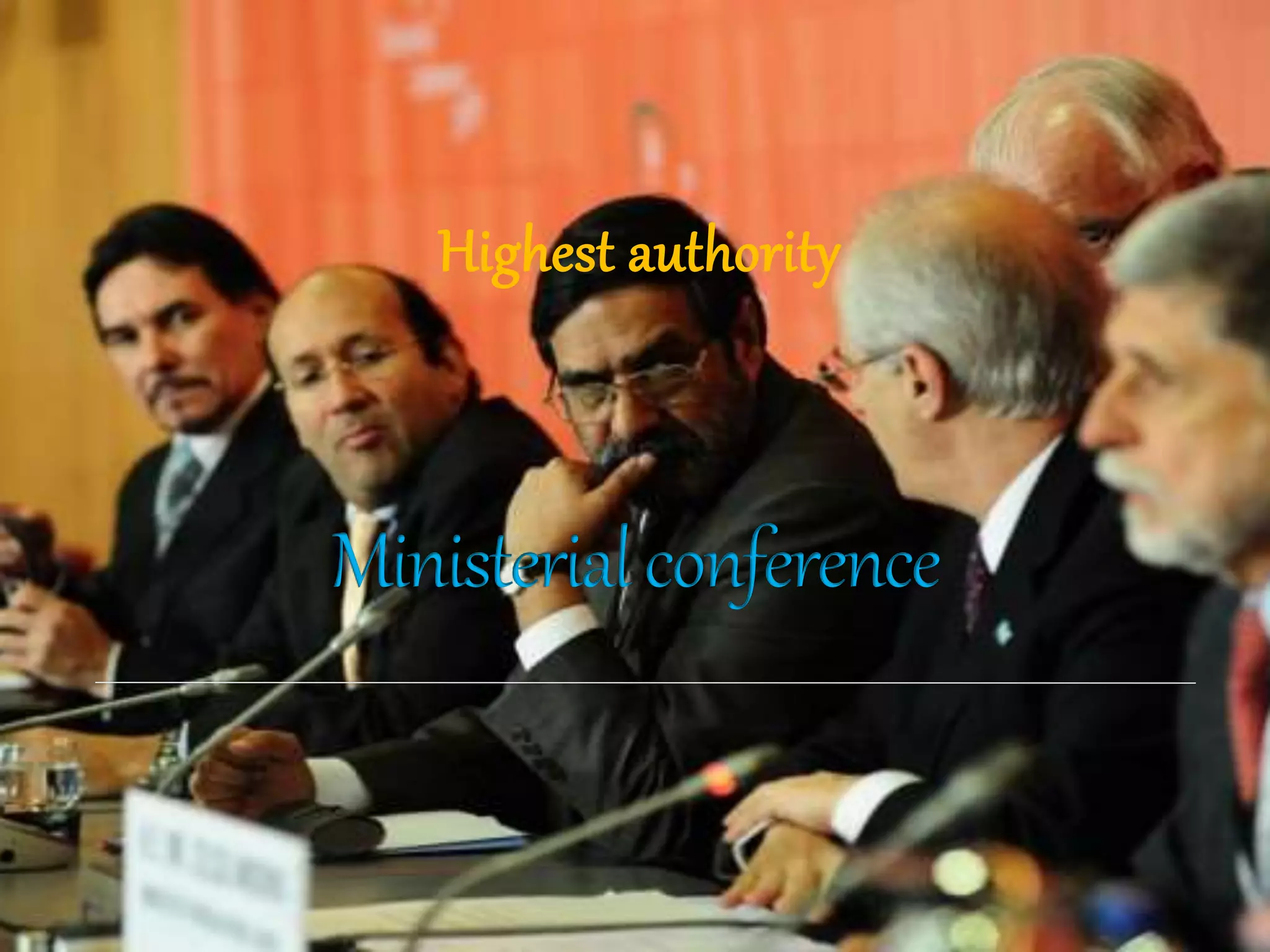
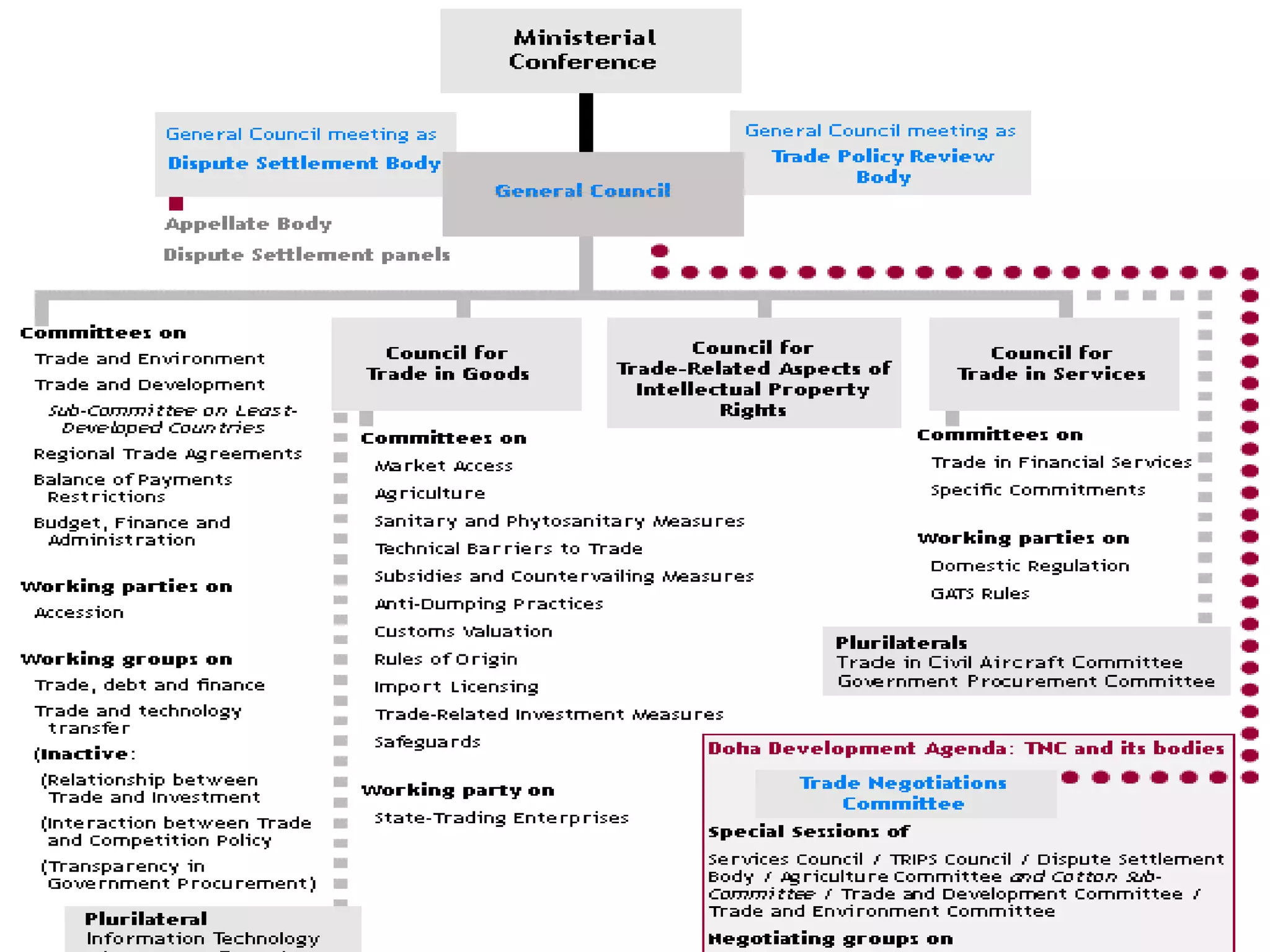
Highest authority
 the WTO belongs to its members.
 The countries make their decisions through
various councils and committees, whose
membership consists of all WTO members.
 Topmost is the ministerial conference which has to
meet at least once every two years.
 The Ministerial Conference can take decisions on
all matters under any of the multilateral trade
agreements.
Second level:
 Day-to-day work in between the ministerial
conferences is handled by three bodies:
The General Council
 The Dispute Settlement Body
The Trade Policy Review Body
 All three are in fact the same —
 the Agreement Establishing the WTO states they are all the
General Council, although they meet under different terms
of reference.
 Again, all three consist of all WTO members. They report
to the Ministerial Conference.
 The General Council acts on behalf of the Ministerial
Conference on all WTO affairs.
 It meets as the Dispute Settlement Body and the Trade
Policy Review Body to oversee procedures for settling
disputes between members and to analyze members’ trade
policies
 Dispute settlement
 The WTO’s procedure for resolving trade quarrels
under the Dispute Settlement Understanding is
vital for enforcing the rules and therefore for
ensuring that trade flows smoothly.
 Countries bring disputes to the WTO if they think
their rights under the agreements are being
infringed.
 Judgments by specially-appointed independent
experts are based on interpretations of the
agreements and individual countries’
 The system encourages countries to settle their
differences through consultation.
 Failing that, they can follow a carefully mapped out,
stage-by-stage procedure that includes the possibility
of a ruling by a panel of experts, and the chance to
appeal the ruling on legal grounds.
 Confidence in the system is borne out by the number
of cases brought to the WTO — around 300 cases in
eight years compared to the 300 disputes dealt with
during the entire life of GATT (1947–94).
 Policy review
 The Trade Policy Review Mechanism’s purpose is to
improve transparency, to create a greater understanding of
the policies that countries are adopting, and to assess their
impact.
 Many members also see the reviews as constructive
feedback on their policies.
 All WTO members must undergo periodic scrutiny, each
review containing reports by the country concerned and the
WTO Secretariat.
Presentation1 wto

Presentation1 wto

  • 3.
     World TradeOrganization Created by : Uruguay Round negotiations (1986- 94)  Membership :153 countries (on 23 July 2008)  Budget : 185 million Swiss francs for 2008  Secretariat Staff : 625  Head : Director-General, Pascal Lamy  Established: 1 January 1995 Location :- Geneva, Switzerland  Goal: To help producers of goods and services, exporters, and importers conduct their business.”
  • 5.
    WTO Established onJanuary 1, 1995 , the successor to the General Agreement on Tariffs and Trade or GATT formed in 1948 which provided the framework for the conduct of international trade.  Main objective of GATT, and now the WTO:  Open up (liberalize) trade among its member countries by reducing tariffs (taxes) and quotas (volume or number) on traded products.  Expanded coverage to include not only to trade in agricultural products, textiles and clothing but also to trade in services (such as health, education or banking), trade-related aspects of intellectual property rights and trade-related investment measures.
  • 6.
     WTO Administeringand Implementing the multilateral trade agreements.  Acting as a forum for multilateral trade negotiations .  Seeking to resolve trade disputes.  Overseeing national trade policies.  Cooperating with other international institutions.  Maintaining trade related database.  Acting as a watchdog of international trade.  Technical assistance and training for developing countries.
  • 7.
     Taking positivesteps to ensure that developing countries. Introduce sustainable development.  Raising standard of living and income .
  • 8.
     Administering tradeagreements  Acting as a forum for trade negotiations  Settling trade disputes  Reviewing national trade policies  Assisting developing countries in trade policy issues, through technical assistance and training programmes  Cooperating with other international organizations
  • 10.
     The WTOis run by its member governments.  All major decisions are made by the membership as a whole, either by ministers (who meet at least once every two years) or by their ambassadors or delegates (who meet regularly in Geneva).  Decisions are normally taken by consensus.  In this respect, the WTO is different from some other international organizations such as the World Bank and International Monetary Fund.  In the WTO, power is not delegated to a board of directors or the organization’s head.
  • 11.
     When WTOrules impose disciplines on countries’ policies, that is the outcome of negotiations among WTO members.  The rules are enforced by the members themselves under agreed procedures that they negotiated, including the possibility of trade sanctions.  But those sanctions are imposed by member countries, and authorized by the membership as a whole.  This is quite different from other agencies whose bureaucracies can, for example, influence a country’s policy by threatening to withhold credit.
  • 12.
     Reaching decisionsby consensus among some 150 members can be difficult.  Its main advantage is that decisions made this way are more acceptable to all members.  And despite the difficulty, some remarkable agreements have been reached.  Nevertheless, proposals for the creation of a smaller executive body — perhaps like a board of directors each representing different groups of countries — are heard periodically.  But for now, the WTO is a member-driven, consensus- based organization.
  • 13.
  • 14.
     the WTObelongs to its members.  The countries make their decisions through various councils and committees, whose membership consists of all WTO members.  Topmost is the ministerial conference which has to meet at least once every two years.  The Ministerial Conference can take decisions on all matters under any of the multilateral trade agreements.
  • 15.
  • 16.
     Day-to-day workin between the ministerial conferences is handled by three bodies: The General Council  The Dispute Settlement Body The Trade Policy Review Body
  • 17.
     All threeare in fact the same —  the Agreement Establishing the WTO states they are all the General Council, although they meet under different terms of reference.  Again, all three consist of all WTO members. They report to the Ministerial Conference.  The General Council acts on behalf of the Ministerial Conference on all WTO affairs.  It meets as the Dispute Settlement Body and the Trade Policy Review Body to oversee procedures for settling disputes between members and to analyze members’ trade policies
  • 19.
     Dispute settlement The WTO’s procedure for resolving trade quarrels under the Dispute Settlement Understanding is vital for enforcing the rules and therefore for ensuring that trade flows smoothly.  Countries bring disputes to the WTO if they think their rights under the agreements are being infringed.  Judgments by specially-appointed independent experts are based on interpretations of the agreements and individual countries’
  • 20.
     The systemencourages countries to settle their differences through consultation.  Failing that, they can follow a carefully mapped out, stage-by-stage procedure that includes the possibility of a ruling by a panel of experts, and the chance to appeal the ruling on legal grounds.  Confidence in the system is borne out by the number of cases brought to the WTO — around 300 cases in eight years compared to the 300 disputes dealt with during the entire life of GATT (1947–94).
  • 22.
     Policy review The Trade Policy Review Mechanism’s purpose is to improve transparency, to create a greater understanding of the policies that countries are adopting, and to assess their impact.  Many members also see the reviews as constructive feedback on their policies.  All WTO members must undergo periodic scrutiny, each review containing reports by the country concerned and the WTO Secretariat.