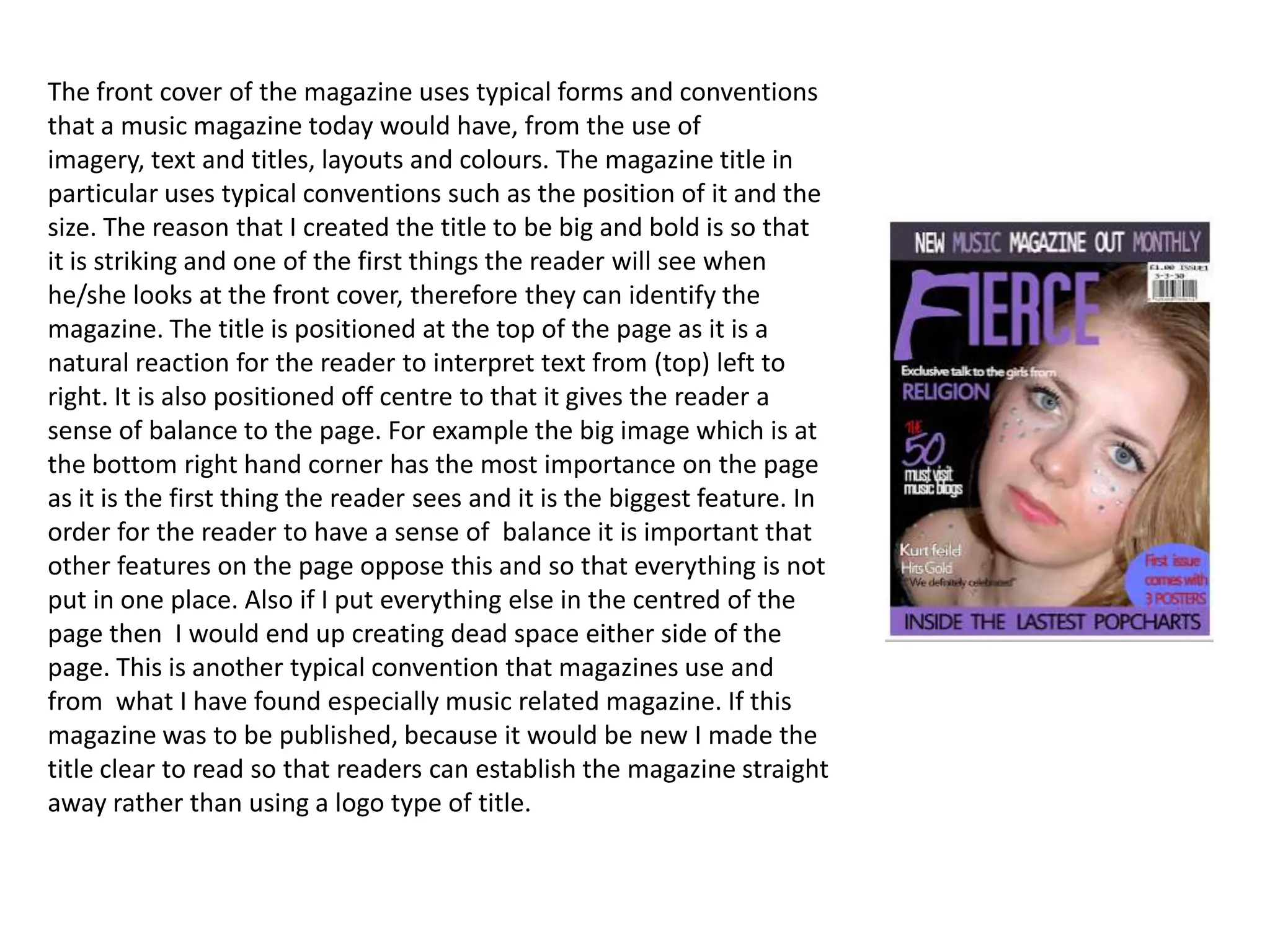
The front cover of the magazine uses typical forms and conventions
that a music magazine today would have, from the use of
imagery, text and titles, layouts and colours. The magazine title in
particular uses typical conventions such as the position of it and the
size. The reason that I created the title to be big and bold is so that
it is striking and one of the first things the reader will see when
he/she looks at the front cover, therefore they can identify the
magazine. The title is positioned at the top of the page as it is a
natural reaction for the reader to interpret text from (top) left to
right. It is also positioned off centre to that it gives the reader a
sense of balance to the page. For example the big image which is at
the bottom right hand corner has the most importance on the page
as it is the first thing the reader sees and it is the biggest feature. In
order for the reader to have a sense of balance it is important that
other features on the page oppose this and so that everything is not
put in one place. Also if I put everything else in the centred of the
page then I would end up creating dead space either side of the
page. This is another typical convention that magazines use and
from what I have found especially music related magazine. If this
magazine was to be published, because it would be new I made the
title clear to read so that readers can establish the magazine straight
away rather than using a logo type of title.
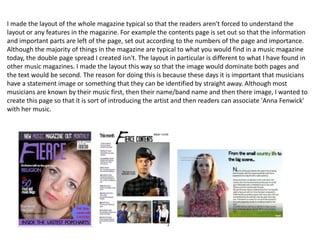
I made the layout of the whole magazine typical so that the readers aren't forced to understand the
layout or any features in the magazine. For example the contents page is set out so that the information
and important parts are left of the page, set out according to the numbers of the page and importance.
Although the majority of things in the magazine are typical to what you would find in a music magazine
today, the double page spread I created isn't. The layout in particular is different to what I have found in
other music magazines. I made the layout this way so that the image would dominate both pages and
the text would be second. The reason for doing this is because these days it is important that musicians
have a statement image or something that they can be identified by straight away. Although most
musicians are known by their music first, then their name/band name and then there image, I wanted to
create this page so that it is sort of introducing the artist and then readers can associate 'Anna Fenwick'
with her music.
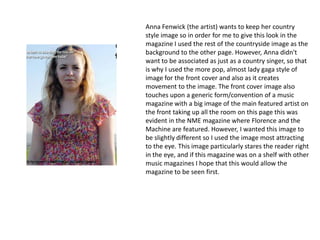
Anna Fenwick (the artist) wants to keep her country
style image so in order for me to give this look in the
magazine I used the rest of the countryside image as the
background to the other page. However, Anna didn't
want to be associated as just as a country singer, so that
is why I used the more pop, almost lady gaga style of
image for the front cover and also as it creates
movement to the image. The front cover image also
touches upon a generic form/convention of a music
magazine with a big image of the main featured artist on
the front taking up all the room on this page this was
evident in the NME magazine where Florence and the
Machine are featured. However, I wanted this image to
be slightly different so I used the image most attracting
to the eye. This image particularly stares the reader right
in the eye, and if this magazine was on a shelf with other
music magazines I hope that this would allow the
magazine to be seen first.

Presentation1 evalutation 1111

  • 1.
    The front coverof the magazine uses typical forms and conventions that a music magazine today would have, from the use of imagery, text and titles, layouts and colours. The magazine title in particular uses typical conventions such as the position of it and the size. The reason that I created the title to be big and bold is so that it is striking and one of the first things the reader will see when he/she looks at the front cover, therefore they can identify the magazine. The title is positioned at the top of the page as it is a natural reaction for the reader to interpret text from (top) left to right. It is also positioned off centre to that it gives the reader a sense of balance to the page. For example the big image which is at the bottom right hand corner has the most importance on the page as it is the first thing the reader sees and it is the biggest feature. In order for the reader to have a sense of balance it is important that other features on the page oppose this and so that everything is not put in one place. Also if I put everything else in the centred of the page then I would end up creating dead space either side of the page. This is another typical convention that magazines use and from what I have found especially music related magazine. If this magazine was to be published, because it would be new I made the title clear to read so that readers can establish the magazine straight away rather than using a logo type of title.
  • 2.
    I made thelayout of the whole magazine typical so that the readers aren't forced to understand the layout or any features in the magazine. For example the contents page is set out so that the information and important parts are left of the page, set out according to the numbers of the page and importance. Although the majority of things in the magazine are typical to what you would find in a music magazine today, the double page spread I created isn't. The layout in particular is different to what I have found in other music magazines. I made the layout this way so that the image would dominate both pages and the text would be second. The reason for doing this is because these days it is important that musicians have a statement image or something that they can be identified by straight away. Although most musicians are known by their music first, then their name/band name and then there image, I wanted to create this page so that it is sort of introducing the artist and then readers can associate 'Anna Fenwick' with her music.
  • 3.
    Anna Fenwick (theartist) wants to keep her country style image so in order for me to give this look in the magazine I used the rest of the countryside image as the background to the other page. However, Anna didn't want to be associated as just as a country singer, so that is why I used the more pop, almost lady gaga style of image for the front cover and also as it creates movement to the image. The front cover image also touches upon a generic form/convention of a music magazine with a big image of the main featured artist on the front taking up all the room on this page this was evident in the NME magazine where Florence and the Machine are featured. However, I wanted this image to be slightly different so I used the image most attracting to the eye. This image particularly stares the reader right in the eye, and if this magazine was on a shelf with other music magazines I hope that this would allow the magazine to be seen first.