Decision Support
   Clinical Guidelines and Reviews for Evidence Based
   Medicine
   (Where Do I Start?)


               Policy Development & Management Program,
                                                  Nov. 2011
                                      Jessica E. Rolle (Mrs.)
                                        Planning Unit, PMH
Evidence (Truth or Reality?)
 Healthcare   decisions/services should be
  based on evidence
 Evidence: the numbers that represent the
  current condition or situation as it relates
  to a specific service/topic or area. It
  reflects the PRESENT state or transitional
  truth, however it does not necessarily
  represent an absolute truth.
Sourcing The Information
(Using The Internet)
   DO NOT GO TO GOOGLE!!!!
       Use google on the search the broad subject,
        not specifics

   Use Pre-filtered sources of clinical evidence.
    Why?
       Provides more focused information
       Not subject to advertisements
       Has more inclusive information from worldwide
        sources
The Cochrane Library
 Comprised   of 6 different databases
 Provides information to inform health
  decision making.
 Independent reviews
 The ‘diamond’ in evidentiary reviews for
  clinical papers
 www.thecochranelibrary.com
Medline Plus
 Provides  information that is also suitable
  for patient education
 Has videos and podcasts that provide
  visual reinforcement and assistance.
 Easier Reading
 http://www.nlm.nih.gov/medlineplus
Other Sites…..
   Bandolier:
       http://www.medicine.ox.ac.uk/bandolier/
       Quick and dirty
       Provides reviews and quick ratings

   Attract:
       http://www.attract.wales.nhs.uk/default.aspx
       Answers questions and reviews specific to the
        clinical conditions (ex. Diabetes)
It’s a Trip!
 http://www.tripdatabase.com
 Trip   Database
     Combines all reviews
     The HUB….no need to go further!
     Provides a succinct site for cross referenced
      data (globally)
     Rates the quality of the information
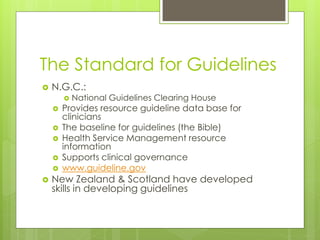
The Standard for Guidelines
   N.G.C.:
           National Guidelines Clearing House
       Provides resource guideline data base for
        clinicians
       The baseline for guidelines (the Bible)
       Health Service Management resource
        information
       Supports clinical governance
       www.guideline.gov
   New Zealand & Scotland have developed
    skills in developing guidelines
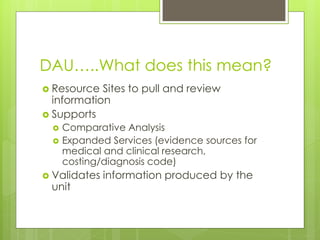
DAU…..What does this mean?
 Resource  Sites to pull and review
  information
 Supports
     Comparative Analysis
     Expanded Services (evidence sources for
      medical and clinical research,
      costing/diagnosis code)
 Validates   information produced by the
 unit
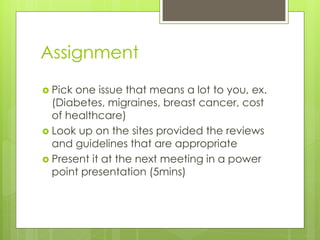
Assignment
 Pick one issue that means a lot to you, ex.
  (Diabetes, migraines, breast cancer, cost
  of healthcare)
 Look up on the sites provided the reviews
  and guidelines that are appropriate
 Present it at the next meeting in a power
  point presentation (5mins)

Finding the evidence on the Internet....Where do I start?

  • 1.
    Decision Support Clinical Guidelines and Reviews for Evidence Based Medicine (Where Do I Start?) Policy Development & Management Program, Nov. 2011 Jessica E. Rolle (Mrs.) Planning Unit, PMH
  • 2.
    Evidence (Truth orReality?)  Healthcare decisions/services should be based on evidence  Evidence: the numbers that represent the current condition or situation as it relates to a specific service/topic or area. It reflects the PRESENT state or transitional truth, however it does not necessarily represent an absolute truth.
  • 3.
    Sourcing The Information (UsingThe Internet)  DO NOT GO TO GOOGLE!!!!  Use google on the search the broad subject, not specifics  Use Pre-filtered sources of clinical evidence. Why?  Provides more focused information  Not subject to advertisements  Has more inclusive information from worldwide sources
  • 4.
    The Cochrane Library Comprised of 6 different databases  Provides information to inform health decision making.  Independent reviews  The ‘diamond’ in evidentiary reviews for clinical papers  www.thecochranelibrary.com
  • 5.
    Medline Plus  Provides information that is also suitable for patient education  Has videos and podcasts that provide visual reinforcement and assistance.  Easier Reading  http://www.nlm.nih.gov/medlineplus
  • 6.
    Other Sites…..  Bandolier:  http://www.medicine.ox.ac.uk/bandolier/  Quick and dirty  Provides reviews and quick ratings  Attract:  http://www.attract.wales.nhs.uk/default.aspx  Answers questions and reviews specific to the clinical conditions (ex. Diabetes)
  • 7.
    It’s a Trip! http://www.tripdatabase.com  Trip Database  Combines all reviews  The HUB….no need to go further!  Provides a succinct site for cross referenced data (globally)  Rates the quality of the information
  • 8.
    The Standard forGuidelines  N.G.C.:  National Guidelines Clearing House  Provides resource guideline data base for clinicians  The baseline for guidelines (the Bible)  Health Service Management resource information  Supports clinical governance  www.guideline.gov  New Zealand & Scotland have developed skills in developing guidelines
  • 9.
    DAU…..What does thismean?  Resource Sites to pull and review information  Supports  Comparative Analysis  Expanded Services (evidence sources for medical and clinical research, costing/diagnosis code)  Validates information produced by the unit
  • 10.
    Assignment  Pick oneissue that means a lot to you, ex. (Diabetes, migraines, breast cancer, cost of healthcare)  Look up on the sites provided the reviews and guidelines that are appropriate  Present it at the next meeting in a power point presentation (5mins)