THINKING BASED
LEARNING
PRESENTED BY
BHAGYASHREE VYAWAHARE
THINKING BASED LEARNING
● Thinking Based Learning (TBL) is an educational
approach that emphasises the development of
critical thinking skills alongside the acquisition of
knowledge.
● It focuses on encouraging students to engage in
higher order thinking processes such as analysis,
evaluation, synthesis and creativity, rather than just
memorizing facts.
Key features of thinking based learning:
1. Critical and analytical thinking
2. Problem solving
3. Creative thinking
4. Metacognition
5. Discussion and collaboration
6. Reflective practice
7. Transferability
Benefits of thinking based learning
● Promotes critical thinking
● Transversal skills in different areas
● More meaningful learning for
students
● Preparing for the future
How will you implement TBL in class?
➢ Promote debates and discussions in class
➢ Foster the solution of real and authentic
problems
➢ Organize simulations or role-playing
games
➢ Promote autonomy in the study
➢ Encourage analysis
➢ Ask them questions that force them to
think and meditate
Competency-based learning
Competency-based learning or competency-based
education is a framework for teaching and assessment
of learning. It is also described as a type of education
based on predetermined "competencies," which focuses
on outcomes and real-world performance.
Competence based learning (CBL)
CBL is an educational approach that focuses on students
acquiring specific skills and competences required to
perform tasks and solve problems effectively in real-world
situations. Unlike traditional educational models, which
often emphasize the completion of predefined curriculum
and the memorization of knowledge,CBL prioritizes the
demonstration of proficiency in particular competencies
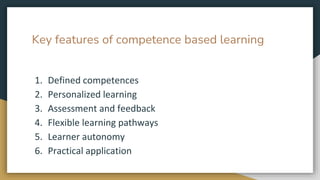
Key features of competence based learning
1. Defined competences
2. Personalized learning
3. Assessment and feedback
4. Flexible learning pathways
5. Learner autonomy
6. Practical application
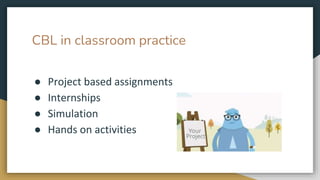
CBL in classroom practice
● Project based assignments
● Internships
● Simulation
● Hands on activities
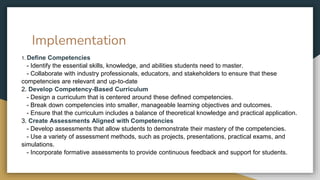
Implementation
1. Define Competencies
- Identify the essential skills, knowledge, and abilities students need to master.
- Collaborate with industry professionals, educators, and stakeholders to ensure that these
competencies are relevant and up-to-date
2. Develop Competency-Based Curriculum
- Design a curriculum that is centered around these defined competencies.
- Break down competencies into smaller, manageable learning objectives and outcomes.
- Ensure that the curriculum includes a balance of theoretical knowledge and practical application.
3. Create Assessments Aligned with Competencies
- Develop assessments that allow students to demonstrate their mastery of the competencies.
- Use a variety of assessment methods, such as projects, presentations, practical exams, and
simulations.
- Incorporate formative assessments to provide continuous feedback and support for students.
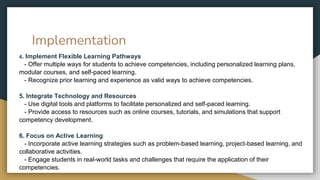
Implementation
4. Implement Flexible Learning Pathways
- Offer multiple ways for students to achieve competencies, including personalized learning plans,
modular courses, and self-paced learning.
- Recognize prior learning and experience as valid ways to achieve competencies.
5. Integrate Technology and Resources
- Use digital tools and platforms to facilitate personalized and self-paced learning.
- Provide access to resources such as online courses, tutorials, and simulations that support
competency development.
6. Focus on Active Learning
- Incorporate active learning strategies such as problem-based learning, project-based learning, and
collaborative activities.
- Engage students in real-world tasks and challenges that require the application of their
competencies.
Implementation
7. Provide Continuous Feedback and Support
- Offer regular, constructive feedback to help students understand their progress and
areas for improvement.
- Use formative assessments and reflective practices to guide students in their learning
journey.
- Provide additional support through tutoring, mentoring, and supplementary materials.
8. Encourage Self-Assessment and Reflection
- Teach students how to self-assess their competencies and reflect on their learning
experiences.
- Encourage students to set personal learning goals and track their progress
Implementation
9. Foster a Growth Mindset
- Promote a learning environment that values effort, persistence, and
continuous improvement.
- Encourage students to view challenges as opportunities to develop
their competencies.
10. Collaborate and Share Best Practices
- Work with other educators to share strategies, resources, and
insights on implementing CBL effectively.
- Participate in professional development opportunities to stay
updated on the latest CBL practices and research.
References
https://www.topworksheets.com/blog/en/the-thinking-based-learning-and-how-to-put-it-into-practice-
61ea8d81861ce
https://additioapp.com/en/what-is-and-how-does-thinking-based-learning-tbl-work/
https://en.wikipedia.org/wiki/Competency-
based_learning#:~:text=Competency%2Dbased%20learning%20or%20competency,outcomes%20and%20rea
l%2Dworld%20performance.

presentation on THINKING BASED LEARNING.pptx

  • 1.
  • 2.
    THINKING BASED LEARNING ●Thinking Based Learning (TBL) is an educational approach that emphasises the development of critical thinking skills alongside the acquisition of knowledge. ● It focuses on encouraging students to engage in higher order thinking processes such as analysis, evaluation, synthesis and creativity, rather than just memorizing facts.
  • 3.
    Key features ofthinking based learning: 1. Critical and analytical thinking 2. Problem solving 3. Creative thinking 4. Metacognition 5. Discussion and collaboration 6. Reflective practice 7. Transferability
  • 4.
    Benefits of thinkingbased learning ● Promotes critical thinking ● Transversal skills in different areas ● More meaningful learning for students ● Preparing for the future
  • 5.
    How will youimplement TBL in class? ➢ Promote debates and discussions in class ➢ Foster the solution of real and authentic problems ➢ Organize simulations or role-playing games ➢ Promote autonomy in the study ➢ Encourage analysis ➢ Ask them questions that force them to think and meditate
  • 6.
    Competency-based learning Competency-based learningor competency-based education is a framework for teaching and assessment of learning. It is also described as a type of education based on predetermined "competencies," which focuses on outcomes and real-world performance.
  • 7.
    Competence based learning(CBL) CBL is an educational approach that focuses on students acquiring specific skills and competences required to perform tasks and solve problems effectively in real-world situations. Unlike traditional educational models, which often emphasize the completion of predefined curriculum and the memorization of knowledge,CBL prioritizes the demonstration of proficiency in particular competencies
  • 8.
    Key features ofcompetence based learning 1. Defined competences 2. Personalized learning 3. Assessment and feedback 4. Flexible learning pathways 5. Learner autonomy 6. Practical application
  • 9.
    CBL in classroompractice ● Project based assignments ● Internships ● Simulation ● Hands on activities
  • 10.
    Implementation 1. Define Competencies -Identify the essential skills, knowledge, and abilities students need to master. - Collaborate with industry professionals, educators, and stakeholders to ensure that these competencies are relevant and up-to-date 2. Develop Competency-Based Curriculum - Design a curriculum that is centered around these defined competencies. - Break down competencies into smaller, manageable learning objectives and outcomes. - Ensure that the curriculum includes a balance of theoretical knowledge and practical application. 3. Create Assessments Aligned with Competencies - Develop assessments that allow students to demonstrate their mastery of the competencies. - Use a variety of assessment methods, such as projects, presentations, practical exams, and simulations. - Incorporate formative assessments to provide continuous feedback and support for students.
  • 11.
    Implementation 4. Implement FlexibleLearning Pathways - Offer multiple ways for students to achieve competencies, including personalized learning plans, modular courses, and self-paced learning. - Recognize prior learning and experience as valid ways to achieve competencies. 5. Integrate Technology and Resources - Use digital tools and platforms to facilitate personalized and self-paced learning. - Provide access to resources such as online courses, tutorials, and simulations that support competency development. 6. Focus on Active Learning - Incorporate active learning strategies such as problem-based learning, project-based learning, and collaborative activities. - Engage students in real-world tasks and challenges that require the application of their competencies.
  • 12.
    Implementation 7. Provide ContinuousFeedback and Support - Offer regular, constructive feedback to help students understand their progress and areas for improvement. - Use formative assessments and reflective practices to guide students in their learning journey. - Provide additional support through tutoring, mentoring, and supplementary materials. 8. Encourage Self-Assessment and Reflection - Teach students how to self-assess their competencies and reflect on their learning experiences. - Encourage students to set personal learning goals and track their progress
  • 13.
    Implementation 9. Foster aGrowth Mindset - Promote a learning environment that values effort, persistence, and continuous improvement. - Encourage students to view challenges as opportunities to develop their competencies. 10. Collaborate and Share Best Practices - Work with other educators to share strategies, resources, and insights on implementing CBL effectively. - Participate in professional development opportunities to stay updated on the latest CBL practices and research.
  • 14.