Tagore Government college of Education
Presented by
Prabhakar Mondal
Pedagogy of computer science
B.SC.B.ED Mathematics 3 rd year
GENERATIONS OF
COMPUTER
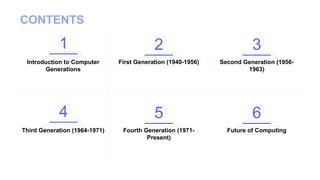
CONTENTS
2
First Generation (1940-1956)
3
Second Generation (1956-
1963)
5
Fourth Generation (1971-
Present)
6
Future of Computing
1
Introduction to Computer
Generations
4
Third Generation (1964-1971)
Introduction to Computer
Generations
01
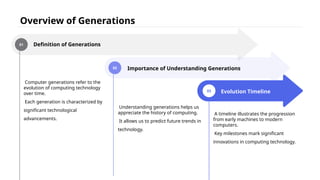
Overview of Generations
Computer generations refer to the
evolution of computing technology
over time.
Each generation is characterized by
significant technological
advancements.
01 Definition of Generations
Understanding generations helps us
appreciate the history of computing.
It allows us to predict future trends in
technology.
02 Importance of Understanding Generations
A timeline illustrates the progression
from early machines to modern
computers.
Key milestones mark significant
innovations in computing technology.
03 Evolution Timeline
Historical Context
Early Computing Devices
The earliest devices, like the abacus, set the stage for later developments.
Mechanical devices evolved into electrical machines by the early 20th
century.
World War Contributions
The need for computation during wars accelerated technological
innovations.
ENIAC, one of the first electronic computers, was developed during this
time.
Key Innovators
Figures like Alan Turing and John von Neumann were pivotal in early
computing.
Their theories laid the groundwork for modern computer science.
First Generation (1940-
1956)
02
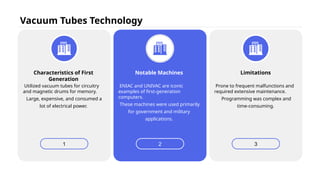
Vacuum Tubes Technology
1
Utilized vacuum tubes for circuitry
and magnetic drums for memory.
Large, expensive, and consumed a
lot of electrical power.
Characteristics of First
Generation
2
ENIAC and UNIVAC are iconic
examples of first-generation
computers.
These machines were used primarily
for government and military
applications.
Notable Machines
3
Prone to frequent malfunctions and
required extensive maintenance.
Programming was complex and
time-consuming.
Limitations
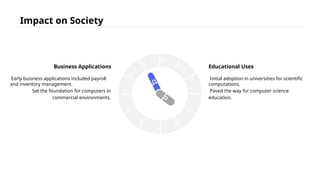
Impact on Society
Early business applications included payroll
and inventory management.
Set the foundation for computers in
commercial environments.
Business Applications
Initial adoption in universities for scientific
computations.
Paved the way for computer science
education.
Educational Uses
Second Generation (1956-
1963)
03
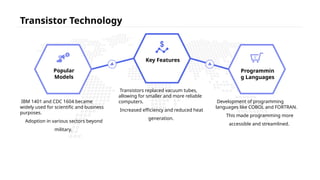
Transistor Technology
Key Features
Programmin
g Languages
Popular
Models
Transistors replaced vacuum tubes,
allowing for smaller and more reliable
computers.
Increased efficiency and reduced heat
generation.
IBM 1401 and CDC 1604 became
widely used for scientific and business
purposes.
Adoption in various sectors beyond
military.
Development of programming
languages like COBOL and FORTRAN.
This made programming more
accessible and streamlined.
Business Transformation
Computers began to be integrated
into everyday business operations.
Improved efficiency in data
processing and analysis.
01
Educational Growth
Increased focus on computer science
education in institutions.
More tailored programs developed for
training skilled professionals.
02
Advancements and Impact
Third Generation (1964-
1971)
04
Integrated Circuits
01 02
03
Models and Makers
Systems like IBM System/360 enhanced
performance significantly.
Mainframe computers became prevalent in large
organizations.
Integration of Components
Introduction of integrated circuits combined
multiple transistors on a single chip.
Markedly reduced size and increased speed of
computers.
OS & Multitasking
Development of operating systems enabled multitasking
capabilities.
Significantly improved user experience and resource
management.
Societal Influence
Corporate Computing
Businesses began to rely heavily on
computers for operations.
Data processing became essential for strategic
decision-making.
Research Advancements
Enhanced capabilities in research fields,
notably in engineering and physics.
Computers facilitated complex simulations
and data analysis.
Fourth Generation (1971-
Present)
05
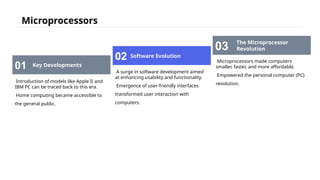
Microprocessors
01 Key Developments
Introduction of models like Apple II and
IBM PC can be traced back to this era.
Home computing became accessible to
the general public.
02 Software Evolution
A surge in software development aimed
at enhancing usability and functionality.
Emergence of user-friendly interfaces
transformed user interaction with
computers.
03 The Microprocessor
Revolution
Microprocessors made computers
smaller, faster, and more affordable.
Empowered the personal computer (PC)
revolution.
Modern Era Impact
Internet and
Communication
Cloud Computing
The rise of the Internet
transformed computing and
communication.
Enabled instant access to
information globally.
Cloud technology changed
how data is stored and
accessed.
Promotes collaboration and
remote work capabilities across
industries.
Future of Computing
06
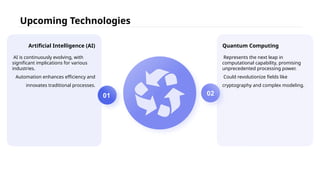
Artificial Intelligence (AI)
AI is continuously evolving, with
significant implications for various
industries.
Automation enhances efficiency and
innovates traditional processes.
01
Quantum Computing
Represents the next leap in
computational capability, promising
unprecedented processing power.
Could revolutionize fields like
cryptography and complex modeling.
02
Upcoming Technologies
Societal Implications
Workforce Transformation
Automation and AI will reshape job
landscapes, requiring new skill sets.
Professionals must adapt to technological
advancements to stay relevant.
Ethical Considerations
New technologies bring ethical challenges
regarding privacy, data security, and decision-
making.
Society must navigate these challenges to
maximize benefits while minimizing risks.
Thank you for listening

Presentation on ' Generations of Computer'

  • 1.
    Tagore Government collegeof Education Presented by Prabhakar Mondal Pedagogy of computer science B.SC.B.ED Mathematics 3 rd year GENERATIONS OF COMPUTER
  • 2.
    CONTENTS 2 First Generation (1940-1956) 3 SecondGeneration (1956- 1963) 5 Fourth Generation (1971- Present) 6 Future of Computing 1 Introduction to Computer Generations 4 Third Generation (1964-1971)
  • 3.
  • 4.
    Overview of Generations Computergenerations refer to the evolution of computing technology over time. Each generation is characterized by significant technological advancements. 01 Definition of Generations Understanding generations helps us appreciate the history of computing. It allows us to predict future trends in technology. 02 Importance of Understanding Generations A timeline illustrates the progression from early machines to modern computers. Key milestones mark significant innovations in computing technology. 03 Evolution Timeline
  • 5.
    Historical Context Early ComputingDevices The earliest devices, like the abacus, set the stage for later developments. Mechanical devices evolved into electrical machines by the early 20th century. World War Contributions The need for computation during wars accelerated technological innovations. ENIAC, one of the first electronic computers, was developed during this time. Key Innovators Figures like Alan Turing and John von Neumann were pivotal in early computing. Their theories laid the groundwork for modern computer science.
  • 6.
  • 7.
    Vacuum Tubes Technology 1 Utilizedvacuum tubes for circuitry and magnetic drums for memory. Large, expensive, and consumed a lot of electrical power. Characteristics of First Generation 2 ENIAC and UNIVAC are iconic examples of first-generation computers. These machines were used primarily for government and military applications. Notable Machines 3 Prone to frequent malfunctions and required extensive maintenance. Programming was complex and time-consuming. Limitations
  • 8.
    Impact on Society Earlybusiness applications included payroll and inventory management. Set the foundation for computers in commercial environments. Business Applications Initial adoption in universities for scientific computations. Paved the way for computer science education. Educational Uses
  • 9.
  • 10.
    Transistor Technology Key Features Programmin gLanguages Popular Models Transistors replaced vacuum tubes, allowing for smaller and more reliable computers. Increased efficiency and reduced heat generation. IBM 1401 and CDC 1604 became widely used for scientific and business purposes. Adoption in various sectors beyond military. Development of programming languages like COBOL and FORTRAN. This made programming more accessible and streamlined.
  • 11.
    Business Transformation Computers beganto be integrated into everyday business operations. Improved efficiency in data processing and analysis. 01 Educational Growth Increased focus on computer science education in institutions. More tailored programs developed for training skilled professionals. 02 Advancements and Impact
  • 12.
  • 13.
    Integrated Circuits 01 02 03 Modelsand Makers Systems like IBM System/360 enhanced performance significantly. Mainframe computers became prevalent in large organizations. Integration of Components Introduction of integrated circuits combined multiple transistors on a single chip. Markedly reduced size and increased speed of computers. OS & Multitasking Development of operating systems enabled multitasking capabilities. Significantly improved user experience and resource management.
  • 14.
    Societal Influence Corporate Computing Businessesbegan to rely heavily on computers for operations. Data processing became essential for strategic decision-making. Research Advancements Enhanced capabilities in research fields, notably in engineering and physics. Computers facilitated complex simulations and data analysis.
  • 15.
  • 16.
    Microprocessors 01 Key Developments Introductionof models like Apple II and IBM PC can be traced back to this era. Home computing became accessible to the general public. 02 Software Evolution A surge in software development aimed at enhancing usability and functionality. Emergence of user-friendly interfaces transformed user interaction with computers. 03 The Microprocessor Revolution Microprocessors made computers smaller, faster, and more affordable. Empowered the personal computer (PC) revolution.
  • 17.
    Modern Era Impact Internetand Communication Cloud Computing The rise of the Internet transformed computing and communication. Enabled instant access to information globally. Cloud technology changed how data is stored and accessed. Promotes collaboration and remote work capabilities across industries.
  • 18.
  • 19.
    Artificial Intelligence (AI) AIis continuously evolving, with significant implications for various industries. Automation enhances efficiency and innovates traditional processes. 01 Quantum Computing Represents the next leap in computational capability, promising unprecedented processing power. Could revolutionize fields like cryptography and complex modeling. 02 Upcoming Technologies
  • 20.
    Societal Implications Workforce Transformation Automationand AI will reshape job landscapes, requiring new skill sets. Professionals must adapt to technological advancements to stay relevant. Ethical Considerations New technologies bring ethical challenges regarding privacy, data security, and decision- making. Society must navigate these challenges to maximize benefits while minimizing risks.
  • 21.
    Thank you forlistening