



 Motivation is the driving force that causes the
flux from desire(ஆசைச) to will in life.
 For example, hunger is a motivation that elicits
a desire to eat.
 Motivation is an inner drive to behave or act in
a certain manner. These inner conditions such
as wishes, desires and goals, activate to move
in a particular direction in behavior.
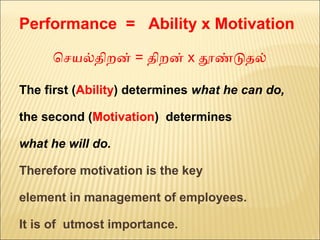
Performance = Ability x Motivation
ெசயலதிறன் = திறன் x தணடதல்  
The first (Ability) determines what he can do,
the second (Motivation) determines
what he will do.
Therefore motivation is the key
element in management of employees.
It is of utmost importance.
 Motivation is the consequence of an
interaction between the individual and the
situation. People who are “motivated” exert a
greater effort to perform than those who are
‘not motivated’.
 Motivation is the willingness to do something.
It is conditioned by this action’s ability to
satisfy some need for the individual
Rti, Jammu
7
 Takes moderate risks.
 Prefers immediate feedback
 Derives satisfaction on the successful
accomplishment of a task
 Has total concentration or pre --
occupation with the assigned task
Rti, Jammu
17
Rti, Jammu
19
Some important theories:
 Maslow’s Hierarchy of Needs Theory
 Mcclelland’s Achievement Motivation
Theory
 Herzberg’s Motivation-Hygiene theory
 Expectancy Theory
 McGregor (1957) Theory X and Theory Y
Rti, Jammu
21
Based on the conclusion that people have two
different categories of needs:
 O Hygiene factors - ொதொழிலசொர் சகநலம்
Conditions, Pay, Status, Security & Company Policies
o Motivating factors
Achievement, Recognition, Growth/Advancement &
Interest in the job
Five needs:
 1.  Physiological – உடலியல் : Basic needs of hunger,
thirst, shelter, sex and other body needs.
 2.   Safety - பொதுகொப்பு : security and protection from
physical and emotional harm
 3.   Social - சமூக : affection, belongingness, acceptance
and friendship
 4.   Esteem Need - மொியொைதைய ேதைவைகைள for both
self esteem(self respect, autonomy and achievement) and
external esteem (status, recognition and attention)
 5.   Self-actualization - சய இயலபொக்கம் the drive to
become what one is capable of becoming: includes growth,
achieving one’s potential, self fulfillment.
Rti, Jammu
23
 Goal setting
 Subordinate participation
 Implementation
 Performance appraisal and
feedback
Rti, Jammu
26
Goals are Desired Result, purpose or Objective that
one strives to attain ……….
Goal must be ….. SMARTT
Specific – திட்டவட்டமான
Measurable - அளவிடக்கூடிய
Attainable - முயற்சி செசய்து சஅைடய சகூடிய
Relevant- ெபொருத்தமான/ Realistic- தத்ரூபெமான
Time Oriented – ேநேரம் சார்ந்த
Tangebile- ெதளிவாக செதாிய சகூடிய
 Identify the Goal
 Prepare a Goal Statement
 Check your Goal with “others”
 Identify / Search for Success Stories
 Rearrange your Goal
 Identify the Internal & External Obstacles in
achieving
 Develop Strategies to overcome these
Threats
 Start to Implement your Goal
 Choose 02 Goals – Work &
Personal
 Make it SMARTT
 Break them in to Sub – Goals
 Identify the Activities required –
To Achieve
 Use Annual, Monthly & Weekly
Planners – To Help you to
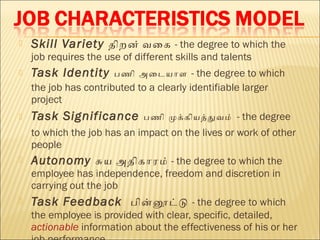
 Skill Variety திறன் வைக - the degree to which the
job requires the use of different skills and talents
 Task Identity பெணி அைடயாள - the degree to which
the job has contributed to a clearly identifiable larger
project
 Task Significance பெணி முக்கியத்துவம் - the degree
to which the job has an impact on the lives or work of other
people
 Autonomy சய அதிகாரம் - the degree to which the
employee has independence, freedom and discretion in
carrying out the job
 Task Feedback பெினனட்ட - the degree to which
the employee is provided with clear, specific, detailed,
actionable information about the effectiveness of his or her
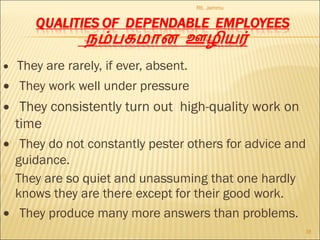
•   They are rarely, if ever, absent.
•   They work well under pressure
•   They consistently turn out high-quality work on
time
•   They do not constantly pester others for advice and
guidance.
 They are so quiet and unassuming that one hardly
knows they are there except for their good work.
•   They produce many more answers than problems.
Rti, Jammu
38
•  Six important words are “ I admit I made a mistake”
•  Five important words are” You did a good job”
•  Four important words are “ What is your opinion?”
•  Three important words are “Let’s work together.”
•  Two most important words are “ Thank you”
•  Single most important word is ”WE”.
Rti, Jammu
39
SF / FHB/CF/2006
Children are different
44
Advancement
Work
itself
Responsibility
Recogn
ition
Personal Growth
Achievment
OUR MOTTO -OUR MOTTO - எங்கள் தாரகமந்திரம்எங்கள் தாரகமந்திரம்
Be a good motivator

Motivation

  • 5.
     Motivation isthe driving force that causes the flux from desire(ஆசைச) to will in life.  For example, hunger is a motivation that elicits a desire to eat.  Motivation is an inner drive to behave or act in a certain manner. These inner conditions such as wishes, desires and goals, activate to move in a particular direction in behavior.
  • 6.
    Performance = Abilityx Motivation ெசயலதிறன் = திறன் x தணடதல்   The first (Ability) determines what he can do, the second (Motivation) determines what he will do. Therefore motivation is the key element in management of employees. It is of utmost importance.
  • 7.
     Motivation isthe consequence of an interaction between the individual and the situation. People who are “motivated” exert a greater effort to perform than those who are ‘not motivated’.  Motivation is the willingness to do something. It is conditioned by this action’s ability to satisfy some need for the individual Rti, Jammu 7
  • 17.
     Takes moderaterisks.  Prefers immediate feedback  Derives satisfaction on the successful accomplishment of a task  Has total concentration or pre -- occupation with the assigned task Rti, Jammu 17
  • 19.
    Rti, Jammu 19 Some importanttheories:  Maslow’s Hierarchy of Needs Theory  Mcclelland’s Achievement Motivation Theory  Herzberg’s Motivation-Hygiene theory  Expectancy Theory  McGregor (1957) Theory X and Theory Y
  • 21.
    Rti, Jammu 21 Based onthe conclusion that people have two different categories of needs:  O Hygiene factors - ொதொழிலசொர் சகநலம் Conditions, Pay, Status, Security & Company Policies o Motivating factors Achievement, Recognition, Growth/Advancement & Interest in the job
  • 23.
    Five needs:  1. Physiological – உடலியல் : Basic needs of hunger, thirst, shelter, sex and other body needs.  2.   Safety - பொதுகொப்பு : security and protection from physical and emotional harm  3.   Social - சமூக : affection, belongingness, acceptance and friendship  4.   Esteem Need - மொியொைதைய ேதைவைகைள for both self esteem(self respect, autonomy and achievement) and external esteem (status, recognition and attention)  5.   Self-actualization - சய இயலபொக்கம் the drive to become what one is capable of becoming: includes growth, achieving one’s potential, self fulfillment. Rti, Jammu 23
  • 26.
     Goal setting Subordinate participation  Implementation  Performance appraisal and feedback Rti, Jammu 26
  • 27.
    Goals are DesiredResult, purpose or Objective that one strives to attain ………. Goal must be ….. SMARTT Specific – திட்டவட்டமான Measurable - அளவிடக்கூடிய Attainable - முயற்சி செசய்து சஅைடய சகூடிய Relevant- ெபொருத்தமான/ Realistic- தத்ரூபெமான Time Oriented – ேநேரம் சார்ந்த Tangebile- ெதளிவாக செதாிய சகூடிய
  • 28.
     Identify theGoal  Prepare a Goal Statement  Check your Goal with “others”  Identify / Search for Success Stories  Rearrange your Goal  Identify the Internal & External Obstacles in achieving  Develop Strategies to overcome these Threats  Start to Implement your Goal
  • 29.
     Choose 02Goals – Work & Personal  Make it SMARTT  Break them in to Sub – Goals  Identify the Activities required – To Achieve  Use Annual, Monthly & Weekly Planners – To Help you to
  • 36.
     Skill Varietyதிறன் வைக - the degree to which the job requires the use of different skills and talents  Task Identity பெணி அைடயாள - the degree to which the job has contributed to a clearly identifiable larger project  Task Significance பெணி முக்கியத்துவம் - the degree to which the job has an impact on the lives or work of other people  Autonomy சய அதிகாரம் - the degree to which the employee has independence, freedom and discretion in carrying out the job  Task Feedback பெினனட்ட - the degree to which the employee is provided with clear, specific, detailed, actionable information about the effectiveness of his or her
  • 38.
    •   They are rarely,if ever, absent. •   They work well under pressure •   They consistently turn out high-quality work on time •   They do not constantly pester others for advice and guidance.  They are so quiet and unassuming that one hardly knows they are there except for their good work. •   They produce many more answers than problems. Rti, Jammu 38
  • 39.
    •  Six importantwords are “ I admit I made a mistake” •  Five important words are” You did a good job” •  Four important words are “ What is your opinion?” •  Three important words are “Let’s work together.” •  Two most important words are “ Thank you” •  Single most important word is ”WE”. Rti, Jammu 39
  • 41.
  • 44.
  • 48.
    OUR MOTTO -OURMOTTO - எங்கள் தாரகமந்திரம்எங்கள் தாரகமந்திரம்
  • 50.
    Be a goodmotivator

Editor's Notes

  • #44 You’re not alone in this job. There are literally thousands of recruiters around the world facing the same challenges . We can all learn from each other. We will provide you with the contact details of everyone from this workshop so we can all stay in touch.
  • #47 This session explains the follow-up actions for participants